Carleton E. Watkins
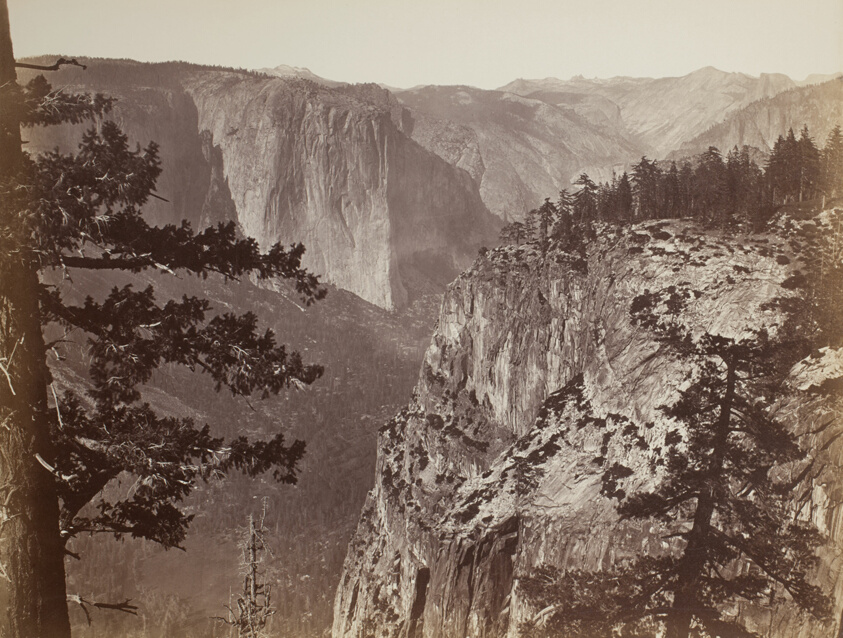
The Man Who Revealed the West
Artist Spotlight · The Collection Editorial
There are photographs that document the world, and then there are photographs that fundamentally alter how a civilization understands itself. Carleton E. Watkins made the latter kind. In the summer of 1861, hauling hundreds of pounds of glass plates, chemical baths, and a custom built camera capable of producing images larger than any previously seen in American photography, Watkins descended into Yosemite Valley and returned with pictures that stopped the country cold.
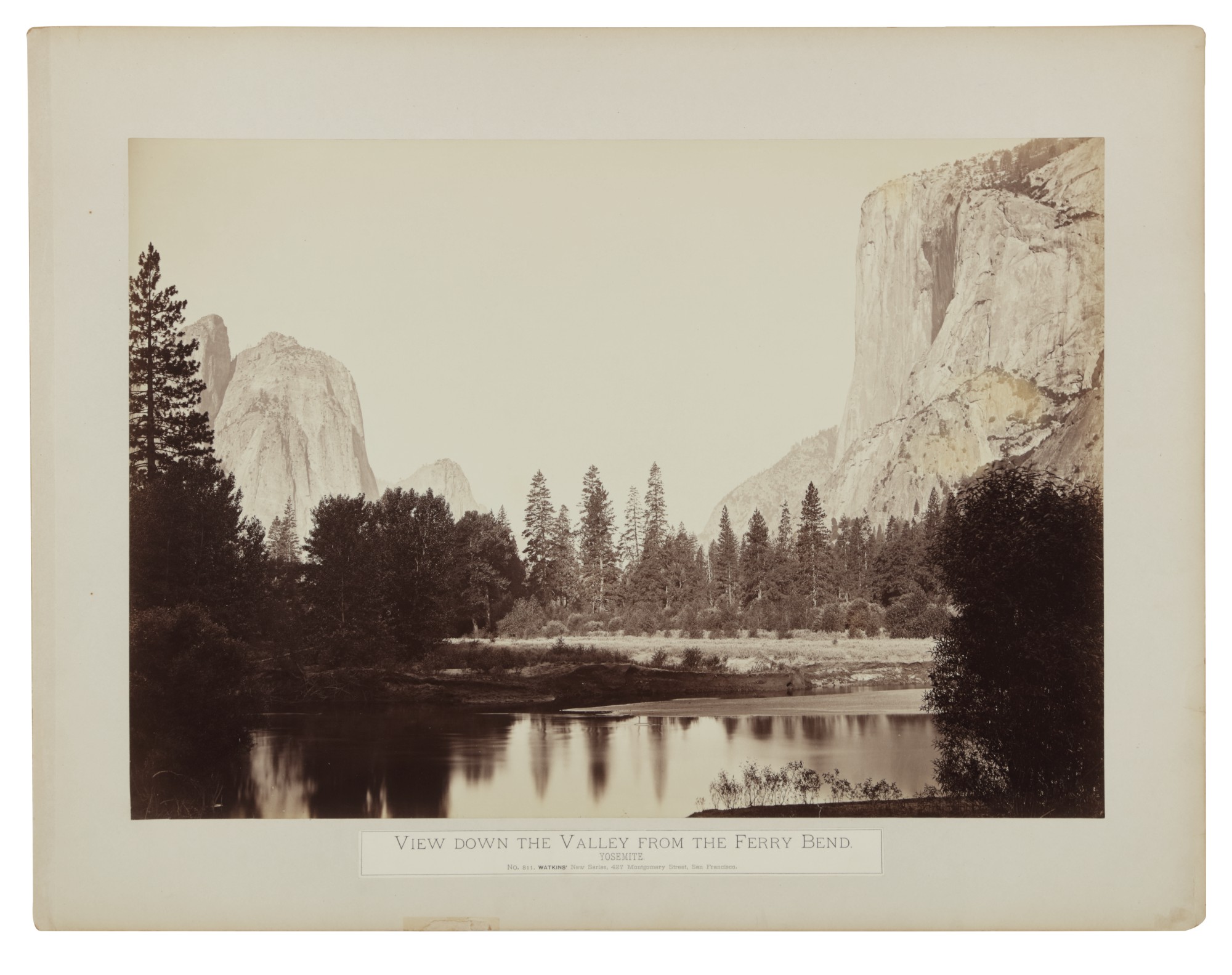
Carleton E. Watkins
'View Down the Valley from the Ferry Bend, Yosemite'
When Senator John Conness stood before Congress in 1864 to argue for the protection of Yosemite as a public trust, Watkins's prints were circulating among the very legislators who would cast the deciding votes. That a photographer, working with light and silver and patience, helped save one of the most extraordinary landscapes on earth is perhaps the most remarkable footnote in the entire history of the medium. Watkins was born in Oneonta, New York, in 1829, the son of a tavern keeper. His early life gave little indication of the visual genius that would emerge.
Like many ambitious young men of his generation, he was drawn westward by the gravitational pull of the California Gold Rush, arriving in San Francisco around 1851. He found work not in the mines but in the city, eventually drifting into the orbit of the photographer Robert Vance, whose gallery offered Watkins his first serious exposure to the craft. He was largely self taught, absorbing technique through practice and observation rather than formal instruction, and this autodidactic foundation may well explain the fearlessness with which he later approached problems that would have discouraged more conventionally trained practitioners. His development as an artist unfolded with remarkable speed once he committed to photography as a vocation.
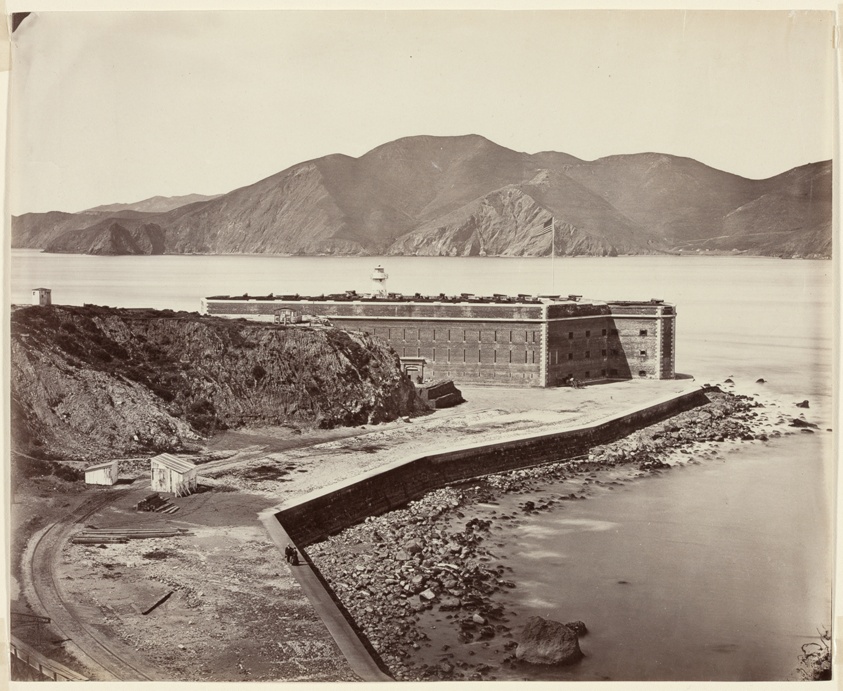
Carleton E. Watkins
San Francisco Bay, 1860
By the late 1850s he was producing accomplished work along the California coast and in the burgeoning city of San Francisco, and his 1860 albumen print of San Francisco Bay already reveals the compositional confidence and tonal sensitivity that would define his mature practice. But it was his first major Yosemite expedition of 1861 that announced him as something altogether exceptional. To photograph the valley at the scale he envisioned, Watkins had a specially constructed camera built that could accommodate mammoth glass plate negatives measuring roughly 18 by 22 inches. No commercial manufacturer offered such equipment.
He simply decided the world needed these images in this size and made the necessary arrangements, a gesture of creative will that tells you everything about the man. The resulting mammoth plate albumen prints are among the most breathtaking objects in the history of photography. Works such as his studies of El Capitan, those iconic views measuring 3,600 feet of vertical granite rendered in exquisite tonal gradation, reward extended looking in a way that few photographs of any era manage. His series images from the Watkins Pacific Coast portfolio, including stereoviews of Three Brothers, the Bridal Veil Fall, and the domes seen from Moran Point, demonstrate an equally masterful command of the smaller format, with each composition achieving a sense of spatial depth and atmospheric presence that feels almost architectural in its precision.
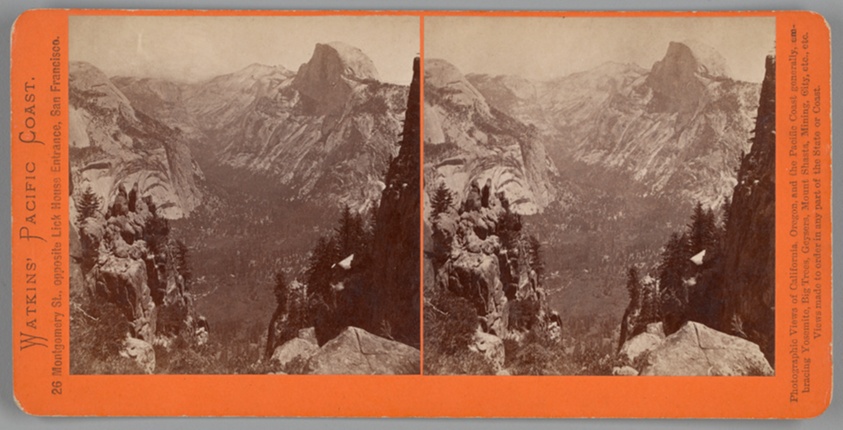
Carleton E. Watkins
The Domes from Moran Point, Yosemite, from the series "Watkins' Pacific Coast", 1861
What distinguishes Watkins from his contemporaries is not merely technical virtuosity, though that virtuosity was formidable. It is the quality of his attention, the way each image seems to have been waited for rather than simply taken, the horizon always considered, the foreground always purposeful, the relationship between water and stone and sky always resolved into something approaching the inevitable. For collectors, Watkins occupies a position of singular importance within nineteenth century American photography. His mammoth plate prints, particularly those from his 1860s and 1870s campaigns in Yosemite, are among the most actively sought objects in the field.
The Gordon L. Bennett Collection, examples of which carry the collector's distinctive stamp on the reverse of mounted prints, represents one of the most celebrated private accumulations of Watkins material and has long served as a benchmark for condition and provenance in the market. Collectors should look for the presence of the photographer's own letterpress studio label affixed to the mount, typically bearing the image title, series number, and his Montgomery Street, San Francisco address, as these details authenticate the print's relationship to Watkins's own commercial operation and significantly enhance both scholarly and market value. Stereoview pairs from the Pacific Coast series, while more accessible in price than the mammoth plates, offer an equally intimate encounter with his vision and remain underappreciated entry points for new collectors.
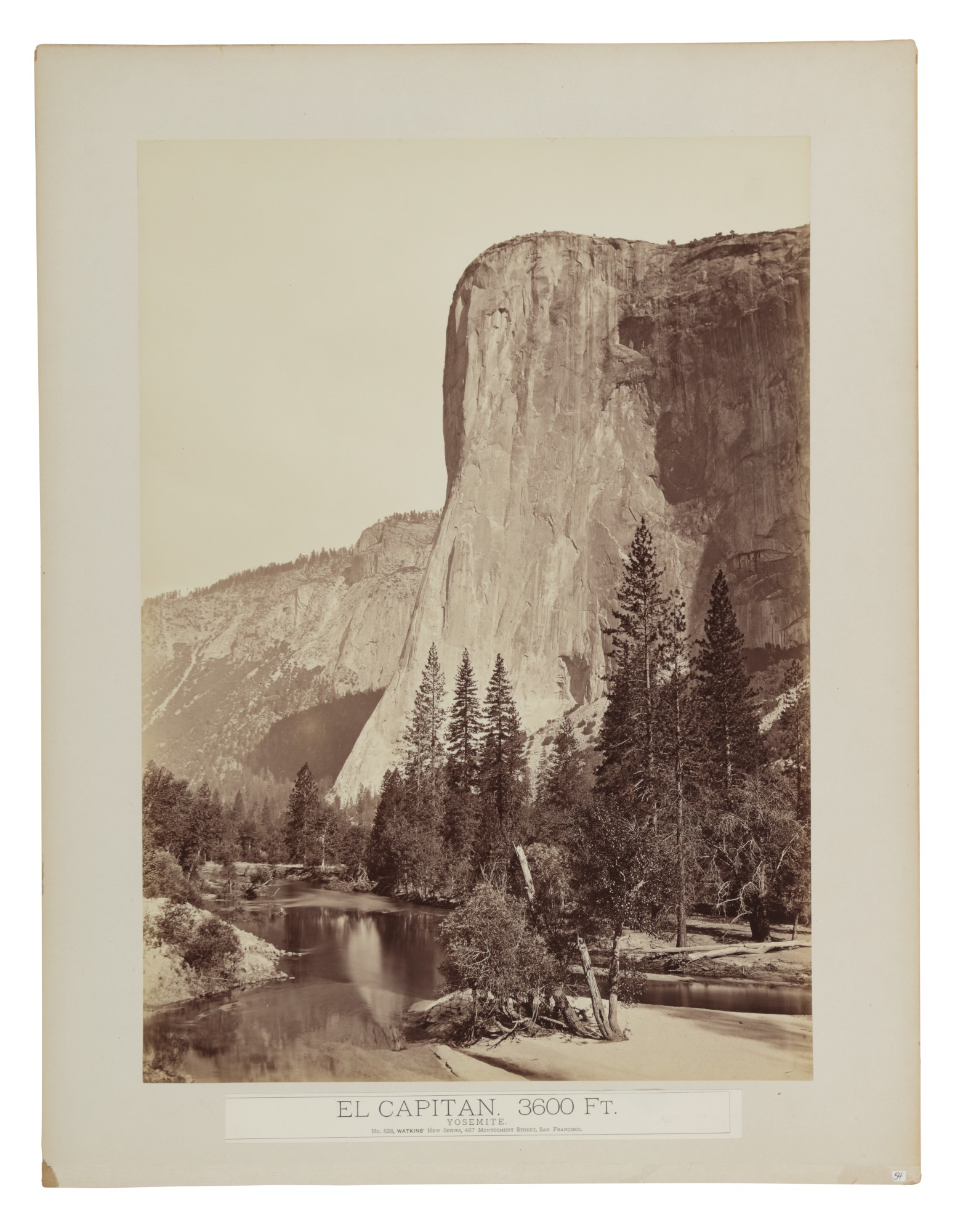
Carleton E. Watkins
'El Capitan. 3600 Ft. Yosemite'
Watkins belongs to a broader tradition of nineteenth century landscape photography that includes Timothy O'Sullivan, whose geological survey work in the American Southwest shares Watkins's combination of scientific purpose and lyrical sensibility, and Eadweard Muybridge, his San Francisco contemporary whose own Yosemite photographs invite direct comparison. In painting, his closest spiritual kin are the luminists and the Hudson River School, particularly Albert Bierstadt, whose grand canvases of Yosemite were created in direct conversation with photographic sources including Watkins's own work. The dialogue between Watkins's photographs and the painters of his era was genuinely reciprocal: his images shaped how artists imagined the West, and the pictorial conventions of sublime landscape painting in turn informed the compositional ambitions he brought to his camera. The final decades of Watkins's life were marked by hardship.
The 1906 San Francisco earthquake destroyed his studio and much of his archive, a loss that remains one of the great catastrophes in American cultural history. He spent his last years in poverty and died in 1916 at the Napa State Hospital, his contribution to American visual culture not yet fully understood by his contemporaries. The twentieth century would correct that oversight decisively. Today his prints appear in the permanent collections of the Metropolitan Museum of Art, the Getty Museum, the San Francisco Museum of Modern Art, and dozens of other institutions worldwide.
His influence on the photographers who followed him, from Ansel Adams to the New Topographics movement, is both traceable and profound. To encounter a Watkins print in person is to understand immediately why the West looks the way it does in the American imagination: he did not merely record a landscape, he taught an entire nation how to see one.
Explore books about Carleton E. Watkins
Carleton Watkins: The Art of Perception
Mark Klett and Byron Wolfe

Carleton E. Watkins: Selected Photographs
Peter E. Palmquist

Carleton Watkins: An American Master Photographer
National Geographic Society
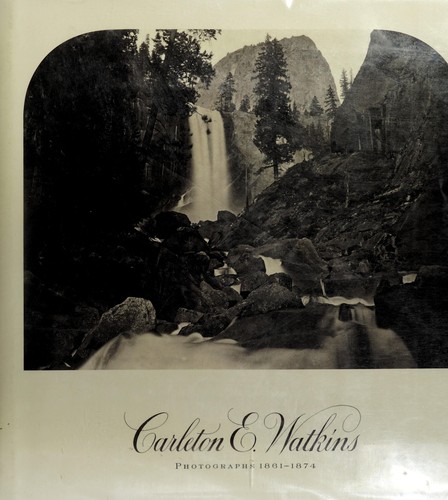
Watkins' Yosemite
Peter E. Palmquist
In Sunlight and in Shadow: Photographs by Carleton Watkins
Weston Naef and Christine Hult-Lewis