Carla Accardi
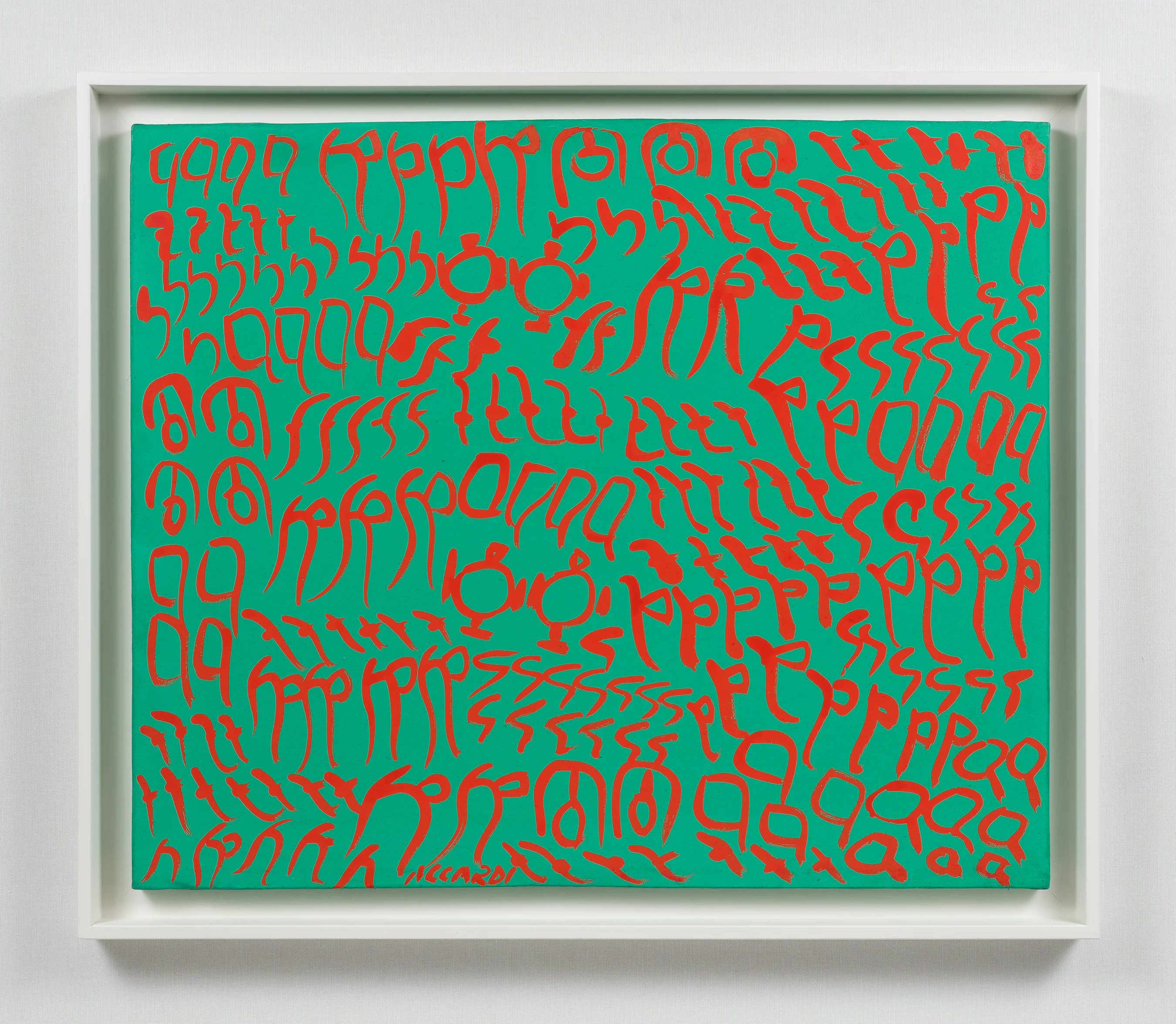
Carla Accardi: Italy's Radical Visionary Of Color
Artist Spotlight · The Collection Editorial
“I have always worked with signs. Signs are my language, the only one I know how to speak.”
Carla Accardi, interview cited in retrospective documentation
In the spring of 2014, just months before her death at the age of ninety, Carla Accardi was celebrated at the Venice Biennale with a special tribute that felt less like a farewell and more like a long overdue coronation. Institutions across Europe and North America had spent the preceding decade steadily acquiring her works, with MAXXI in Rome, Tate in London, and MoMA in New York each recognizing what Italian critics had understood for decades: that Accardi was among the most consequential abstract painters of the twentieth century. Her canvases, her painted transparencies, her bold cascades of interlocking signs had quietly reshaped what postwar European painting could be and who could make it. Accardi was born in 1924 in Trapani, a port city on the far western tip of Sicily.
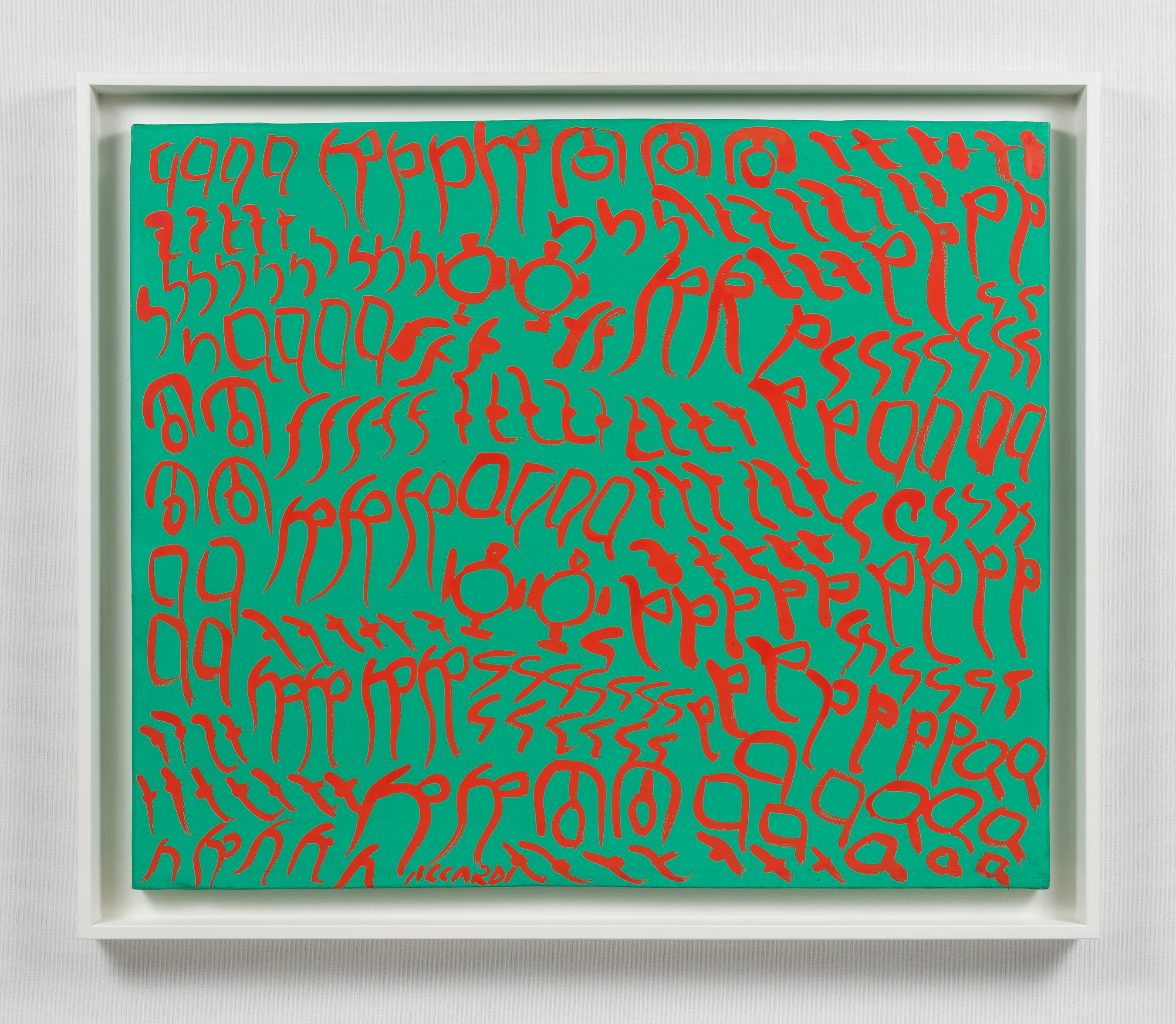
Carla Accardi
Verderosso, 1977
The light there is particular, almost aggressive in its clarity, and anyone who has stood on that coast and looked out toward the open Mediterranean understands something about the chromatic fearlessness that would later define her work. She moved to Rome to study at the Accademia di Belle Arti, arriving in a city still processing the physical and psychological wreckage of the Second World War. Rome in the late 1940s was a place of competing urgencies, political, aesthetic, and moral, and the young Accardi found herself drawn into a circle of artists who believed that painting had to answer to all of them at once. In 1947, Accardi was among the founding members of Forma 1, a collective that positioned itself at the intersection of Marxist politics and formal abstraction.
The group, which also included Pietro Consagra, Giulio Turcato, and Piero Dorazio, published a manifesto that declared itself simultaneously formalist and Marxist, a pairing that invited considerable argument from both camps. For Accardi, Forma 1 was not simply a political gesture. It was an announcement that she intended to take abstraction seriously as a language, one capable of bearing meaning without resorting to the illustrational conventions that Socialist Realism demanded and that she found creatively stifling. The group held its first exhibition in Rome in 1947, and Accardi was the only woman among its founders, a fact that resonated differently with each passing decade of feminist art history.
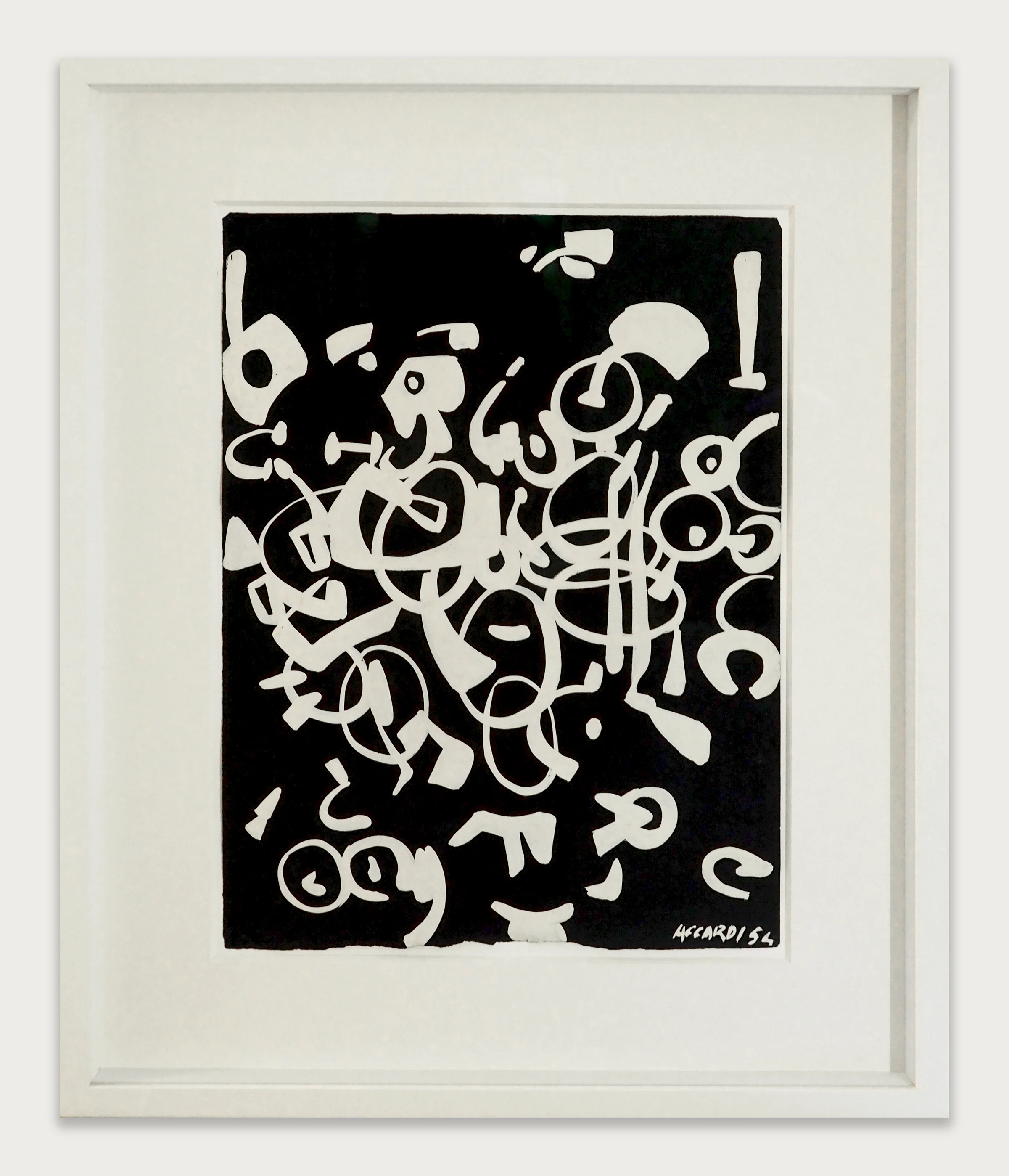
Carla Accardi
Senza titolo, 1954
Her paintings from the early 1950s already show a sensibility that was entirely her own. Works like the 1950 oil on canvas known as Senza Titolo and the 1954 casein tempera on paper also called Senza titolo demonstrate her commitment to a visual vocabulary built from signs rather than shapes, gestures that recalled calligraphy without quoting it directly. Grigio (Ideogramma) from 1954, executed in enamel and casein on canvas, is particularly revealing: the grey ground seems to vibrate beneath the painted marks, which accumulate not as decoration but as argument. These are paintings that ask to be read as much as seen, and they reward the patience of a careful viewer with a density of visual intelligence that is startling even now.
Perhaps the most transformative decision of Accardi's career came in the 1960s, when she abandoned traditional canvas in favor of Sicofoil, a transparent plastic support that was then used primarily in industrial contexts. The move was not mere novelty. By painting on a surface that allowed light to pass through from behind, Accardi changed the fundamental relationship between the work and its environment. Color became atmospheric rather than applied.
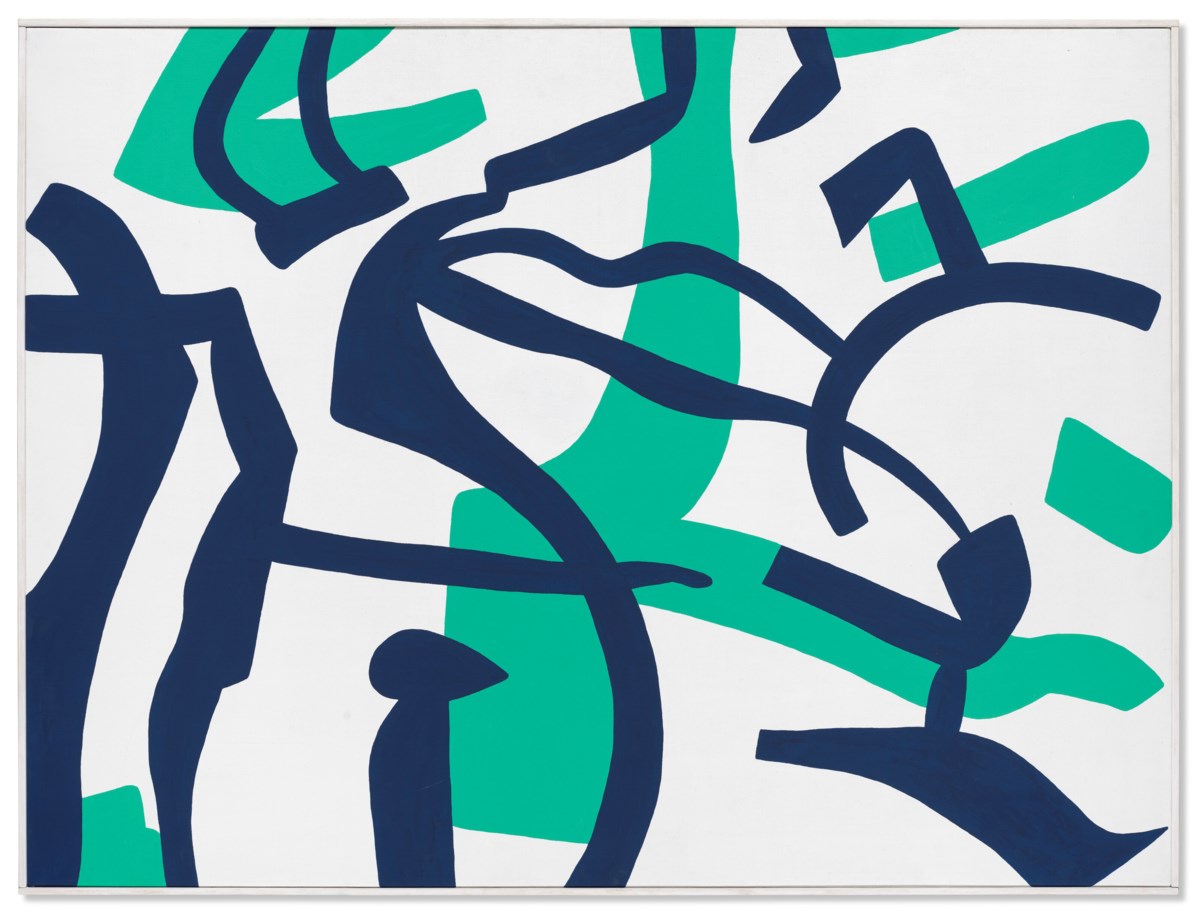
Carla Accardi
Cascate Viaggianti, 2011
The painting existed in a kind of suspension, hovering between object and phenomenon. Segni Neri from 1967, rendered in varnish on Sicofoil, is one of the most eloquent examples of this period: the black signs seem to float, untethered from any conventional pictorial ground, as if Accardi had found a way to paint with space itself. These works were shown to considerable attention in Italy and abroad, and they cemented her reputation as an artist willing to follow her ideas wherever they led, regardless of commercial expectation. The works available through The Collection span an extraordinary range of this long and restless career.
Verderosso from 1977, executed in casein tempera on canvas, sits at a fascinating juncture between her sign based vocabulary and a growing confidence with saturated color. Turchese arancio from 1961, casein tempera on lined paper laid on canvas, shows her early willingness to incorporate found or unconventional supports into the work. Parentesi n. 8 (Verde smeraldo) from 1982 brings a jewel like concentration of emerald green that demonstrates how her palette only grew more daring as she aged.
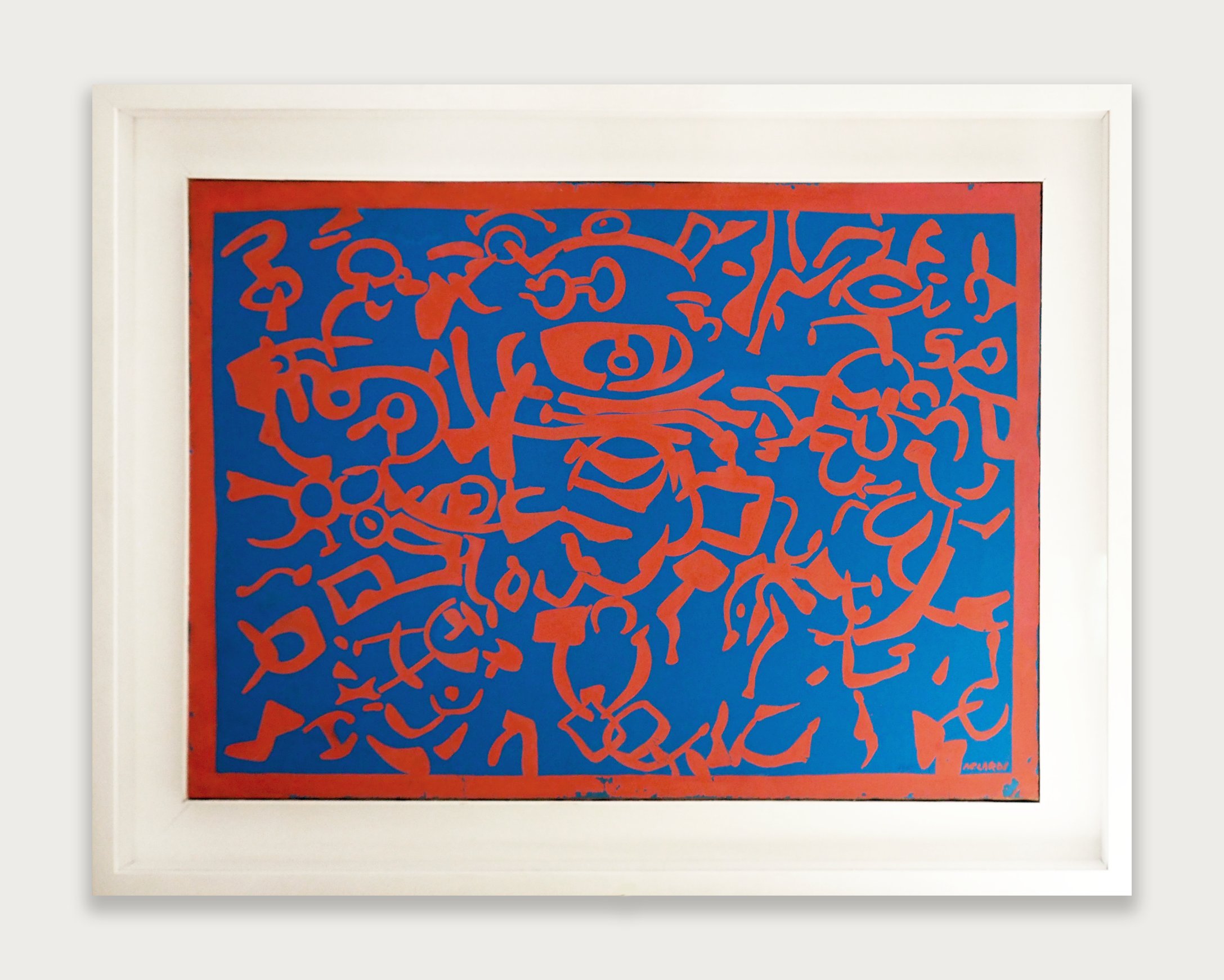
Carla Accardi
Turchese arancio, 1961
And Cascate Viaggianti from 2011, executed in vinylic on canvas when the artist was eighty seven years old, is a remarkable testament to a practice that never settled into formula or comfort. For collectors, Accardi represents a genuinely compelling proposition. Her place in art history is secure and increasingly acknowledged in the international market, where her works have appeared at major auction houses including Christie's and Sotheby's with results that reflect growing institutional and private demand. The Sicofoil works from the 1960s are particularly sought after for their rarity and conceptual ambition, though her casein tempera paintings on canvas and paper offer equally serious engagement at a range of price points.
Collectors who have built holdings around postwar European abstraction, particularly those drawn to artists such as Piero Dorazio, Tancredi, or the broader Arte Informale and Concrete Art movements, will find in Accardi a figure whose work both converses with and challenges those contexts. Her relationship to international peers including Agnes Martin, whose commitment to visual repetition and spiritual precision shares certain affinities with Accardi's sign based systems, also makes her increasingly legible to collectors with North American as well as European focuses. What makes Accardi's legacy feel so alive today is precisely her refusal to accept the terms she was handed. She was a woman in a postwar art world that systematically undervalued women's contributions; she responded by making work so rigorous and so original that its exclusion from canonical histories became increasingly embarrassing to defend.
She was an Italian artist at a moment when the international art world's gaze was fixed almost entirely on New York; she responded by developing a visual language that was neither derivative of American abstraction nor nostalgic for European tradition, but genuinely her own. The signs she invented, those looping, crackling, joyful marks that fill her canvases from the 1950s through to the 2010s, constitute one of the most personal and persistent pictorial vocabularies in the art of her century. To collect Accardi is to participate in a story that is still being told, and to recognize, with something close to gratitude, that the full measure of her achievement is only now coming into focus.
Explore books about Carla Accardi
Carla Accardi
Germano Celant
Carla Accardi: Catalogo Ragionato
Maurizio Fagiolo dell'Arco
Carla Accardi: 1950-2000
Various
Carla Accardi
Ida Panicelli
Carla Accardi: The Transparency Series
Various