Carl Auböck
Carl Auböck: Beauty Held in the Hand
Artist Spotlight · The Collection Editorial
There is a moment, familiar to anyone who has picked up a Carl Auböck object, when the weight of it surprises you. A letter opener, a bell, a small brass vase: each one settles into the palm with a quiet authority that feels almost organic, as though it had always belonged there. This sensation, at once sensory and intellectual, is precisely what has drawn a new generation of collectors to Auböck's work with renewed intensity in recent years. As mid century design continues to command serious attention at auction houses from Vienna to New York, the objects produced in the Auböck family workshop on Bernardgasse in Vienna's seventh district have come to occupy a singular position: they are among the rare things that satisfy both the rigorous collector of applied design and the devoted admirer of fine art.
Carl Auböck
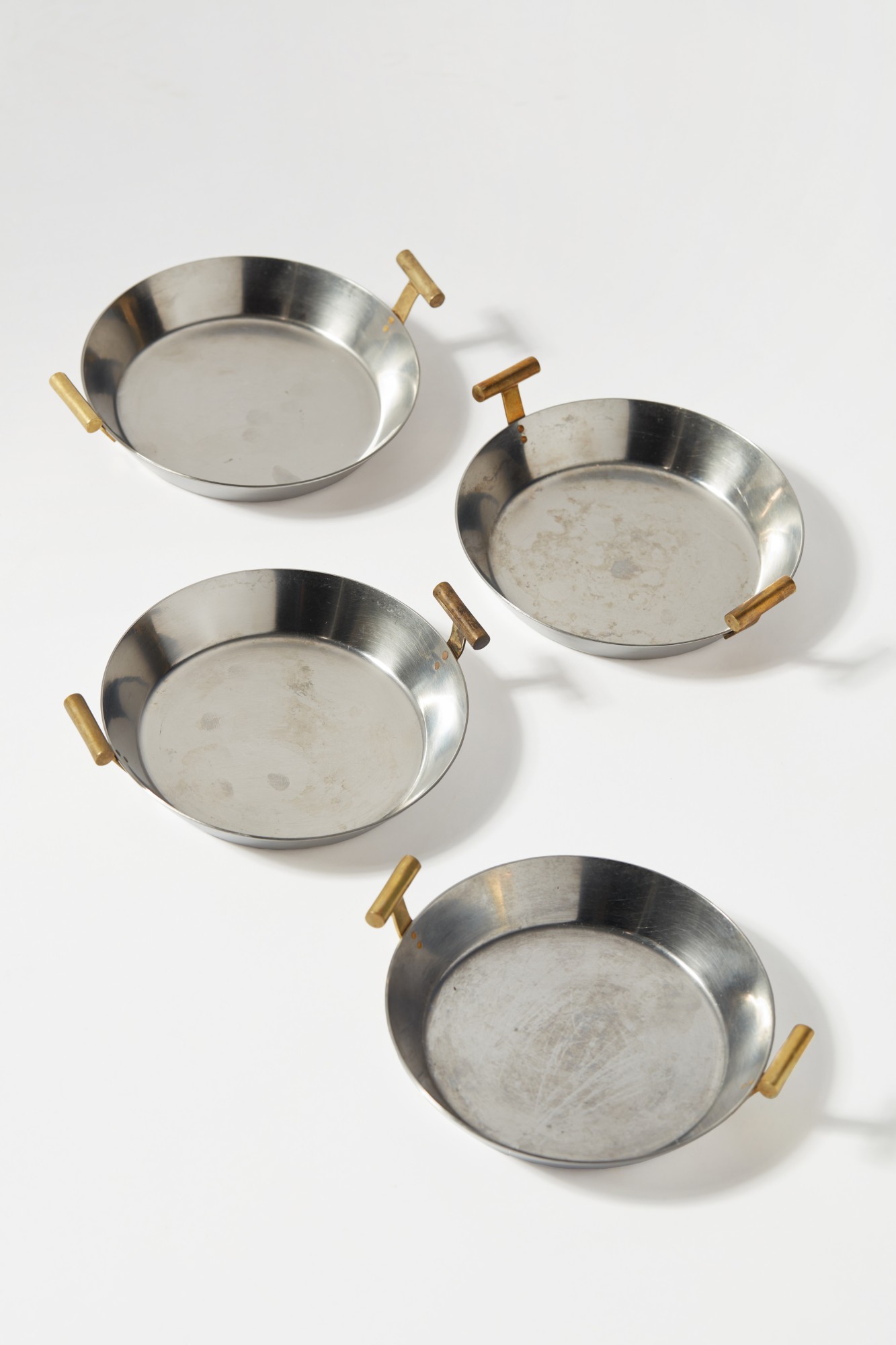
Four Dishes
Carl Auböck II was born in Vienna in 1900, at the threshold of a century that would remake the visual world from the ground up. He came of age in a city already electric with creative ambition, a place where Gustav Klimt and Egon Schiele had recently torn apart conventional notions of beauty, and where the Wiener Werkstätte had proposed a radical new relationship between art and everyday life. This inheritance was not incidental to Auböck's development. The Werkstätte's founding conviction, that a well made spoon could be as meaningful as a painting, would become the animating idea behind everything he went on to create.
His father, Carl Auböck I, had established the family workshop in 1900, and it was into this environment of skilled craft and disciplined making that the younger Carl was born and formed. His formal education extended beyond Vienna. Auböck studied at the Bauhaus in Weimar and Dessau during the movement's most fertile years, absorbing the school's insistence on the unity of form and function, and on the moral seriousness of good design. He also studied in Paris and spent time in the United States, experiences that gave his sensibility a cosmopolitan breadth unusual for a craftsman working in the applied arts.
Carl Auböck
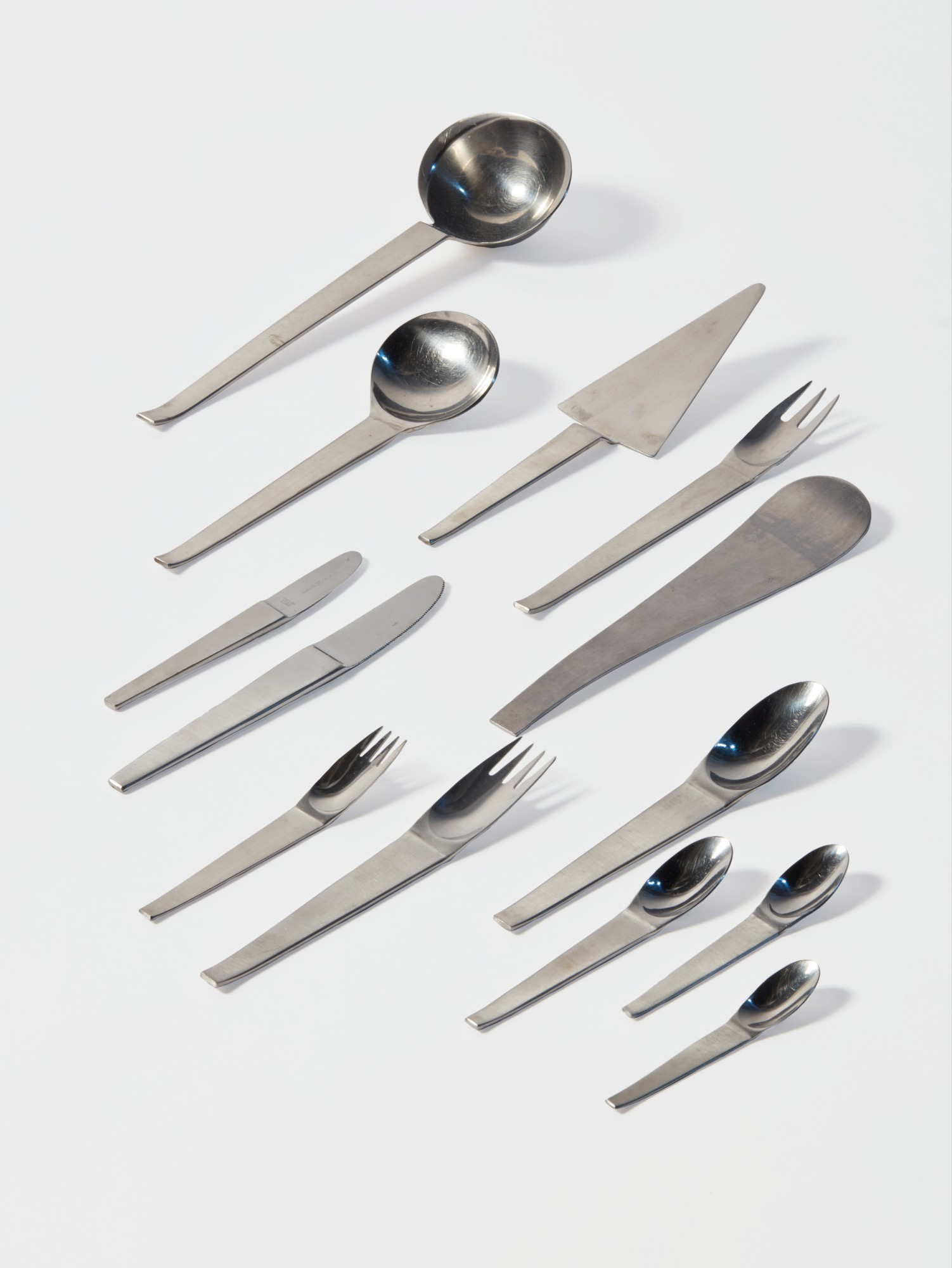
Flatware Service
When he returned to Vienna and took over the family workshop, he carried with him a synthesis that was entirely his own: the Bauhaus faith in the integrity of materials, the Viennese craft tradition's warmth and tactile pleasure, and a modernist's eye for proportion and restraint. The result was a body of work that felt, and still feels, completely without period. The Auböck workshop produced objects in brass, leather, wood, stainless steel, and wicker, often combining several materials within a single piece with a confidence that never tipped into showiness. A flatware service in stainless steel carried the cool logic of industrial design while remaining unmistakably handmade in its details.
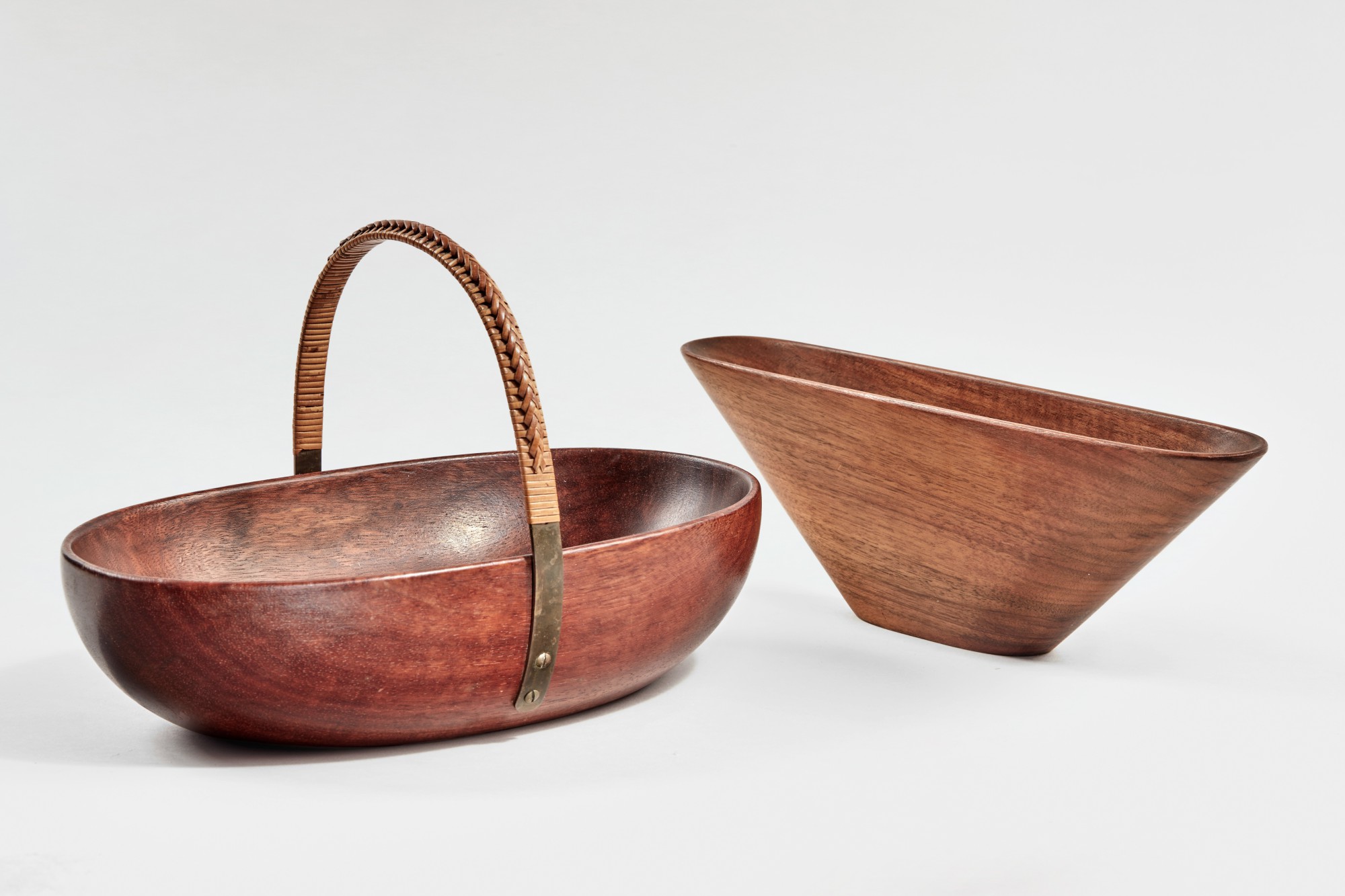
A basket and bowl in natural materials demonstrated an understanding of volume and negative space that belonged more to sculpture than to craft. His letter openers, perhaps the most widely recognized of his objects, are extraordinary precisely because they ask so little of the eye and so much of the hand. Held, they reveal themselves: the taper of the blade, the swell of the handle, the exact distribution of weight that makes the gesture of opening a letter feel considered and complete. These are not decorative objects that happen to function.
Carl Auböck
Basket and Bowl
They are functional objects that happen to be beautiful, and the distinction matters enormously. Among the most compelling works associated with the Auböck workshop are pieces like the Umbrella Stand in stainless steel and cast iron, an object that manages to be both architecturally imposing and domestically warm, and the Six Sets of Dessert Cutlery, whose combination of stainless steel with leather and wicker exemplifies the workshop's gift for material dialogue. The Teapot, the Bell, and the Vase each reward prolonged looking, revealing in their proportions a mind that understood the history of these forms and chose, deliberately, to simplify them to their most essential geometry. The Four Dishes in stainless steel and brass demonstrate that even the flattest, most utilitarian of objects could carry genuine formal intelligence.
In every case, the hand of the maker is present without being intrusive, which is among the hardest things to achieve in designed objects. For collectors approaching Auböck's work today, the market presents both richness and nuance. Objects from the Bernardgasse workshop appear regularly at auction houses including Sotheby's, Christie's, and the major Viennese sale rooms, as well as through specialist dealers in mid century design. A critical distinction for serious collectors lies between pieces made during Carl Auböck II's lifetime, from the early decades of the twentieth century through 1957, and those produced after his death by his son Carl Auböck III, who continued the workshop with remarkable fidelity to its founding principles.
Carl Auböck
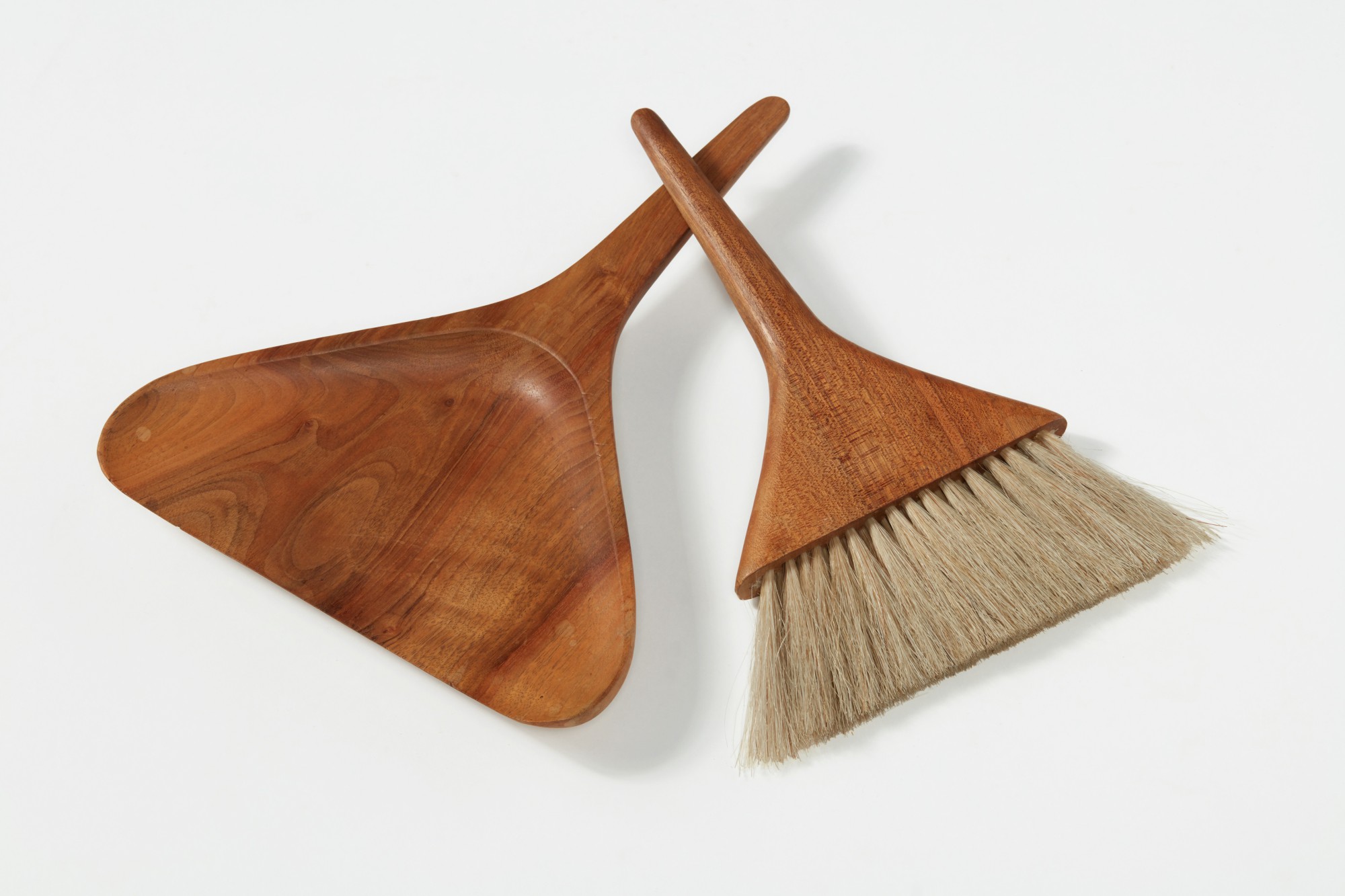
Brush and Dustpan
Both generations are genuinely collectible and the workshop remains in operation, which means that condition, provenance, and the particulars of dating reward careful attention. Early pieces tend to carry slightly more patina and variation, marks of individual hand production that become more pronounced with time and handling. Collectors drawn to this work often find that it integrates naturally with other mid century European applied art, and that it holds its own in dialogue with pieces by fellow travelers in the Bauhaus tradition. Auböck belongs to a distinguished lineage of designers who insisted that the boundary between art and craft was, at best, administrative.
His closest spiritual neighbors include Josef Hoffmann, whose Wiener Werkstätte laid so much of the groundwork for what Auböck would achieve, and Wilhelm Wagenfeld, the German designer whose lamp from the Bauhaus metalwork workshop occupies a similarly iconic place in the canon of functional beauty. Further afield, there are affinities with the work of Tapio Wirkkala in Finland and Hans Wegner in Denmark, designers who shared Auböck's conviction that materials speak, and that the job of the designer is to listen. What distinguishes Auböck within this company is perhaps his particular register of intimacy. His objects are scaled to the hand, intended for daily use, and they accumulate meaning through that use in a way that feels genuinely different from the monumental ambitions of much modernist design.
Carl Auböck II died in 1957, leaving behind a workshop, a philosophy, and a body of work that has only grown in stature in the decades since. In a cultural moment when the distinction between art and design is the subject of serious institutional debate, when design fairs sit alongside contemporary art fairs in the calendars of the world's most sophisticated collectors, Auböck's work arrives precisely where it belongs: at the center of the conversation. His objects ask nothing more than that you pick them up, hold them, and pay attention. For those who do, they offer something that the best art has always offered, which is the feeling that someone, somewhere, made this thing with complete seriousness and complete love.