Camille Pissarro
Pissarro: The Father Who Taught Everyone
Artist Spotlight · The Collection Editorial
“It is only by drawing often, drawing everything, drawing incessantly, that one fine day you discover to your surprise that you have rendered something in its true character.”
Camille Pissarro, letter to his son Lucien
Picture Paris in the spring of 1874. A group of painters, tired of rejection and determined to show the world on their own terms, hang their canvases in the studio of the photographer Nadar on the Boulevard des Capucines. Among them is a bearded, gentle eyed man whose work crackles with the energy of wind moving through apple trees and the soft weight of peasant life observed with total tenderness. Camille Pissarro was there at the beginning of something that would change the history of art forever, and he would remain there, steadfast and generous, until the very end.
Camille Pissarro
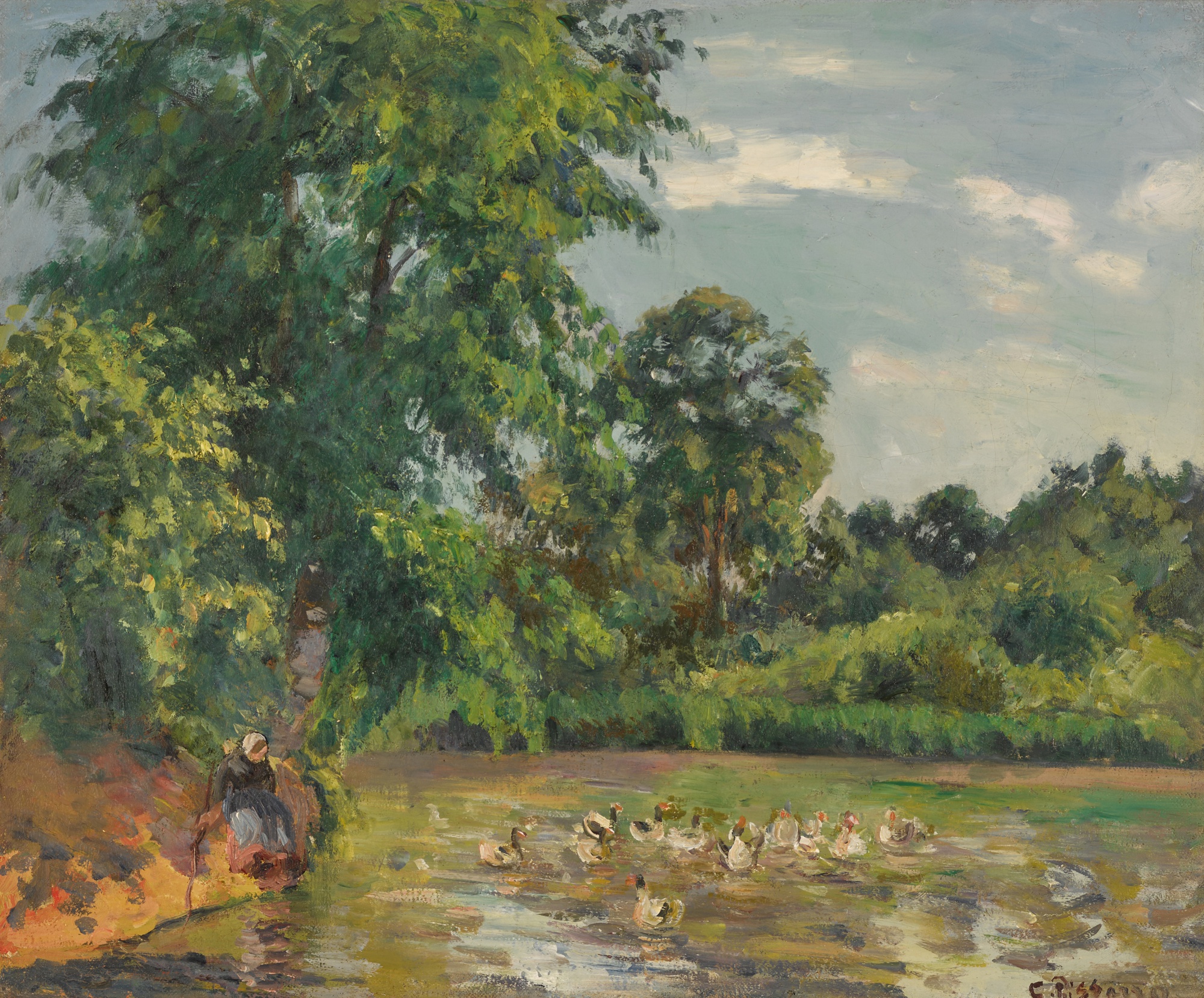
Canards sur l'étang de Montfoucault, 1874
Pissarro's origin story is unlike that of almost any other artist associated with the French avant garde. He was born in 1830 on the island of St. Thomas in the Danish West Indies, to a Sephardic Jewish father of French origin and a Creole mother. The Caribbean light of his childhood, vivid and particular, seems to have permanently calibrated his eye toward warmth and luminosity.
At twelve he was sent to school near Paris, where he encountered French painting for the first time, and by his early twenties he had returned to St. Thomas only to leave again, this time for good, to pursue a life entirely devoted to art. He studied briefly at the École des Beaux Arts and the Académie Suisse in Paris, where he encountered Claude Monet and Paul Cézanne, relationships that would prove foundational not just for his own work but for the entire trajectory of modern painting. His artistic development was never static, and that restlessness is one of the things that makes him so compelling to study.
Camille Pissarro
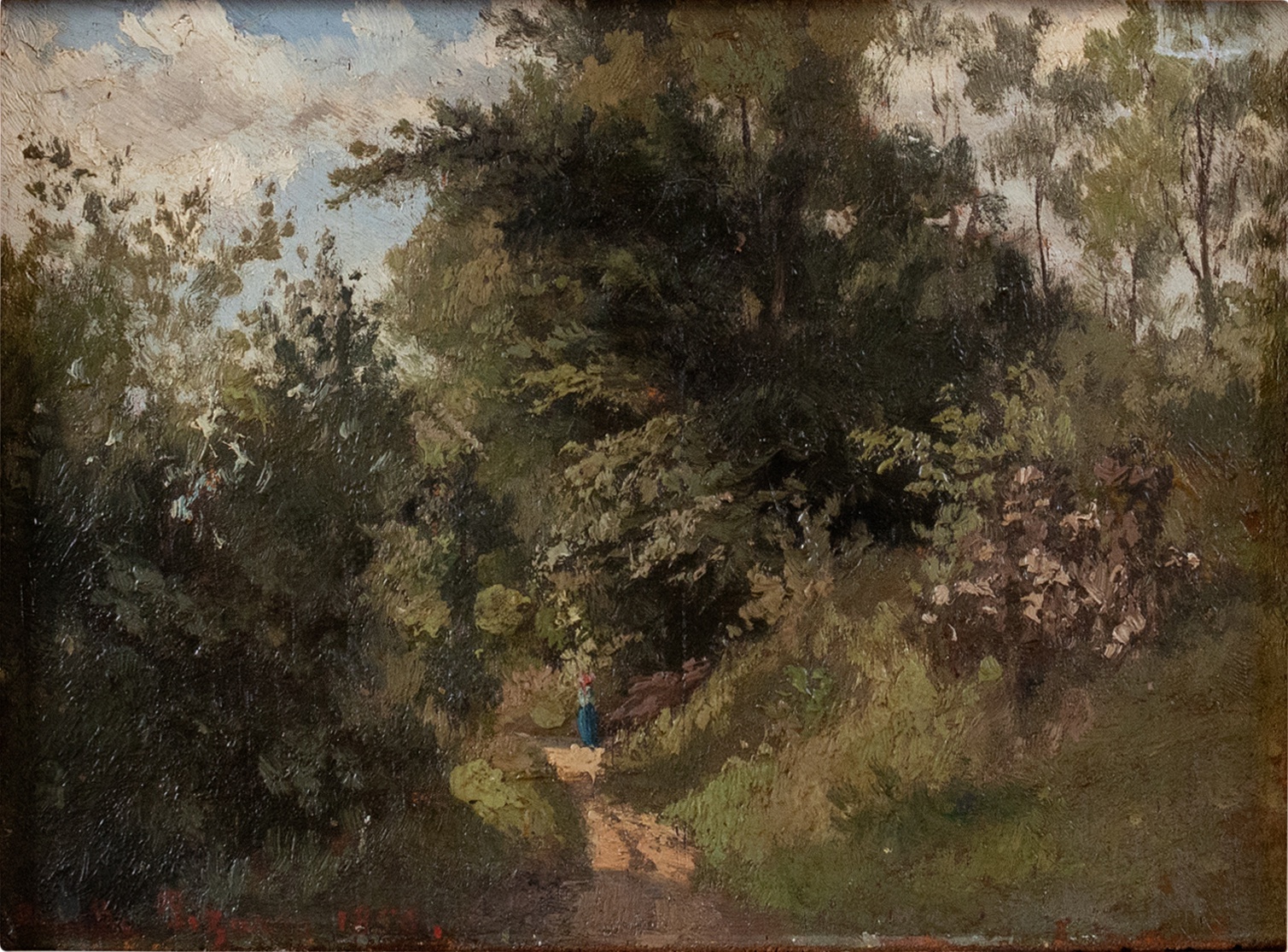
Sentier dans un sous-bois (Path through the Undergrowth)
Through the 1860s and 1870s he was already painting with a directness and sincerity that set him apart, drawn to rural landscapes around Pontoise and later Louveciennes. The Franco Prussian War of 1870 forced him to flee to London, where many of his canvases left behind in Louveciennes were destroyed by occupying Prussian soldiers. A devastating loss, yet the London period introduced him to the work of John Constable and J.M.
“Blessed are they who see beautiful things in humble places where other people see nothing.”
Camille Pissarro
W. Turner, deepening his understanding of atmospheric painting and the radical possibilities of natural light. By the time he returned to France and settled in Pontoise, his practice had crystallized into something genuinely revolutionary: a commitment to working directly from nature, in all weathers and all seasons, with an honesty that felt almost moral in its insistence. That moral seriousness is present everywhere in his greatest works.
Camille Pissarro
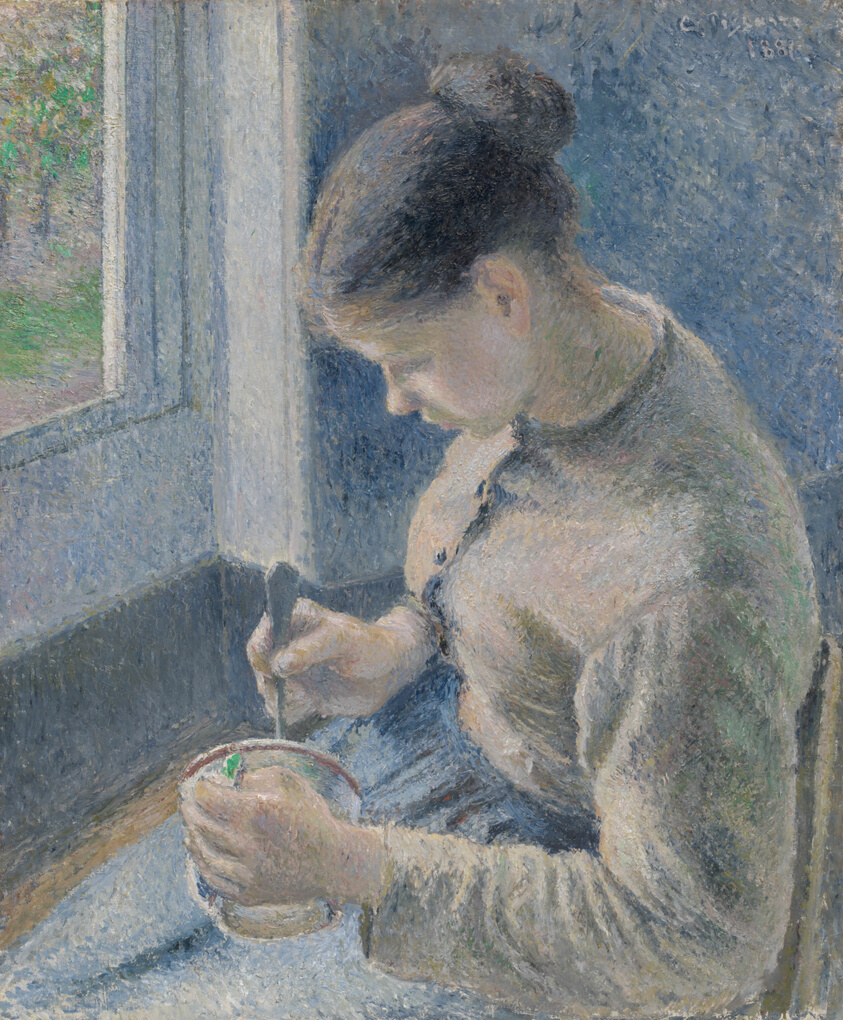
Young Peasant Having Her Coffee, 1881
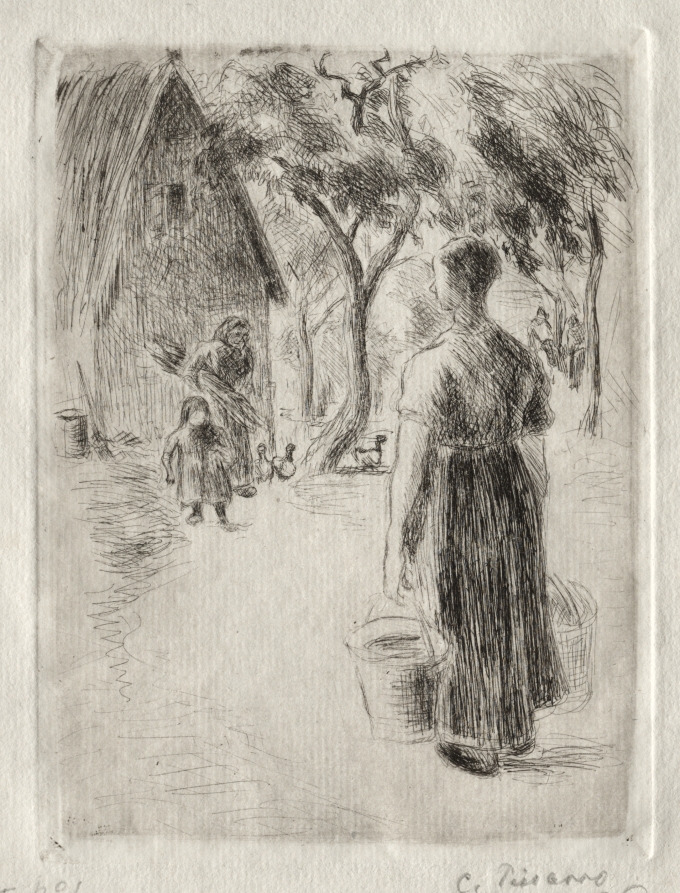
His 1874 painting "Canards sur l'étang de Montfoucault" is a perfect example of Pissarro at his most quietly astonishing, the water's surface alive with reflected light, the ducks rendered with an affection that never tips into sentimentality. "Young Peasant Having Her Coffee" from 1881 is something rarer still: a figure painting of extraordinary dignity, the young woman absorbed in her own moment, painted with the same respectful attention Pissarro brought to a field of grain or a bend in a country road. His drawings and pastels, including studies like "Etude d'oies" and "Deux paysannes près de l'atre," reveal an artist whose observational gifts were just as powerful without color, a draughtsman of real authority. And then there are his urban paintings from the 1890s, the sweeping views of Parisian boulevards captured from hotel windows when failing eyesight made outdoor work difficult, works that pulse with modern life and anticipate the city paintings of the twentieth century.
“Do not be afraid in nature: one must be bold, at the risk of having made errors.”
Camille Pissarro, letter to his son Lucien
In the 1880s Pissarro underwent a significant and much discussed shift, embracing the Pointillist technique of Georges Seurat and Paul Signac and working in a Neo Impressionist mode for several years. Critics and friends were sometimes baffled; Monet was openly skeptical. But Pissarro's willingness to experiment, to subject himself to the rigor of an entirely new method in his fifties, speaks to something essential about his character. He eventually returned to a looser, more intuitive approach, but the Pointillist period left permanent traces in the precision of his attention to color relationships and the structure of light.
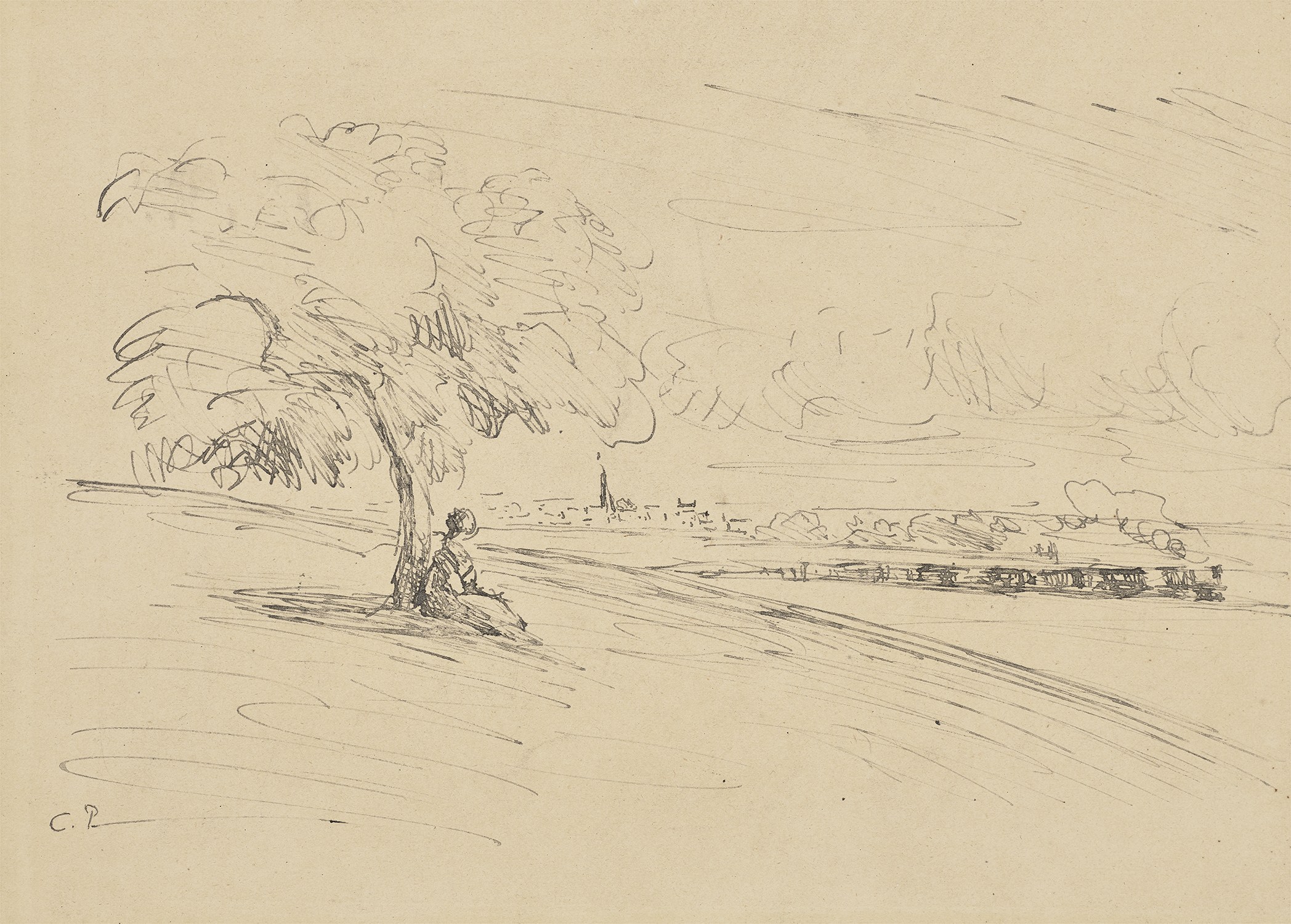
Camille Pissarro
Industrial Landscape with a Train
His practice was always a conversation with ideas, not just with nature. For collectors, Pissarro occupies a position of particular importance in the Impressionist market. His work appears regularly at the major auction houses, Christie's, Sotheby's, and Bonhams, and strong examples in oil on canvas command significant prices reflecting both his historical centrality and the enduring pleasure his paintings give. Works on paper and oil studies on panel offer collectors a more accessible point of entry into a practice of remarkable breadth.
Connoisseurs tend to look for works that demonstrate his mastery of atmospheric light, with well documented provenance and clear exhibition histories. The sheer range of his output, from tropical landscapes recalling his Caribbean origins to Norman orchards, urban boulevards, and intimate figure studies, means that assembling a meaningful collection around his work is genuinely possible across different mediums and periods. To understand Pissarro fully you need to understand the company he kept, and that company was extraordinary. He was a close friend and mentor to Paul Cézanne, who called him a humble and colossal painter and credited him with teaching him how to see.
He guided the young Paul Gauguin in the late 1870s and early 1880s, and his influence on Gauguin's early work is unmistakable. His friendships with Monet, Berthe Morisot, and Alfred Sisley placed him at the very center of Impressionism's social and intellectual world. Unlike some of his peers, Pissarro held strong anarchist political convictions and was deeply committed to questions of justice and equality, values that inflected his choice of subjects and his approach to the working people he so often painted with such care and respect. Pissarro died in Paris in November 1903, just months after his last great series of paintings of the Dieppe harbor and the Seine at Rouen.
He was seventy three and had never stopped working. His legacy is immense in ways that are still being fully reckoned with. He was the only artist to show in all eight of the historic Impressionist exhibitions, from the first in 1874 to the last in 1886, a fact that alone places him at the structural heart of the movement. But his importance goes beyond that institutional role.
He was the great connector, the artist whose generosity of spirit and clarity of vision helped define what modern painting could be and who it could be for. To spend time with his work today is to feel the warmth of that vision still radiating outward, patient and luminous and completely alive.
Explore books about Camille Pissarro
Camille Pissarro: His Life and Work
Ludovic Rodo Pissarro and Lionello Venturi
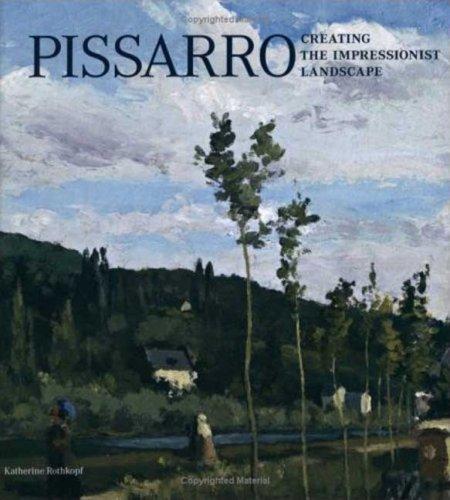
Pissarro
Christopher Lloyd
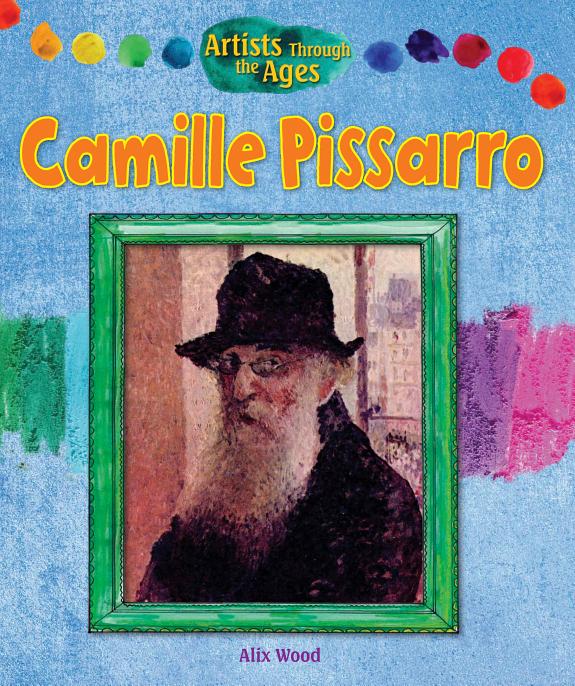
Camille Pissarro
Ralph E. Shikes and Paula Harper
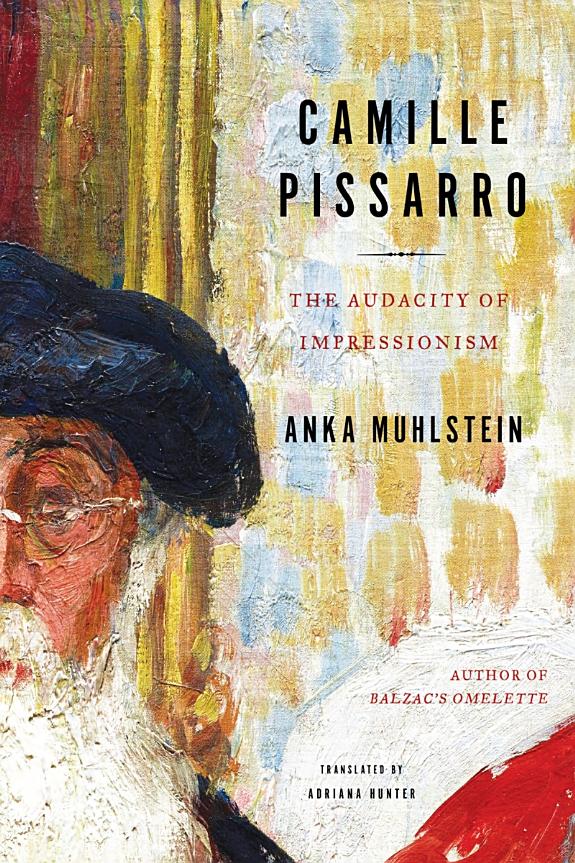
The Letters of Camille Pissarro
Camille Pissarro, edited by Claire Durand-Ruel Snollaerts and Lucien Pissarro
Pissarro: Creating the Impressionist Landscape
Paul Hayes Tucker
Camille Pissarro: Impressionism, Anarchism, and the Public
Esther Gabara
Pissarro: Modernism and the Anarchist Imagination
Frederic Busi