Bryan Hunt
Bryan Hunt, Sculptor of Living Forces
Artist Spotlight · The Collection Editorial
There are moments in the history of American sculpture when a single body of work reframes what bronze can do, what a surface can hold, what stillness can suggest about motion. Bryan Hunt arrived at one of those moments. When he emerged onto the New York art scene in the mid 1970s, the dominant conversation in sculpture was about industrial materials, minimalist geometry, and conceptual distance. Hunt moved in a different direction entirely, reaching toward the lyrical, the organic, and the elemental.
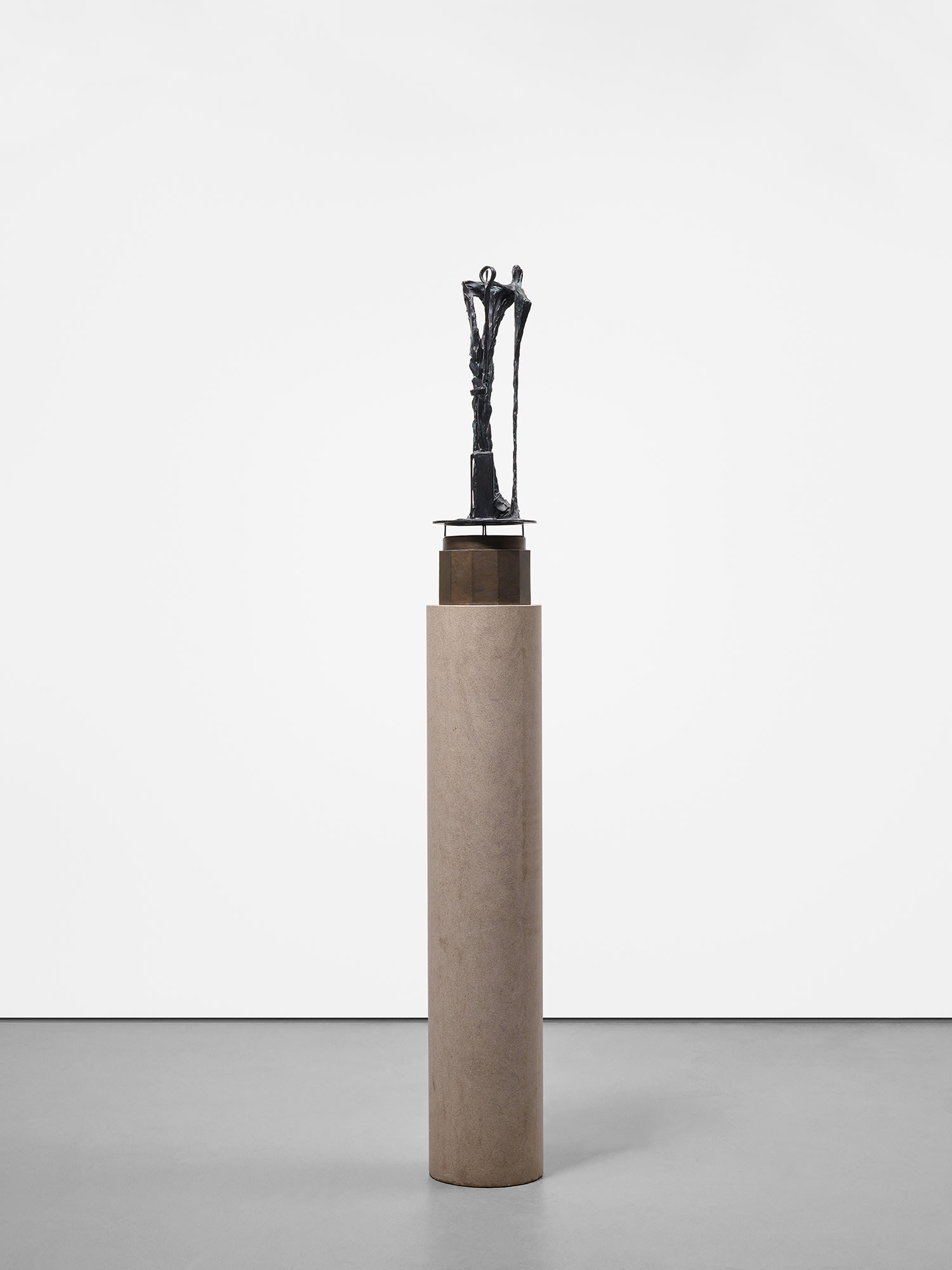
Bryan Hunt
incised with the artist's signature and number 'Bryan Hunt 3/6' on the base, 1985
Decades later, with works held in major museum collections and a career that has only deepened with time, his sculpture feels not like a product of its era but like something genuinely timeless. Hunt was born in 1947 and grew up in Terre Haute, Indiana, a landscape that would quietly shape his sensibility in ways that became visible only later. He studied at the Otis Art Institute in Los Angeles before relocating to New York, where he attended the Independent Study Program at the Whitney Museum of American Art in the early 1970s. That program, rigorous and intellectually charged, connected him to a generation of artists wrestling seriously with form and meaning.
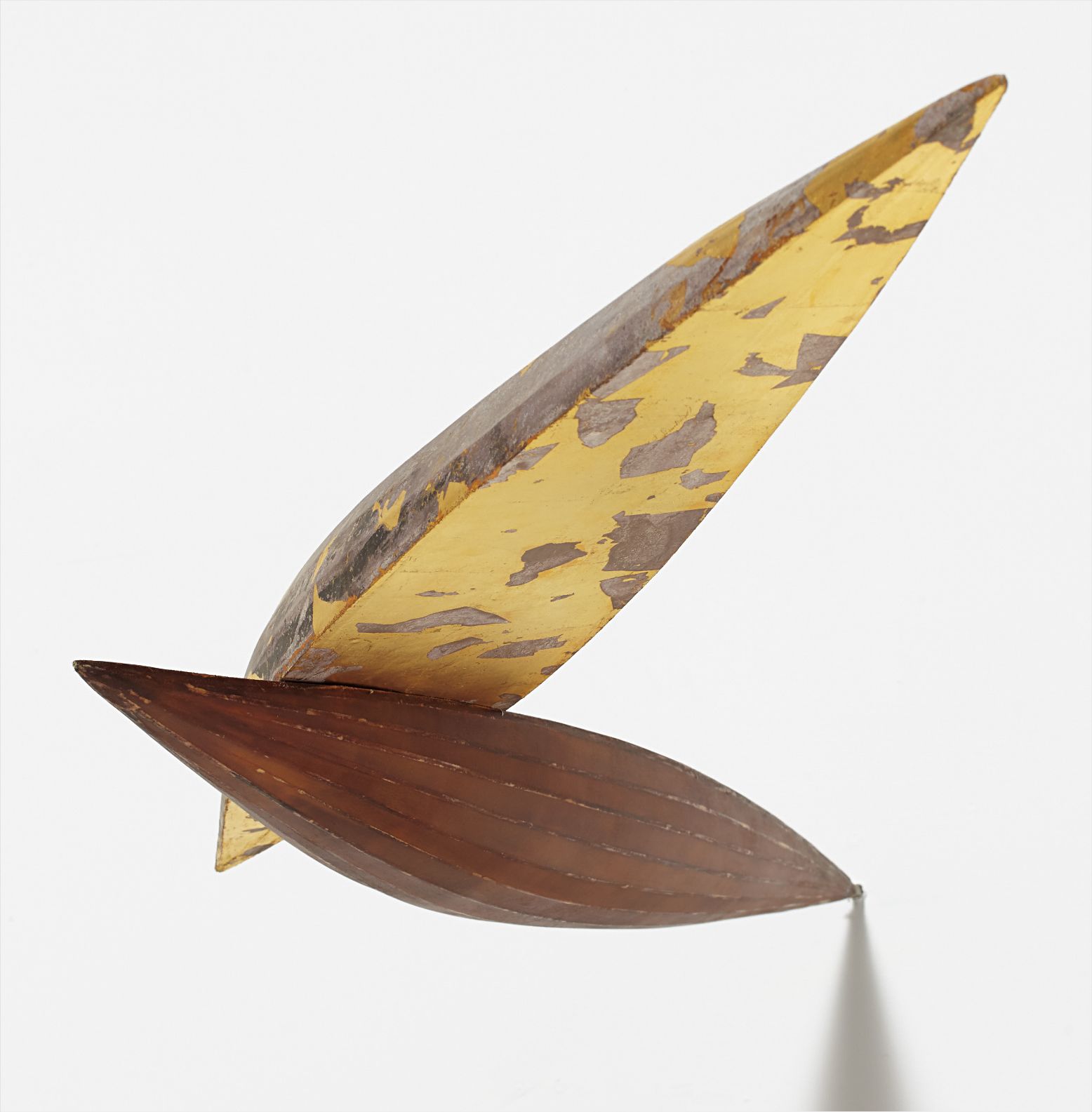
New York in that period was electrically alive with debate, and Hunt absorbed it all while charting a course that was distinctly his own. His early breakthrough came through works inspired by airships, those great buoyant forms that hover between the mechanical and the biological. The Airship series announced a sensibility that would define his entire practice: a fascination with forms that defy gravity, that seem to float or surge or pour. From airships he moved toward waterfalls and lakes, translating the movement of water into bronze with a fluency that seemed almost impossible given the weight of the material.
Bryan Hunt
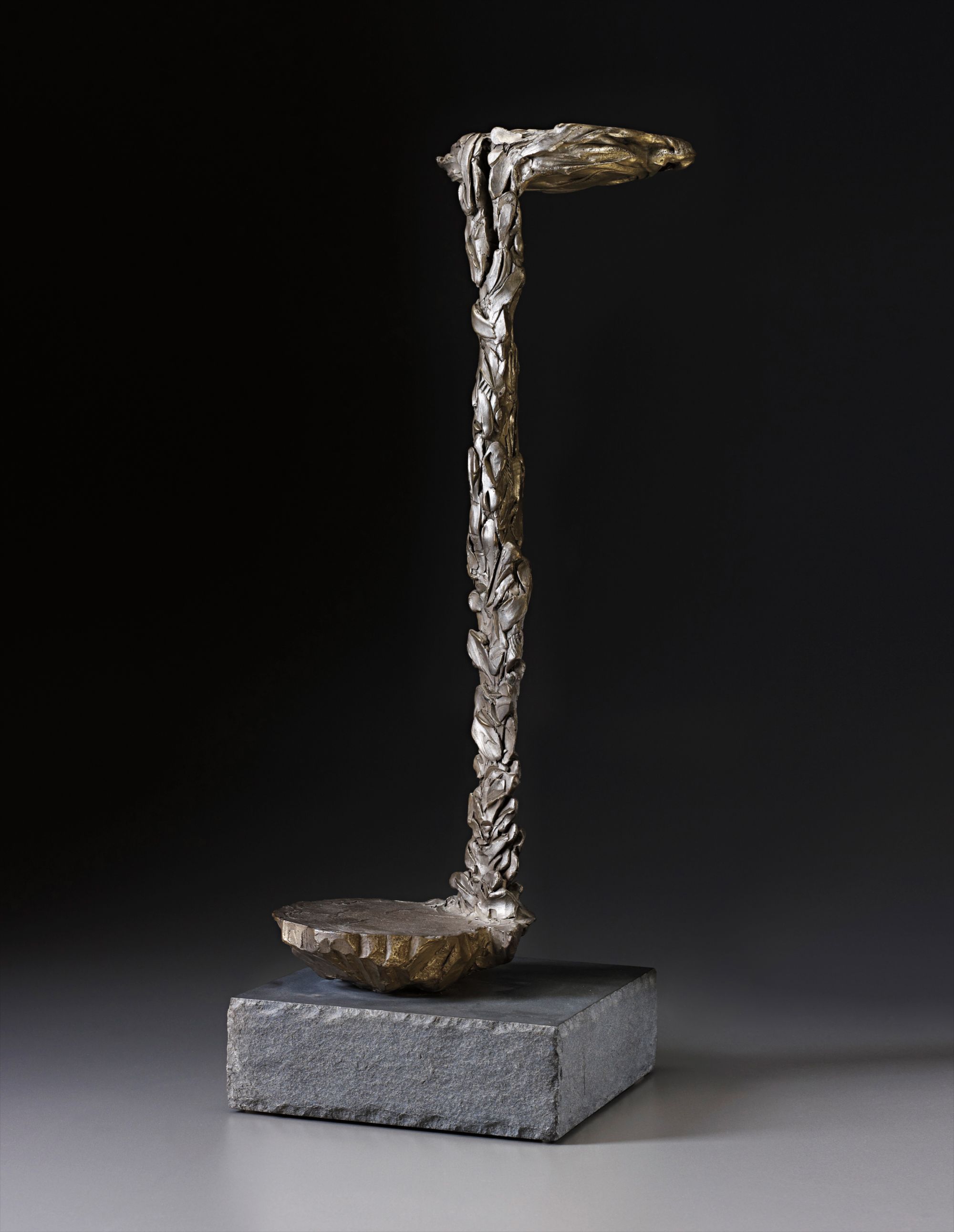
Study for Double Lake Falls
Works like Waterfall and Study for Double Lake Falls became central to his reputation, capturing the cascading energy of natural phenomena in surfaces that are richly worked and deeply textured. The paradox at the heart of these pieces, that something so fluid could be rendered in something so permanent, is precisely what gives them their power. The bronze works for which Hunt is best celebrated reward close looking. His casting process preserves every gesture of the working surface, every push and pull of the sculptor's hand, so that the finished object carries an almost biographical record of its own making.
Cairn IV, with its stacked organic mass on a granite base, speaks to geological time and human accumulation simultaneously. Hoodoo 1, with its patinated bronze surface, evokes those strange wind eroded rock formations of the American Southwest, connecting the intimate scale of a gallery object to the vast patience of landscape. The 1985 bronze on cement plinth, signed and numbered as part of a limited edition, exemplifies his command of the edition format: each cast retains the vitality of the original while standing as a fully resolved work in its own right. Hunt also worked extensively on paper, and his monumental drawings deserve recognition alongside his sculpture.
Bryan Hunt
Red River (Airship)
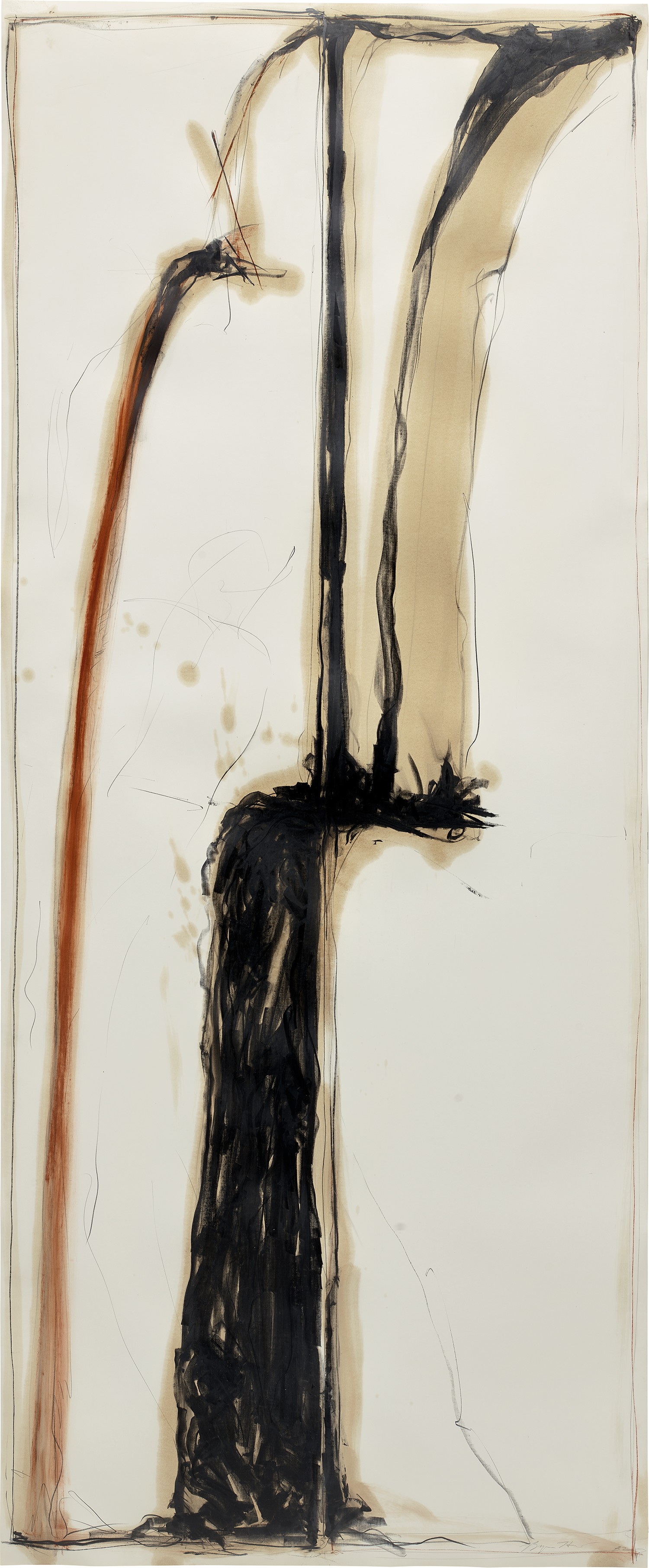
Plutarch's Lives, from the Door Series, executed in graphite, conté crayon, and linseed oil on wove paper, is a work of considerable ambition, bringing the same sensitivity to mark making that animates his bronze surfaces into the two dimensional realm. These drawings are not studies in the preparatory sense but fully independent works, and they reveal a mind that thinks across media without hierarchy. For collectors interested in the full scope of an artist's intelligence, a Hunt drawing offers an entry point that is distinct from, and yet deeply continuous with, his sculpture. The market for Hunt's work reflects his standing as a serious figure in postwar American art.
His work has appeared at major auction houses and has been acquired by institutions including the Whitney Museum of American Art, the Hirshhorn Museum and Sculpture Garden, and the Metropolitan Museum of Art. Collectors are drawn to the combination of material presence and poetic restraint that defines his best pieces. The bronzes, particularly those from the waterfall and lake series made during the late 1970s through the 1990s, represent the core of his achievement and remain the most sought after works on the secondary market. Limited edition casts in good condition, with clear provenance and original plinth elements, command particular attention.
Bryan Hunt
Plutarch's Lives, from The Door Series
His works on paper, still somewhat underappreciated relative to the sculpture, offer an intelligent collecting opportunity. To understand Hunt's place in art history is to understand a particular current in late twentieth century American sculpture that ran alongside, and sometimes against, the dominant movements of the time. Where artists like Carl Andre and Donald Judd reduced sculpture to its structural logic, Hunt was in dialogue with a different lineage: the biomorphic traditions of Jean Arp and Constantin Brancusi, the romantic naturalism of Augustus Saint Gaudens recast through a thoroughly contemporary sensibility, and the gestural energy of Abstract Expressionism translated into three dimensions. His peers in this more lyrical mode included artists like Martin Puryear and Joel Shapiro, all of whom were finding ways to make sculpture that was abstract without being cold, material without being merely formal.
What Hunt's work offers today is something that feels increasingly rare: sculpture that is genuinely beautiful in the oldest sense of that word, that earns its elegance through thought and craft rather than through decoration. His forms carry the memory of the natural world without illustrating it, evoking rivers and air and stone through the intelligence of their surfaces rather than through literal representation. For a generation of collectors and viewers now returning to questions of the organic, the handmade, and the phenomenological in art, Hunt's work arrives not as nostalgia but as resource. His career is a demonstration that the ambition to make something lasting, something that holds both physical weight and metaphysical resonance, remains one of the most serious things a sculptor can pursue.