Bruno Romeda
Bruno Romeda: Bronze Elevated to Pure Poetry
Artist Spotlight · The Collection Editorial
There is a quiet revolution happening in the world of decorative arts and sculptural furniture, and Bruno Romeda sits at its center with the calm authority of an artist who has spent decades perfecting a singular vision. His work has drawn increasing attention from collectors who move fluidly between the worlds of fine art and haute design, those discerning individuals who refuse to accept that a table or a lantern cannot carry the same metaphysical weight as a painting or a cast sculpture. In recent years, the market for artist designed furniture and functional objects of his caliber has surged, and Romeda's patinated bronze pieces have become quiet trophies among collectors who prize depth and material intelligence above fleeting trend. Romeda was born and trained in Argentina before establishing himself firmly within the French decorative arts tradition, a cultural crossing that would prove formative to everything he would later create.
Bruno Romeda
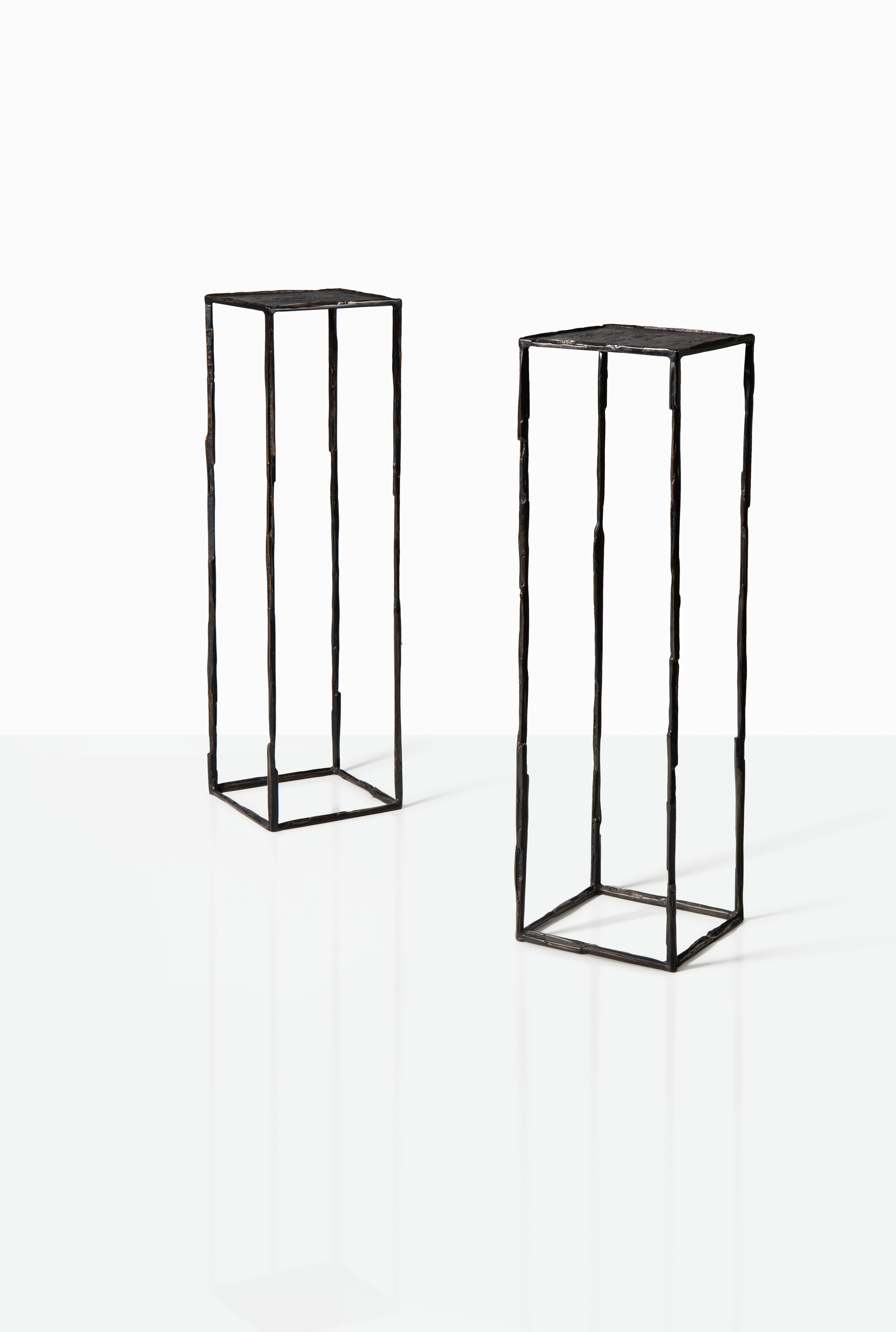
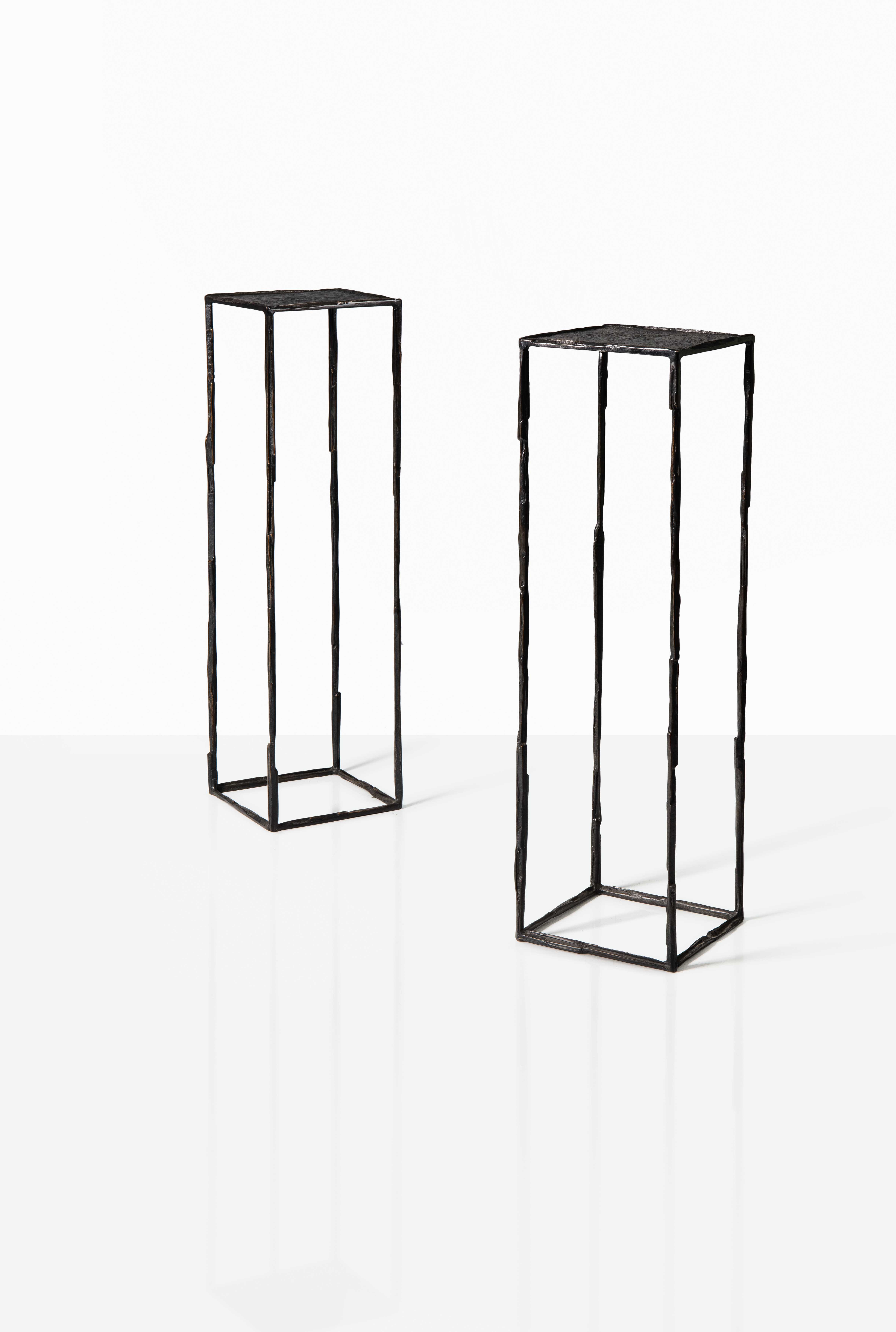
Paire de sellettes BRM07
The sensibility of Latin American modernism, with its bold formal geometry and its appetite for materials used with expressive confidence, never left him. When he arrived in France and immersed himself in the rigorous craft traditions of Parisian ateliers, he brought with him a maker's directness and a sculptor's eye that set him apart from decorators who approached furniture as a problem of comfort or style. For Romeda, an object made to be lived with was still, first and always, a sculptural act. His artistic development unfolded across several decades of focused, almost meditative production.
Working primarily in bronze, he developed a mastery of patination that transformed the surface of each piece into something approaching landscape, each finish unique and impossible to exactly replicate. Bronze, in Romeda's hands, loses its associations with academic statuary or monumental public art and instead becomes intimate, warm, and alive. He understood early on that the patina was not a finish applied at the end of the process but a layer of meaning woven into the object from the beginning, a record of heat and chemical reaction that gave each piece its own biography. The works available through The Collection offer an ideal introduction to the full range of Romeda's vocabulary.
Bruno Romeda
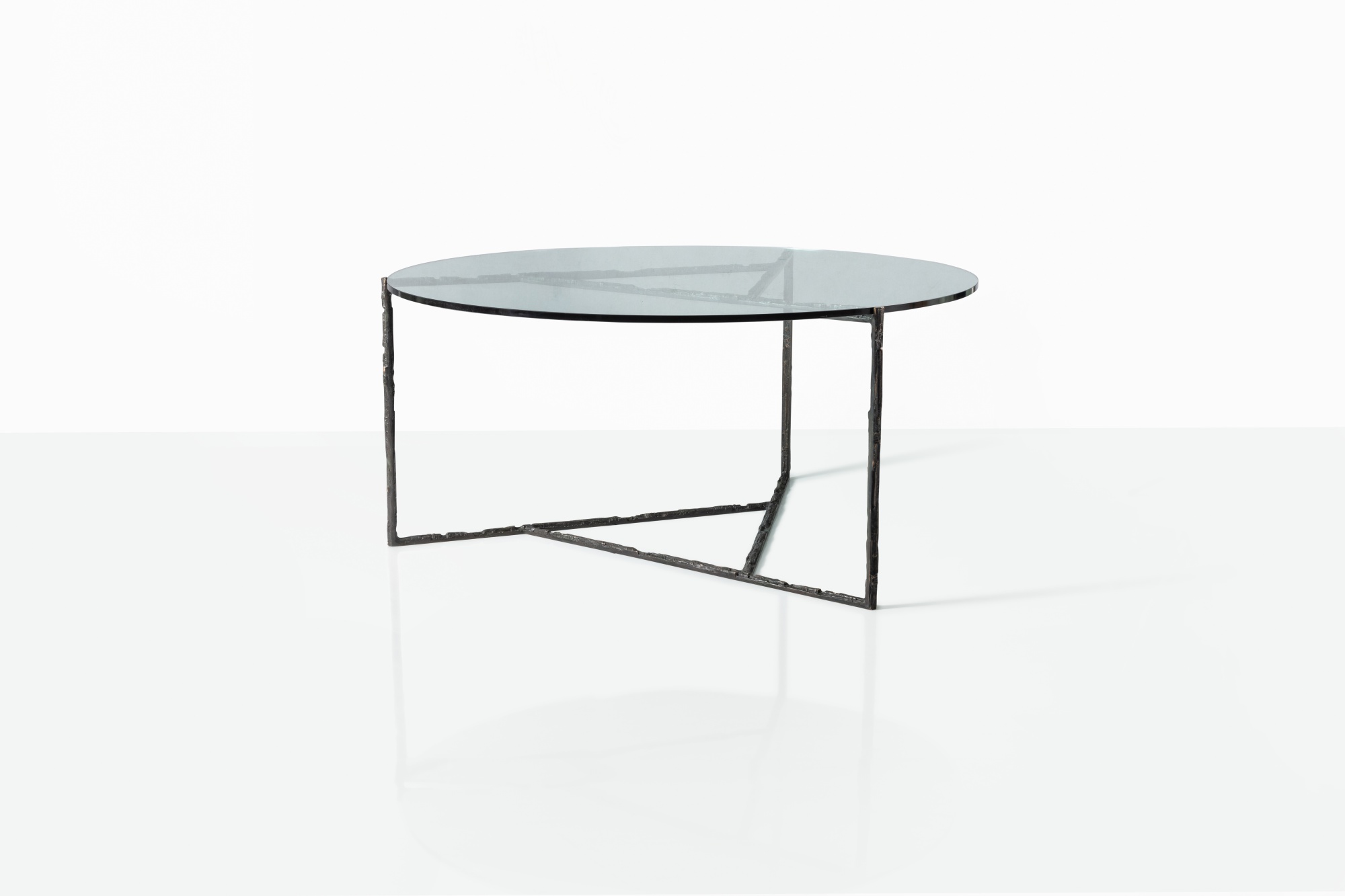
Table BRM20
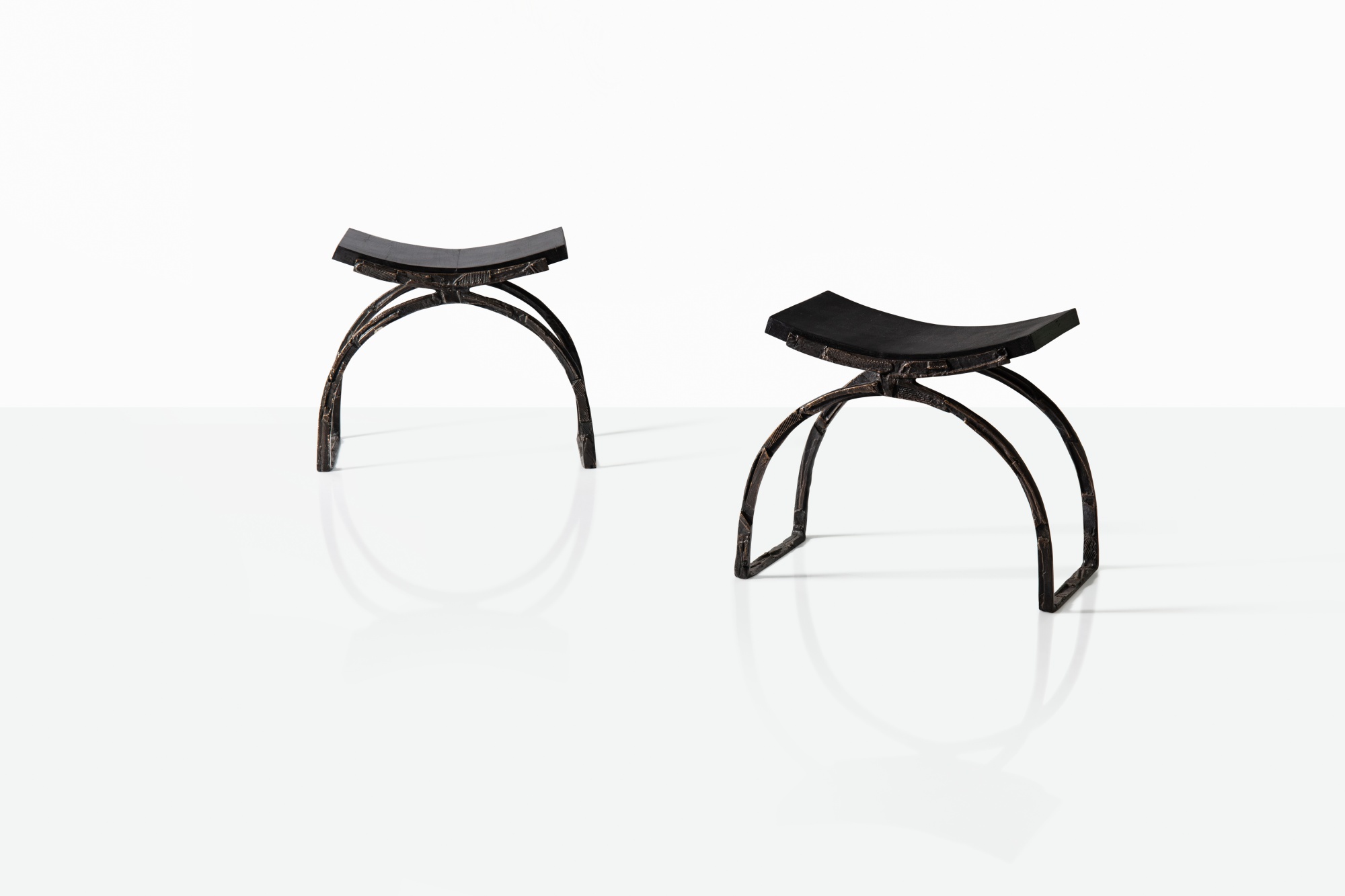
The pairs of stools catalogued as BRM02, BRM35, and BRM36 demonstrate his extraordinary ability to work within a single form across multiple material conversations. BRM02 pairs patinated bronze with tinted oak, creating a dialogue between the cool authority of metal and the organic warmth of wood that feels almost like a philosophical argument resolved in physical form. BRM35 and BRM36, by contrast, place bronze in conversation with aluminum, exploring what shifts when two industrial metals of different weights and temperaments are brought together under the discipline of elegant proportion. Each pair is also a study in the meaning of repetition: Romeda creates in pairs frequently, and this choice feels deliberate, as though symmetry itself is a kind of statement about order and harmony in domestic space.
The tables BRM20 and BRM21, both in patinated bronze and glass, reveal another dimension of his practice entirely. Glass introduces transparency and fragility into a body of work otherwise defined by permanence and density. The combination creates objects that seem to breathe, surfaces that hold light in a way that solid bronze never could, while the bronze bases assert a gravitational confidence that grounds each piece as unmistakably his. The lanternes, catalogued as BRM28 and BRM29, extend this investigation into the relationship between bronze and light in its most literal sense, enclosing illumination within patinated frames that transform the act of lighting a room into something ceremonial and considered.
Bruno Romeda
Paire de tabourets BRM02
From a collecting perspective, Romeda occupies a genuinely compelling position. He works within a tradition that includes such towering figures as Diego Giacometti, whose bronze furniture for private clients set a standard of poetic functionality that resonates deeply with Romeda's own approach, and Francois Xavier Lalanne, whose animal form furniture blurred the boundary between sculpture and object with unforgettable wit. Romeda is more austere than Lalanne and perhaps more formally architectural than Giacometti, but the lineage is clear and the company distinguished. Collectors who have pursued works by Hubert Le Gall or Claude Lalanne will find in Romeda a natural next chapter, an artist whose work rewards the same quality of attention and whose objects gain meaning through placement and daily proximity.
The market for this category of work has been one of the more resilient and intellectually serious corners of the collecting world. Unlike purely decorative objects that rely on period association or provenance alone, artist designed bronze furniture carries its value in the singularity of conception and the irreducible quality of hand craft. Each piece by Romeda is made in limited numbers, with the patination process ensuring that no two surfaces are identical. For collectors building a coherent interior in dialogue with their art holdings, his work offers something rare: objects that hold their ground alongside paintings and sculptures without competing with them, adding to a room's atmosphere rather than simply furnishing it.
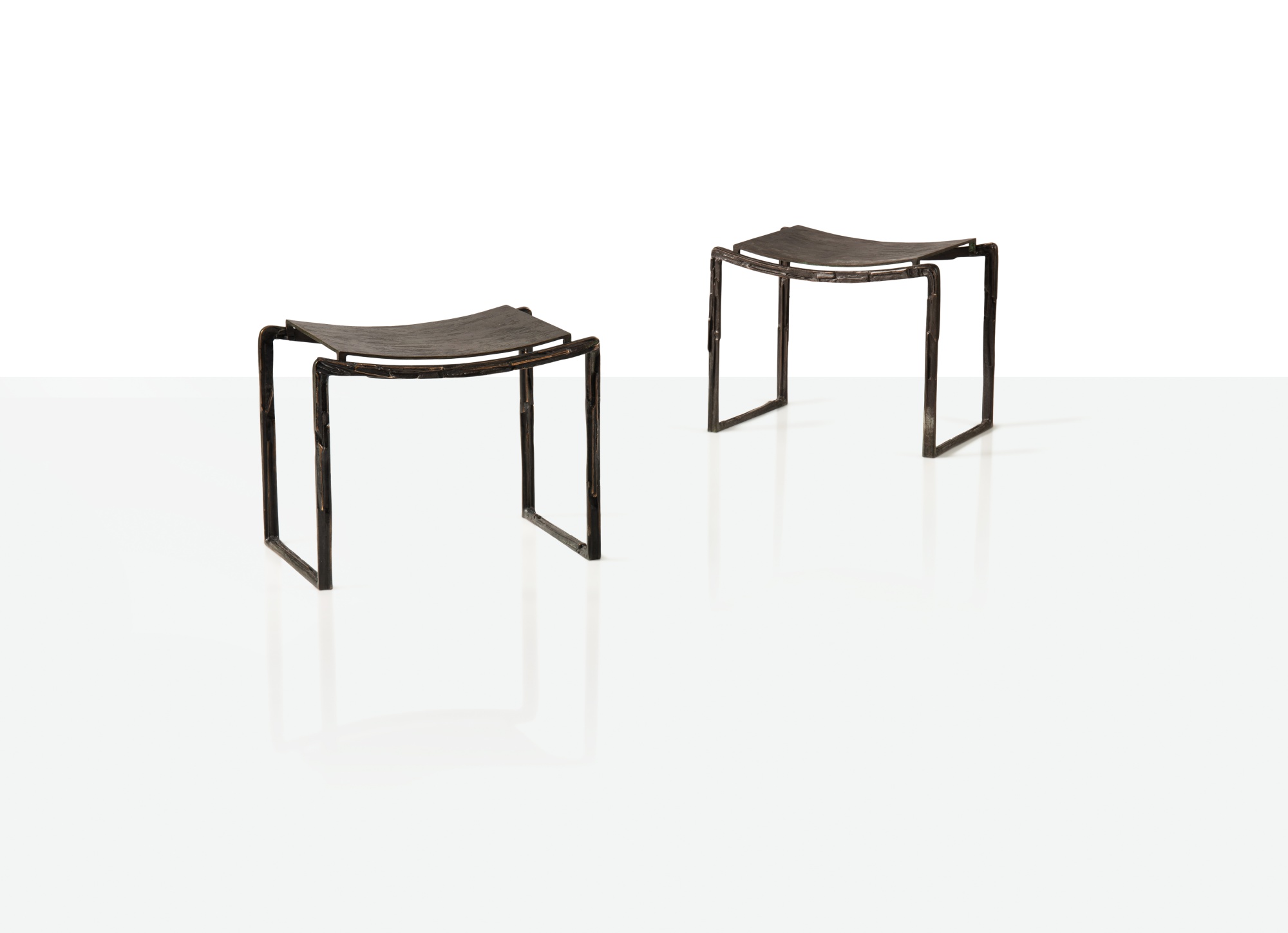
Bruno Romeda
Paire de tabourets BRM35
Romeda's legacy rests on his insistence that the boundary between art and the functional object is a bureaucratic fiction rather than a meaningful distinction. In the long history of the decorative arts, from the bronzes of ancient China to the ateliers of Art Deco Paris, the finest makers have always understood this. Romeda carries that understanding into the present with a body of work that is specific to his own time and sensibility while drawing on the deepest wells of the craft tradition. To live with his pieces is to accept a daily argument about beauty, material, and the dignity of objects made with complete seriousness of purpose.
That argument, conducted in patinated bronze and glass and wood, is one that collectors return to with pleasure for the rest of their lives.