Brett Weston
Brett Weston: Nature Rendered Pure and Bold
Artist Spotlight · The Collection Editorial
“I never thought of myself as Edward Weston's son. I thought of myself as a photographer.”
Brett Weston
Stand before a Brett Weston photograph long enough and something quietly remarkable happens. The subject, whether a wind sculpted California dune, a tangle of Pacific reeds, or the glassy surface of a glacial lake, ceases to be a place or a thing and becomes something closer to a feeling. This is the particular genius of Weston's vision: a capacity to look at the physical world and find within it a geometry so precise, so emotionally charged, that the photograph transcends documentation entirely. His work endures as one of the signal achievements of American modernist photography, and institutions from the Center for Creative Photography in Tucson to the Museum of Modern Art in New York hold his prints as foundational examples of the medium at its most resolute.
Brett Weston
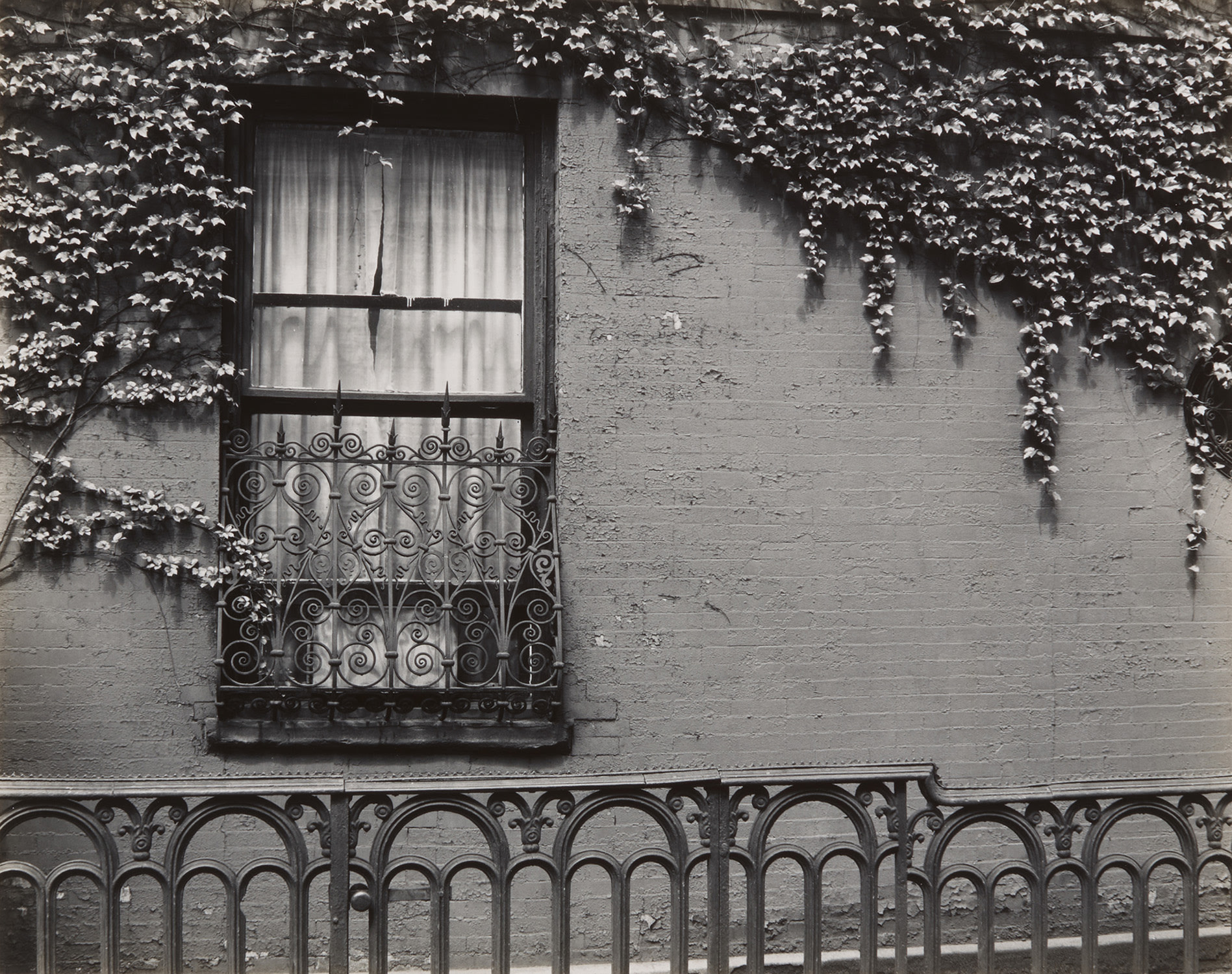
Washington Square, NYC
Brett Weston was born in Los Angeles in 1911, the second son of Edward Weston, the towering figure whose own mastery of the camera would help define what photography could be as a fine art. Growing up in that household meant being immersed in questions of light, form, and intention from the very beginning. Brett received his first camera from his father at the age of thirteen while the two were living in Mexico City, where Edward was working and where the young Brett began to develop a photographic eye with remarkable speed. By the time he was sixteen, his work was already being exhibited alongside his father's in a joint showing, a fact that speaks not to nepotism but to the genuine and precocious quality of his early prints.
Mexico gave him an appetite for strong tonal contrasts and for subjects that carried a kind of elemental weight, tendencies that would define his practice for the next seven decades. Where Edward Weston is often associated with the sensuous curves of peppers and nudes, Brett charted a more austere and arguably more abstract course. Through the 1930s and 1940s he developed a working method grounded in the traditions of Group f.64, the influential collective that included his father, Ansel Adams, Imogen Cunningham, and others who championed straight photography: sharp focus across the entire frame, no darkroom manipulation, subjects rendered with unflinching clarity.
Brett Weston
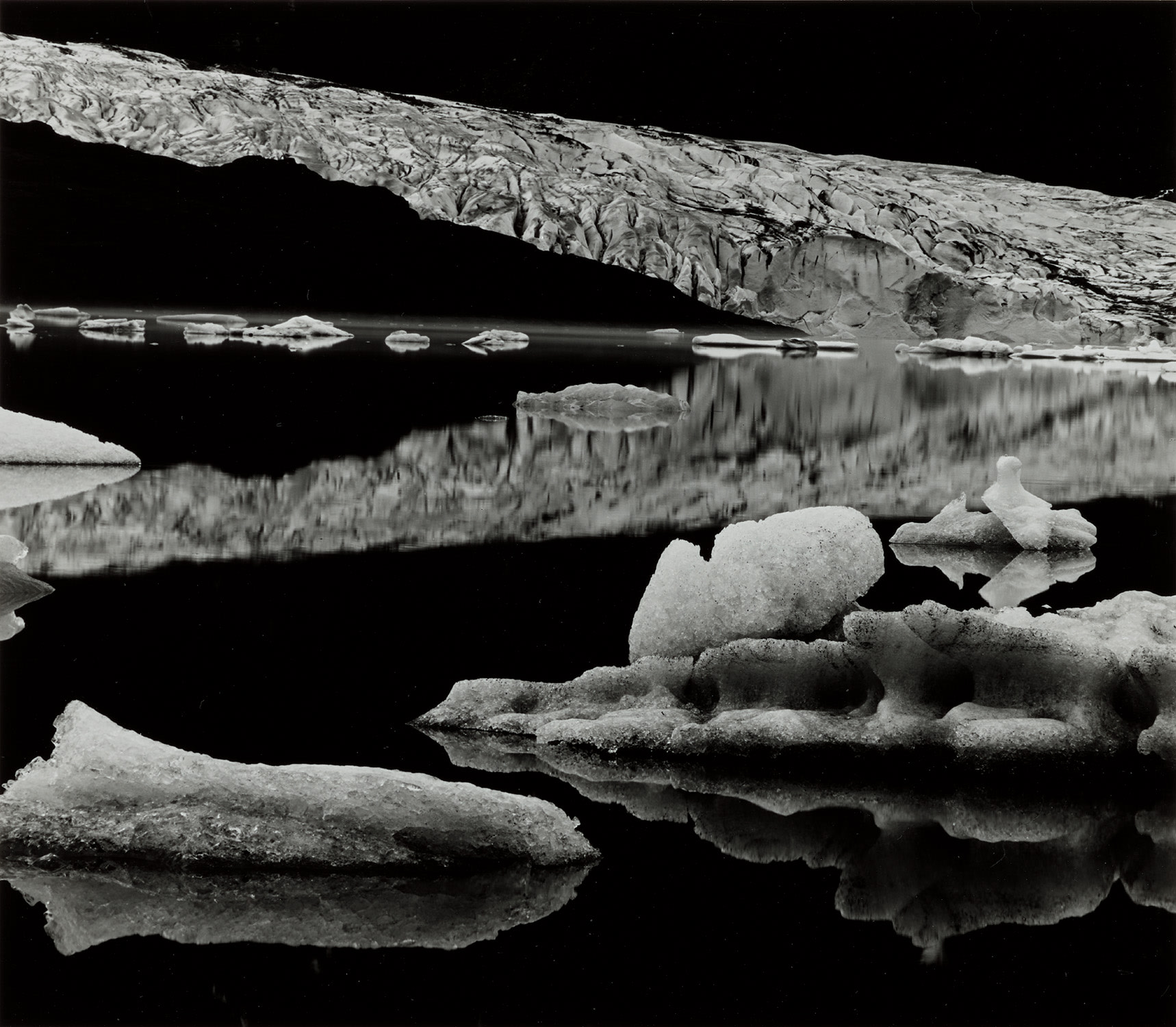
Mendenhall Glacier
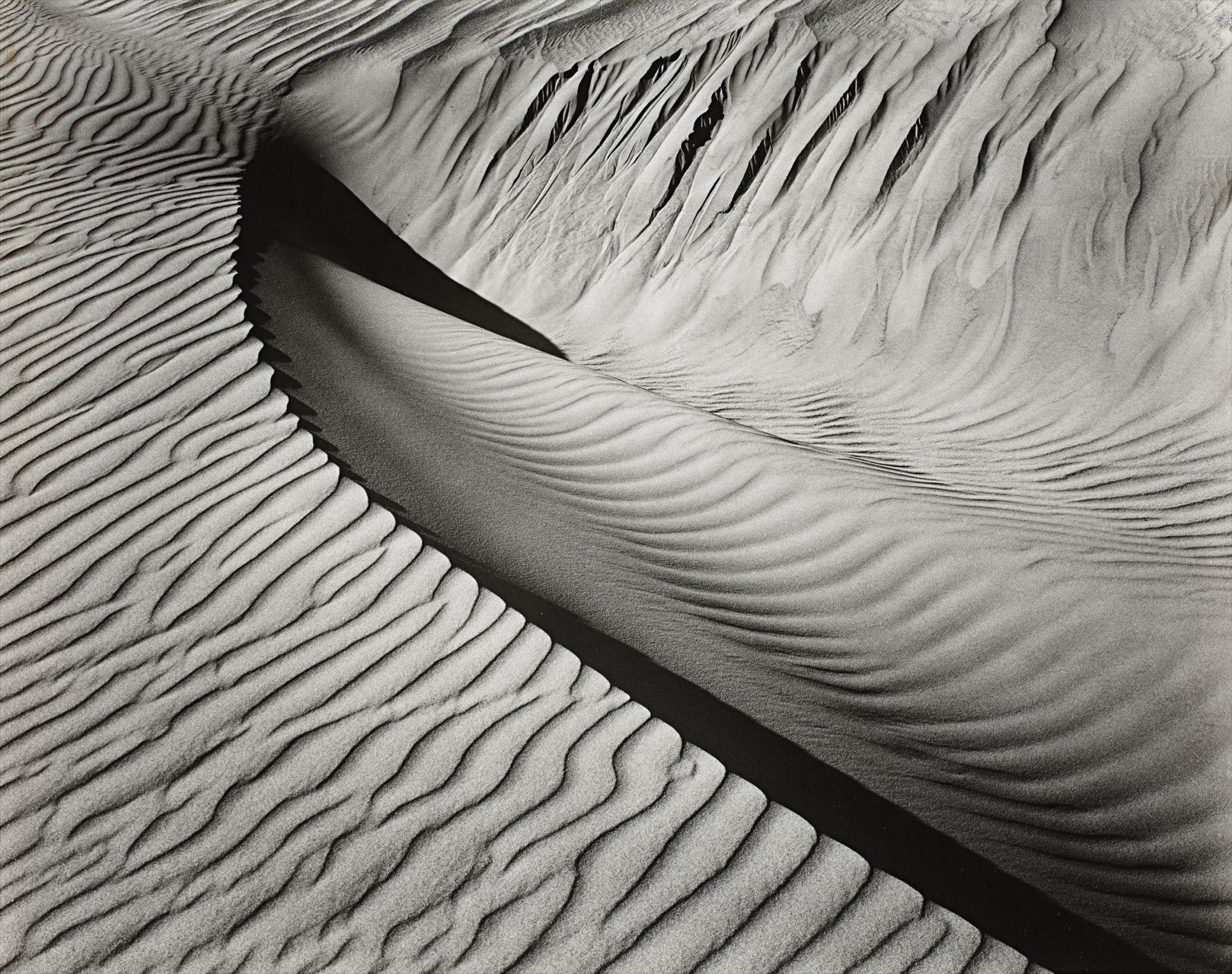
Yet Brett pushed these principles toward abstraction in a way that felt distinctly his own. He was drawn to surfaces as much as subjects, to the texture of cracked earth, weathered wood, and industrial metal as compositional events in themselves. The result was a body of work that sat at a compelling crossroads between the documentary impulse and pure formalism. Among his most celebrated works are the dune studies made along the California coast, including pieces such as Dune, California, in which the undulating contours of sand fill the frame with a sculptural authority that recalls the work of Constantin Brancusi in three dimensions.
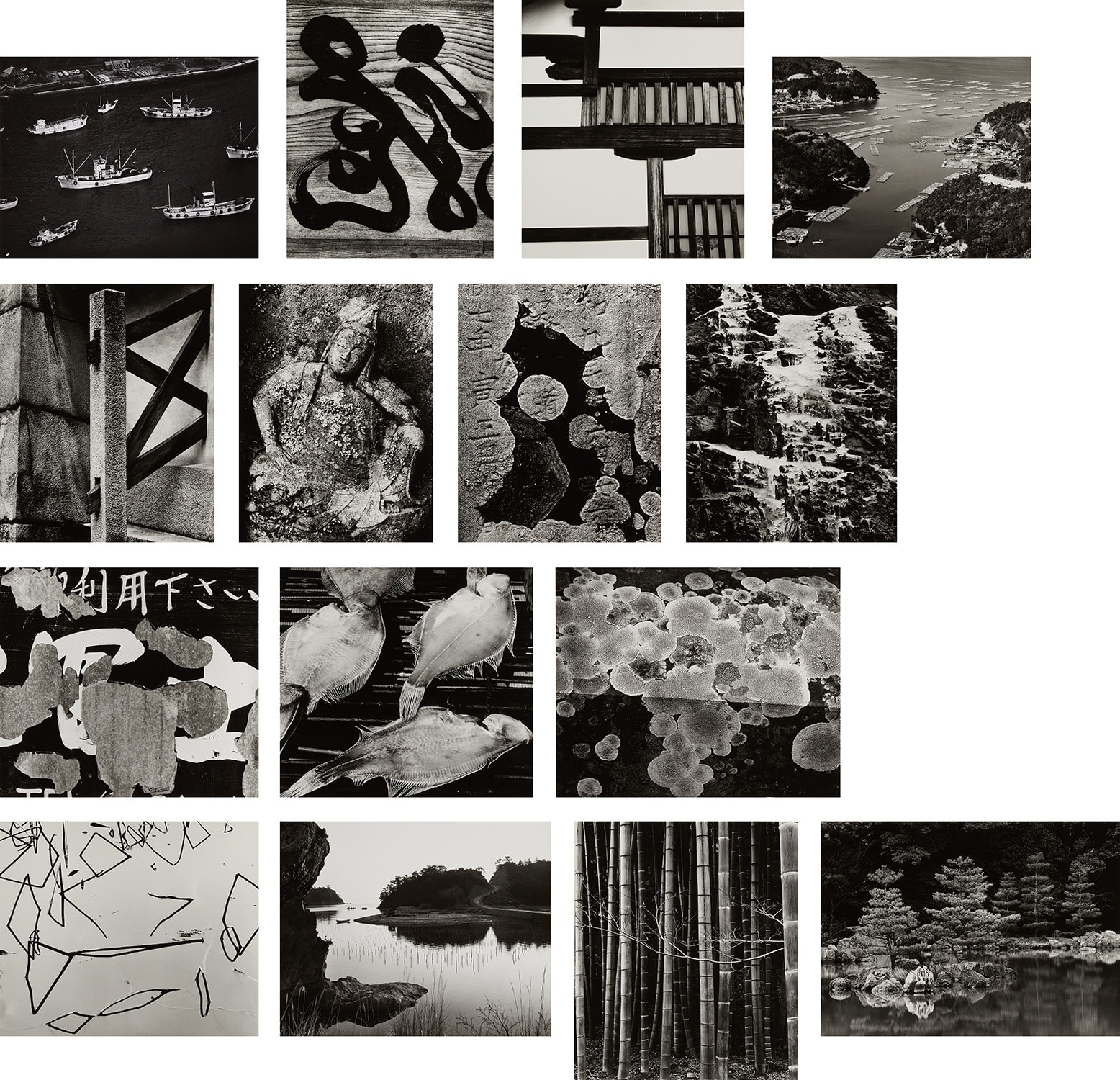
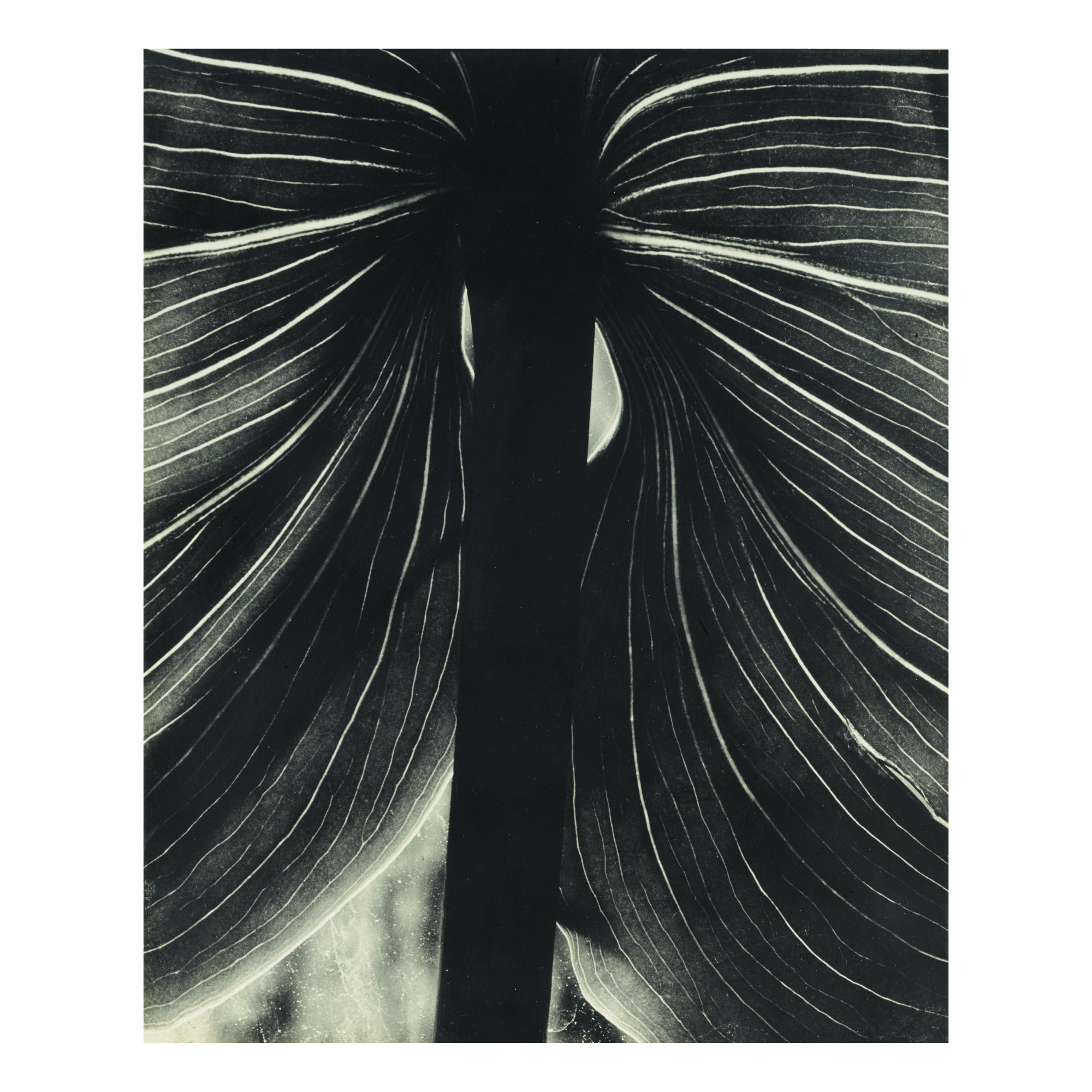
His Mendenhall Glacier print, made in Alaska and printed in 1977, transforms a vast geological formation into something intimate and almost architectural. The Fifteen Photographs of Japan portfolio, self published in Carmel in 1970, remains one of the most sought after examples of his work in portfolio form, capturing the gardens, textures, and landscapes of Japan with a sensitivity that shows how deeply Weston could attune his eye to entirely new visual vocabularies without losing his essential voice. Works such as Reeds, Oregon and Holland Canal demonstrate his range across continents and subjects while maintaining that signature quality of stillness combined with visual tension. His Untitled studies of lily leaves made near his Carmel home reveal an almost meditative relationship with local nature, finding cosmic proportion in the intimate and ordinary.
Brett Weston
Fifteen Photographs of Japan
For collectors, Brett Weston presents a genuinely compelling proposition. His vintage gelatin silver prints, made during his most productive decades from the 1930s through the 1970s, carry a warmth and tonal richness that later prints, while often beautifully crafted, approach differently. The portfolios represent particularly important collecting opportunities: limited and self published, they carry the full authority of the artist's hand and intent, and the Fifteen Photographs of Japan portfolio in particular commands serious attention at auction and in the private market. Weston worked primarily in gelatin silver throughout his career, a medium that rewards careful condition assessment, and collectors should attend to mount quality and provenance when acquiring his work.
His photographs appear regularly at the major American auction houses and through specialist photography dealers, and demand has remained steady among collectors who understand the history of the medium. His work occupies a position in the canon that is secure without being so institutionalized as to feel untouchable, making it a meaningful addition to any serious collection focused on twentieth century photography. To understand Brett Weston's place in art history is to understand the particular ferment of American photography in the decades surrounding the Second World War. His colleagues and contemporaries in the f.
Brett Weston
Untitled (lily Leaf, Carmel)
64 tradition, including Ansel Adams with his grand Yosemite vistas and Imogen Cunningham with her botanical close ups, each pursued a version of the straight photographic ideal, but Brett's version was perhaps the most purely abstract of the group. Edward Weston's influence is undeniable and was something Brett both embraced and worked consciously to move beyond, arriving eventually at a personal aesthetic that stands fully apart from his father's legacy. He is also productively considered alongside Minor White, whose contemplative approach to natural forms shares certain spiritual qualities with Brett's later landscape work, even if their temperaments and methods differed considerably. Brett Weston burned his negatives on his eightieth birthday in 1981, a gesture of extraordinary conviction that transformed every surviving print into a finite and unrepeatable artifact.
The act was characteristically bold and has only deepened the significance of the prints that remain. He continued to photograph until near the end of his life, dying in Hawaii in 1993 while still engaged with the world through his camera. What endures is a body of work that rewards sustained looking, that asks the viewer to slow down and attend to the world with the same ferocity of attention that Weston himself brought to every frame he composed. In a moment when photography's status as a fine art has never been more broadly acknowledged, and when collectors are returning with fresh enthusiasm to the twentieth century masters who established that status, Brett Weston's photographs feel not like historical artifacts but like living invitations to see differently.
Explore books about Brett Weston
