Brent Wadden
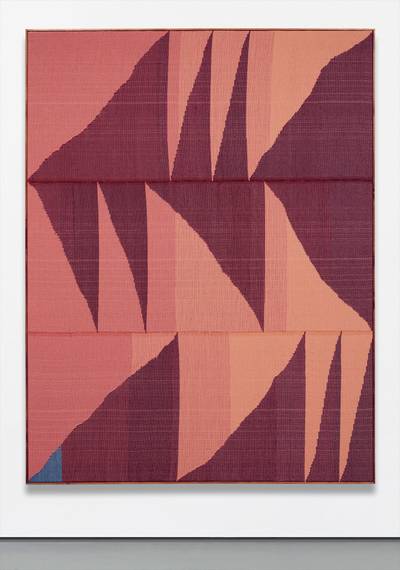
Brent Wadden Weaves the World Anew
Artist Spotlight · The Collection Editorial
“I've been weaving now for about two years, which is such a different process from painting. When weaving, I'm forced to have some kind of plan before I start.”
Brent Wadden, 2013
There is a moment, standing before a Brent Wadden textile, when the eye refuses to settle. The surface pulses with color, the warp and weft building a visual rhythm so insistent it begins to feel less like cloth and more like music made visible. That sensation has been drawing serious collectors and curators to Wadden's work for over a decade now, and the conversation around his practice shows no sign of quieting. His solo presentation with Peres Projects at Frieze London and his sustained presence in major international group exhibitions have cemented his reputation as one of the most compelling voices working at the intersection of textile craft and abstract painting today.
Brent Wadden
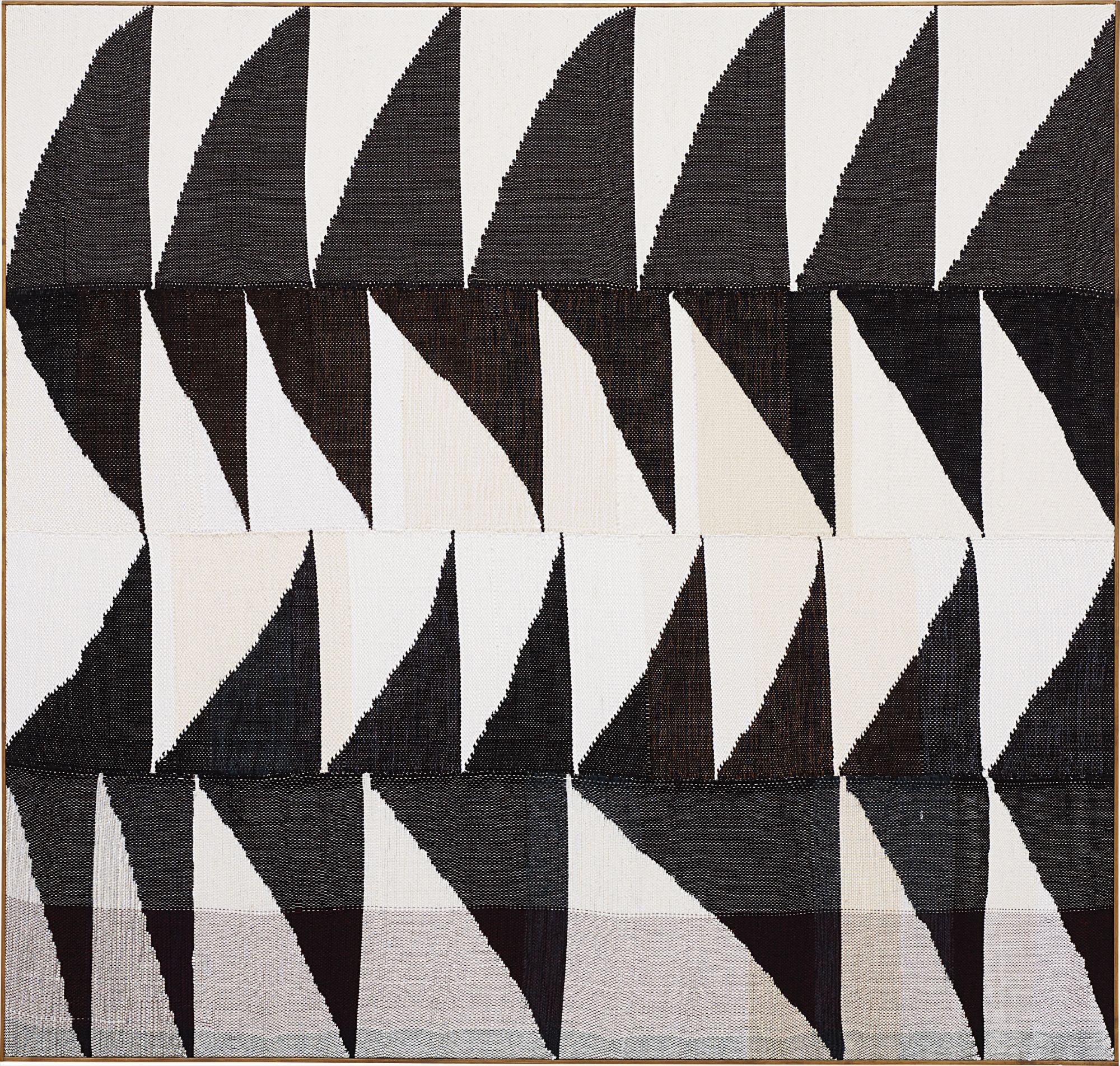
Alignment #11
Wadden was born in 1979 in Nova Scotia, Canada, a region whose culture carries a deep and unself conscious relationship with handcraft. The maritime provinces have long sustained traditions of weaving, quilting, and textile making that are woven, so to speak, into the fabric of everyday life there. Growing up in that environment, Wadden absorbed an understanding of making as something inseparable from living, long before he would frame it in the language of contemporary art. That early formation gave his practice a rootedness that distinguishes it from artists who come to craft as pure conceptual strategy.
He later studied at the Nova Scotia College of Art and Design, an institution with a notably rigorous and intellectually adventurous history, particularly in its engagement with Conceptual art and its relationship to vernacular and material culture. After completing his studies, Wadden spent time in Vancouver before eventually relocating to Berlin, where he has been based and where the international dimensions of his career have flourished. The move placed him at the center of a European art world hungry for work that questioned the hierarchies separating fine art from applied craft, and his timing proved fortuitous. Wadden came to weaving relatively late in his development as an artist, and that transition is part of what makes his practice so intellectually alive.
Brent Wadden
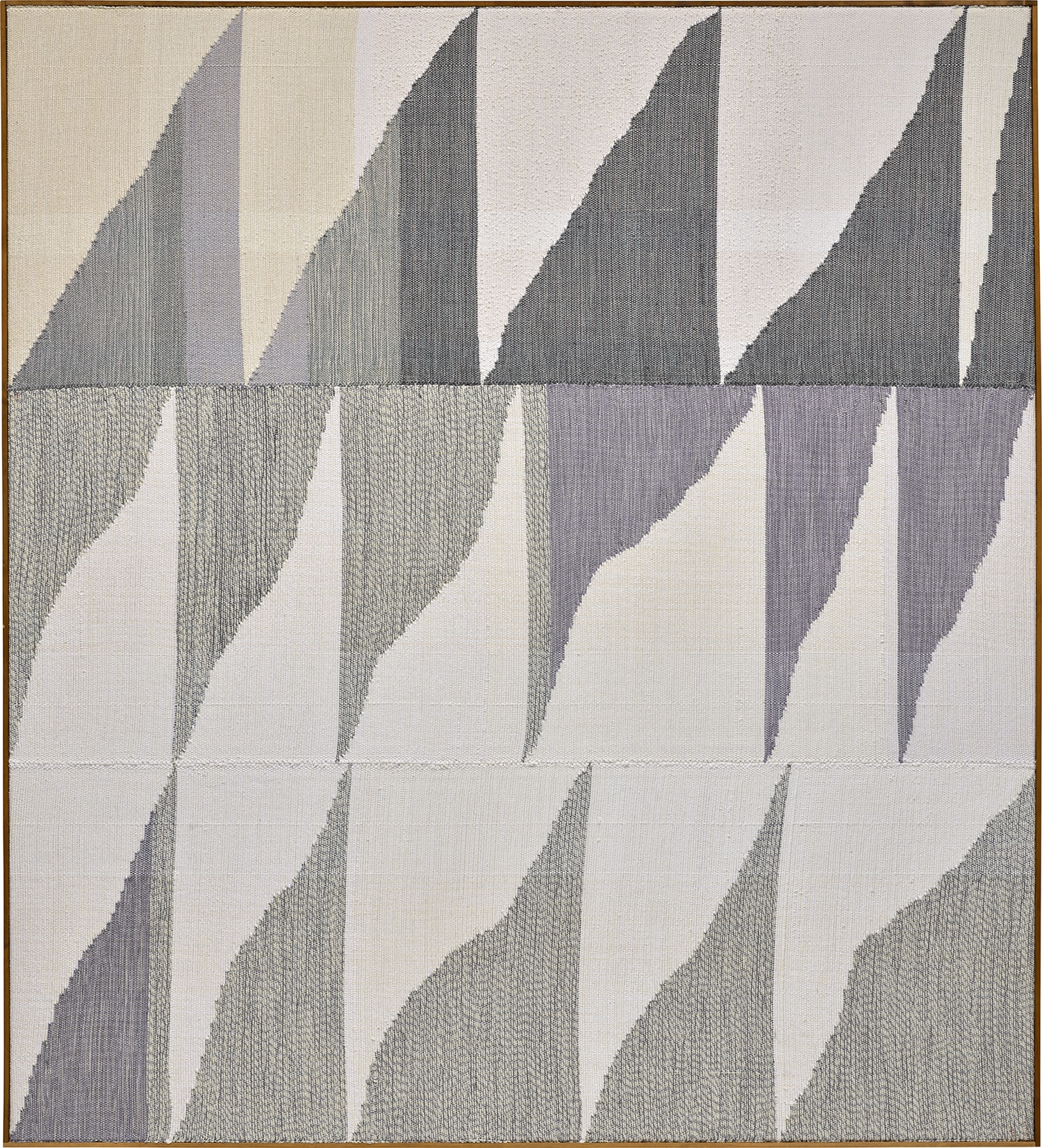
TBT (gm4), 2014
He had worked as a painter before picking up the loom, and the tension between those two disciplines is productive and visible in everything he makes. Working on a floor loom, he constructs densely patterned fabrics using wool, cotton, and linen, building compositions that draw simultaneously from the traditions of geometric abstraction, modernist painting, and the folk textile traditions of North America and Europe. The loom imposes its own logic: unlike a painter who can revise spontaneously, Wadden must plan his compositions in advance, translating intuition into structural decision making before the first thread is laid. He has spoken candidly about this constraint and about the way it disciplines his thinking without diminishing the sense of aliveness in the finished work.
The series of works titled Alignment represents some of the most focused expressions of his formal concerns. Works such as Alignment 11, Alignment 12, and Alignment 22 deploy stripes and color fields in arrangements that feel simultaneously inevitable and surprising, as though the geometry has been arrived at through long contemplation rather than imposed from the outside. These pieces are typically mounted in the artist's own handmade frames, a detail that matters enormously: by framing his textiles as paintings, Wadden refuses the lesser status that Western art history has too often assigned to fiber work, insisting that his objects occupy the same critical and physical space as canvas. The gesture is pointed without being polemical, confident rather than defensive.
Brent Wadden
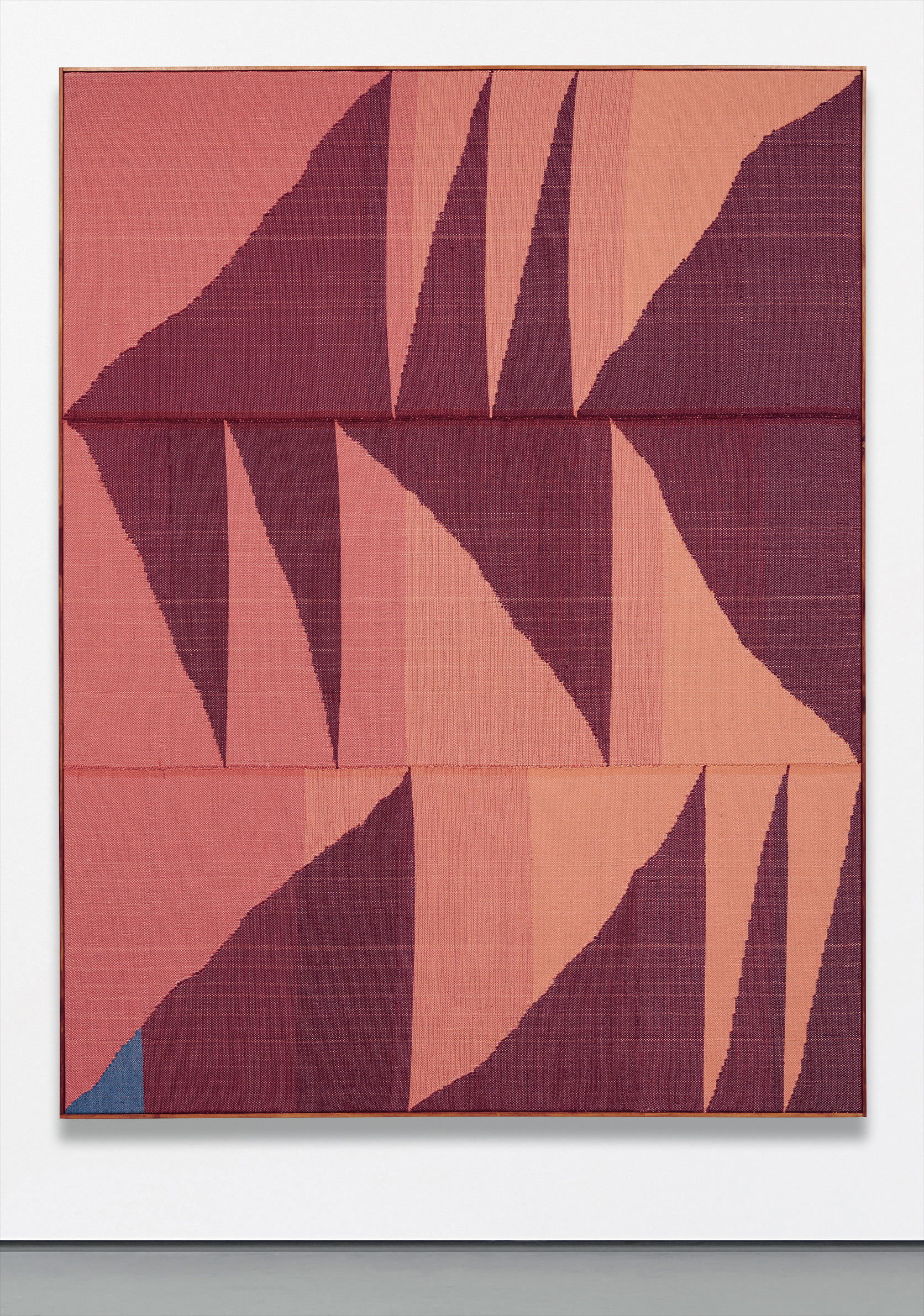
Big Red, 2014
Works from 2014 and 2015 such as TBT (gm4), Big Red, No. 6 (Donkin), and Tangerine Grey (Double Face) reveal the range of emotional register Wadden commands through color alone. Big Red is precisely what its title promises, a work of considerable physical presence and chromatic force. Tangerine Grey (Double Face) plays more subtly, its warm and cool tones creating a surface that shifts in character depending on the light and the distance from which it is viewed.
Baby Blue and White, by contrast, has an almost meditative quietness, its restrained palette inviting sustained looking. Together these works demonstrate that Wadden is not pursuing a single effect but rather exploring a full emotional spectrum through the same disciplined formal means. From a collecting perspective, Wadden's work occupies an enviable position. It is serious enough to attract institutional attention and to hold its value in the secondary market, yet it also has a warmth and tactile beauty that makes it livable in domestic spaces in a way that much rigorous abstract painting does not.
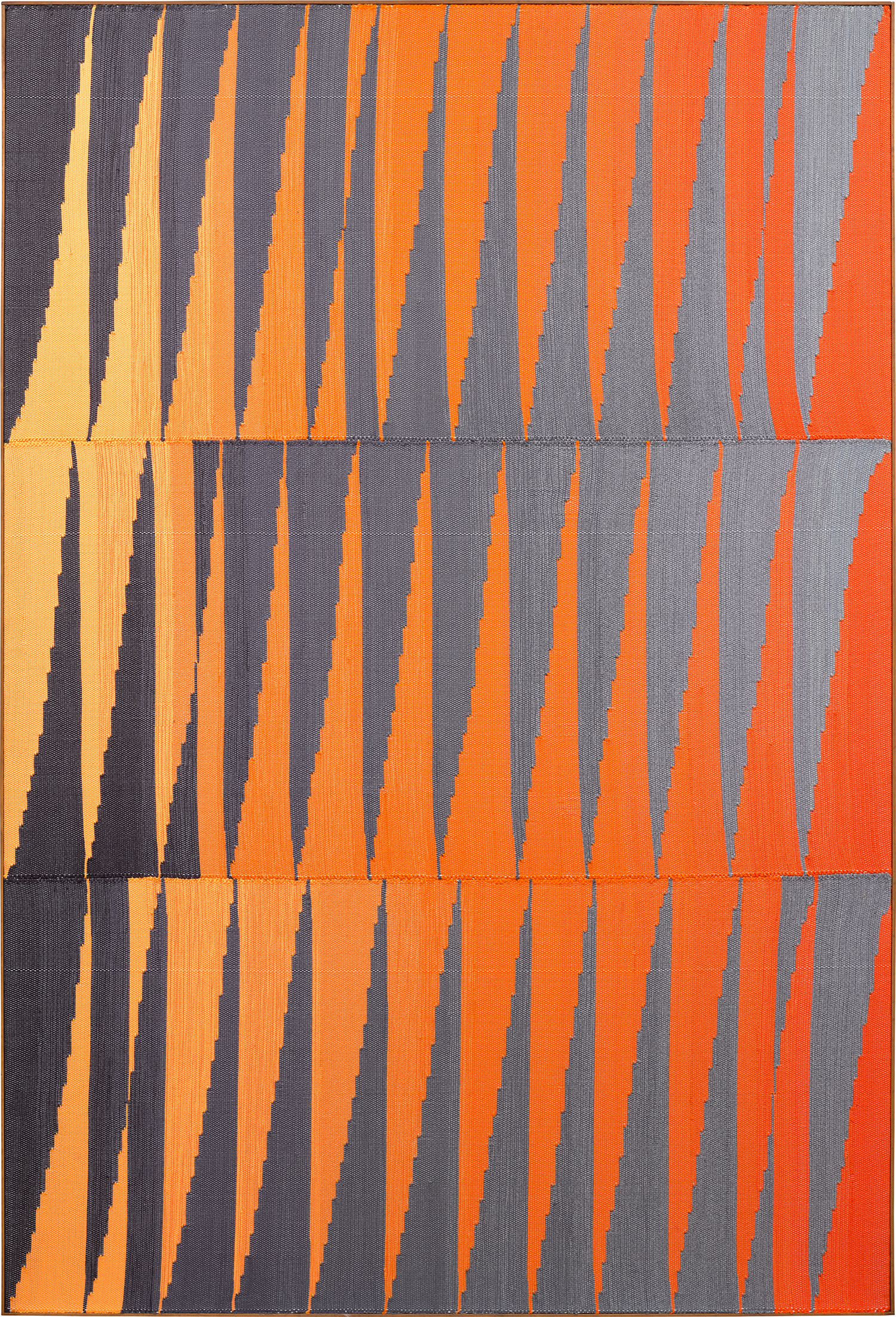
Brent Wadden
Tangerine Grey (Double Face), 2015
Collectors drawn to the post minimalist tradition, to artists such as Anni Albers, Agnes Martin, Rosemarie Trockel, or Sheila Hicks, will find in Wadden a contemporary practitioner who engages those lineages with genuine intelligence and originality. His work also speaks to collectors interested in the broader reassessment of craft that has characterized serious contemporary art collecting over the past fifteen years, a reassessment in which fiber arts have moved from the margins to a position of genuine critical prestige. It is worth situating Wadden within that broader art historical moment. The rehabilitation of textile practice as a site of major artistic ambition has roots in the feminist art movements of the 1970s, in the Lausanne Biennale of Tapestry which ran from the 1960s through the 1990s, and in the long shadow cast by the Bauhaus weaving workshop, where Albers and her contemporaries established that the loom was as capable of philosophical inquiry as any other medium.
Artists such as Rosemarie Trockel brought fiber into conceptual and institutional critique in the 1980s and 1990s. Wadden inherits all of this history while drawing it into contact with the specific visual culture of Canadian folk tradition and the painterly freedoms of abstract expressionism and hard edge painting. The synthesis is entirely his own. What ultimately makes Brent Wadden matter, and what will ensure his work continues to find important homes and important audiences, is a quality that is difficult to name but easy to feel.
His objects are made with an uncommon degree of commitment and physical investment. The hours at the loom, the planning that precedes them, the structural complexity that the finished surface both reveals and conceals: all of this registers in the work as a kind of concentrated presence. Collecting Wadden is not simply acquiring a beautiful object, though the objects are undeniably beautiful. It is aligning oneself with a practice that takes seriously both the history of abstraction and the dignity of making, and that refuses to treat those two commitments as contradictory.
Explore books about Brent Wadden