Brassaï (Gyula Halász)
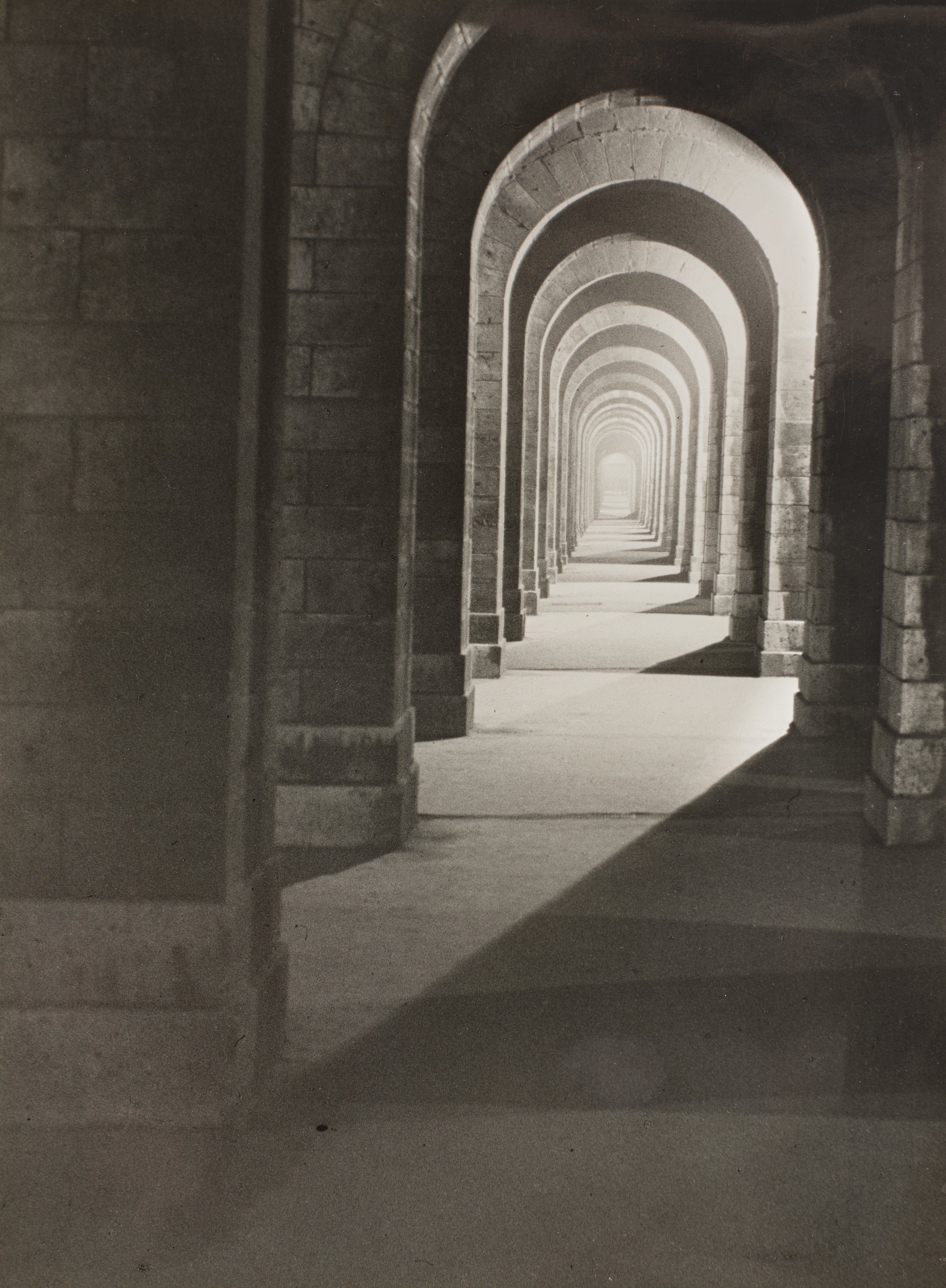
Brassaï: The Poet Who Illuminated Paris
Artist Spotlight · The Collection Editorial
“My ambition was always to show the extraordinary in the ordinary.”
Brassaï
There is a photograph that stops you in your tracks. A woman stands at the bar of Le Monocle on Boulevard Edgar Quinet in Montparnasse, her posture a study in self possession, the light catching the angles of her face with the precision of a Flemish master. Brassaï made this image sometime in the early 1930s, in a lesbian nightclub that most of respectable Paris preferred to pretend did not exist. That it exists at all as a document, tender and unsentimental in equal measure, tells you everything about the man who made it.
Brassaï (Gyula Halász)
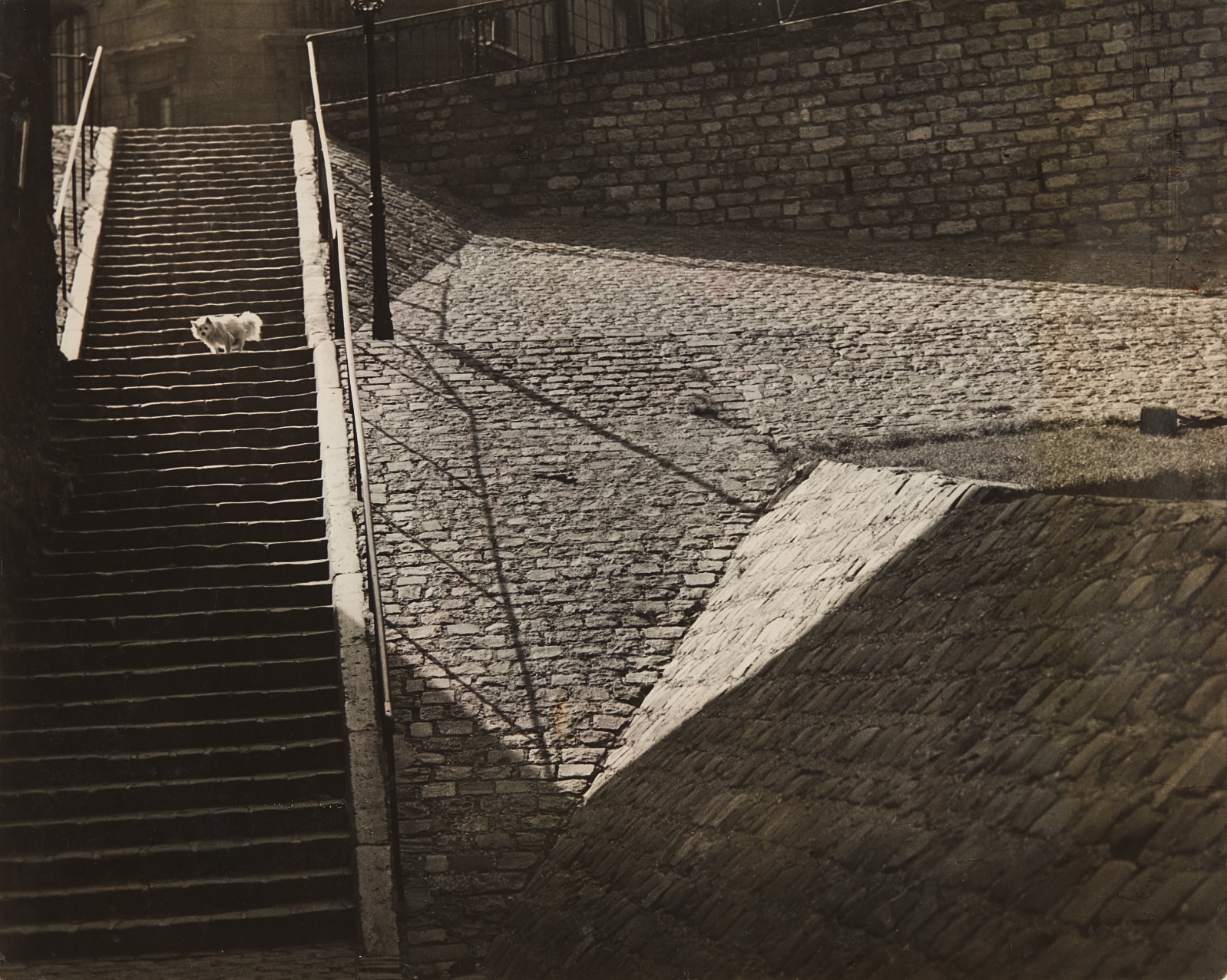
Les Escaliers à Montmartre
Decades later, institutions from the Centre Pompidou in Paris to the Museum of Modern Art in New York have returned to this body of work again and again, and the images continue to feel as alive and necessary as they did when the negatives first came out of the developer. Gyula Halász was born in 1899 in the city of Brassó, in Transylvania, a region that was then part of the Austro Hungarian Empire and is now Brașov in Romania. His father was a professor of French literature, a fact that would prove formative in ways that went far beyond the obvious. The family spent a year in Paris when Gyula was a child, and the city lodged itself in his imagination with the permanence of a founding myth.
He studied art in Budapest and later in Berlin, where he arrived in the early 1920s and moved in the same circles as László Moholy Nagy and other luminaries of the European avant garde. Berlin sharpened his eye and introduced him to modernist ideas about form and the visual world, but it was Paris that finally claimed him. He arrived in 1924 and never truly left. For several years after settling in Paris, Halász supported himself as a journalist and resisted photography entirely, preferring drawing.
Brassaï (Gyula Halász)
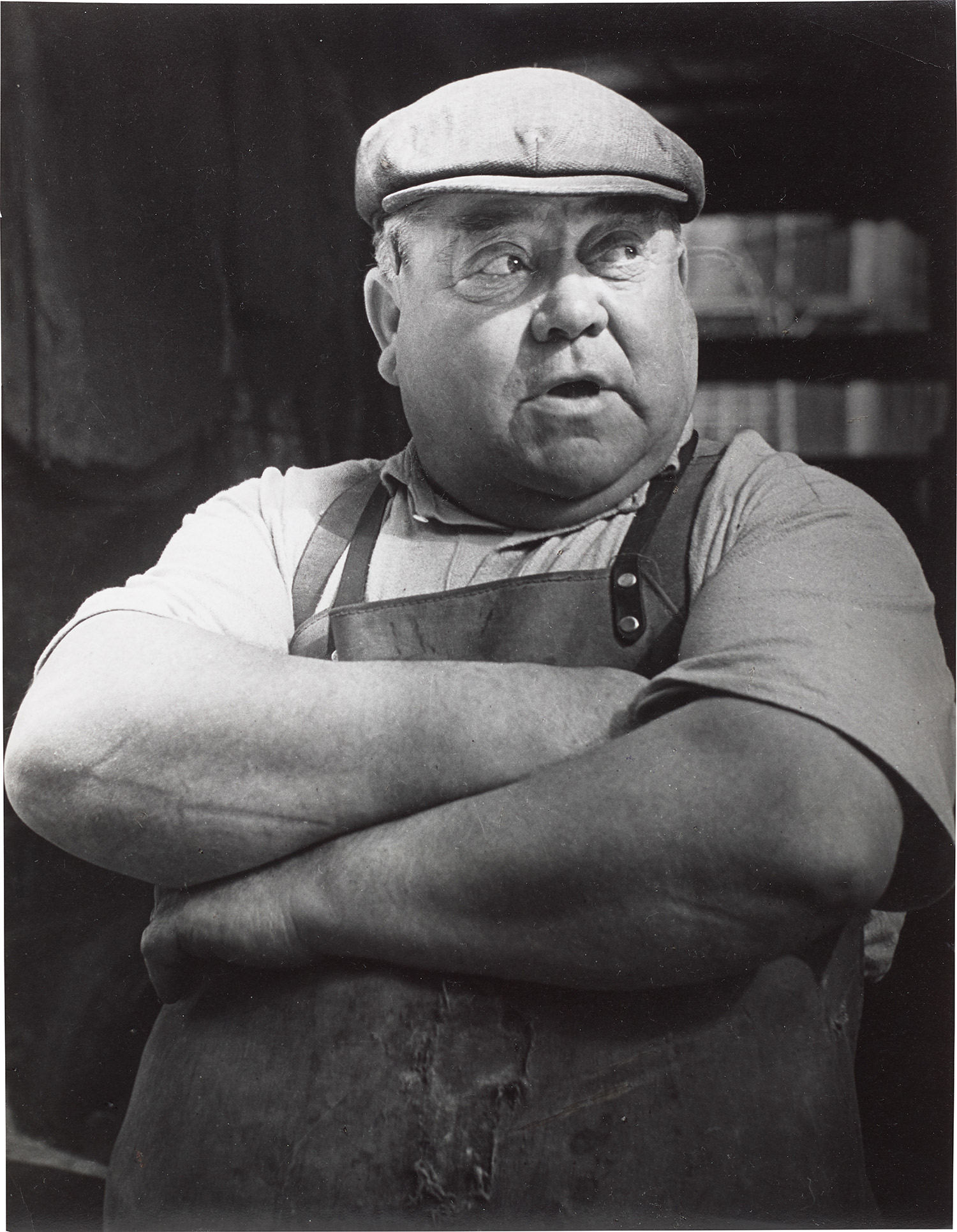
Porteur aux Halles
It was his friend and fellow Hungarian expatriate André Kertész who encouraged him to pick up a camera. The conversion was total. By the late 1920s, Halász had adopted the name Brassaï, derived from his hometown, and had begun the nocturnal wanderings that would define his reputation. He was methodical about it, moving through the arrondissements after midnight with a large format camera and a tripod, working by available gaslight and the occasional flash, befriending the prostitutes, the pimps, the lovers in doorways, the old men nursing wine in empty cafés.
“I invented nothing. I imagined everything.”
Brassaï
He was not slumming. He was paying attention with the full force of a serious artistic intelligence. The publication of Paris de Nuit in 1933 was a genuine cultural event. The book, featuring sixty four photographs with a preface by Paul Morand, introduced a mass audience to a Paris that existed in parallel with the city of monuments and fashionable boulevards.
Brassaï (Gyula Halász)
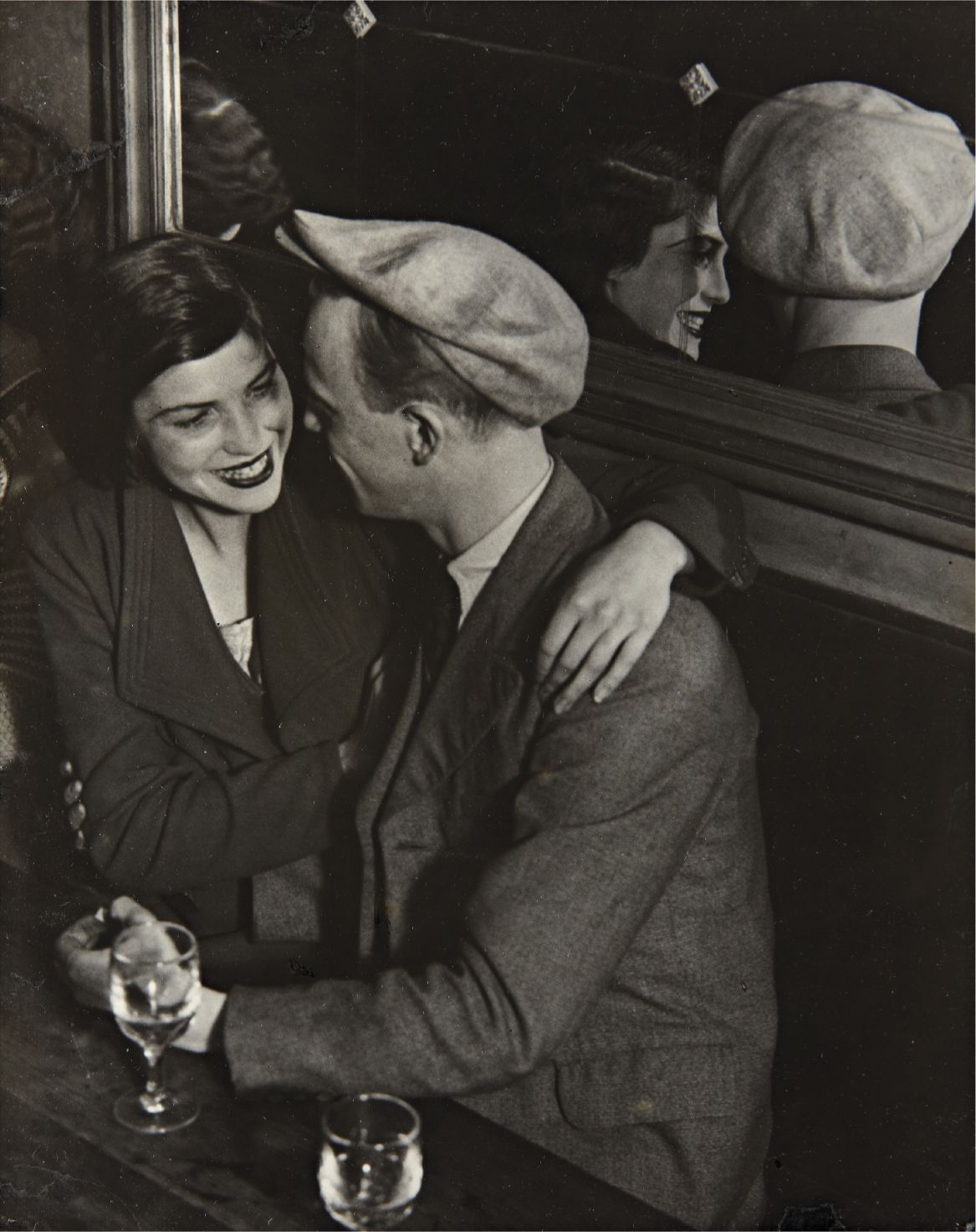
Couple at the Bal des Quatre Saisons, Rue de Lappe
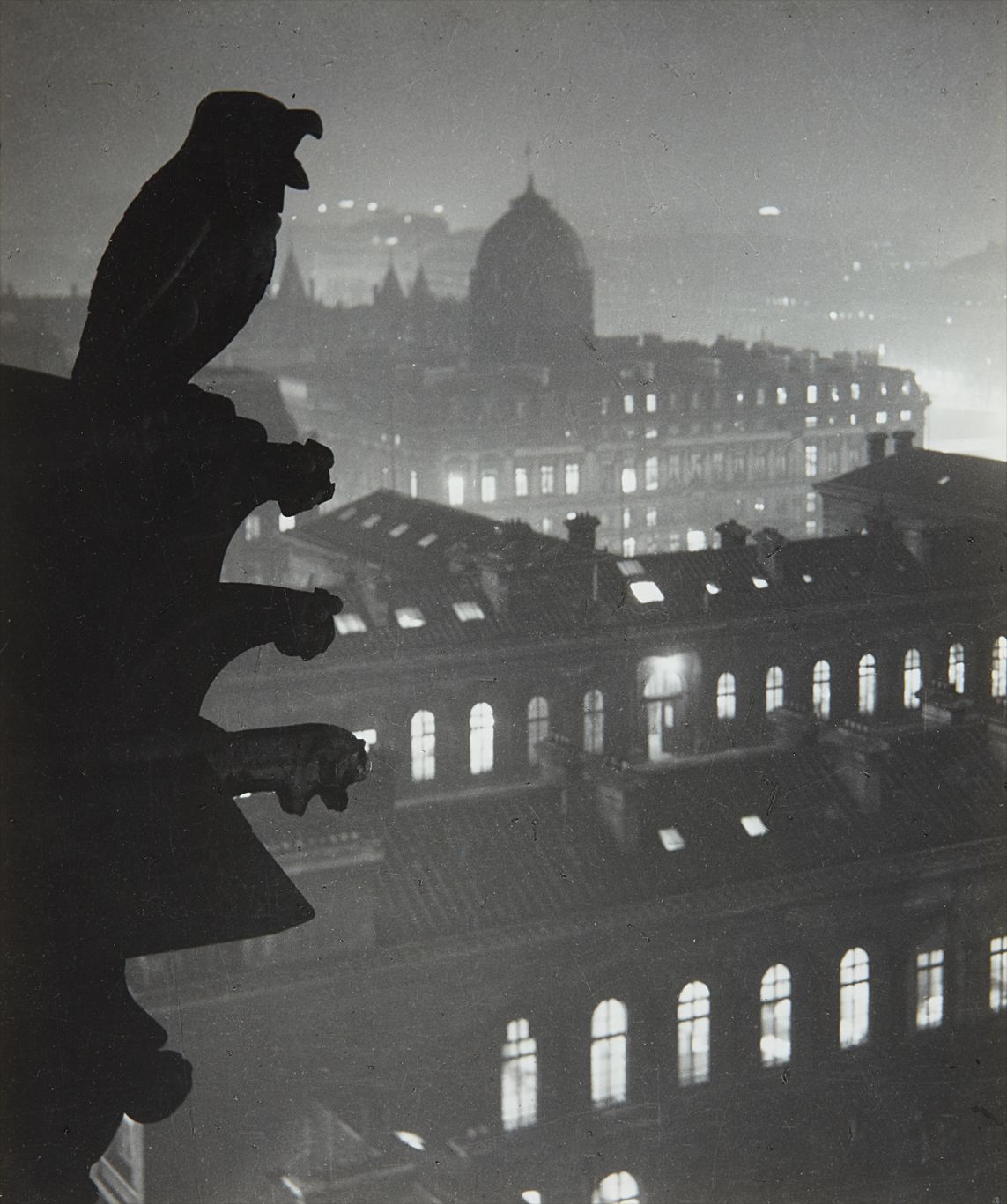
It sold widely and earned Brassaï the nickname that Henry Miller, another friend and admirer, bestowed upon him: the Eye of Paris. Miller's essay of that name, written in 1932, understood that Brassaï was doing something more than documentary work. He was constructing a mythology of urban life, finding in the wet cobblestones and the neon reflections and the human figures caught between shadow and light a kind of poetry that belonged equally to literature and to visual art. The images of this period, including the nocturnal view from Notre Dame overlooking the Hôtel Dieu and the street walkers on the Boulevard de Rochechouart in Montmartre, remain among the most recognizable photographs of the twentieth century.
What distinguishes Brassaï from his contemporaries, and what continues to fascinate collectors, is the breadth of his sympathies and the consistency of his formal intelligence across radically different subjects. His photographs of Parisian nightlife share a visual grammar with his images of graffiti, a project he pursued across several decades, photographing crude marks and carved figures on the walls of Paris and eventually publishing the work as Graffiti in 1961. The graffiti series, which includes works such as Les deux coeurs, represents one of the most sustained investigations of vernacular mark making undertaken by any artist of his generation. It anticipates the interest in street art and urban language that would become central to contemporary practice decades later.
Brassaï (Gyula Halász)
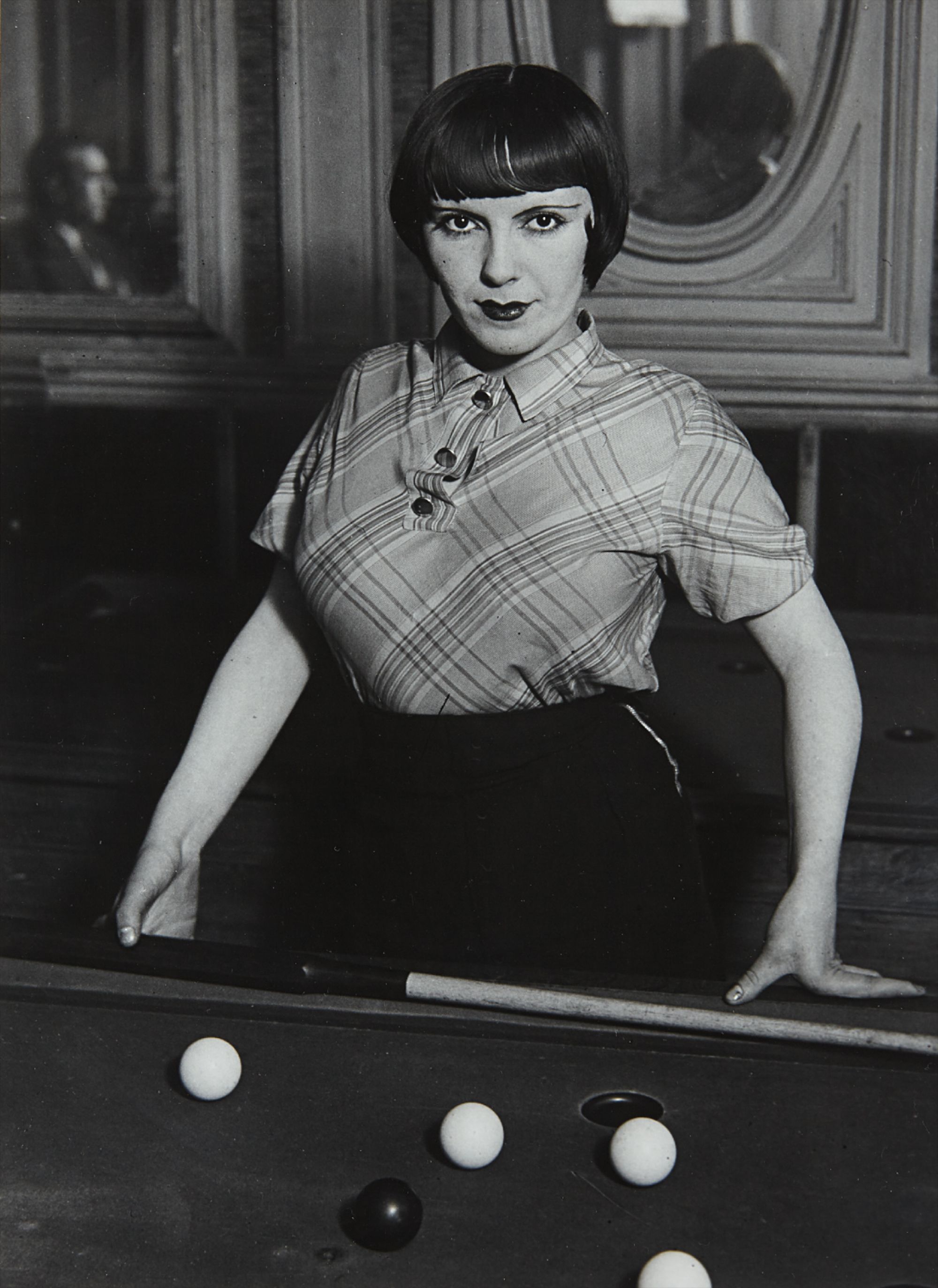
Prostitute Playing Russian Billiards, Boulevard Rochechouart
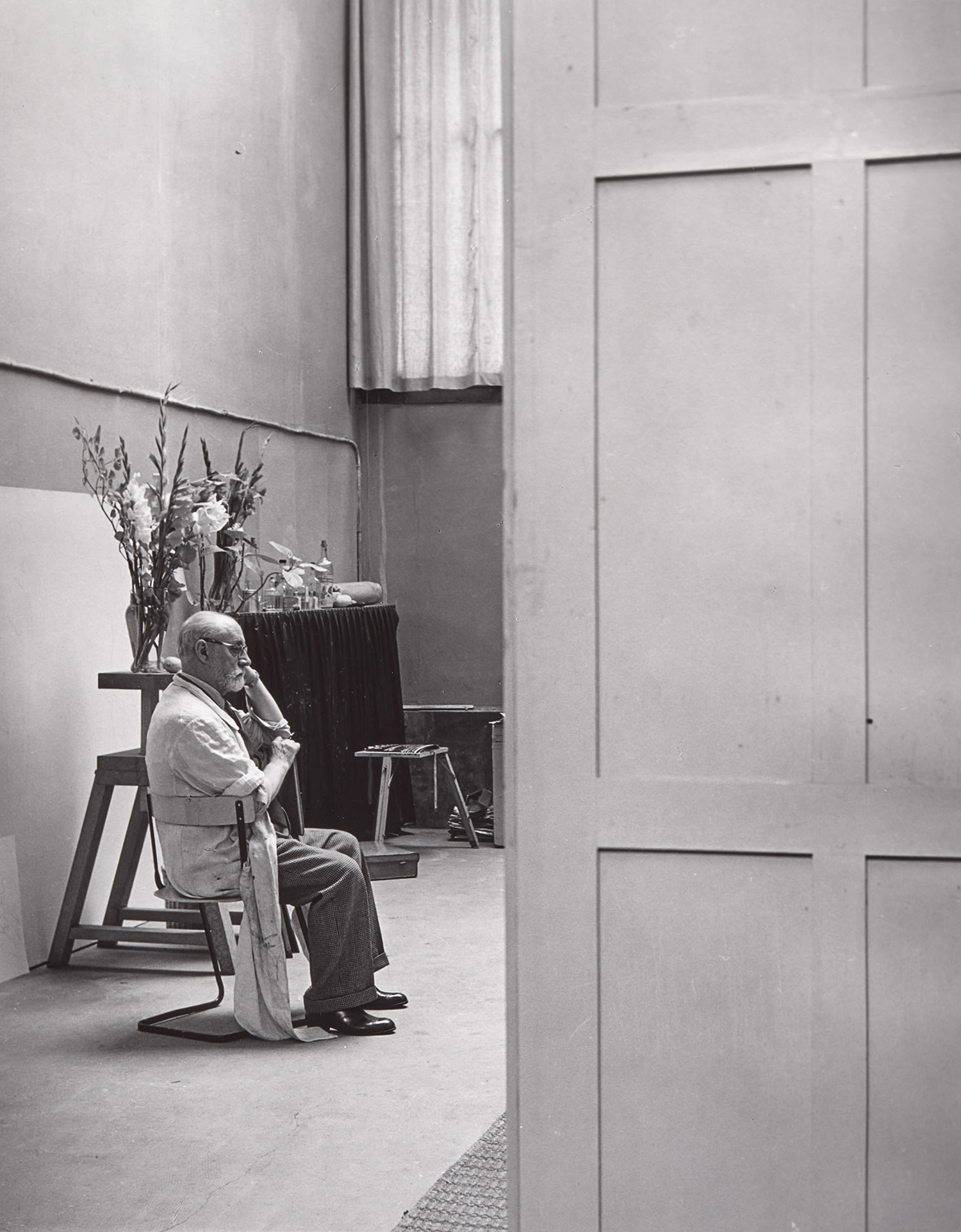
He was also a close friend of Pablo Picasso, and their long relationship produced not only a rich photographic record of the artist and his studio but a genuine intellectual exchange between two men who took the question of images seriously. For collectors, Brassaï's work presents a compelling combination of historical significance and visual immediacy. The gelatin silver prints that circulate on the market, the majority produced in the 1950s through the 1970s under Brassaï's own supervision or in close collaboration with trusted printers, maintain a remarkable tonal richness. Works such as La Môme Bijou at the Bar de la Lune and the Femme Fruit (Transmutation) from around 1960 demonstrate his ability to move between social observation and something closer to surrealist transformation.
The Transmutation series, in which the human body is seen to merge with or become organic forms, reveals his debt to and dialogue with the Surrealist movement, even as he maintained a careful distance from its more programmatic tendencies. Prices for significant prints have risen steadily at auction houses including Christie's and Sotheby's, with major works from the Paris de Nuit period and the graffiti series commanding particular attention. Collectors who focus on twentieth century photography consistently place him alongside Henri Cartier Bresson, Eugène Atget, and Robert Doisneau as one of the defining voices of French photographic modernism. Brassaï was also a sculptor, a writer, and a maker of tapestries and drawings, and this multidisciplinary range matters when situating him in art history.
His book on Picasso, published in French in 1964 and translated as Picasso and Company, is considered one of the finest accounts of the artist ever written, a work of literature as much as biography. He continued to work and exhibit actively until the end of his life, dying in Nice in 1984. The full arc of his career, from the wet streets of interwar Paris to the graffiti on ancient walls to the surrealist transformations of the human form, describes a sensibility that was always in motion, always looking for the thing that lay just beneath the visible surface of the world. What makes Brassaï matter now, in the present tense, is that his work asks questions that have not been answered.
He photographed people who lived outside the sanctioned narratives of their time and treated them with the same formal seriousness he brought to his images of Picasso or the Seine at night. His nocturnal Paris is not a city of danger or degradation but a city of genuine human life, complex and luminous and deserving of witness. In an era when photography's relationship to truth and to representation is more contested than ever, there is something clarifying about returning to an artist who understood from the beginning that the camera was not a neutral instrument but a means of making a case for what deserves to be seen.
Featured Works
Explore books about Brassaï (Gyula Halász)
Brassaï: The Eye of Paris
Pierre Assouline
Brassaï: Paris de Nuit
Brassaï

Brassaï: An Alphabet
Quentin Bajac
Brassaï: Letters to My Parents
Brassaï, translated by Roslyn Schloss
Brassaï: The Monograph
Anne Wilkes Tucker

Brassaï: Graffiti
Brassaï
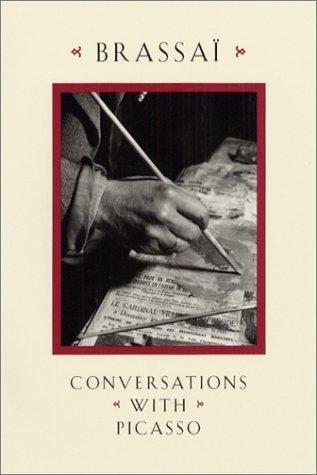
Brassaï: Conversations with Picasso
Brassaï
Brassaï: The Invisible Sought
Bing