Brad Kahlhamer
Brad Kahlhamer: Where Every World Belongs
Artist Spotlight · The Collection Editorial
There is a particular kind of artist whose work arrives from somewhere between worlds, drawing its power not from a single tradition but from the friction and beauty of many colliding at once. Brad Kahlhamer is that artist. Over the past three decades, his paintings, drawings, sculptures, and installations have earned him a devoted following among collectors and curators who recognize in his work something genuinely difficult to achieve: a visual language that feels wholly original, urgent, and alive. His presence in major institutional collections and his continued output from his New York studio mark him as one of the most compelling figures working at the intersection of indigenous American imagery, urban culture, and the restless mythology of American identity.
Brad Kahlhamer
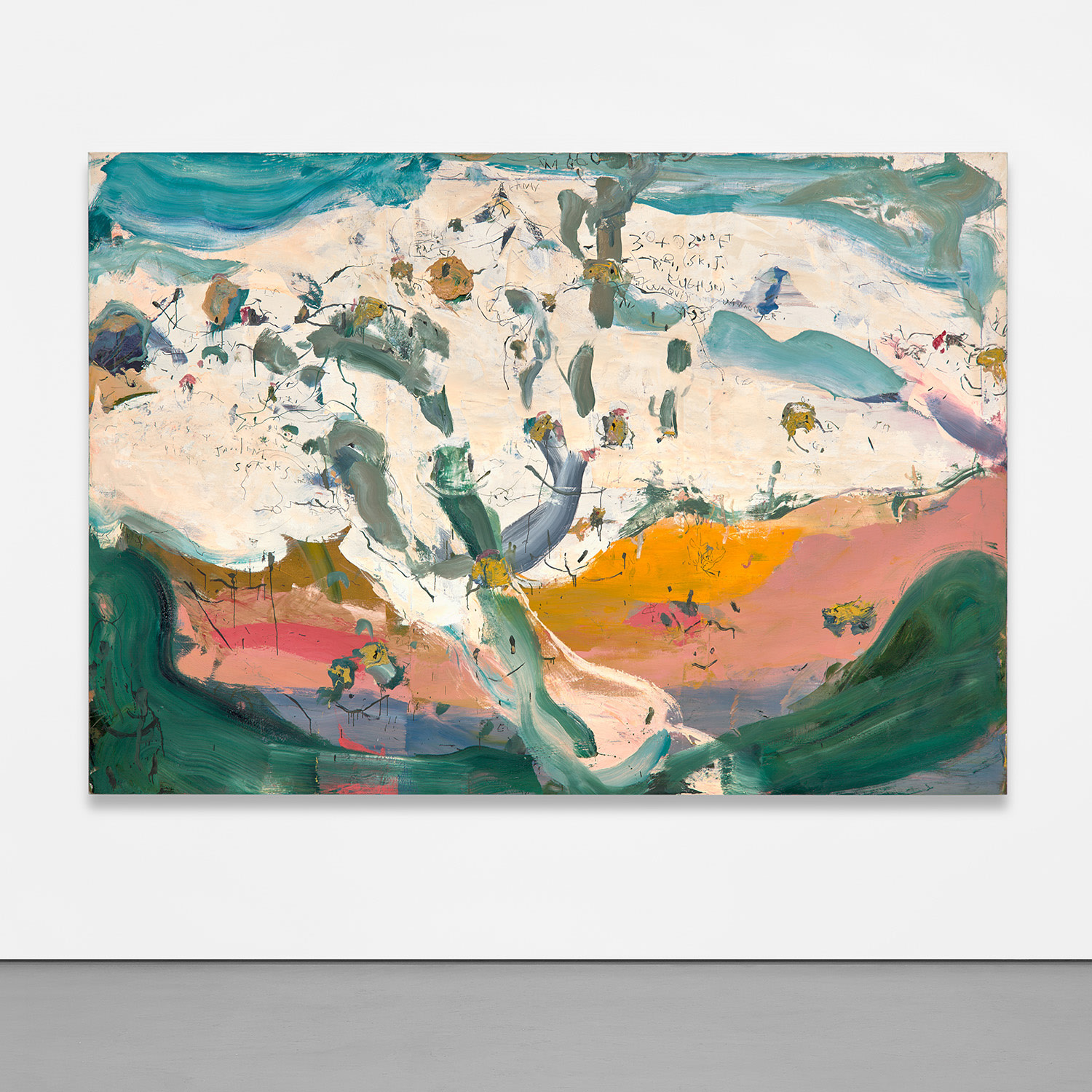
30 at 3,000 Feet (Waqui + Waquier), 1998
Kahlhamer was born in 1956 and adopted as an infant, raised outside of his Native American birth culture in the American Midwest and Southwest. That biographical fact is not incidental to his art. It is the root system from which everything else grows. Growing up without direct access to his indigenous heritage, he encountered American culture in its most unfiltered forms: punk rock, street life, the visual noise of cities, the wide and often contradictory promises of the American landscape.
He came to New York as a young man and absorbed the downtown art scene of the 1980s and 1990s, a period of intense cross pollination between fine art, music, and subcultural energy. That environment gave him permission to be multiple things at once, and he took full advantage of it. His artistic development reflects a sustained and disciplined exploration of what it means to occupy contested cultural ground. Rather than resolving the tensions in his biography, Kahlhamer leans into them.
Brad Kahlhamer
Teeth
His paintings layer totemic animal forms, feathered figures, and spectral presences against compositions that carry the kinetic energy of graffiti and the emotional directness of outsider art. He works fluidly across media, moving from oil on canvas to watercolor and ink on paper to elaborate sculptural assemblages that incorporate wire, leather, feathers, rubber, and found materials. Each shift in medium feels purposeful, as though the work itself is always searching for the right body to inhabit. Among the works that have defined his reputation, the 1998 oil on canvas "30 at 3,000 Feet (Waqui + Waquier)" stands as a commanding early statement.
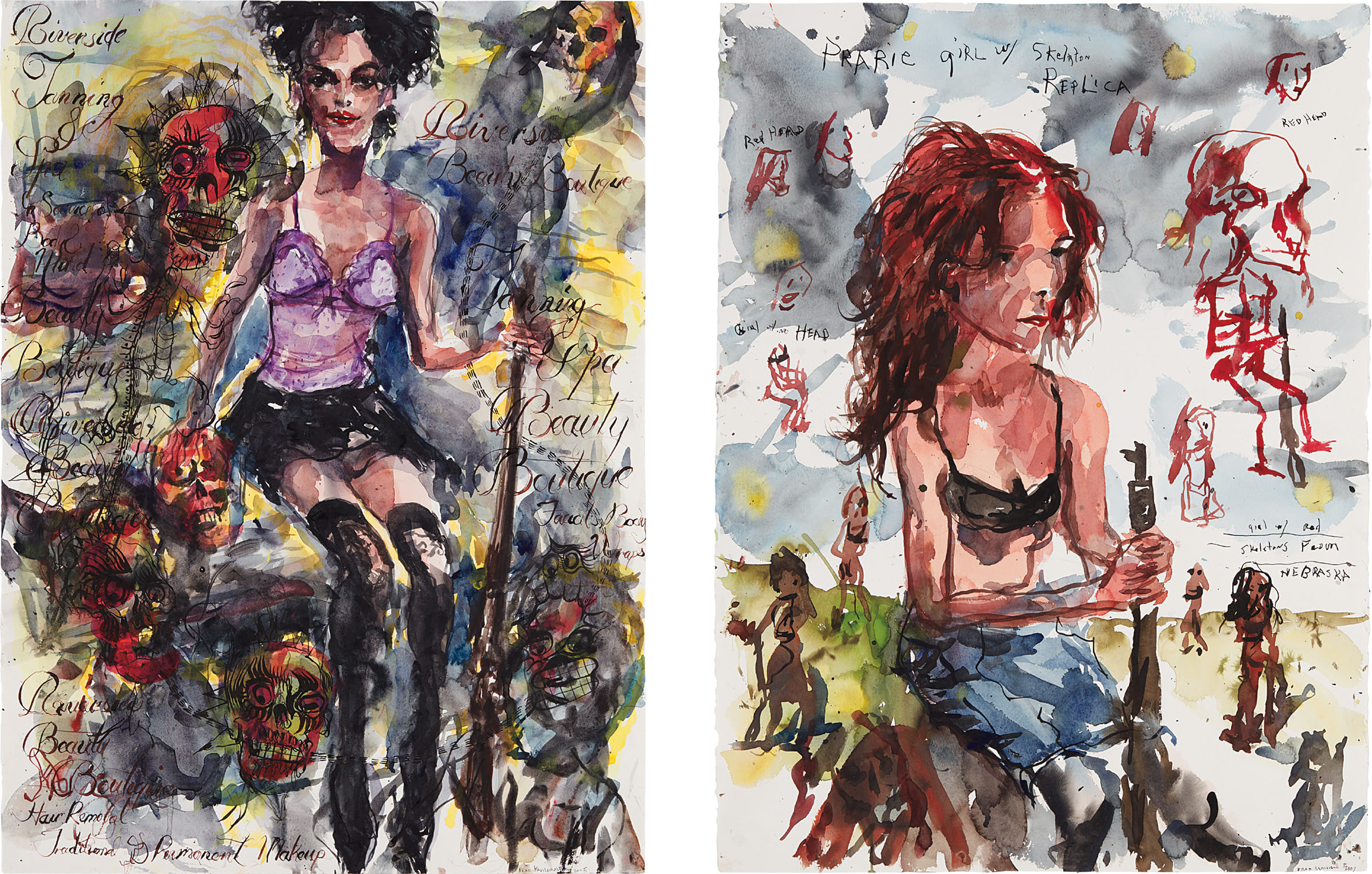
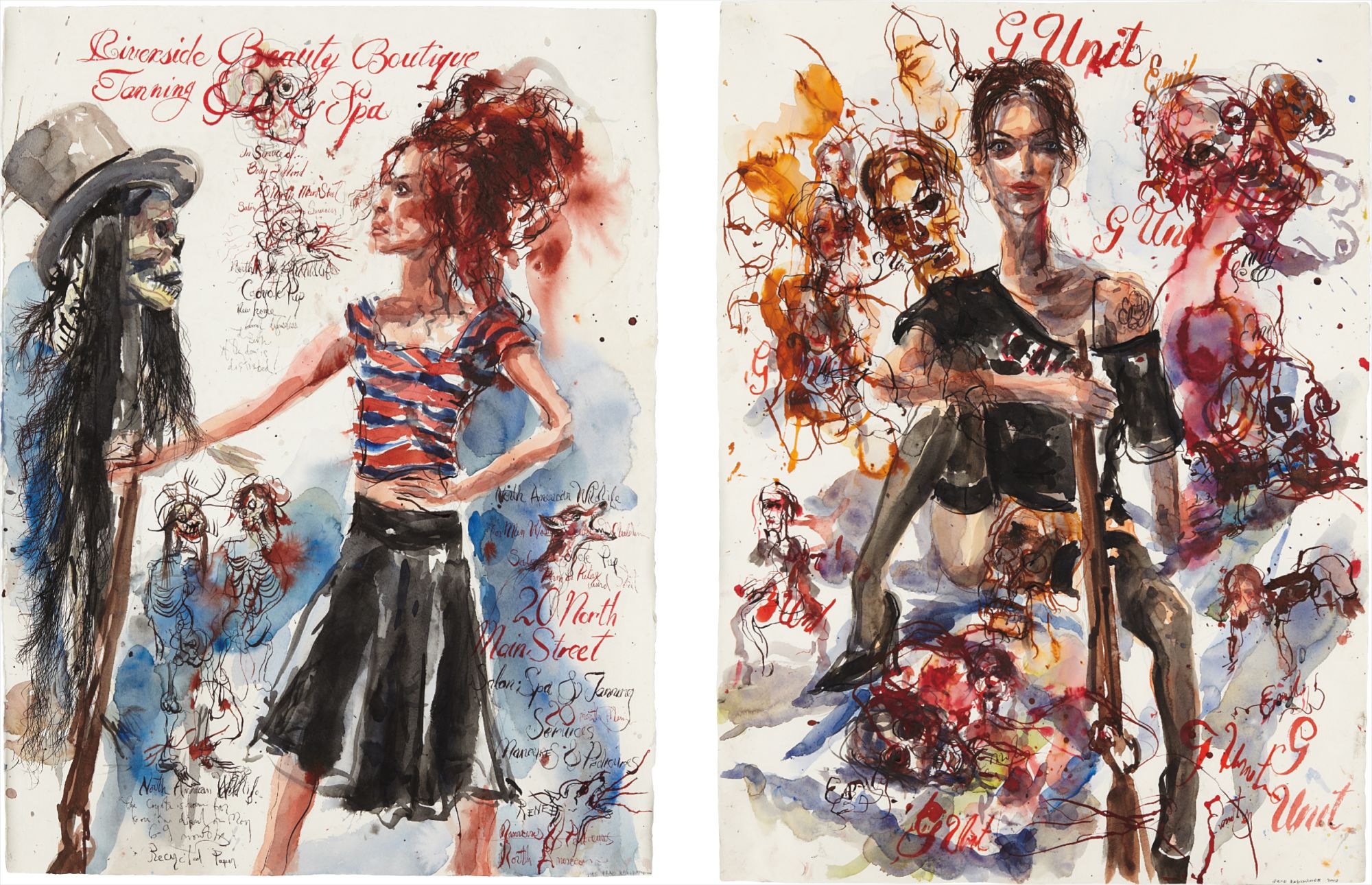
Its scale and its layering of imagery demonstrate how confidently Kahlhamer had already developed his signature approach: figures and creatures that seem to migrate across the picture plane, neither fully grounded nor fully airborne, caught in a state of perpetual becoming. His "Urban Prairie Girls" series, rendered in ink and watercolor on paper across multiple iterations from 2003 onward, offers an equally revealing window into his practice. These works are tender and strange in equal measure, fusing the femininity and toughness of urban street archetypes with something older and more ceremonial. The title itself performs the cultural collision that defines his entire body of work.
Brad Kahlhamer
Two works: (i) Urban Prairie Girls; (ii) Urban Prairie Girls, 2003
His sculptural piece "Group of Birds," assembled in 18 parts from wire, leather, nails, staples, wood, rubber, pigment, fabric collage, feathers, plastic, and ribbon, demonstrates his gift for transforming humble and disparate materials into objects of genuine spiritual charge. For collectors, Kahlhamer represents a rare opportunity. His work sits at a crossroads that the art market increasingly recognizes as important: the meeting point between indigenous American visual traditions and the broader currents of contemporary art. Collectors who came to his work early, acquiring paintings and works on paper in the late 1990s and early 2000s, have watched those acquisitions age with remarkable grace.
The works on paper, in particular, offer an accessible entry point into his practice while demonstrating the full range of his draftsmanship and his ability to sustain complex imagery at intimate scale. Oil paintings from that same period carry a different weight, both physically and in terms of their presence in a collection. A Kahlhamer canvas is not a quiet object. It makes demands on the room it occupies, and it rewards sustained attention.
Brad Kahlhamer
Urban Prairie Girls
Collectors drawn to artists who resist easy categorization will find in his work a sustained argument for the richness of cultural complexity. Placing Kahlhamer within art history requires a willingness to hold several lineages in mind simultaneously. He shares certain preoccupations with artists like Jean Michel Basquiat, whose synthesis of street culture and art historical awareness shaped a generation, and with Jaune Quick to See Smith, whose work has long interrogated the representation of Native identity within the Western art canon. Kahlhamer also resonates with the assemblage traditions associated with artists like Betye Saar, particularly in his sculptural works, where found and handmade materials are brought together with a sense of ritual intention.
Yet his voice remains distinctly his own, shaped by experiences that belong to no single tradition and answer to no single community. That independence is part of what makes him so compelling to serious collectors and curators. Kahlhamer has exhibited at institutions including the Whitney Museum of American Art and the New Museum in New York, and his work has been the subject of sustained critical attention from writers and curators engaged with questions of identity, diaspora, and cultural hybridity in contemporary American art. His gallery relationships have brought his work to international audiences, and auction appearances over the years have confirmed a steady and genuine market interest.
What is striking, however, is that the enthusiasm for his work feels less speculative than genuinely art motivated. People collect Kahlhamer because they cannot stop looking at the work, because it opens something up rather than closing it down. The relevance of Brad Kahlhamer in the current cultural moment is unmistakable. At a time when conversations about indigenous representation, cultural belonging, and the complexity of American identity have never been more present in public life, his work offers not argument but embodiment.
He does not illustrate these themes from the outside. He lives inside them, and the art that emerges is richer for it. For any collector seeking work that is beautiful, intellectually alive, and rooted in genuine human experience, his practice represents exactly the kind of investment that rewards not just financially but in every encounter with the work itself.