Blanche Lazzell
Blanche Lazzell: Color, Line, and Pure Joy
Artist Spotlight · The Collection Editorial
Picture Provincetown in the early decades of the twentieth century, salt air rolling off Cape Cod Bay, a small but electric community of artists gathered around wooden printing presses and stretched canvases. At the center of that scene, working with focused intensity, was Blanche Lazzell, a West Virginia woman who had carried the spirit of Parisian Cubism across the Atlantic and was busy transforming it into something wholly her own. Today, with renewed institutional attention to overlooked American modernists and a collector market hungry for works that bridge the transatlantic avant garde and the American experience, Lazzell is receiving recognition long overdue. Her white line woodcuts, vibrant and architecturally assured, feel as alive now as they did when the ink was still fresh.
Blanche Lazzell
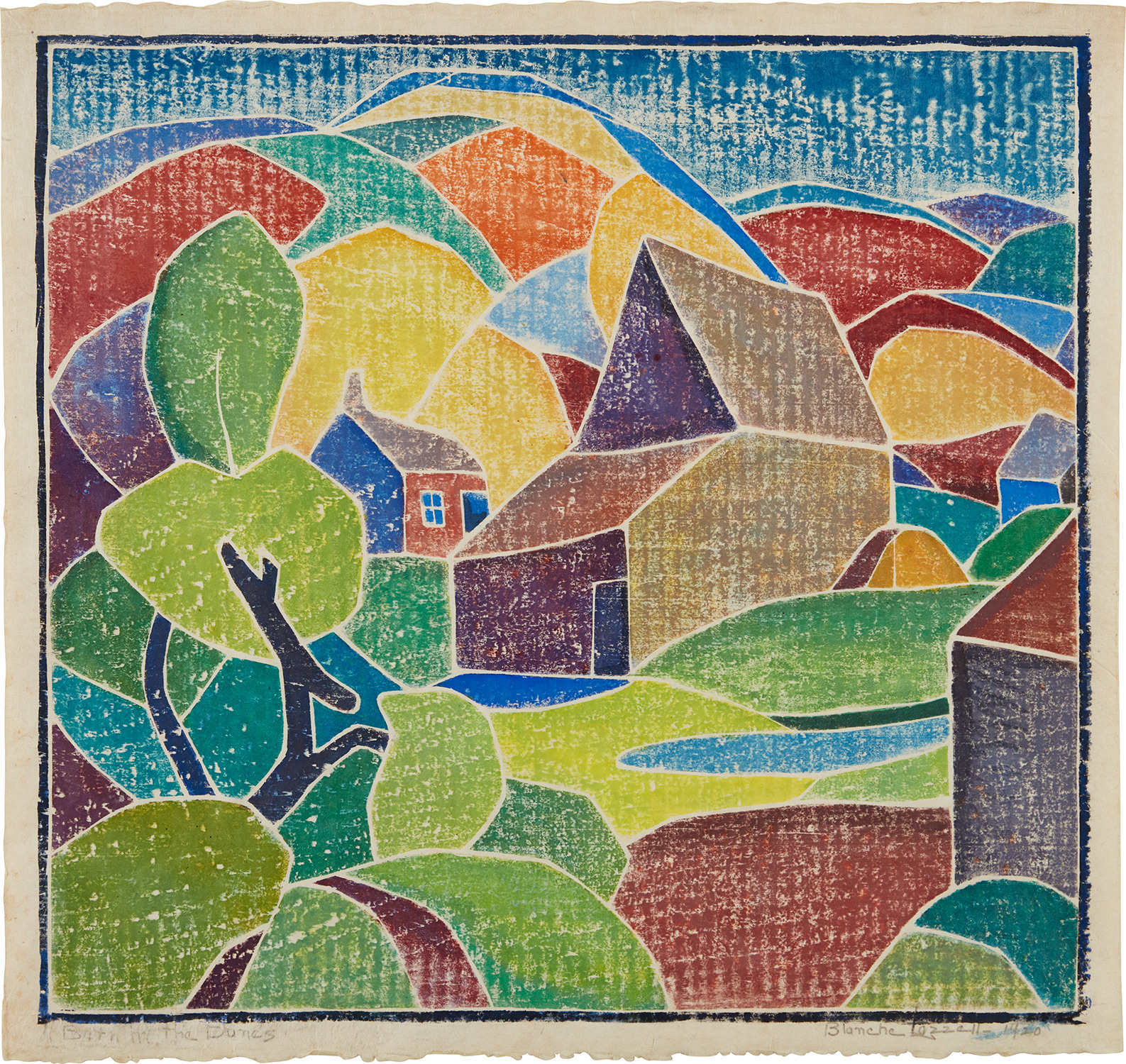
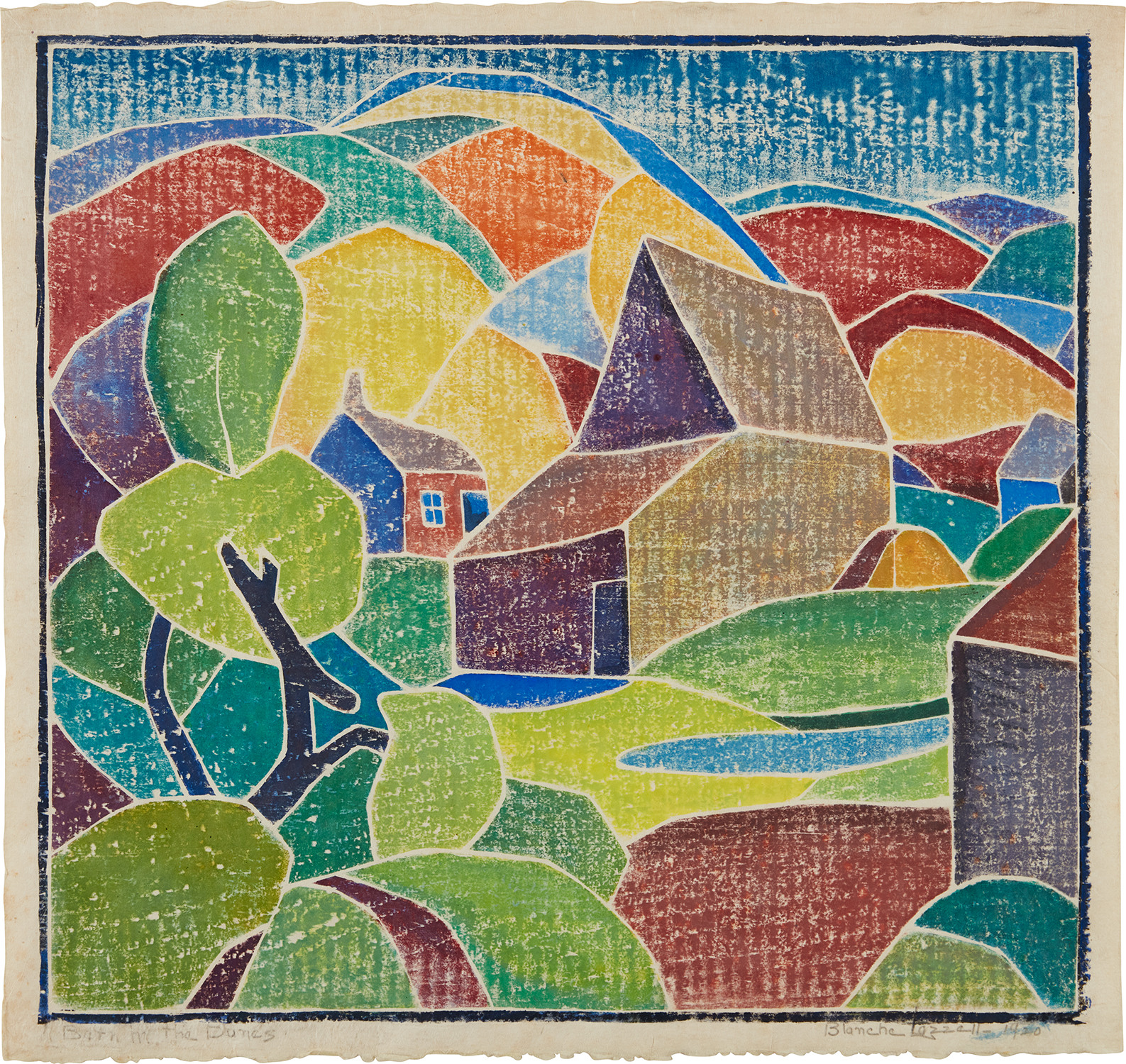
Barn in the Dunes (C. bl. 30)
Lazzell was born in 1878 in Greenbrier County, West Virginia, a rural landscape of rolling hills and river valleys that would leave a permanent mark on her visual imagination. She studied at the Woman's College of West Virginia before moving to New York to train at the Art Students League, where she absorbed the technical foundations of her craft. Her formation was serious and deliberate, the trajectory of someone who understood that ambition required both discipline and exposure to the wider world. That wider world arrived definitively when she first traveled to Paris in 1912, and then again in the early 1920s when she studied under Fernand Léger and Albert Gleizes at the Académie Moderne, immersing herself in the Cubist language that would reshape everything she made.
Paris gave Lazzell the conceptual tools she needed, but Provincetown gave her the medium and the community. She became deeply embedded in the Provincetown Printers, a group of artists who collectively developed and championed the white line woodcut technique, a process in which a single block is carved with incised lines and inked in multiple colors, each passage applied by hand before a single impression is pulled. The result is a work that is simultaneously intimate and bold, bearing the trace of direct human touch while achieving a luminous, jewel like quality impossible to replicate exactly. Lazzell did not merely participate in this movement.
Blanche Lazzell
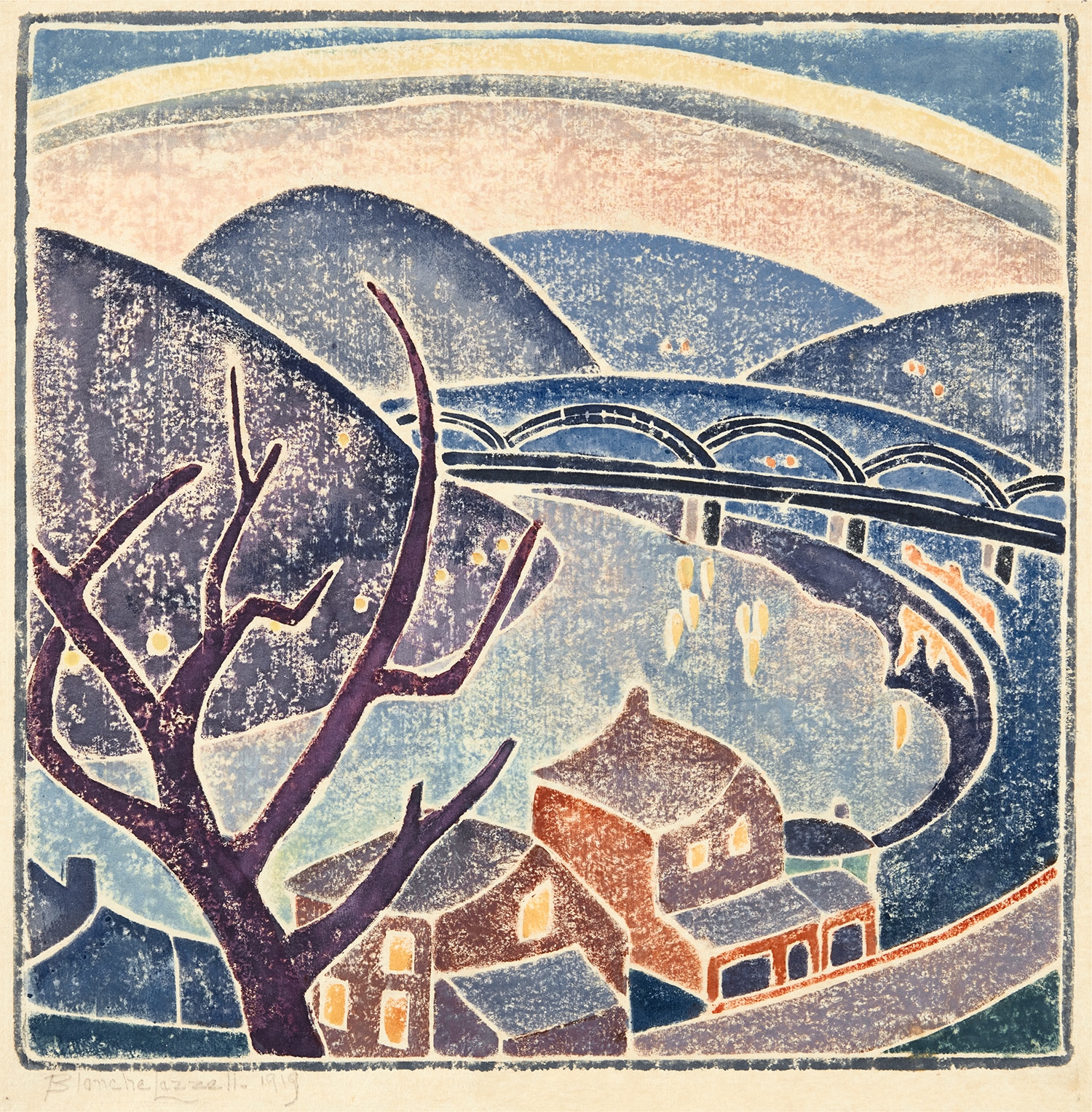
The Monongahela (C. bl. 16)
She extended it, pushing the technique toward increasingly abstract compositions that reflected her rigorous engagement with European modernism. Her signature works reveal a mind comfortable holding multiple influences in productive tension. Barn in the Dunes, one of the most celebrated works in her catalog, translates the Cape Cod landscape into a series of interlocking geometric planes, the vernacular architecture of rural New England refracted through a Cubist lens. The Monongahela series, which returns to the rivers of her West Virginia upbringing, demonstrates her ability to find monumental geometry in familiar, personal geography.
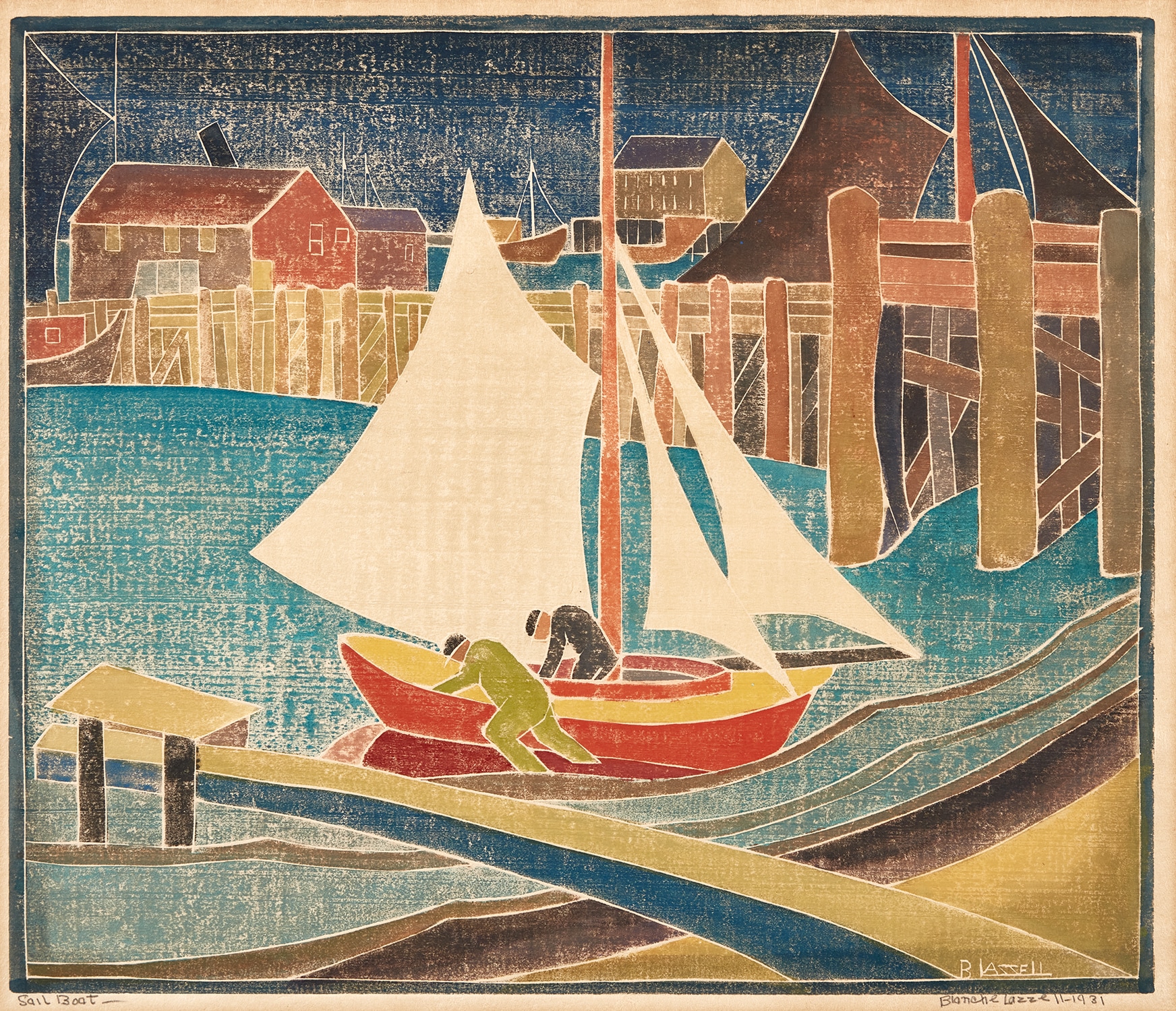
Sail Boat reduces maritime form to pure rhythm, color, and plane, achieving something close to joyful abstraction while never losing its anchor in observed experience. The Red Quill carries this same precision, its composition a study in controlled dynamism. Across all these works, what strikes viewers is the sense that color is not decorative but structural, that each hue carries weight and plays a spatial role as deliberate as any brushstroke in a Léger canvas. For collectors, Lazzell represents a compelling intersection of art historical significance and relative accessibility.
Blanche Lazzell
Sail Boat (C. bl. 79)
Her works are held in major institutional collections including the Smithsonian American Art Museum and the West Virginia University Art Museum, which speaks to their established cultural standing. At auction, her white line woodcuts have attracted steady and growing interest, particularly as the market for American modernism has broadened its appreciation beyond the canonical names. Collectors drawn to early twentieth century prints, to the Provincetown school, or to the transatlantic exchange between American artists and the European avant garde will find in Lazzell a figure of genuine importance. Works on laid paper, with wide margins and strong color retention, represent the most desirable examples, and her Monongahela subjects carry particular resonance for those interested in the relationship between place and abstraction.
To understand Lazzell fully is to place her in a constellation of artists working at the same fertile intersection of modernism and printmaking. Agnes Pelton, another American woman who synthesized European ideas into a distinctive personal vision, offers one point of comparison, as does Marguerite Zorach, whose work similarly navigated the space between folk tradition and international modernism. Among the Provincetown Printers, B.J.
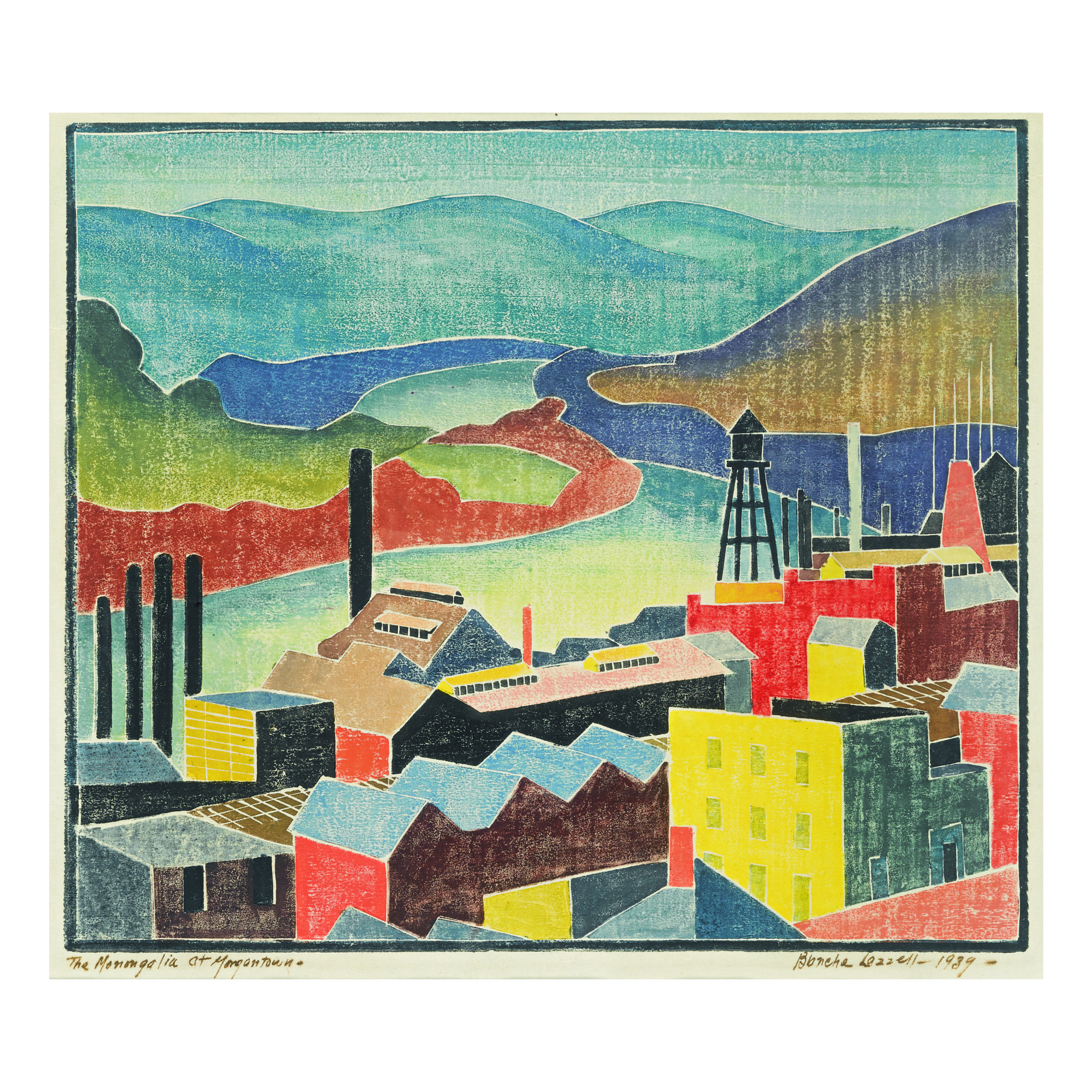
Blanche Lazzell
The Monongahela At Morgantown
O. Nordfeldt is often credited as an early developer of the white line technique, but it was artists like Lazzell who carried it to its most sophisticated expression. Her relationship to Stuart Davis and Arthur Dove, contemporaries who were working out their own American versions of Cubist and post Cubist ideas, helps locate her within the broader story of how modernism took root in the United States during the interwar decades. The case for Lazzell is ultimately a case for complexity and courage.
She worked for most of her career without the institutional support extended to her male peers, and she made works of extraordinary ambition anyway. She returned to Paris multiple times, continued exhibiting and printing into the 1940s and 1950s, and never retreated from the abstract convictions she had formed in her most formative years. What she left behind is a body of work that rewards sustained attention, that opens up the more you know about its making, and that carries within it a distinctive American voice shaped equally by the hills of West Virginia and the studios of Montparnasse. For any collector serious about the history of American modernism, Blanche Lazzell is not a footnote.
She is a foundation.