Blair Thurman
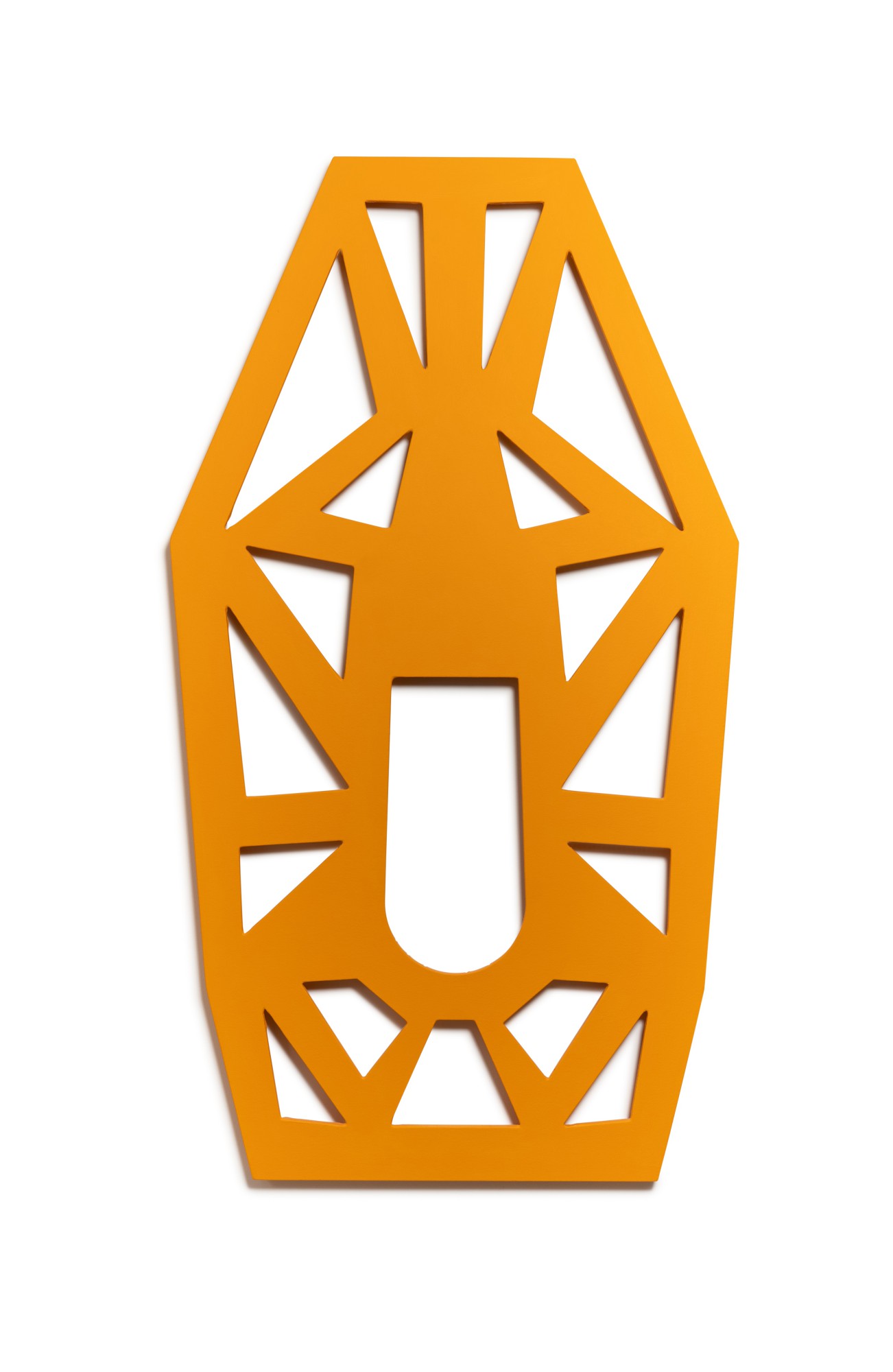
Blair Thurman Lights Up the Fast Lane
Artist Spotlight · The Collection Editorial
There is a moment, standing in front of a Blair Thurman painting, when the canvas stops being a flat object and becomes something closer to a portal. The neon arcs pulse. The metallic paint catches the light at an angle that suggests motion. You are, somehow, both at the starting line and already deep into the race.
Blair Thurman
Na-Cheez-Mo, 2014
It is this quality, the sensation of speed distilled into stillness, that has made Thurman one of the most compelling figures working at the intersection of American abstraction and popular iconography, and it is why collectors and curators continue to return to his work with genuine excitement. Blair Thurman was born in 1961, and his formative years unfolded against the backdrop of an America saturated with commercial color, roadside spectacle, and the particular glamour of motorsport. The stock car circuit, with its handpainted numbers, sponsor decals, racing stripes, and roaring crowds, offered a visual vocabulary that was both emphatically American and almost entirely ignored by the fine art world. Thurman saw in that vernacular something rich and worthy: a grammar of shape and hue that was as sophisticated in its own way as anything hanging in a Chelsea gallery.
His biography is inseparable from his eye, and his eye was trained by the speedway as much as by the studio. Throughout the 1980s and into the 1990s, Thurman developed his practice in New York, absorbing the lessons of the generation before him without being consumed by them. He understood the color field painters, felt the pull of minimalism, and registered the irreverence of pop art, but he was building toward something more personal and more kinetic. His shaped canvases began to emerge as a signature move, works where the physical boundary of the painting was itself part of the composition, a windshield curve here, a fender arc there.
Blair Thurman
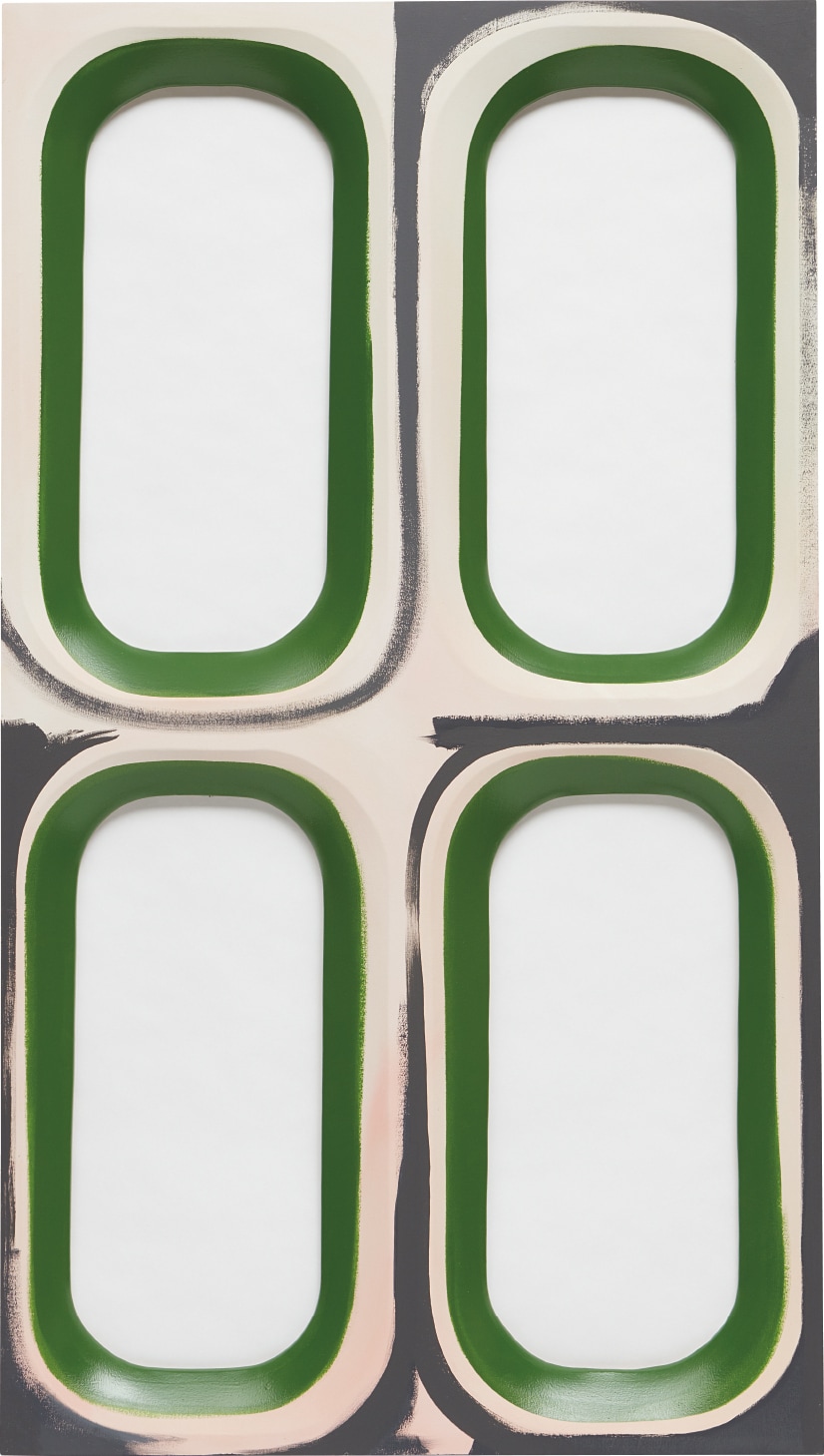
Green Eggs and Ham, 2013
These were not decorative choices. They were structural arguments about what a painting could be and where it could take you. The works that collectors encounter on The Collection represent Thurman at the height of his powers across a particularly fertile period in the 2010s. "That Old Can Am Glam," made in 2013, captures everything essential about his approach: the title is a knowing wink at motorsport history, a nod to the legendary Can Am racing series of the late 1960s and early 1970s, while the surface delivers a rush of acrylic color that feels both nostalgic and utterly present.
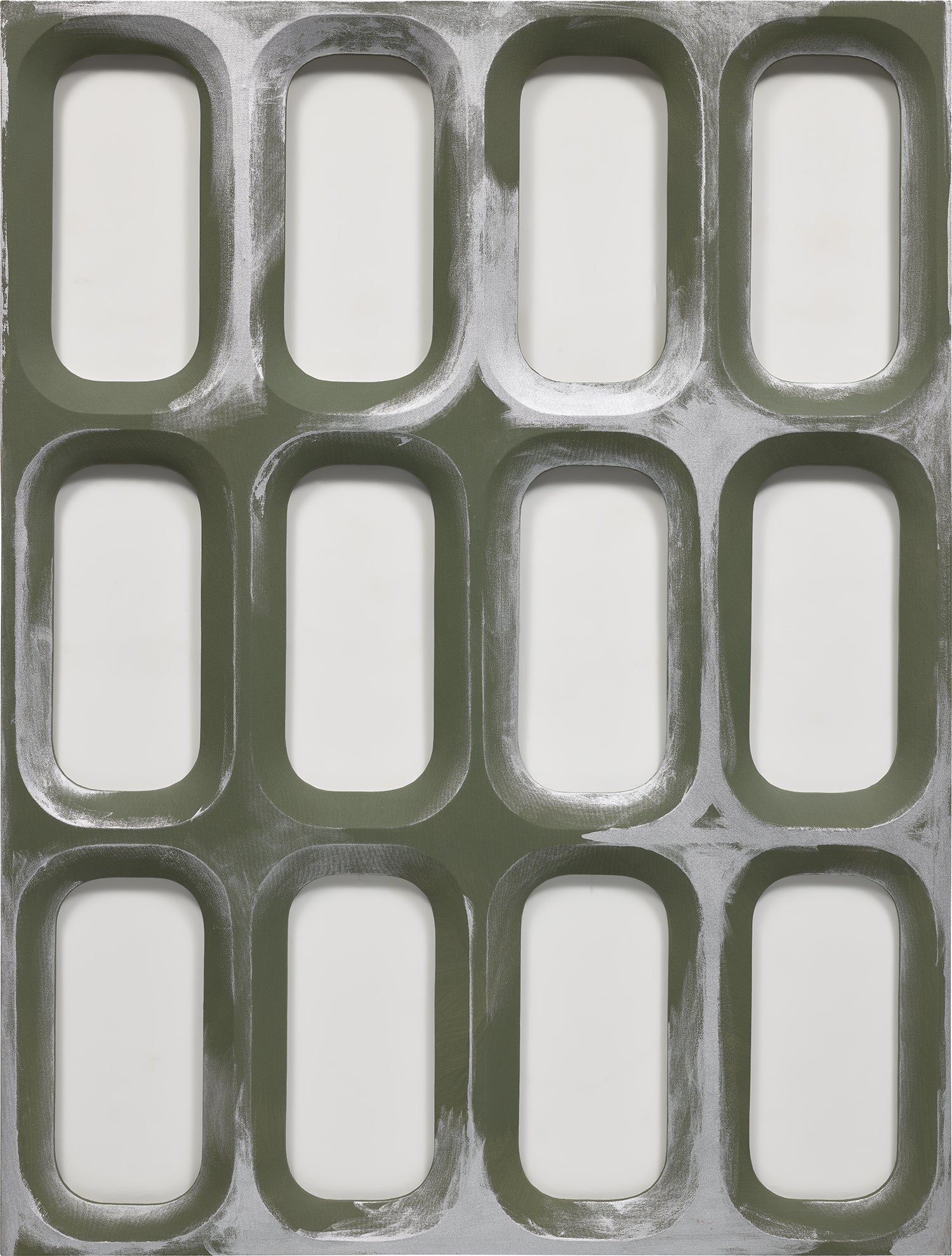
That same year produced "Green Eggs and Ham" and "Sardine Disaster," the latter distinguished by its use of acrylic and metallic paint on a shaped canvas, a combination that gives the work an almost automotive finish, the kind of gleam you associate with a perfectly maintained machine under exhibition lighting. "Na Cheez Mo" from 2014 and "Rapunz O" from 2016 extend this logic further, their playful titles masking a rigorous formal intelligence that rewards extended looking. "Double Pumpkin" from 2015, executed on a shaped canvas, demonstrates how Thurman uses the physical silhouette of a work as a compositional instrument, the painting beginning before it begins, in the decision of where the edge will fall. What draws serious collectors to Thurman is precisely this layering of pleasure and rigor.
Blair Thurman
Sardine Disaster, 2013
On first encounter, the work is seductive, the colors are confident, the references are fun, and there is an immediate accessibility that does not condescend to the viewer. On sustained engagement, the formal complexity becomes apparent. The geometry is deliberate, the color relationships are earned, and the shaped supports reveal themselves as arguments rather than flourishes. Thurman occupies a rare position in the market: his work is genuinely enjoyable to live with, yet it holds up to the most demanding critical scrutiny.
That combination is rarer than it sounds, and it is why collections that include his paintings tend to feel both intellectually serious and genuinely alive. Auction interest in his work has been steady among collectors who understand the American abstraction tradition and who recognize that his contribution to it has been consistently undervalued relative to some of his peers. In the broader context of art history, Thurman belongs to a lineage that runs from the hard edge painters of the 1960s through the pop appropriationists of the 1970s and into the generation that began, in the 1980s and 1990s, to reclaim American popular culture as legitimate artistic material without ironic distance. He shares sensibilities with artists like Peter Halley, whose interest in geometric abstraction and cultural coding resonates with Thurman's own enterprise, and with John M.

Blair Thurman
Jiffy Pop I (CCKSCKR HAT III)
Armleder, who similarly plays between decoration and concept. The candy colored energy of his palette invites comparisons to Keith Haring and Kenny Scharf, though Thurman's investment in formal structure and motorsport specificity places him in a distinct territory. He is perhaps best understood as an artist who took the lessons of postwar American abstraction and ran them through the filter of the speedway, emerging with something that belongs to both worlds and can be fully claimed by neither. The legacy of Blair Thurman is still being written, which is part of what makes his work so alive as a collecting proposition right now.
He has exhibited internationally, including significant presentations in New York and Europe, and his reputation among collectors who prize rigorous, joyful, formally inventive painting has only deepened over the decades. There is a generosity in his work that feels important in the current moment, a willingness to be pleasurable, to celebrate American visual culture from the inside, and to trust that a painting can be both smart and fun without either quality diminishing the other. For anyone building a collection that takes American art seriously, and that wants to look forward as well as back, Blair Thurman is not a discovery waiting to be made. He is a confirmation of something you already suspected: that the best painting finds its language in the places others have overlooked, and then makes those places luminous.