Bisa Butler
Bisa Butler Stitches History Into Living Color
Artist Spotlight · The Collection Editorial
“I want my subjects to be seen. I want them to have a full humanity, a full life.”
Bisa Butler, Art Institute of Chicago interview, 2020
When the Art Institute of Chicago unveiled Bisa Butler's solo exhibition "Portraits" in 2020, visitors stopped in their tracks. The show brought together a suite of monumental quilted portraits, each one humming with the energy of African wax prints, silks, velvets, and cottons layered into faces and bodies of extraordinary presence. Critics reached for superlatives. The quilting world celebrated.
Bisa Butler
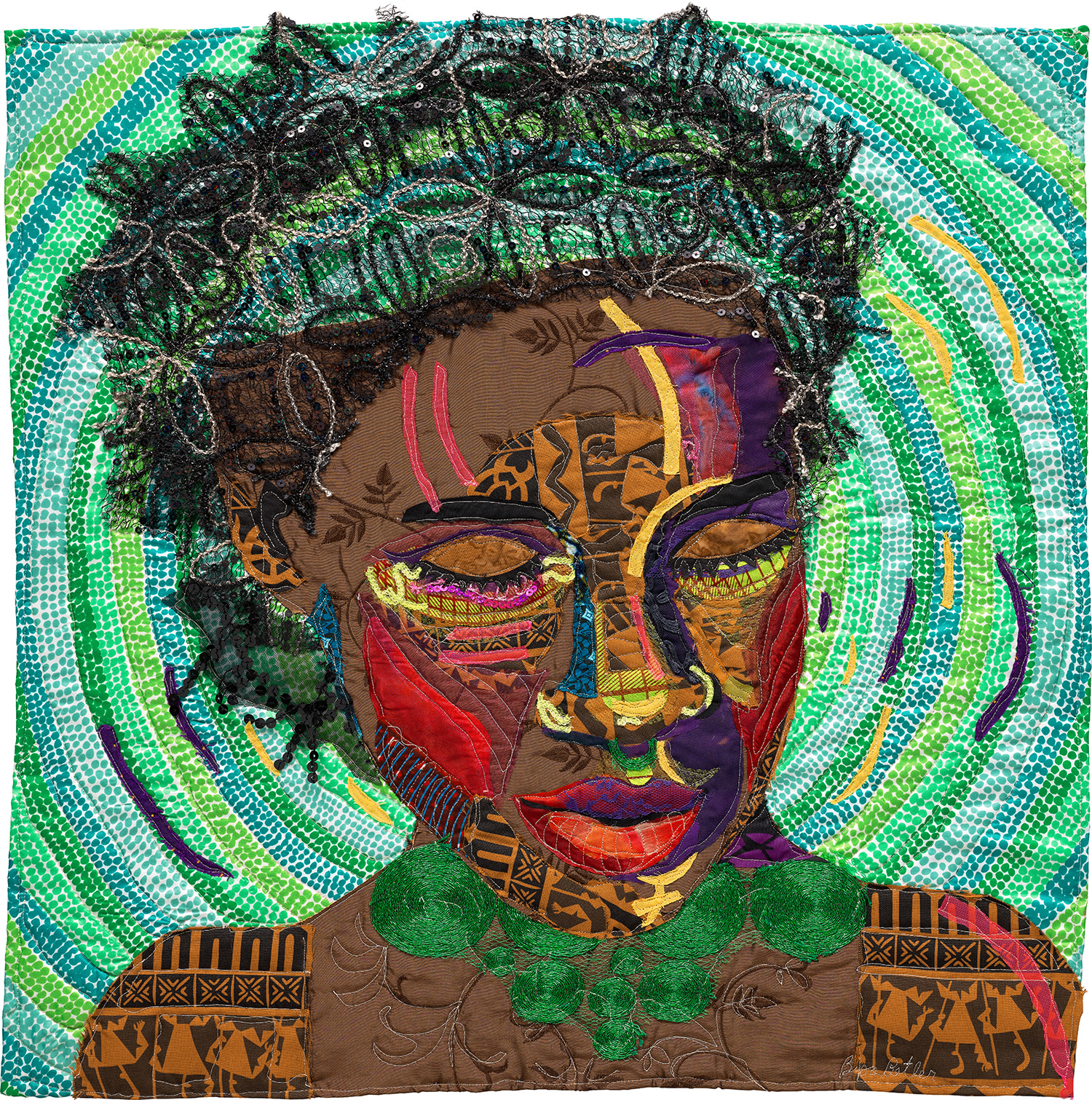
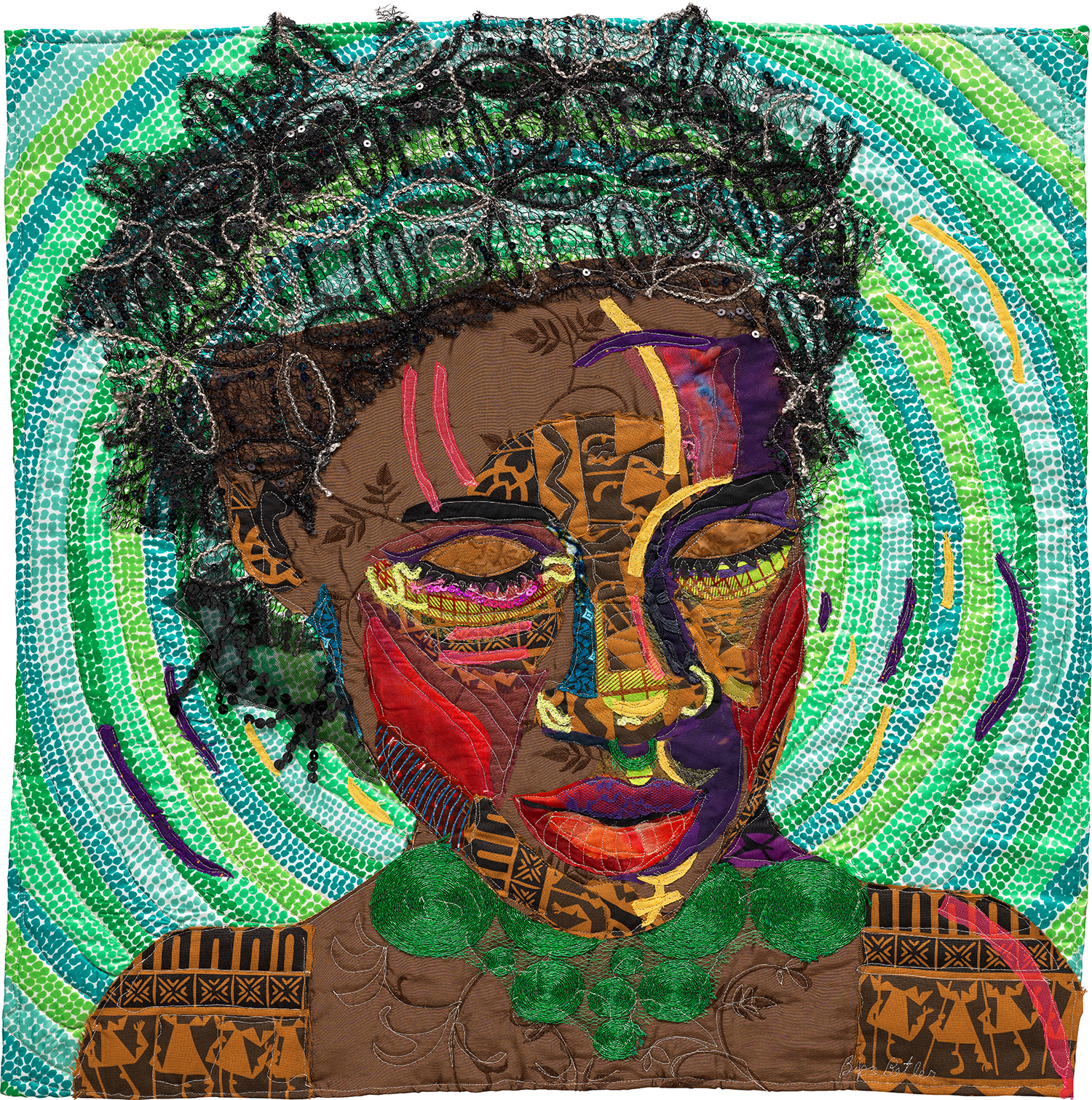
Whirlwind, 2016
And the broader art world was forced to reckon, once again, with its own assumptions about what constitutes fine art and whose stories deserve to be told at scale. Butler was born in 1973 in Orange, New Jersey, and grew up in a household where creativity was not a luxury but a language. Her mother was a seamstress, and the domestic arts were woven into daily life with a seriousness that many in the fine art world reserve for painting or sculpture. Butler studied fine art at Howard University, the historically Black institution in Washington, D.
C. that has long served as an incubator for some of America's most important artists, and later completed her Master of Fine Arts at Montclair State University in New Jersey. That dual formation, one grounded in the intellectual traditions of the Black Arts Movement and the other in rigorous contemporary practice, gave her work a foundation that is both deeply personal and historically ambitious. The turn toward quilting was not a sudden departure but a homecoming.

Bisa Butler
Gathering Flowers, 2008
Butler had trained as a painter, and the influence of that training is visible in the way she approaches color, composition, and light. But fabric offered something paint could not: texture, history, and a direct line to the women who came before her. The African American quilting tradition carries within it coded messages, communal memory, and an improvisational genius that Butler recognized as entirely aligned with her artistic ambitions. Rather than abandon painting, she absorbed it into cloth, constructing images with the same attention to tone and form that a portraitist might bring to a canvas.
“Fabric has a history. Every print, every textile carries the memory of the hands that made it.”
Bisa Butler, Smithsonian Magazine
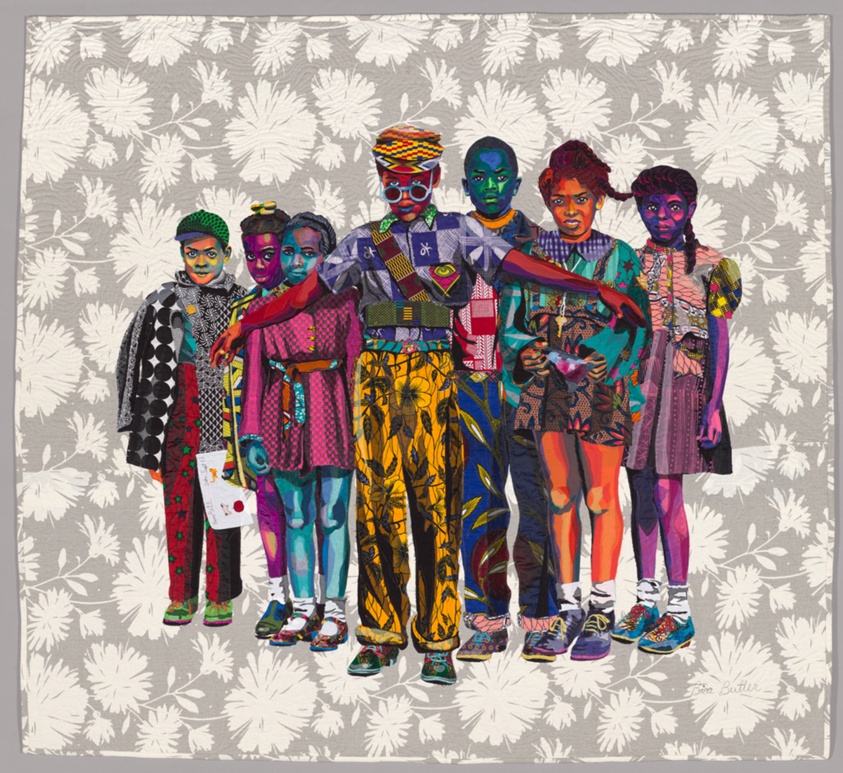
Her process begins with archival photographs, many of them drawn from the collections of the Schomburg Center for Research in Black Culture in Harlem and other repositories of African American history. She selects images of ordinary people, families at leisure, children in school uniforms, women in their Sunday best, soldiers on the eve of deployment, and transforms them into works of extraordinary scale and chromatic intensity. The Safety Patrol from 2018, constructed from cotton, wool, and chiffon and rendered through appliqué and quilting, is a perfect example of this approach. It takes a school photograph of young Black children performing civic duty and elevates it into something ceremonial, insisting on the dignity and beauty that the original image already contained but that history has so often chosen to overlook.
Bisa Butler
The Safety Patrol, 2018
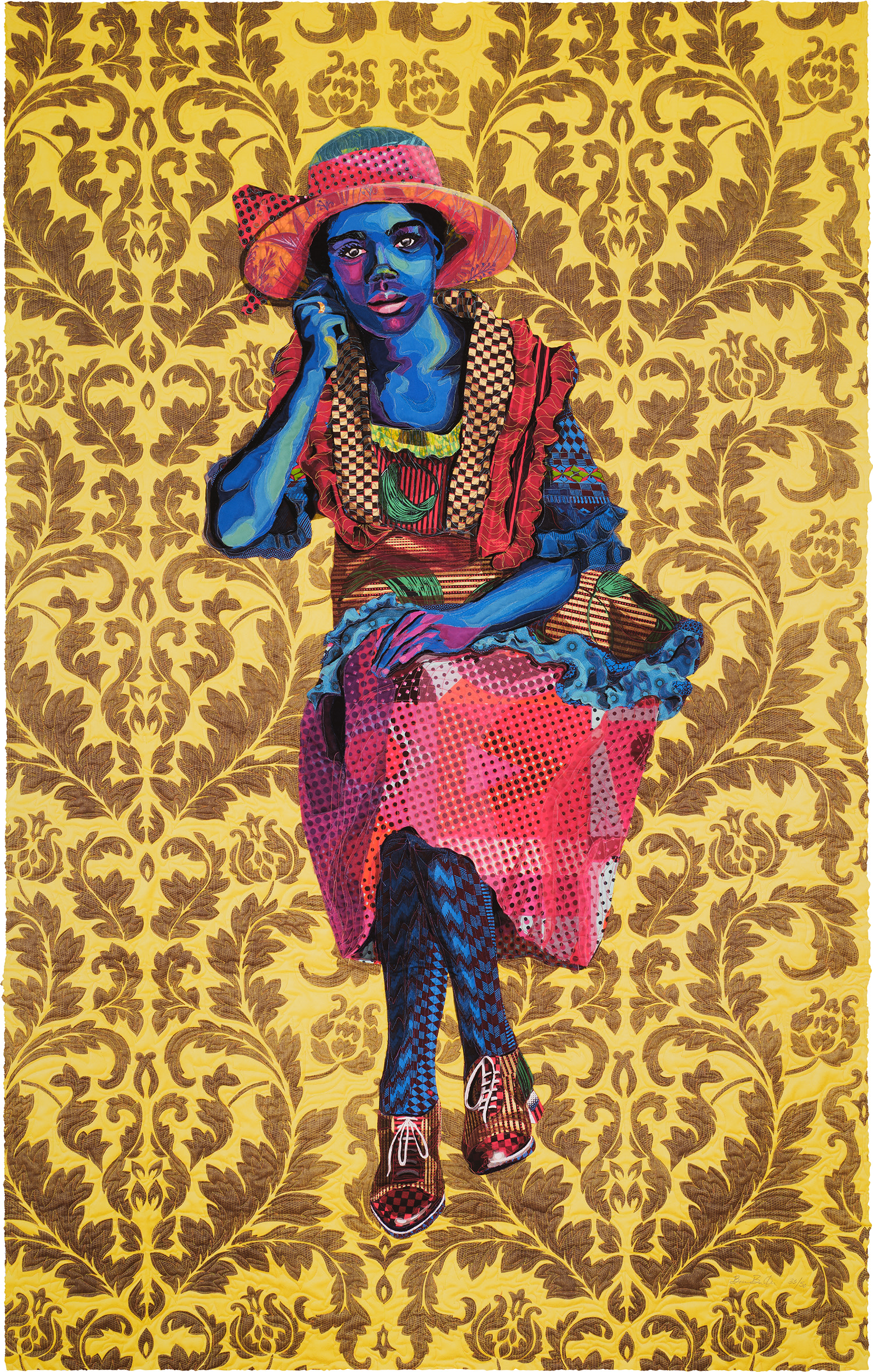
Whirlwind, created in 2016, demonstrates Butler's ability to translate spiritual weight into material form. The work pulses with movement, its fabrics chosen and placed with an intensity that feels improvisational even as it reflects meticulous planning. Gathering Flowers from 2008, one of her earlier major works, already shows the mature vocabulary she would go on to develop: the bold pattern play, the warm palette drawn from West African textile traditions, and the refusal to sentimentalize even as she celebrates. Daughter of the Dust, available as an inkjet pigment print on wove paper, extends her vision into the realm of multiples, making her imagery accessible to a wider range of collectors while preserving all the visual authority of her original textile work.
For collectors, Butler represents a confluence of forces that makes for a compelling and genuinely significant acquisition. Her work sits at the intersection of several urgent conversations: the revaluation of craft and textile art, the centering of Black American life in the mainstream art historical canon, and the growing market appetite for artists whose practice engages authentically with identity and memory. Her institutional recognition has accelerated considerably over the past decade, with major American museums adding her work to their permanent collections and her exhibitions drawing audiences that extend well beyond the usual gallery circuit. Collectors who entered early have seen both the cultural and market value of their acquisitions rise considerably, and the demand for her work continues to outpace supply.
Bisa Butler
Daughter of the Dust
Within the broader context of art history, Butler belongs to a lineage of artists who have used portraiture as an act of restoration and resistance. Her work resonates deeply with that of Kerry James Marshall, whose monumental paintings insist on the full humanity of Black figures in Western art historical settings, and with Faith Ringgold, whose story quilts established a powerful precedent for narrative textile practice. One might also invoke the influence of Romare Bearden, whose collage work similarly drew on the vernacular traditions of African American visual culture to build something encyclopedic and new. Butler's particular genius lies in her synthesis: she takes the quilt, an object historically undervalued precisely because it was made by women and in the home, and wields it as an instrument of portraiture that rivals anything produced in oil on canvas.
What Butler has built over the course of her career is not merely a body of work but a framework for seeing. She has argued, through every stitch and every yard of fabric, that Black lives are worthy of the grandest artistic treatment available, that the domestic can be monumental, and that history preserved in cloth is no less rigorous than history preserved in bronze or stone. As institutions continue to expand their understanding of what the canon should include, her place within it grows more secure with each passing year. For collectors who believe that art should be both beautiful and necessary, Bisa Butler makes a case that the two are inseparable.