Bill Traylor
Bill Traylor: American Visionary, Endlessly Alive
Artist Spotlight · The Collection Editorial
In 2018, the Smithsonian American Art Museum mounted "Between Worlds: The Art of Bill Traylor," one of the most celebrated retrospectives the institution had ever dedicated to a self taught artist. The exhibition drew visitors from across the country and crystallized what scholars and collectors had long understood: that Traylor's work belongs not merely to the canon of American folk art but to the broader story of twentieth century art making itself. Curated with deep archival care, the show brought together works from major museums and private collections alike, affirming that Traylor's spare, electric imagery had lost none of its power in the decades since his rediscovery. For many who encountered his drawings for the first time in those gallery rooms, the experience was something close to revelation.
Bill Traylor
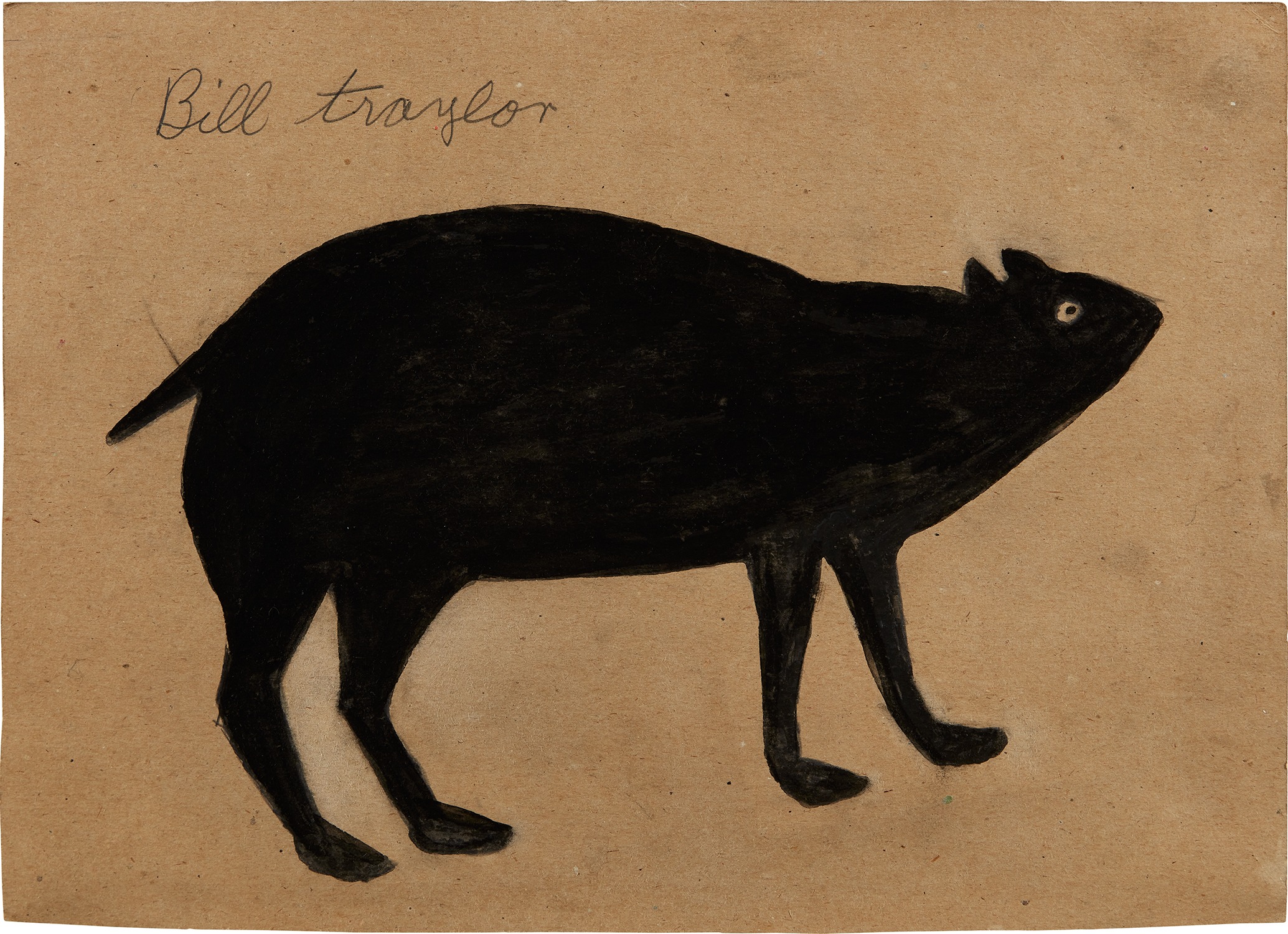
Black Bear, 1939
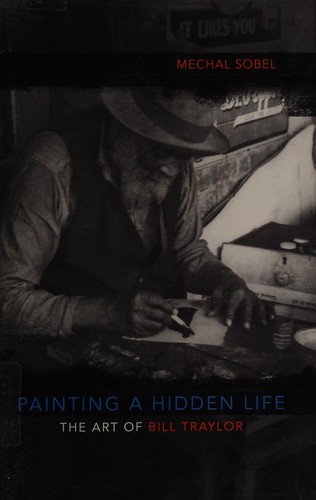
Bill Traylor was born around 1853 on a cotton plantation in Benton, Alabama, in the years just before the Civil War. He was born into slavery, and after emancipation he remained on the plantation as a sharecropper, living and working on the land that had defined his entire world. He married, raised a large family, and spent the better part of eight decades in that rural Alabama landscape, absorbing its rhythms, its stories, its animals, and its hierarchies of power. When his wife died and his children dispersed to northern cities in the great migration of the early twentieth century, Traylor found himself, in his mid eighties, alone and unmoored, eventually making his way to Montgomery, where he slept in the back room of a funeral parlor and spent his days on the sidewalks of Monroe Street.
It was on those sidewalks, sometime around 1939, that Traylor began to draw. The circumstances were as unlikely as anything in the history of American art. He had no formal training, no studio, no materials beyond what he could find or afford. He worked on pieces of cardboard torn from boxes, using pencil stubs and small amounts of house paint.
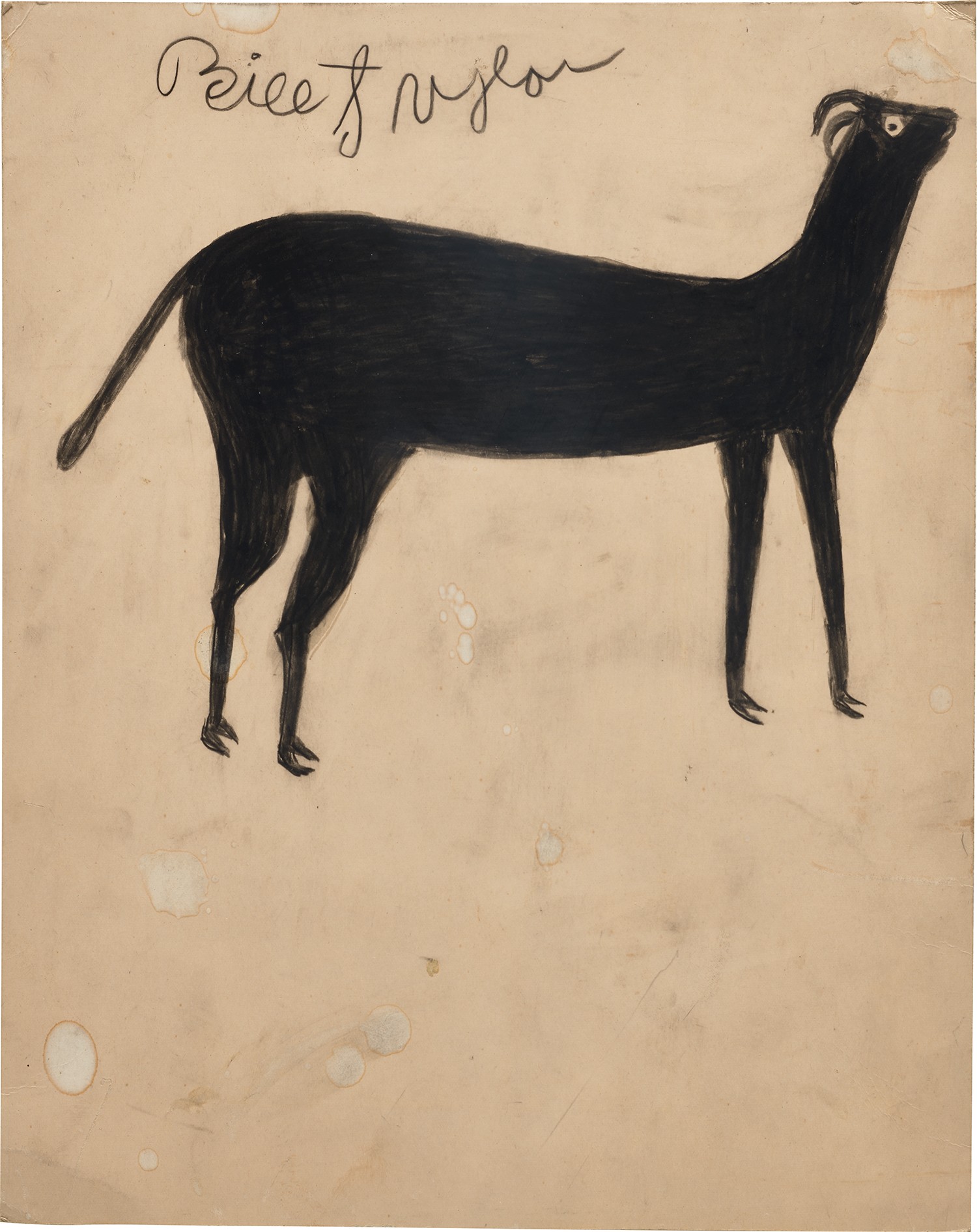
Bill Traylor
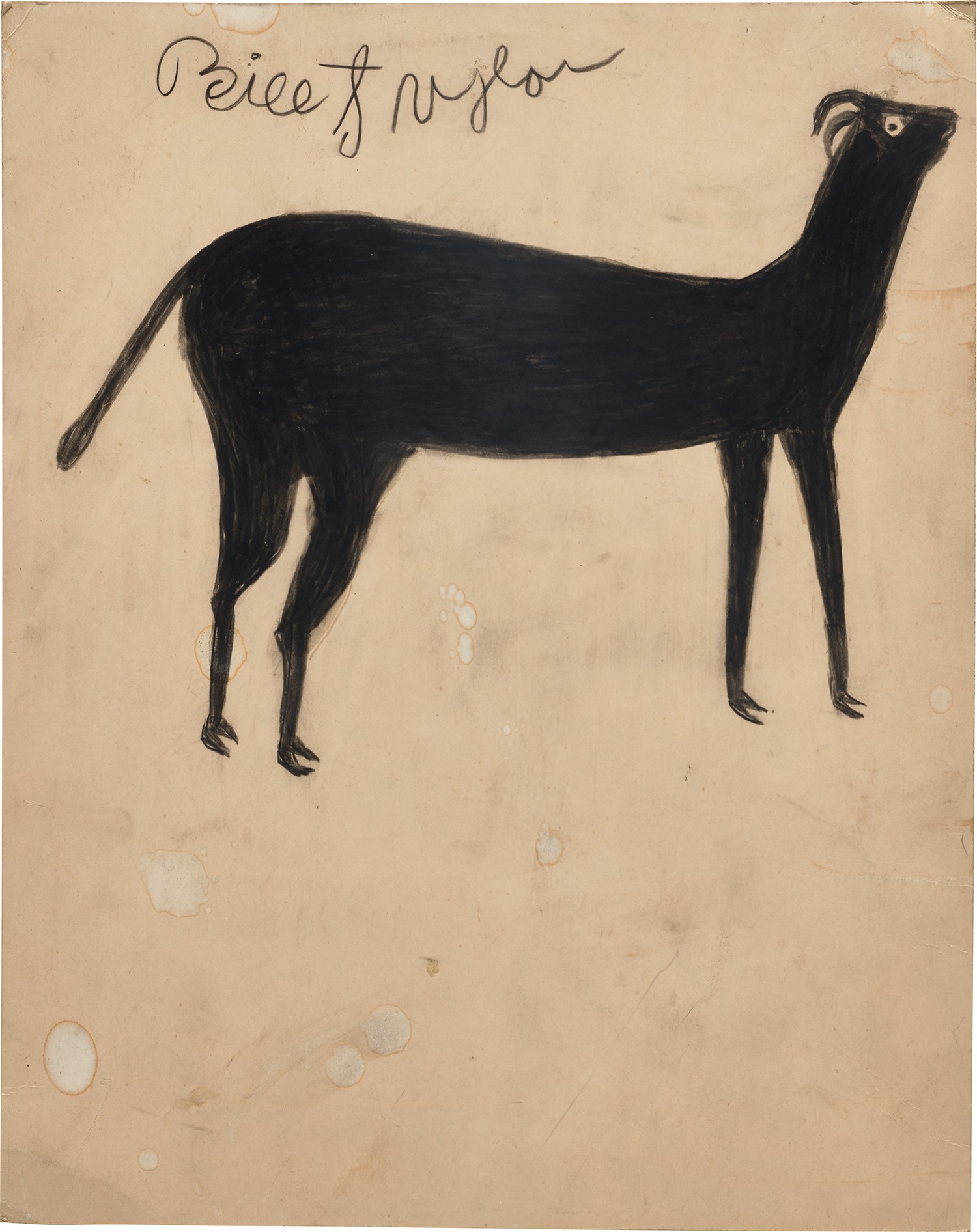
Black Goat, 1939
Yet from these humble means came something fully formed and entirely his own: a visual language of startling confidence and economy. A young white artist named Charles Shannon noticed Traylor at work and began bringing him better materials, and the two developed a friendship and a working relationship that would prove essential to the preservation of Traylor's legacy. Traaylor's imagery draws from the deep well of his experience: plantation life, animals he had lived alongside for decades, figures caught in moments of conflict or transformation or strange exuberant motion. His compositions are radically simplified, almost architectural in their clarity.
A goat stands against a white field with the authority of a heraldic emblem. A bear rises on its hind legs, its silhouette so precisely weighted that it seems to contain an entire folk tradition within its outline. Figures climb ladders, flee pursuing animals, and engage in scenes whose narrative logic is intuitive rather than literal. There is humor in these works, and there is also something older and more searching, a visual thinking shaped by oral traditions, memory, and a lifetime of careful watching.
Among the works available on The Collection, "Black Goat" and "Black Bear," both from 1939, offer an ideal entry point into Traylor's achievement. These pieces date from the earliest and most vital period of his output, when his confidence was at its most electric and his forms at their most distilled. The bold silhouettes he favored in these works reflect a mastery of negative space that many formally trained artists spend careers pursuing without ever quite achieving. For a collector, owning a Traylor from this period is to hold a fragment of one of the most extraordinary creative explosions in American cultural history.
The market for Traylor's work has grown steadily and significantly over the past three decades, tracking his expanding critical reputation. Major auction houses including Sotheby's and Christie's have handled important examples, with strong works regularly achieving six figure results. Collectors are drawn to the combination of aesthetic intensity and historical weight that his work carries: these are objects that function beautifully as visual experiences while also standing as primary documents of African American life and creativity in the Jim Crow South. Institutions including the High Museum of Art in Atlanta, the American Folk Art Museum in New York, and the Montgomery Museum of Fine Arts hold significant holdings.
Private collectors who entered the market early have watched their acquisitions become cornerstones of serious American art collections. To understand Traylor within the broader landscape of American art is to appreciate how his work connects to and diverges from several traditions at once. He is often discussed alongside figures such as Henry Darger and Grandma Moses within the self taught or outsider art tradition, yet his formal rigor and compositional intelligence place him in productive conversation with modernist contemporaries he never knew or encountered. His flat planes and bold contours anticipate aspects of mid century graphic design, and his interest in figuration under psychological pressure resonates with artists as different as Jean Michel Basquiat and Philip Guston.
The comparison to Basquiat in particular is worth dwelling on: both artists worked with a rawness that was in fact the result of profound formal intelligence, and both used imagery drawn from African American experience to speak to universal conditions of power, survival, and desire. Traaylor continued drawing until around 1942, producing what scholars estimate to be more than 1,200 works before illness slowed his hand. He died in Montgomery in 1949, having lived through nearly a century of American history with a witness's clarity and an artist's hunger to make sense of what he had seen. His legacy today is a matter of settled consensus among the scholars, curators, and collectors who know American art best.
He is taught in universities, collected by major institutions, and celebrated in the kind of retrospective exhibition that marks an artist's permanent place in the cultural record. For those coming to his work for the first time, the encounter tends to be unforgettable: here is an artist who made the most of everything, and left us images that will not let go.
Featured Works
Explore books about Bill Traylor