Bill Jensen
Bill Jensen: Nature, Spirit, Paint, Transformed
Artist Spotlight · The Collection Editorial
There is a quiet revolution happening on small canvases in studios and collections across America, and Bill Jensen is at its center. In recent years, major institutional surveys of American abstraction have returned again and again to Jensen's work as a touchstone, a reminder that painting at its most intimate can also be its most ambitious. His canvases, many no larger than a book held open, carry within them entire cosmologies of color, form, and feeling. To stand before one is to understand that scale and significance are entirely different things.
Bill Jensen
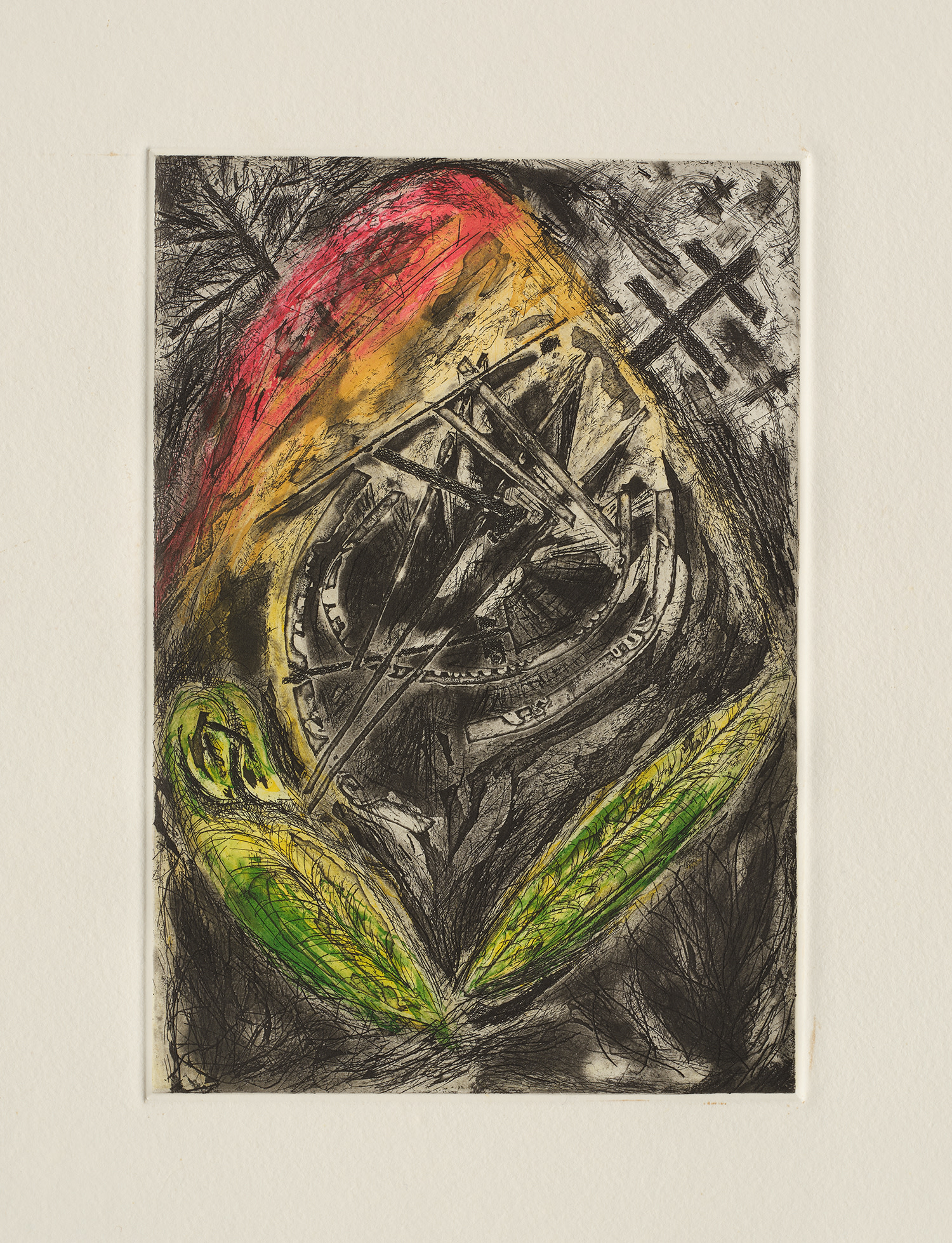
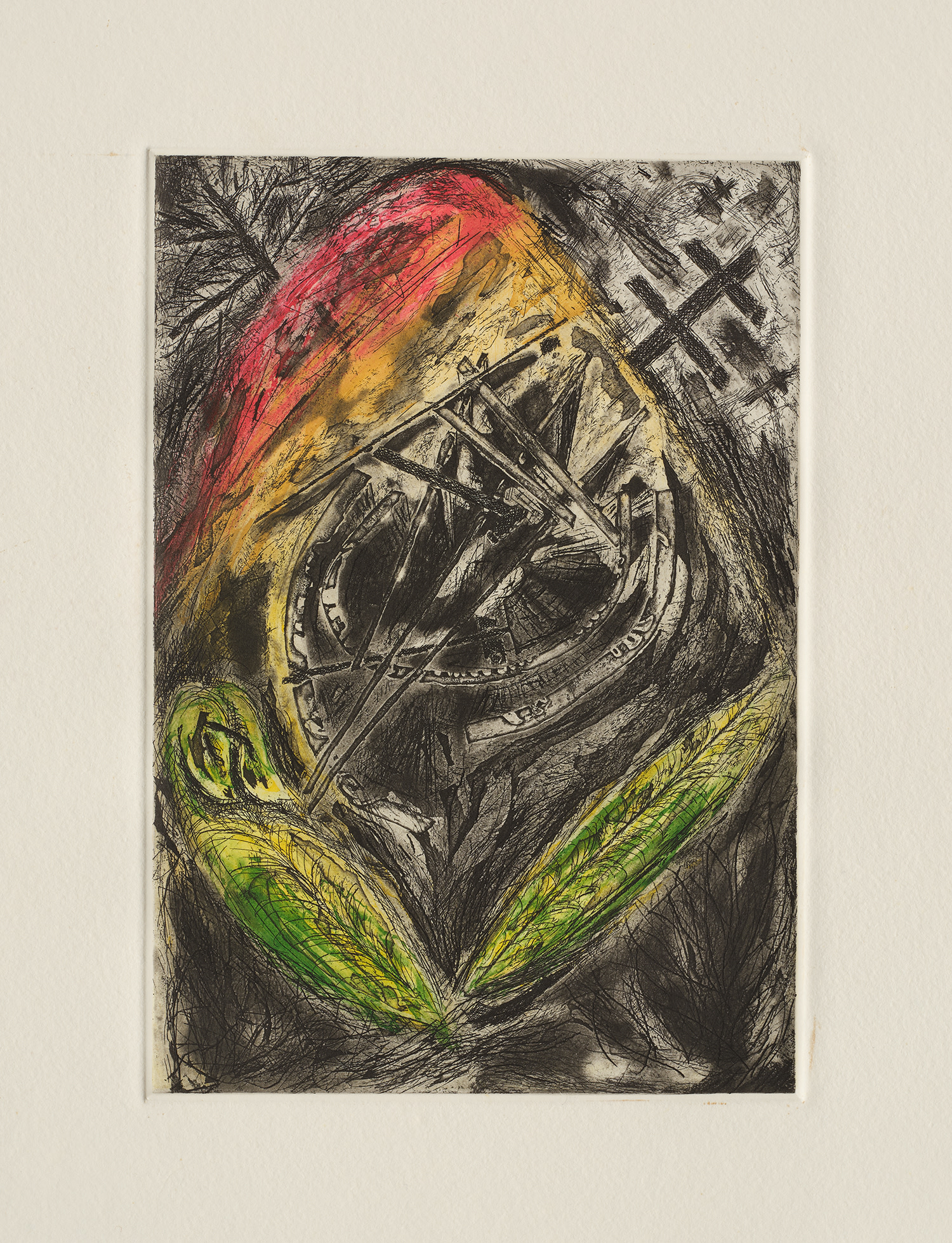
Ancestors
Born in Minneapolis, Minnesota in 1945, Jensen grew up in the American Midwest with an awareness of landscape and the natural world that would never leave his work. He studied at the University of Minnesota before moving to New York in the late 1960s, arriving at a moment when the city was a furnace of competing ideas about what painting could and should be. Minimalism was asserting its cool authority, conceptual art was dismantling the object, and yet Jensen quietly, stubbornly, committed himself to the oldest practice in the room. That decision took courage, and it shaped everything that followed.
In New York, Jensen immersed himself not only in the contemporary scene but in the deep history of painting itself. He spent long hours in museum galleries studying the Old Masters, absorbing lessons from Rembrandt's handling of light and shadow, from the compressed intensity of Goya, and from the visionary color of J.M.W.
Bill Jensen
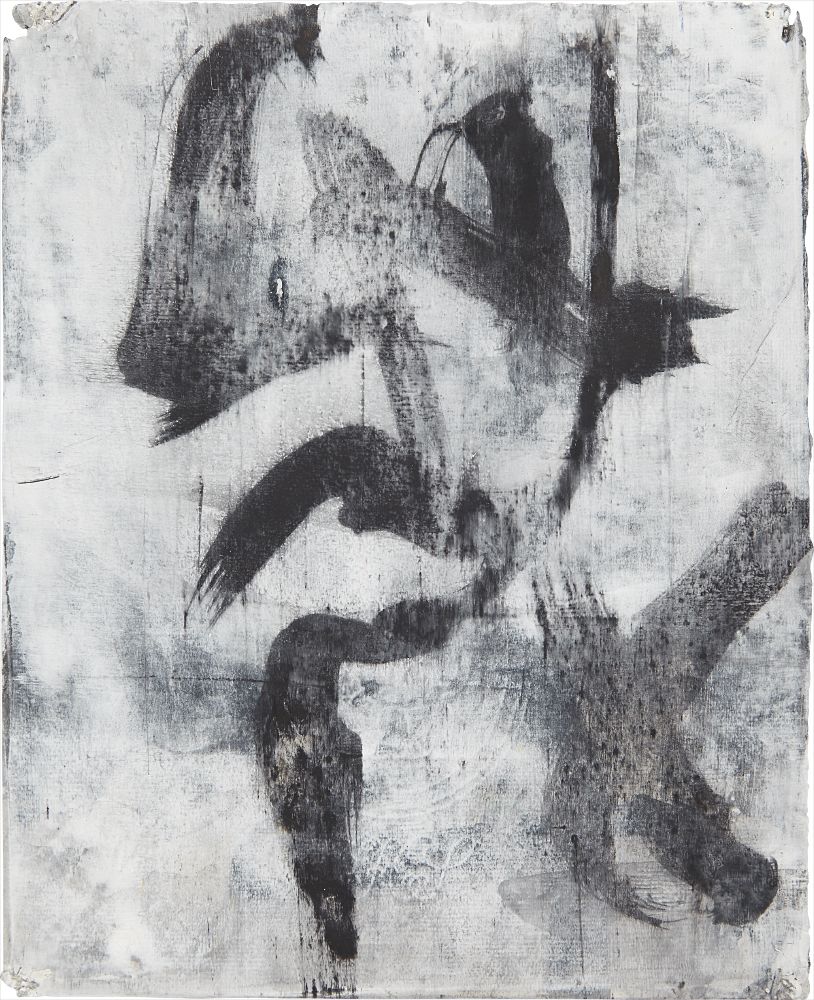
Drunken Brush #29
Turner. He was equally drawn to the American modernists who had come before him, particularly Albert Pinkham Ryder, whose brooding, thickly worked surfaces and sense of inner spiritual life Jensen recognized as kindred territory. This willingness to look backward as a means of moving forward became one of the defining qualities of his practice. Jensen's breakthrough came gradually through the 1970s and into the 1980s as he developed the signature approach that would earn him a devoted following among painters, curators, and collectors alike.
Working in oil on linen, he built his surfaces through slow accumulation, layering and reworking until the paint itself seemed to breathe. His forms are biomorphic and elusive, suggesting seeds, flames, wings, or cellular structures without ever resolving into literal imagery. There is a tension in his compositions between control and release, between the deliberate and the discovered, that gives each work an unresolved, living quality. Exhibitions at Washburn Gallery in New York brought his work to sustained critical attention and established him as a singular voice in American painting during a period when figuration was making its loud return and Jensen held his own quiet ground.
Among the works that best illuminate his achievement are pieces like the etching and aquatint in colors known as Ancestors, a title that speaks directly to his relationship with art history and with the layered, ancestral forces he summons through material practice. The print medium, with its own demands for precision and its capacity for rich tonal variation, suits Jensen beautifully, allowing him to pursue the same luminous depth he achieves in oil through an entirely different set of gestures. His ink and tempera work on handmade British paper, as seen in Drunken Brush No. 29, reveals another dimension of his practice, one that embraces the accident and the spontaneous mark as fully as the labored surface.
The title carries a knowing warmth, a nod to the long tradition of expressive mark making in both Eastern and Western art, and to the state of receptive abandon that great painting sometimes requires. For collectors, Jensen's work occupies a particularly compelling position. His paintings are not trophies in the conventional sense. They do not announce themselves across a room or demand attention through scale or spectacle.
Instead they reward proximity, patience, and return. Collectors who live with Jensen's work often describe the experience of discovering something new in a canvas they have owned for years, a quality that speaks to the density and intention packed into each surface. His prints and works on paper offer a meaningful point of access for collectors building a relationship with his vision, combining the intimacy of his approach with the particular beauty of fine printmaking. Given the seriousness with which institutions and curators regard his contribution to American abstraction, his work represents both a genuine aesthetic experience and a historically grounded acquisition.
To understand Jensen fully it helps to place him in the company of artists who share his commitments without quite sharing his path. His reverence for Ryder connects him to a distinctly American strain of romantic and visionary painting. His engagement with layered, textured surfaces and spiritual interiority places him in dialogue with contemporaries such as Susan Rothenberg and Terry Winters, artists who also insisted on painting's capacity for psychological and metaphysical depth during decades when such claims were unfashionable. He shares with Brice Marden a commitment to process and material richness, though Jensen's forms are more overtly organic and less governed by systematic thinking.
These are artists who kept faith with painting when the art world looked elsewhere, and history has been generous in its recognition of that faith. What makes Jensen matter today, perhaps more than ever, is precisely his resistance to speed. In an era of images produced and consumed in fractions of a second, his canvases insist on duration. They were made slowly and they ask to be seen slowly.
They carry within them the accumulated weight of looking, of thinking, of returning to the studio day after day with nothing guaranteed. His work reminds collectors, curators, and anyone who cares about painting that the most profound experiences art can offer are often the quietest ones. Bill Jensen has spent more than five decades proving that a small canvas, worked with full devotion, can hold the infinite.