Bharti Kher
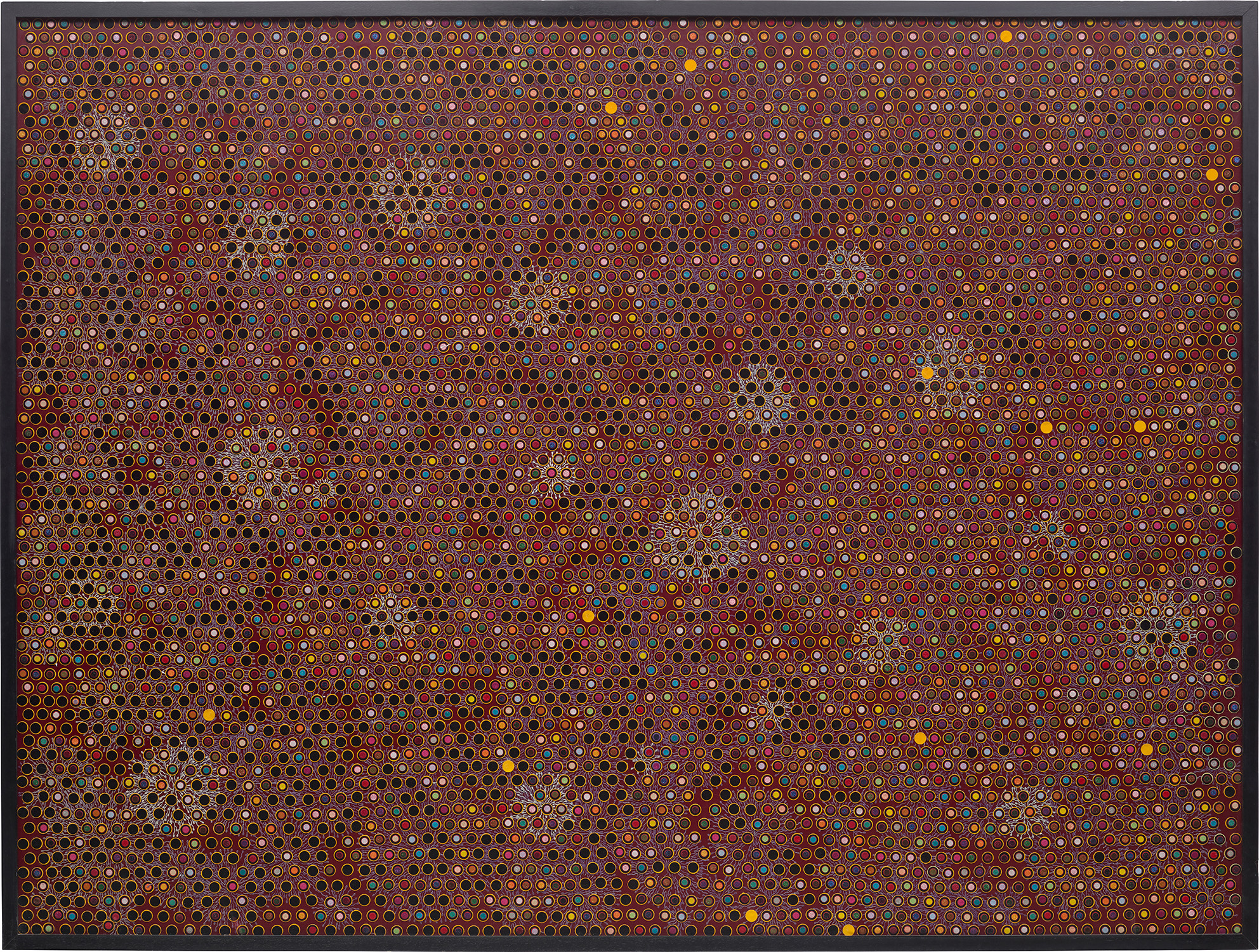
Bharti Kher: Marking the World Anew
Artist Spotlight · The Collection Editorial
“The bindi is a sign that could mean everything or nothing. That instability is what drew me to it.”
Bharti Kher, interview with Tate Modern
In recent years, Bharti Kher has moved from celebrated insider status to something rarer and more commanding: a genuinely global presence whose work feels urgently necessary rather than merely important. Her monumental fiberglass elephant, "The Skin Speaks a Language Not Its Own," has appeared in some of the world's most prestigious institutional contexts, drawing audiences who arrive expecting spectacle and leave having encountered something far more philosophically unsettling. That quality of productive disorientation is, in many ways, the defining gift of her practice. She builds worlds that look almost familiar and then pulls the ground gently away.
Bharti Kher
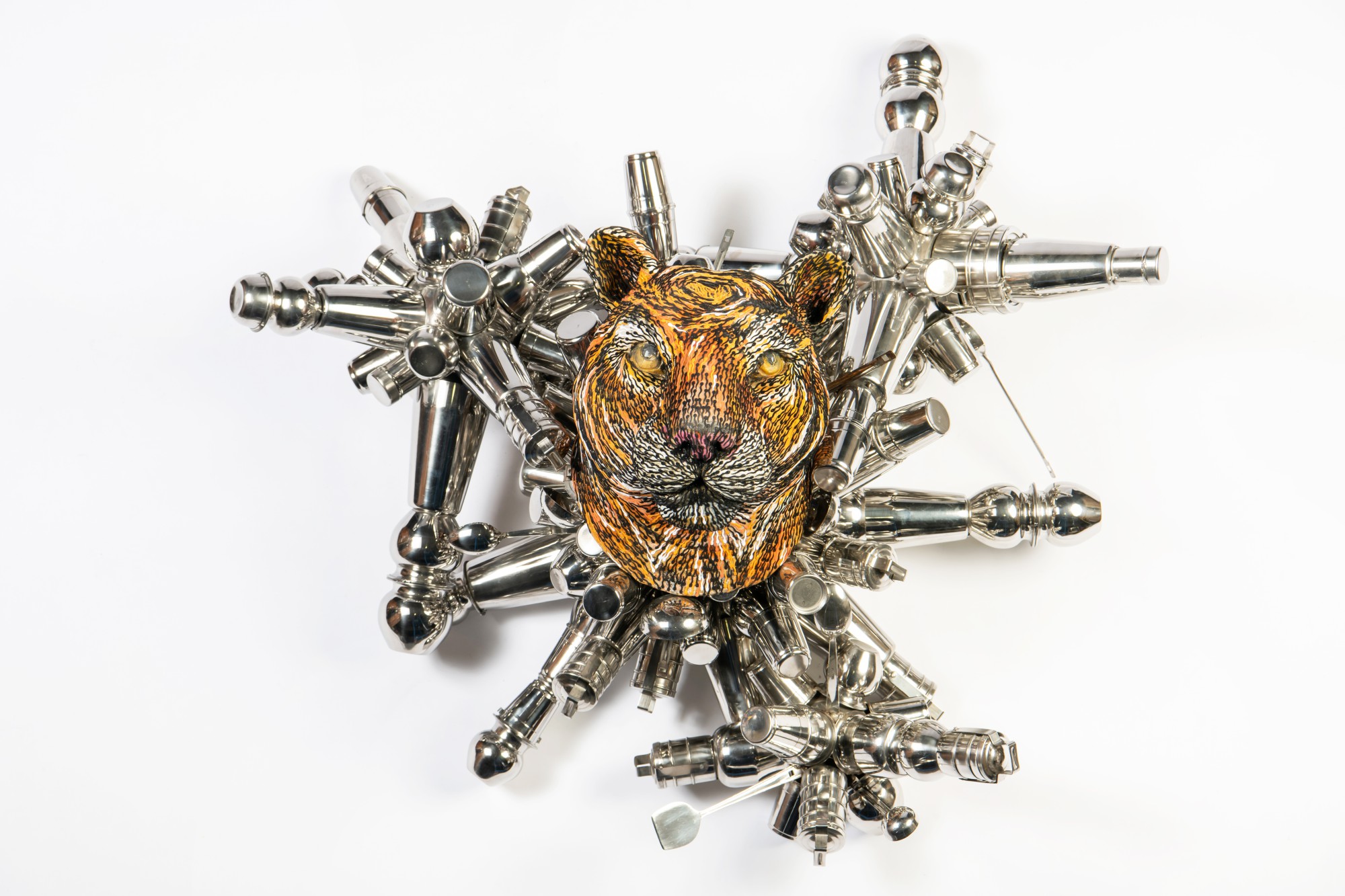
Puli 虎
Kher was born in London in 1969 to Indian parents, and that double inheritance has been the engine of everything she has made. She studied at Newcastle Polytechnic, graduating in 1991, and then made a decision that would alter the trajectory of contemporary art in India: she moved to New Delhi in 1993, the year she also married the painter Subodh Gupta. The city absorbed her and she absorbed it back. She encountered the bindi, that small adhesive dot worn on the forehead by women across the subcontinent, and recognized in it not a decorative detail but a concentrated symbol carrying millennia of meaning: cosmic energy, the third eye, femininity, auspiciousness, and the weight of social expectation all pressed into a few centimeters of pigmented paper.
That recognition changed everything. Her early work in the mid to late 1990s established the bindi as her primary material and conceptual vehicle. This was not an act of cultural appropriation but something more nuanced and personally earned: a migrant artist from Britain finding in her adopted home an object that crystallized questions she had been carrying about identity, belonging, and the body. By the early 2000s, she had developed a practice expansive enough to encompass sculpture, painting, installation, drawing, and video, yet coherent enough that a single sensibility ran visibly through all of it.
Bharti Kher
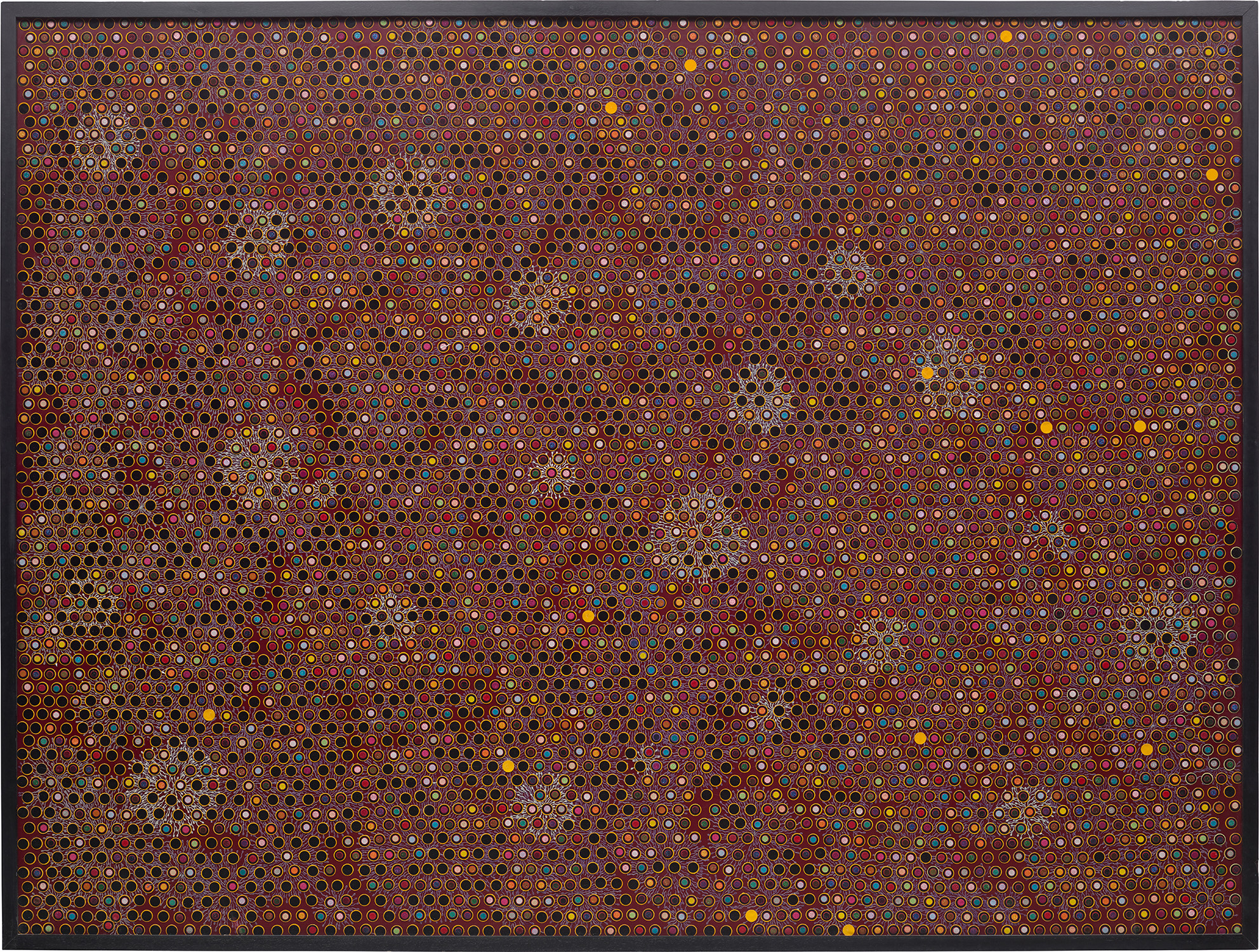
A Love Letter, 2009
The bindi became, in her hands, a kind of universal grammar: endlessly combinable, capable of expressing both the intimate and the cosmic. The works on view through The Collection give a vivid sense of the range within that coherence. "Lost and Found" from 2006 applies bindis to aluminum, the mass produced industrial surface transformed into something that breathes and shimmers, carrying traces of individual lives. "A Love Letter" from 2009, bindis on painted board set within the artist's own frame, operates in a more intimate register: the letter as a form that crosses distances, that carries embodied longing, that refuses clean resolution.
"Speak to Me" from 2012 brings bindis together with mirrors and stainless steel in a work that quite literally multiplies the viewer, surrounding them with reflections that are never quite accurate. Then there is "Puli," a work in stainless steel utensils and fiber and bindis that moves into her longstanding engagement with myth and the animal body, the tiger as force, as feminine power, as something that cannot be domesticated no matter how many domestic objects are pressed into its form. Each of these works rewards extended looking: they are not works that give themselves up on first encounter. "The Skin Speaks a Language Not Its Own," first shown at the Frieze Art Fair in London in 2006 and subsequently acquired by the Kiran Nadar Museum of Art in New Delhi, remains the work that most dramatically announces her ambitions.
Bharti Kher
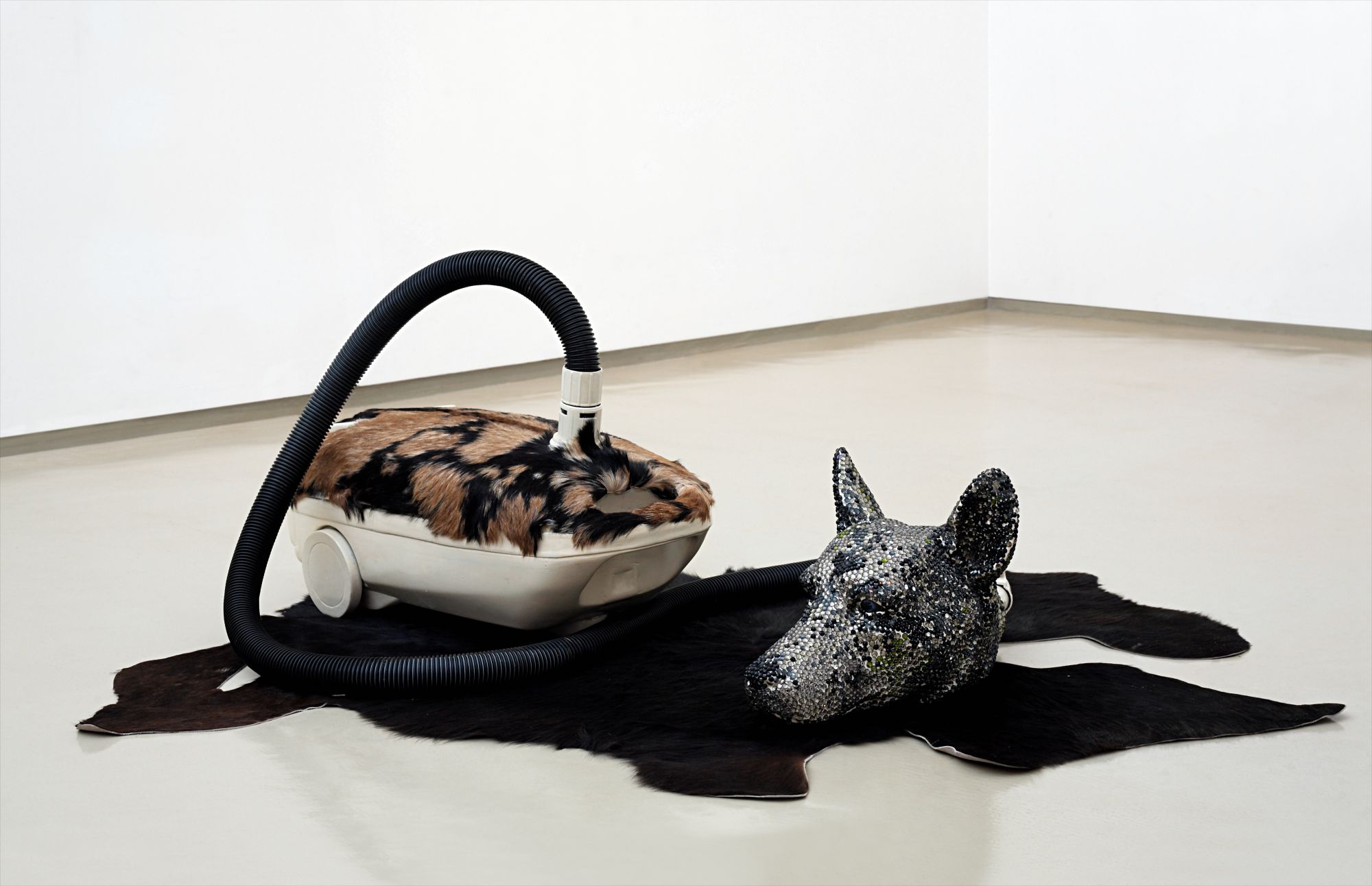
Hungry Dogs Eat Dirty Pudding
A full scale fiberglass elephant lies on its side, its surface covered in thousands of bindis arranged in swirling patterns that suggest both decoration and wound, both celebration and collapse. The elephant carries enormous symbolic weight in South Asian culture: divine, powerful, associated with Ganesha and with royal procession. To see one fallen, its skin marked as though by the hands of many women, is to feel the complexity of what Kher is doing: honoring and questioning simultaneously, allowing beauty and grief to occupy the same space. The Tate Modern holds work by Kher, as does the Kiran Nadar Museum, and her presence in these collections confirms that the institutional world has long understood what collectors are still discovering.
For collectors, what Kher offers is unusually rare: works that function beautifully as objects while carrying genuine intellectual weight that deepens over time. The bindi works on board and aluminum are particularly compelling entry points, as they sit within the tradition of painting while doing something painting alone cannot do. The tactile specificity of thousands of individual adhesive dots, each one placed by hand, gives the surfaces a presence that reproduction entirely fails to convey. Collectors who have spent time with these works consistently report that they reveal new configurations and new emotional temperatures depending on the light and the hour.
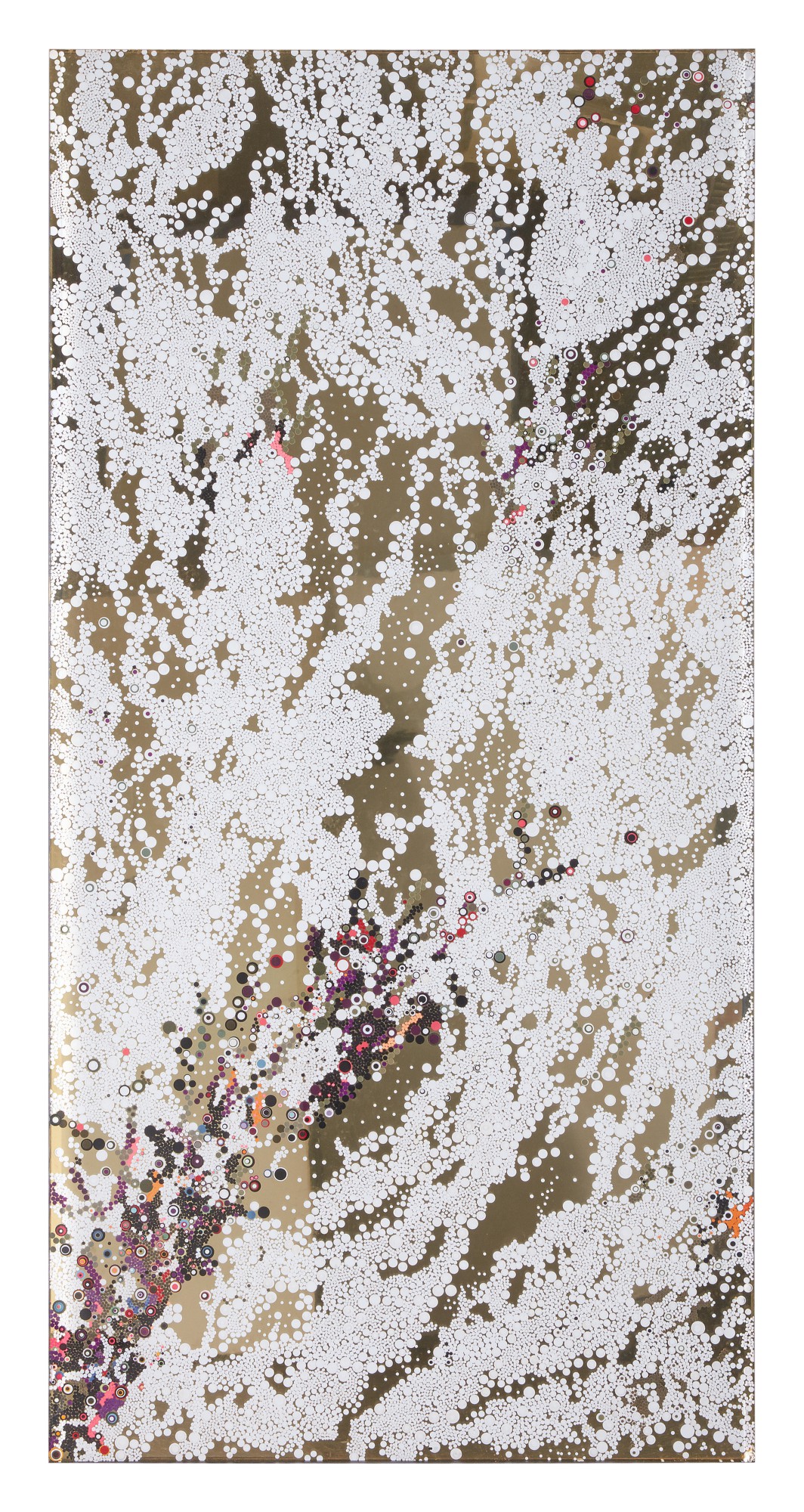
Bharti Kher
Lost and Found, 2006
That quality of inexhaustibility is the mark of work made to last. Her market has grown steadily and deliberately, with institutional interest reinforcing private demand in the way that tends to support long term value most reliably. Kher sits in productive dialogue with a generation of artists who have made diaspora identity and postcolonial complexity central to their practice rather than peripheral to it. Contemporaries such as Anish Kapoor and Nalini Malani, working across different materials and methods, share with her an interest in what it means to carry multiple cultural inheritances and to make art from that multiplicity rather than in spite of it.
Further afield, her work resonates with artists such as Kara Walker and Kiki Smith, who similarly use accumulated mark making and symbolic imagery to build works that are at once aesthetically seductive and philosophically demanding. Kher belongs to this company without being reducible to it: her idiom is entirely her own. What makes Bharti Kher matter so particularly right now is the quality of attention she brings to questions that the present moment has made newly urgent. Who speaks for the body?
What does inherited symbolism do when it is removed from its original context and placed in a new one? How do we hold tradition and transformation together without betraying either? Her answers are never simple and never final, which is precisely their strength. She has built a body of work that will continue to generate new readings as the world changes around it, and that is the closest thing to permanence that contemporary art can offer.
For those who live with her work, that ongoing conversation is among its greatest gifts.
Explore books about Bharti Kher