Beverly Pepper
Beverly Pepper: Form, Earth, and Forever
Artist Spotlight · The Collection Editorial
“I want the viewer to feel an intimate connection with something that is also immense.”
Beverly Pepper
When Storm King Art Center in New York's Hudson Valley draws visitors out across its rolling hills, the experience of encountering sculpture as landscape and landscape as sculpture feels almost inevitable. Yet this seamless integration of art and earth owes a profound debt to artists like Beverly Pepper, whose monumental steel works at that beloved institution stand as benchmarks of what outdoor sculpture can achieve. Pepper, who lived to the remarkable age of 97, spent nearly seven decades asking the same essential question from every possible angle: how does a form made by human hands find its rightful place in the world? The answers she arrived at changed the conversation around public sculpture permanently.
Beverly Pepper
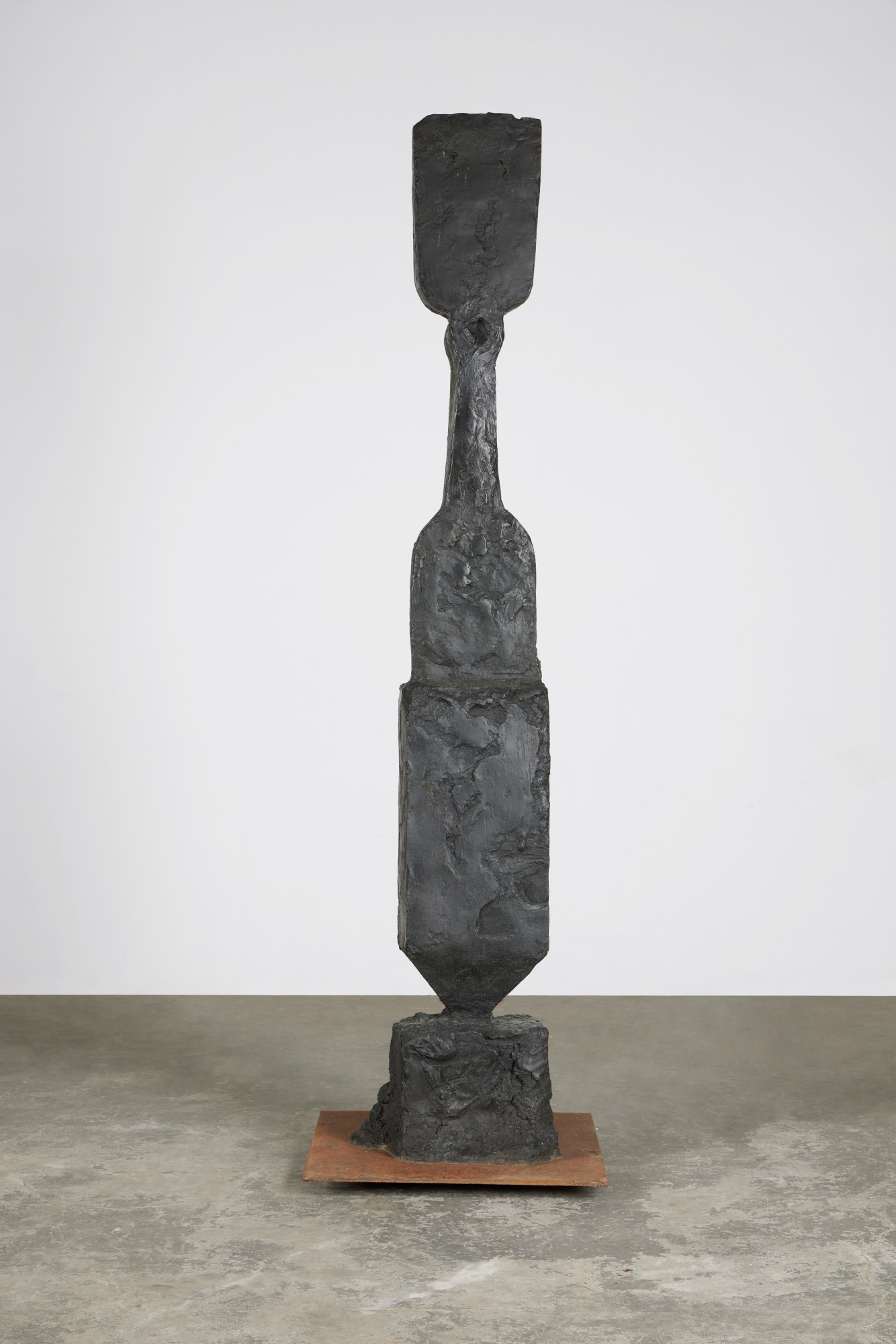
Bedford Sentinel II, 1990
Born in Brooklyn in 1922, Pepper came of age in a moment when American art was beginning to assert itself on the world stage, though her own path led her decisively outward. After studying art and design in New York, she traveled to Paris in the late 1940s to study painting under Fernand Léger and André Lhote, an experience that gave her a foundation in compositional rigor and a taste for thinking big. Paris also gave her a husband, the writer and editor Bill Pepper, and the couple eventually settled in Italy, a country that would become the spiritual and physical home of her practice for the rest of her long life. Todi, in Umbria, became her base, and the ancient textures of Italian hill towns, Roman columns, and sacred civic spaces soaked into her sensibility in ways that would only become fully legible decades later in her work.
Her shift from painting to sculpture came in the early 1960s, a turning point she described as a kind of inevitability. She worked with industrial fabricators in Italy, learning to speak the language of steel and iron with the same fluency she had brought to canvas. By the late 1960s she was producing works that announced a fully formed sculptural voice, and pieces like Ligne Scolpite II from 1968, executed in stainless steel and Isofan, showed her already thinking about how polished and matte surfaces could create internal dialogue within a single form. The work had both the severity of Minimalism and something warmer, something rooted in bodily intuition that set her apart from the more cerebral strand of that movement.
Beverly Pepper
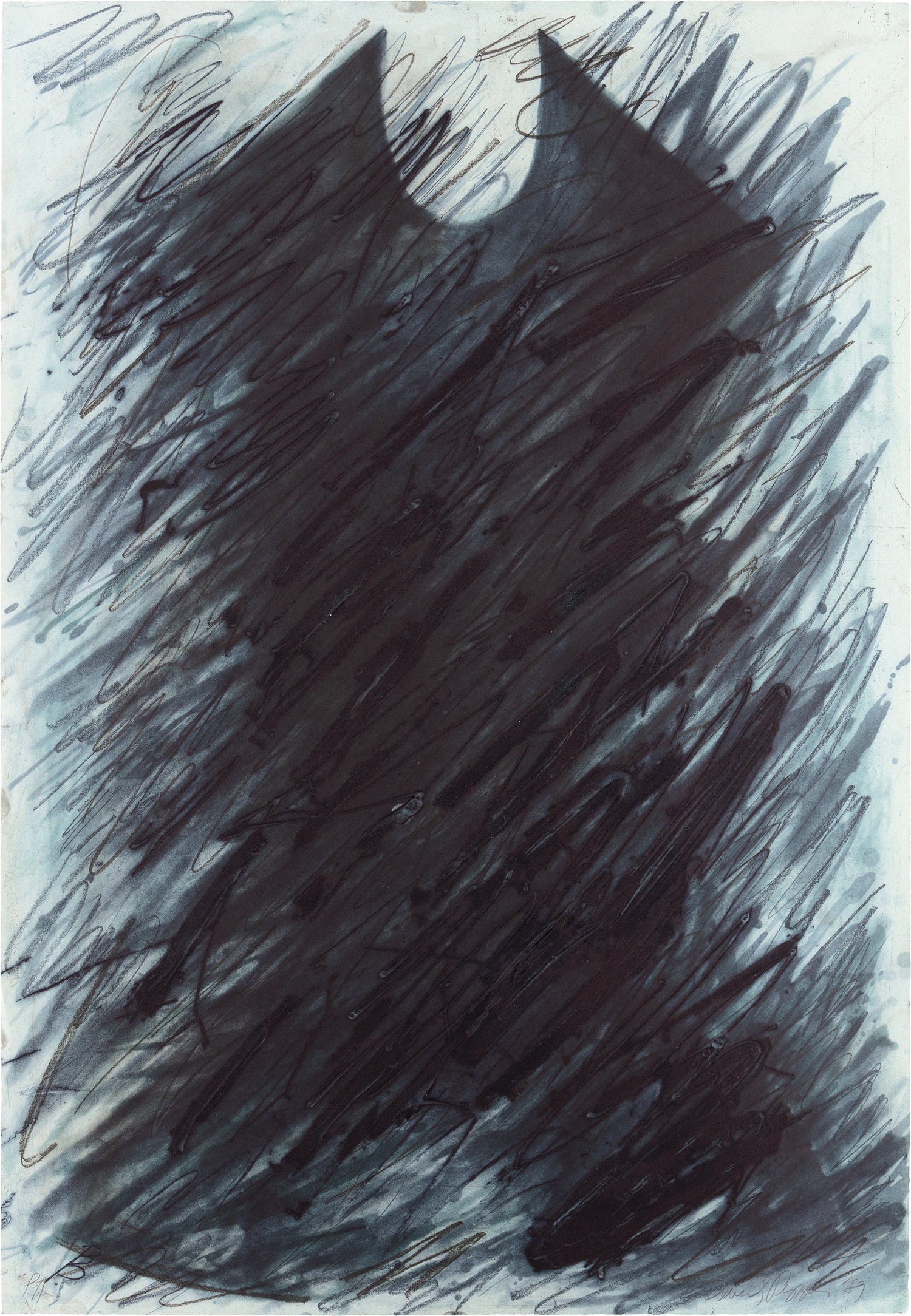
Janis blue
The 1970s and 1980s marked her ascent to international recognition. The Andhra Column of 1979 and the Normanno Column II of 1980, cast in iron with the weight and permanence of ancient architecture, revealed her deep engagement with verticality as a spiritual condition rather than merely a formal one. These column works drew on her years in Italy and her intimate knowledge of how civilizations mark the earth with upright forms to signal meaning across time. Her 1987 work Open Trapezium Altar II pushed further into the territory her titles often signaled: the altar, the sacred threshold, the idea that sculpture could function as a site of contemplation rather than simply an object of aesthetic regard.
Bedford Sentinel II, created in 1990 in bronze with a rich black patina, distills these concerns into a work of austere and commanding presence, the sentinel standing watch with a patience that feels geological. Perhaps her most publicly celebrated achievement is Sol i Ombra, the plaza she created in Barcelona in 1992 as part of the city's ambitious transformation ahead of the Olympic Games. Commissioned as a permanent civic work, it transformed a public square in the Gràcia neighborhood into a mosaic landscape of sun and shadow, using ceramic tiles designed in collaboration with the city's artisanal traditions. The work is beloved by residents and visitors alike precisely because it does not announce itself as art in any aggressive way: it simply makes the experience of being in a public space more vivid, more considered, more alive.
Beverly Pepper
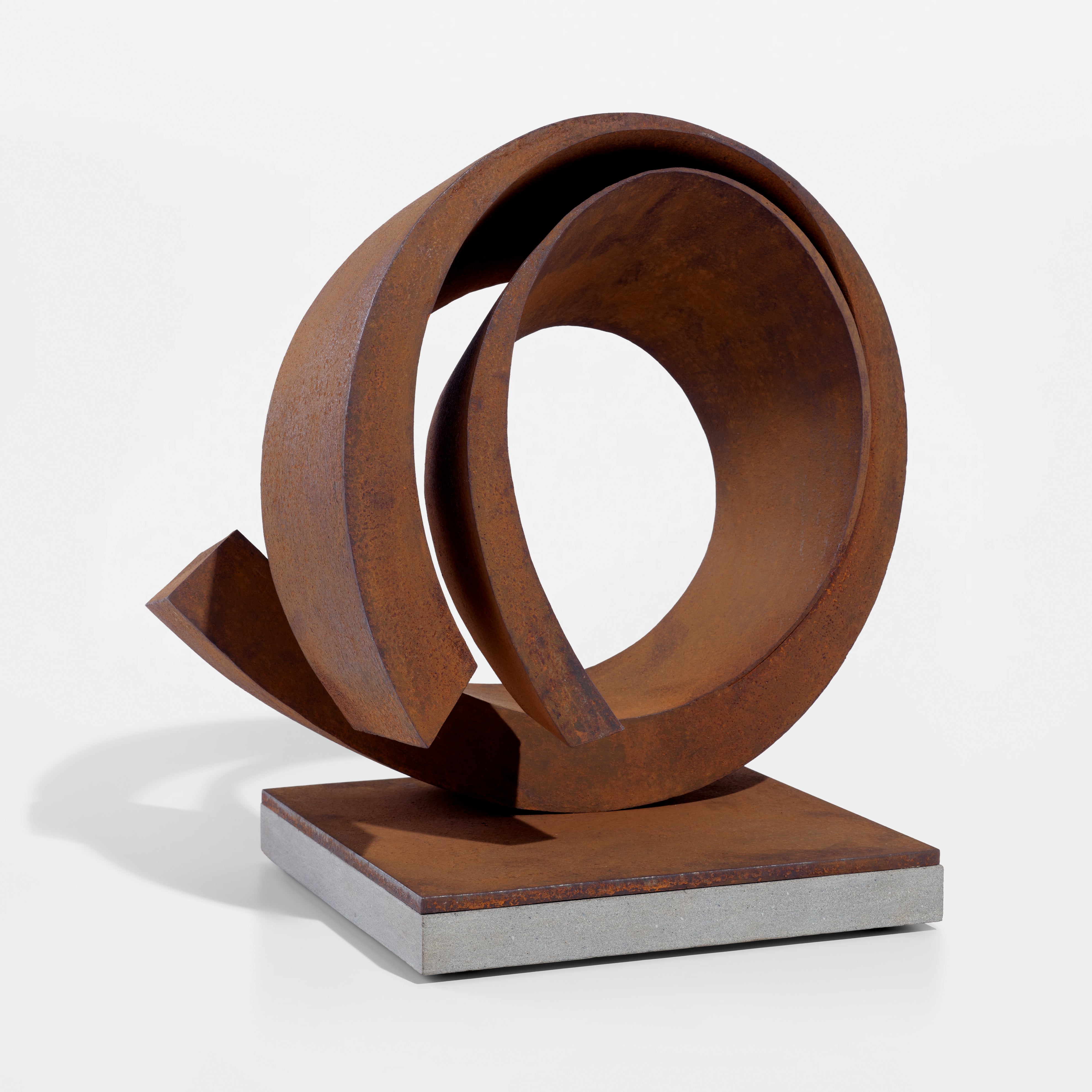
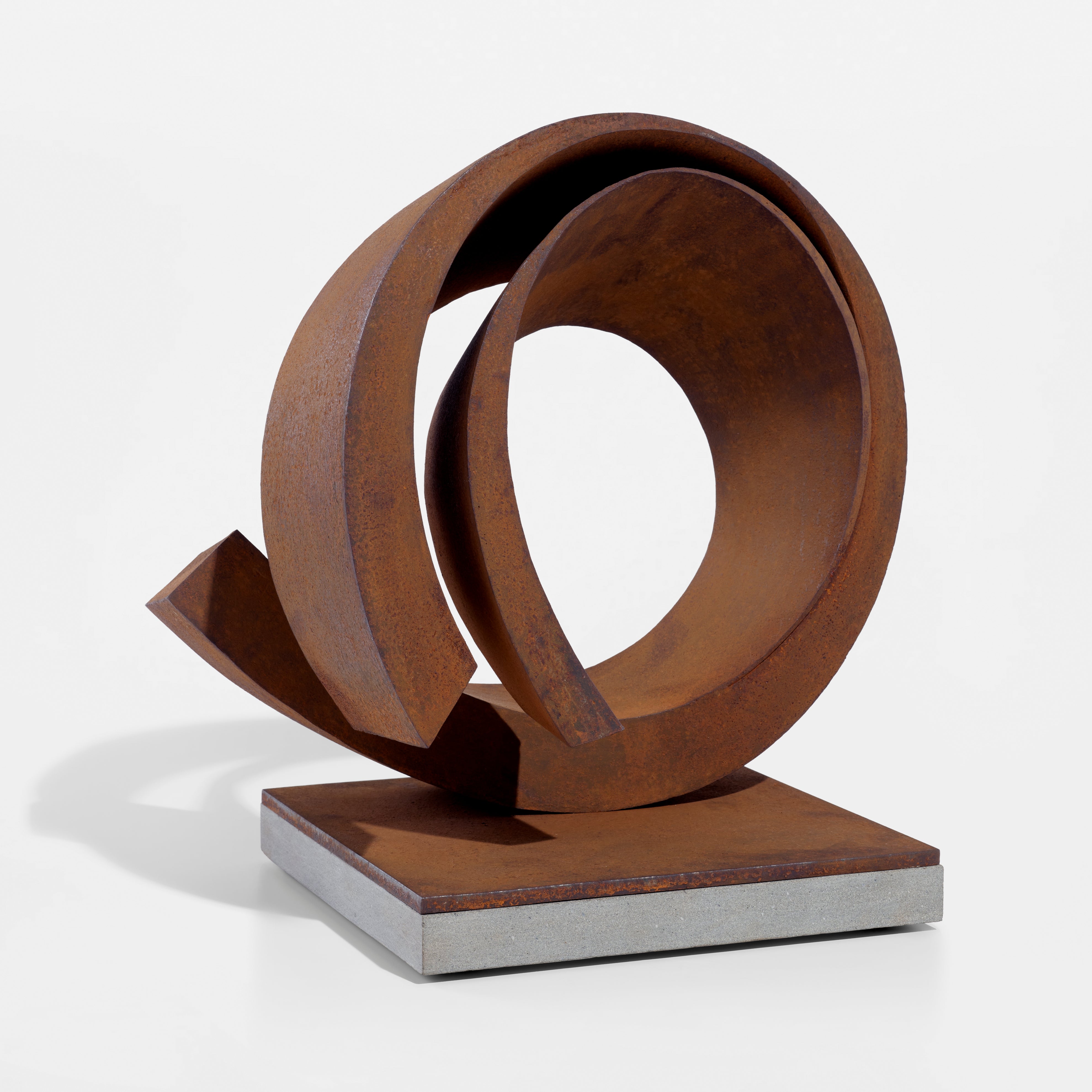
Clodia Medea, 2014
This quality, the ability to elevate the everyday without condescending to it, runs through everything Pepper made. For collectors, Pepper's work presents a rich and varied field. Her sculptural editions in bronze and cast iron offer entry points into a practice better known for its monumental public scale, and they carry the same formal intelligence in more intimate dimensions. Works like Clodia Medea from 2014, made late in her career when she was in her early nineties, demonstrate that her formal ambition never flagged.
Her prints, including etchings and aquatints on Fabriano paper, offer another dimension of her thinking: works on paper that are genuinely exploratory rather than merely documentary, bearing the same attention to surface and edge that defines her three dimensional work. Collectors who have engaged seriously with the sculpture of the postwar period consistently find that Pepper's work holds its own in any company, and her market has reflected a growing institutional reaffirmation of her stature in recent years. Within the broader map of postwar and contemporary sculpture, Pepper occupies a position that is both clearly situated and genuinely singular. She shares certain commitments with figures like Mark di Suvero and Richard Serra in her embrace of industrial materials and large scale ambition, and with Isamu Noguchi in her belief that sculpture and landscape are not separate categories but continuous ones.
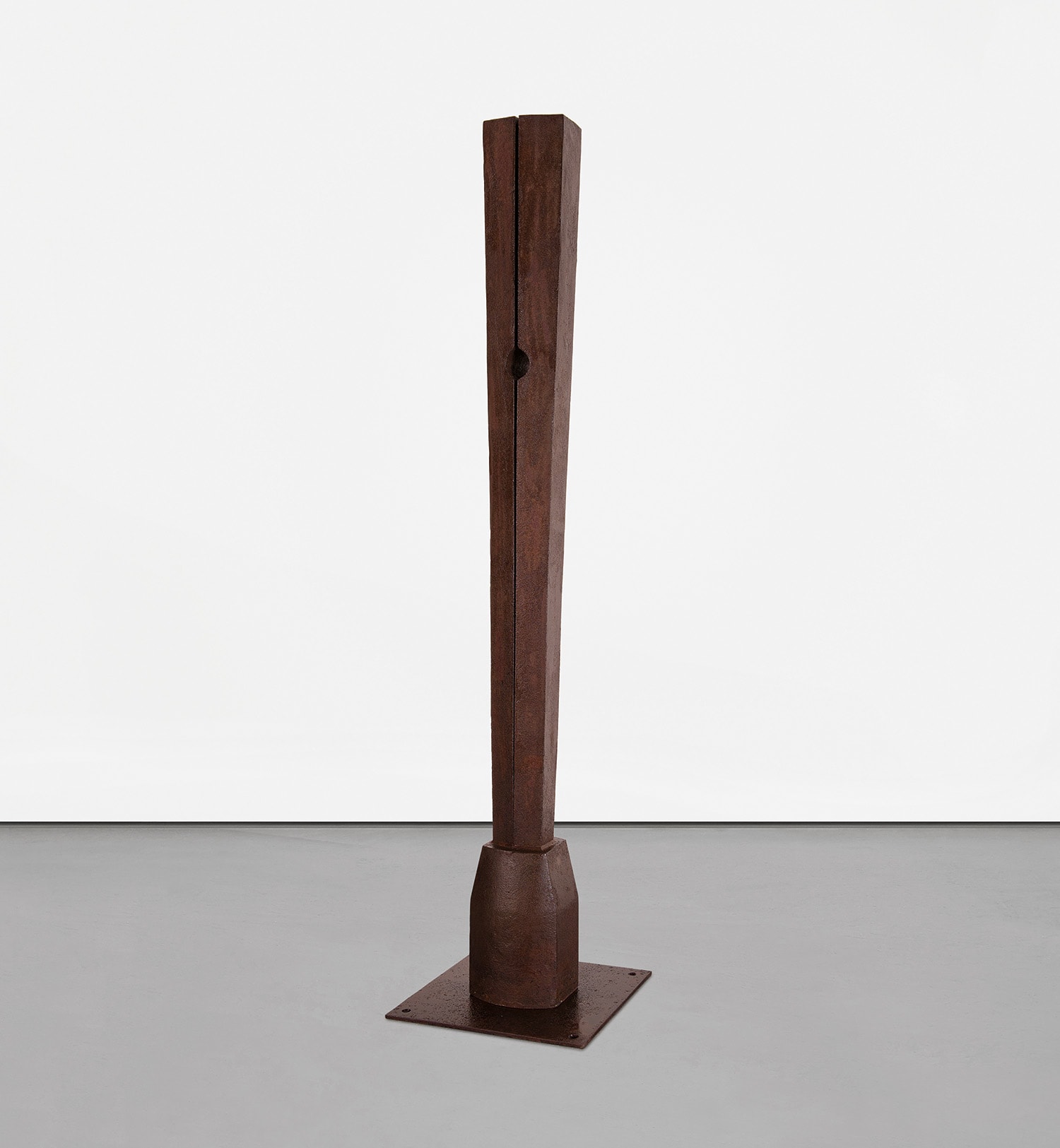
Beverly Pepper
Normanno Column II, 1980
She is also deeply aligned with a generation of women sculptors, including Louise Nevelson and Barbara Hepworth, who insisted on working at the highest scale and with the most demanding materials at a time when such insistence required considerable force of will. That she did so while living abroad, working across languages and cultures, adds another layer of interest to her biography. Beverly Pepper's legacy is one of uncommon generosity. Her works in Barcelona, at Storm King, in museums across the United States and Europe, ask nothing more of the people who encounter them than a willingness to slow down and feel the weight of the world differently.
She spent her career making that offer with absolute seriousness and absolute craft, and the art world is richer, and more grounded, for everything she gave it.
Explore books about Beverly Pepper
Beverly Pepper: Sculpture in the Landscape
Barbara Rose
Beverly Pepper: A Retrospective
Museum of Modern Art
Beverly Pepper: The Spirals
Barbara Rose
Beverly Pepper: Public and Private Works
Paul Goldberger
Beverly Pepper: Sculpture 1960-1998
Susan Larsen