Berthe Morisot
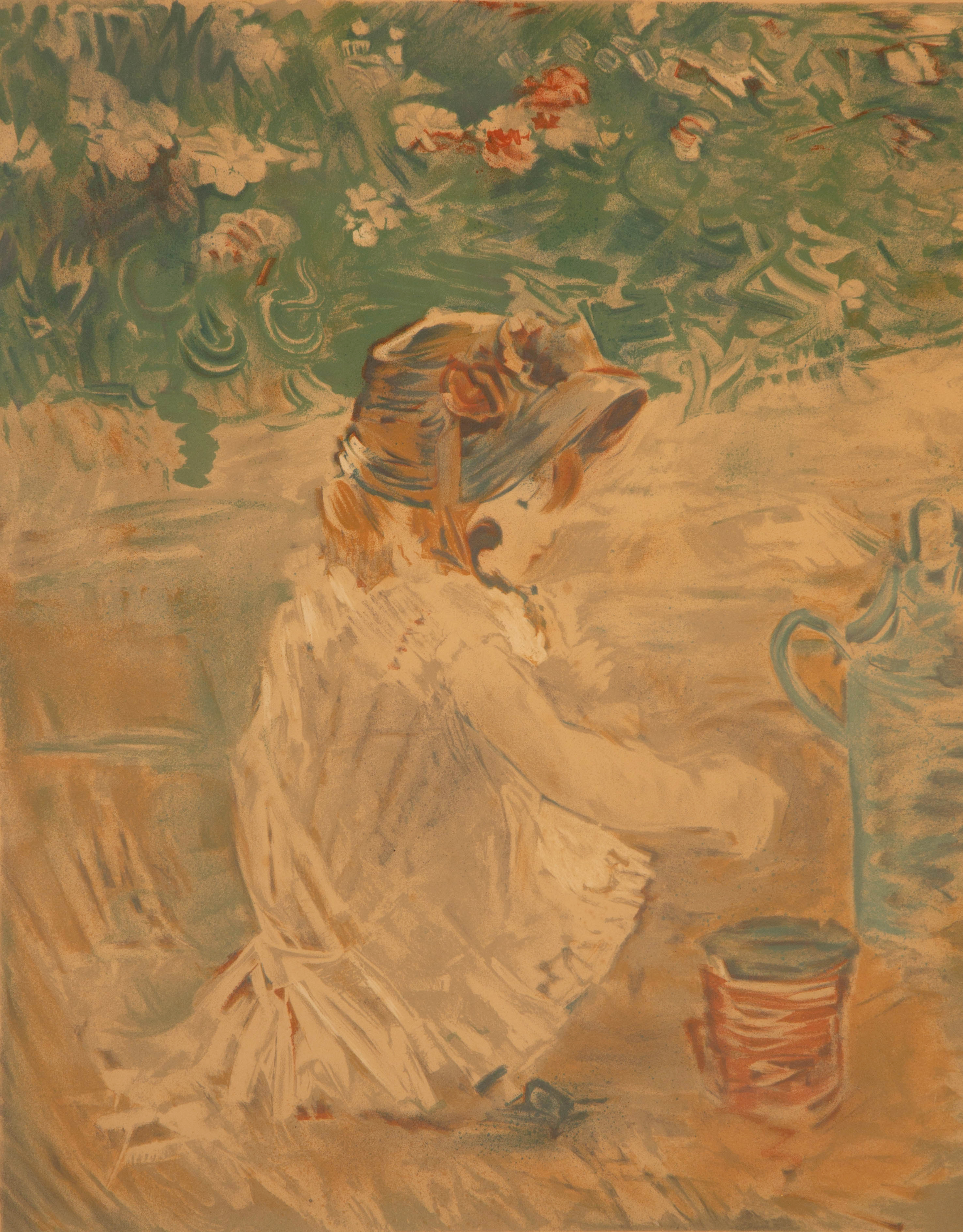
Berthe Morisot, Light Made Tender
Artist Spotlight · The Collection Editorial
“I don't think there has ever been a man who treated a woman as an equal, and that is all I would have asked.”
Berthe Morisot, personal correspondence
There is a particular painting in the Musée d'Orsay that stops visitors mid stride. In 'The Cradle' from 1872, a young mother gazes at her sleeping infant through a veil of white gauze, her expression balanced between adoration and something more interior, more private. The work was shown at the first Impressionist exhibition in Paris in 1874, where Berthe Morisot stood as the only woman among a group that included Claude Monet, Pierre Auguste Renoir, and Edgar Degas. More than 150 years later, her place in that story has shifted from footnote to cornerstone, and institutions from the Fondation Louis Vuitton to the Musée Marmottan Monet have devoted major retrospectives to understanding precisely what she achieved.
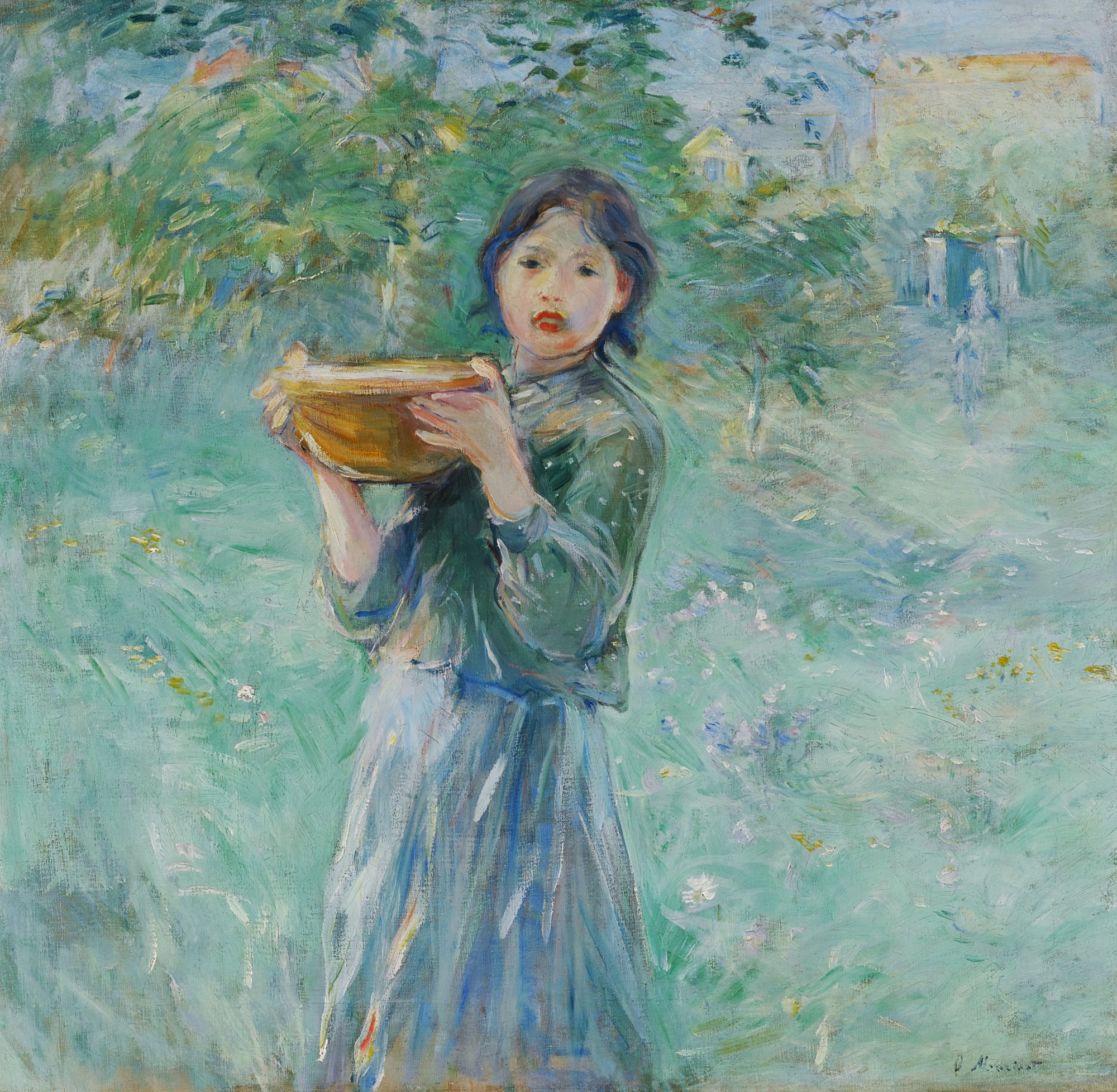
Berthe Morisot
La Jatte de lait
The reassessment is long overdue, and it is gathering momentum. Berthe Morisot was born in Bourges in 1841 into a cultivated upper middle class family that moved to Paris when she was still a child. Her father was a senior government official and her mother an enthusiastic supporter of the arts, and it was Cornélie Morisot who arranged drawing lessons for Berthe and her sister Edma with the academic painter Joseph Benoît Guichard. When Guichard saw how serious his young students were, he warned their mother that art at this level was not a parlor accomplishment but a consuming vocation.
He was not wrong. By her early twenties, Berthe was copying masterworks in the Louvre, a common practice for ambitious students, and there she attracted the attention of the landscape painter Jean Baptiste Camille Corot, who became a formative mentor and introduced her to plein air painting. The encounter with Corot loosened something in Morisot's approach. She began working outdoors, painting the gardens and riversides around Paris and Brittany with an attention to atmospheric light that set her apart from her academic contemporaries.
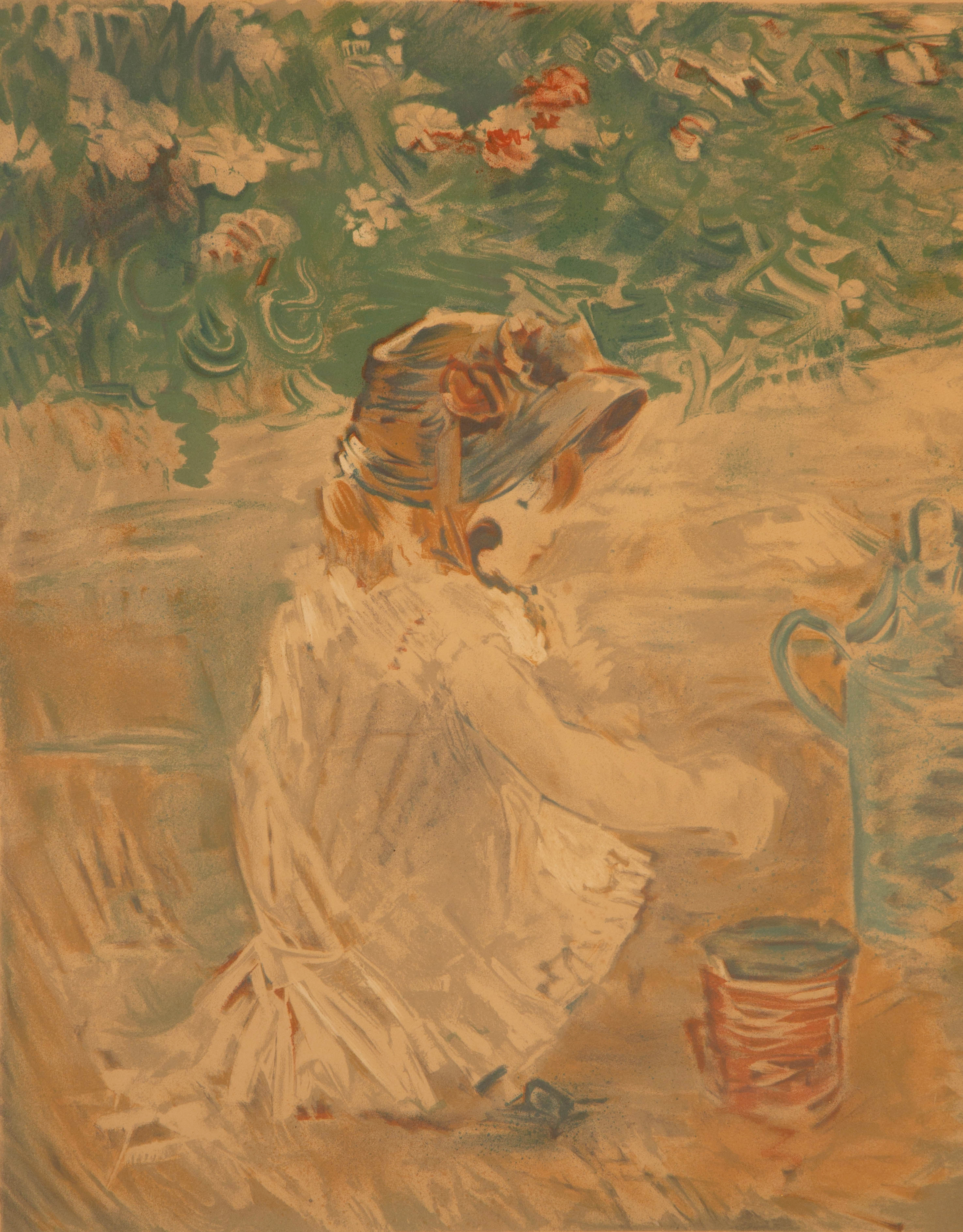
Berthe Morisot
Untitled, Image Girl with a Pail
In 1868, she met Édouard Manet, and the friendship that developed between them became one of the most generative relationships in French art history. Manet painted her at least a dozen times, and Morisot's influence on his loosening of form and his embrace of contemporary domestic life has been increasingly recognized by scholars. She was not his student. She was his peer, and in some respects his creative catalyst.
“I work with intensity when I am in front of the model. The rest of the time I think.”
Berthe Morisot, personal journals
In 1874, she married his younger brother Eugène Manet, an arrangement that kept her close to the avant garde world she had already made her own. Morisot exhibited in seven of the eight Impressionist exhibitions, a record of commitment that only a handful of the group could match. Her subjects were drawn largely from the domestic and social world she inhabited: women at their toilette, children at play, figures in sunlit gardens, mothers nursing infants. Critics of her time occasionally used this subject matter to diminish her, to suggest she was simply painting what lay closest to hand.
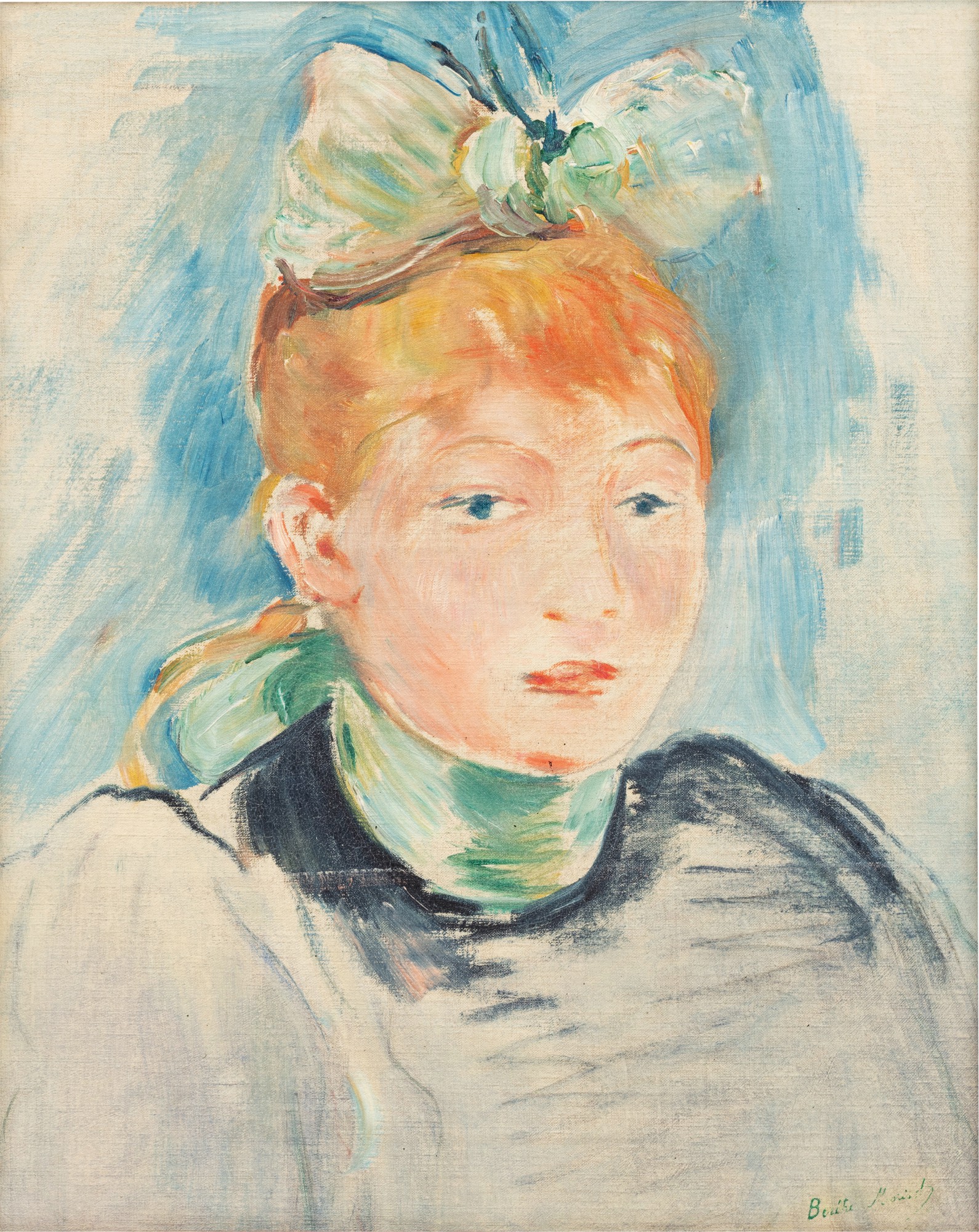
Berthe Morisot
Jeune fille rousse en chapeau, 1894
What they missed was the radicalism of her method. Her brushwork could be rapid and almost dissolving at the edges, creating the impression of a scene caught in the act of forming itself. Her color was luminous and unmixed, laid on with a confidence that Degas himself admired openly. She painted not what a scene looked like from a distance but what it felt like to be present within it.
Among the works available through The Collection, the range of Morisot's practice is beautifully demonstrated. 'Reading' from 1873 captures the quality of absorbed quietude she returned to again and again, two figures in a garden sharing a moment of mutual privacy. 'Woman at Her Toilette' from 1870 is an early example of her ability to transform the most intimate domestic ritual into something both specific and universal. The pastels, including 'Jeune fille s'habillant' from 1887 and 'Mademoiselle Louise Riesener in a Hat' from 1877, show how fluidly she moved between media.
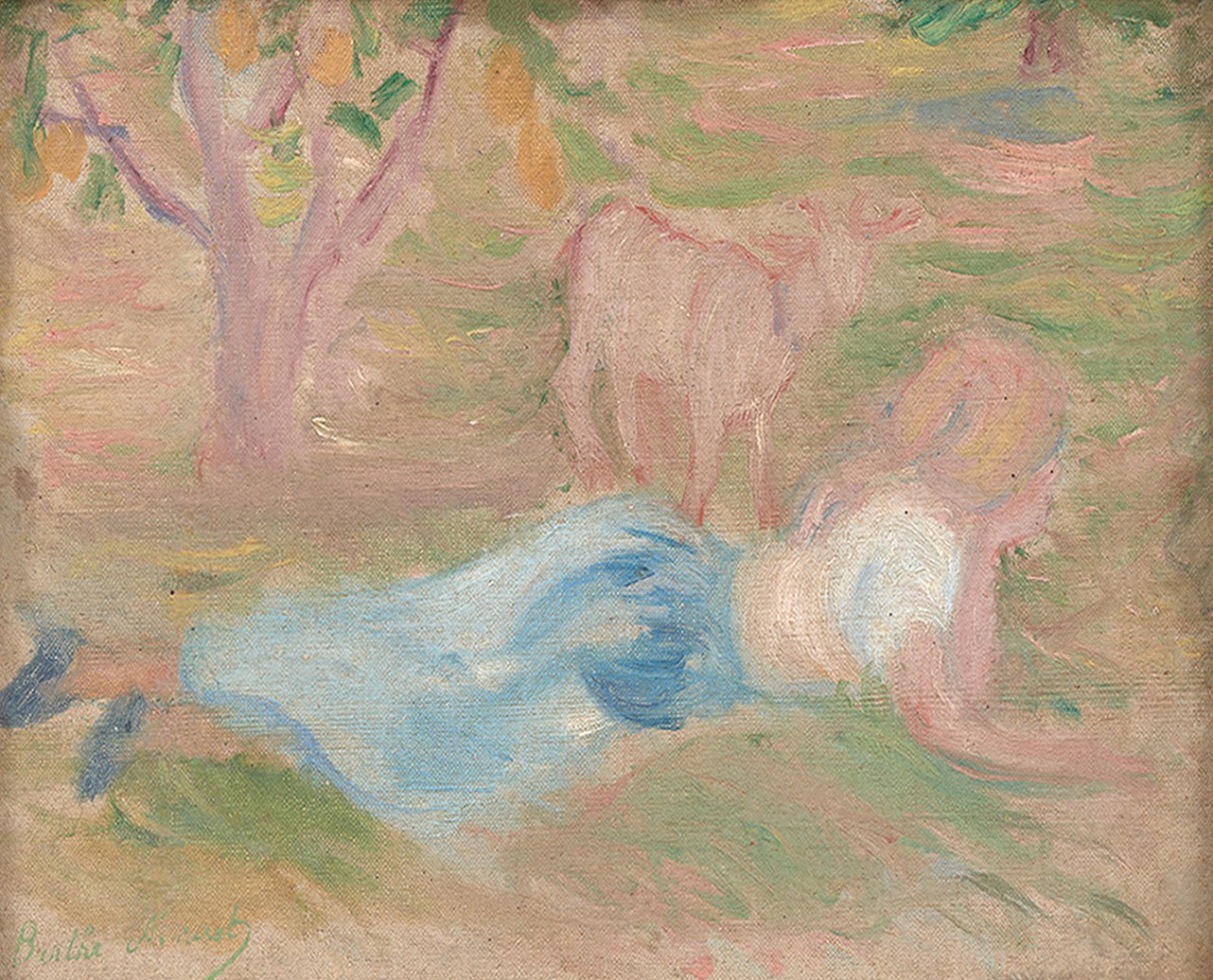
Berthe Morisot
Jeune bergère
Pastel suited her instincts: fast, atmospheric, responsive to light in ways that oil sometimes resisted. Her drypoint 'Swan and Duck, with portraits of Julie' from 1889 reveals a more intimate, experimental side of her practice, tender and playful, made in response to the life of her daughter Julie Manet, who grew up to become an important diarist and witness to the Impressionist circle. For collectors, Morisot occupies a position that is simultaneously established and still full of possibility. Her works appear at the major auction houses with regularity, and prices have risen steadily as scholarly and institutional attention has grown.
Works on paper, including pastels, charcoals, and prints, represent a particularly compelling point of entry. They tend to show her most spontaneous thinking and are often where her most inventive mark making appears. The colored lithographs and drypoints are especially prized among print collectors for their rarity and their intimacy. Oil paintings, naturally, command the highest prices, but even among them there is a range that allows collectors at different levels to engage seriously with her legacy.
What makes collecting Morisot meaningful is the sense of participating in a conversation that is still actively unfolding. To place Morisot within art history is to understand her in relation to the full scope of Impressionism and to the painters she worked alongside most closely. She shares with Monet a devotion to the transforming effects of natural light and with Degas an interest in captured gesture and the interior life of figures. The American painter Mary Cassatt, who joined the Impressionist circle in the late 1870s, is her closest parallel: both women worked within the movement on their own terms, both have been subject to long scholarly reconsideration, and both reward close looking in ways that continue to surprise.
Morisot also anticipates certain qualities in Post Impressionist painting, particularly in the way her later works push toward abstraction at the edges without ever losing their human warmth. The legacy of Berthe Morisot is not a story of rediscovery so much as a story of recognition finally catching up with achievement. She was celebrated in her lifetime, collected by serious patrons, and respected by the painters whose respect was hardest to earn. What has changed is the framework through which we understand what she was doing.
Her subjects were not limitations but chosen fields of inquiry. Her touch was not decorative but analytical. She looked at the world she lived in with the same rigorous attention that her male contemporaries brought to cafés and cathedrals and open seas. The light she found in a woman's dressing room or a child's afternoon garden is as real and as hard won as any light in the history of the medium.
That is the measure of her greatness, and it is only becoming clearer.
Explore books about Berthe Morisot
Berthe Morisot: A Life
Claire Durand-Ruel Snollaerts and Yves Stavrides
Berthe Morisot
Anne Higonnet
The Letters of Berthe Morisot
Denis Rouart
Berthe Morisot: Woman Impressionist
Pascale Francfort
Berthe Morisot: Catalogue Raisonné of Paintings
Denis Rouart
Berthe Morisot and Julie Manet: The Correspondence
Denise Brahimi
Berthe Morisot: Art and Motherhood
Kathleen Adler and Marty Anne Stevens
Berthe Morisot: Impressionist
Alain Clairet and Delphine Montalant