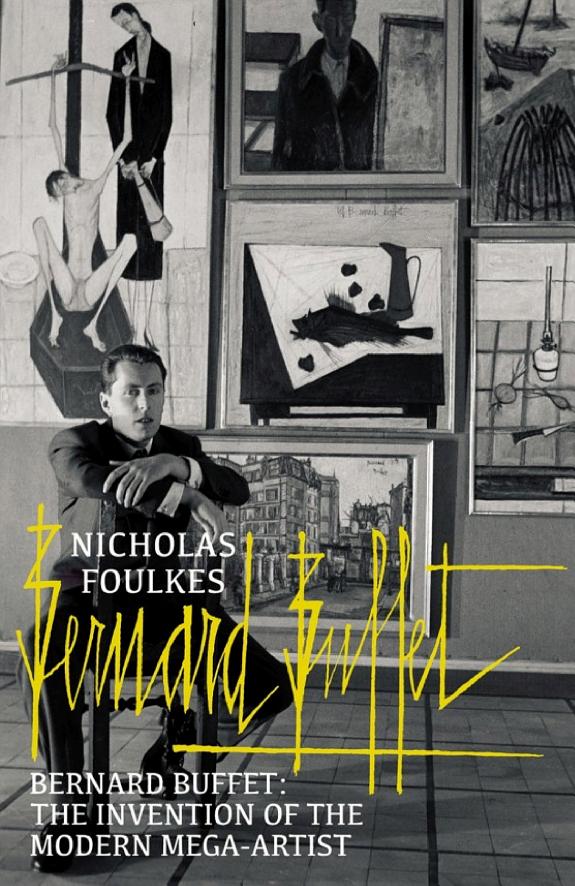
Bernard Buffet
Bernard Buffet: A Master Reclaimed by Joy
Artist Spotlight · The Collection Editorial
“I paint what I see, what I feel, what I live. Painting is my life and my life is painting.”
Bernard Buffet
In the spring of 2023, a striking oil on canvas by Bernard Buffet sold at Christie's Paris for well above its high estimate, drawing competitive bidding from collectors across Europe and Asia. The result was not an isolated event but part of a sustained reappraisal that has been quietly building for more than a decade. Scholars, curators, and a new generation of collectors are arriving at the same conclusion: Buffet, long dismissed by the critical establishment as too popular for his own good, was one of the most gifted figurative painters of the twentieth century. Bernard Buffet was born in Paris in 1928, into a modest middle class family.
Bernard Buffet
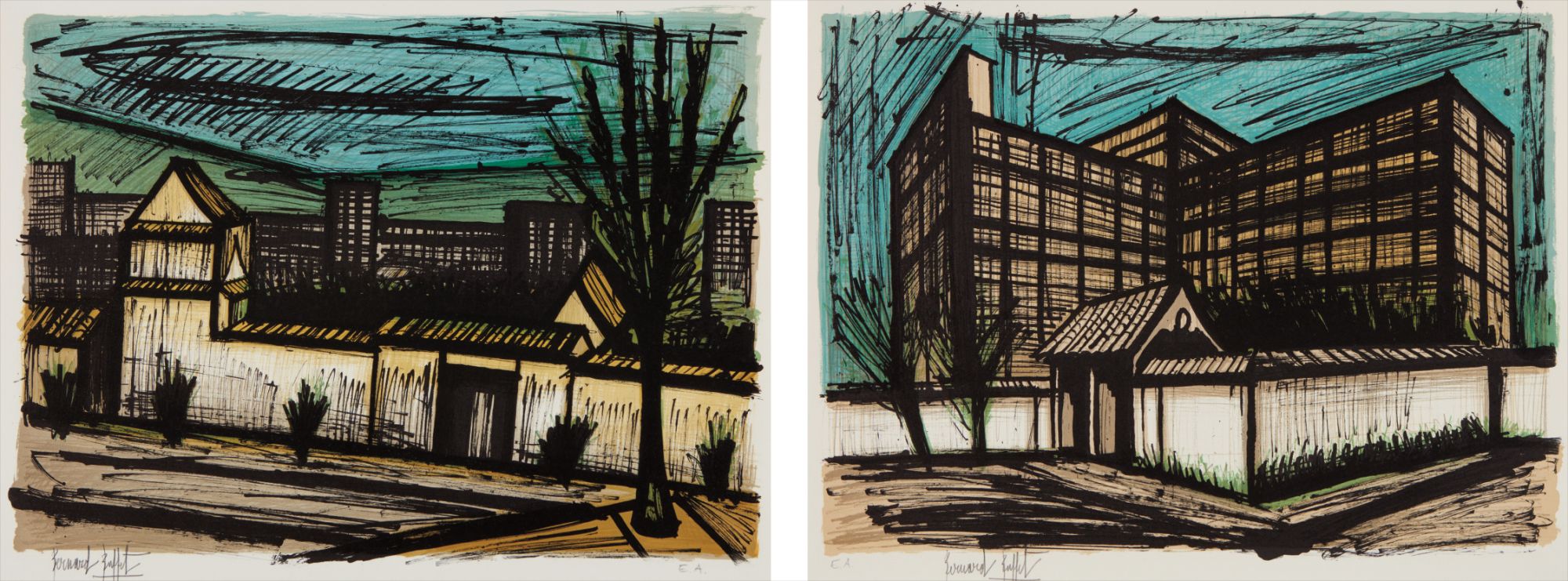
Vue de l’hôtel, Kyoto (Hotel View, Kyoto); and L’Hôtel Fujita à Kyoto (The Hotel Fujita in Kyoto), from Le Voyage au Japon (The Journey to Japan)
His childhood was shaped by the deprivations of the Occupation, and by the time he enrolled at the École Nationale Supérieure des Beaux Arts in 1944, he had already absorbed the grey weight of wartime Paris into his sensibility. He was a prodigy in the truest sense, technically assured and emotionally driven, finding his footing with a speed that astonished his teachers. By the age of seventeen he was producing work of genuine authority, and he would never stop. His breakthrough came with breathtaking speed.
In 1948, at just twenty years old, Buffet shared the prestigious Prix de la Critique with Bernard Lorjou, a recognition that catapulted him into the front rank of French painting almost overnight. He became the face of a figurative resistance to the rising tide of abstraction, championed by critics who saw in his gaunt, grid like compositions an honest reckoning with post war suffering. The philosopher and art critic Charles Estienne was among his early advocates, and the gallerist Maurice Garnier became his devoted dealer and lifelong champion, mounting exhibitions of Buffet's work annually for decades from the Galerie Maurice Garnier in Paris. What Buffet developed across the late 1940s and 1950s was a visual language entirely his own.
Bernard Buffet
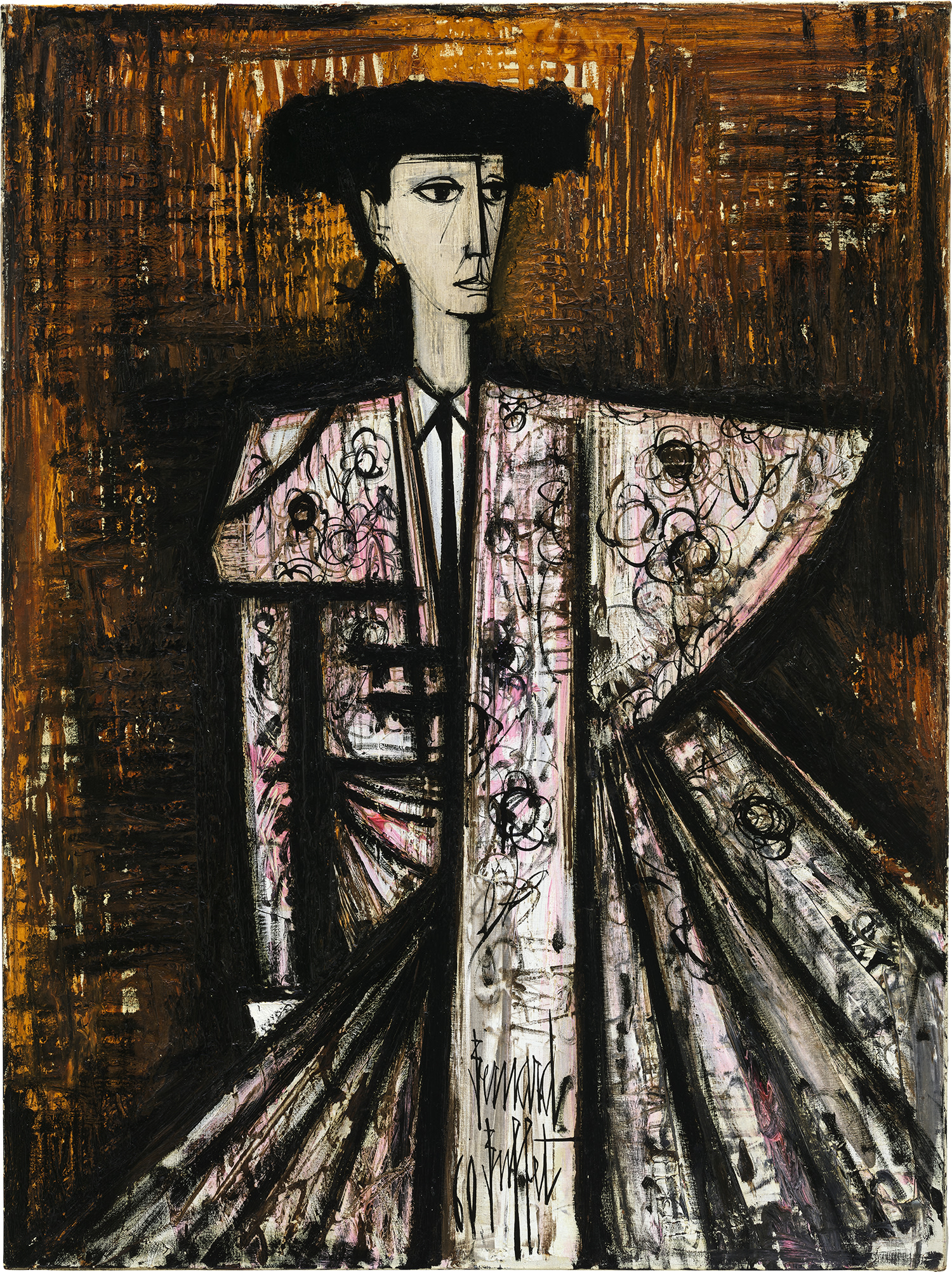
Torero rose, 1960
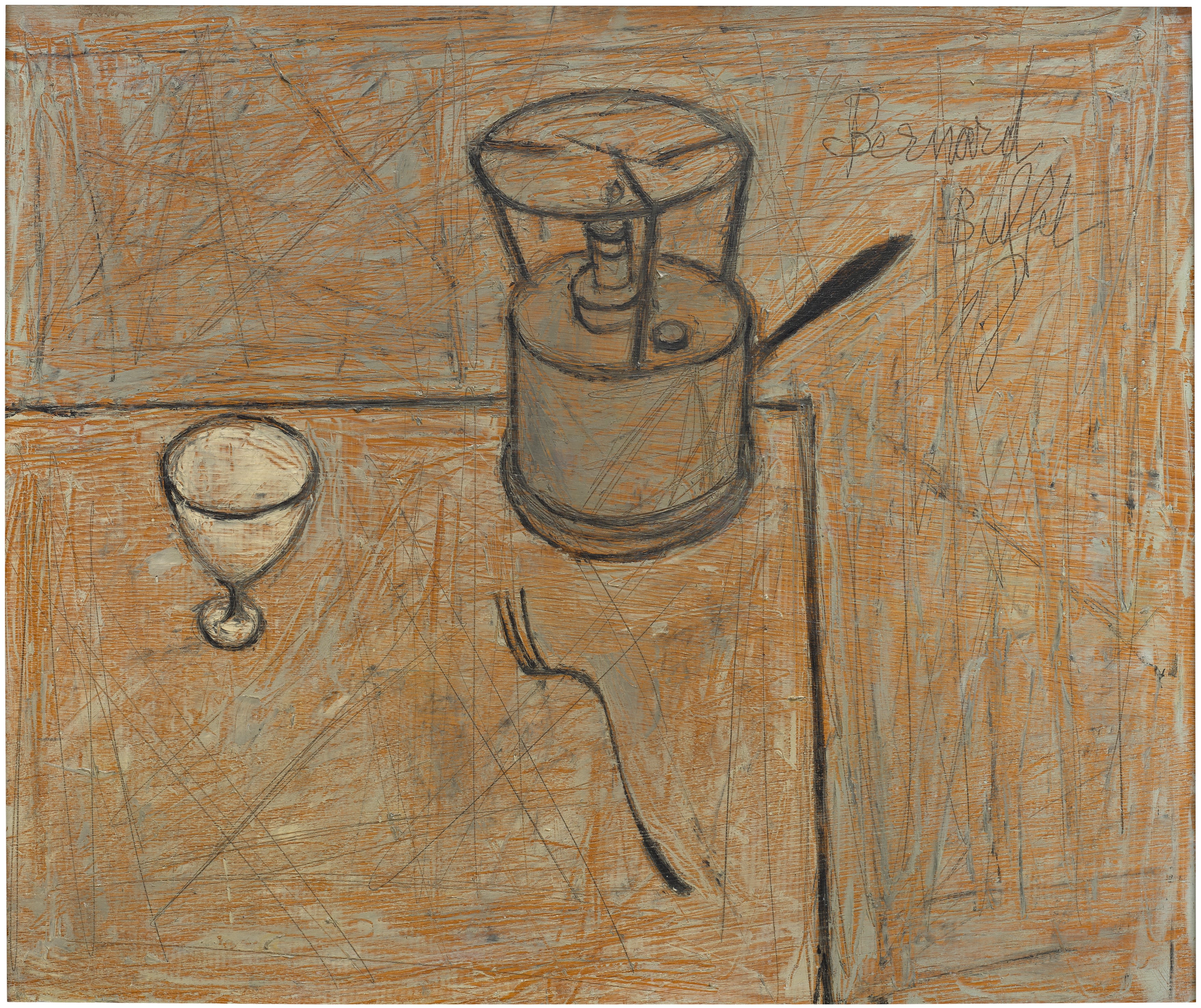
His signature: dark, incisive outlines drawn with almost architectural precision, figures stretched into expressive verticals, palettes drained to ash and bone with occasional eruptions of deep crimson or rust. His still lifes from this period, works such as "Nature Morte Aux Oeufs" from 1955 and "Les poissons" from 1946, feel less like arrangements of objects than like autopsies of the everyday, rendered with a tenderness that makes them quietly devastating. His studio interiors, including the celebrated "Atelier à Nanse" from 1955, carry the same quality of stillness under pressure, a world observed with both love and grief. As the 1950s progressed, Buffet's ambition expanded into grand thematic series that he pursued with the discipline of a novelist.
He painted clowns and circus performers with particular devotion, drawn to the tragicomic dignity of figures whose work is to perform emotion for an audience. His lithographic series "Mon Cirque," which includes memorable images of Emile and Pipo, brought his imagery to a wider audience and demonstrated his mastery of printmaking as a medium in its own right, not a secondary activity. He traveled widely and his journeys fed his work: the portfolio "Le Voyage au Japon," published by Éditions A.C.
Bernard Buffet
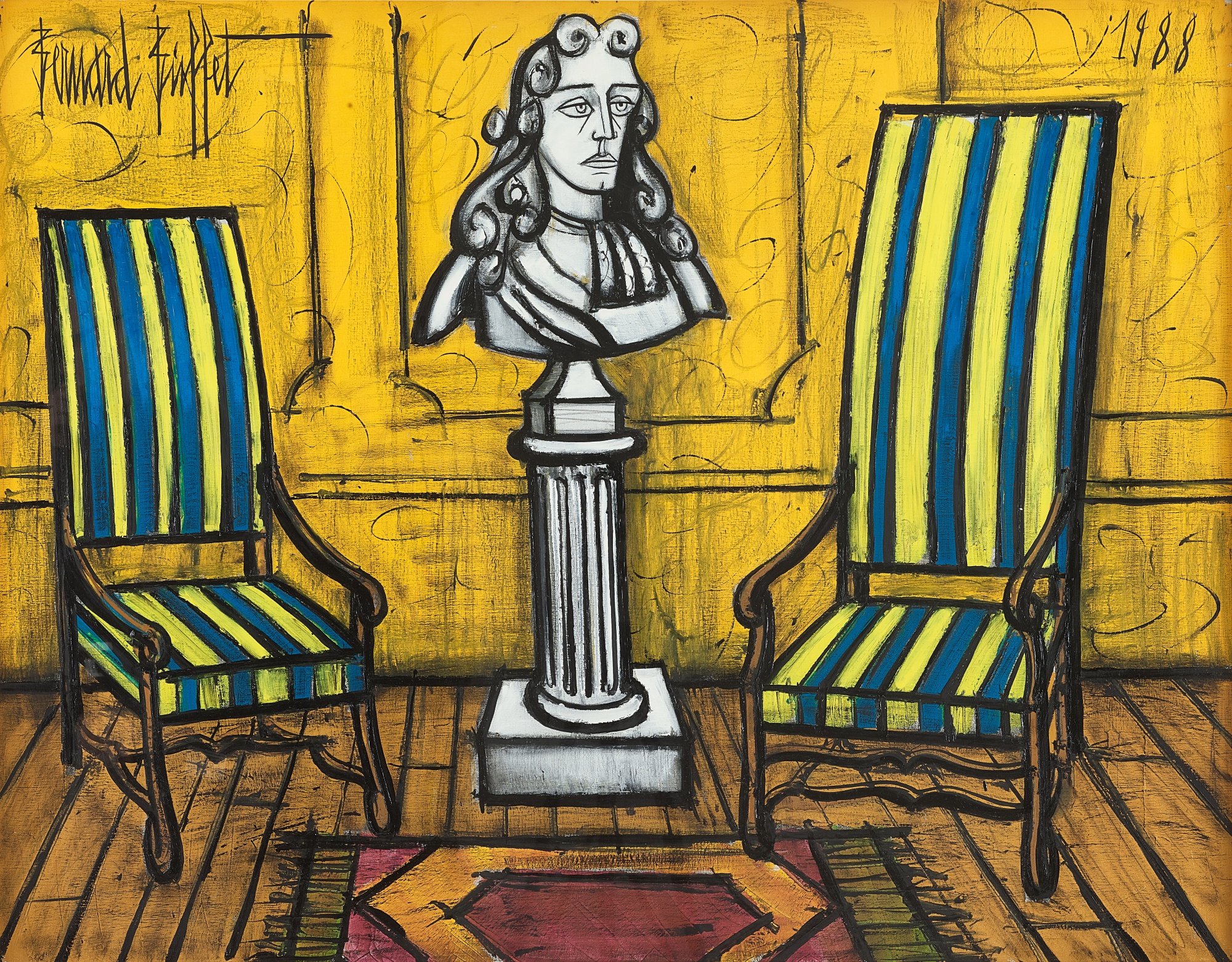
Intérieur aux deux fauteuils 室內的一對扶手椅, 1988
Mazo in Paris, stands as one of the most beautiful artist's books of the later twentieth century, a series of prints in which Buffet's linear intensity meets the geometry and quiet of Japanese architecture and landscape. His "Torero rose" from 1960 shows the range of his palette and his ability to invest a single figure with both spectacle and solitude. The trajectory of Buffet's critical reputation is one of the more instructive stories in modern art history. Through the 1950s he was lionized; by the 1960s, as the art world turned decisively toward abstraction and then conceptualism, his figurative commitment was reframed as a liability.
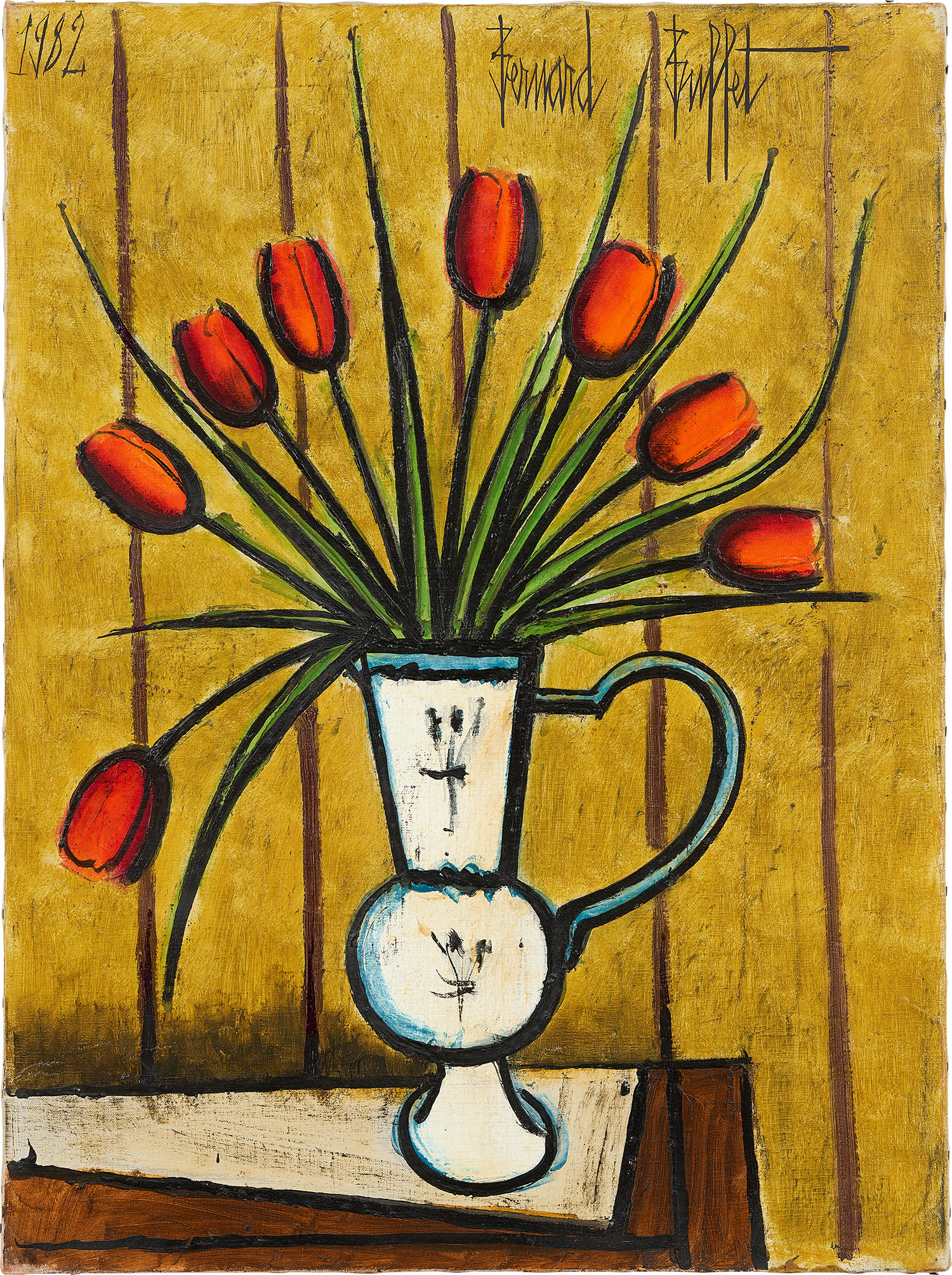
His commercial success, which was enormous, was used against him. Yet the work never wavered in its sincerity or its quality. His Venice paintings, including "Palais des Doges" from 1962, show a painter in full command of architectural grandeur, finding in the city's layered stone and reflected light a subject perfectly suited to his linear grammar. His flower paintings, such as "Bouquet de tulipes" from 1982 and "Glaïeuls rouges" from 1959, surprise collectors who encounter them expecting austerity: they are vivid, generous, full of the pleasure of looking.
Bernard Buffet
Bouquet de tulipes, 1982
From a collecting perspective, Buffet offers remarkable range. Works on paper and prints, including the artist's proofs from limited editions such as "Le Voyage au Japon," represent an accessible entry point that also carries genuine art historical significance. His oils, particularly the still lifes and interiors from the late 1940s through the 1960s, are the works that scholars and serious collectors pursue most actively. The interior paintings of the 1980s, such as "Intérieur aux deux fauteuils" from 1988, demonstrate that his late career was by no means a decline but a sustained meditation on space, comfort, and the objects with which we surround ourselves.
Provenance, condition, and the presence of a clear exhibition or publication history all strengthen the case for individual works. Within the broader landscape of twentieth century figurative painting, Buffet belongs to a distinguished company. He shared affinities with the British painters Francis Bacon and Lucian Freud in his commitment to the figure as the primary vehicle of emotional truth, though his means were entirely different, more architectural, more linear, less carnal. Among his French contemporaries, comparisons with Jean Dubuffet and Alberto Giacometti illuminate something important: like Giacometti, Buffet was transfixed by the elongated human form as a kind of existential statement, and like Dubuffet, he refused the seductions of conventional beauty in favour of a more searching honesty.
The legacy of Bernard Buffet is being written anew, and the revision is long overdue. The Musée Bernard Buffet in Surugadaira, Japan, which opened in 1973 and holds an extraordinary collection of his work, has long been a place of pilgrimage for collectors and admirers who understood the depth of his achievement when the Western critical world was looking elsewhere. Today, with figurative painting once again at the centre of contemporary art conversation, Buffet's foundational role in keeping that tradition alive through difficult decades looks not like stubbornness but like courage. He was an artist who trusted his own vision completely, and the work rewards that trust in full.
Explore books about Bernard Buffet