Berenice Abbott
Berenice Abbott Saw the City Whole
Artist Spotlight · The Collection Editorial
“Photography can never grow up if it imitates some other medium. It has to walk alone.”
Berenice Abbott
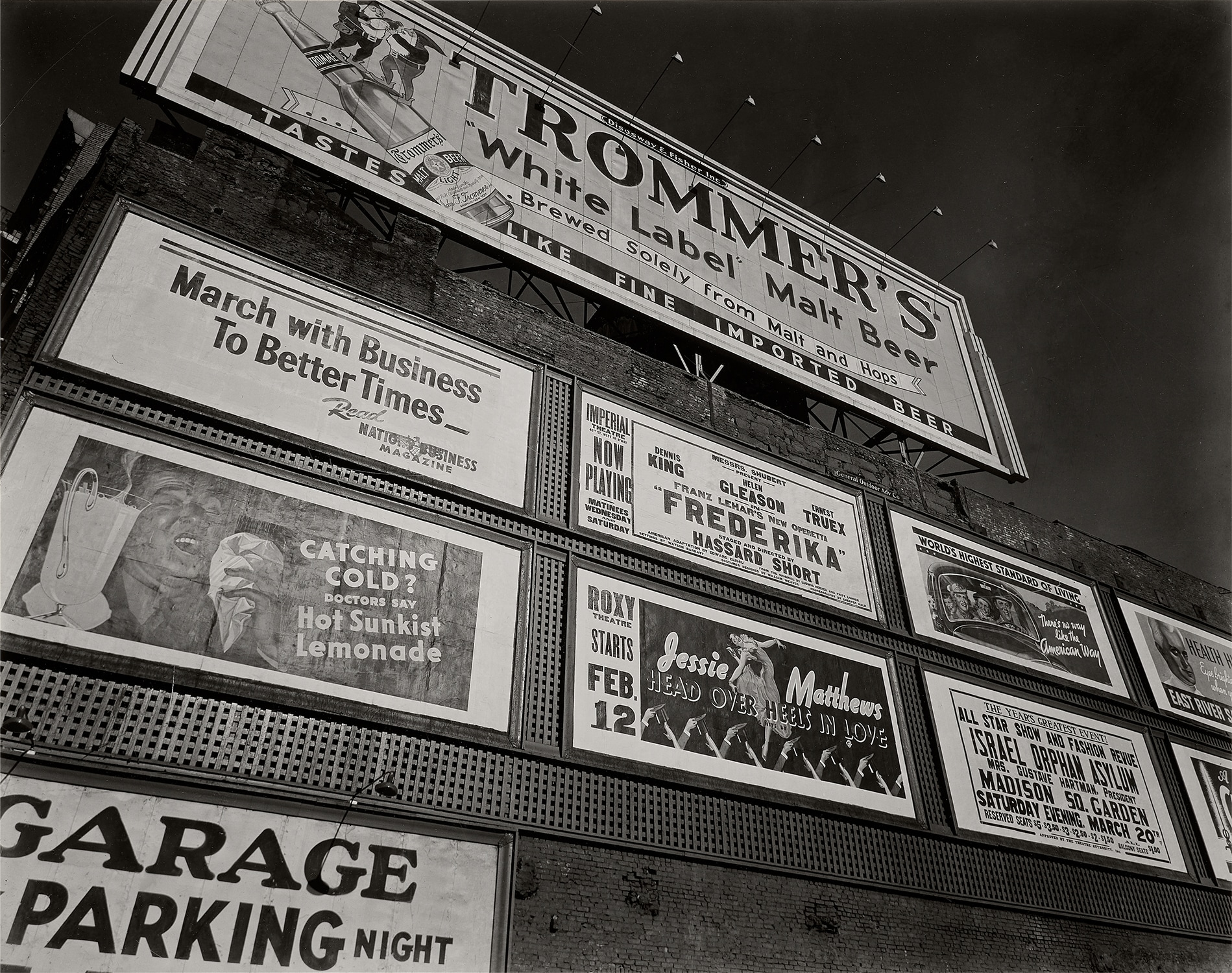
There is a particular quality of winter light in lower Manhattan, the kind that carves hard shadows between the steel and stone facades of buildings that no longer exist. Berenice Abbott understood that light intimately. Working through the late 1930s with a large format camera and an almost missionary sense of purpose, she produced a body of documentary photographs of New York City that remains one of the most extraordinary achievements in the history of American art. Her project, eventually published as "Changing New York" in 1939, stands today not merely as a historical record but as a sustained artistic vision, a love letter written in silver and shadow to a metropolis in the act of transforming itself.
Berenice Abbott
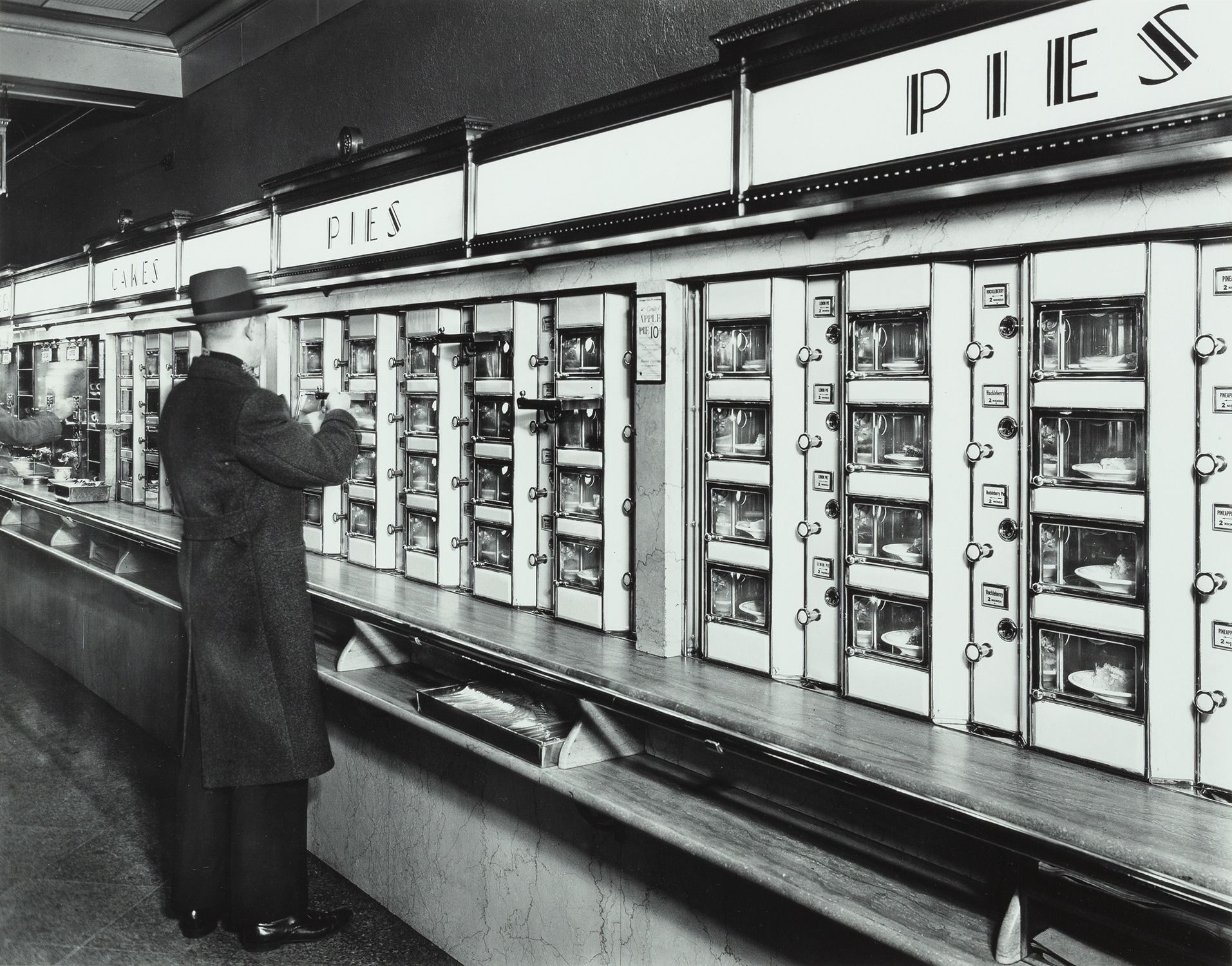
Automat, 977 Eighth Avenue, Manhattan
Abbott was born in Springfield, Ohio in 1898, and her early years offered little obvious preparation for the career that awaited her. She studied at Ohio State University before leaving for New York City in 1918, drawn by the energy of bohemian Greenwich Village and its community of writers and radical thinkers. A few years later she made her way to Paris, the gravitational center of the avant garde in the early 1920s, where she arrived intending to study sculpture. What she found instead was a vocation.
She became an assistant to the great surrealist photographer Man Ray, learning the mechanics and possibilities of the medium from within one of the most creatively charged studios in Europe. The pivotal encounter of Abbott's formative years came through Man Ray's studio, where she was introduced to the work of Eugene Atget, the French photographer who had spent decades making quietly devastating images of a Paris likewise caught between tradition and modernity. Atget died in 1927, and Abbott, recognizing the magnitude of what she had encountered, worked to preserve and champion his archive. She purchased his negatives and prints, advocated for his importance at a time when photography itself was still fighting for recognition as a fine art, and helped bring his work to American audiences.
Berenice Abbott
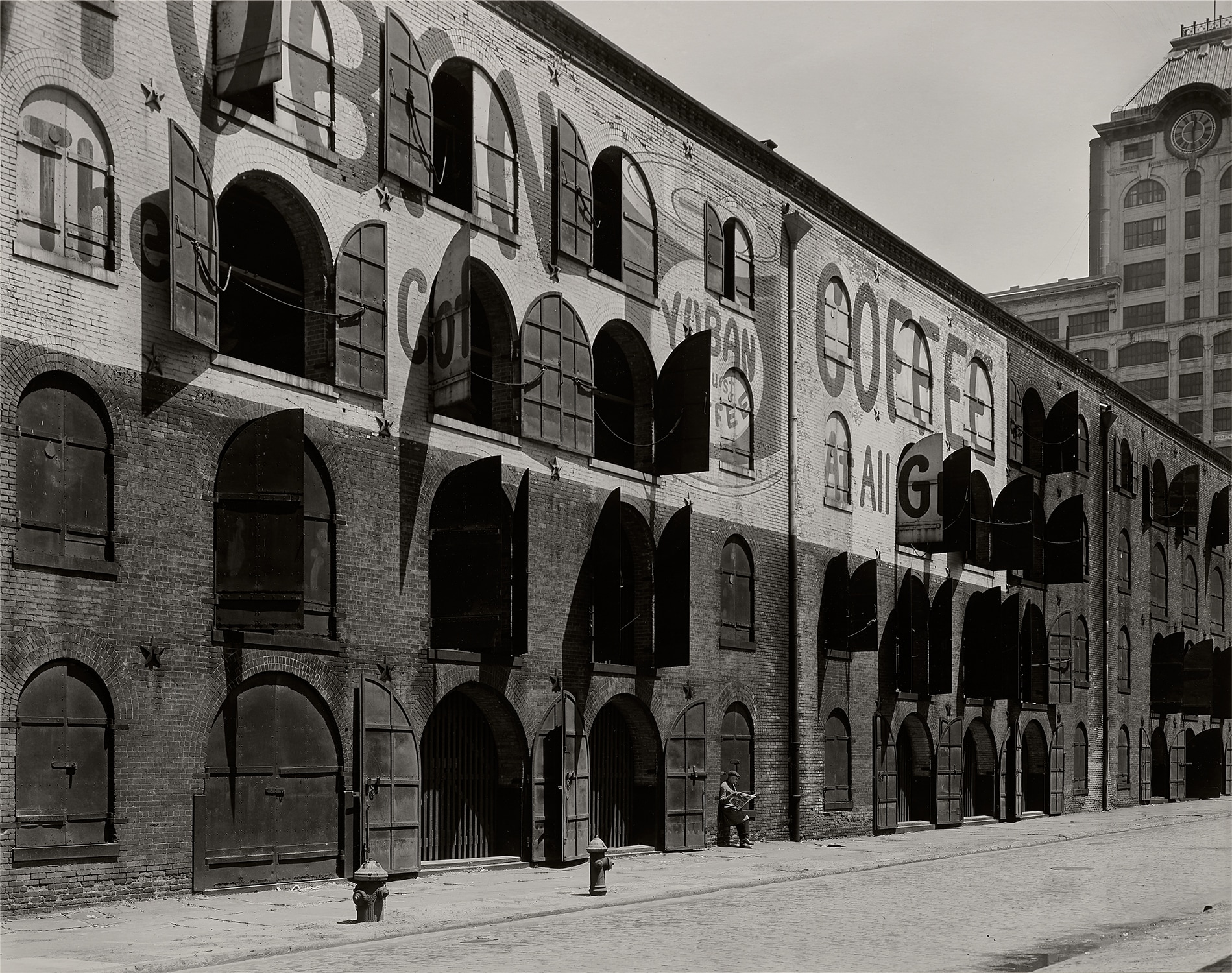
Yuban Warehouse, Water and Dock Streets, Brooklyn
This act of curatorial devotion speaks to something essential in Abbott's character: she saw clearly, she acted decisively, and she understood that great vision deserved to outlast its moment. Returning to New York in 1929, Abbott was struck by the sheer velocity of change reshaping the city she had left a decade earlier. Skyscrapers were rising at a pace that felt almost violent in its ambition. Neighborhoods were being cleared and rebuilt.
“The challenge for me has been to see things as they are, whether it is a tenement or the George Washington Bridge.”
Berenice Abbott
The elevated rail lines, the pushcart markets, the ornate facades of theaters and warehouses built in the previous century were all under pressure from a city that could not stop reinventing itself. Abbott secured support from the Federal Art Project, part of the Works Progress Administration, and from 1935 to 1939 she worked systematically and passionately to document what was disappearing and what was being born. The resulting photographs are neither nostalgic elegies nor triumphalist celebrations. They are something rarer and more honest: a record made with full awareness that the camera is always catching the world in the act of becoming something else.
Berenice Abbott
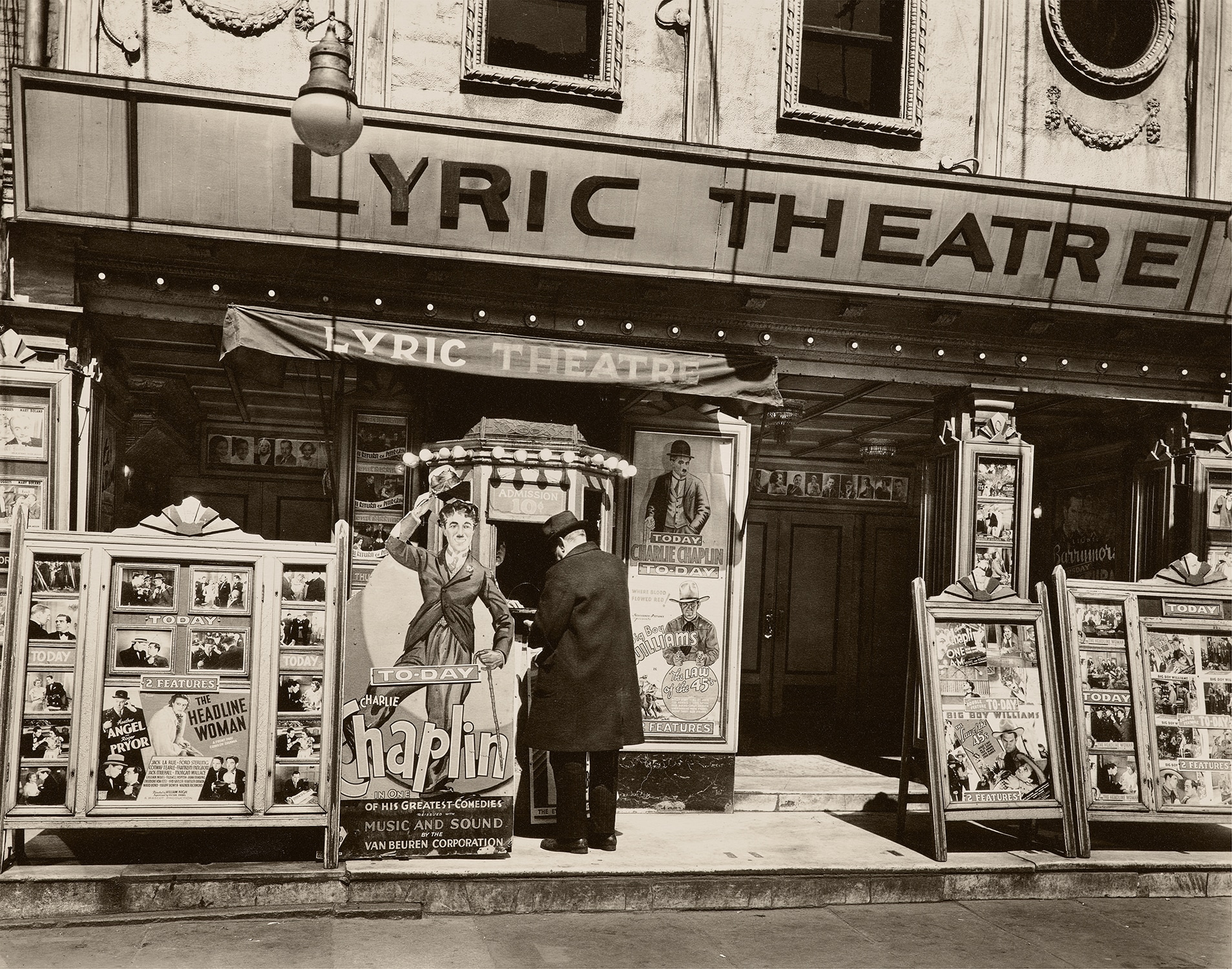
Lyric Theatre, 3rd Avenue between 12th and 13th Streets, Manhattan
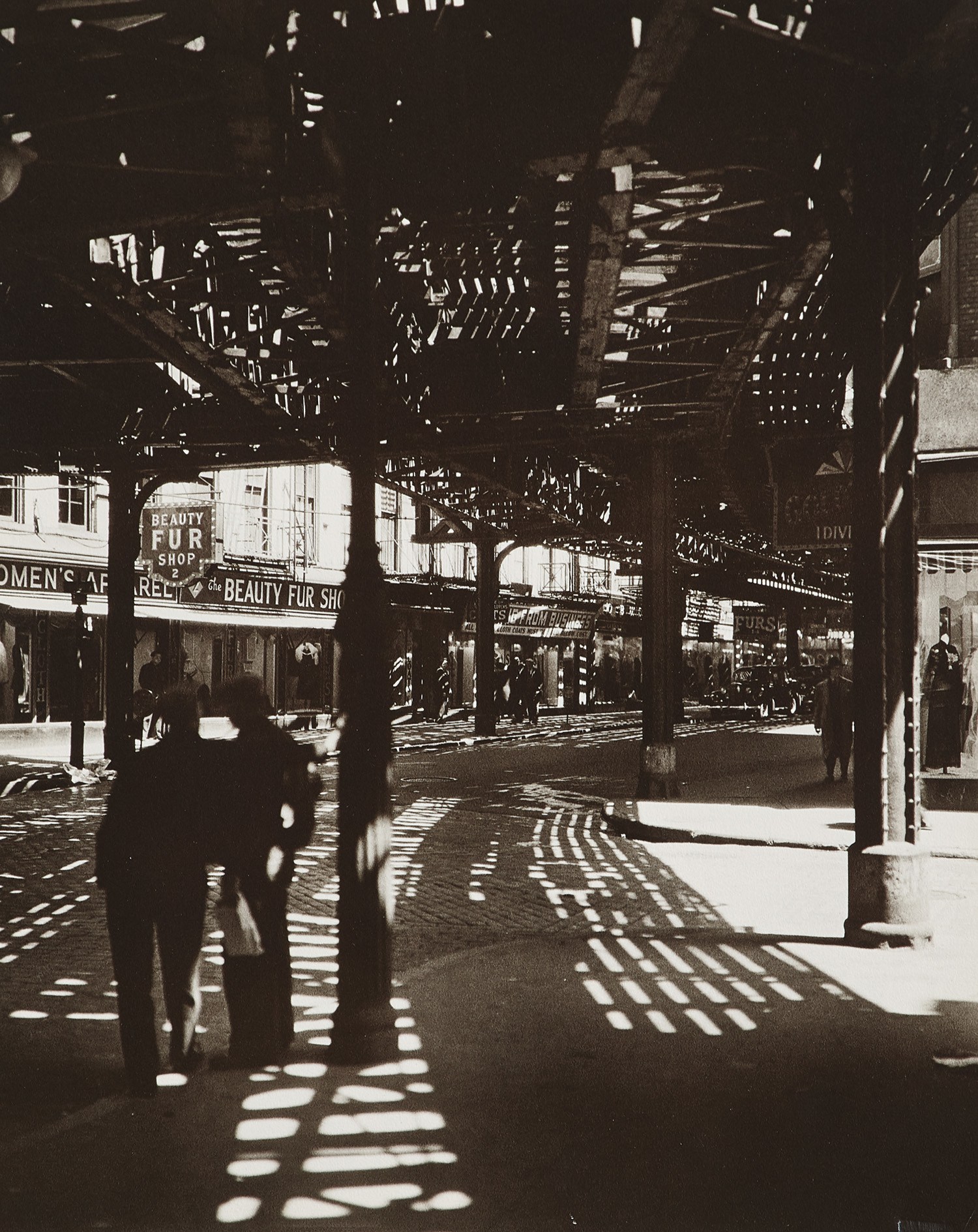
The works held on The Collection offer a remarkable survey of Abbott's New York vision. "Automat, 977 Eighth Avenue, Manhattan" captures the democratic theater of one of the city's most beloved institutions, a space where steam heat and gleaming chrome offered working people a moment of modern comfort. "The George Washington Bridge" finds Abbott looking upward and outward, dazzled by the engineering sublime of a structure completed in 1931, its cables and towers emerging from mist with an almost painterly grandeur. "El, Second and Third Avenue Lines: Bowery and Division Street, Manhattan" documents the elevated railway infrastructure that defined daily movement through the city before its eventual demolition.
"Yuban Warehouse, Water and Dock Streets, Brooklyn" and "Hoboken Railroad Yards, New Jersey" extend her gaze beyond Manhattan to the working waterfront, the industrial edges where goods and labor shaped a metropolitan economy largely invisible to fashionable uptown life. Each image is executed as a gelatin silver print, and the tonal range Abbott achieves across this body of work, the way she holds detail simultaneously in the deepest shadows and the brightest skies, reflects a technical mastery earned through years of disciplined practice. For collectors, Abbott's work occupies a position of considerable distinction in the photography market. Her prints are held in the permanent collections of the Museum of Modern Art in New York, the Metropolitan Museum of Art, the Art Institute of Chicago, and the Smithsonian American Art Museum, among many others.
Berenice Abbott
'El,' Second and Third Avenue Lines: Bowery and Division Street, Manhattan
Period prints made during the 1930s and printed later in her lifetime both command serious attention, and the gelatin silver print remains the medium most closely associated with her practice. Collectors drawn to documentary photography, to the history of New York, or to the broader tradition of American modernism will find in Abbott's work a rare combination of aesthetic power and historical significance. The images reward prolonged looking in a way that distinguishes the finest photography from mere illustration. Abbot exists in a rich constellation of photographers whose work she influenced and who share her commitment to the documentary as an artistic form.
Walker Evans, her contemporary, brought a similar rigorous eye to the American vernacular landscape, and the two are often discussed together as defining figures of a distinctly American photographic sensibility. Dorothea Lange's socially committed portraits of the Depression era inhabit the same moral and aesthetic world. Looking backward, Atget remains the essential forefather, and Abbott's devotion to his legacy forms one of the great continuities in photographic history. Looking forward, her influence can be felt in the work of generations of photographers who understood that the street is an inexhaustible subject.
Abbott continued to work and teach long after "Changing New York" established her reputation, turning in later decades to scientific photography and explorations of physical phenomena for projects developed in collaboration with educational publishers. She lived until 1991, long enough to see her New York images recognized not just as documents but as art of enduring importance. She died in Monson, Maine, where she had lived for many years. The distance from the city she had so lovingly fixed in silver seems fitting somehow.
She had done her work. The photographs remain, holding their corner of time with the quiet authority of things made to last.
Explore books about Berenice Abbott
Berenice Abbott: A Life
Jennifer Light
Berenice Abbott: Photographer
Berenice Abbott
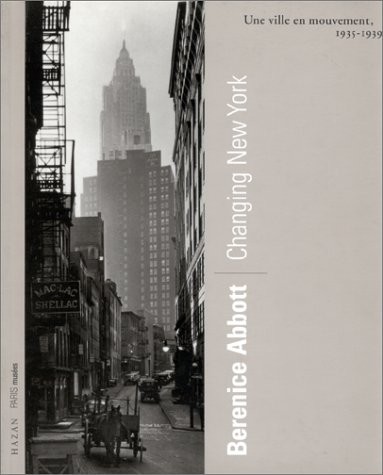
Changing New York
Berenice Abbott
Guide to Better Photography
Berenice Abbott
Berenice Abbott: Master of Photography
Hank O'Neal
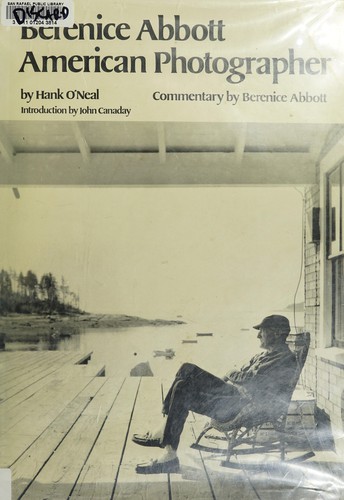
Berenice Abbott: American Photographer
Berenice Abbott and Hank O'Neal
The World of Berenice Abbott
Berenice Abbott