Ben Vautier
Ben Vautier: The Man Who Made Everything Art
Artist Spotlight · The Collection Editorial
“Everything is art. I am art. You are art. The street is art.”
Ben Vautier
In the summer of 2024, the art world paused to honor a singular voice that had spent nearly seven decades insisting, with absolute conviction, that everything, truly everything, could be art. Ben Vautier, the Swiss born provocateur, philosopher, and eternal optimist of the avant garde, passed away leaving behind a body of work that is as intellectually rigorous as it is irresistibly playful. Museums, collectors, and fellow artists across Europe and beyond marked his passing not with solemnity but with something closer to celebration, the kind he would have demanded. His was a life lived entirely in defiance of the ordinary, and the art world is richer, stranger, and more honest for it.
Ben Vautier
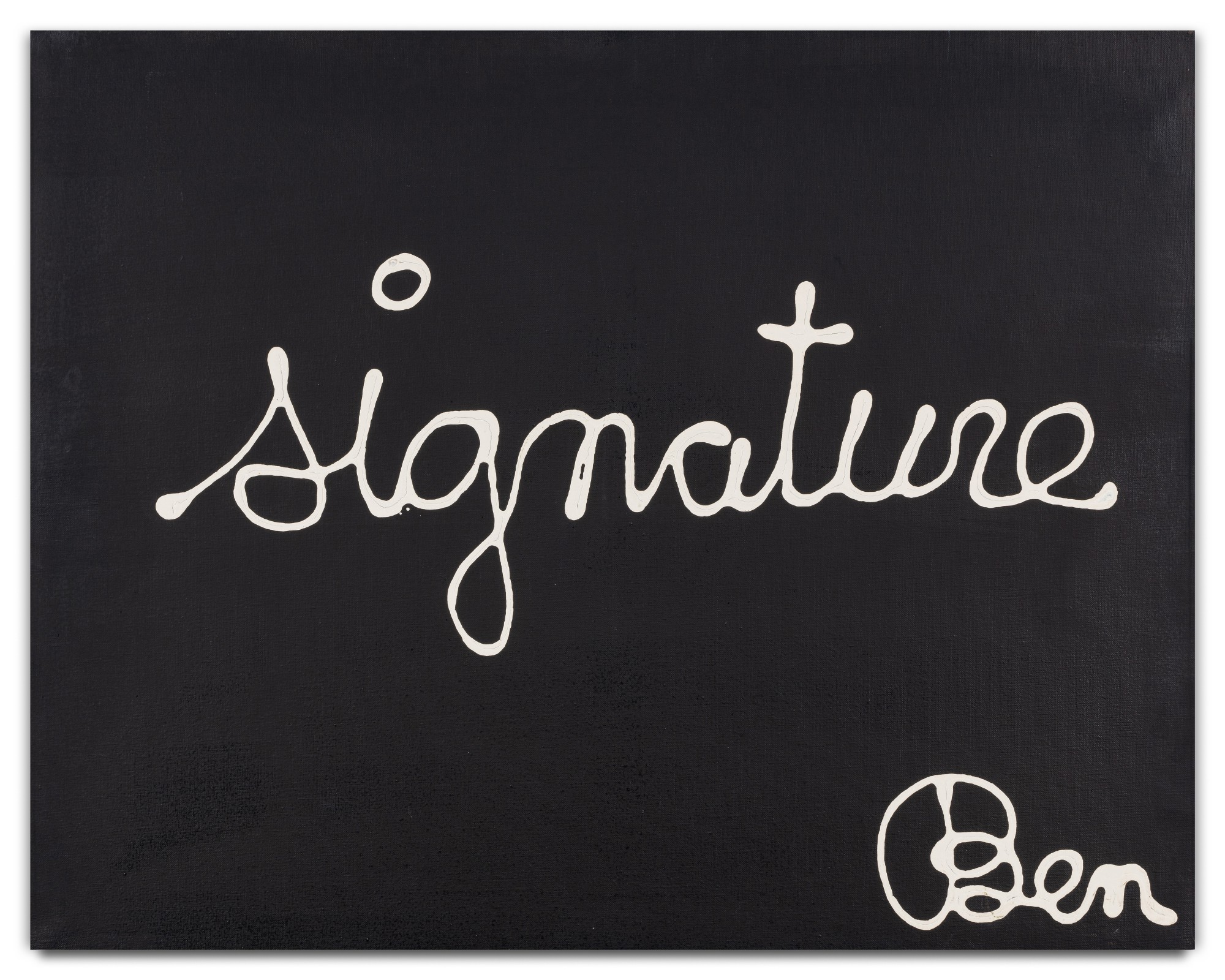
Signature, 1973
Born in Naples in 1935 to a family of Swiss origin, Ben, as he was universally known, spent his formative years moving across Europe before settling in Nice in the 1950s. It was in Nice that everything crystallized. He opened a small record shop on the Rue Tondutti de l'Escarène that became, almost accidentally, one of the most important gathering points for experimental art and music in postwar France. The shop was less a commercial venture than a living installation, a space where ideas were traded as freely as vinyl records.
Nice itself, sunny and peripheral, proved to be the perfect incubator for someone who was never going to fit within the institutional frameworks of Paris. The encounter with Fluxus in the early 1960s was the defining turning point of Ben's artistic life. Through correspondence and collaboration with George Maciunas, the founder of Fluxus, and close friendship with artists including Yoko Ono, Nam June Paik, and Robert Filliou, Ben found his people. Fluxus proposed that art should dissolve into life, that the boundaries between the artwork and the everyday were artificial constructs worth dismantling with humor and sincerity in equal measure.
Ben Vautier
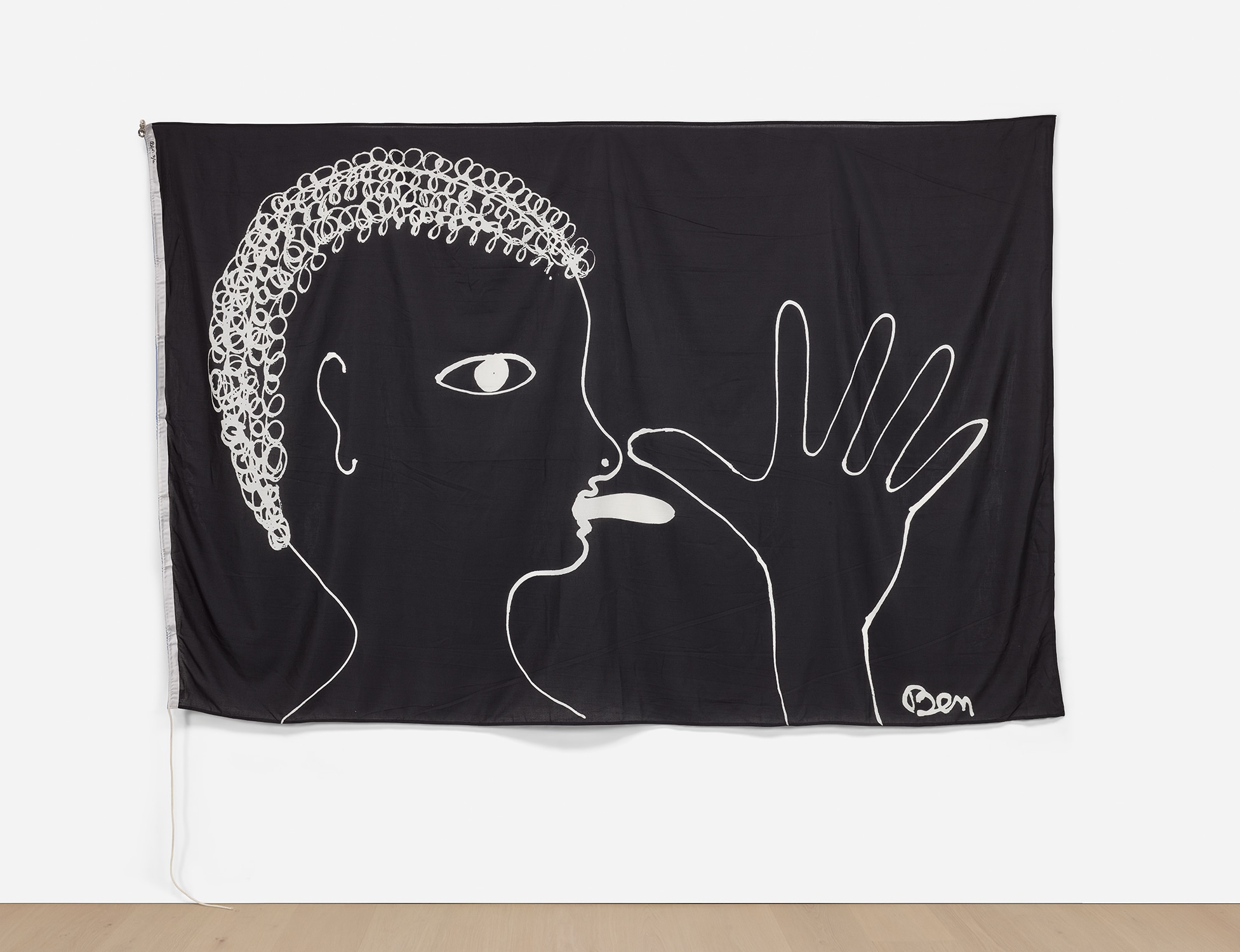
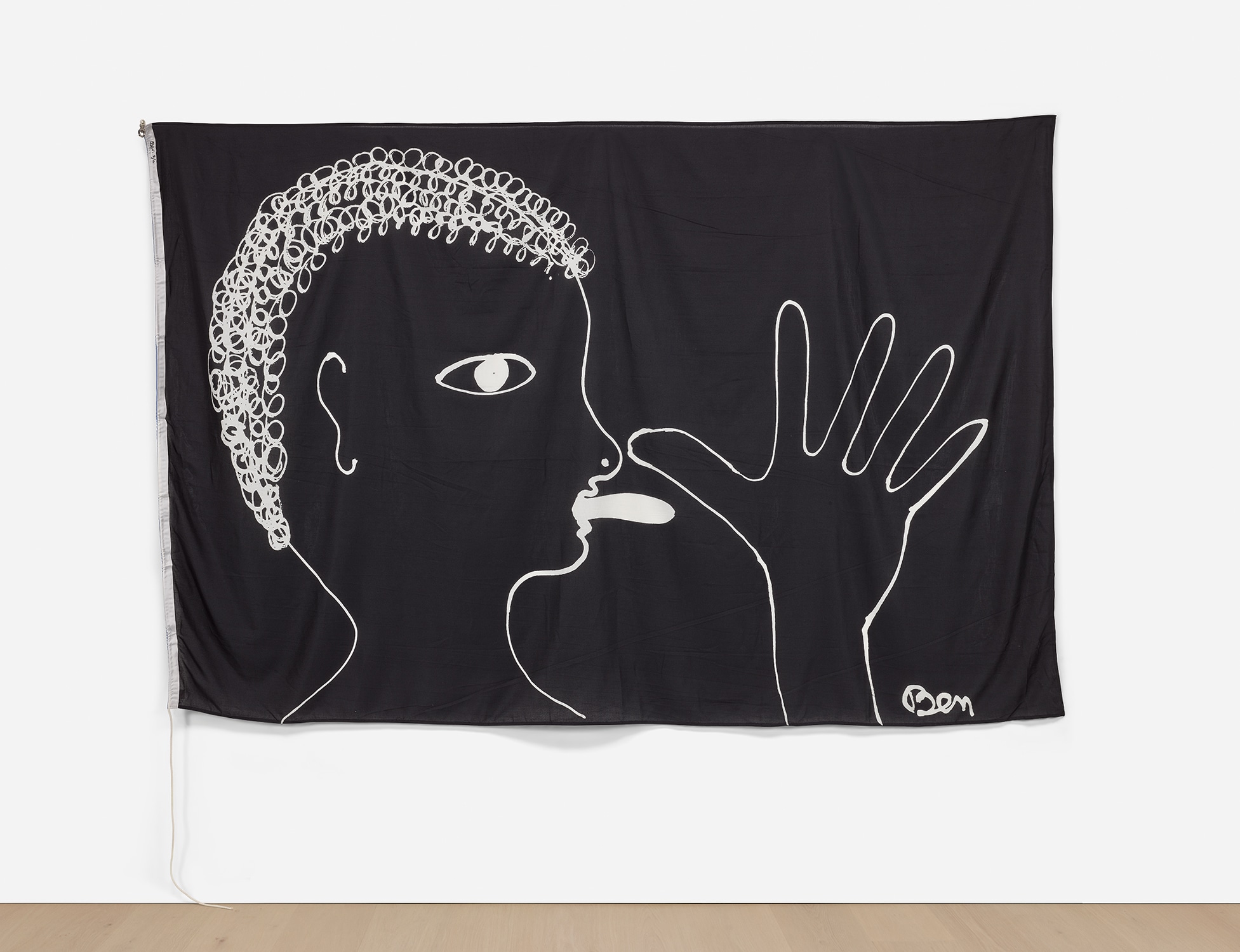
Vive la différence, from Gran Pavese – The Flag Project
Ben took this proposition and made it entirely his own. He signed things. He signed everything. He signed the sky, the sea, God, and himself.
“I sign everything because signing is the most simple and direct way to claim that something is art.”
Ben Vautier
The act of the signature, that most intimate assertion of authorship, became his primary medium and his central philosophical inquiry. The work titled "Signature," an oil on canvas from 1973, distills this obsession into something almost iconic. The painting is at once straightforward and deeply strange, a canvas that presents the very act of signing as its complete subject and its complete content. It asks the viewer to consider what it means for an artist to claim ownership of an idea, an object, or a gesture.
Ben Vautier
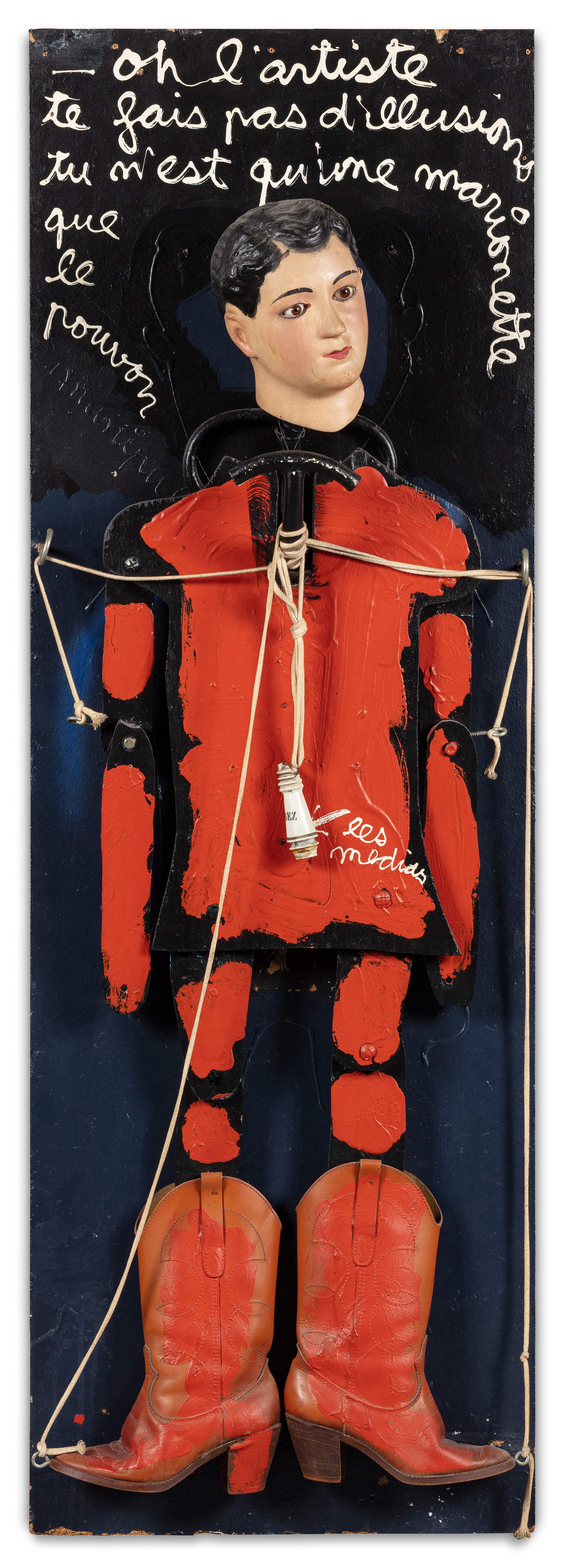
Oh ! L'artiste, te fais pas d'illusions..., 1986
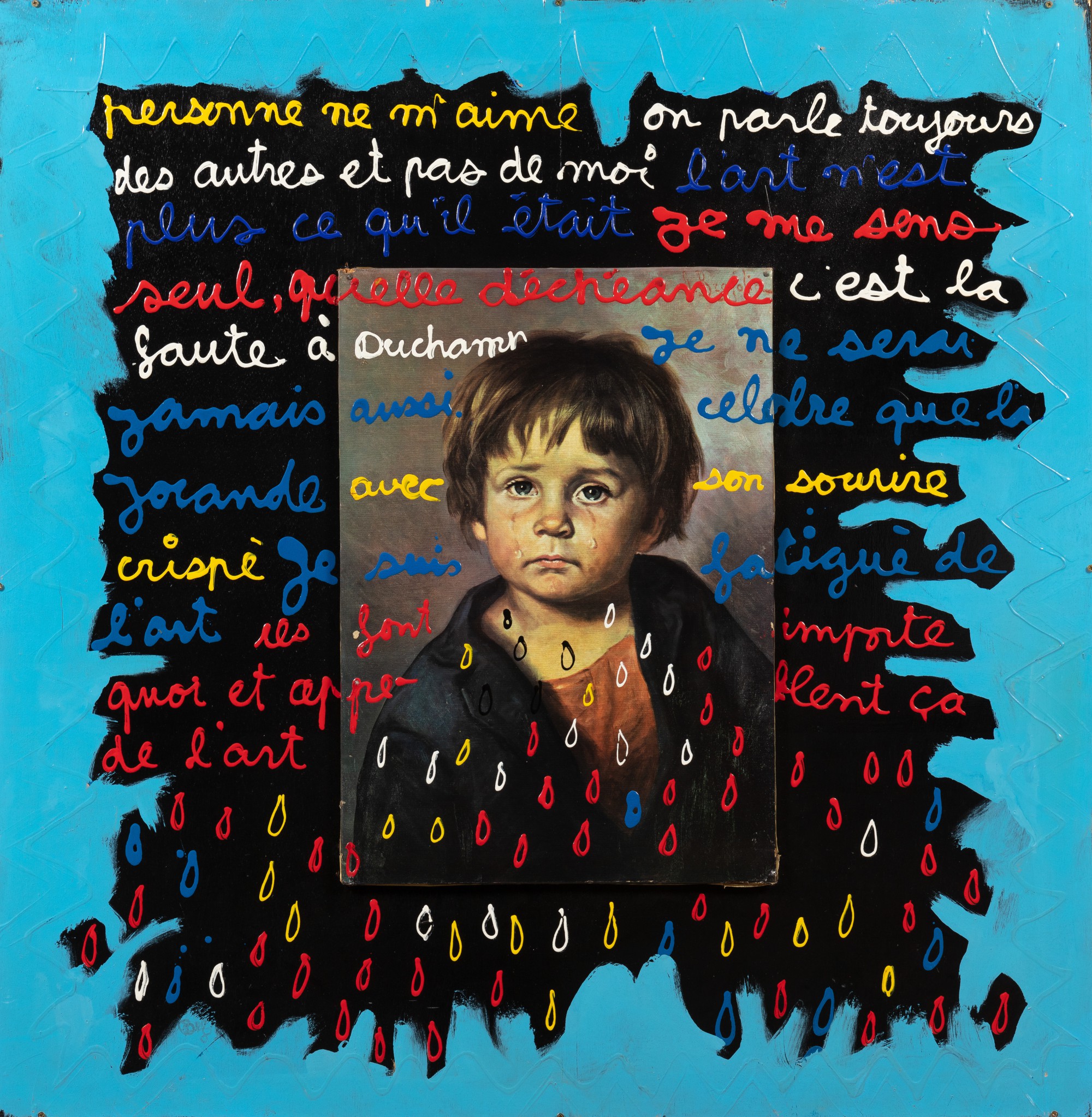
Decades before appropriation art became a dominant conversation in contemporary practice, Ben was already pulling at these threads with wit and without apology. His mixed media panel works from the mid 1980s, including "Oh, L'artiste, te fais pas d'illusions..." from 1986 and "Moi aussi je pleure pour qu'on m'oublie pas" from 1985, reveal another dimension of his practice: the use of text painted directly onto surfaces in his distinctive handwriting, urgent and intimate, turning the canvas into something between a confession, a manifesto, and a comedy. These works feel as alive today as they did when they were made.
Among the most intriguing objects in any serious Ben collection is the "Boite mystère ne pas ouvrir" from 1962, a sealed box constructed from wood, metal, copper wire, steel wire, paint, and sealing wax. The instruction not to open it is, of course, part of the work. This is Ben at his most conceptually precise: the artwork exists in the tension between curiosity and obedience, between the object you can hold and the unknown you cannot access. It is a direct descendant of Duchamp's spirit and a clear ancestor of the conceptual strategies that would come to dominate the following decades.
Ben Vautier
Moi aussi je pleure pour qu'on m'oublie pas, 1985
The piece rewards the collector who understands that its value is not diminished by its mystery but is, in fact, entirely constituted by it. For collectors approaching Ben's market, the works on paper and painted panel pieces represent a compelling entry point into a practice that spans six decades and multiple mediums. His text based works on panel and canvas carry particular resonance because they are so completely and unmistakably his own. The handwriting, the directness of address, the way the French language is used not decoratively but argumentatively, these are qualities that no one else has ever replicated with the same conviction.
Works from the 1960s and 1970s, particularly those connected to his Fluxus period and his Nice based activities, command strong attention at auction and among private collectors in Europe. Pieces such as "Vive la différence," from the Gran Pavese Flag Project, demonstrate his capacity to work at monumental scale and in formats, here a screenprint on polyester flag, that carry both conceptual weight and visual drama. In the context of art history, Ben sits in productive dialogue with a remarkable constellation of figures. His philosophical proximity to Marcel Duchamp is undeniable, though where Duchamp maintained a certain aristocratic detachment, Ben insisted on warmth and accessibility.
He shares creative territory with Joseph Beuys in his belief that art is fundamentally a social act, and with Lawrence Weiner in his commitment to language as a sculptural material. Among his Fluxus contemporaries, his closest affinities are perhaps with Robert Filliou, with whom he shared a deep investment in the idea of art as a permanent and democratic condition of human life rather than a specialized professional activity. What makes Ben essential today, in a cultural moment saturated with irony and detachment, is precisely his sincerity. He was never cynical.
His questions, about authorship, about identity, about the nature of difference and the politics of culture, were always genuine questions, posed with urgency and without the protective distance of irony. His advocacy for minority languages and regional cultures, expressed throughout his career, feels startlingly relevant in an era of renewed anxiety about cultural homogenization. The work "Pour un dominateur" in acrylic on canvas, with its typically confrontational title delivered in Ben's characteristically direct manner, reminds us that he was also always a political artist in the deepest sense, someone who believed that art had the responsibility to name power and to question it. To collect Ben Vautier is to acquire not merely an object but a position, a way of looking at the world that is more generous, more questioning, and considerably more fun than most of the alternatives on offer.