Ben Enwonwu
Ben Enwonwu, The Father of Modern African Art
Artist Spotlight · The Collection Editorial
In February 2018, the London auction rooms crackled with a particular kind of electricity. Three versions of Ben Enwonwu's 'Tutu' portrait series came to market within weeks of one another, and the art world found itself transfixed. The works, depicting a serene Yoruba woman rendered in Enwonwu's luminous, lyrical style, shattered expectations and set new records for African art at auction. Bonhams sold one of the portraits for over one million dollars, a moment that announced to a global collecting audience what many in Nigeria had long understood: that Enwonwu was not simply a significant regional figure but one of the most important artists of the twentieth century, full stop.
Ben Enwonwu
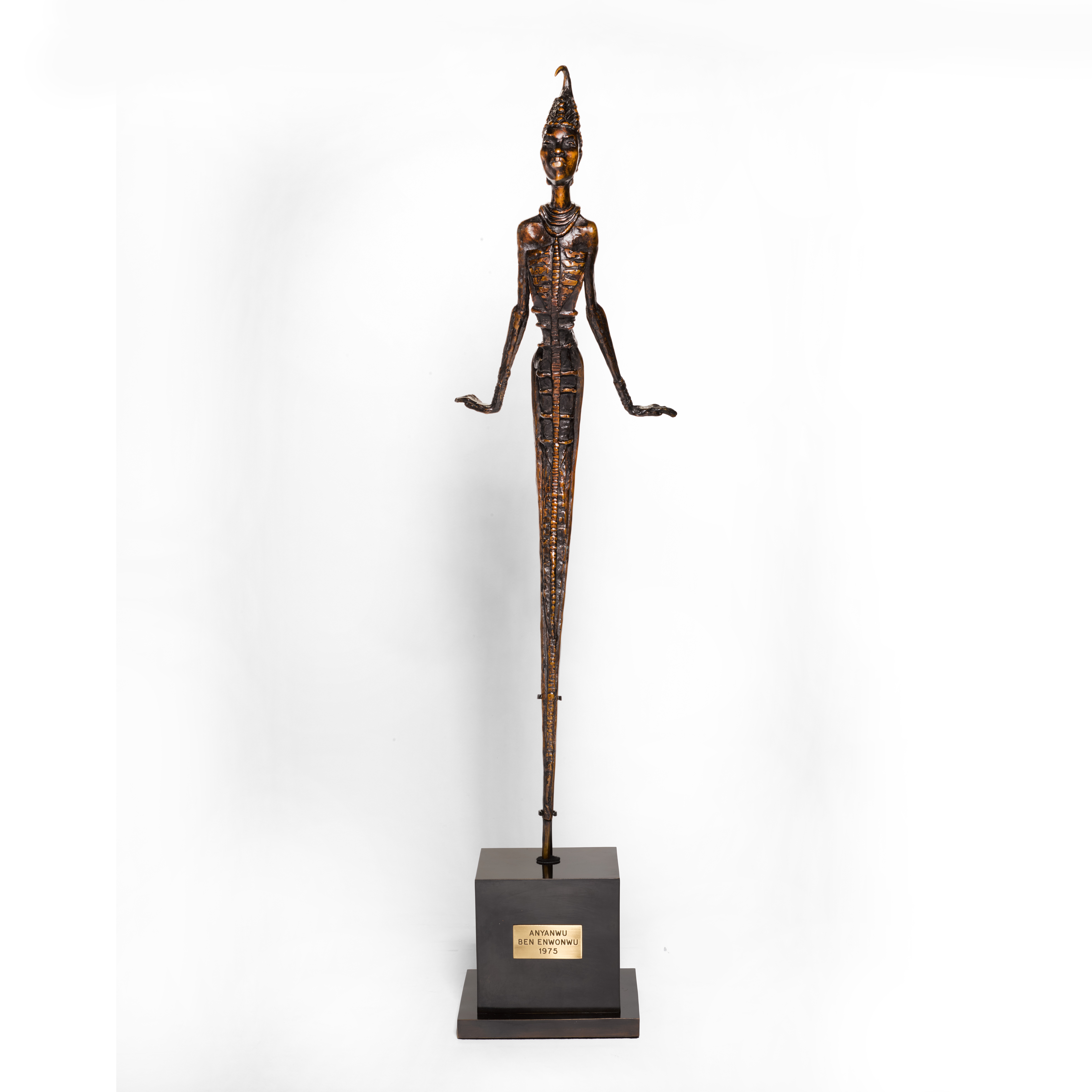
Anyanwu
Benedict Chukwuemeka Enwonwu was born in 1917 in Onitsha, a vibrant trading city on the Niger River in what was then colonial Nigeria. His father, Enwonwu Senior, was himself a respected carver, and the young Ben grew up surrounded by the visual vocabulary of Igbo ceremonial tradition, the rhythms of masquerade, and the formal intelligence embedded in ancestral sculpture. It was an upbringing that gave him a profound, embodied understanding of African artistic form before he ever encountered a Western paintbrush. That foundation would prove to be everything, shaping an aesthetic sensibility that could absorb modernist influence without being consumed by it.
Enwonwu's formal education took him first to the Government College in Umuahia and then, crucially, to England. He studied at the Slade School of Fine Art in London and later at the University of Oxford, becoming one of the first African artists to receive serious academic training in Europe during the mid twentieth century. The experience was formative but also clarifying. Where other artists of his generation risked losing themselves in the gravitational pull of European modernism, Enwonwu moved in the opposite direction, using his time abroad to sharpen his sense of what made African artistic traditions not merely different but philosophically distinct.
Ben Enwonwu
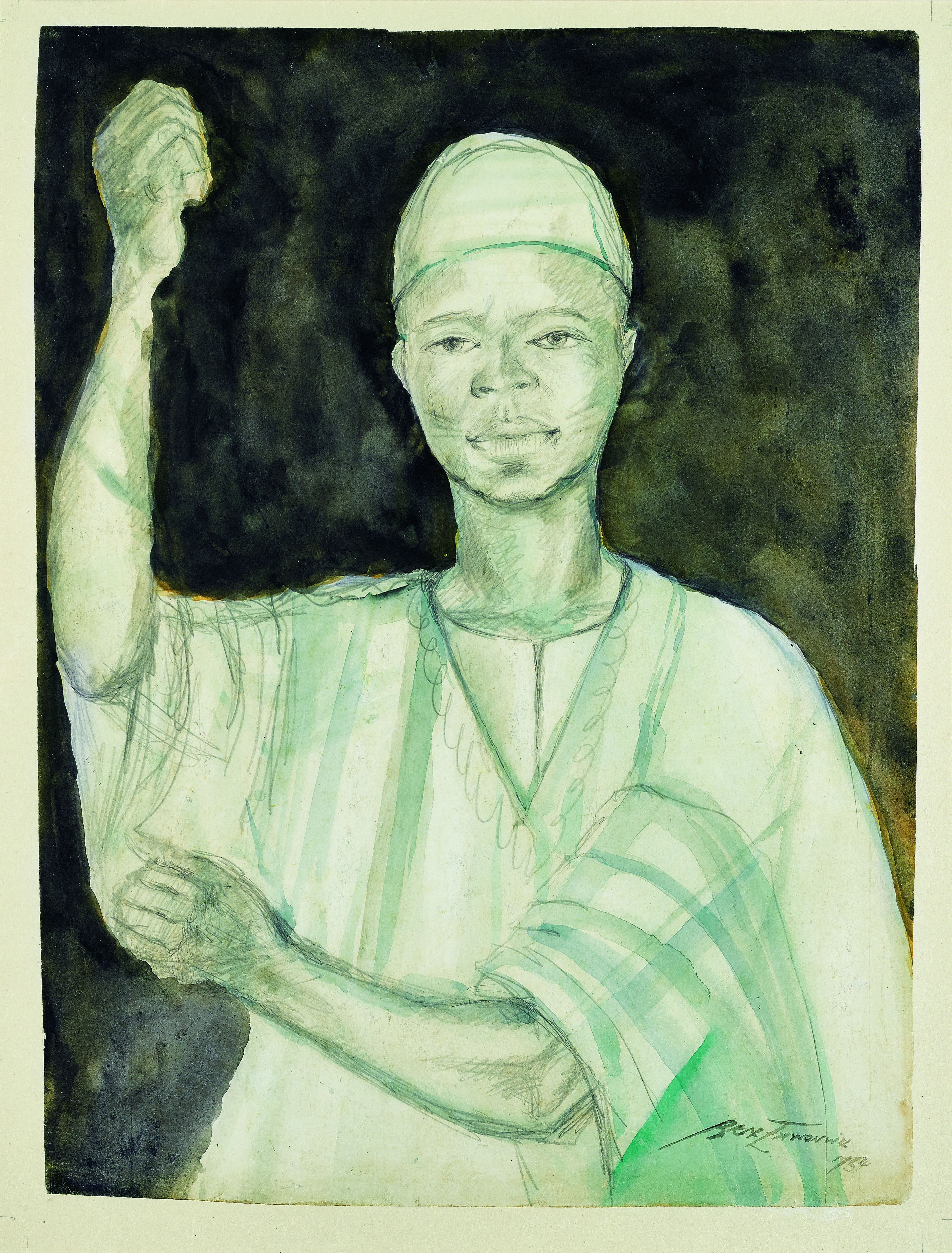
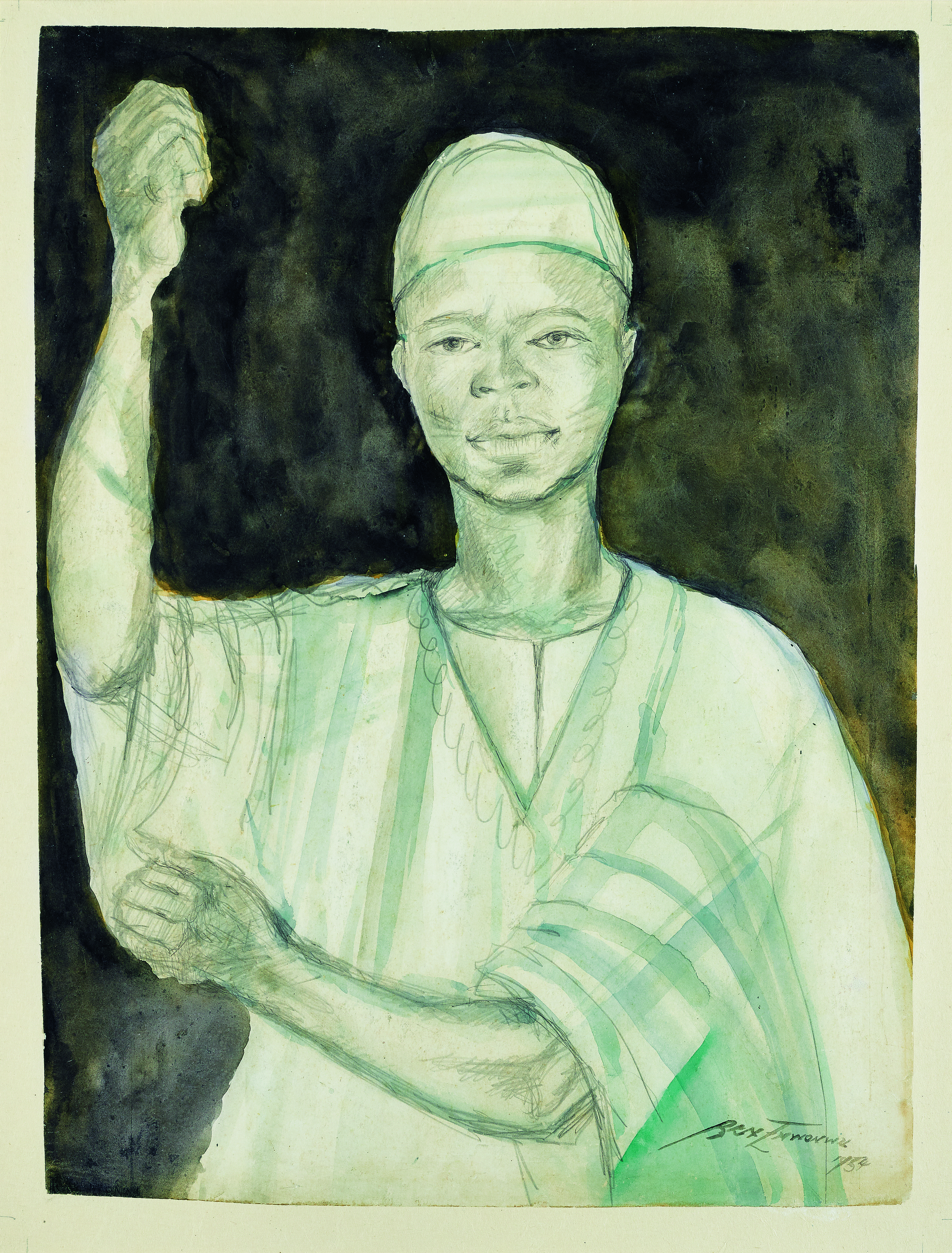
The Orator
He returned to Nigeria not as a convert to Western aesthetics but as an artist who had learned the language of Picasso and Henry Moore well enough to speak back to it on his own terms. The arc of his mature practice reveals an artist of extraordinary range and intellectual ambition. His sculpture 'Anyanwu', created in 1954 and meaning 'Eye of the Sun' in Igbo, stands as one of his most celebrated achievements. The bronze figure of a rising woman, arms outstretched, synthesises Igbo spiritual symbolism with a modernist formal clarity that feels timeless rather than dated.
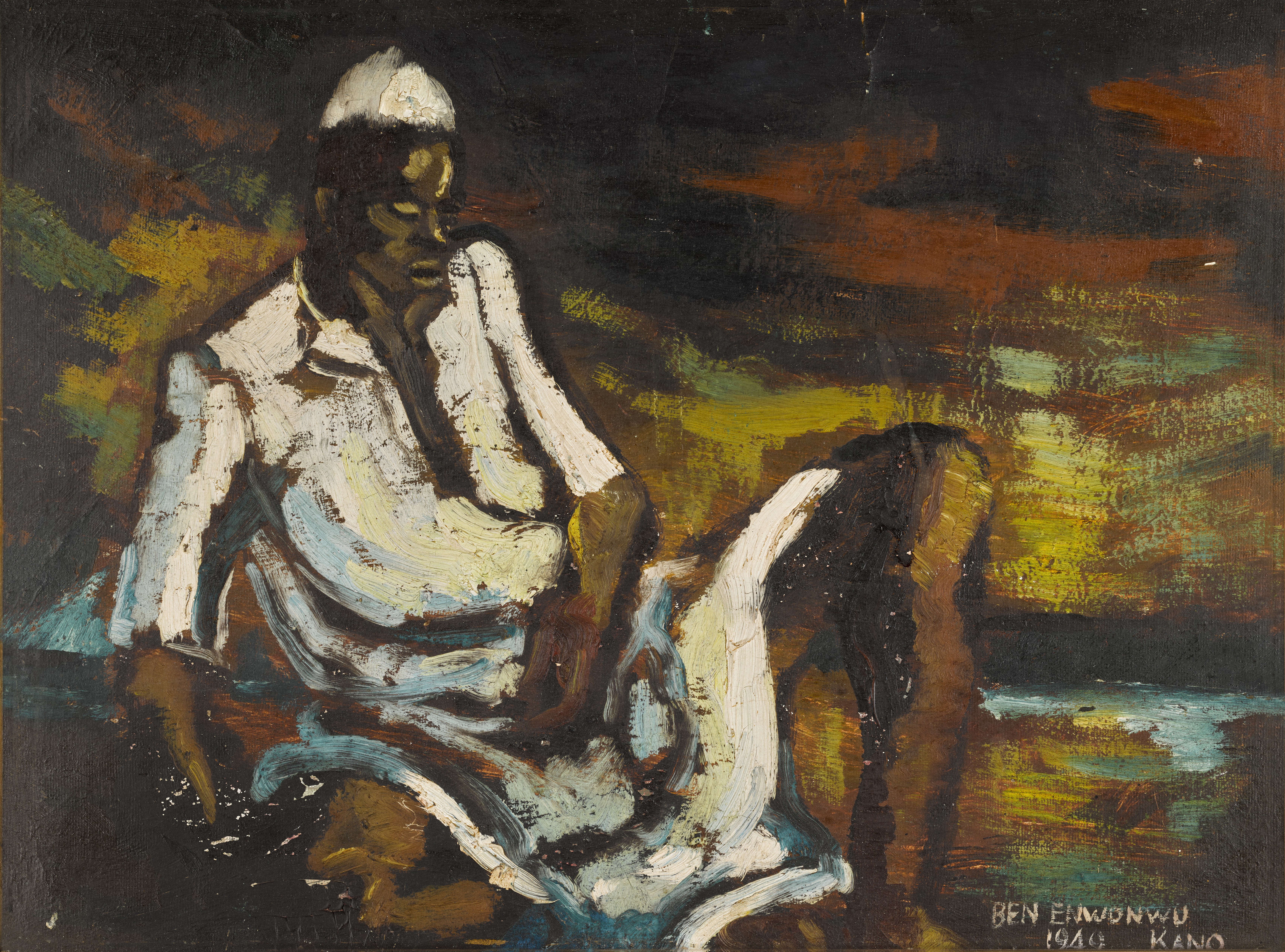
A cast of the work was installed at the United Nations headquarters in New York, and another stands at the National Museum in Lagos, testaments to the universal resonance of his vision. On canvas and paper, works like 'Abstract Figures (Africa Dances)' and 'The Orator' demonstrate his ability to move fluidly between figuration and abstraction, always anchored by an energy that is distinctly and unapologetically African. His 'Hausa Boy' and 'Portrait of a young lady', both in oil, reveal a portraitist of deep empathy, someone capable of rendering individual dignity with the same intensity he brought to grand allegorical subjects. The gouache work 'Negritude' connects him explicitly to the pan African intellectual movement of the same name, placing his art in conversation with writers like Léopold Sédar Senghor and Aimé Césaire who were arguing, in their own medium, for the beauty and validity of African thought.
Ben Enwonwu
Hausa Boy
The 'Tutu' series, created in 1973, remains his most discussed body of work, and its story is inseparable from its moment. Produced during the painful aftermath of the Nigerian Civil War, the Biafran conflict that had torn the country apart between 1967 and 1970, the paintings of the Yoruba princess became symbols of reconciliation and shared identity. Enwonwu, himself Igbo, chose a Yoruba subject deliberately, and Nigerians across ethnic lines responded with something approaching devotion. The original paintings circulated widely as prints and posters, becoming ubiquitous in homes and offices throughout the country.
The fact that the originals resurfaced decades later to achieve landmark auction prices speaks to both the emotional depth of the work and the growing sophistication of the market for African modernism. For collectors approaching Enwonwu's work today, the breadth of his output offers genuinely varied points of entry. His bronzes, including the powerful 'Bronze Torso of a Girl', command the highest prices and appear most rarely, occupying the upper tier of the African art market alongside works by contemporaries such as Twins Seven Seven and Bruce Onobrakpeya. Works on paper and board, including gouaches and oil studies, offer collectors a more accessible pathway into his practice without sacrificing the quality and authenticity that define serious collecting.
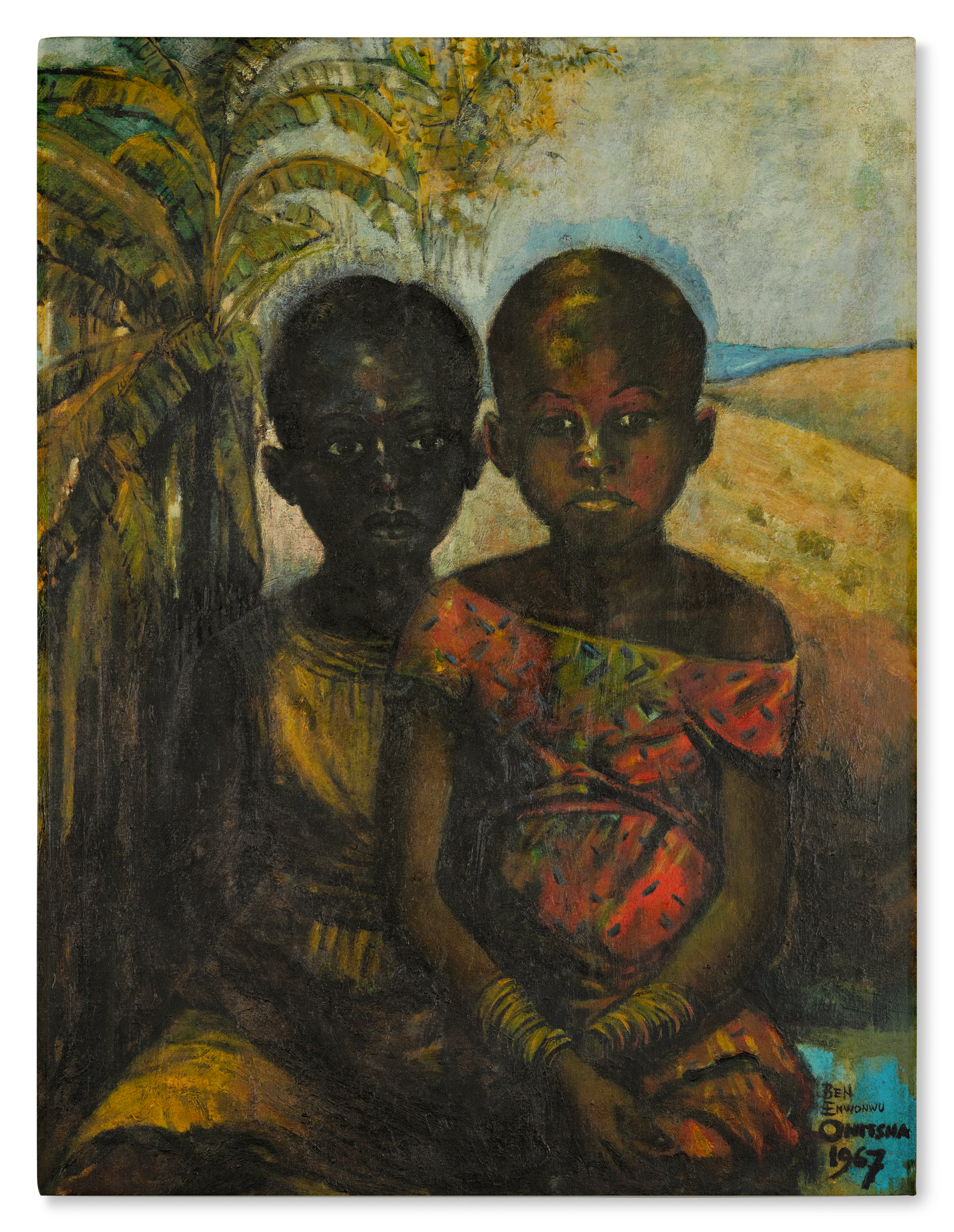
Ben Enwonwu
Chiekwe and Caro, 1967
The key qualities to look for are the characteristic fluidity of his line, the warm ochres and deep earths of his palette, and the sense of spiritual presence that animates even his most apparently secular subjects. Provenance and exhibition history are particularly important given the renewed global interest in his work, and buyers are well advised to approach specialists with deep knowledge of the Nigerian modernist canon. Enwonwu's place in art history sits at a genuinely important intersection. He belongs to a generation of African modernists, alongside artists such as Uche Okeke and Demas Nwoko in Nigeria, who argued through their practice that African art could be simultaneously rooted and cosmopolitan, traditional and contemporary, local and universal.
His influence on subsequent generations of African and diaspora artists has been profound. Artists working today across Lagos, London, New York and Accra are in many ways still navigating the creative territory he mapped. Institutions including the Smithsonian and the British Museum hold his works, and major retrospectives in recent years have introduced him to new audiences who discover, consistently, that his art has lost none of its vitality. Ben Enwonwu died in Lagos in 1994, but the conversation around his work has never been more alive.
The record prices achieved for 'Tutu' were not merely a market event but a cultural one, confirming that the global art world had arrived, perhaps belatedly, at a recognition his admirers in Nigeria never needed to be convinced of. To collect Enwonwu is to hold a piece of one of the great artistic arguments of the twentieth century, the argument that Africa's visual traditions were not raw material waiting to be processed by European modernism but living, evolving, intellectually sovereign forms in their own right. In that argument, Enwonwu was not just a participant. He was the defining voice.