Banksy
Banksy: The World Is His Canvas
Artist Spotlight · The Collection Editorial
“They say graffiti frightens people and is symbolic of the decline of society, but graffiti is just a crime of opportunity.”
Banksy, Wall and Piece
In October 2018, the art world collectively held its breath as a Banksy work titled Girl with Balloon partially shredded itself seconds after selling at Sotheby's London for just over one million pounds. The act, engineered by the artist through a mechanism hidden inside the frame, was simultaneously a prank, a philosophical statement, and a masterwork of performance art. Rather than destroying the work's value, the shredding transformed it into something even more extraordinary. Renamed Love Is in the Bin, the piece later sold in 2021 for approximately 18.
Banksy
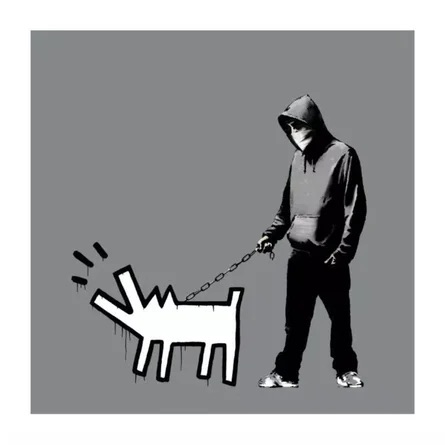
Untitled
6 million pounds, cementing Banksy's reputation not only as a street artist but as one of the most strategically brilliant creative minds of his generation. Banksy was born in Bristol, England, in 1974, and the city's famously fertile counterculture would prove to be the perfect incubator for the sensibility he would carry into the world. Bristol in the late 1980s and early 1990s was alive with the energy of the emerging UK hip hop scene, the free party movement, and a street art community that was beginning to find its own visual language. It was here, among the stencils and spray cans and underground clubs, that a young Banksy began to develop the irreverent, politically charged aesthetic that would eventually appear on walls from London to Bethlehem.
The city's working class grit and its tradition of nonconformity gave him both his subject matter and his sense of moral urgency. His early work drew directly from the Bristol graffiti scene, and he has cited artists including Blek le Rat, the French pioneer of stencil street art, as formative influences. The turn toward stenciling, which Banksy has described as partly a practical decision driven by the need to work quickly and avoid arrest, became the cornerstone of his visual identity. The stencil allowed him to achieve a precision and reproducibility that elevated his work above casual tagging and into something closer to graphic design or printmaking.
Banksy
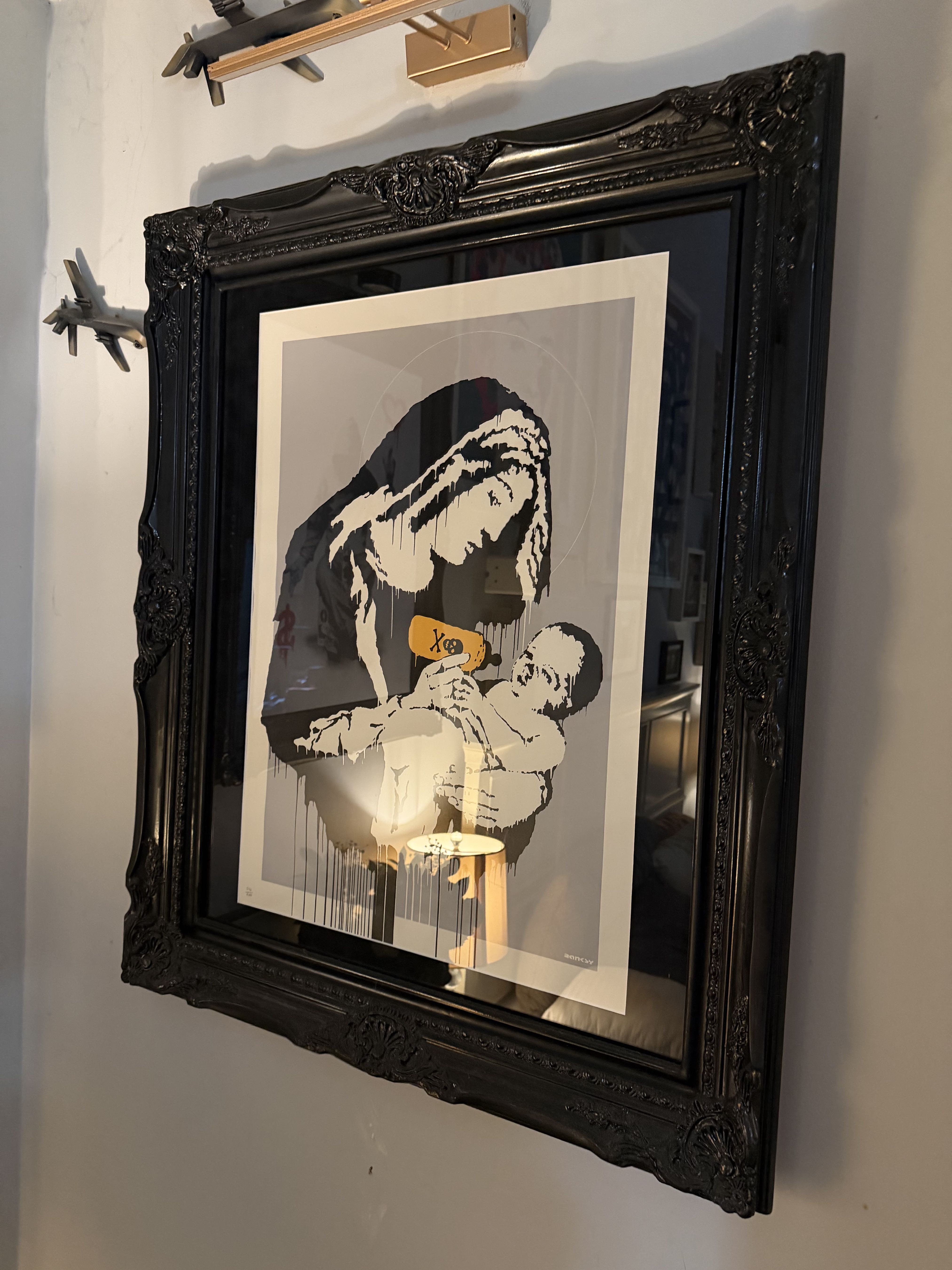
Toxic Mary, 2004
By the late 1990s his imagery was appearing with increasing regularity on the streets of Bristol and London, and word of his identity, always withheld, was generating as much conversation as the work itself. The early 2000s brought Banksy into genuine international consciousness. His self organized shows, including Turf War in London in 2003 and Barely Legal in Los Angeles in 2006, drew enormous crowds and considerable media attention. Barely Legal in particular marked a turning point, attracting celebrities including Angelina Jolie and Brad Pitt and signaling to the mainstream art world that this anonymous artist from Bristol could not be ignored.
“Art should comfort the disturbed and disturb the comfortable.”
Banksy
His 2005 intervention in which he hung his own works, unannounced, inside the Metropolitan Museum of Art, the Louvre, the Museum of Modern Art, and the British Museum, was both audacious and deeply funny, a reminder that the gatekeepers of culture were not quite as impenetrable as they imagined. The British Museum eventually acquired the piece he had placed there, a cave painting featuring a human figure pushing a shopping cart, and it remains in their permanent collection. The works that collectors and institutions prize most reveal the extraordinary range of his practice. Toxic Mary from 2004, a screenprint depicting the Virgin Mary holding not an infant but a bottle of toxic cleaning fluid, is a perfect distillation of his ability to fuse religious iconography with corrosive social commentary.
Banksy
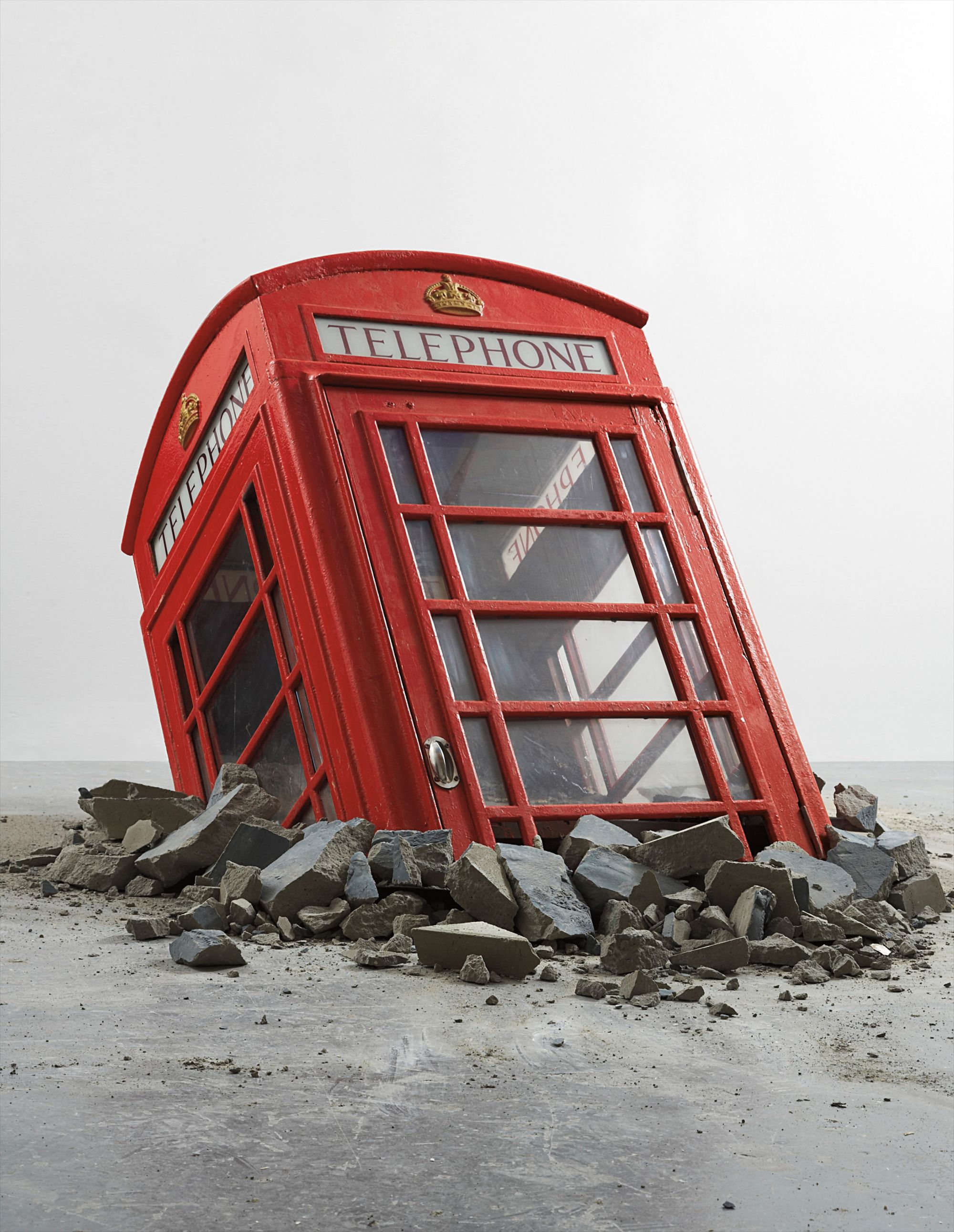
Submerged Phone Booth
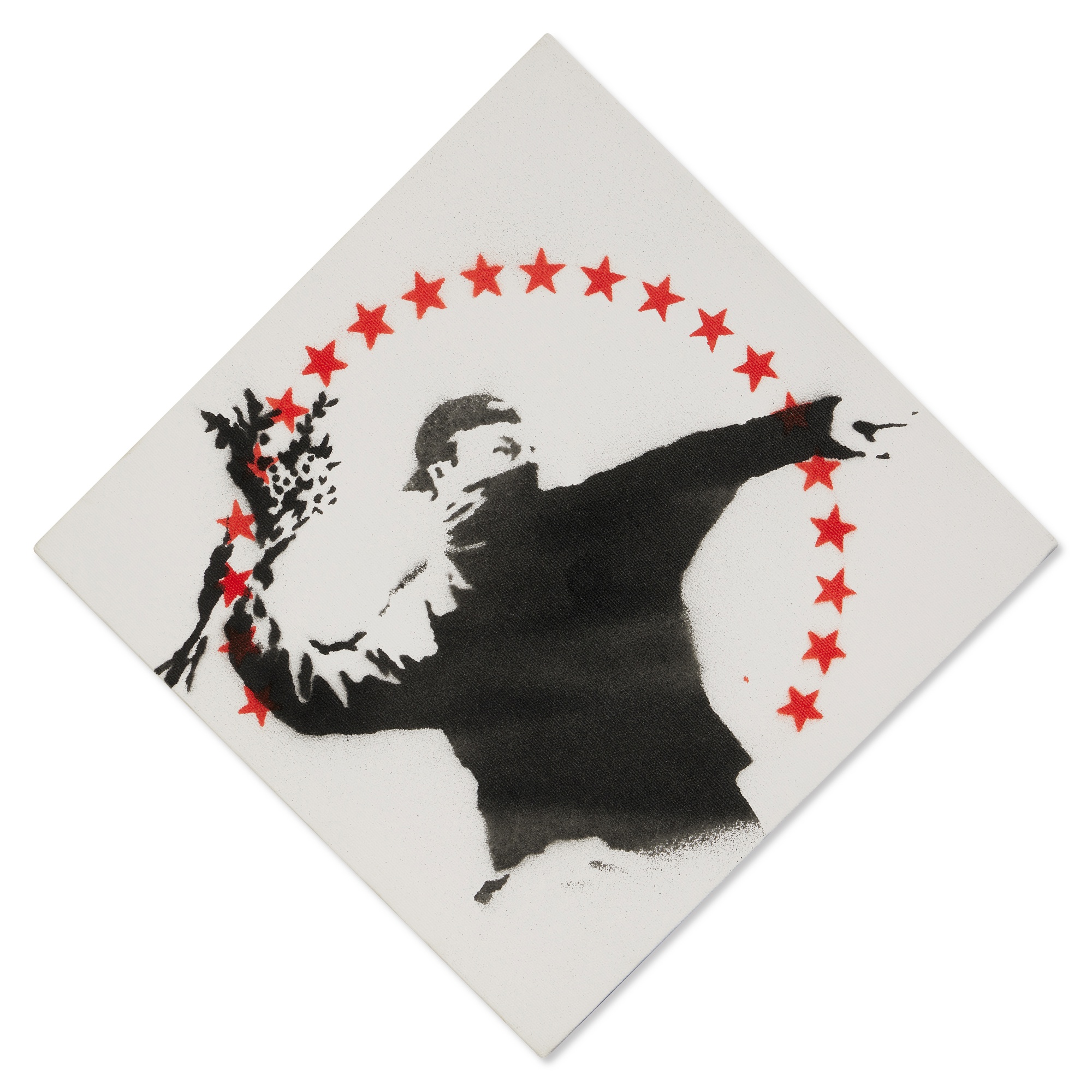
Love Is in the Air, also known as Flower Thrower, from 2005, shows a masked protester hurling not a petrol bomb but a bouquet of flowers, and it has become one of the most reproduced images in contemporary art. Works such as Gangsta Rat, Bomb Love also known as Bomb Hugger, and the deeply affecting Stop and Search demonstrate his mastery of screenprint as a medium, each image balancing visual immediacy with layers of meaning that reward sustained attention. His three dimensional piece Submerged Phone Booth, a traditional British red phone box bent and punctured as though sinking into the pavement, is a quietly devastating meditation on obsolescence and the pace of technological change. For collectors, Banksy presents a genuinely compelling opportunity across multiple price points and formats.
“The thing I hate the most about advertising is that it attracts all the bright, creative and ambitious young people.”
Banksy, Wall and Piece
His authenticated screenprints, produced in numbered editions and authenticated through Pest Control, the official body he established to verify his works, offer accessibility without sacrificing art historical significance. The market for these works has been extraordinarily robust, with prices for authenticated prints rising steadily over the past two decades. Collectors are drawn not only to the visual power of the work but to its cultural legibility, few contemporary artists are as immediately recognizable to audiences both inside and outside the traditional art world. Original canvases and unique works command premium prices at auction, with major houses including Sotheby's, Christie's, and Bonhams all recording significant results.
Banksy
Love Is In the Air (with stars), 2006
The key considerations for any collector entering this market are authentication through Pest Control and provenance, as Banksy's fame has unfortunately also generated a significant secondary market in unverified works. Within the broader history of art, Banksy's practice connects a rich set of lineages. His debt to the Situationist International, to Dadaism, and to the conceptual art of Marcel Duchamp is legible in his preoccupation with institutional critique and the spectacle of consumer culture. He shares with Andy Warhol a fascination with mass reproduction and celebrity, and with Keith Haring a commitment to public space as both medium and message.
Jean Michel Basquiat's fusion of street origins with gallery legitimacy is another useful parallel, as is the political urgency found in the work of Jenny Holzer or Barbara Kruger. Among his contemporaries, artists including Shepard Fairey, Os Gemeos, and JR have pursued adjacent paths, each using public space to challenge prevailing assumptions about where art belongs and who it speaks to. What makes Banksy genuinely important, and what ensures his place not just in art history but in the broader cultural record of our time, is the seriousness of purpose beneath the wit. His work in the West Bank, beginning in 2005 with images painted directly onto the Israeli separation barrier, transformed a structure of political division into one of the most discussed public art sites in the world.
His Walled Off Hotel, which opened in Bethlehem in 2017, extended that engagement into a fully realized environmental installation that operates simultaneously as satire, activism, and hospitality. These are not the gestures of an entertainer seeking attention but of an artist who has thought deeply about what art can do that language cannot. For collectors who believe that art should reflect and respond to the world we actually live in, few figures in contemporary practice offer a more vivid or more vital answer to that question.
Explore books about Banksy

Wall and Piece
Banksy
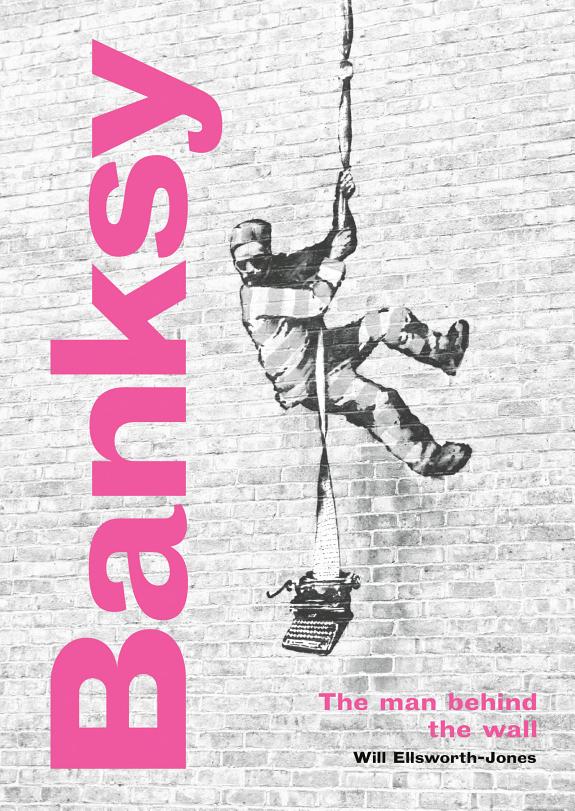
Banksy: The Man Behind the Wall
Marc Levinson
Banksy: The Unauthorized Biography
Will Ellsworth-Jones
Keeping It Real: Post-MTV Authenticity in Pop Music
Marta Savigliano (contributor on Banksy)
Banksy: The Banksy Story
Tristan Manco
Graffiti Planet: The Most Far-Flung Locations of Street Art
Tristan Manco
Banksy: Cut and Run
Banksy