Baldur Helgason
Baldur Helgason Paints the Joyful Absurd
Artist Spotlight · The Collection Editorial
Something is stirring in the New York painting scene, and Baldur Helgason sits comfortably near the center of it. The Icelandic artist has spent the past several years accumulating a devoted international following, his canvases appearing in discerning private collections across Europe, Asia, and the United States. With a body of work that feels simultaneously ancient and urgently contemporary, Helgason has arrived at a moment when the art world's appetite for emotionally generous, psychologically alive figurative painting is at its most voracious. Helgason was born in Iceland in 1973, a place whose mythological depth, volcanic drama, and distinctive relationship with darkness and light would leave visible fingerprints on everything he would later make.
Baldur Helgason
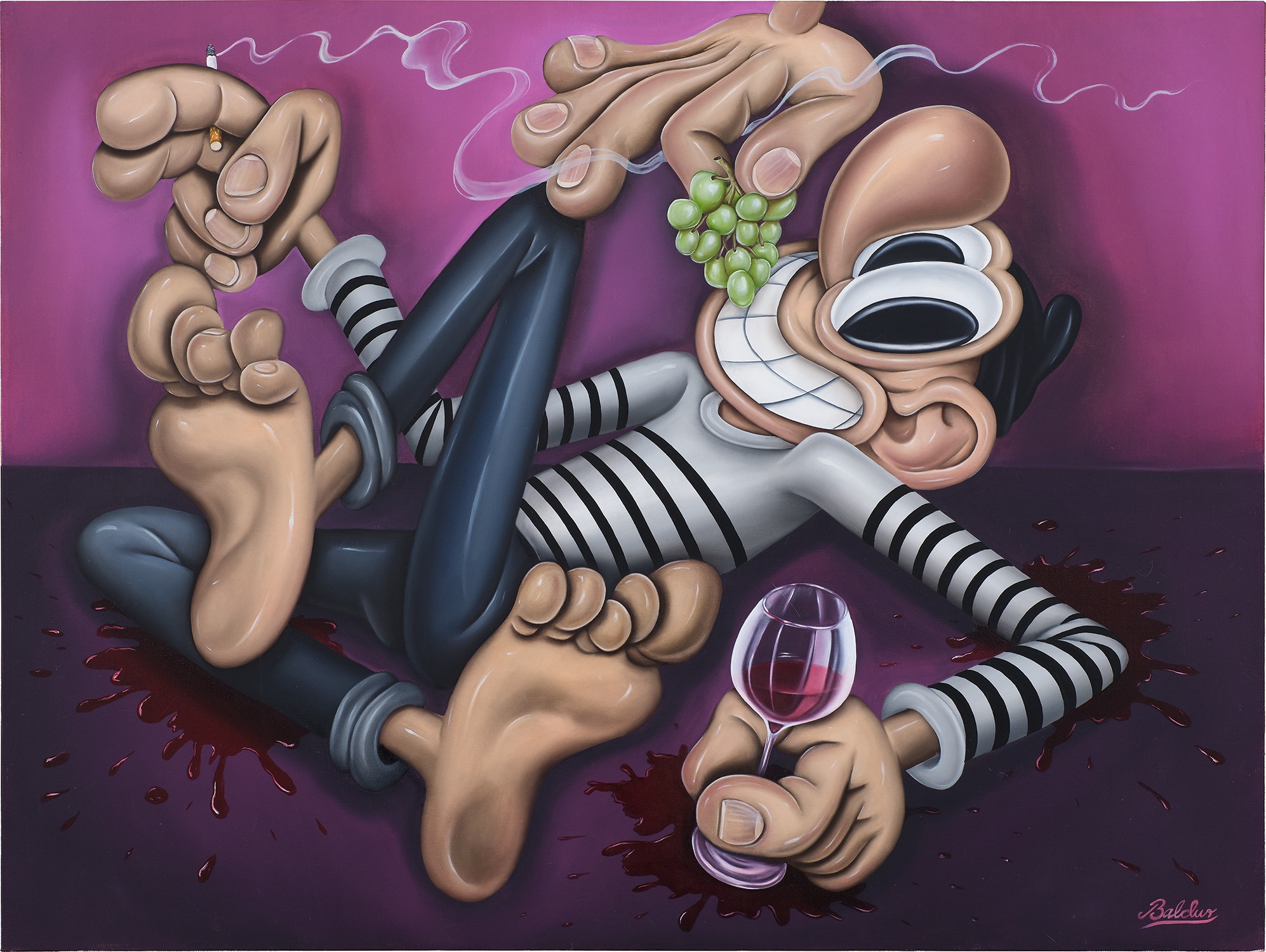
A Dionysian Painting, 2020
Iceland is a country that takes its storytelling seriously, where the sagas are not dusty artifacts but living inheritances, and where the human figure has always been understood against an overwhelming natural backdrop. Growing up there instilled in Helgason a sensitivity to scale, to the lone figure navigating an indifferent or theatrical world, that runs through his paintings like a current. He eventually made his way to New York, the city that has served as the primary stage for his mature practice, and where the cacophony and comedy of everyday urban life gave his sensibility the material it needed to fully ignite. His development as a painter reflects a genuine engagement with art history rather than a decorative relationship to it.
Helgason absorbed the lessons of expressionism with evident care, the raw emotional voltage of figures like Ernst Ludwig Kirchner and the psychologically loaded brushwork of the German Neo Expressionists offering a foundation he could both honor and push against. At the same time, pop art's love of vernacular imagery, its willingness to treat the cartoon, the commercial, and the culturally throwaway as worthy of sustained attention, gave him permission to be playful without being shallow. The result is a practice that sits at a genuinely productive crossroads, neither purely ironic nor purely earnest, but alive with the tension between the two. Looking across his most celebrated works, certain recurring preoccupations become clear.
Baldur Helgason
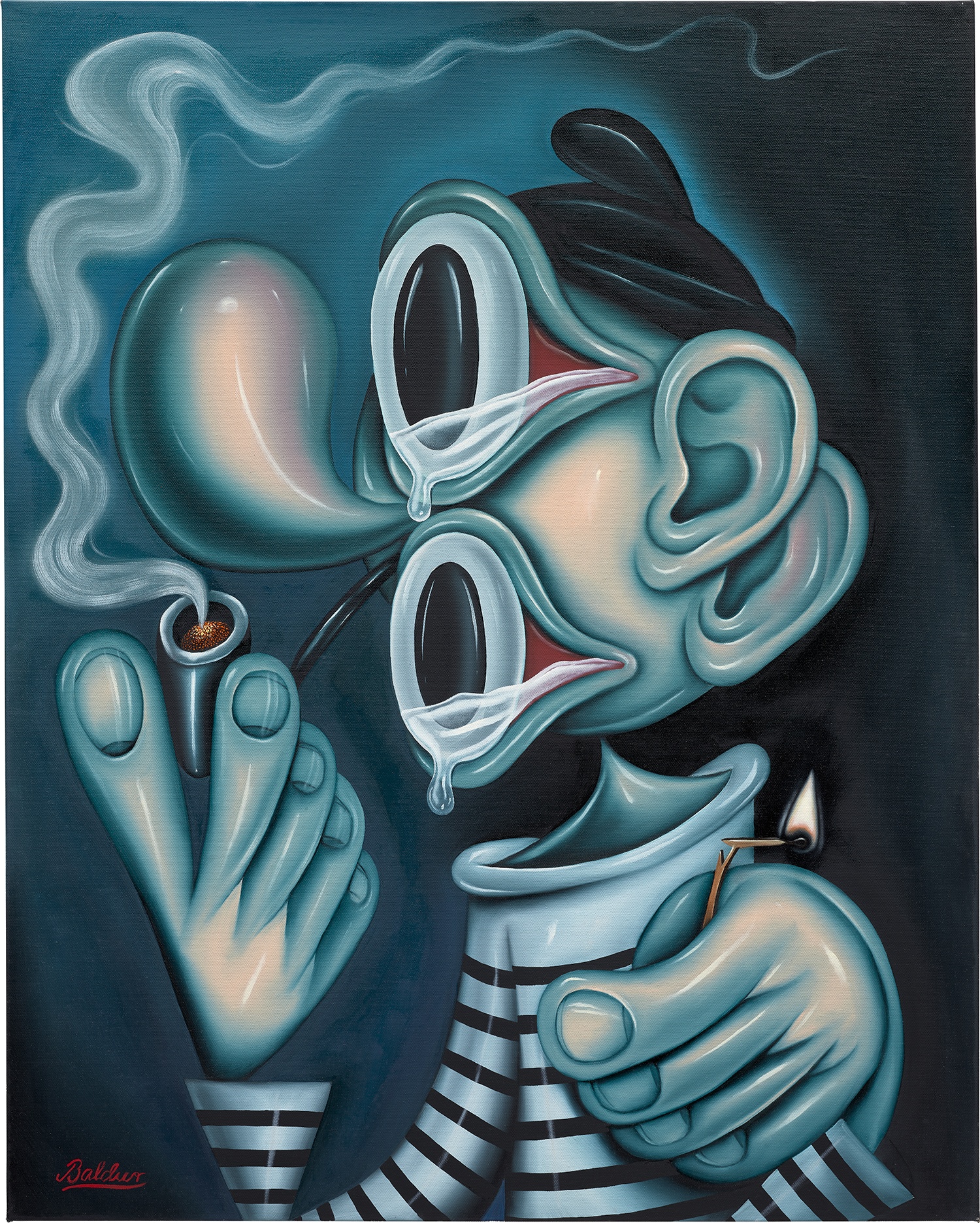
In Blue Shadow, 2020
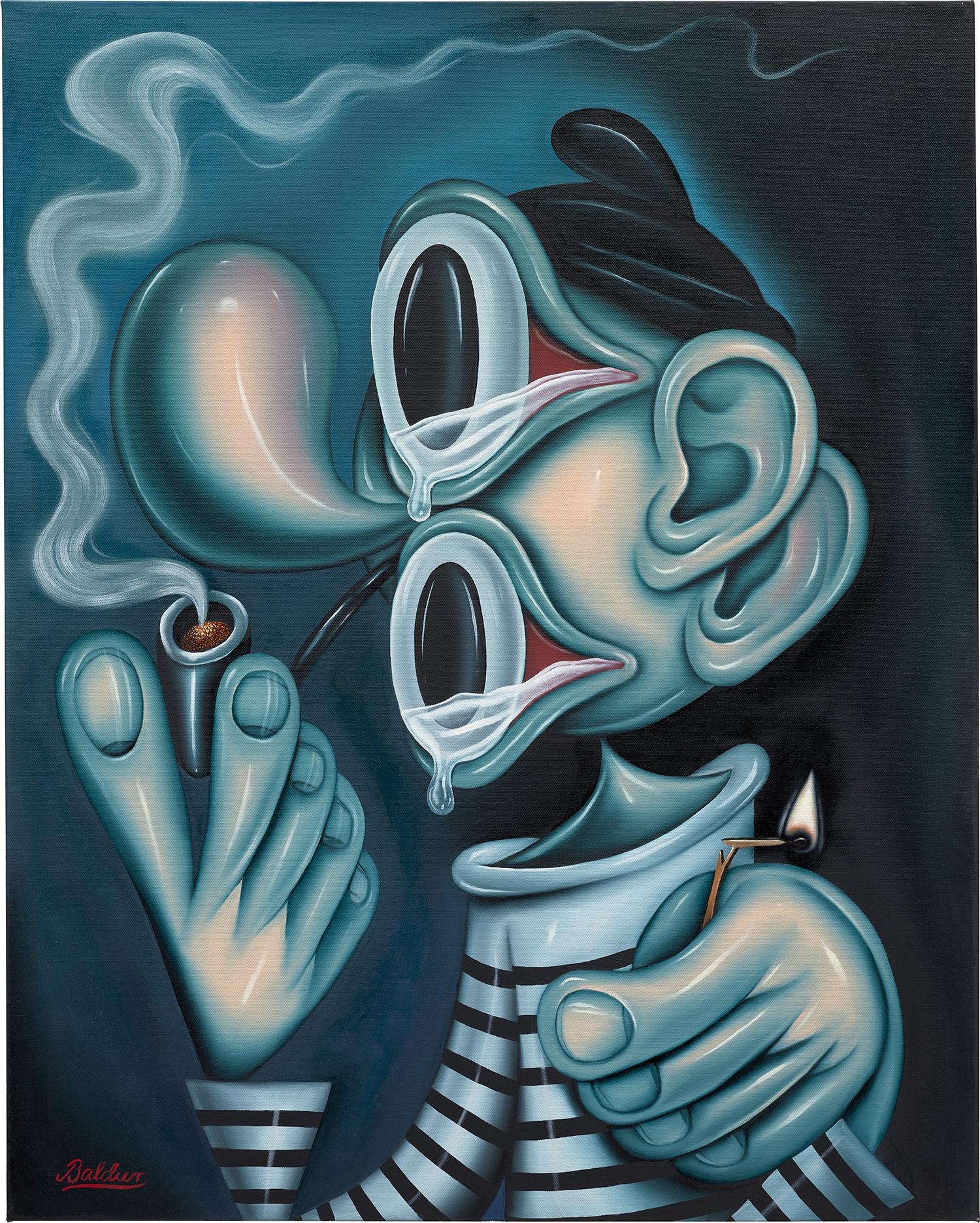
"A Dionysian Painting," completed in 2020, announces its ambitions in its title, invoking the Greek god of wine, revelry, and creative frenzy while delivering on that promise with bold, almost hallucinatory color and figures that seem caught between ecstasy and bewilderment. "In Blue Shadow," also from 2020, demonstrates Helgason's gift for using color temperature as an emotional instrument, the cool blue wash of the work creating a psychological atmosphere that is contemplative without ever tipping into melancholy. "愛情傻瓜(愛我)," from 2019, which translates roughly as "Love Fool (Love Me)," is among his most openly tender works, the bilingual titling a signature move that signals his international scope and his interest in how language shapes feeling. His bilingual titles, incorporating Chinese alongside English, reflect genuine cultural curiosity and speak to the global reach of his collecting base.
Perhaps no single work captures the range of Helgason's wit and intelligence better than "If I Had A Hammer (Instructions for Hanging This Painting)," from 2020. The work transforms its own installation requirements into subject matter, folding the practical business of displaying art into the content of the art itself. It is a conceptually knowing gesture that never loses its warmth, the kind of joke that makes you think as well as smile. "Caravaggio's 'Youth with Ram' from Memory," completed in 2022, reveals another dimension of the practice, one in which art history becomes raw material for a deeply personal act of reconstruction.
Baldur Helgason
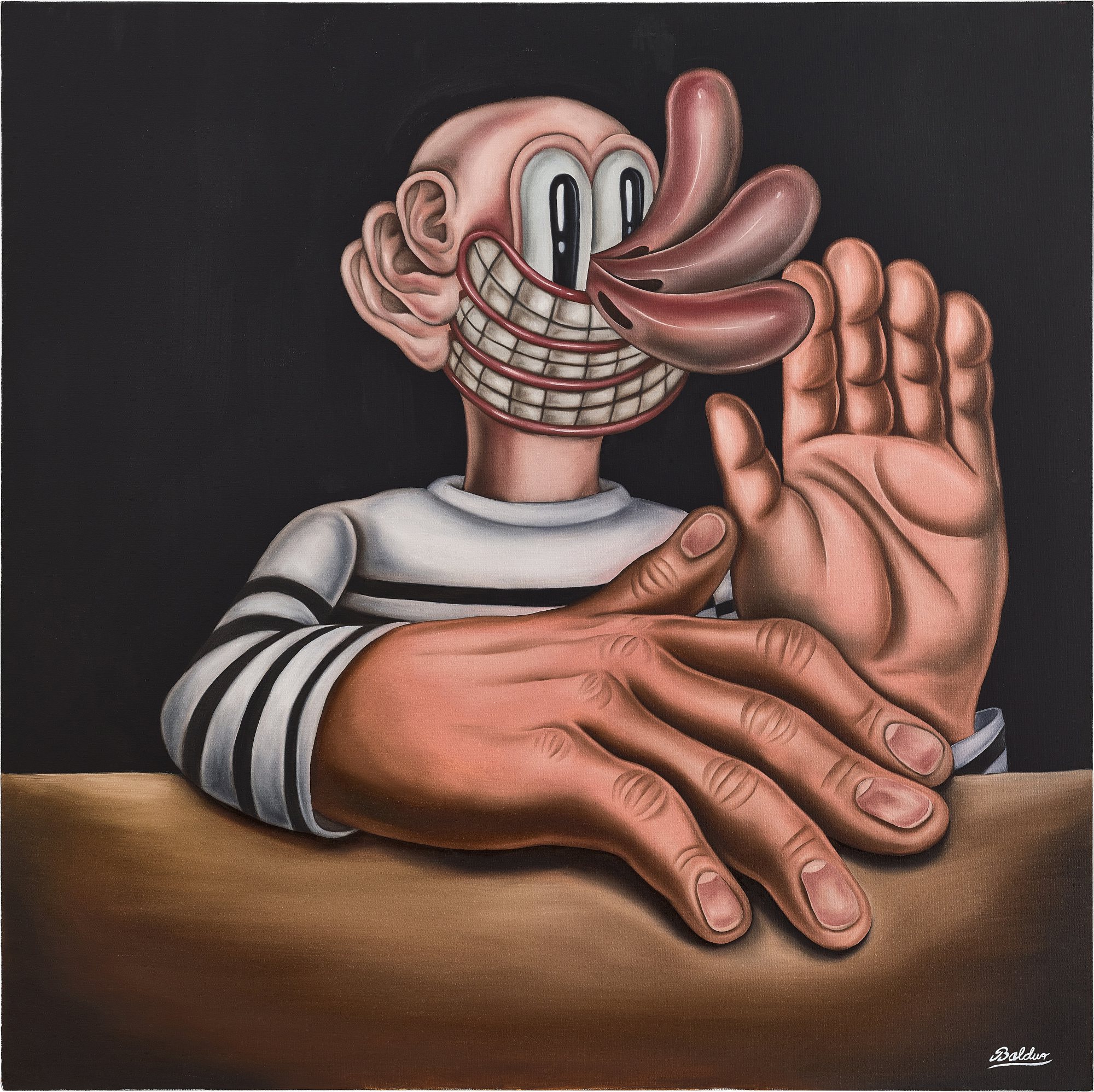
最孤獨的陌生人, 2018
Painting a Caravaggio from memory is an exercise in misremembering as method, in allowing the gaps between what you know and what you can recall to generate something new. It is a work that would delight any collector who loves both the old masters and the artists remaking them. For collectors, Helgason presents a compelling opportunity at a moment when his profile continues to expand internationally. His work appeals to a particular kind of discerning collector, one who is comfortable with humor as a serious artistic mode, who understands that a painting can be funny and profound in the same breath.
The scale and ambition of the works vary, making entry into the practice accessible at several levels, while the consistency and distinctiveness of his visual language ensures that any work bearing his signature is immediately and unambiguously his. The bilingual titles have also made his work particularly resonant with collectors in East Asia, a market that has developed a sophisticated appetite for figurative painting that operates across cultural registers. In the broader landscape of contemporary figuration, Helgason belongs to a generation that has rehabilitated painting as a site of genuine intellectual and emotional possibility. His work invites comparisons with artists like Dana Schutz, whose expressionistic figuration similarly balances humor and pathos, and with the cartoon inflected psychological intensity of artists such as Nicole Eisenman.
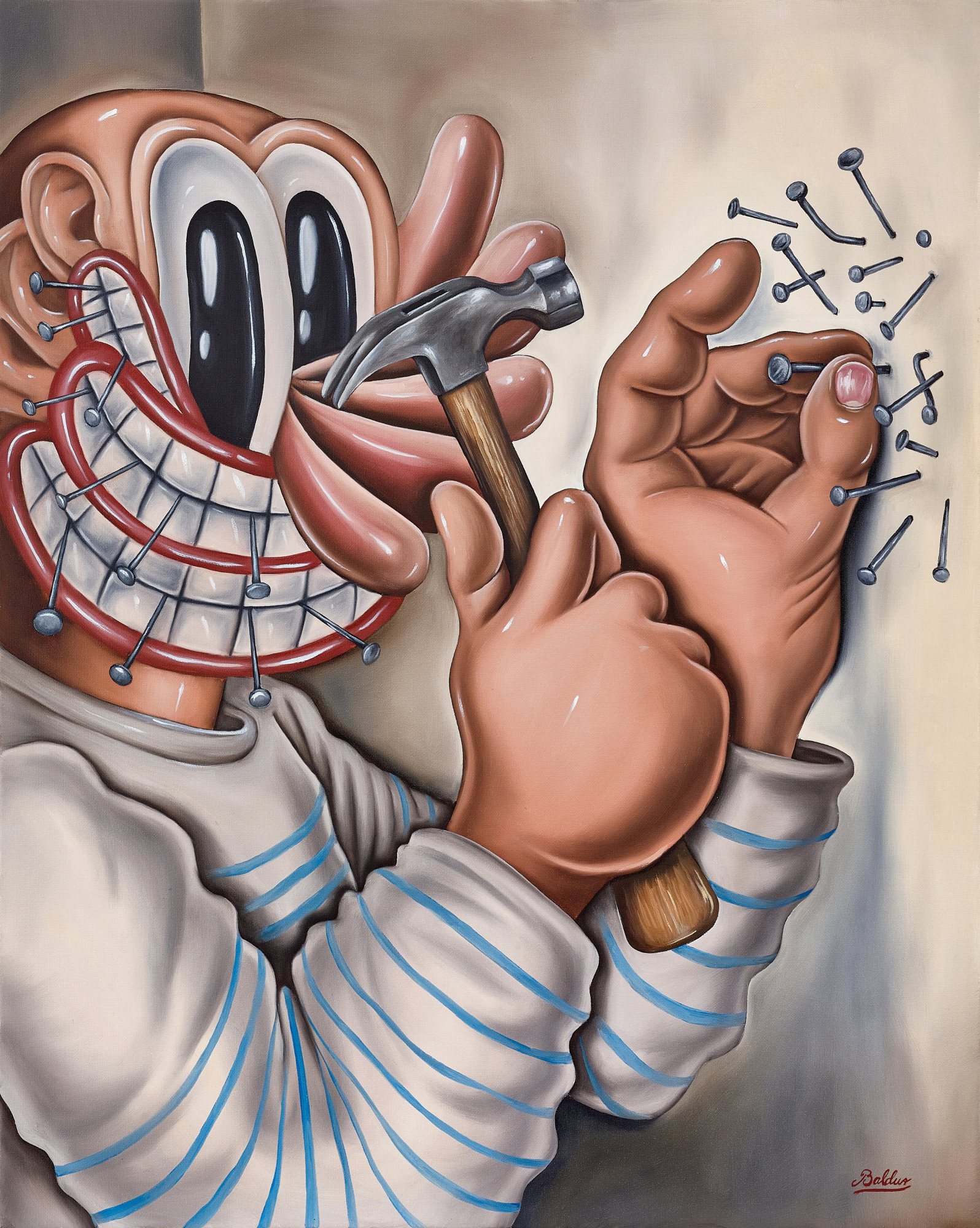
Baldur Helgason
If I Had A Hammer (Instructions for Hanging This Painting) 如果我有一把錘子(掛這幅畫的指示) , 2020
There is also something of the spirit of Philip Guston in Helgason's willingness to embrace the cartoon form as a vehicle for existential inquiry, to find in the simple drawn figure a container for complex feeling. Like Guston, he refuses to treat accessibility and seriousness as opposites. What makes Helgason matter today, beyond the pleasure his paintings deliver on first encounter, is the particular kind of honesty they represent. In an art world that can reward obscurity and conceptual difficulty as ends in themselves, his work is unafraid to be legible, to make you feel something recognizable, to locate the absurd in the everyday and hold it up with affection rather than contempt.
His figures, strange and funny and somehow always achingly human, remind us that painting at its best is a social act, a conversation between the person who made the marks and the person who stands before them. Baldur Helgason is making that conversation as lively and generous as it has ever been.