Austyn Weiner
Austyn Weiner Paints Everything That Matters
Artist Spotlight · The Collection Editorial
Something is happening in Los Angeles, and Austyn Weiner is at the center of it. In recent years her canvases have moved from the walls of intimate gallery spaces into the rooms of serious collectors and onto the blocks of major auction houses including Phillips, where her work has drawn the attention of buyers who recognize urgency when they see it. She is still in her early thirties, and the conversation around her practice carries the particular electricity that surrounds artists who have found their voice early and completely. To encounter one of her paintings in person is to feel immediately that you are standing in front of something made by a person who had no choice but to make it.
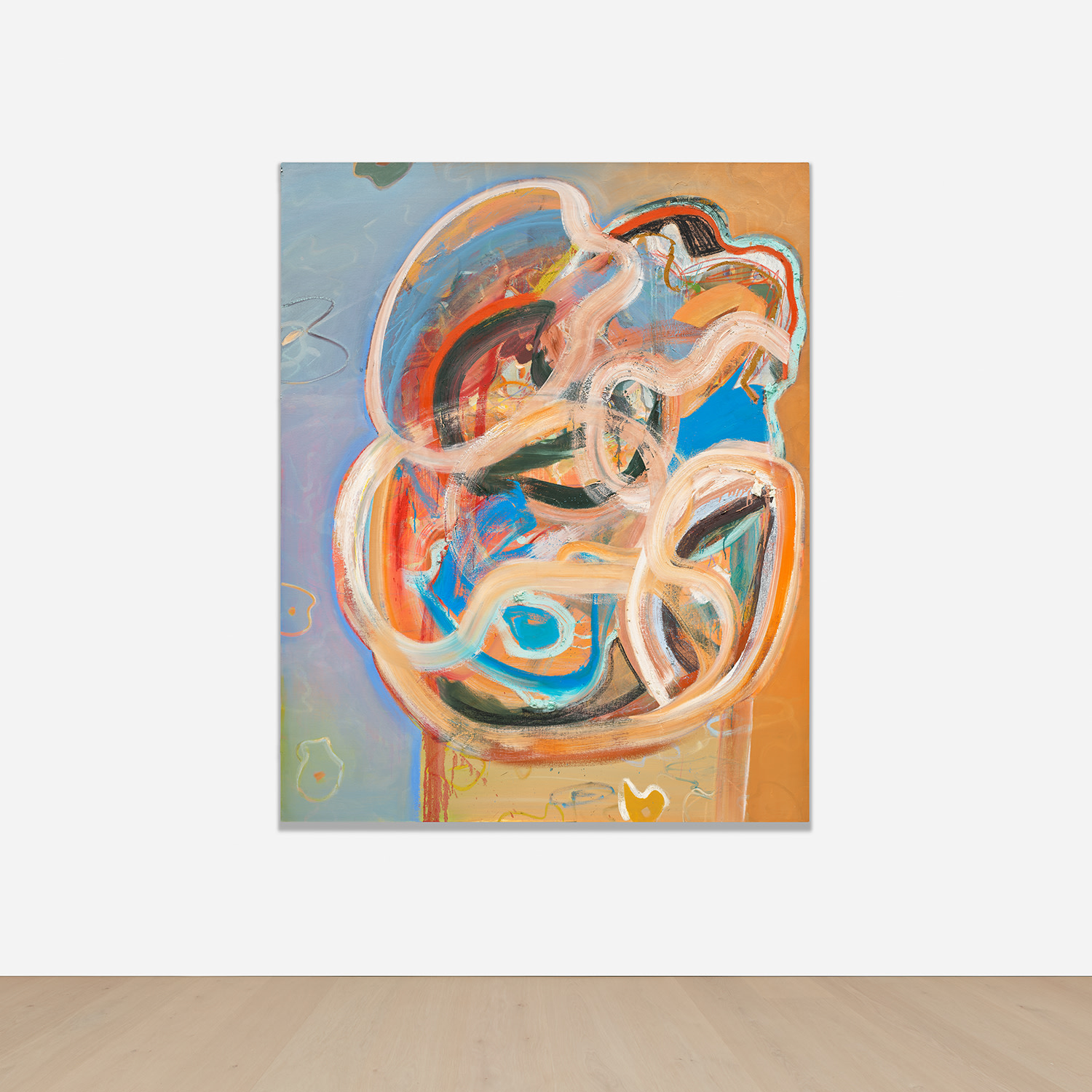
Austyn Weiner
An Enigma and a Dream, 2020
Weiner was born in 1991 and has spent her adult life rooted in Los Angeles, a city whose light, sprawl, and cultural restlessness seem to have shaped her sensibility in fundamental ways. Los Angeles has long offered painters a different kind of permission than New York, a permission to be physical and emotional and unresolved all at once, and Weiner has taken that permission seriously. The city's tradition of raw, body centered painting, carried by figures who worked through figuration and abstraction simultaneously, runs quietly through her work like an underground current. She belongs to a generation of American painters who came of age looking at that history and decided to push further into it rather than away from it.
Her development as a painter is marked by an increasing confidence in the gesture as a complete thought. Early works like the 2017 oil stick canvas "Loves Me Not" already demonstrate her instinct for the loaded mark, for the stroke that carries both formal intention and emotional residue. By 2020 her output had reached a kind of fever pitch, producing some of the most talked about works of her career in what feels, looking back, like an extraordinary concentrated period. The titles from that year alone read like dispatches from the interior of an extraordinarily alive mind: "An Enigma and a Dream," "I Miss You I Kiss You I Didn't Mean to Dismiss You," "And All of the Men?
Austyn Weiner
I Miss You I Kiss You I Didn't Mean to Dismiss You, 2020
They Never Mattered." These are not ironic titles. They are declarations. What makes Weiner's practice so compelling is the way it holds together things that painters usually have to choose between.
Her surfaces are layered and complex, built up through oil, acrylic, oil stick, and charcoal in combinations that reward prolonged looking. Yet nothing about the work feels labored or precious. It reads as fast and felt, even when the material evidence tells you that multiple sessions and serious decisions went into each piece. "Working Through Not Knowing A Damn Thing About Any Thing," a 2020 diptych in oil and acrylic on panel, captures this quality perfectly.
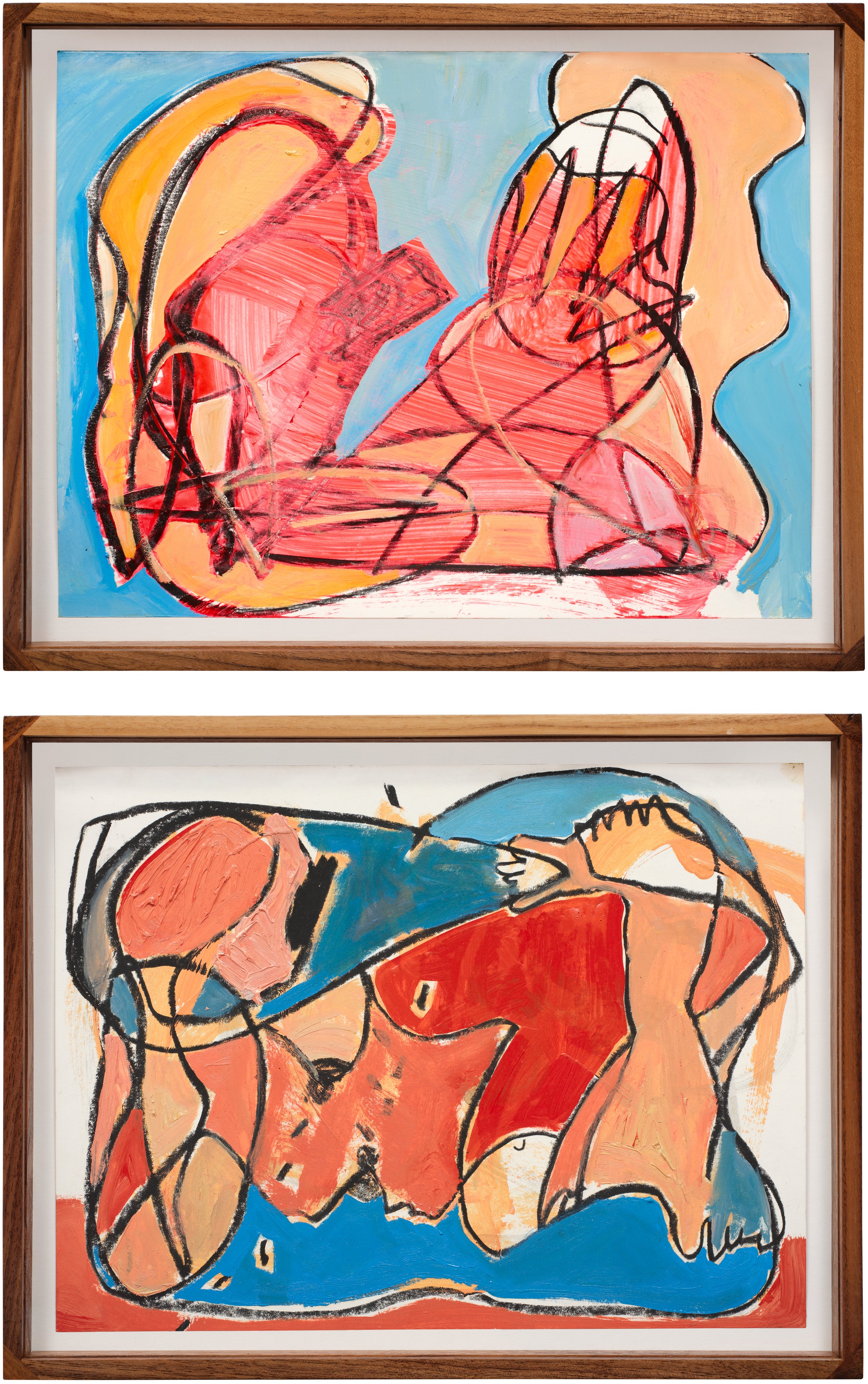
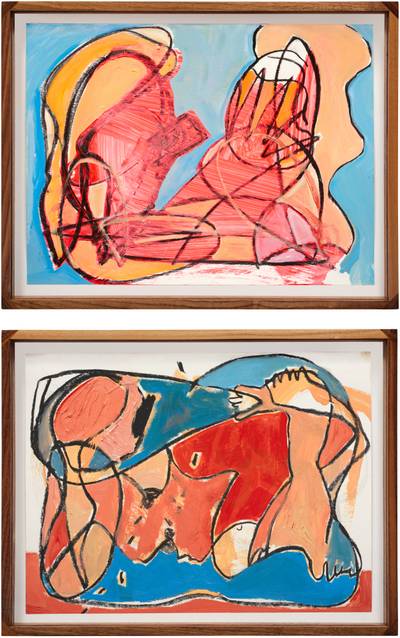
Austyn Weiner
Two works: (i) A SLAP IN THE FACE IS ALL I NEED (ii) UNDER OVER BUT MOSTLY OVER, 2020
The title performs a kind of self deprecating openness while the painting itself demonstrates a technical and compositional intelligence that is anything but unknowing. This productive tension, between the vulnerability of the stated position and the authority of the actual mark, is where Weiner lives as an artist. The works on paper deserve particular attention from collectors, and the framing choices Weiner makes for them signal that she thinks of them as primary rather than secondary objects. "A SLAP IN THE FACE IS ALL I NEED" and its companion "UNDER OVER BUT MOSTLY OVER," both from 2020 and executed in oil and charcoal on paper, are presented in the artist's chosen frame, a detail that matters.
The same is true of "Six Feet And A Mask But I Still Can't Stop," also from 2020, whose title carries the unmistakable texture of a specific historical moment without reducing itself to mere document. These works show an artist thinking carefully about how objects meet the world, about the total experience of the work rather than the image alone. "At First I Thought It Was The Altitude," a 2021 triptych in oil, oil stick, and crayon on paper, extends this thinking into an even more expansive format, demonstrating her comfort with scale and sequence. For collectors, Weiner represents something genuinely rare: an artist whose market recognition is growing steadily but whose work retains the quality of conviction that can disappear once the commercial machinery gets too loud.
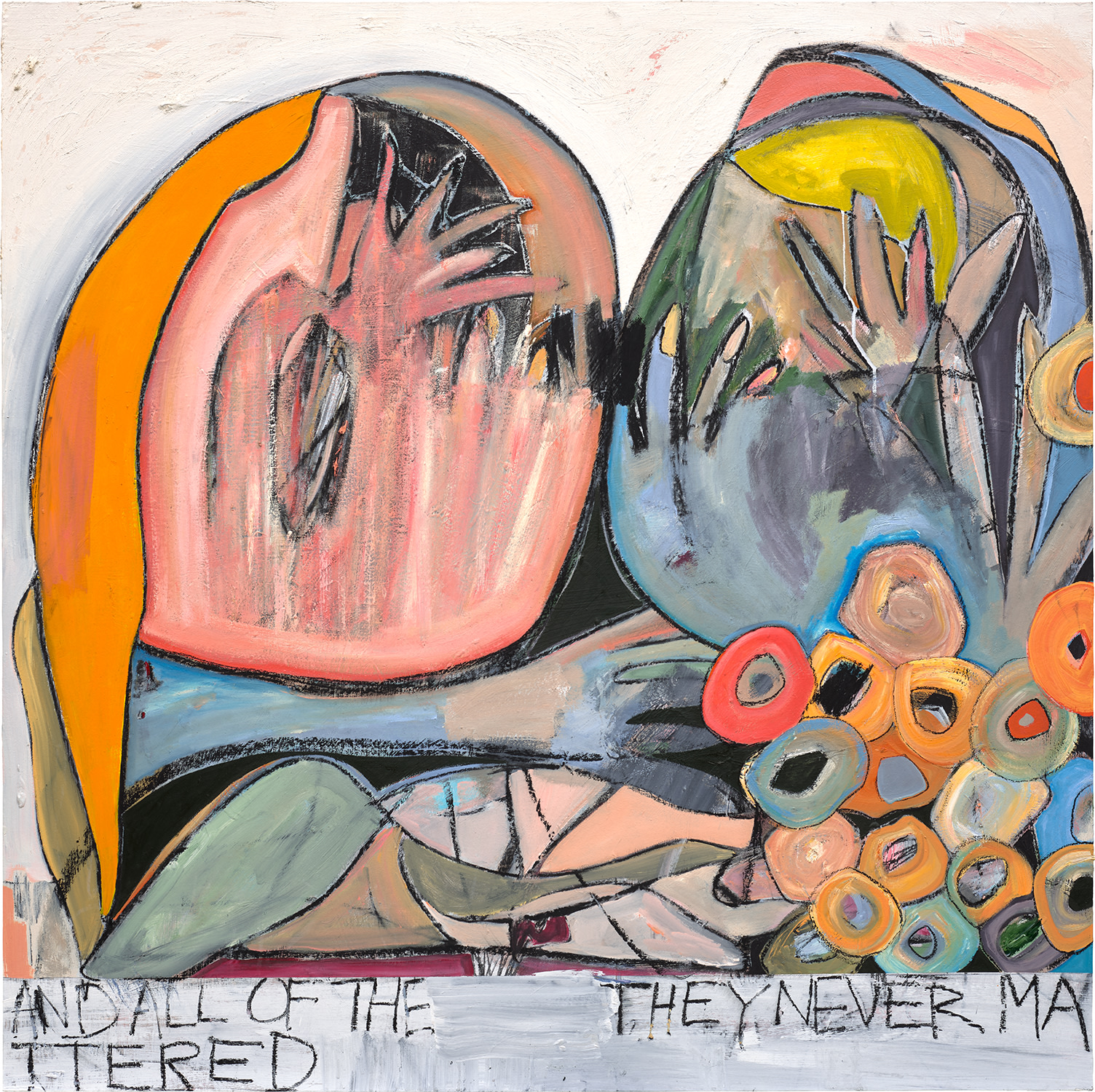
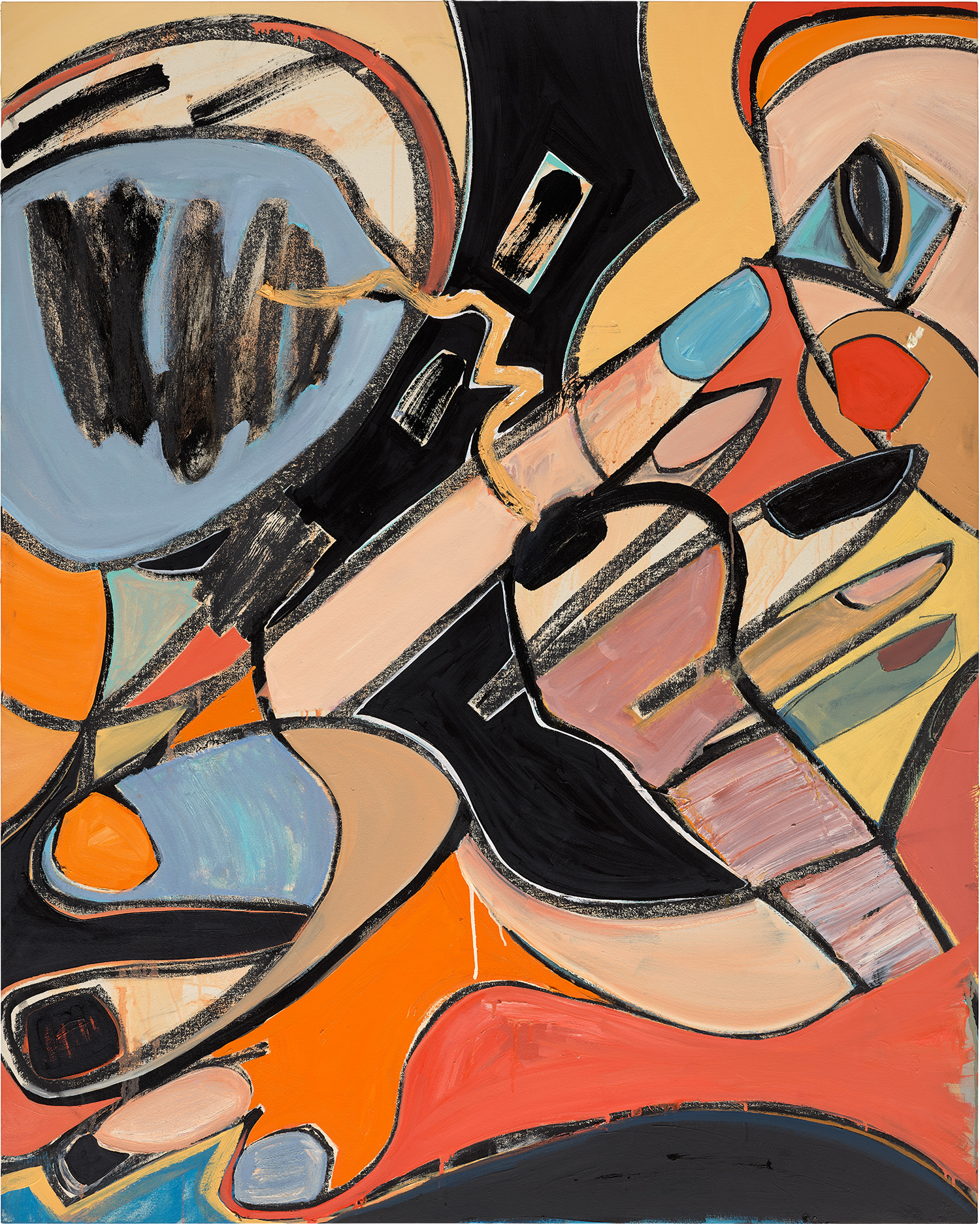
Austyn Weiner
And All of the Men? They Never Mattered, 2020
Her appearances at Phillips have introduced her to a broader international audience, and the interest that has followed suggests that audience is paying close attention. Works from her concentrated 2020 period are likely to be regarded as some of the defining examples of her practice, and the relative accessibility of her prices compared to artists in similar conversations makes this a serious collecting opportunity. Those drawn to the emotional directness of painters like Dana Schutz, the physical intensity of Cecily Brown, or the autobiographical boldness of artists working at the intersection of abstraction and the body will find in Weiner a voice that is entirely and distinctly her own. Weiner's importance in the current landscape extends beyond any individual work or sale.
She is part of a wider reclamation of painting as a site of genuine feeling at a moment when the art world has sometimes preferred the cool and the ironic. Her canvases insist that the personal is not small, that memory and the body and the mess of being alive are worthy subjects for sustained pictorial attention. "The Bathers," from 2021, positions her in conscious dialogue with one of painting's oldest and most freighted subjects, the figure at water, and she inhabits that conversation with ease and assurance. She is an artist who knows her history and knows herself, and the combination is one that collectors, critics, and fellow painters will be returning to for a long time to come.