Austin Lee
Austin Lee Paints the Future Feeling Everything
Artist Spotlight · The Collection Editorial
When Austin Lee's paintings appeared at Jeffrey Deitch's Los Angeles gallery, they stopped people in their tracks. Not because they were aggressive or confrontational, but because they were disarmingly, almost scandalously alive. Cartoonish figures twisted in states of ecstasy, confusion, and tenderness, rendered in airbrushed acrylic that glowed with a peculiar inner light, as though the canvas itself were a screen. In a moment when the art world was grappling seriously with what digital culture means for painting, Lee offered something that felt genuinely new: not a debate, but a resolution.
Austin Lee
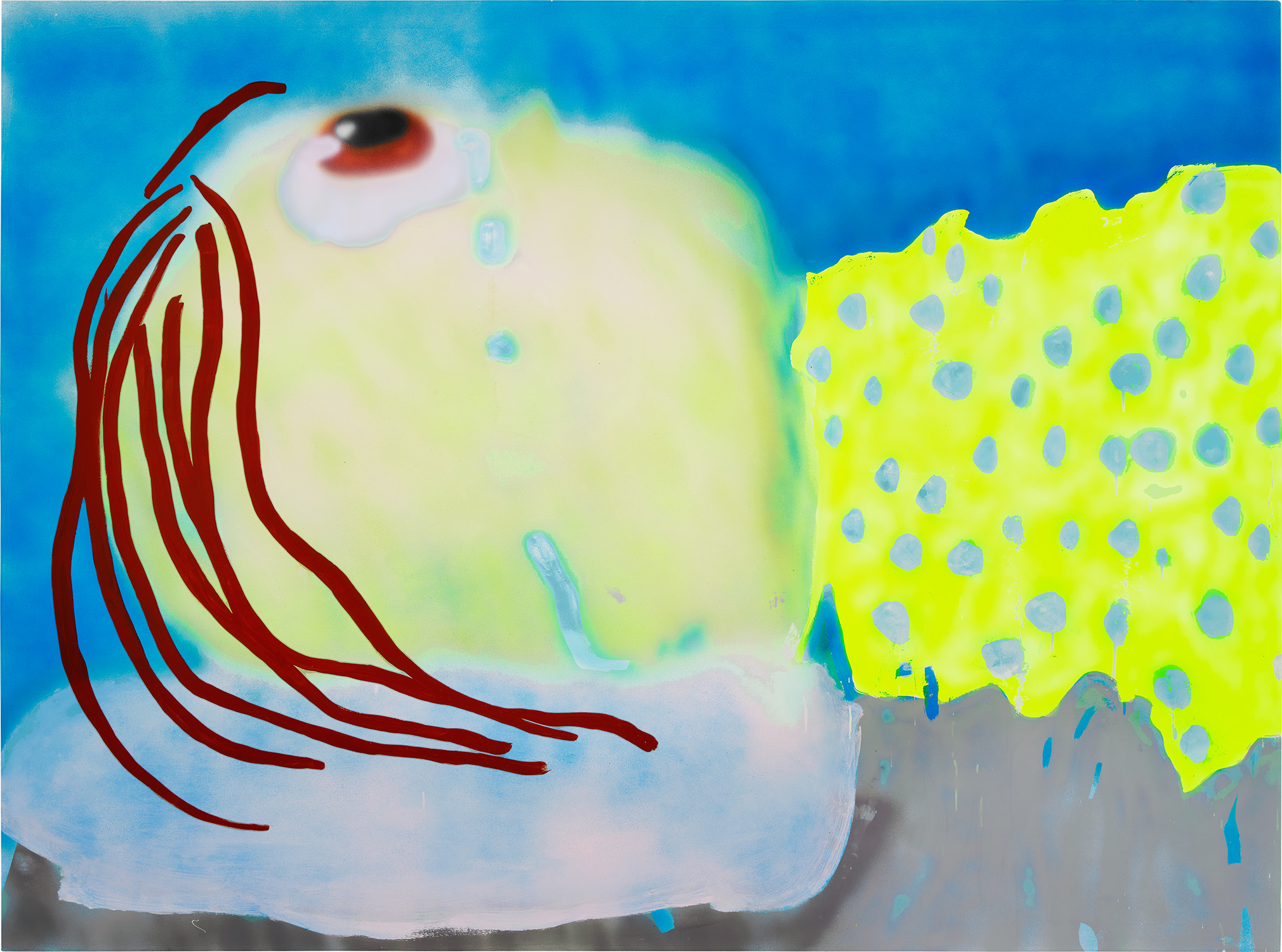
Dropsy, 2013
His work did not ask whether the digital and the painterly could coexist. It simply showed you that they already did. Lee was born in 1983, which places him squarely in the generation that grew up alongside the personal computer without being entirely native to it. He experienced the analogue world first and the digital world second, and that biographical fact matters enormously to understanding his art.
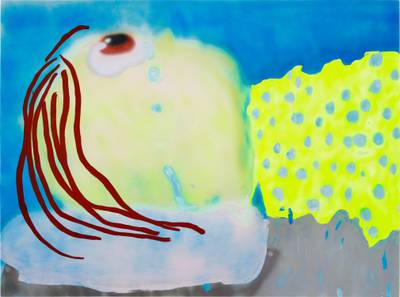
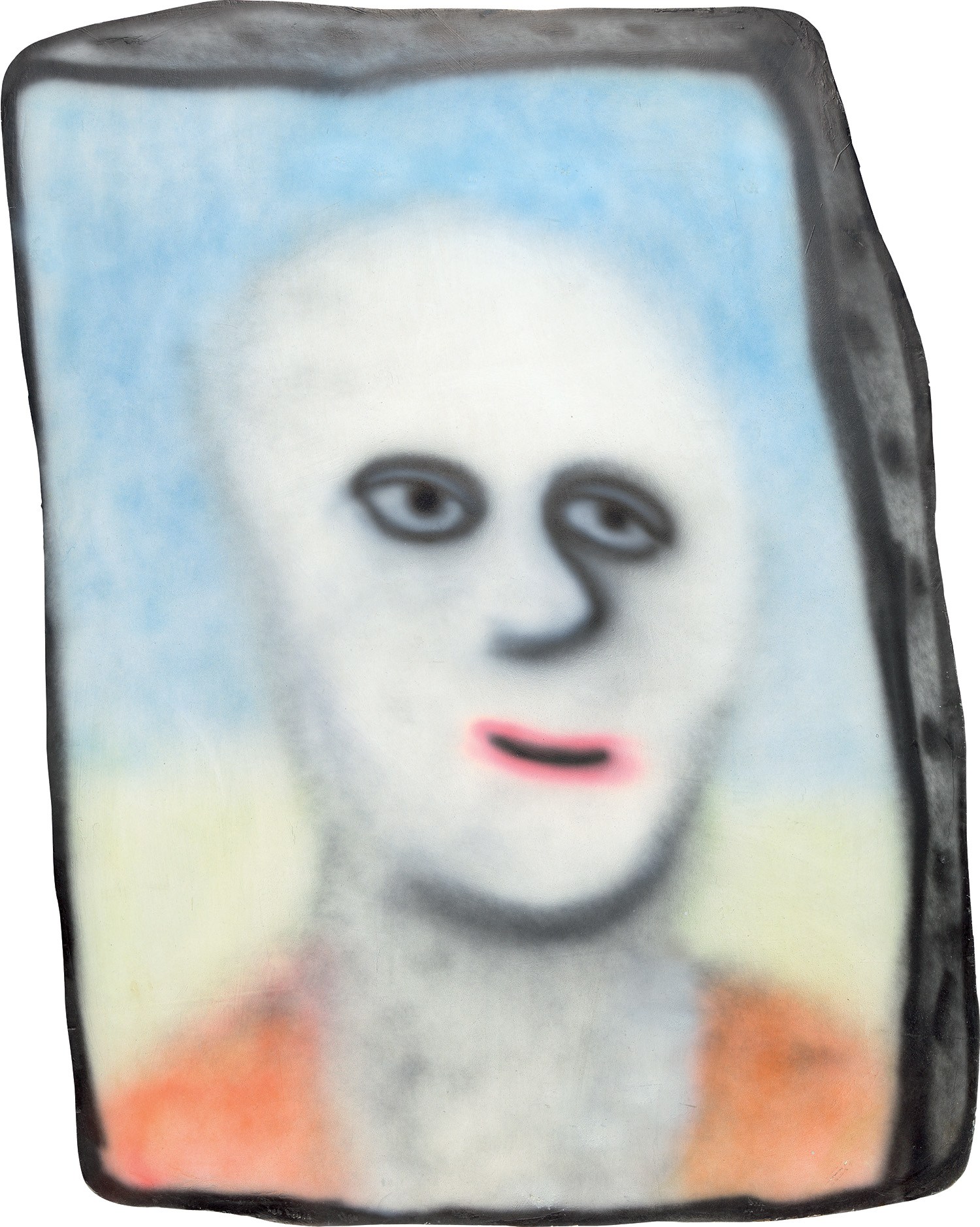
He studied at the Yale School of Art, where he earned his MFA, immersing himself in a rigorous intellectual environment that takes painting seriously as a discipline with history and stakes. Yale gave him the critical vocabulary to understand what he was doing, but the real formation came from his instinctive pull toward the vernacular languages of popular culture: video games, cartoons, internet imagery, and the strange emotional register of things that are not quite real but feel more real than reality. His early practice in the 2010s already showed a distinctive set of preoccupations. Works like Slapstick (Action Painting) from 2012 and the trio of paintings including Dropsy, Face, and Mark from 2013 established the terms of his visual language with notable confidence.
Austin Lee
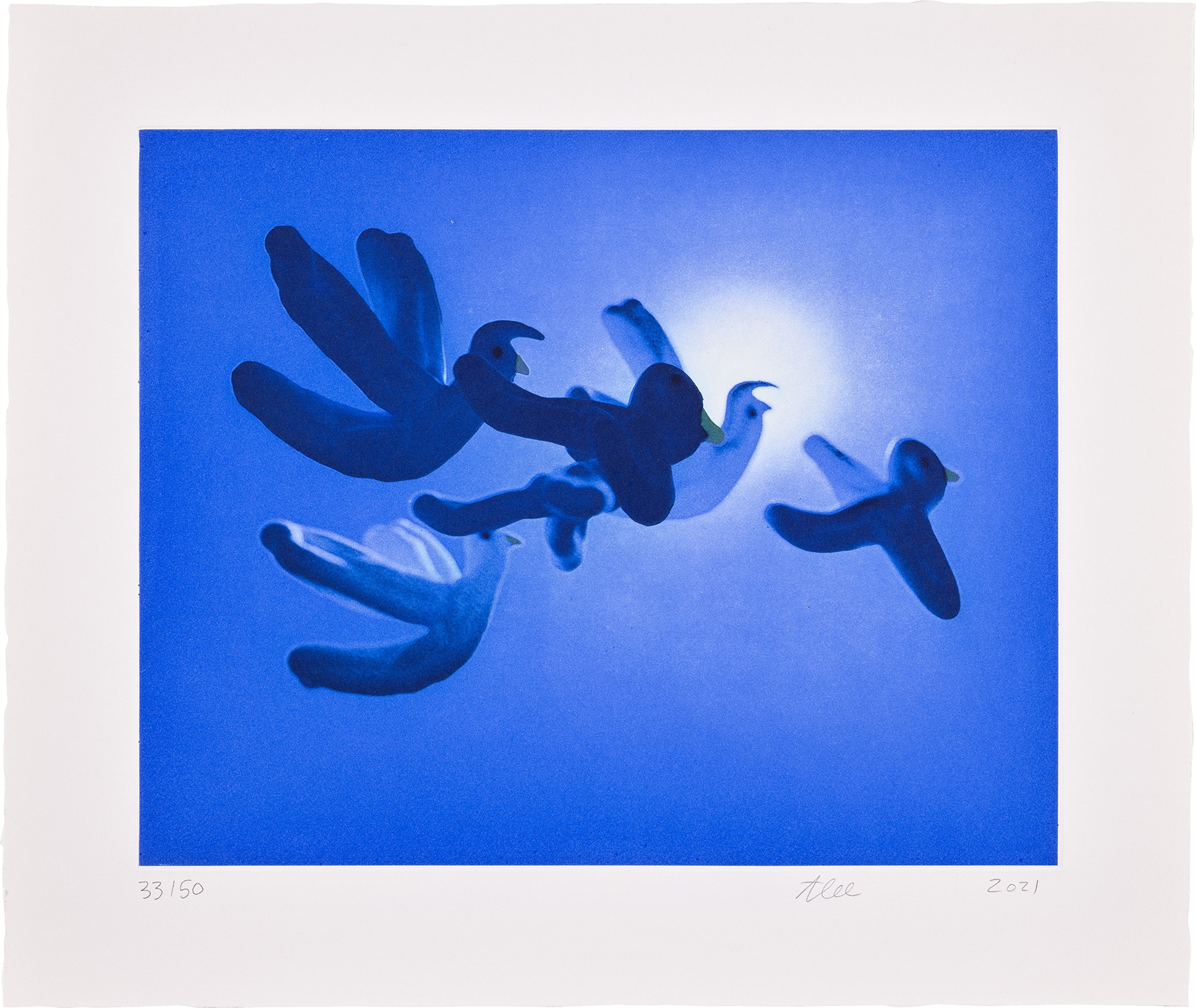
Rendered Birds
These canvases, painted in flashe and acrylic, combined the loose gestural energy of abstract expressionism with imagery that felt pulled from a Saturday morning cartoon, or perhaps from a dream you might have after falling asleep in front of a television. The figures are rubbery, exaggerated, emotionally legible even when their situations are ambiguous. There is something of Philip Guston in the willingness to be funny and dark and tender all at once, and something of early 1980s graffiti painting in the chromatic confidence and the embrace of popular forms. What makes Lee's practice genuinely distinctive is the process he developed to achieve his signature look.
He works with 3D modeling software to construct compositions, translating digital renderings into physical paintings through airbrushing techniques that preserve the smooth gradients and soft volumetric shading of a computer generated image. The result is a surface that is simultaneously undeniably painted and unmistakably informed by the screen. This is not a gimmick or a conceptual position for its own sake. It is simply Lee's way of being honest about the visual world he actually inhabits, where the digital and the physical interpenetrate constantly.
Austin Lee
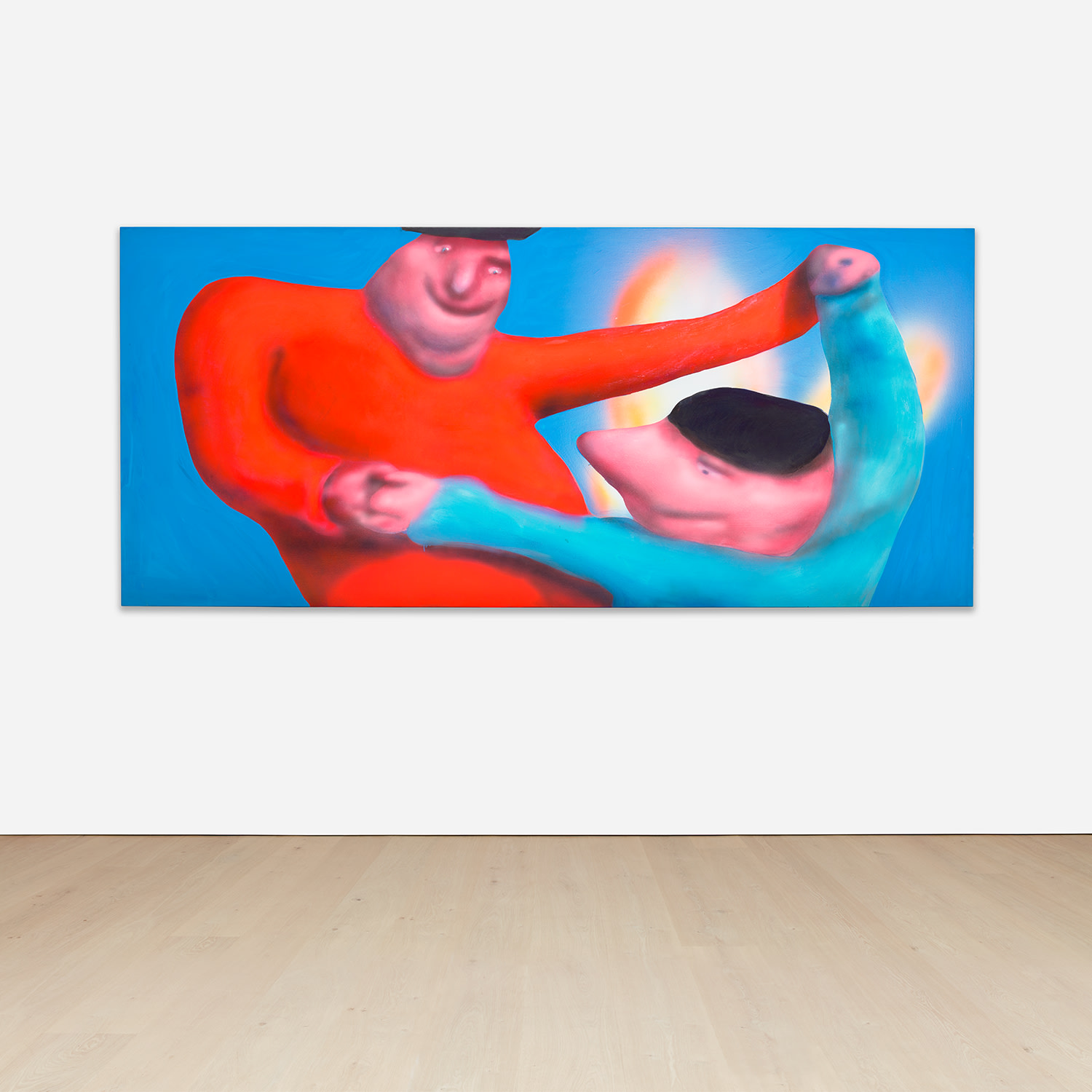
Slow Dance, 2018
By 2016 and 2018, with works like Blue Dog, Slow Dance, and Mass Hysteria, the practice had deepened considerably. The figures became more psychologically complex, the color more daring, the emotional temperature harder to pin down in a single word. Slow Dance from 2018 is among the most moving paintings Lee has made. Two figures, simplified almost to the point of abstraction, hold each other in an embrace that reads as genuinely tender despite its cartoon vocabulary.
The airbrushed surface gives the image a quality of gentle luminosity, as though the scene is being remembered rather than observed. Mass Hysteria from the same year works in a very different emotional register, crowded with figures in states of agitation, yet rendered with the same formal clarity and chromatic care. Together these works demonstrate Lee's range and his ability to use the same visual language to explore radically different psychological territories. His 2014 canvas Collusion and the Untitled work from the same year show the mid decade evolution of these ideas, with compositional complexity increasing as his confidence in the language grew.
Austin Lee
Face, 2013
Collectors have responded to Lee's work with genuine enthusiasm, drawn by the paintings' rare combination of immediate visual pleasure and sustained intellectual interest. His gallery relationships with Jeffrey Deitch and Paul Kasmin have given his work strong institutional visibility, and his prints, including the edition Rendered Birds published by Pace Editions to benefit the Environmental Defense Fund, demonstrate his commitment to making work accessible across formats and price points. For collectors building a serious contemporary painting collection, Lee occupies a position of real importance. His work sits in conversation with artists like Jonas Wood, whose similarly flat and patterned approach to representation shares Lee's interest in domestic and popular imagery, and with artists like Hugh Hayden or Jamian Juliano Villani, who also work at the intersection of figuration, humor, and cultural saturation.
In a longer historical perspective, the conversation extends to Roy Lichtenstein's engagement with comic imagery and to the New Image painters of the late 1970s who reclaimed figuration after the dominance of abstraction. What makes Lee's work a particularly compelling proposition for serious collectors right now is precisely its position at a cultural inflection point. We are collectively renegotiating what it means to look, to feel, and to be present in a world saturated with digital images, and Lee has been working through these questions with care and intelligence for over a decade. His paintings are not commentary on this condition from a critical distance.
They are paintings made from inside the experience, by someone who feels it acutely and has developed a genuinely original visual language to express what that feeling is like. The warmth and humor in the work make it easy to love, but the rigor and consistency of the practice make it worth studying seriously over time. Austin Lee is one of the most significant painters working in America today, and the arc of his development suggests that the most important work may well be still ahead.