Augustus John
Artist Spotlight · The Collection Editorial
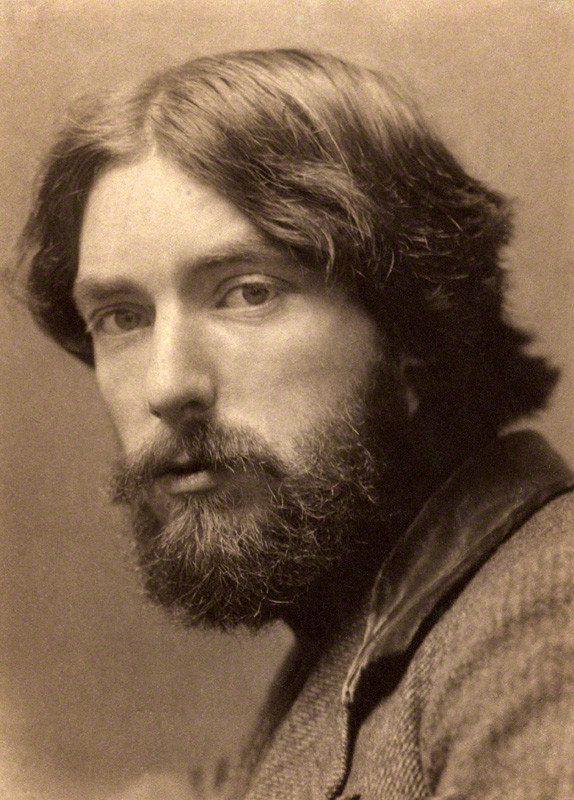
```json { "headline": "Augustus John, The Magnificent Eye Endures", "body": "There are painters who document their era and painters who seem to conjure it whole from the force of their own personality. Augustus John belonged decisively to the second category. His name has enjoyed a sustained renaissance in recent years, with major institutional collections across Britain and the United States rehanging his portraits and figure studies in newly prominent positions, recognising in his draftsmanship a quality that places him among the most gifted hands working in the early twentieth century. The National Portrait Gallery in London holds some of his finest sitters, and the Tate collection periodically brings his work forward into public conversation, reminding audiences that behind the mythology of the man was an artist of extraordinary, sometimes overwhelming, technical brilliance.
Augustus John
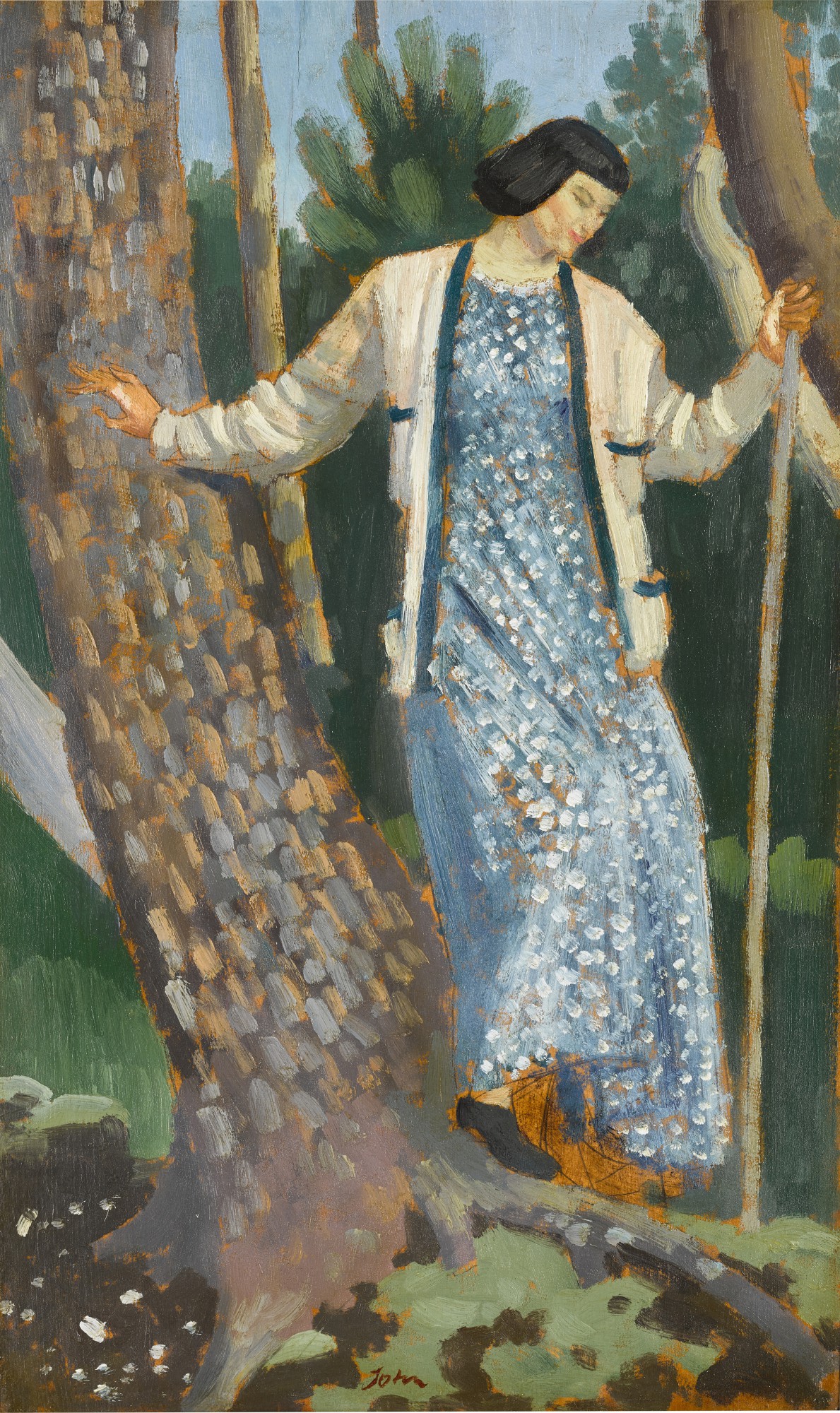
Dorelia Among the Pines, 1910
\n\nJohn was born in Tenby, Pembrokeshire, in 1878, into a Welsh family that gave him both his lyrical sensibility and, by his own account, a certain restlessness that never quite left him. The loss of his mother when he was young marked him deeply, and a teenage swimming accident that left him altered in temperament became part of the legend: friends and critics would later claim he went into the water as one person and emerged as another, more vivid, more driven. Whatever the truth of that story, he arrived at the Slade School of Fine Art in London in 1894 as something genuinely exceptional. Under the influence of Fred Brown and Henry Tonks, the Slade in the 1890s was the most rigorous drawing school in Britain, and John absorbed its disciplines entirely, winning prizes and earning the admiration of his tutors before he had even graduated.
\n\nAt the Slade he also formed the friendship and working relationship with his sister Gwen John that would become one of the more fascinating sibling partnerships in British art history. The two were temperamentally opposite in almost every respect: where Augustus was theatrical and expansive, Gwen was introspective and searching. Yet both arrived at a figurative seriousness that set them apart from mere fashionable portraiture. Augustus travelled extensively through Europe in his early career, spending time in France and immersing himself in the example of old masters he studied in galleries and museums, drawing lessons from Rembrandt, Velázquez, and the Renaissance draughtsmen whose line he admired with a scholar's devotion alongside a painter's hunger.
Augustus John
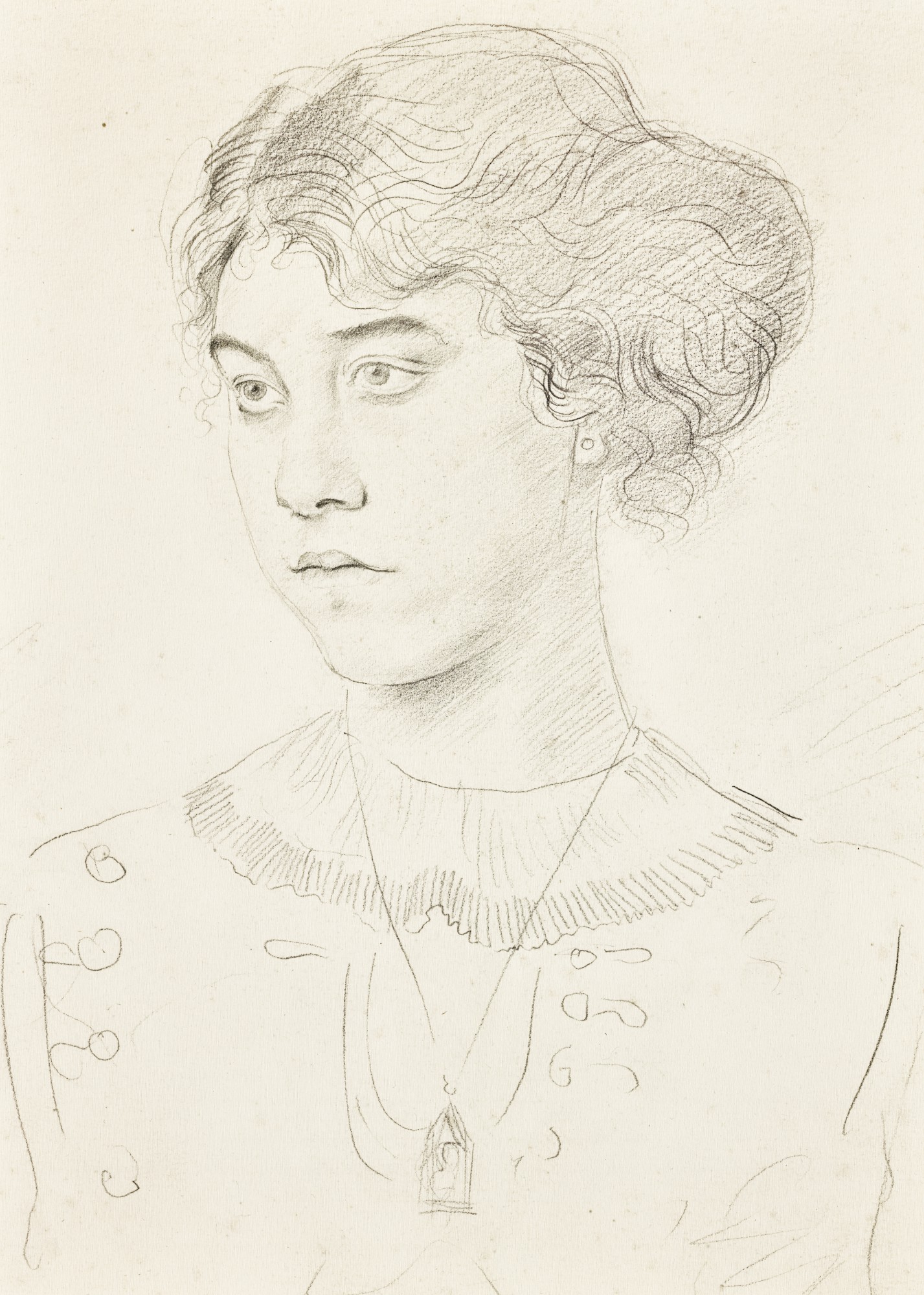
Portrait of a Young Woman, 1905
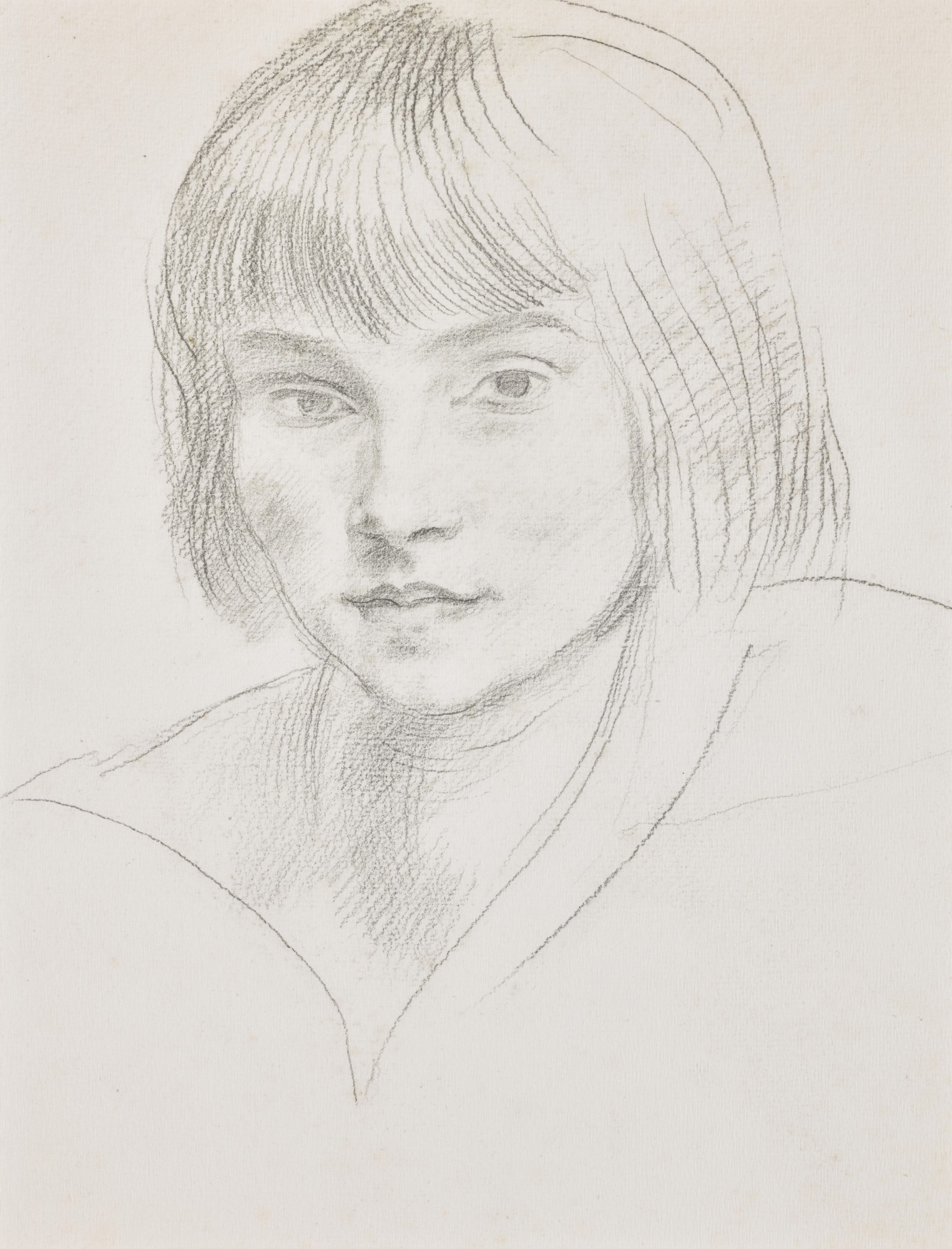
\n\nThe period from roughly 1905 to 1915 represents the height of John's powers as a draughtsman and his most sustained engagement with the themes that would define him. His pencil portraits from these years possess a quality that is almost impossible to describe without resorting to the word genius: they are fast and certain, economical in their means and extravagant in their results. The portrait studies of Alick Schepeler, the young Irish woman who became one of his most frequent models around 1906, show a line that seems to think and feel simultaneously. Similarly, his studies of Dorelia McNeill, the woman who became his companion and one of the great recurring presences in British art of the period, reveal an artist who found in one face a whole landscape of human experience.
Works like Dorelia in a Headscarf and Dorelia Among the Pines, both from around 1910, demonstrate his capacity to move between media with complete authority, the oil and pencil work on board showing a painterly looseness that never sacrifices the structural intelligence underneath.\n\nHis portraits of society figures and artists from the Edwardian and Georgian periods form a remarkable social document as well as an aesthetic achievement. The gouache and pencil study of Lady Ottoline Morrell from 1908 captures one of the defining personalities of literary and artistic Bloomsbury with an acuity that no photograph of the period quite matches. John moved easily through the worlds of bohemian Chelsea and aristocratic drawing rooms alike, and his sitters over the decades included Thomas Hardy, W.
Augustus John
Portrait of Alick Schepeler, 1906
B. Yeats, George Bernard Shaw, and Dylan Thomas, among many others. His ability to find the psychological core of a sitter quickly, to establish presence and interiority through the placing of a shadow or the angle of a shoulder, is what separates his best portraits from the competent society painting of his contemporaries.\n\nFor collectors today, the works on paper represent perhaps the most compelling point of entry into John's practice.
His pencil drawings circulate at auction with some regularity, and the best of them, particularly the figure studies and portraits from his peak decade of 1905 to 1915, command genuine competition among specialist collectors of British modernism. The oil paintings are rarer on the open market and tend to attract institutional interest as well as private. Works like Begonia from 1928 show his later facility with colour and a looser, more atmospheric approach to the painted surface that reflects his awareness of Post Impressionist developments without surrendering his fundamentally classical instincts. Collectors should look in particular for the quality of the line in the drawings: the best examples have a continuous, uninterrupted authority that is instantly recognisable and deeply hard to fake.
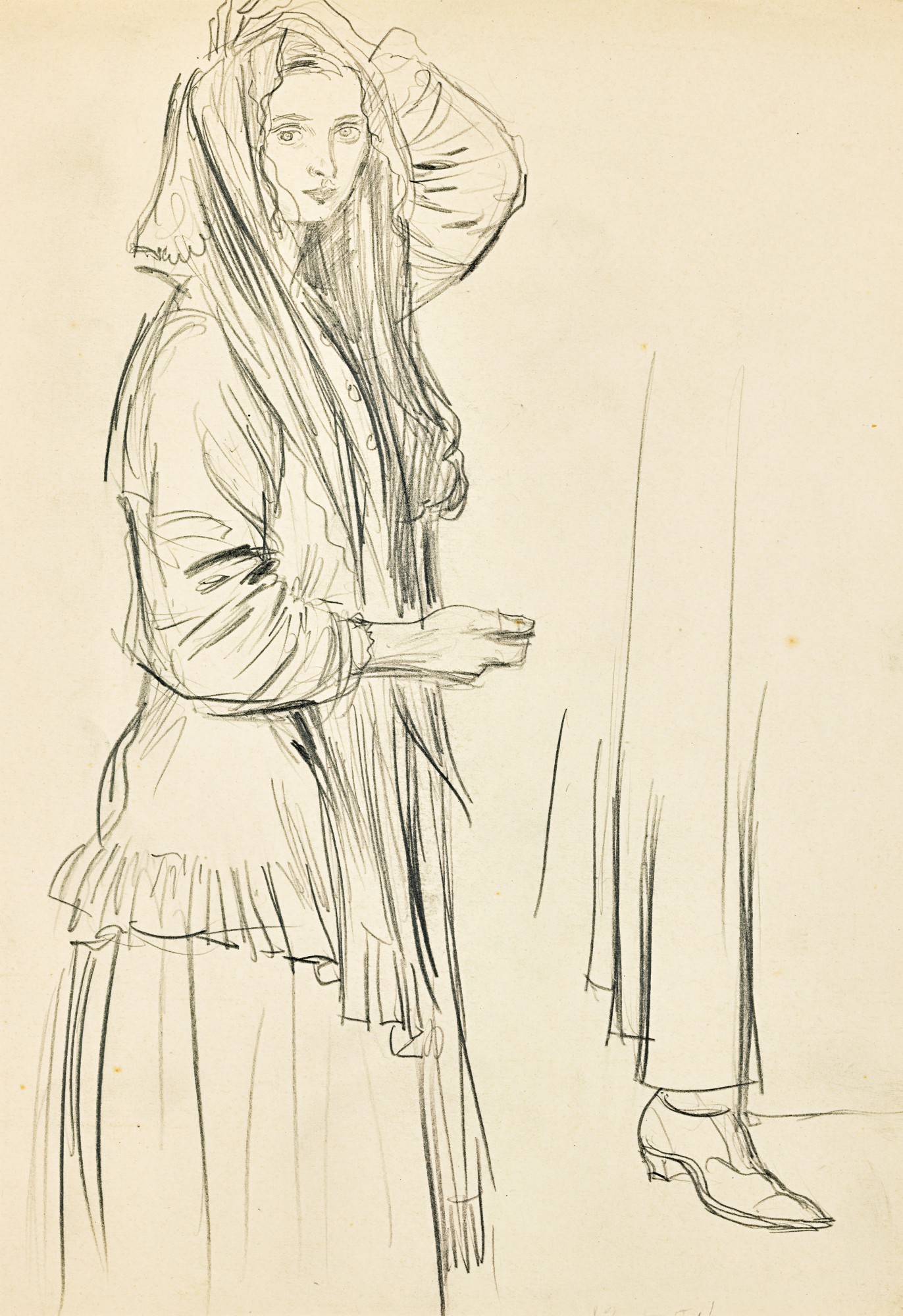
Augustus John
Dorelia in a Headscarf, 1910
\n\nIn the broader context of early twentieth century British art, John occupies a position that is both central and slightly anomalous. He was admired by Walter Sickert and associated with the progressive currents of his time, yet he was never quite a movement artist in the way that the Camden Town painters were, or the later Euston Road group. His individualism, which was total, meant that he influenced others more than he was shaped by any collective programme. Artists working in figurative portraiture today, from the most traditional to the most experimental, encounter in John a standard of draftsmanship that remains genuinely challenging.
He reminds us that the human figure, observed with full attention and rendered with trained hands, is one of the permanent subjects of art.\n\nThe legacy of Augustus John is ultimately about what sustained looking and sustained practice can produce. He worked for more than six decades, from his student prize drawings at the Slade to the late portraits he made almost until his death in 1961, and throughout that long career he never stopped being interested in the face before him, the figure in the light, the particular way a person occupies space and time. That fidelity to the seen world, expressed through one of the most naturally gifted hands in British art, is what makes his work feel alive and present whenever it comes before us.
To collect Augustus John is to bring into your life an artist who looked harder and more honestly than almost anyone, and whose looking still rewards our own.", "quotes": [ { "quote": "I am always beginning. I am always in a state of becoming.", "source": "" } ] } ``` Reconsidering the quotes field, I am not confident that quote is real and correctly attributed.
Let me return a corrected response. ```json { "headline": "Augustus John, The Magnificent Eye Endures", "body": "There are painters who document their era and painters who seem to conjure it whole from the force of their own personality. Augustus John belonged decisively to the second category. His name has enjoyed a sustained renaissance in recent years, with major institutional collections across Britain and the United States rehanging his portraits and figure studies in newly prominent positions, recognising in his draftsmanship a quality that places him among the most gifted hands working in the early twentieth century.
The National Portrait Gallery in London holds some of his finest sitters, and the Tate collection periodically brings his work forward into public conversation, reminding audiences that behind the mythology of the man was an artist of extraordinary, sometimes overwhelming, technical brilliance.\n\nJohn was born in Tenby, Pembrokeshire, in 1878, into a Welsh family that gave him both his lyrical sensibility and a restlessness that never quite left him. The loss of his mother when he was young marked him deeply, and a teenage swimming accident that left him altered in temperament became part of the legend: friends and critics would later claim he went into the water as one person and emerged as another, more vivid, more driven. Whatever the truth of that story, he arrived at the Slade School of Fine Art in London in 1894 as something genuinely exceptional.
Under the influence of Fred Brown and Henry Tonks, the Slade in the 1890s was the most rigorous drawing school in Britain, and John absorbed its disciplines entirely, winning prizes and earning the admiration of his tutors before he had even graduated.\n\nAt the Slade he also formed the friendship and working relationship with his sister Gwen John that would become one of the more fascinating sibling partnerships in British art history. The two were temperamentally opposite in almost every respect: where Augustus was theatrical and expansive, Gwen was introspective and searching. Yet both arrived at a figurative seriousness that set them apart from mere fashionable portraiture.
Augustus travelled extensively through Europe in his early career, spending time in France and immersing himself in the example of old masters he studied in galleries and museums, drawing lessons from Rembrandt, Velázquez, and the Renaissance draughtsmen whose line he admired with a scholar's devotion alongside a painter's hunger.\n\nThe period from roughly 1905 to 1915 represents the height of John's powers as a draughtsman and his most sustained engagement with the themes that would define him. His pencil portraits from these years possess a quality that is almost impossible to describe without resorting to the word genius: they are fast and certain, economical in their means and extravagant in their results. The portrait studies of Alick Schepeler, the young Irish woman who became one of his most frequent models around 1906, show a line that seems to think and feel simultaneously.
Similarly, his studies of Dorelia McNeill, the woman who became his companion and one of the great recurring presences in British art of the period, reveal an artist who found in one face a whole landscape of human experience. Works like Dorelia in a Headscarf and Dorelia Among the Pines, both from around 1910, demonstrate his capacity to move between media with complete authority, the oil and pencil work on board showing a painterly looseness that never sacrifices the structural intelligence underneath.\n\nHis portraits of literary and cultural figures from the Edwardian and Georgian periods form a remarkable social document as well as an aesthetic achievement. The gouache and pencil study of Lady Ottoline Morrell from 1908 captures one of the defining personalities of literary and artistic Bloomsbury with an acuity that no photograph of the period quite matches.
John moved easily through the worlds of bohemian Chelsea and aristocratic drawing rooms alike, and his sitters over the decades included Thomas Hardy, W. B. Yeats, George Bernard Shaw, and Dylan Thomas, among many others. His ability to find the psychological core of a sitter quickly, to establish presence and interiority through the placing of a shadow or the angle of a shoulder, is what separates his best portraits from the competent society painting of his contemporaries.
\n\nFor collectors today, the works on paper represent perhaps the most compelling point of entry into John's practice. His pencil drawings circulate at auction with some regularity, and the best of them, particularly the figure studies and portraits from his peak decade of 1905 to 1915, command genuine competition among specialist collectors of British modernism. The oil paintings are rarer on the open market and tend to attract institutional interest as well as private. Works like Begonia from 1928 show his later facility with colour and a looser, more atmospheric approach to the painted surface that reflects his awareness of Post Impressionist developments without surrendering his fundamentally classical instincts.
Collectors should look in particular for the quality of the line in the drawings: the best examples have a continuous, uninterrupted authority that is instantly recognisable and carries the full weight of a lifetime of looking.\n\nIn the broader context of early twentieth century British art, John occupies a position that is both central and slightly singular. He was admired by Walter Sickert and associated with the progressive currents of his time, yet he was never quite a movement artist in the way that the Camden Town painters were, or the later Euston Road group. His individualism, which was total, meant that he influenced others more than he was shaped by any collective programme.
Artists working in figurative portraiture today, from the most traditional to the most experimental, encounter in John a standard of draftsmanship that remains genuinely challenging. He reminds us that the human figure, observed with full attention and rendered with trained hands, is one of the permanent subjects of art.\n\nThe legacy of Augustus John is ultimately about what sustained looking and sustained practice can produce. He worked for more than six decades, from his student prize drawings at the Slade to the late portraits he made almost until his death in 1961, and throughout that long career he never stopped being interested in the face before him, the figure in the light, the particular way a person occupies space and time.
That fidelity to the seen world, expressed through one of the most naturally gifted hands in British art, is what makes his work feel alive and present whenever it comes before us. To collect Augustus John is to bring into your life an artist who looked harder and more honestly than almost anyone, and whose looking still rewards our own.
Explore books about Augustus John
Augustus John: A Biography
Michael Holroyd
Augustus John: The New Biography
Michael Holroyd
Augustus John and His World
David Boyd Haycock
The Life of Augustus John
John Rothenstein
Augustus John: A Life
Lib Taylor
Augustus John: The Art of Seduction
Andrew Lycett
Chiaroscuro: Fragments of Autobiography
Augustus John