August Sander
August Sander: A Portrait of Humanity
Artist Spotlight · The Collection Editorial
“We can tell from appearance the work someone does or does not do, their origin, and their development.”
August Sander, radio broadcast, 1931
There is a photograph that stops you cold. Three young farmers from the Westerwald stand on a country road, suits pressed, hats in hand, on their way to a dance. They look directly into the lens with an ease that feels almost impossible, as though they have always known they would be remembered. This image, Jungbauern, made in 1914, is among the most reproduced photographs of the twentieth century, and yet standing before a vintage print, whether in a museum gallery or in the quiet contemplation of a private collection, it retains every ounce of its original force.
August Sander
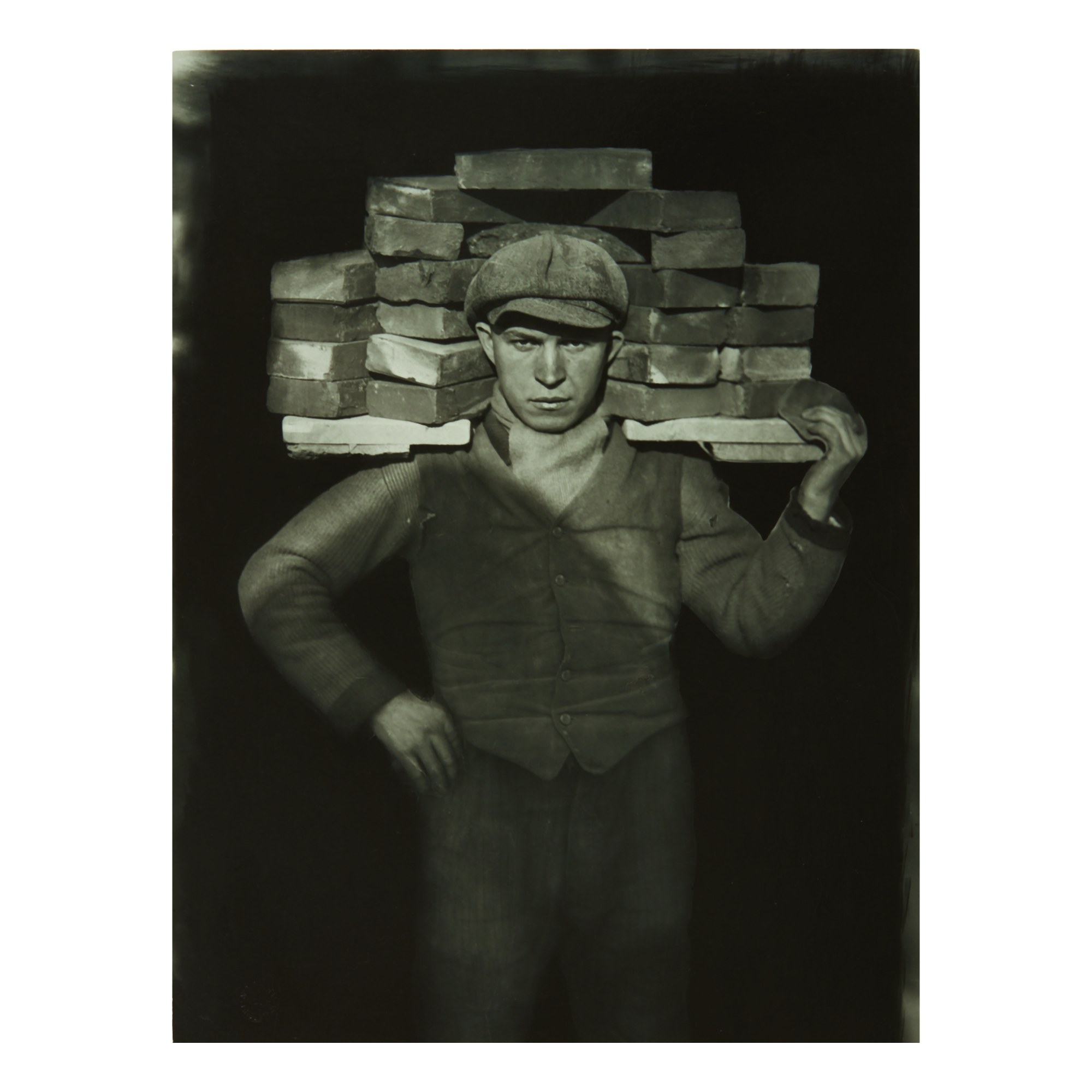
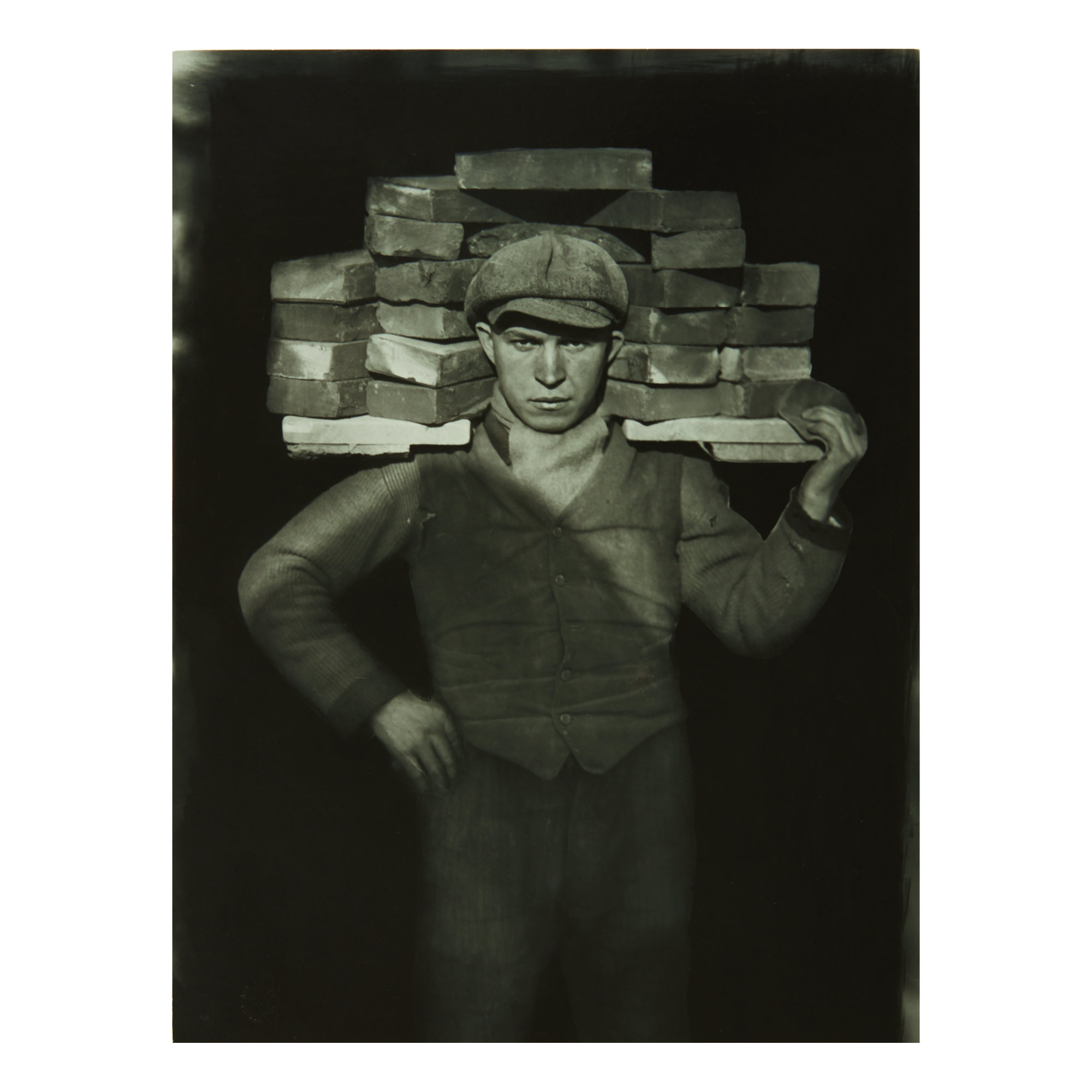
Hod Carrier (handlanger)
August Sander made tens of thousands of photographs over a career spanning six decades, and the best of them feel less like documents than like encounters. Sander was born in 1876 in Herdorf, a small mining town in the Siegerland region of western Germany. His father was a carpenter working in the local iron ore mines, and the landscape of labor was the first world Sander knew. He came to photography almost by chance, helping a local photographer as a young man and teaching himself the technical craft with a rigor that would define everything that followed.
After military service and years working in studios across Germany and Austria, he settled in Cologne in the early 1900s and established a portrait practice that would quietly become one of the most ambitious projects in the history of the medium. The ambition took shape gradually, then with tremendous purpose. Sander conceived of a vast photographic encyclopedia of German society that he would call Menschen des 20. Jahrhunderts, or People of the Twentieth Century.
August Sander
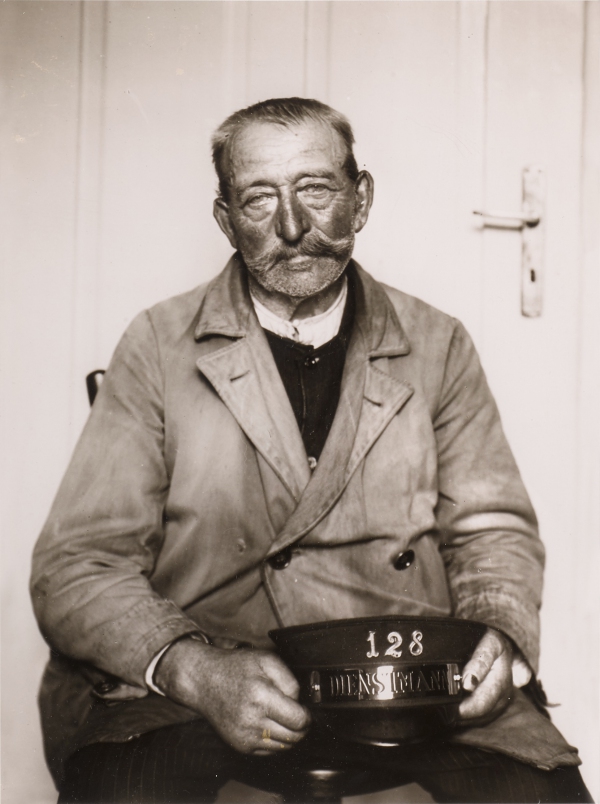
Porter
The project was staggering in its scope: a systematic portrait of an entire civilization, organized not alphabetically or chronologically but by social type and profession. Farmers, tradespeople, artists, industrialists, the unemployed, the persecuted, the powerful. Sander believed that the camera, used with honesty and without flattery, could reveal something essential about how a society organizes itself and who it values. He worked on this project for the rest of his life, and it remains unfinished in the most productive sense: a monument to curiosity and to the democratic potential of the photographic portrait.
“Photography is a universal language that needs no translation.”
August Sander
The first major public presentation of this work came in 1929 with the publication of Antlitz der Zeit, or Face of Our Time, a selection of sixty photographs accompanied by a text by the novelist Alfred Döblin. The book was both celebrated and controversial. Döblin compared Sander's project to comparative anatomy, suggesting that his photographs could be read the way a scientist reads specimens. The Nazi government, which came to power just four years later, found the book's implicit argument about social equality deeply threatening.
August Sander
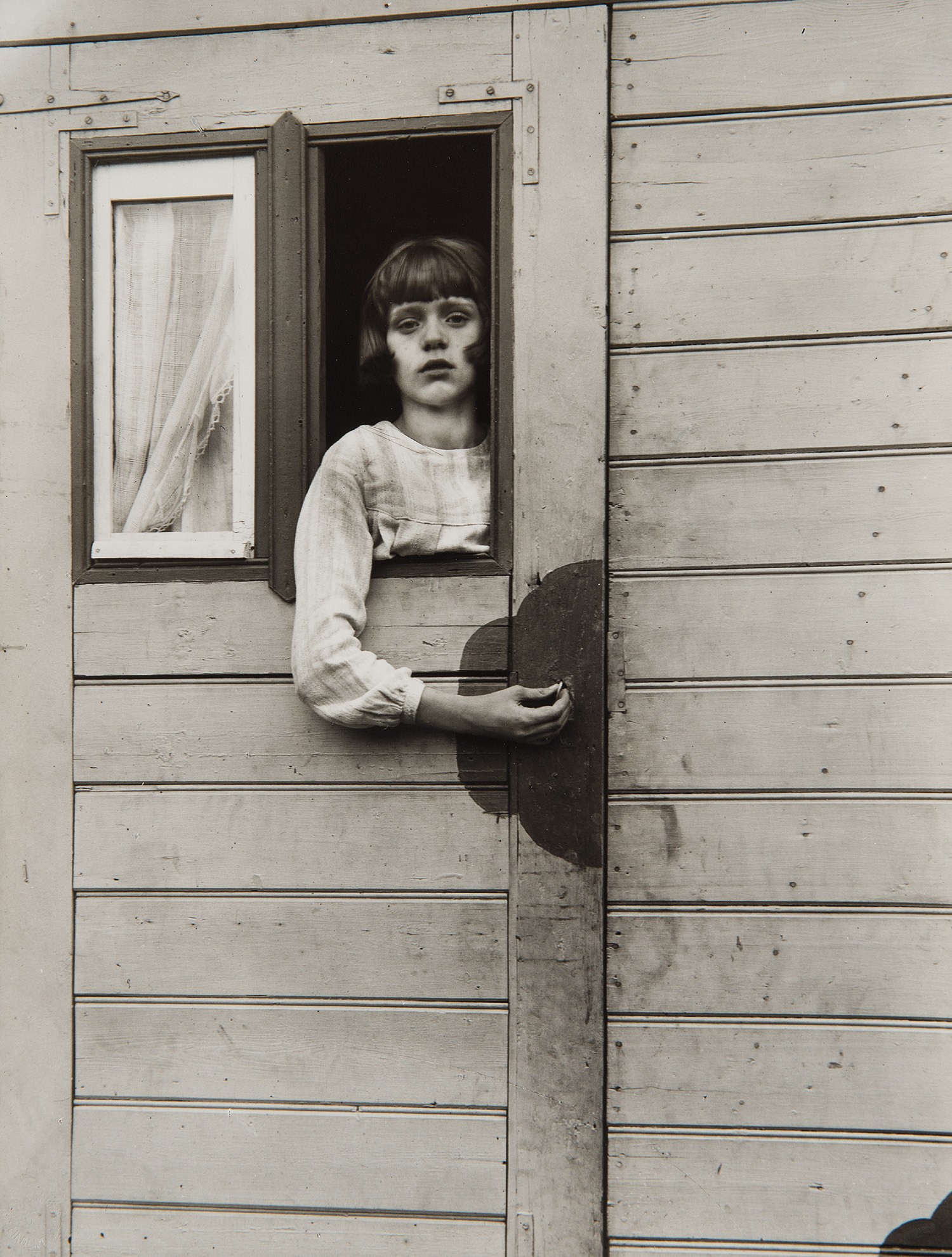
Mädchen im Kirmeswagen (Girl in Fairground Caravan)
In 1936, the Gestapo confiscated the printing plates and destroyed much of the original edition. The suppression only clarified what Sander had understood all along: that to look honestly at people across the full range of society is a political act. What distinguishes Sander's photographs from other documentary work of the period is the quality of his attention. His subjects are never condescended to and never romanticized.
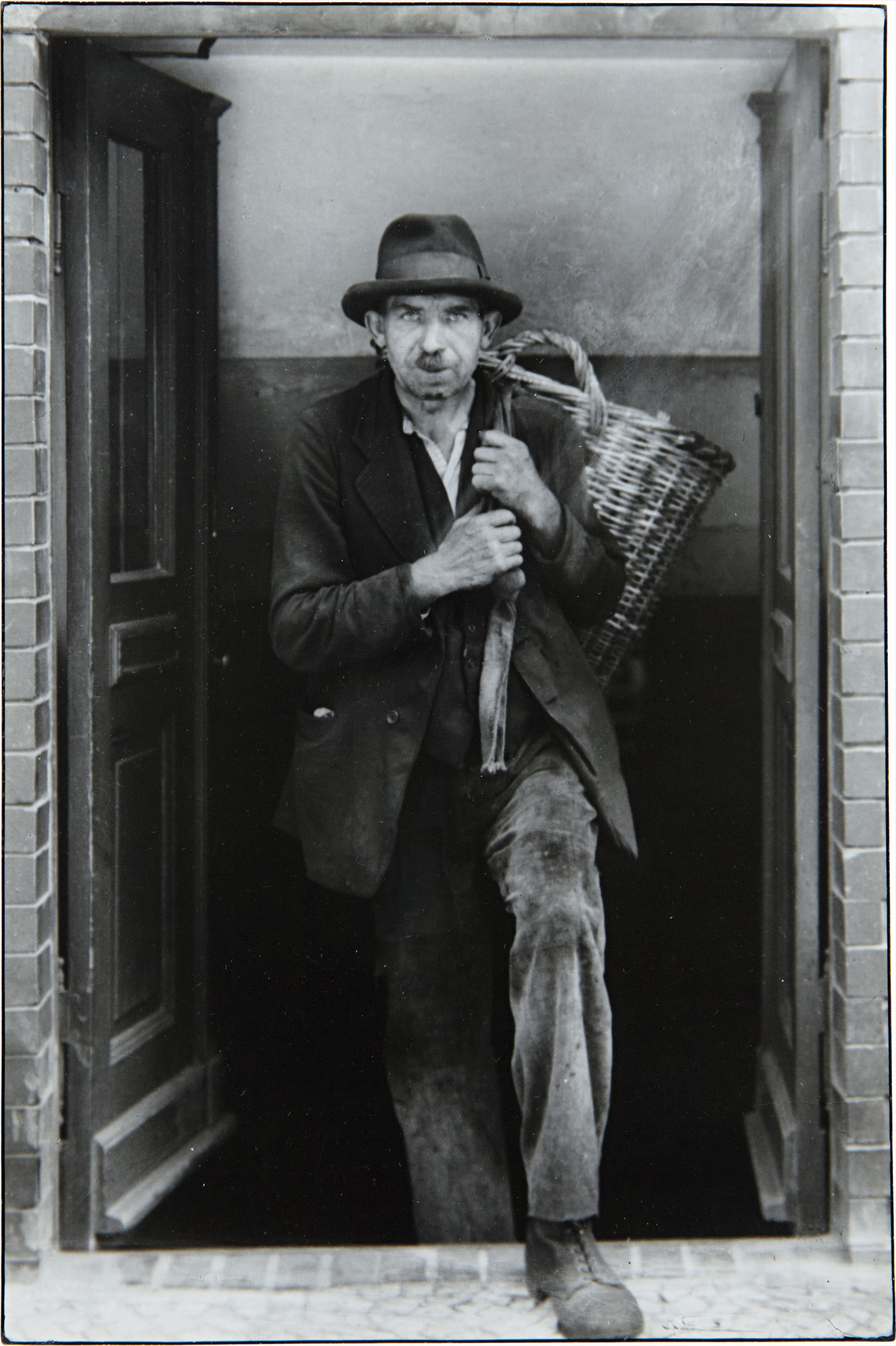
A hod carrier in 1928, photographed mid stride with his load of bricks, carries himself with a dignity that is entirely his own. Sander does not impose it; he simply does not strip it away. The same quality runs through his portraits of a pastry chef in Cologne, a high school student, a group of revolutionaries, a girl in a fairground caravan. Each image is its own argument for the full humanity of its subject.
August Sander
Berliner Kohlenträger
The gelatin silver print, with its luminous tonal range and capacity for fine detail, was the perfect medium for this project. Sander used it to render texture, the grain of a coat, the set of a jaw, with a fidelity that rewards long looking. For collectors, Sander's work presents a rich and layered opportunity. The market distinguishes carefully between vintage prints made in Sander's own lifetime, later prints authorized by his son Gunther Sander, and posthumous prints produced by his grandson Gerd Sander.
Works such as the 1928 Porter, bearing the photographer's Köln Lindenthal blindstamp and with titles inscribed in pencil by Gunther Sander, represent the closest point of contact with the original practice. Posthumous prints from the 1990s, many of which were produced under close scholarly supervision, have made important works accessible to a broader collecting audience and form the backbone of many serious collections. Auction records for Sander's strongest images, particularly the canonical social types from Menschen des 20. Jahrhunderts, have risen steadily as institutional recognition has grown.
The work sits comfortably in dialogue with the great traditions of humanist photography while also anticipating the conceptual rigors of the Düsseldorf School that would follow decades later. The connection to Düsseldorf is not incidental. Bernd and Hilla Becher, whose own typological surveys of industrial architecture shaped a generation of photographers including Andreas Gursky, Thomas Struth, and Thomas Ruff, acknowledged Sander as a foundational figure. His idea that photography could be systematic, that it could accumulate meaning through repetition and comparison, runs directly through their work and through the practice of everyone who learned from them.
Sander belongs in conversation with Dorothea Lange and Walker Evans, who were working in a related documentary spirit in the United States during the same decades, and with Eugène Atget, whose patient accumulation of images of Paris shares something of Sander's archival temperament. Sander lived until 1964, long enough to see photography begin its transformation from a craft into a recognized fine art. He worked through the Weimar Republic, the Nazi period, the devastation of the Second World War, and into the postwar reconstruction of Germany. His archive survived, though not without losses, and it continues to generate scholarship and exhibition.
Major retrospectives at institutions including the Museum of Modern Art in New York and the Cologne Ludwig Museum have cemented his canonical status. His relevance has only grown in an era newly attentive to questions of representation, social visibility, and who gets to be seen. To collect Sander is to hold a piece of that ongoing conversation, and to affirm that photography, at its greatest, is an act of witness and of care.
Explore books about August Sander
August Sander: Citizens of the Twentieth Century
August Sander
August Sander: Photographs 1904-1959
August Sander
August Sander: People of the Twentieth Century
Gunther Sander
August Sander: In Photographs
Susan Sontag
August Sander: A Life in Photographs
Gerd Sander