Atsuko Tanaka
Atsuko Tanaka: Electric Dreams, Radiant Legacies
Artist Spotlight · The Collection Editorial
When the Tate Modern mounted its landmark survey of postwar Japanese avant garde art, one work stopped visitors in their tracks more than almost any other. A photograph of Atsuko Tanaka wearing her Electric Dress at the second Gutai Art Exhibition in 1956 captured something that still feels genuinely startling: a young woman draped in hundreds of blinking light bulbs and neon tubes, standing in a blaze of color and current, utterly unafraid. That image has since become one of the defining icons of twentieth century art, reproduced in textbooks, anthologized in museum retrospectives, and claimed by scholars of performance, feminism, technology, and design alike. It is a reminder that the most radical gestures in art history are sometimes made by the people least likely to receive full credit for them during their lifetimes.
Atsuko Tanaka
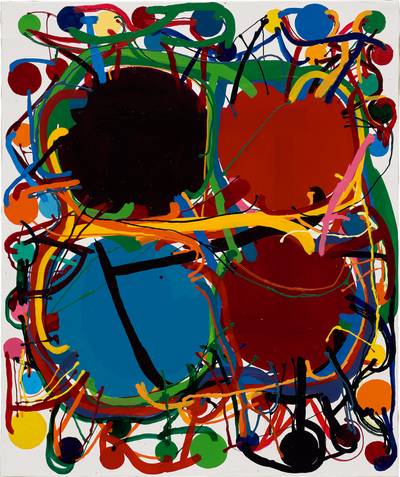
Untitled
Atsuko Tanaka was born in Osaka in 1932, into a Japan that was already living under the long shadow of imperial ambition and the gathering catastrophe of the Second World War. She came of age in the immediate postwar years, a period of extraordinary social disruption and creative ferment. The devastation of the war had leveled not only cities but also the cultural hierarchies that had governed Japanese life for generations, and a new generation of artists found themselves, somewhat vertiginously, free to start again. Tanaka enrolled at the Osaka Municipal School of Arts and Crafts and later studied painting, but the conventional academic path could not contain what she was reaching toward.
In 1955 she joined the Gutai Art Association, the group founded by the visionary Jiro Yoshihara in Ashiya, and everything changed. Gutai, whose name translates roughly as "embodiment" or "concrete," was unlike anything else happening in Japan at the time, and arguably unlike anything happening anywhere in the world. Yoshihara's famous directive to his young artists was to do what no one had done before, and Tanaka took that instruction with a seriousness that bordered on the absolute. Her earliest contributions to Gutai exhibitions showed an artist thinking not about painting as a surface to be decorated but as an event to be enacted.
Atsuko Tanaka
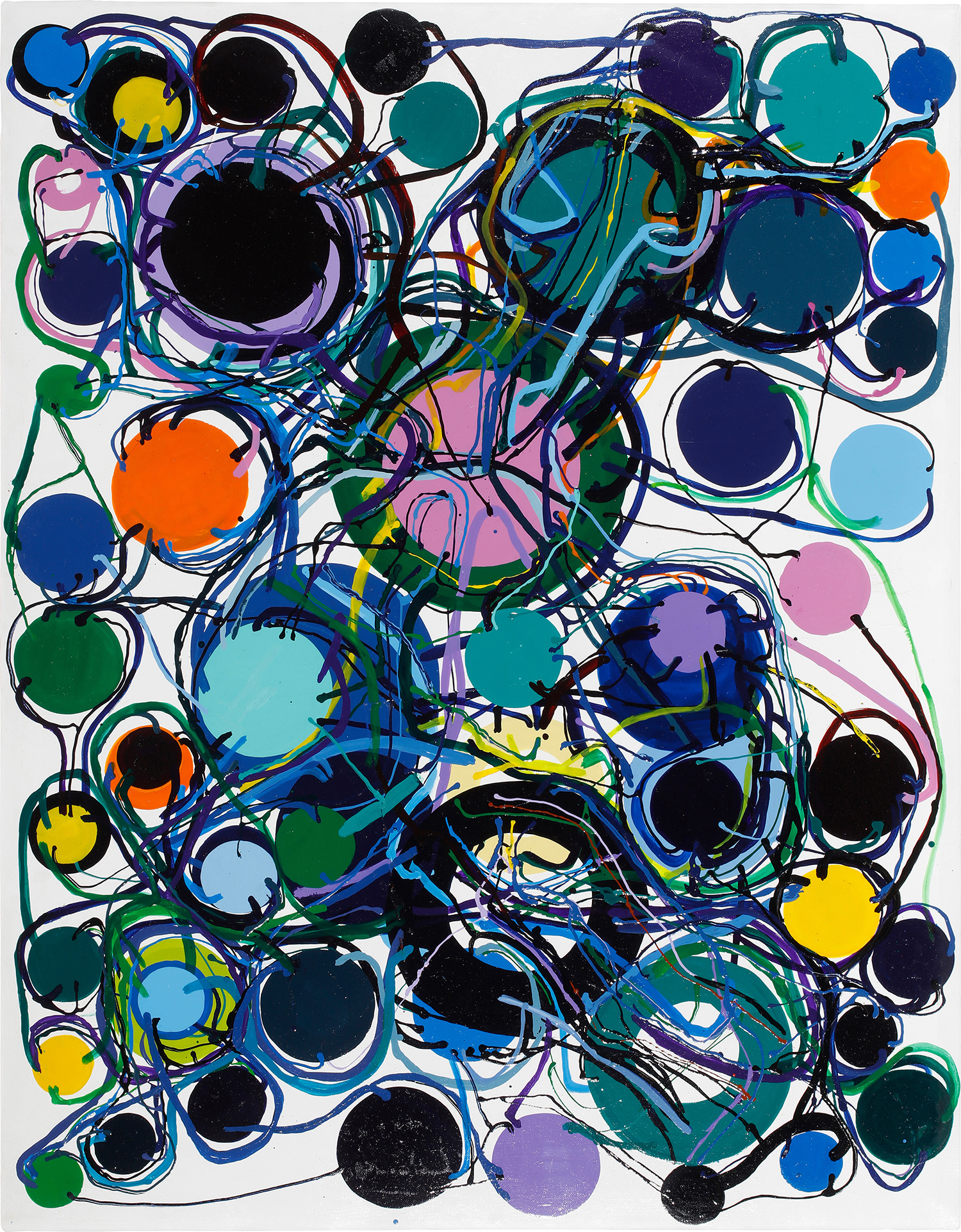
88D, 1988
In 1955 she created Bell, an installation in which a circuit of electric bells rang throughout an exhibition space, filling the room with sound triggered by the presence of visitors. The work anticipated by decades what we now call interactive or participatory art, and it did so with an elegance that owed nothing to theory and everything to intuition. The Electric Dress, first worn at the second Gutai outdoor exhibition in 1956, remains her most celebrated single gesture. Constructed from hundreds of light bulbs, neon tubes, and painted tinplate, the garment was wired to pulse and flicker, transforming Tanaka's body into a kind of living circuit board.
The work was dangerous, physically demanding, and formally brilliant. It collapsed the boundary between the human body and the industrial landscape of postwar Japan, at a moment when that landscape was being rebuilt at extraordinary speed. It also did something subtler: it made the female body the site of technological spectacle rather than its passive object, a reversal that carries obvious resonance even now. Tanaka wore the dress herself, and the act of wearing it was inseparable from the work's meaning.
Atsuko Tanaka
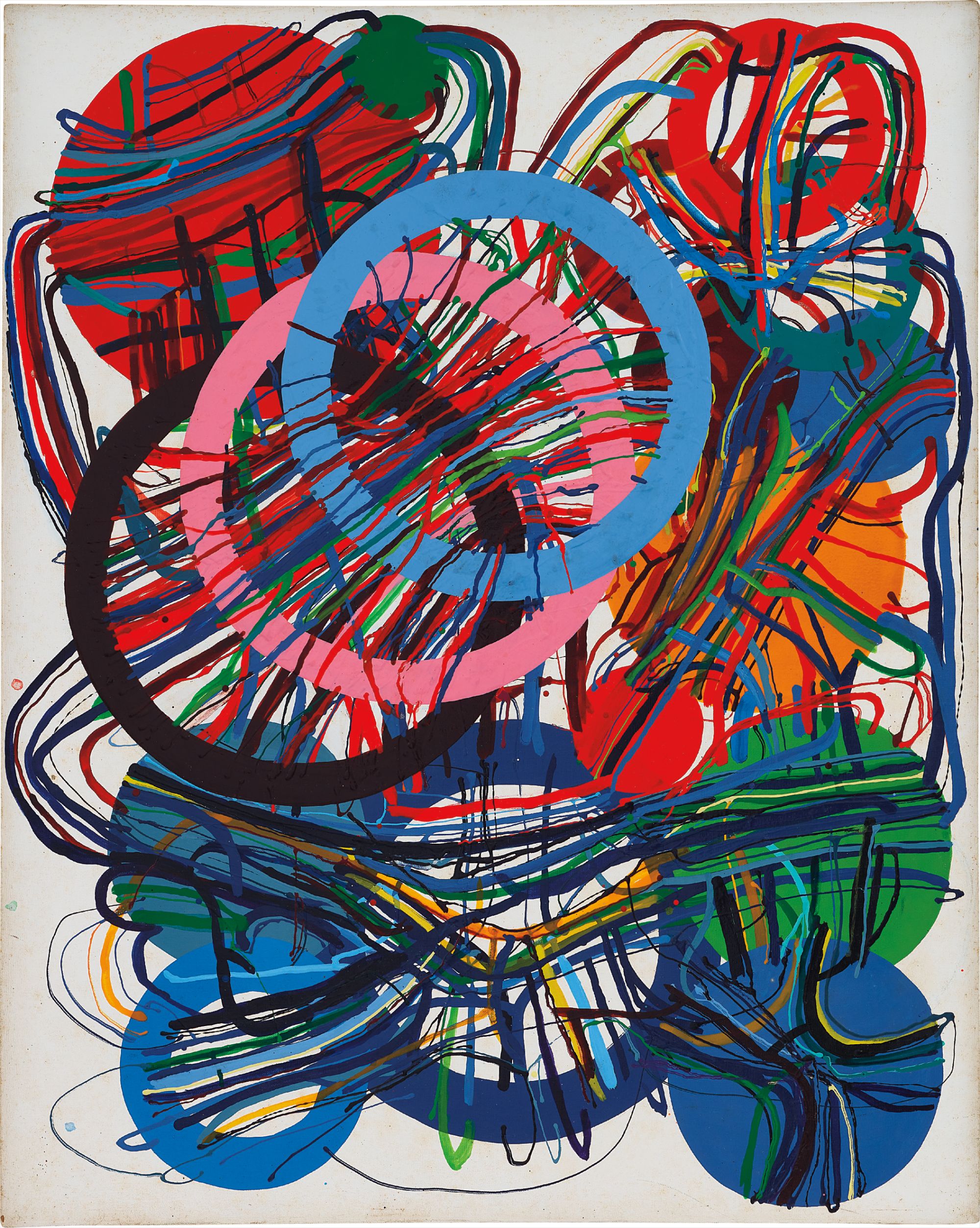
83D
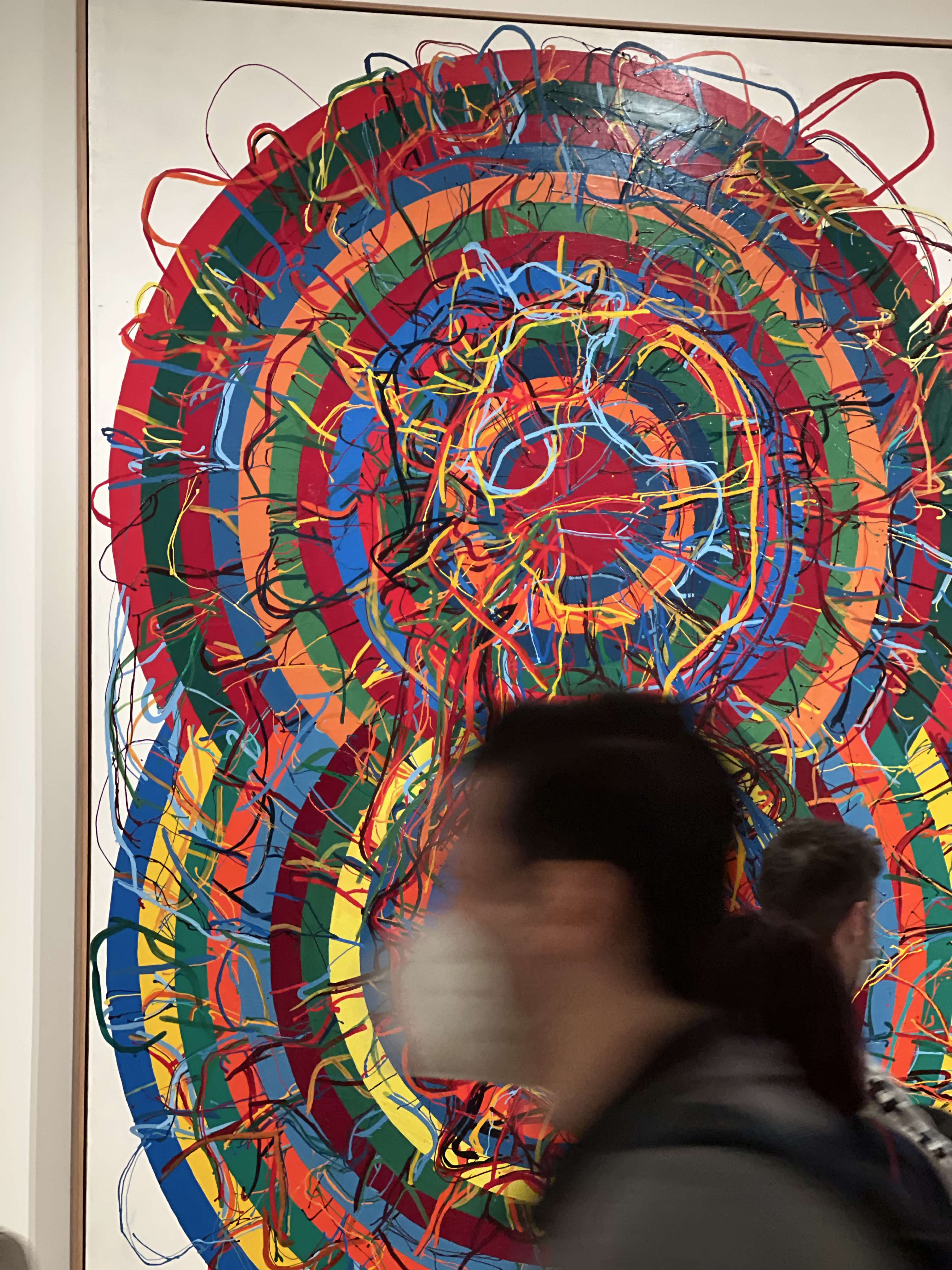
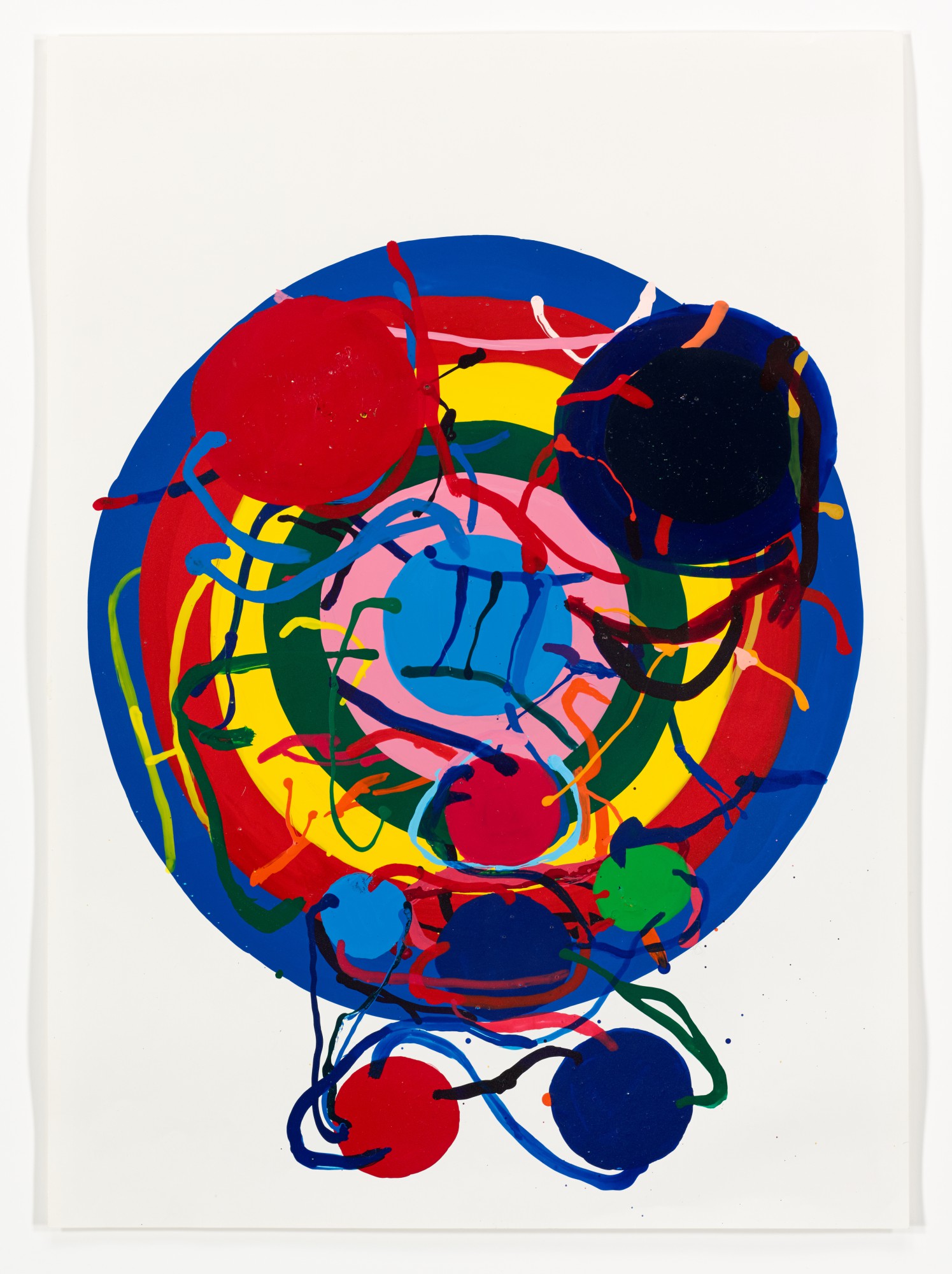
After her most intense years of performance and installation, Tanaka turned with sustained focus to painting on canvas and paper, and it is these works that dominate her legacy in the secondary market and in museum collections today. Working in enamel, acrylic lacquer, and gouache, she developed a visual language of looping, interlocking circles and lines that feel at once organic and diagrammatic. The works from the late 1970s onward, including pieces such as 1975 March and the canvases and works on paper from the 1980s and beyond, carry within them a memory of the Electric Dress: the same cascading networks of color and connection, the same sense of energy flowing through a system. The palette is bold and unapologetic, hot pinks and electric blues and acid yellows meeting in configurations that pulse with visual rhythm.
To spend time with one of these paintings is to feel the nervous system of the work humming against your own. For collectors, Tanaka's paintings occupy a particularly compelling position in the market for postwar Japanese art. Her work has appeared at auction at Christie's, Sotheby's, and Bonhams, where strong results have reflected growing institutional recognition and increasing scarcity. Works on canvas command the highest prices, though her works on paper represent a more accessible entry point into a practice of genuine historical significance.
Atsuko Tanaka
Untitled
What collectors consistently respond to is the combination of formal beauty and conceptual depth: these are paintings that reward sustained looking, that reveal their internal logic slowly, and that sit in dialogue with a rich art historical conversation spanning Abstract Expressionism in America, Art Informel in Europe, and the specific postwar energies of Japan. The enamel surfaces carry an almost industrial luminosity that photographs beautifully but rewards physical encounter even more. Tanaka belongs to a lineage of artists whose influence has outpaced their public recognition, at least until recently. Within Gutai, her practice shares a radical spirit with that of Kazuo Shiraga, who painted with his feet suspended from a rope, and Saburo Murakami, who threw himself bodily through paper screens.
But her particular intersection of technology, the body, and visual abstraction places her in conversation with a broader international field: with Yayoi Kusama's obsessive networks of dots and loops, with the kinetic investigations of Zero group artists in Germany, and with the feminist performance work that would emerge more explicitly in the 1970s through artists such as Marina Abramovic. Tanaka arrived at many of these questions first, and she arrived at them from a place of genuine necessity rather than programmatic intent. Atsuko Tanaka died in 2005, but her work continues to gather attention and respect at an accelerating pace. Major institutions including the Museum of Modern Art in New York and the National Museum of Modern Art in Tokyo hold her work, and the scholarship around Gutai has deepened considerably in the decades since her death, bringing her contribution into clearer and more rightful focus.
For those who encounter her paintings now, on the wall of a museum or a collector's home, the experience is one of meeting an intelligence that was entirely its own: curious, fearless, and alive to the possibilities of making in a way that time has not diminished. She gave her body to art, then gave her years to painting, and what she left behind glows with both.
Explore books about Atsuko Tanaka