Asli Özok
Asli Özok Weaves Gold Into Memory
Artist Spotlight · The Collection Editorial
There is a particular kind of attention that collectors develop over years of looking, a sensitivity to the moment when paint stops being paint and becomes something closer to feeling. For those who have encountered the work of Asli Özok, that moment arrives with unusual force. Her canvases, layered with oil, gold leaf, and the luminous scatter of Swarovski crystals, have been drawing sustained interest from collectors across Turkey and the broader Mediterranean and Middle Eastern art markets, and her presence at auction has confirmed what early admirers already sensed: this is an artist working at the meeting point of personal mythology and formal invention, and the work rewards sustained looking. Özok is a contemporary Turkish artist whose practice has developed against the rich and complex backdrop of modern Istanbul, a city that has always functioned as a living argument about where East meets West, where the Ottoman past negotiates with a European present.
Asli Özok
Garden of Armina V, 2016
That geographic and cultural tension is not merely backdrop for Özok. It is the very substance of her paintings. She draws with genuine fluency from both Western modernist traditions and the visual languages of her Turkish cultural heritage, producing work that feels neither derivative nor deliberately exotic, but genuinely synthesized, the product of an artist who has absorbed multiple traditions and made them entirely her own. Her formation as an artist reflects the cosmopolitan character of contemporary Turkish cultural life.
Özok came of age in an era when Istanbul was consolidating its reputation as one of the most vital art cities in the world, home to institutions like Istanbul Modern and the long running Istanbul Biennial, which since 1987 has brought international curatorial attention to Turkish contemporary practice. This context gave artists of Özok's generation both a local conversation of real depth and a sustained engagement with global contemporary art. Her work shows the marks of both: there is something of the lyrical figuration associated with artists in the tradition of Fahrelnissa Zeid, and something too of the material richness associated with artists exploring craft and decoration as serious formal concerns. The signature gesture in Özok's practice is the integration of precious and semi precious materials directly into the painted surface.
Asli Özok
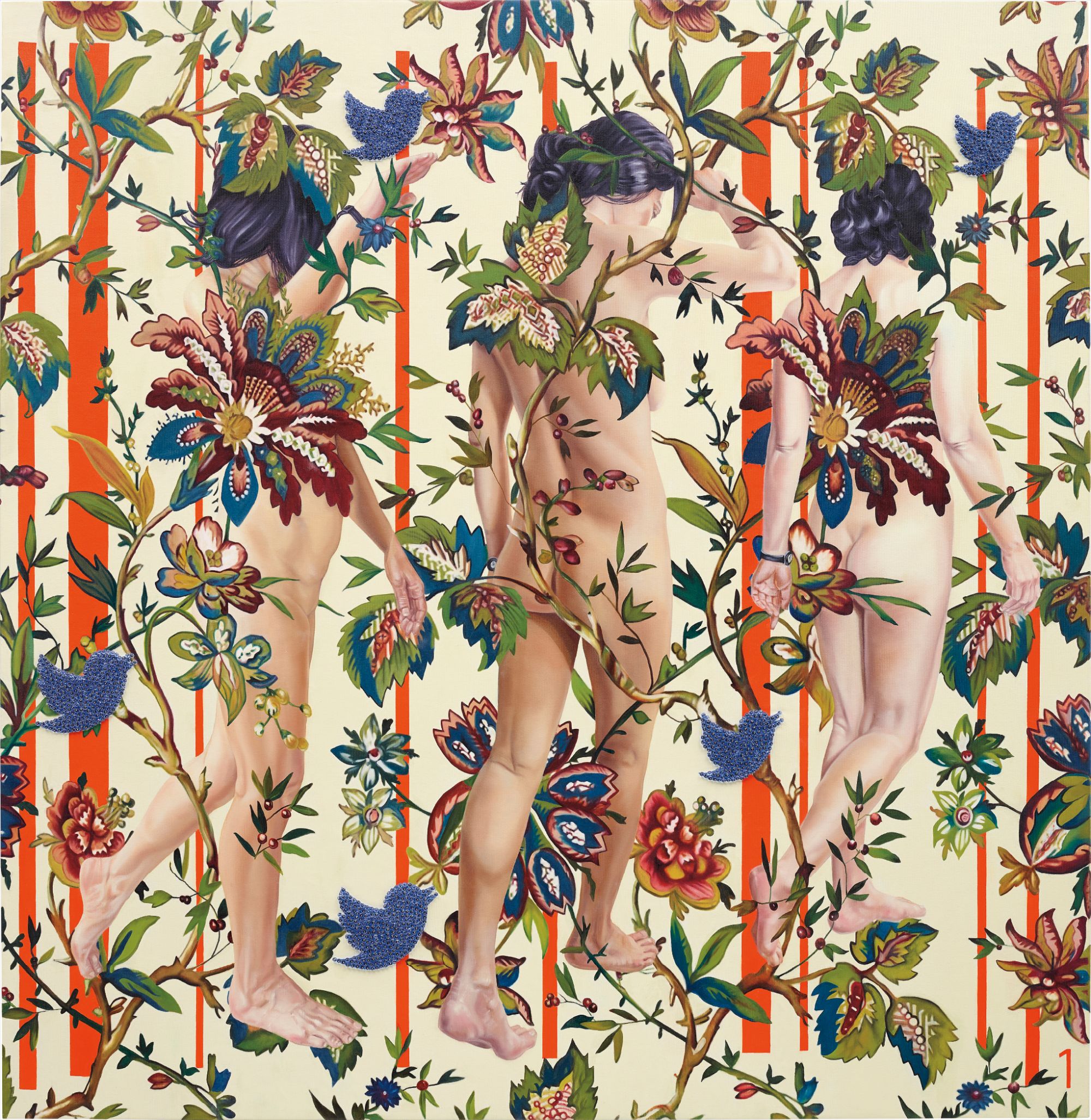
Miami, 2018
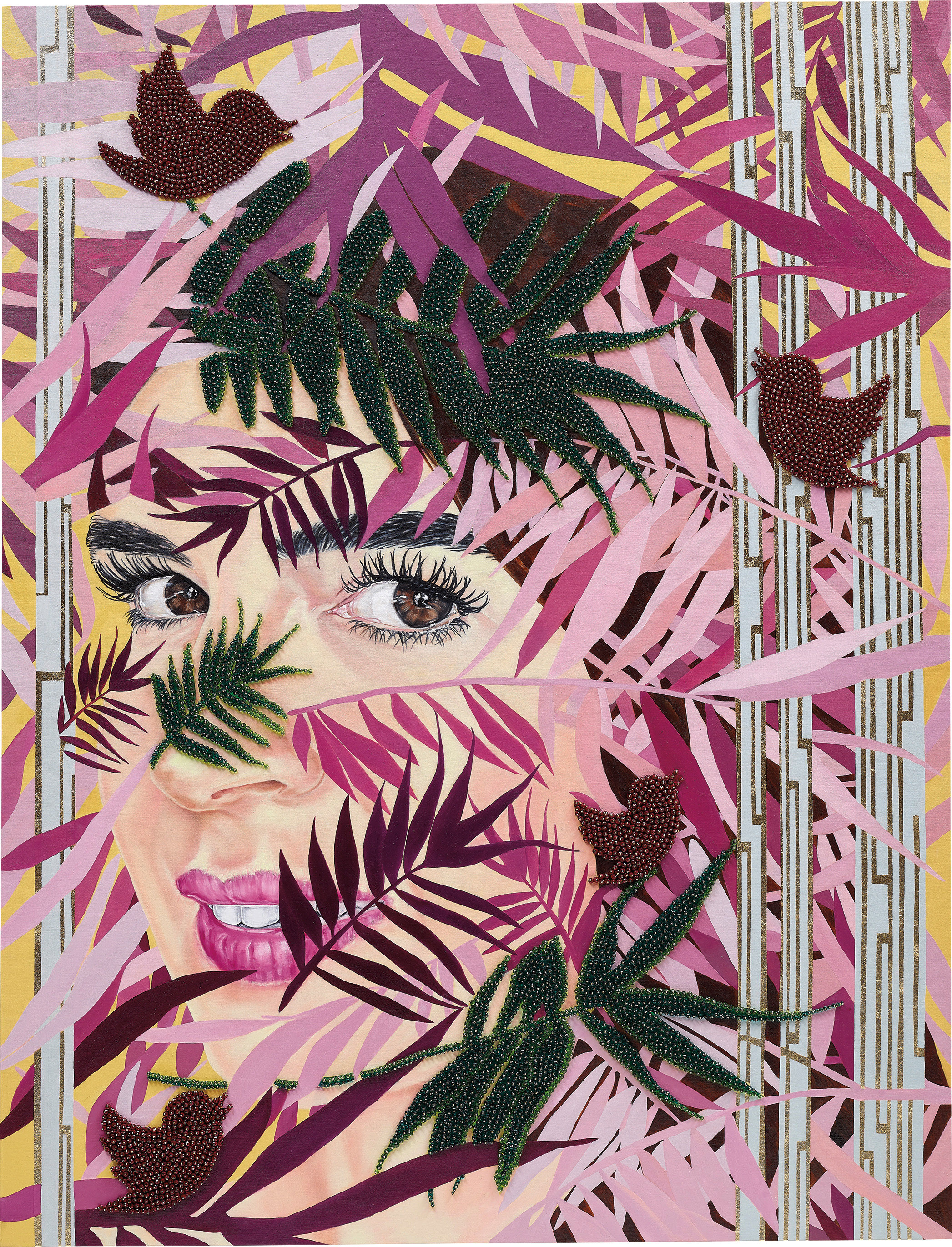
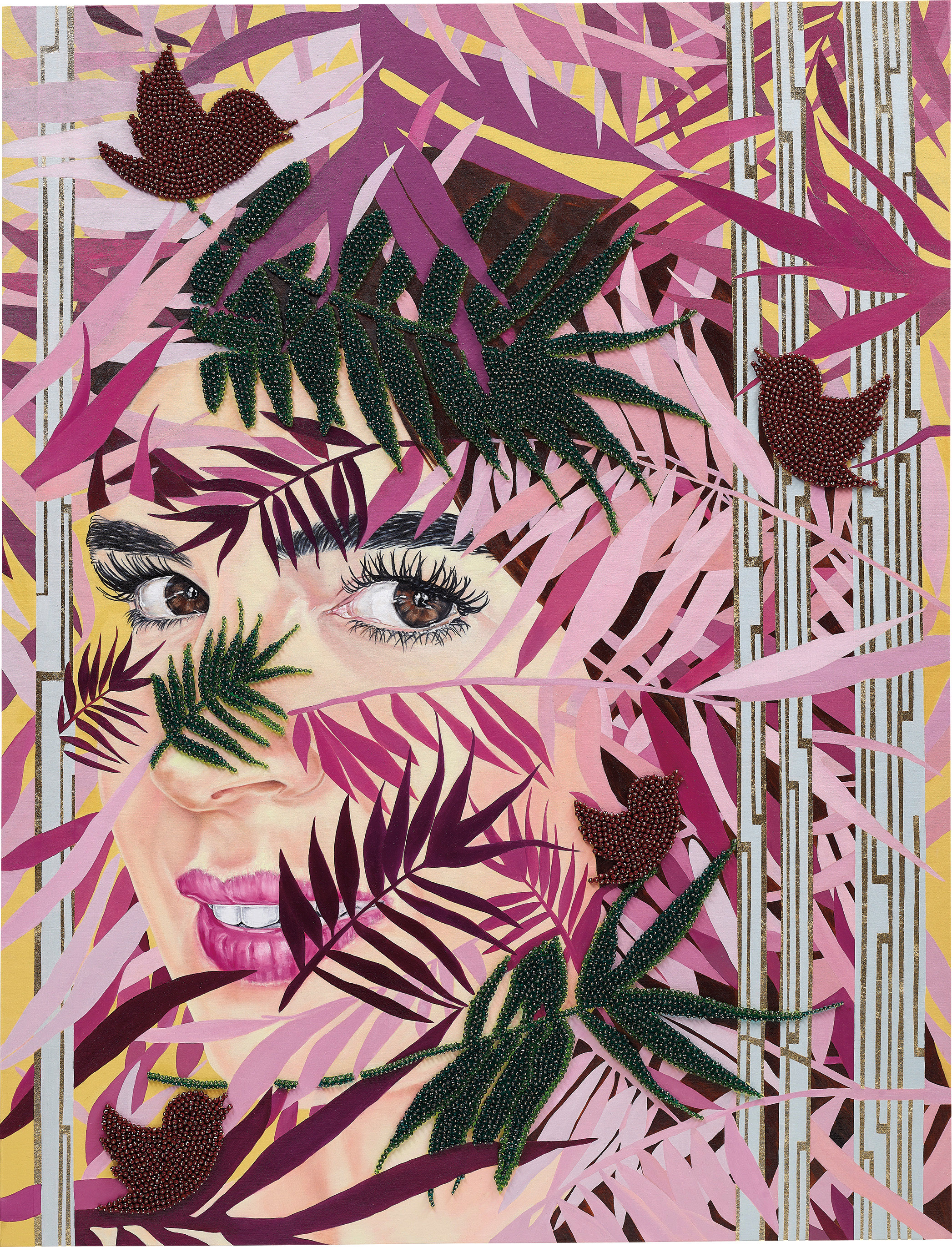
Works like Garden of Armina V, created in 2016, use Swarovski beads embedded in oil paint on canvas to produce surfaces that shift with the light, so that the experience of the painting changes depending on where the viewer stands and how the room is lit. This is not decoration for its own sake. The beads and gold leaf function as a kind of visual insistence, a refusal to let the image settle into passivity. The Garden of Armina series, which also includes Garden of Armina Rose from 2017, suggests an imagined or remembered landscape, a feminized and ornamented space that draws on the long tradition of the garden as a site of inner life in both Western and Islamic visual culture.
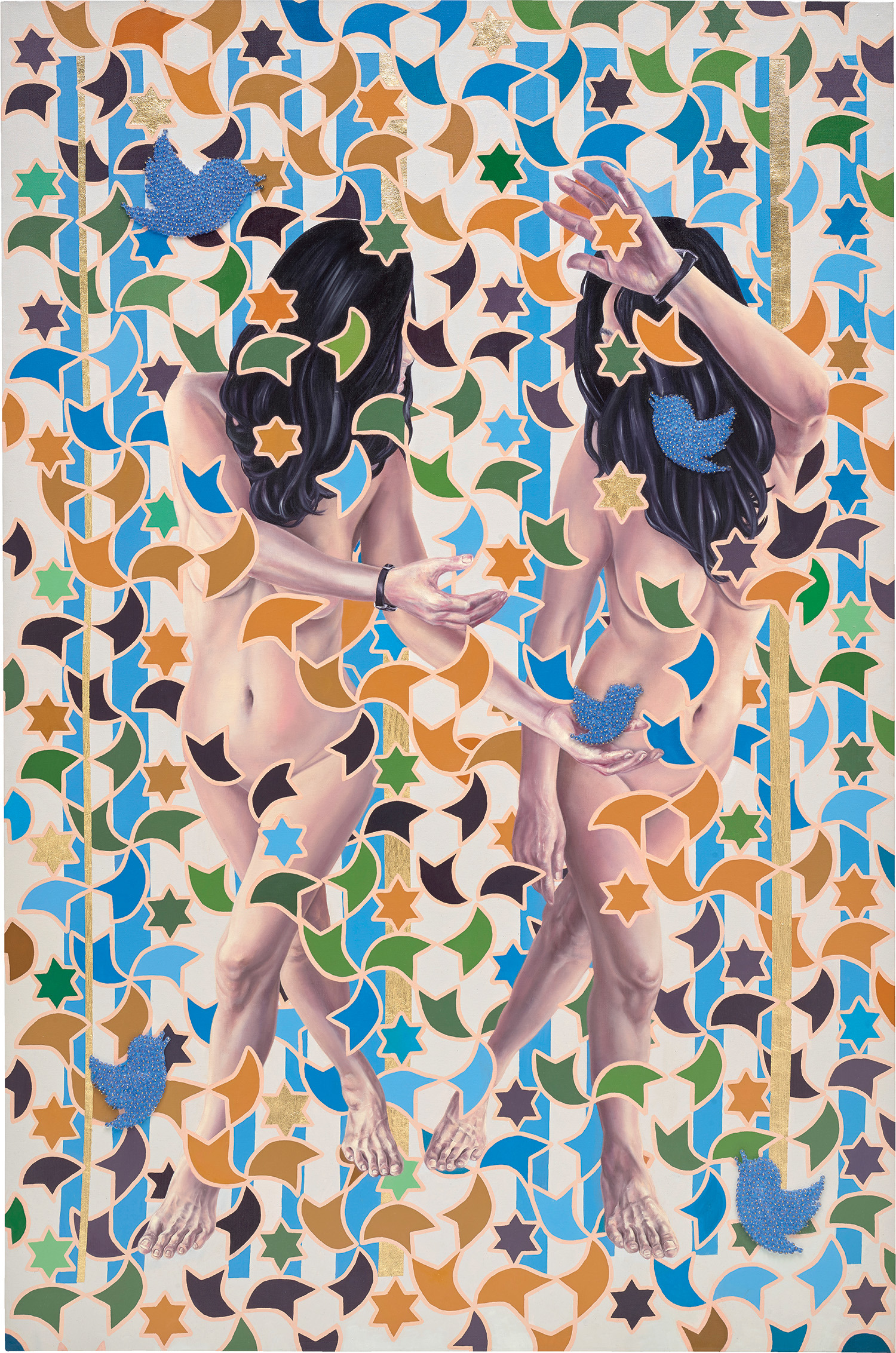
Miami, painted in 2018, extends this vocabulary into a more overtly contemporary register. The use of oil, gold leaf, and beads on canvas here engages with the energy and surface glamour of a specific kind of modern experience, while the underlying figurative structure keeps the work grounded in the human. Two Seconds, also from 2018, is perhaps the most concentrated example of what makes Özok's mature work so compelling. The combination of blue Swarovski beads, gold beads, and gold leaf with oil paint creates a surface of extraordinary complexity, and the title introduces a temporal dimension that complicates the purely visual experience.
Asli Özok
Two seconds, 2018
Two seconds is both an instant and, in the context of a painting meant to be lived with over years, a kind of eternity. The work invites the viewer to think about the relationship between the moment of perception and the enduring object, a theme that connects Özok to a broader conversation in contemporary painting about time and attention. For collectors, Özok's work occupies an attractive position in the current market. She works in a scale and medium, oil on canvas with mixed media embellishment, that translates well to residential and institutional settings alike.
The use of gold leaf and precious materials gives the work an immediate physical presence that photographs well and reads powerfully in person. Her focus on themes of identity, femininity, and cultural memory places her in dialogue with a generation of artists whose work is being actively re evaluated by major institutions and private collections, particularly as collecting attention continues to expand toward contemporary Turkish and broader Middle Eastern and Mediterranean practices. Collectors drawn to artists such as Fahrelnissa Zeid, whose own work commands significant auction results at Christie's and Sotheby's, or to the decorative intensity of artists working in the tradition of Klimt and the Viennese Symbolists, will find in Özok a contemporary practitioner who engages those legacies with genuine originality. The art historical context for Özok's practice is rich.
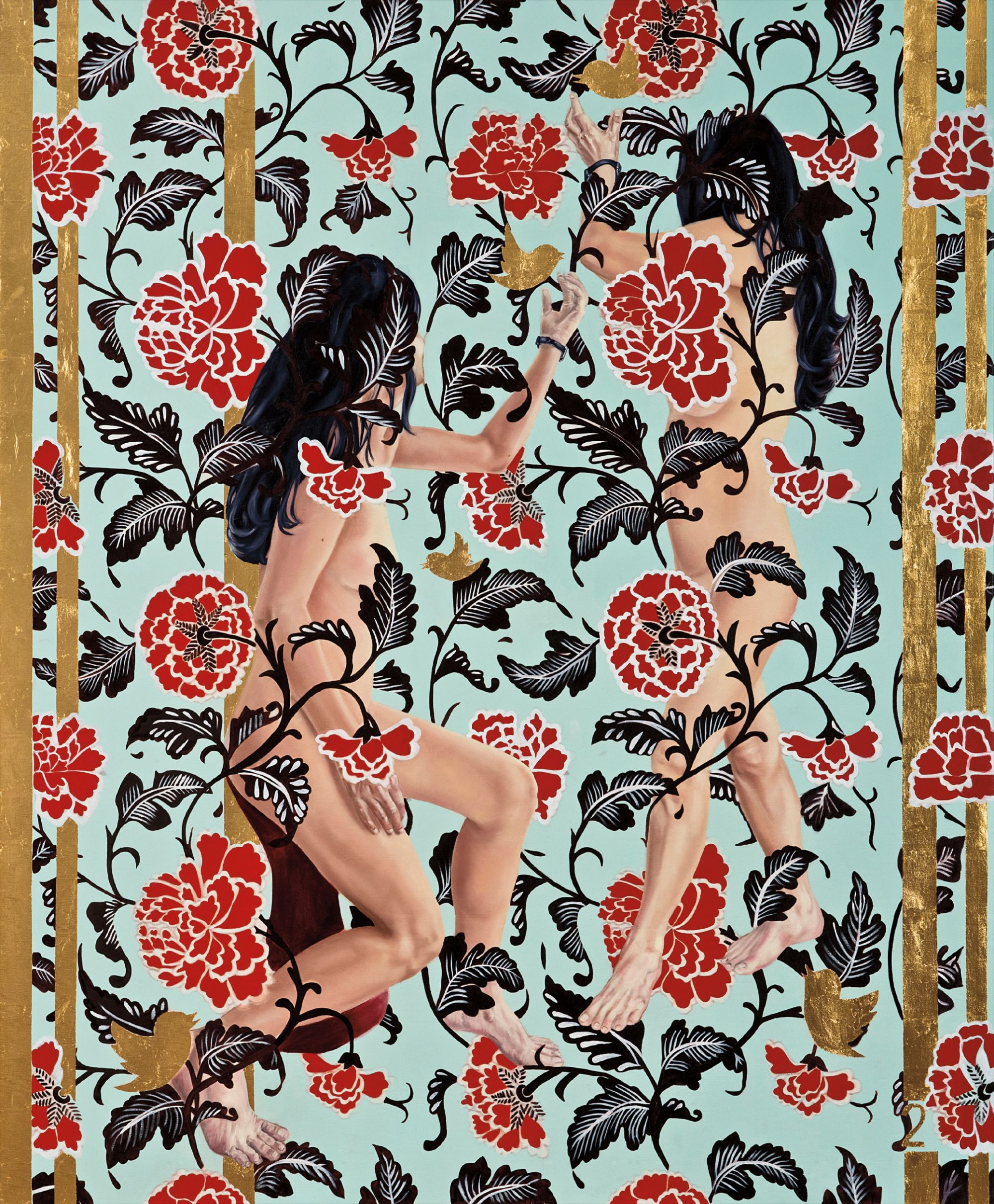
Asli Özok
Garden of Armina Rose, 2017
The integration of ornament and figuration has a distinguished lineage, from the Byzantine mosaics that shimmer across Istanbul's own architectural history to the surface experimentation of twentieth century modernism. Artists like Yayoi Kusama have demonstrated the formal seriousness with which repeated material elements, dots, beads, encrusted surfaces, can function as both optical and conceptual tools. Özok works in that tradition while bringing a specifically Turkish and feminine perspective to questions of adornment, identity, and the relationship between the decorative and the deeply felt. Her work asks us to reconsider the hierarchies that have sometimes separated craft from high art, surface from depth, the beautiful from the meaningful.
What makes Özok matter now is precisely this refusal of easy categories. In a moment when the art world is genuinely renegotiating its canons, when collectors and institutions are looking with fresh eyes at practices that were overlooked or undervalued by previous critical frameworks, Özok's synthesis of cultural influences, her insistence on material richness as a form of intellectual seriousness, and her sustained engagement with questions of identity and femininity feel not just timely but necessary. Her canvases are objects worth living with, works that give back more the longer they are known. For collectors building collections with genuine depth and range, she represents exactly the kind of discovery that defines a thoughtful eye.