Ashley Bickerton
Ashley Bickerton: Paradise Found, Brilliantly
Artist Spotlight · The Collection Editorial
“I am a mongrel. I have no real cultural home, and I think that is actually my great advantage as an artist.”
Ashley Bickerton, Interview Magazine
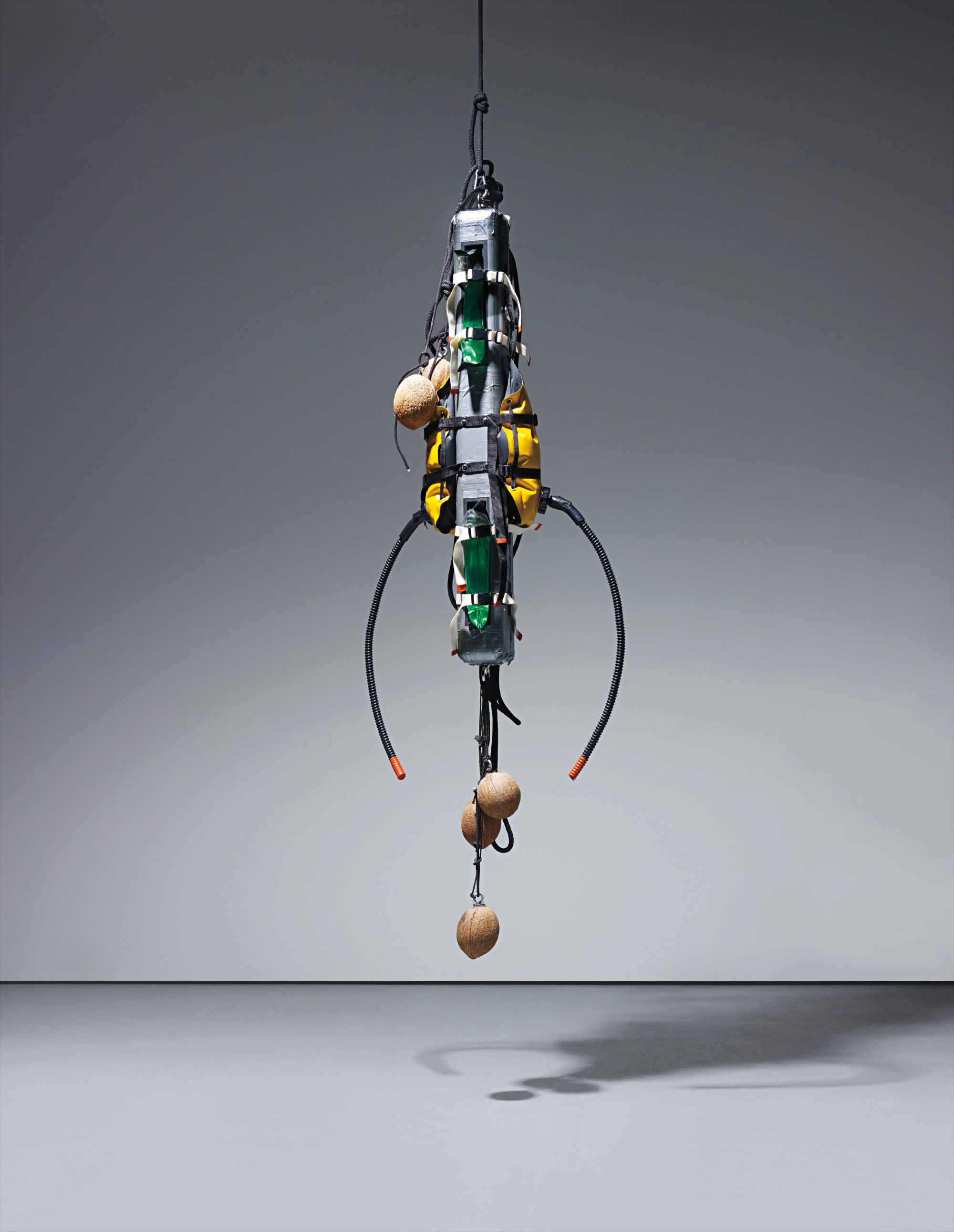
When Lehmann Maupin mounted a major survey of Ashley Bickerton's work, it confirmed what devoted collectors had long understood: here was an artist whose career traced one of the most genuinely singular arcs in contemporary art history. From the gleaming, logo saturated wall sculptures of late 1980s New York to the hallucinatory, jewel toned paintings produced in his Balinese studio, Bickerton never stopped pushing. His death in Bali in 2022 brought an outpouring of reflection from curators, fellow artists, and collectors who recognised that the art world had lost one of its most fearless and intellectually rigorous voices. The works he left behind feel, if anything, more alive and more necessary with each passing year.
Ashley Bickerton
Stratified Landscape #3
Bickerton was born in 1959 in Barbados to British parents, and his early years were defined by movement and displacement. He spent portions of his childhood in Hawaii and Papua New Guinea before eventually arriving in New York to study at the California Institute of the Arts and then making his way into the ferment of the East Village scene. That peripatetic upbringing gave him an outsider's eye for culture, identity, and the way human beings construct meaning through objects and symbols. It was an education no institution could fully replicate, and it showed in everything he made.
By the mid 1980s, Bickerton had found his tribe and his moment. Alongside Jeff Koons, Peter Halley, and Meyer Vaisman, he became a central figure in what critics and dealers quickly labelled the Neo Geo movement, a loose but potent grouping of artists interrogating the visual language of consumer capitalism and late modernism. The gallerist Sonnabend gave this cohort a crucial platform, and a 1986 group exhibition there announced Bickerton as a genuine force. His wall mounted assemblages of that period, bristling with corporate logos, industrial hardware, and survival equipment, read like field dispatches from a culture drowning in its own brand identity.
Ashley Bickerton
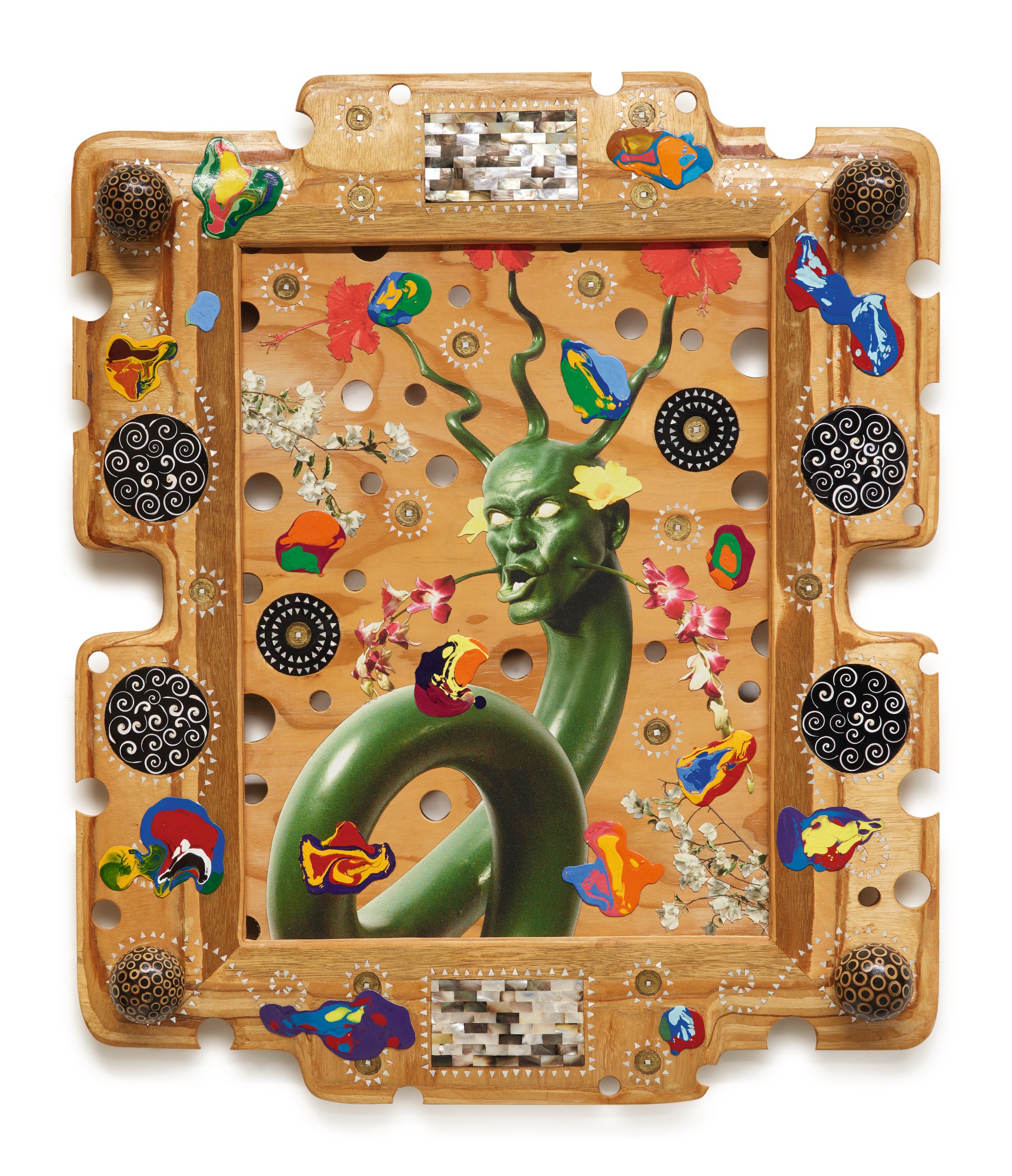
Snake Head Painting No. 2, 2008
They were funny, unsettling, and formally precise all at once. The work that defined this first chapter bore titles and surfaces that mixed corporate speak with existential dread. Bickerton attached the logos of companies and consumer goods to sculptural objects in ways that implicated the viewer directly, turning the gallery wall into a kind of audit of modern life. These pieces felt timely in the Reagan era, when advertising had colonised every surface of public consciousness, but they were grounded in enough formal rigour and art historical awareness to outlast their immediate moment.
He was reading Baudrillard and Debord, but the objects themselves had a raw, almost confrontational physical presence that theory alone could never account for. Then, in the 1990s, Bickerton made a decision that surprised almost everyone and ultimately defined him. He moved to Bali. What might have looked like retreat turned out to be the catalyst for the most exuberant and inventive phase of his career.

Ashley Bickerton
A.b. 8, 2006
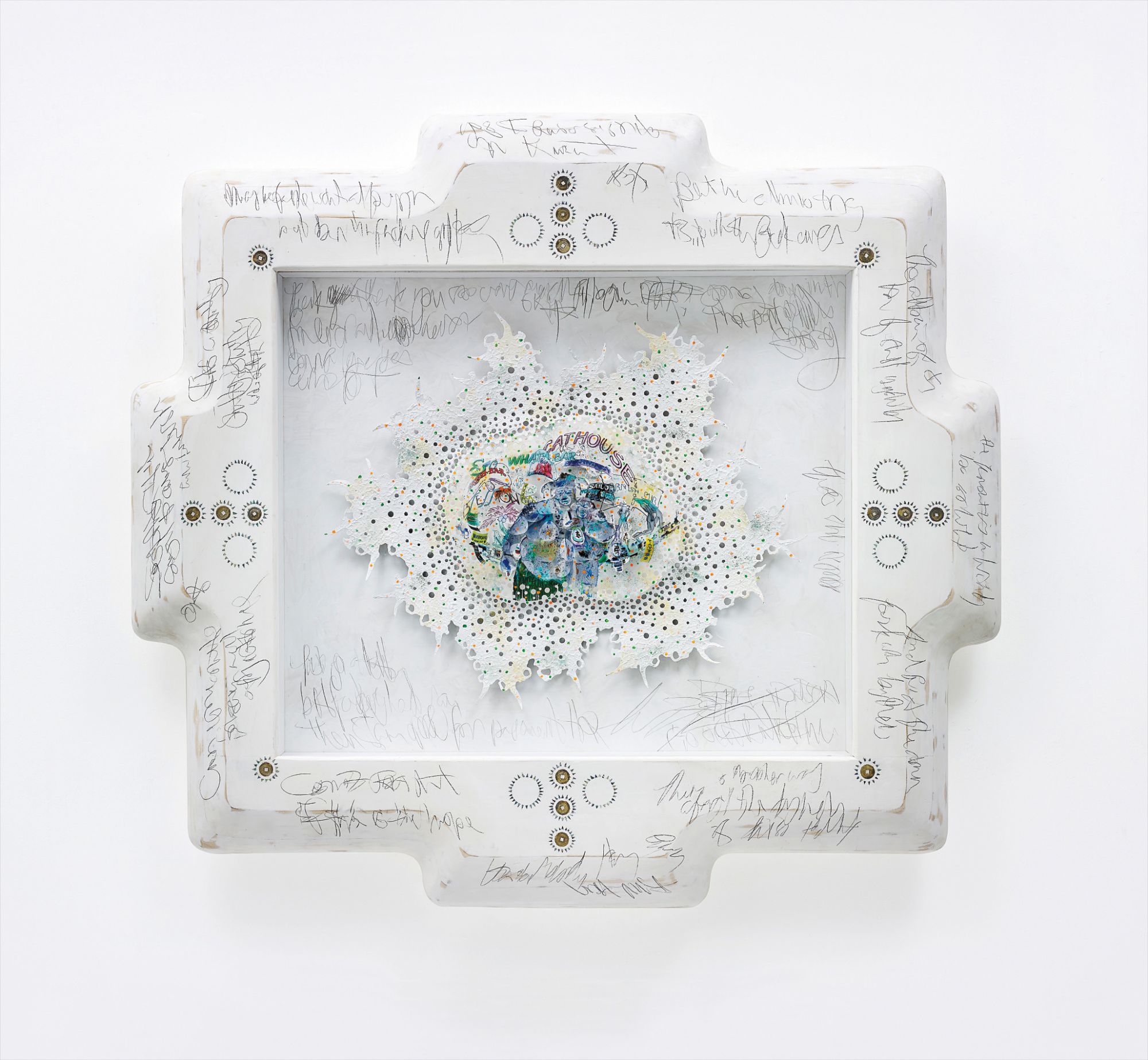
The lush, tropical environment, the syncretic spiritual culture, the dazzling natural colour and the proximity to craft traditions he had never encountered before all fed into a transformation of his practice. His paintings grew saturated with colour, dense with pattern, and populated by strange, grinning figures that drew on local mythology, Western art history, and his own increasingly baroque personal iconography. Works like Snake Head Painting No. 2 from 2008, combining acrylic, oil, digital print, mother of pearl, and coconut on wood, show the full range of his ambition: these are paintings that refuse to settle into any single register, hovering between beauty and menace, sincerity and irony.
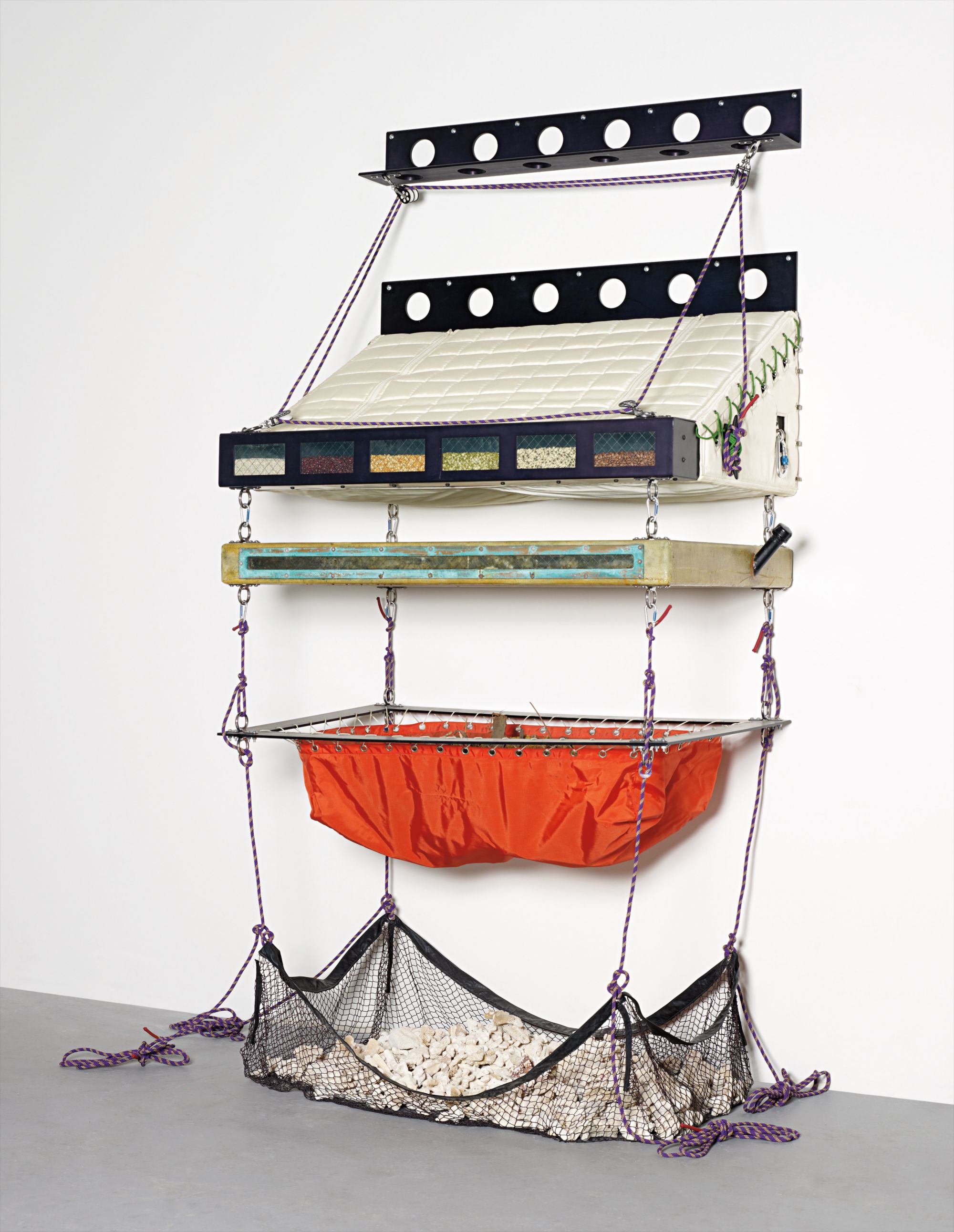
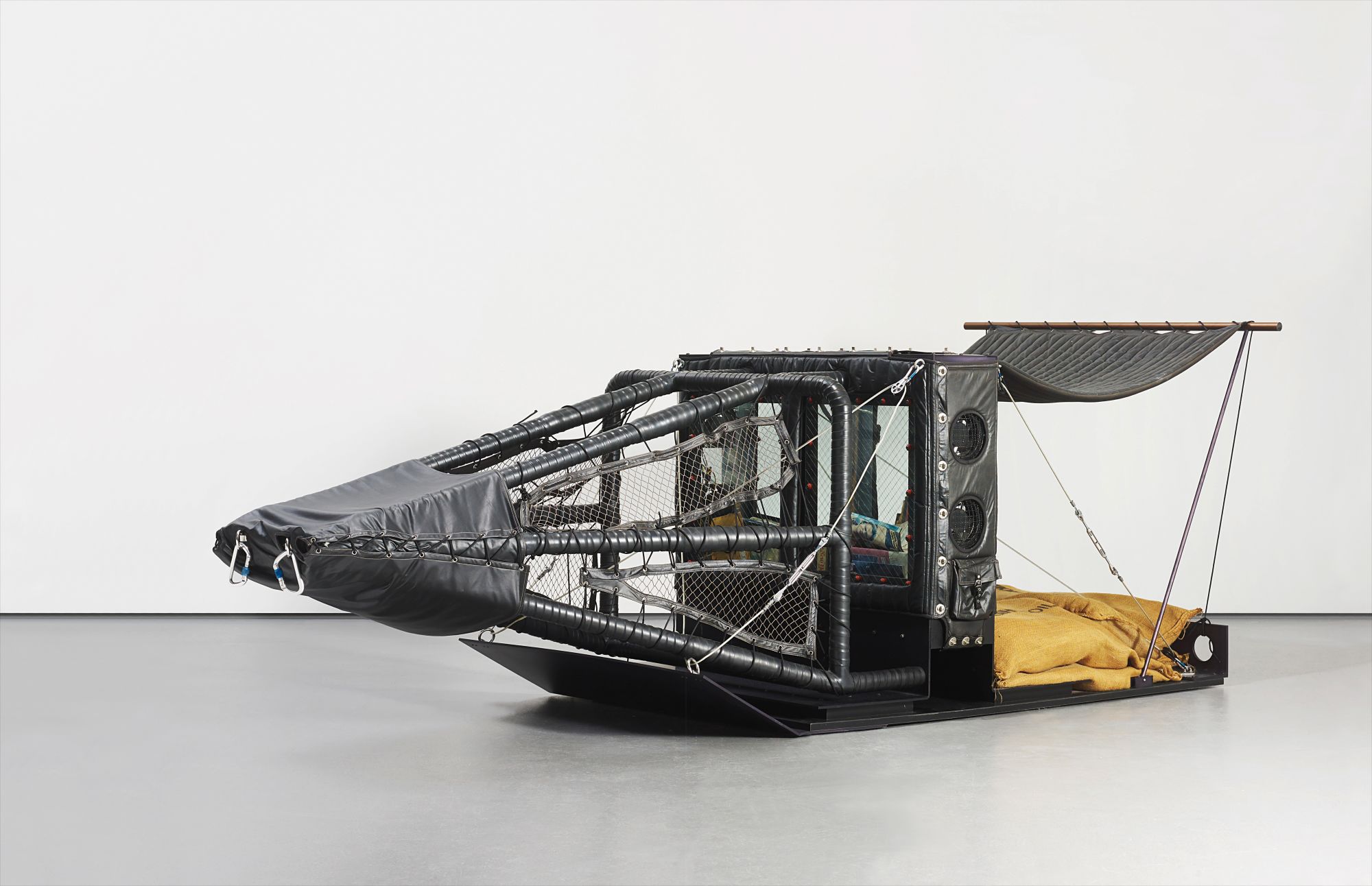
The signature works from his Balinese period reward close attention precisely because they are so layered. Green Painting with Boats from 2002, incorporating acrylic, photo collage, coconuts, metal, and bone on panel, exemplifies his method of treating the picture surface as a kind of archaeology. Materials arrive from different worlds and different economies of meaning, pressed together until they generate something genuinely new. The Seascape works, including the remarkable Seascape: Floating Costume to Drift for Eternity II, in which an actual cowboy suit is encased in glass, aluminum, wood, fibreglass, and enamel, extend this logic into three dimensions with a theatrical grandeur that stops viewers in their tracks.
Ashley Bickerton
Anwwlb 2
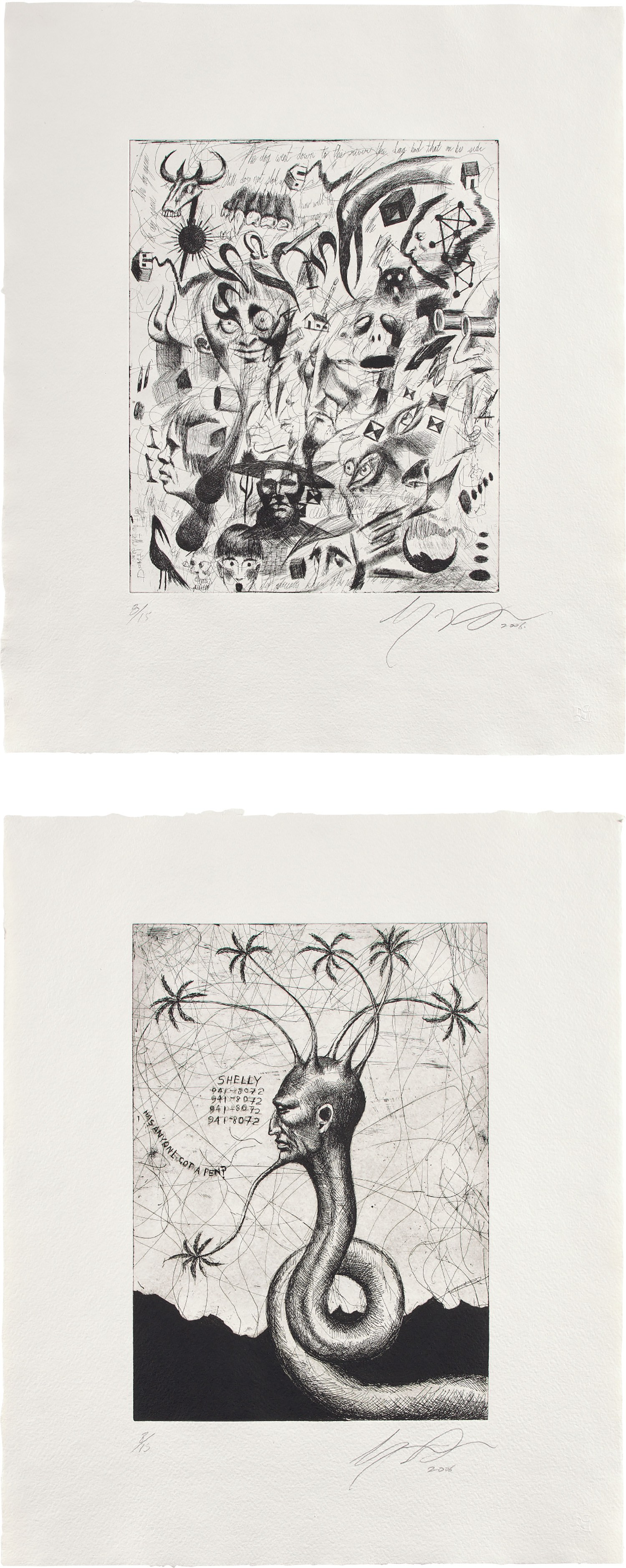
These are not comfortable objects, but they are impossible to forget. For collectors, Bickerton represents an unusually compelling proposition. His prices at auction have strengthened steadily since his death, reflecting both the quality of the work and the growing critical reassessment of Neo Geo as a movement whose insights were perhaps underappreciated during the height of the market enthusiasm that greeted it in the 1980s. His collaborations with institutions such as the Singapore Tyler Print Institute, which co published editions with Lehmann Maupin, produced works that remain beautifully accessible entry points into his practice.
Collectors who focus on his Balinese paintings are acquiring objects that sit at the intersection of several significant art historical conversations: postcolonialism, the critique of globalisation, the legacy of Paul Gauguin reexamined through a knowing, self aware contemporary lens. Bickerton belongs in the company of artists who used irony not as a shield but as a scalpel. His closest affinities are with the other Neo Geo figures, particularly Koons and Halley, but also with artists like Mike Kelley and Raymond Pettibon, who shared his appetite for subcultural reference and his refusal to treat high and low culture as separate territories. His Balinese work invites comparison with painters like Martin Kippenberger, who similarly pursued a kind of restless, internationally nomadic practice that drew energy from displacement and refused the comfort of a settled artistic identity.
Like all of these artists, Bickerton was fundamentally a thinker who happened to work in paint and fiberglass and coconut and bone. The legacy of Ashley Bickerton is still being written, and that feels right for an artist who never stood still long enough to be fully categorised. His work asks us to examine the stories we tell about paradise and corruption, about authenticity and performance, about what it means to be a Western artist living and working in a non Western culture. These are questions that grow more urgent rather than less as time passes.
The collectors and institutions who championed him during his lifetime understood something essential: Bickerton was one of those rare artists whose best work contains more than he put in, returning different meanings as the world around it changes. That is the definition of work that lasts.
Featured Works
Explore books about Ashley Bickerton