Arnulf Rainer
Arnulf Rainer: The Master of Beautiful Destruction
Artist Spotlight · The Collection Editorial
“I paint over things to get closer to them.”
Arnulf Rainer
In the permanent collection galleries of the Museum of Modern Art in Vienna, the Albertina, and the Stedelijk Museum Amsterdam, a curious thing happens to visitors who encounter the work of Arnulf Rainer for the first time. They lean in. The instinct is almost involuntary, a physical response to surfaces that seem to hold secrets beneath their dark, furious veils of paint. The Austrian master, born in Baden bei Wien in 1929, has spent more than seven decades constructing one of the most philosophically rich and visually arresting bodies of work in postwar European art.
Arnulf Rainer
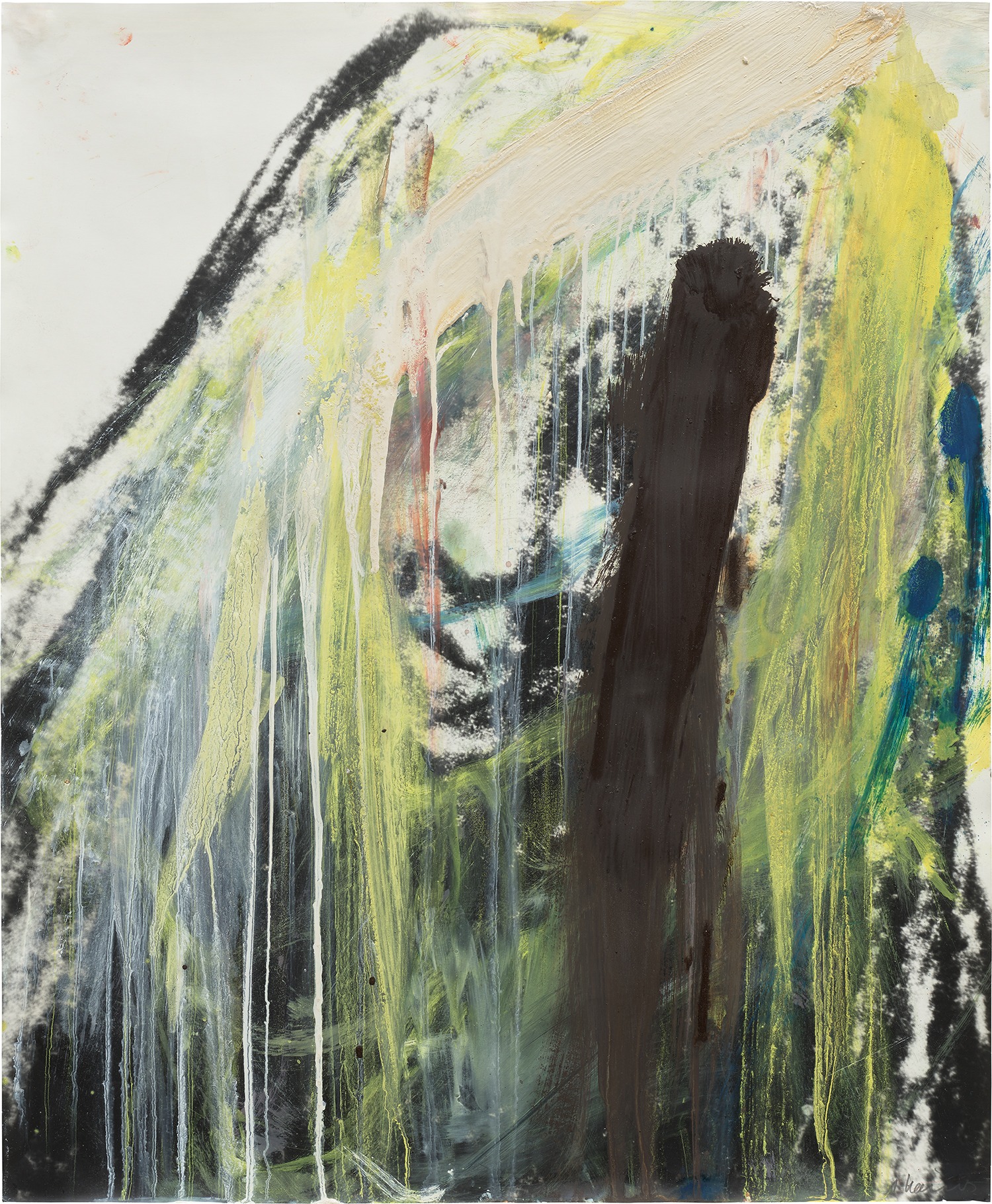
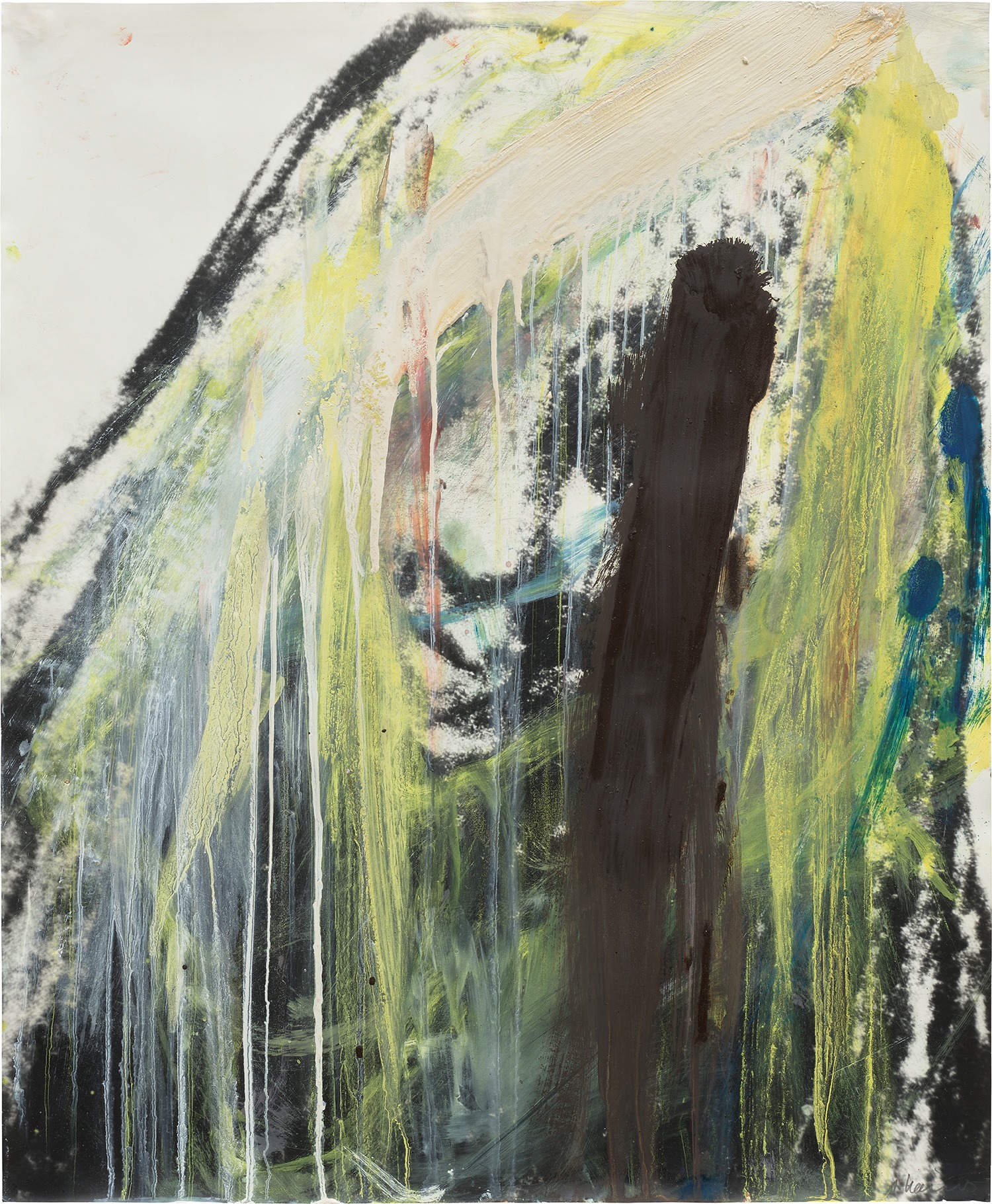
Goya, 1983
His presence in major institutional collections across the globe, from the Guggenheim to the Centre Pompidou, affirms what a growing number of collectors have understood for years: Rainer is essential. Rainer grew up in a Austria still navigating the turbulent currents of the mid twentieth century, and the weight of that cultural inheritance pressed itself into his sensibility early. He briefly attended the Vienna Academy of Fine Arts in 1950 but famously departed after just three days, an act of refusal that announced something fundamental about his temperament. He was drawn instead to the Viennese avant garde circles that were forming around him, finding kinship with artists who believed that art had to be wrestled from the body, from the unconscious, from the unacceptable.
He encountered Surrealism with genuine curiosity, experimented with automatic drawing, and developed an early fascination with states of trance and altered consciousness that would echo through his practice for decades. These were not merely stylistic influences but genuine investigations into what it means to make marks without the interference of rational control. The breakthrough that would define Rainer internationally arrived through his development of overpainting, a practice that is deceptively simple to describe and endlessly complex to experience. Beginning in the 1950s and accelerating dramatically through the 1960s and 1970s, Rainer began applying dense, gestural layers of paint and oilstick directly onto existing images, including photographs, reproductions of Old Master paintings, and his own earlier work.
Arnulf Rainer
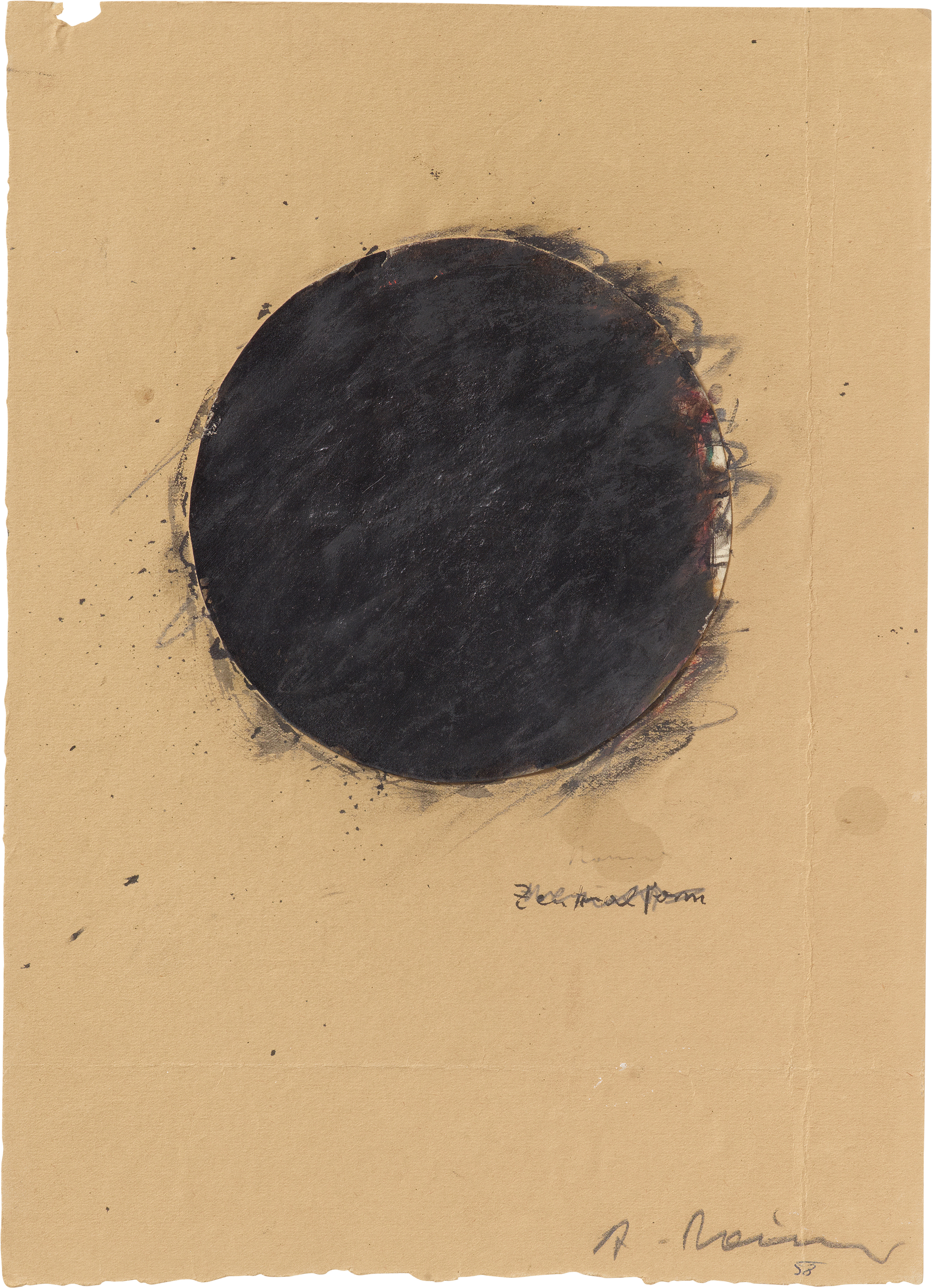
Zentralform (Central Form)
The result is a dialogue between what is visible and what is concealed, between the original image struggling to breathe beneath and the urgent, almost violent marks pressed upon it. This was not vandalism in any easy sense. It was transformation, a re authoring that proposed new meanings while acknowledging the ghostly persistence of the original. His series of overpainted self portraits and his extraordinary engagements with the work of Francisco Goya stand as landmarks in this approach.
Among the works that best illuminate Rainer's range and ambition, his 1983 piece "Goya" holds a particular place. Oil applied to a photographic reproduction of a Goya painting, it places Rainer in direct conversation with one of history's great painters of darkness and human suffering. The gesture is bold but never arrogant. Rainer does not erase Goya but enters into him, adding a layer of contemporary anguish to a canvas of historical grief.
Arnulf Rainer
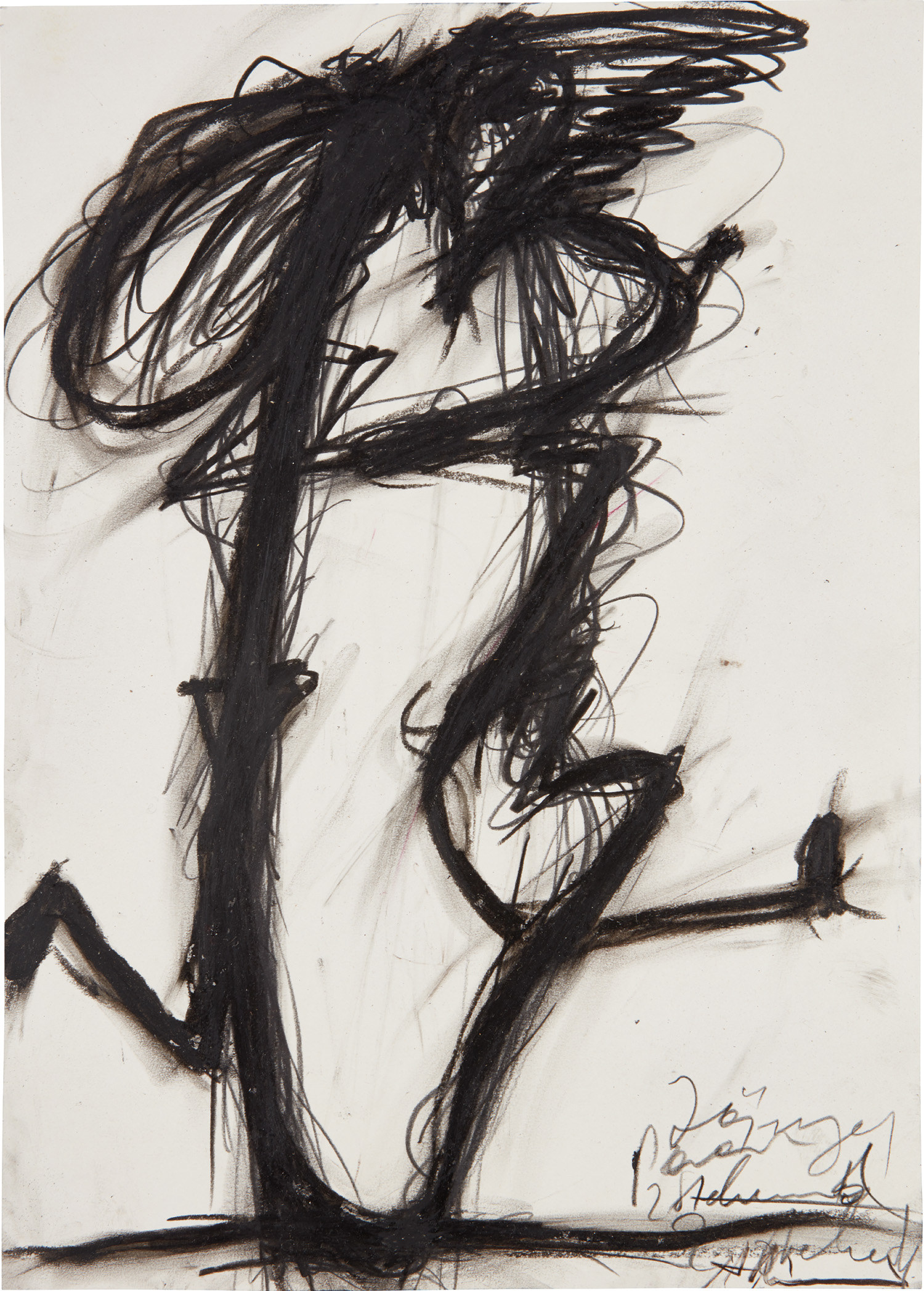
Taenzer Paar, 1967
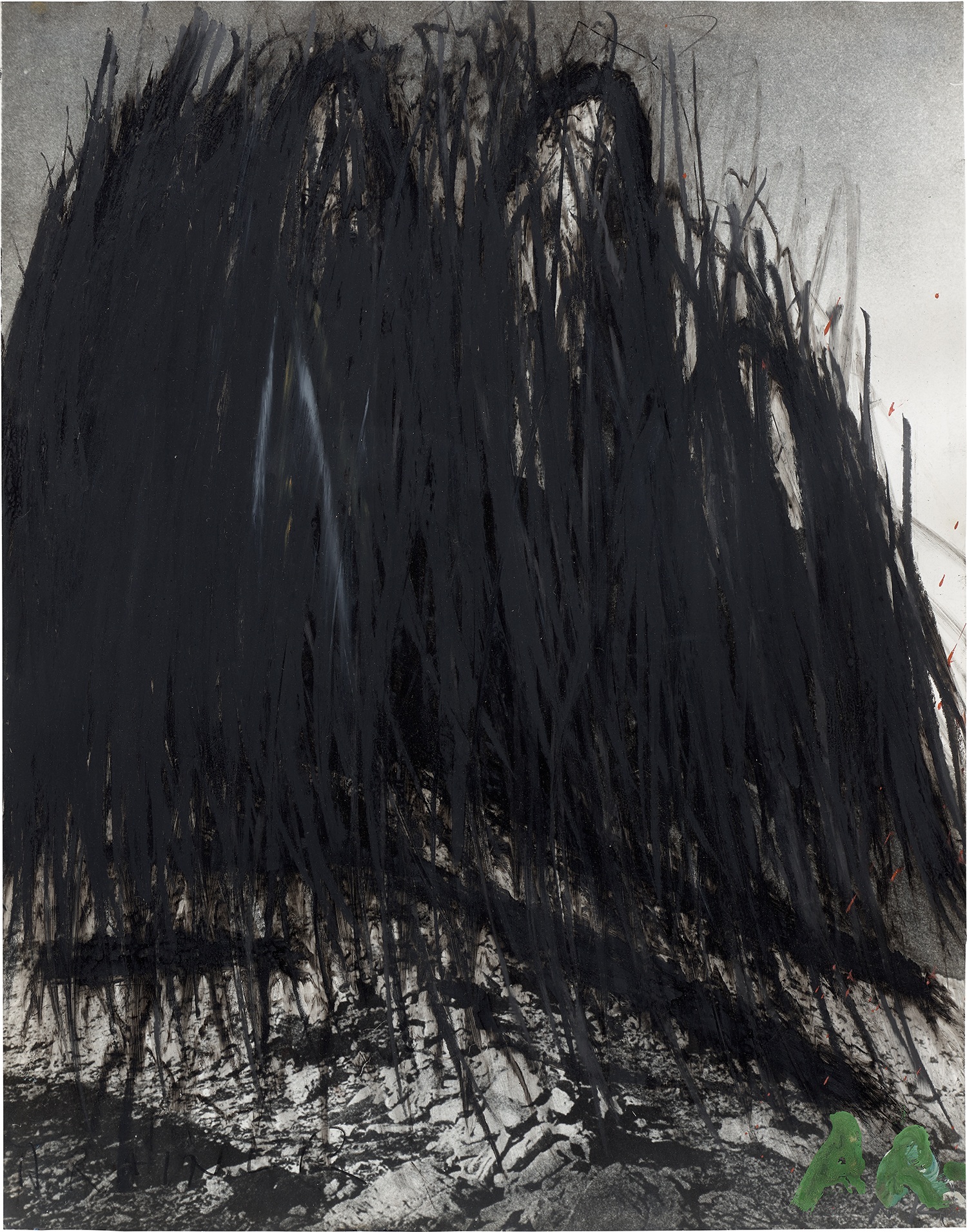
Similarly, his 1974 work "Turm," made with oilstick on photograph, demonstrates his ability to reduce an image to its essential tension, a tower form barely surviving beneath atmospheric strokes that seem to describe the pressure of time itself. "Mountains" from 1975, oil and oilstick on photograph, achieves something almost meditative, the landscape receding and reemerging like a memory being recovered. These works do not merely document a technique. They embody a philosophy about the relationship between making and unmaking.
Rainer's series exploring death masks and body poses brought a visceral dimension to his investigation of identity and mortality. His overpainted death masks, works in which he applied gestural marks to photographs or casts of the faces of the deceased, confront the viewer with the fact of physical endings while simultaneously insisting on the presence of the artist's living hand. There is tenderness in these works as much as there is confrontation. His face farce photographs, in which he documented his own extreme facial expressions and then overpainted them, belong to a tradition of body art and performance documentation that connects him to contemporaries including Viennese Actionist artists like Hermann Nitsch and Günter Brus, though Rainer's approach carries a more introspective, almost tragicomic quality.
Arnulf Rainer
Mountains, 1975
He represented Austria at the Venice Biennale on multiple occasions, each appearance reinforcing his standing as one of the defining voices of postwar European artistic culture. For collectors approaching Rainer's work on the secondary market, the range of entry points is genuinely exciting. His prints and works on paper, including etchings such as "Selbst mit Rost (Even with Rust)" on Rives BFK paper, offer access to his visual language with all the intimacy of his mark making fully present. Works on paper and Ultraphan sheet pieces such as "Jagd" from 1970, charcoal on Ultraphan taped to paper, reveal the experimental materialism at the heart of his practice, his willingness to treat support as a variable rather than a given.
Mixed media works such as "Zentralform (Central Form)" demonstrate his engagement with collage as a conceptual tool, layering sources and surfaces in ways that resist easy resolution. Collectors who are drawn to artists working at the intersection of photography and painting, or those with an interest in the Vienna avant garde, consistently find that Rainer repays sustained attention. His work holds its authority across scale and medium. Rainer's position within art history is usefully understood in relation to a network of artists who shared his fascination with the archive, the found image, and the act of transformation.
His overpainting practice anticipates and resonates with the work of artists like Christian Boltanski, whose use of photography as a site of mourning and memory carries related concerns. His gestural intensity connects him to the broader lineage of Art Informel and Abstract Expressionism, while his conceptual rigor places him comfortably alongside the European conceptualists of the 1960s and 1970s. He is, in this sense, an artist who cannot be tidily filed. His work insists on occupying multiple positions simultaneously, which is precisely why it has retained its energy across so many decades and continues to attract serious scholarly and collecting attention.
The enduring power of Arnulf Rainer's practice lies in its refusal to offer comfort without first demanding engagement. He built a body of work that takes the image, one of the most fundamental units of human meaning making, and asks what happens when another consciousness is pressed directly upon it. The answer, across thousands of works spanning more than seven decades, is that new life emerges. Destruction and creation turn out to be faces of the same gesture.
For collectors and institutions who have the privilege of living with these works, that revelation renews itself every time the light falls differently across a surface, and another layer of meaning rises quietly to the eye.
Explore books about Arnulf Rainer

Arnulf Rainer: Übermalungen und Zeichnungen
Peter Baum
Arnulf Rainer
Dieter Ashton
Arnulf Rainer: Faces and Skulls
Various curators
Arnulf Rainer: Works on Paper
Museum curators
Arnulf Rainer
Katharina Fritsch and others

Arnulf Rainer: In Search of Expression
Gail Day
Arnulf Rainer: Works and Documents
Galerie Thaddaeus Ropac