Arnold Newman
Arnold Newman: The Art of Revealing Souls
Artist Spotlight · The Collection Editorial
“We don't take a picture with a camera. We take it with our heart, our minds, and our knowledge of what is around us.”
Arnold Newman
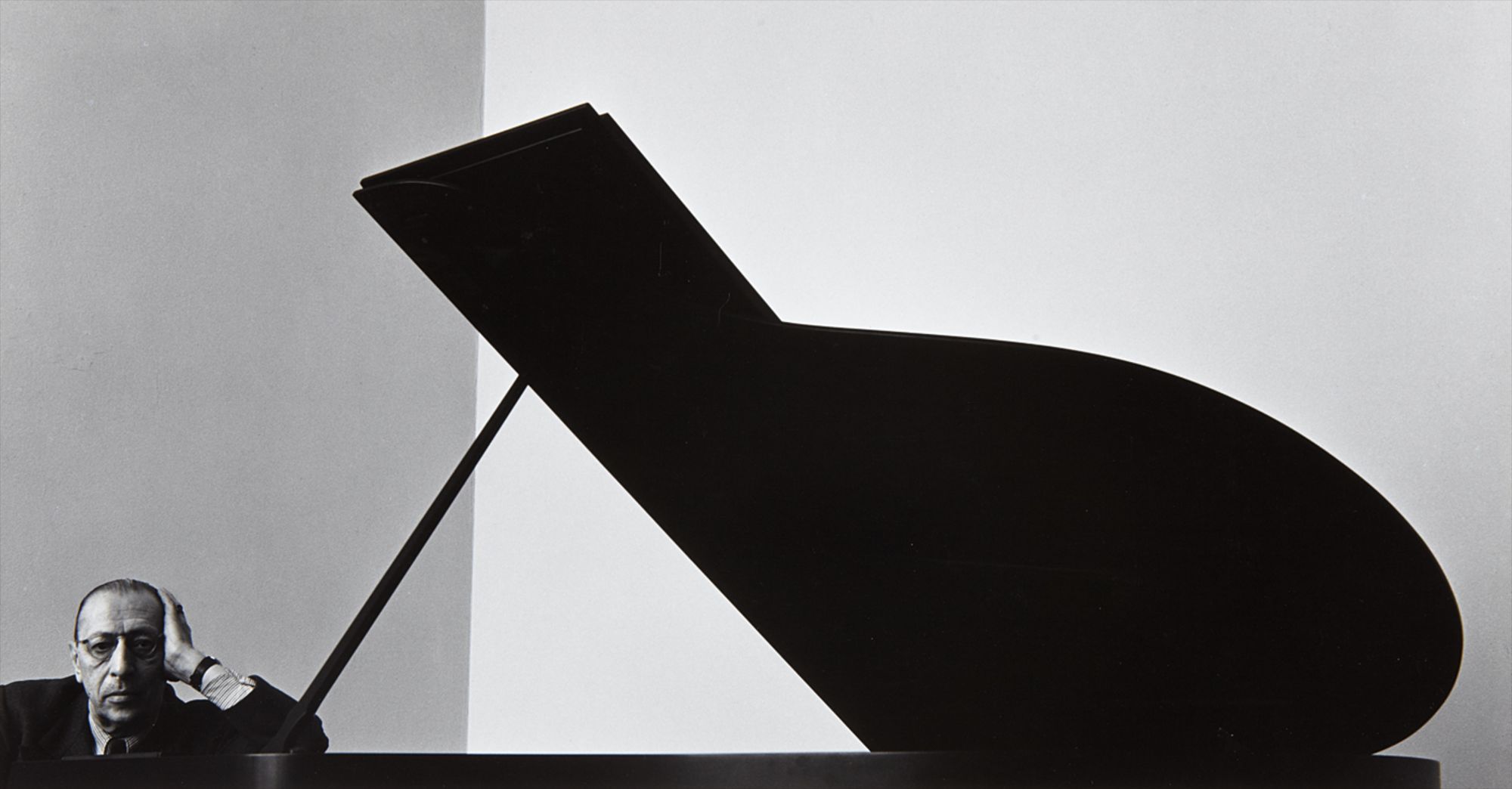
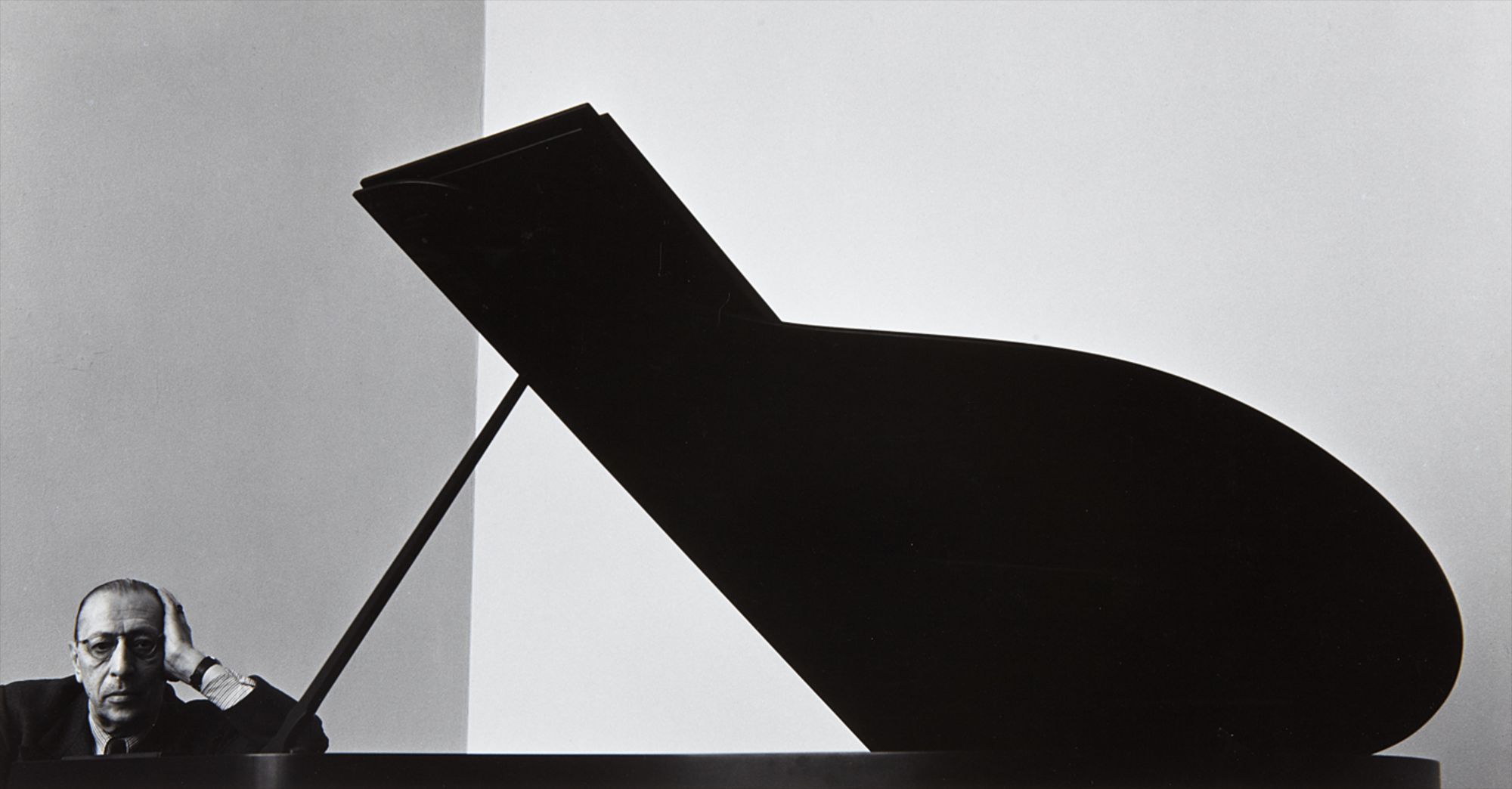
There is a photograph that stops you cold every time you encounter it. Made in 1946, it shows Igor Stravinsky seated at a grand piano, his small figure tucked into the lower right corner of the frame while the vast, curved lid of the instrument sweeps dramatically across the upper two thirds of the composition. The piano is not furniture here. It is architecture, metaphor, and biography all at once.
Arnold Newman
Igor Stravinsky
This single image, among the most reproduced and studied photographs of the twentieth century, tells you everything you need to know about Arnold Newman and why, nearly two decades after his death in 2006, his work continues to command serious attention from institutions, scholars, and discerning collectors alike. Newman was born in New York City in 1918 and grew up in Atlantic City and Miami Beach, environments that gave him an early and instinctive sense of light, space, and the way human beings inhabit their surroundings. Financial hardship cut short his studies at the University of Miami after just two years, and he found work in portrait studios in Philadelphia and then Baltimore during the early 1940s. It was a practical education in the mechanics of photography, but Newman was already restless with the conventions of studio portraiture, its staginess and its fundamental dishonesty about how people actually exist in the world.
He began making photographs of artists and workers in their own spaces, and what he discovered there would become the animating principle of his entire career. By the mid 1940s Newman had settled in New York and was beginning to attract serious notice. His approach, which he developed with genuine intellectual rigor, came to be known as environmental portraiture. The idea was deceptively simple: bring the camera to the subject rather than bringing the subject to the camera, and then use the objects, spaces, tools, and textures of that person's life as compositional elements that speak to who they are.
Arnold Newman
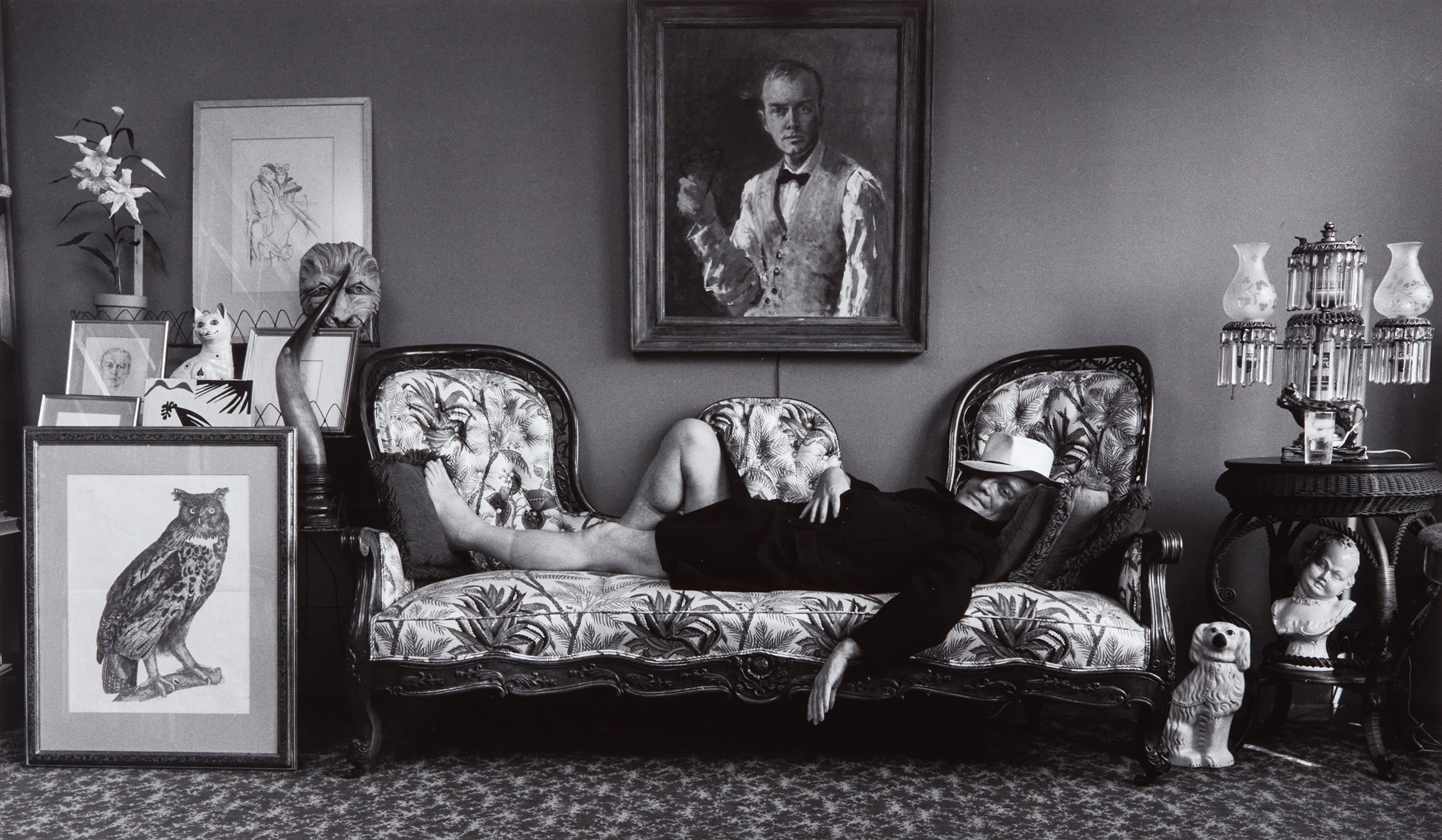
Truman Capote, New York City
In practice this demanded extraordinary skill. Newman was a masterful formalist, deeply influenced by the avant garde painting and sculpture he encountered through friendships with artists like Piet Mondrian, whom he photographed in 1942. His compositions are bold, asymmetrical, and rigorously considered, drawing on the visual language of modernism even as they document real people in real places. The range of subjects Newman photographed over his career is staggering in both its breadth and its depth.
“I didn't just want to make a picture of what someone looked like. I wanted to photograph what they were.”
Arnold Newman
He made portraits of Pablo Picasso at Vallauris in France, capturing the artist's volcanic intelligence with characteristic economy of means. He photographed Georgia O'Keeffe alongside Alfred Stieglitz at An American Place, a meeting of two legends rendered with quiet reverence. His portrait of Truman Capote in New York City is a study in theatrical self possession, the writer coiled into a chair with an almost feline alertness. Marc Chagall, Max Ernst, and Dan Flavin all sat for Newman, each portrait a distinct investigation into how an artist's environment reflects and extends their inner life.
Arnold Newman
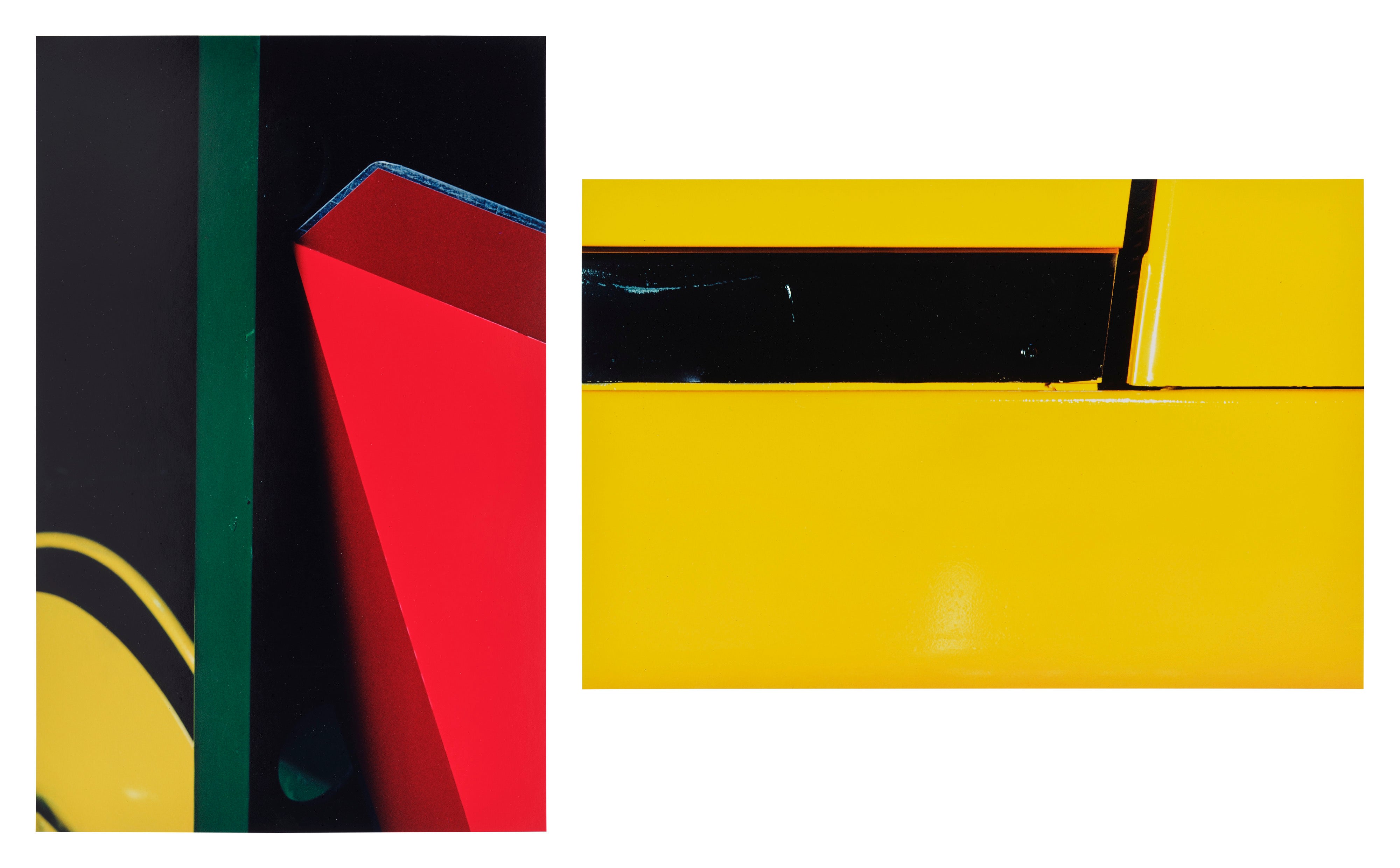
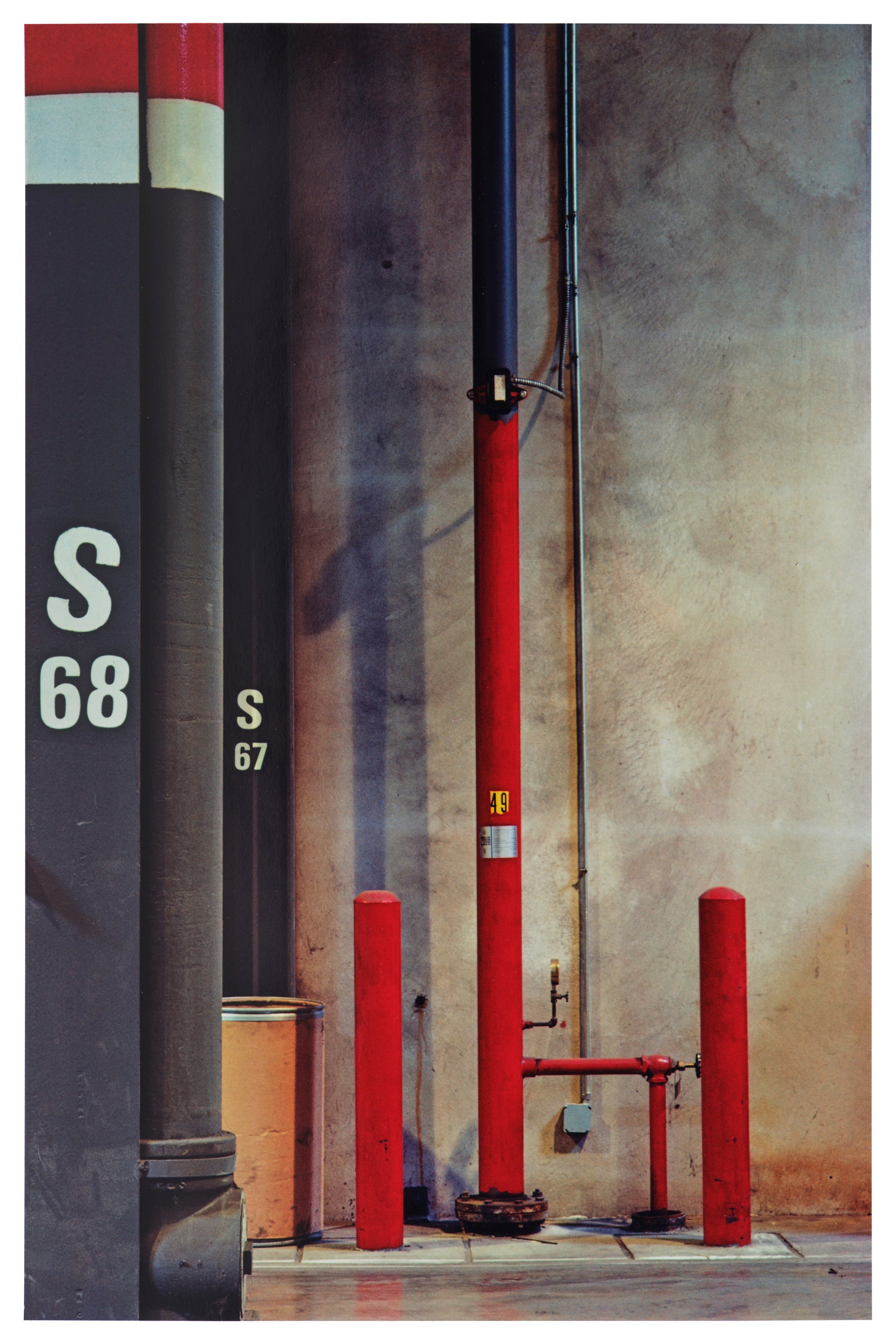
Selected Images, John Deere and Company, Davenport, Iowa
His 1971 portrait of Alfried Krupp, the German industrialist, remains one of the most chilling and deliberately unsettling images in the history of portraiture, a reminder that Newman's psychological acuity was never merely flattering. Newman worked in both gelatin silver and, from the 1970s onward, dye transfer color printing, and collectors rightly prize works in both processes. The gelatin silver prints, many printed later from original negatives, carry the cool, authoritative tonality that defined mid century photographic practice at its highest level. The dye transfer prints, rich and luminous, reflect Newman's engagement with color as an expressive tool in its own right.
A private commission documented in the series connected to John Deere facilities in Davenport, Iowa, produced some of his most ambitious color work, treating industrial landscape with the same compositional intelligence he brought to his portraits of cultural figures. Works such as the Dan Flavin portrait from the Kornblee Gallery in New York demonstrate how Newman's color sensibility deepened in dialogue with the art of his time, Flavin's fluorescent light becoming an active element in the compositional field rather than mere backdrop. On the collecting market, Newman's prints have long been regarded as foundational holdings for anyone serious about the history of photography. Major auction houses have handled significant examples of his work with consistent results, and museum collections including the Museum of Modern Art in New York, the National Portrait Gallery in Washington, and the Art Institute of Chicago hold important holdings.
Arnold Newman
Arnold Newman
Collectors are drawn not only to the iconic images of Stravinsky or Picasso, which represent the absolute apex of his achievement, but also to the quieter and less frequently seen portraits that reward extended looking. When considering a Newman acquisition, provenance and print quality are paramount. Later prints authorized by Newman himself carry full artistic legitimacy, and the dye transfer works in particular benefit from careful attention to color stability and condition. To understand Newman properly is to understand him in dialogue with the broader tradition of humanist photography that flourished in mid twentieth century America and Europe.
His friendships and professional relationships connected him to figures like Edward Steichen, who included Newman's work in the landmark 1955 exhibition The Family of Man at the Museum of Modern Art. He was a peer and in many ways a counterpart to photographers such as Yousuf Karsh, though where Karsh favored the controlled drama of the studio, Newman always returned to the revelatory power of context. His work also speaks across time to photographers who came after him, from Annie Leibovitz, who has acknowledged his influence on her own approach to celebrity portraiture, to contemporary practitioners working at the intersection of documentary and fine art photography. Newman's legacy rests not only on the extraordinary archive of images he produced across six decades of active work, but on the conceptual contribution he made to what photography could be.
He argued, through every image he made, that the camera was a tool capable of genuine psychological and philosophical inquiry, that a portrait could be simultaneously a document and a work of art, a likeness and an interpretation. In an era when the boundaries between fine art photography and other media continue to be negotiated and expanded, his example remains essential. To live with a Newman print is to live with a reminder that the best art of any kind reveals what is essential about its subject, and does so with beauty, intelligence, and lasting grace.
Explore books about Arnold Newman
Arnold Newman: A Life
Christina Strassfield
Arnold Newman: Masterpieces of Photography
Arnold Newman
Arnold Newman: 65 Years of Photography
Arnold Newman
Artists: Portraits from Four Decades
Arnold Newman
One Mind's Eye: The Portraits and Other Photographs of Arnold Newman
Arnold Newman