Armando Morales
Armando Morales, Where the Jungle Dreams
Artist Spotlight · The Collection Editorial
There is a moment, standing before an Armando Morales canvas, when the air in the room seems to thicken. The light shifts. Something green and ancient moves at the edge of perception. It is the particular genius of this Nicaraguan master that his paintings do not merely depict the tropical world but seem to emit it, to breathe it outward through layers of oil and beeswax into the galleries of New York, Paris, and London that gave him his international stage.
Armando Morales
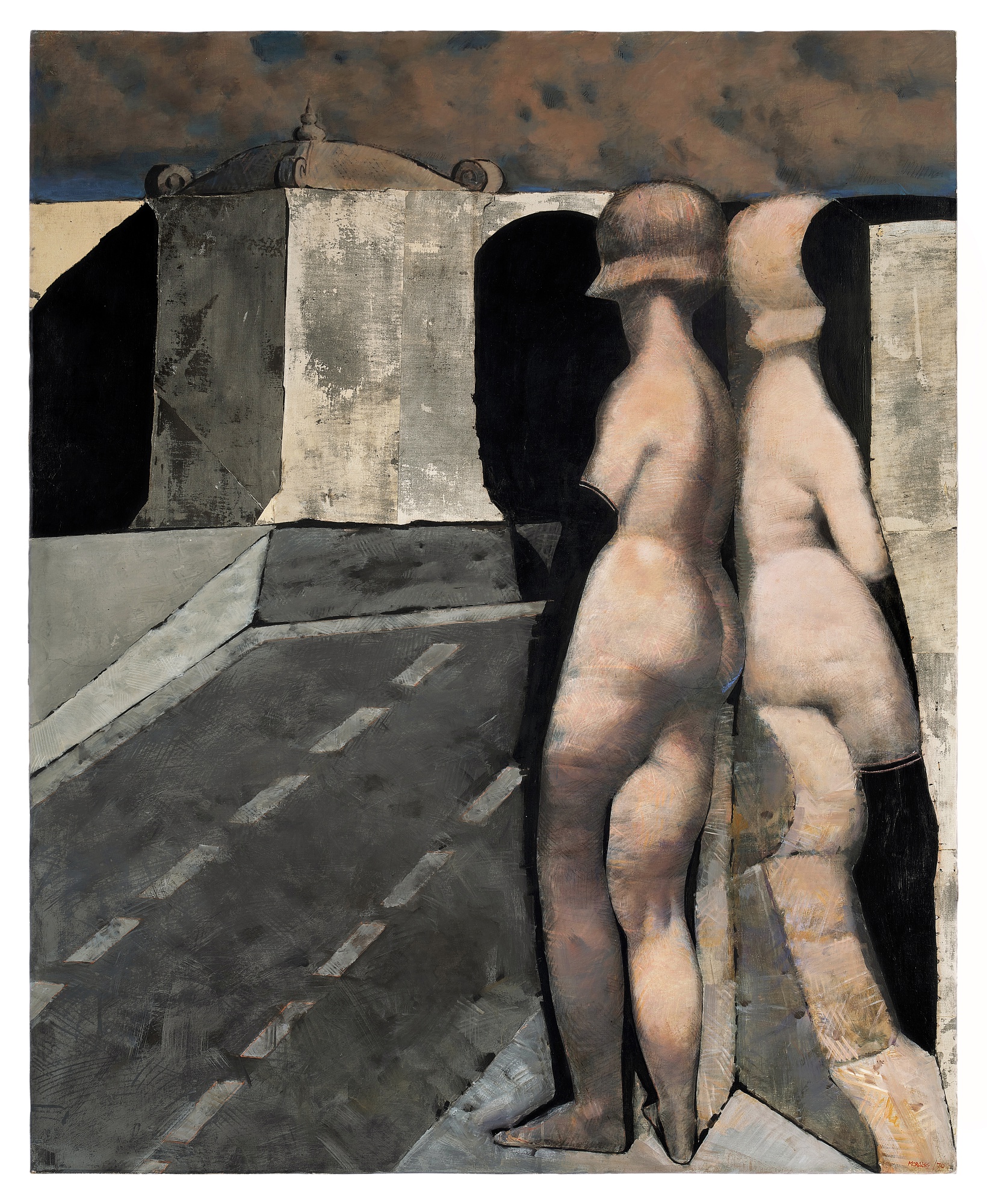
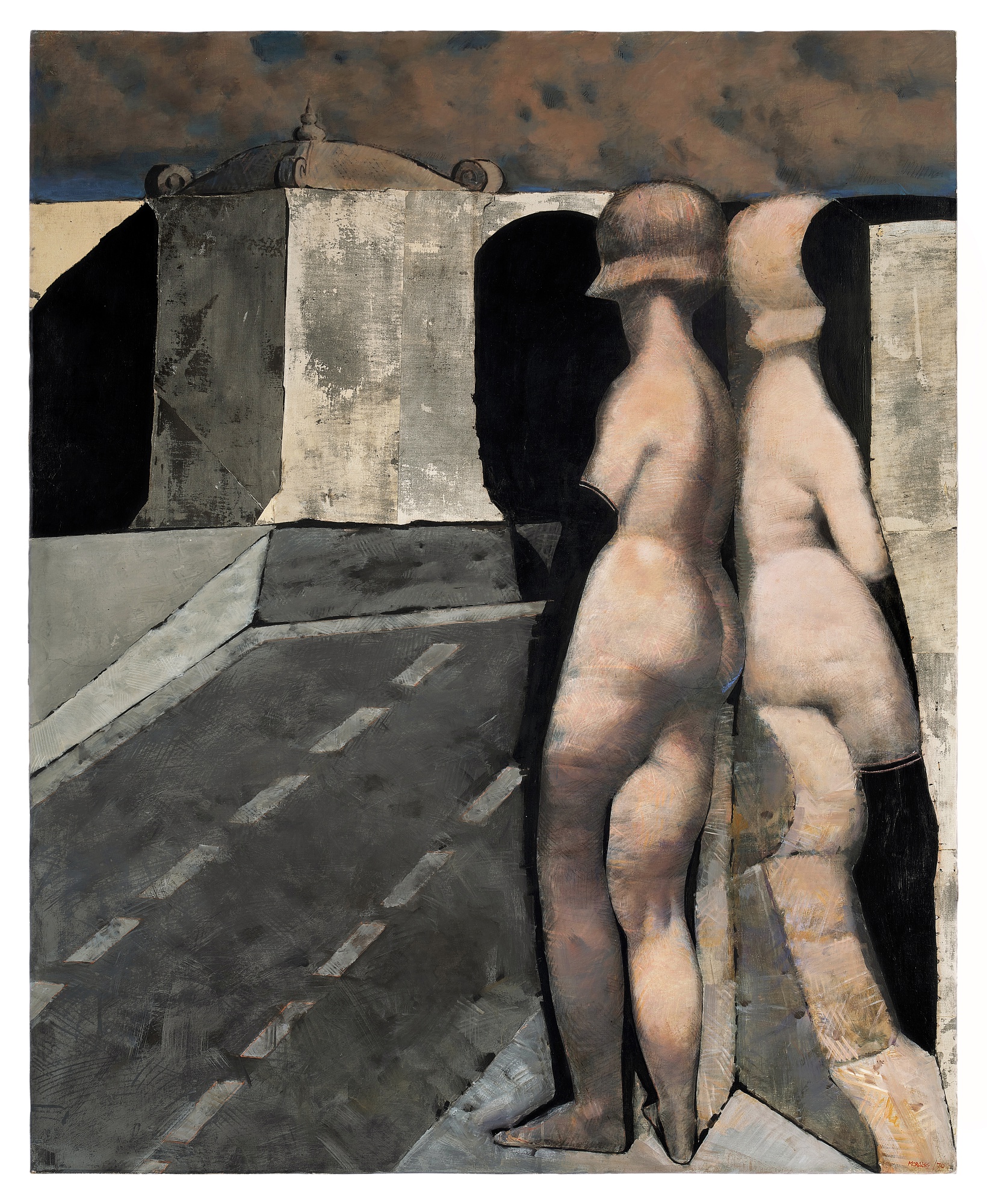
Dos figuras, 1970
Morales spent decades building one of the most quietly authoritative bodies of work in twentieth century Latin American art, and the continued hunger among serious collectors for his canvases confirms that his reputation has only deepened with time. Armando Morales was born in Granada, Nicaragua, in 1927, a city whose colonial architecture, lakeside light, and lush Caribbean proximity would echo through his work for the rest of his life. He trained at the School of Fine Arts in Managua before making the leap to New York in the late 1950s, where he studied at the Pratt Graphic Art Center. That formative period placed him in productive tension with the Abstract Expressionist energy then radiating from New York studios, an influence he absorbed with intelligence rather than submission.
He understood what gestural abstraction was reaching for, but he never abandoned the figure, the landscape, or the humid specificity of his native world. His early career brought rapid recognition. The Pan American Union in Washington and the Guggenheim Foundation both honored him with fellowships, and his work entered major institutional collections while he was still a relatively young artist. He lived and worked across New York, Paris, and London over the following decades, a genuinely international career rooted in a profoundly Nicaraguan sensibility.
Armando Morales
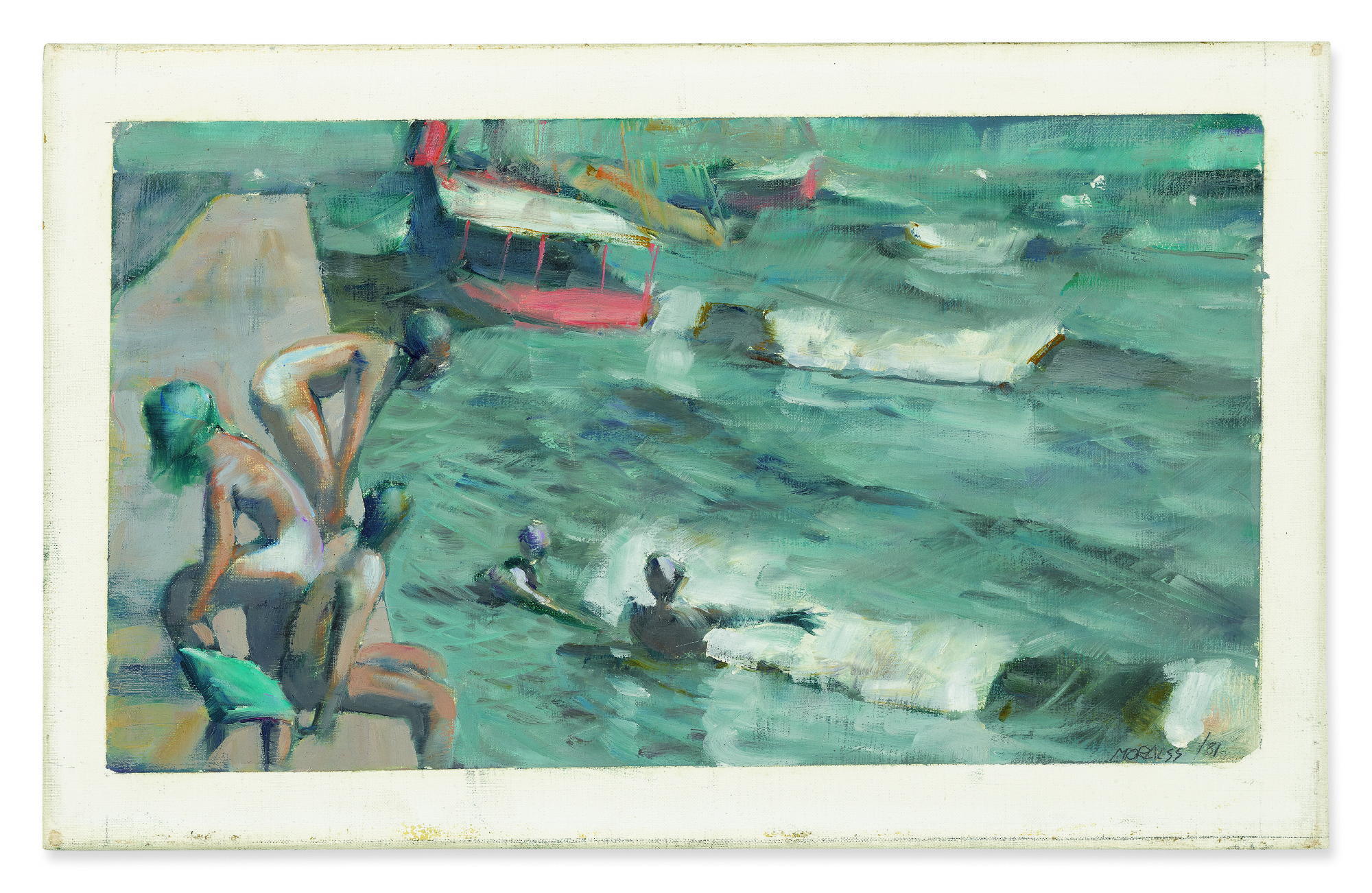
Bañistas En El Puerto De Granada, 1981
Paris in particular suited him. The city's long tradition of painterly sensuousness, its comfort with the nude as a vehicle for serious artistic inquiry, aligned naturally with where his painting was heading. His time there deepened both his technical command and his philosophical commitment to a kind of beauty that was unapologetic and entirely his own. The signature Morales style emerged through the 1970s and reached its fullest expression across the following two decades.
Working in oil, often enriched with beeswax that gave his surfaces a luminous, almost geological depth, he developed a treatment of light that felt simultaneously ancient and utterly personal. His jungle scenes dissolve the boundary between figuration and abstraction. Forms emerge from shadow as if they had always been there and are only now choosing to be seen. His nudes, whether posed singly or gathered in small groups at the water's edge, carry a classical weight without any academic stiffness.
Armando Morales
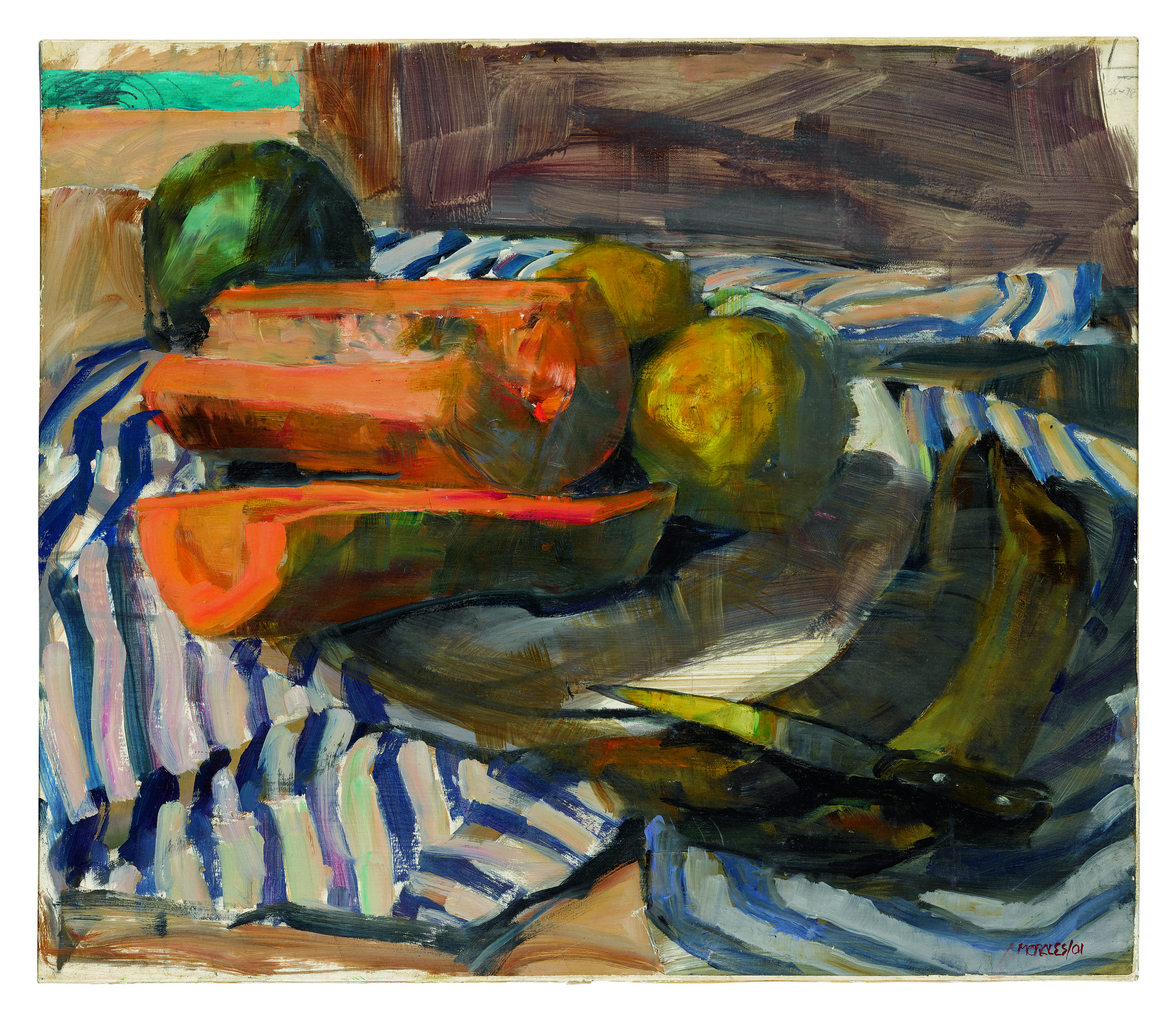
Bodegón Con Papaya, 2001
They are figures who belong entirely to their landscape, as rooted in it as the ceiba trees and still pools that surround them. Among the works available on The Collection, several stand as particularly fine examples of his range and ambition. "Bañistas En El Puerto De Granada" from 1981 is essential Morales: the figures gathered at the waterfront of his birth city, rendered with that characteristic softness of edge that makes them feel remembered rather than observed. "Dos figuras" from 1970, executed in oil, beeswax, and pastel on canvas with canvas collage, reveals an earlier and more formally experimental Morales, testing the boundaries of the picture plane with layered materials.
"Selva tropical (xérophile) II" from 1991 and "Trois Baigneuses" from 1993 show the mature painter at full power, the jungle pressing close, the female figures monumental and serene. "Despedida" from 1977 carries an emotional resonance that lingers long after you have left the room, its title meaning farewell, its atmosphere one of profound and tender stillness. For collectors, Morales occupies a particularly compelling position in the Latin American market. He is an artist who achieved genuine critical recognition in the major Western art capitals during his lifetime, exhibiting with Marlborough Gallery across its New York and London spaces from the 1960s onward, a relationship that positioned him alongside the most significant international painters of his generation.
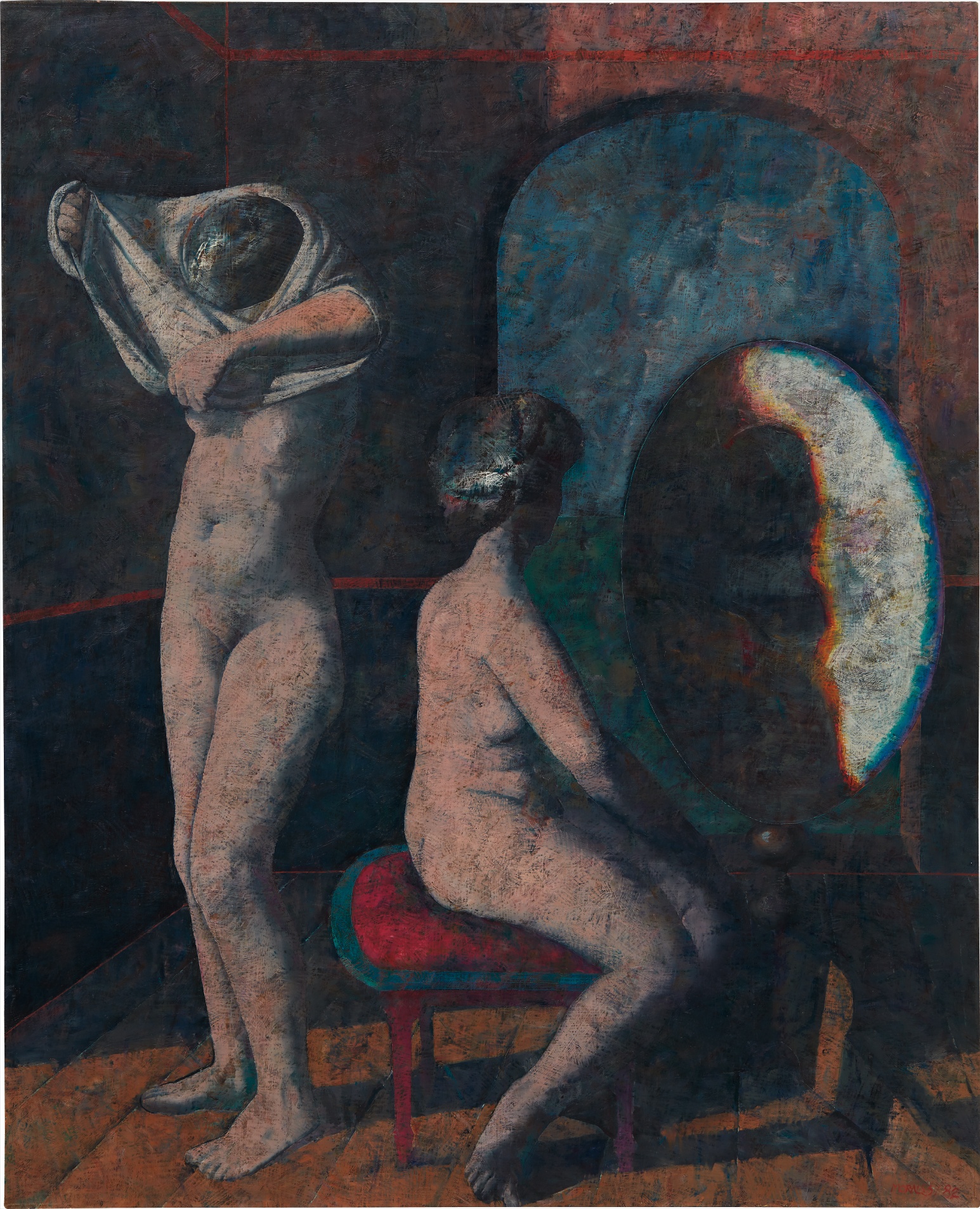
Armando Morales
Dos mujeres frente al espejo, 1982
His auction record reflects sustained institutional and private demand, with major works regularly appearing at Sotheby's and Christie's Latin American sales and attracting competitive bidding from collectors in the United States, Europe, and across Latin America. Works on paper and smaller canvases occasionally offer points of entry, but his large oil and beeswax canvases from the 1970s through the 1990s represent the heart of his achievement and command the strongest long term interest. To place Morales within art history is to understand the particular richness of the Latin American modernist tradition. He belongs to a generation that also includes Fernando Botero, whose monumental figures share a certain formal confidence even as their sensibilities diverge dramatically, and Rufino Tamayo, whose engagement with pre Columbian color and myth parallels Morales's own rooting of modernist form in indigenous American experience.
The surrealist currents that shaped so much mid century Latin American painting are present in Morales too, though filtered through a temperament that was fundamentally lyrical rather than unsettling. His closest spiritual kin might be found in the tradition of the painterly nude from Titian through Ingres and into the twentieth century, a tradition he honored and extended with genuine originality. Armando Morales died in Paris in 2011, leaving a body of work that has grown more rather than less significant in the years since. As the international art world has broadened its canonical understanding of the twentieth century, making room for voices and visions long marginalized by a Eurocentric critical framework, Morales stands as proof that the most enduring modern painting could emerge from Granada, Nicaragua, and speak to something universal.
His canvases ask us to slow down, to let our eyes adjust to the layered dark, to trust that beauty of this density and this seriousness is not an evasion of the world but a way of seeing it whole. For collectors who understand that a great painting is also a kind of companionship, Armando Morales offers something rare and genuinely irreplaceable.
Explore books about Armando Morales
Armando Morales: A Retrospective
Edward J. Sullivan
Armando Morales: Paintings and Drawings 1953-1986
Museo de Arte de América Latina
Armando Morales: obra gráfica completa
Fundación Joan Miró
Armando Morales
Jacqueline Barnitz
Armando Morales: A Survey 1953-2000
Museum of Modern Art