Ariana Papademetropoulos
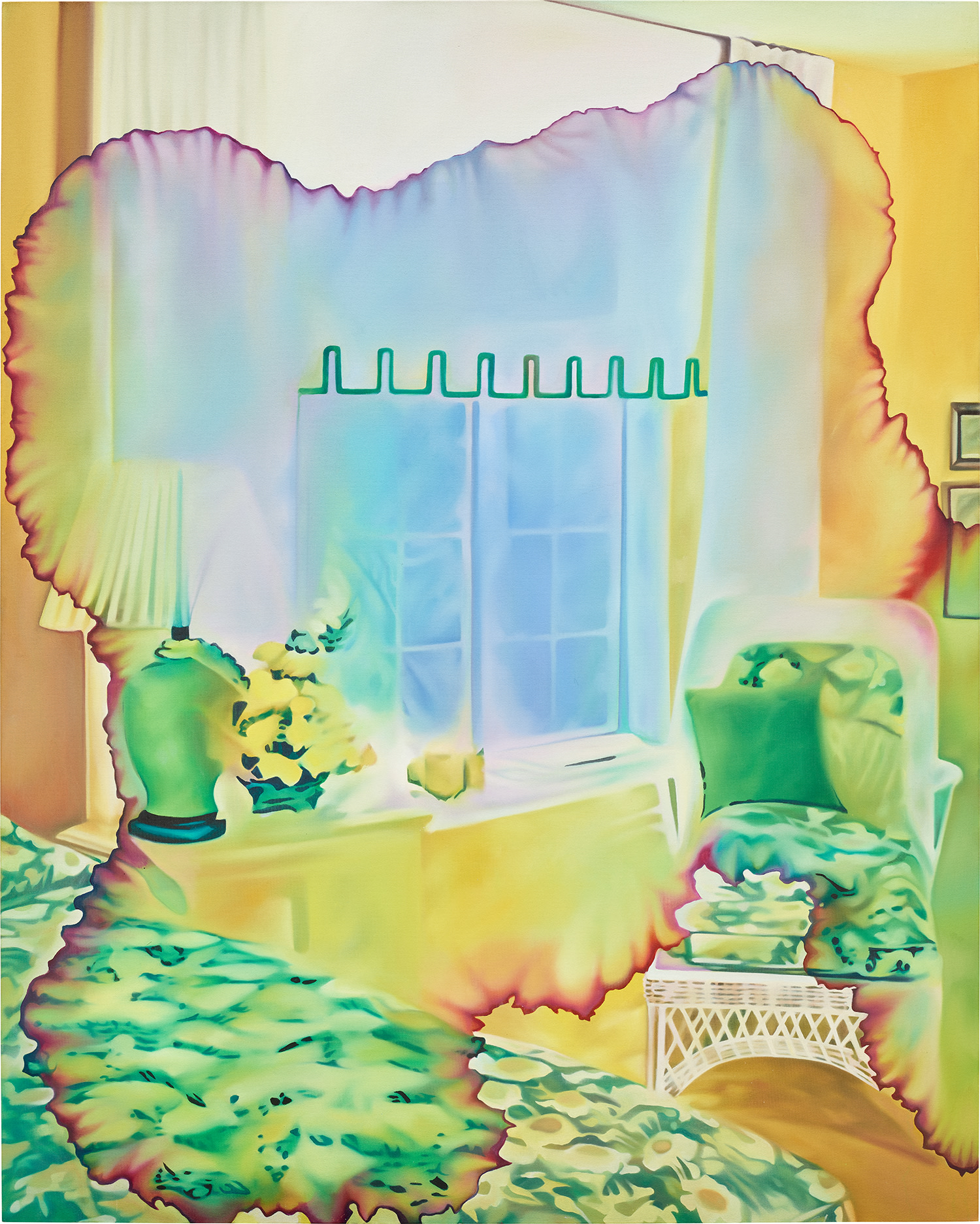
Ariana Papademetropoulos Opens Every Enchanted Door
Artist Spotlight · The Collection Editorial
Something quietly extraordinary has been unfolding in Los Angeles over the past several years, and the art world has taken notice. Ariana Papademetropoulos, the painter whose canvases feel like portals into a dimension just beyond conscious reach, has emerged as one of the most genuinely thrilling voices in contemporary American painting. Her recent solo presentations at Sprüth Magers and her continued relationship with the gallery have cemented her standing not as a curiosity of the moment but as an artist with serious staying power, one whose work rewards both immediate rapture and slow, considered looking. Papademetropoulos was born in 1990 and raised in Los Angeles, a city whose particular brand of dreaming, its sunbaked mythology, its collision of glamour and spiritual searching, runs through her work like an underground current.
Ariana Papademetropoulos
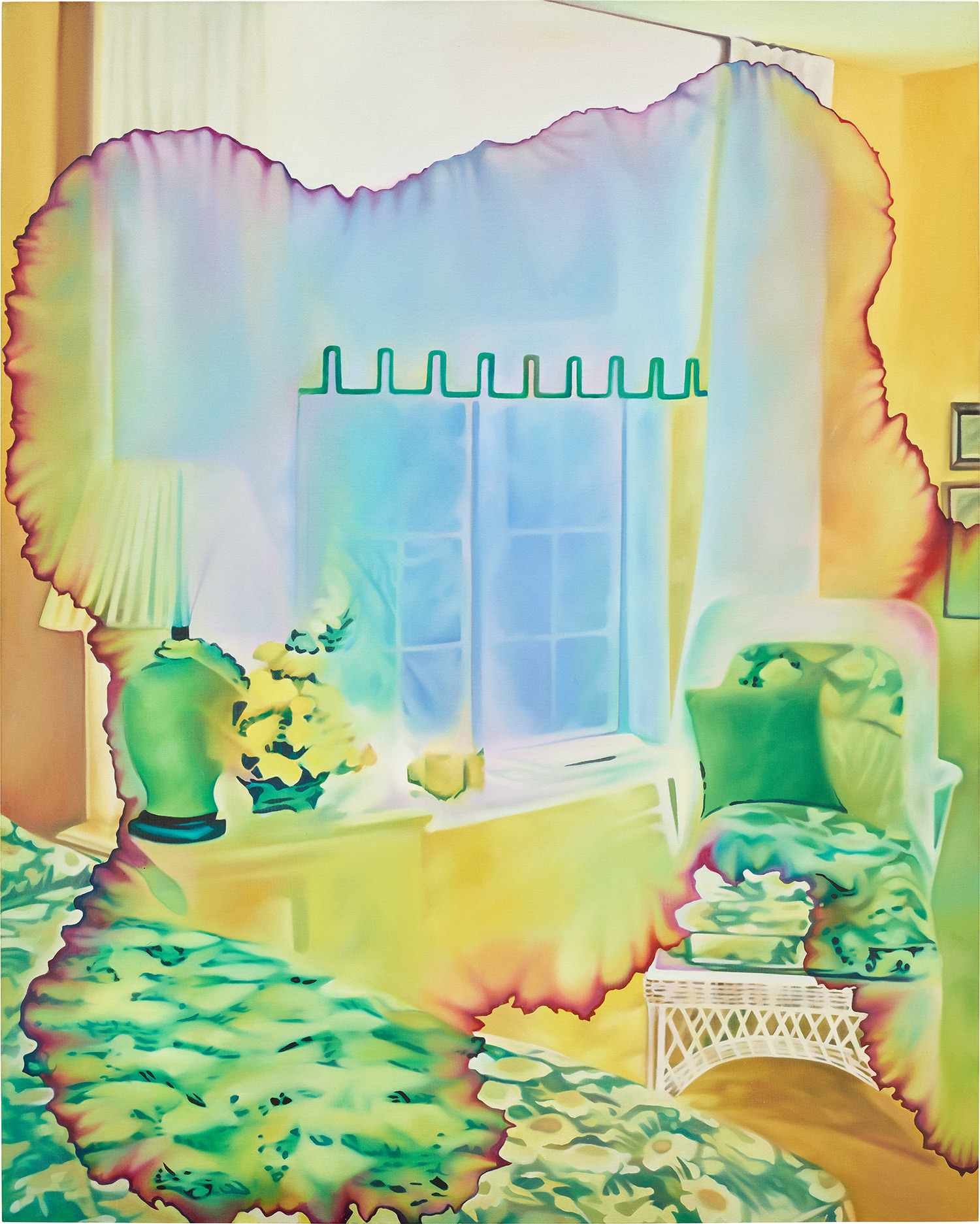
Glass Slipper, 2018
Growing up in Southern California meant growing up inside a place that has always projected fantasies outward, and Papademetropoulos absorbed that cultural atmosphere with the sensitivity of someone who understood, even early on, that she would eventually need to paint her way through it. The Los Angeles of her formation was also a place of genuine counterculture memory, still alive with the residue of the 1960s and 1970s, and that psychedelic inheritance shaped her visual language profoundly. Her formal education took her to the University of California, Los Angeles, where she developed the technical discipline that would later allow her richly detailed surfaces to support the full weight of her ambitions. But education in the traditional sense only partly explains her formation.
Papademetropoulos is a voracious visual thinker, and her real schooling happened in the studio and in the archive, across art history books and old cinema, through the decorative traditions of Art Nouveau and the ornamental intensity of Symbolism, through the feminine mysticism embedded in so much overlooked work from the late nineteenth and early twentieth centuries. She synthesized these influences not by borrowing images but by internalizing a sensibility, a feeling for how art can make the viewer feel suspended between worlds. The development of her practice has been marked by a growing confidence in the strangeness she brings to every canvas. Her early work already announced the key terms of her vision, the interest in liminal space, in doorways and thresholds, in women who seem to exist in a moment just before or just after something momentous, in interiors that fold in on themselves like memory.
Ariana Papademetropoulos
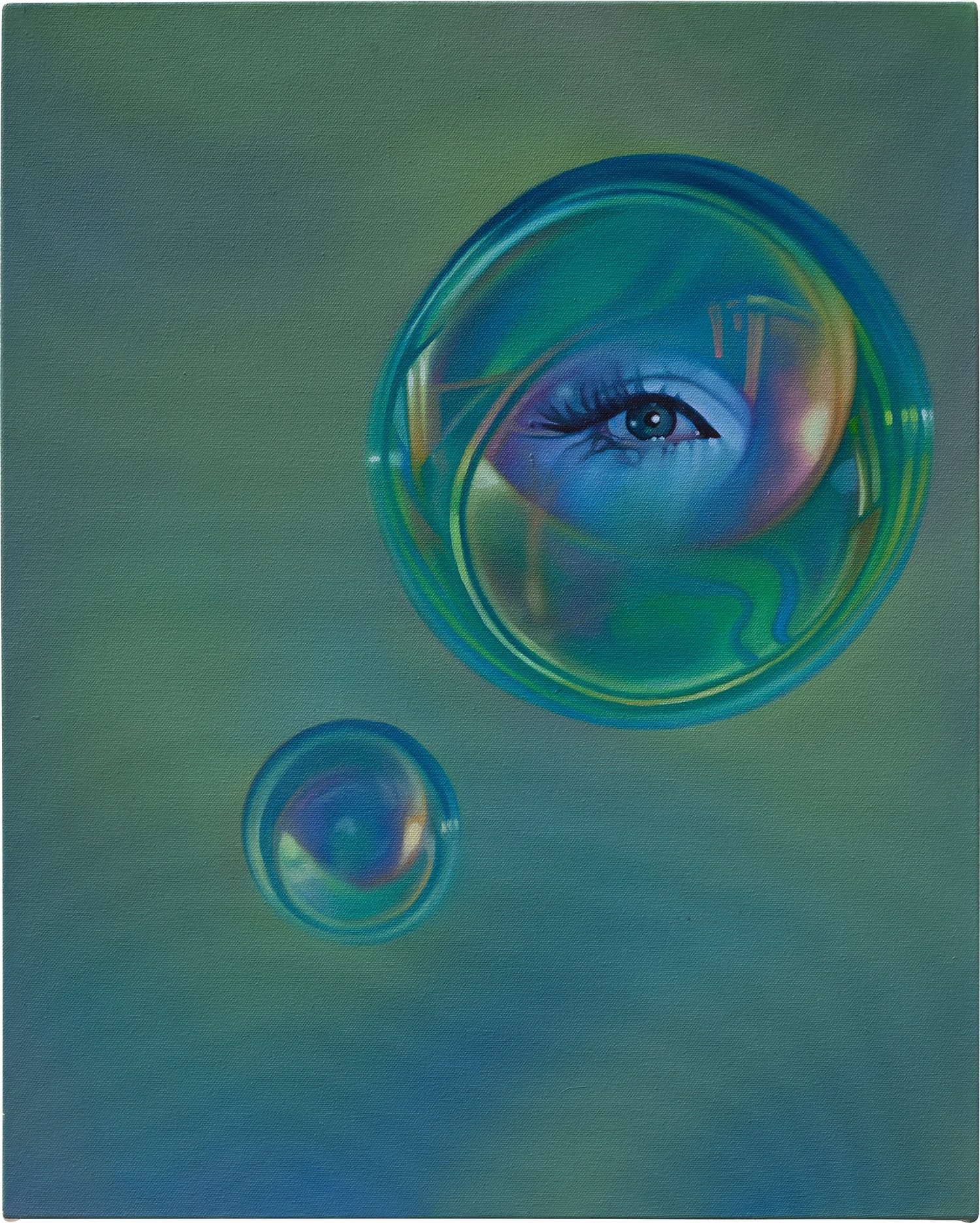
Guilty Pleasure, 2020
Over time she has refined these concerns without ever domesticating them. Her paintings have become more elaborate, more layered in their references, and more generous in the visual pleasure they offer, while retaining the essential quality that makes them singular: the sense that something genuinely uncanny is present, hovering just at the edge of what the painted surface can hold. Among her most celebrated works, Glass Slipper from 2018 demonstrates the full sophistication of her approach. The painting engages with the fairy tale as a structure, not for nostalgia but as a way of examining the mythology built around femininity and transformation, the stories that have been told to women about what they should want and what form their deliverance might take.
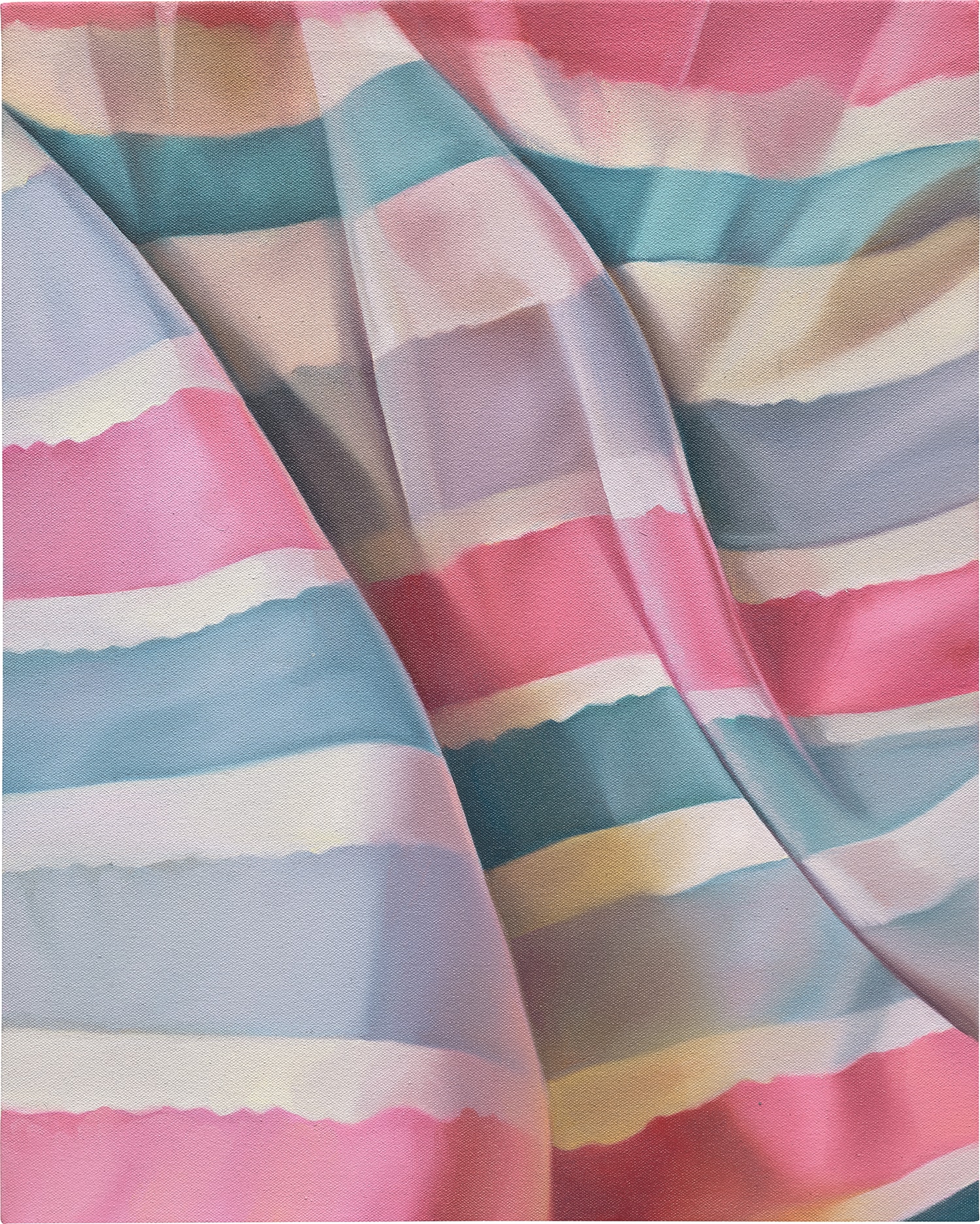
Painted in oil on canvas with the kind of luminous surface quality that speaks directly to her admiration for earlier European traditions, the work is simultaneously beautiful and quietly unsettling, which is exactly where Papademetropoulos does her most interesting thinking. My Lap Is a Wonderland from 2019 and Guilty Pleasure from 2020 extend this investigation, each painting a kind of meditation on the body, on pleasure, on the coded language of desire and excess that runs through so much imagery directed at women. These are not polemical works; they are something more potent than that. They seduce you before they make you think.
Ariana Papademetropoulos
My lap is a wonderland, 2019
From a collecting perspective, Papademetropoulos represents a particularly compelling proposition. Her work sits at an intersection that serious collectors have increasingly recognized as significant: technically accomplished painting that also carries genuine conceptual weight, work that holds its own in any conversation about the history of surrealism and its legacies while also feeling entirely alive to the present moment. Her canvases have attracted the attention of collectors who understand that accessibility and depth are not opposites, that a painting can be visually ravishing and intellectually serious at the same time. Works from her earlier periods, including paintings from around 2018 and 2019, have already demonstrated appreciation in value as her institutional profile has grown, and collectors who engaged with her work during those years were rewarded both aesthetically and financially.
For those approaching her work now, the question is not whether her importance will be sustained but how fully the market will come to reflect what discerning collectors already know. To understand where Papademetropoulos sits within the broader landscape of contemporary painting, it helps to think about the constellation of artists who have been reexamining surrealism, psychedelia, and feminine interiority over the past decade. Her work invites comparison with painters like Caitlin Keogh and Cecilia Vicuña in its attention to the symbolic freight carried by images of women, and she shares with artists such as Allison Gildersleeve a commitment to surface beauty as something philosophically serious rather than merely decorative. Further back, the lineage runs through Leonora Carrington and Remedios Varo, those great surrealist painters who brought genuine mysticism and rigorous imagination to the movement, and through the decorative intensity of Gustav Klimt and Alphonse Mucha, whose investment in the ornamental Papademetropoulos both inherits and transforms.
What Ariana Papademetropoulos ultimately offers is something that painting at its most vital has always offered: a space in which the viewer can encounter something they did not know they were looking for. Her canvases create an atmosphere of enchantment that is never merely escapist, always grounded in genuine feeling and genuine thought. She is an artist in full command of her gifts, working at a moment when those gifts are finding exactly the audience they deserve. To collect her work is to participate in something that will matter for a long time.