Antoniucci Volti
Volti's Bronze Women, Timeless and Alive
Artist Spotlight · The Collection Editorial
There is a moment, standing before one of Antoniucci Volti's reclining bronzes, when the temperature of the room seems to change. The metal breathes. The surface, worked and reworked by a sculptor who understood the female form as both subject and spiritual inquiry, carries the memory of every hand that shaped it. It is no accident that Volti's work has found renewed appreciation among serious collectors in recent years, as the broader art market rediscovers the richness of mid century European figurative sculpture and reassesses the artists who refused to abandon the human body even as abstraction swept through the galleries of Paris and New York.
Antoniucci Volti
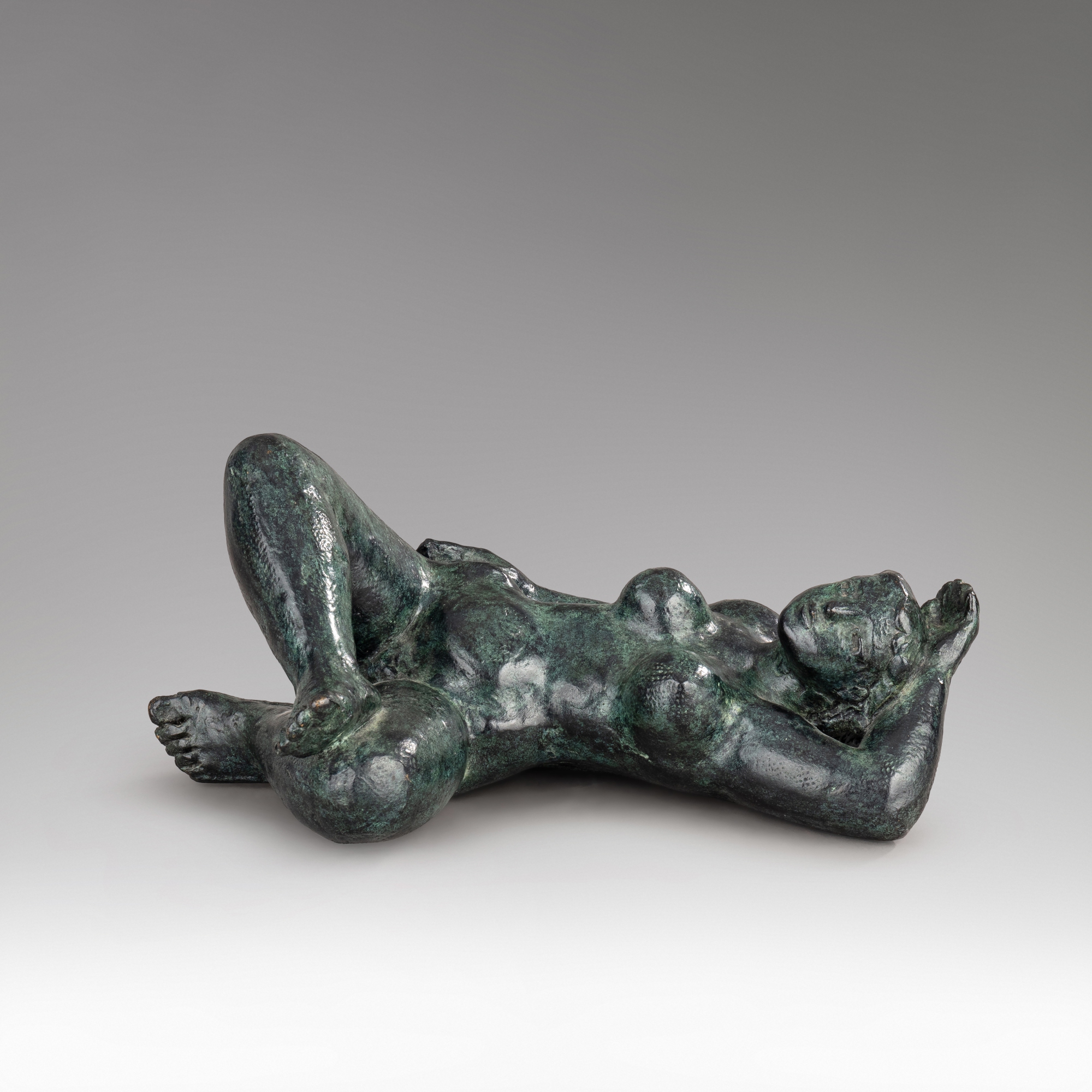
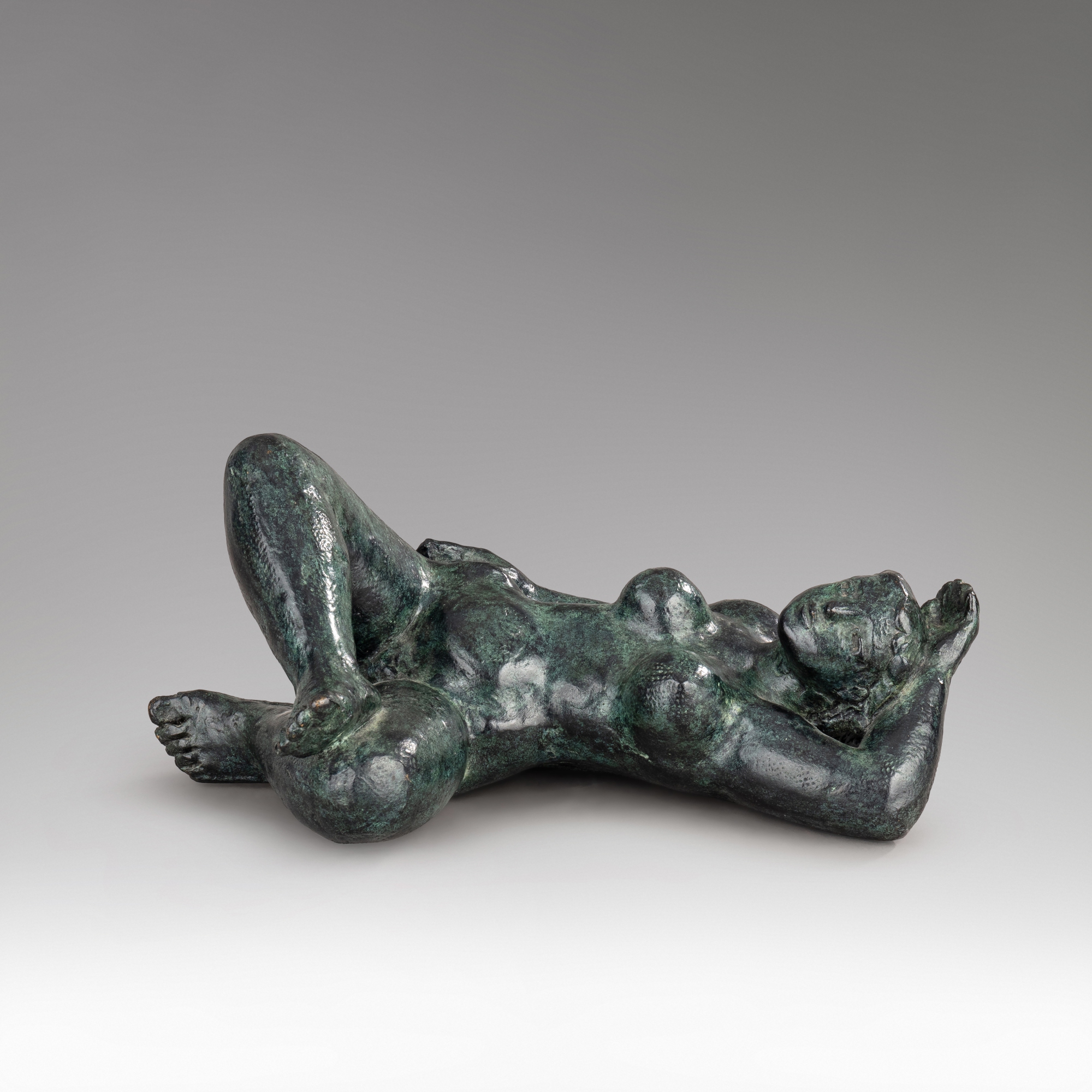
Nude woman lying on her back
Antoniucci Volti was born in 1915 in Versailles to Italian parents, a detail that speaks volumes about the dual inheritance that would define his entire artistic life. He grew up between two cultures, absorbing the monumental ambition of the Italian sculptural tradition while living inside one of the world's great centers of modern art. He studied at the École Nationale Supérieure des Beaux Arts in Paris, training under figures steeped in the classical tradition, and it was there that he developed the technical mastery that would later allow him extraordinary freedom. His formation was rigorous, patient, and deeply grounded in observation of the living figure.
Volti came of age as an artist during one of the most turbulent and creatively explosive periods in Western art history. The decades following the Second World War saw Paris simultaneously celebrate abstraction as the language of liberation and mourn the passing of the great figurative traditions. Volti made a quiet and resolute choice. He would stay with the body.
Antoniucci Volti
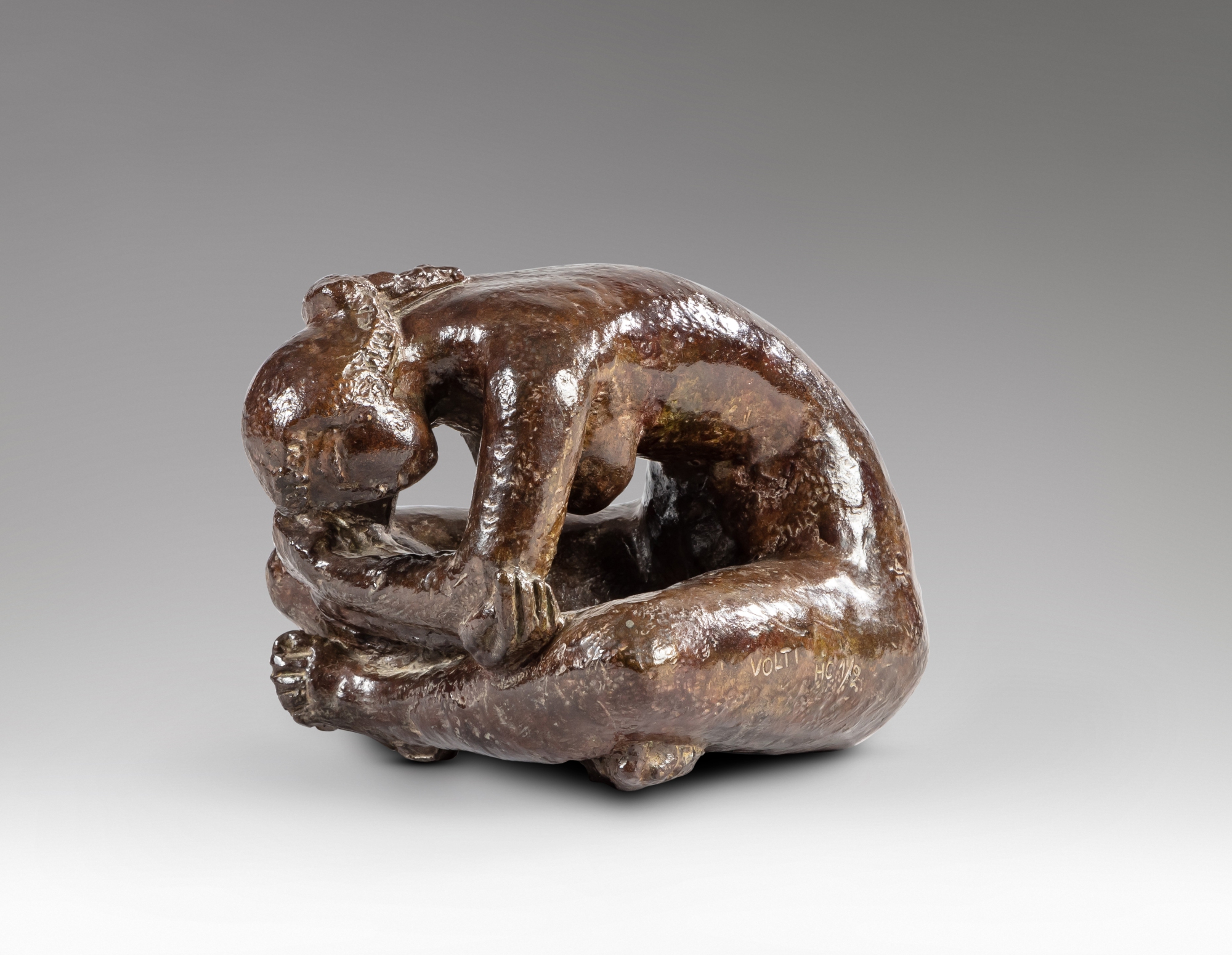
Flavia
He would stay with the woman. Not as a political statement or a reactionary gesture, but because he found in the female form an inexhaustible source of formal and emotional complexity. His work through the 1950s and 1960s deepened steadily, moving away from the academic figure toward something more intimate, more charged, more his own. What separates Volti from his contemporaries working in figurative bronze is the quality of his surfaces and the psychological warmth of his compositions.
His figures do not pose or perform. They rest, they turn inward, they exist in a state of quiet self possession. Works such as the reclining nude with its deep dark green patina and the portrait bronze titled Flavia, with its luminous brown green surface, demonstrate his remarkable ability to use patination as a form of emotional modulation. The darkness of the bronze is never funereal.
Antoniucci Volti
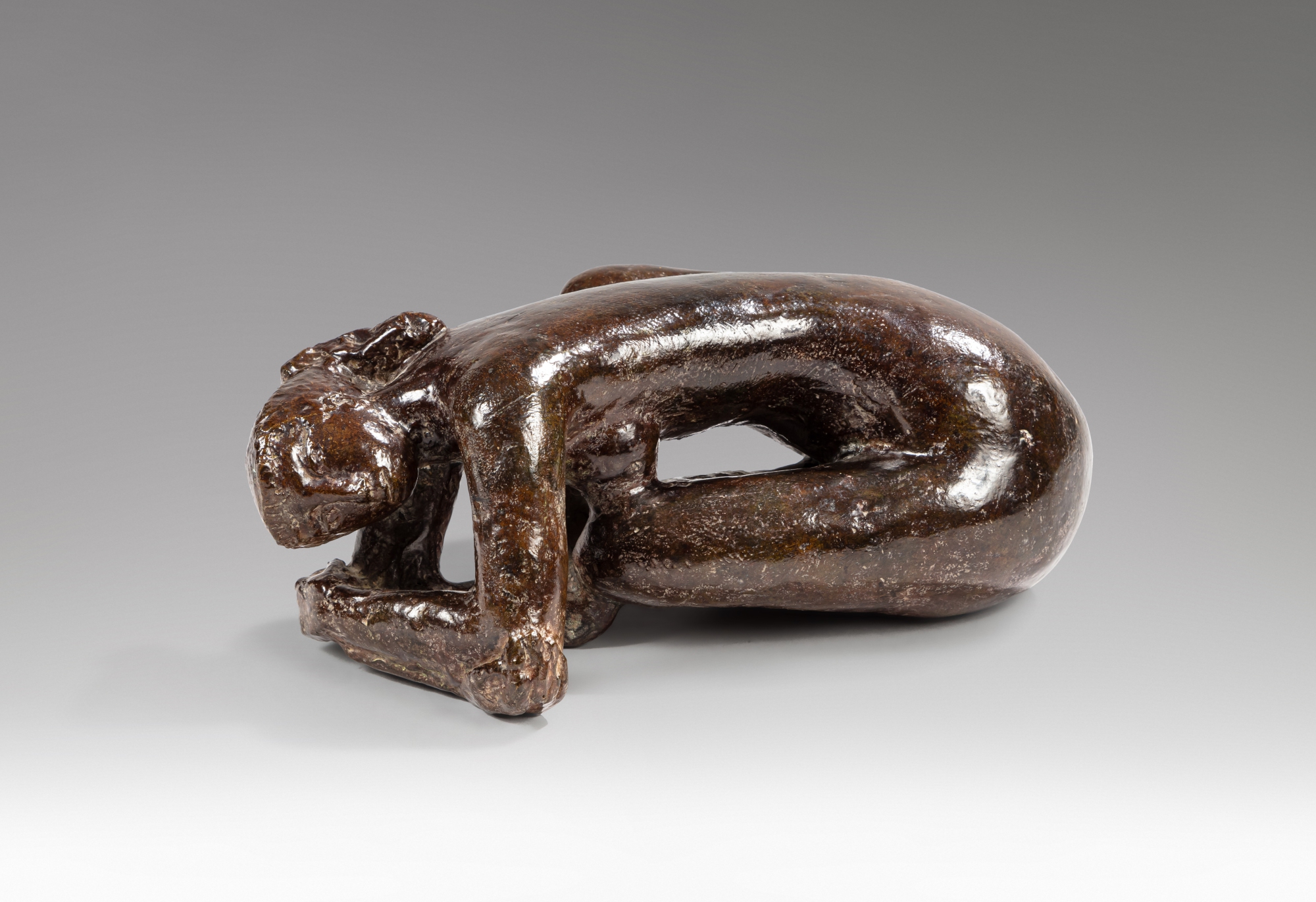
Florence
It is rich and warm, suggesting skin and shadow rather than stone and distance. Florence, finished in a dark brown patina, carries the name of a city synonymous with Renaissance sculpture, and the reference feels intentional: Volti was in genuine conversation with that tradition, updating it rather than imitating it. The reclining female nude is perhaps the oldest subject in Western sculpture, invoked by everyone from the ancient Greeks to Rodin, Maillol, and Henry Moore. What Volti brings to this lineage is an almost domestic tenderness.
His women are not goddesses or allegories. They are women. The sculptor described his relationship with his models as one of long and attentive looking, and that sustained attention is legible in every work. The curves are observed rather than idealized, the weight distribution is believable, the sense of breathing presence is remarkable.
Collectors who live with these bronzes consistently report that the work changes throughout the day as light moves across the patinated surface, making each viewing a slightly different experience. From a collecting perspective, Volti represents a compelling proposition for both established collectors and those earlier in their journey. His work has appeared at major French auction houses and has found homes in significant private collections across Europe. Because his reputation, while solid and respected, has not yet been amplified by the full machinery of international museum retrospectives, there remains an opportunity to acquire works of genuine quality and historical importance at prices that reflect serious connoisseurship rather than speculative fever.
Collectors drawn to Aristide Maillol, who similarly devoted his practice to the female form in bronze, or to the warm humanism of Antoine Bourdelle, will find in Volti a natural companion. His work also resonates with admirers of Giacomo Manzù, who brought a similarly Italian sensuousness to figurative bronze in the mid century period. Within art history, Volti occupies a position that is beginning to be more fully understood. For decades, the dominant narrative of postwar art privileged rupture over continuity, abstraction over figuration, concept over craft.
That narrative is now being substantially revised. Curators and scholars are returning to artists like Volti and recognizing that the decision to remain with the figure was not conservatism but a different kind of radicalism: a commitment to the idea that the human body remains the most complex and meaningful subject available to the artist. The critical infrastructure around mid century European figurative sculpture is expanding, and Volti is well positioned to benefit from that reassessment. What endures most powerfully in Volti's legacy is the feeling his work produces in the viewer.
It is a feeling of being welcomed rather than challenged, moved rather than instructed, connected to something ancient and also entirely present. In an art world that often prizes difficulty and distance, there is something genuinely courageous about work that invites you closer. Antoniucci Volti spent his career making bronzes that reward exactly that kind of attention, and the collectors who choose to live with them are participating in a tradition of looking that stretches back centuries and remains, in his hands, astonishingly alive.