Anton Henning
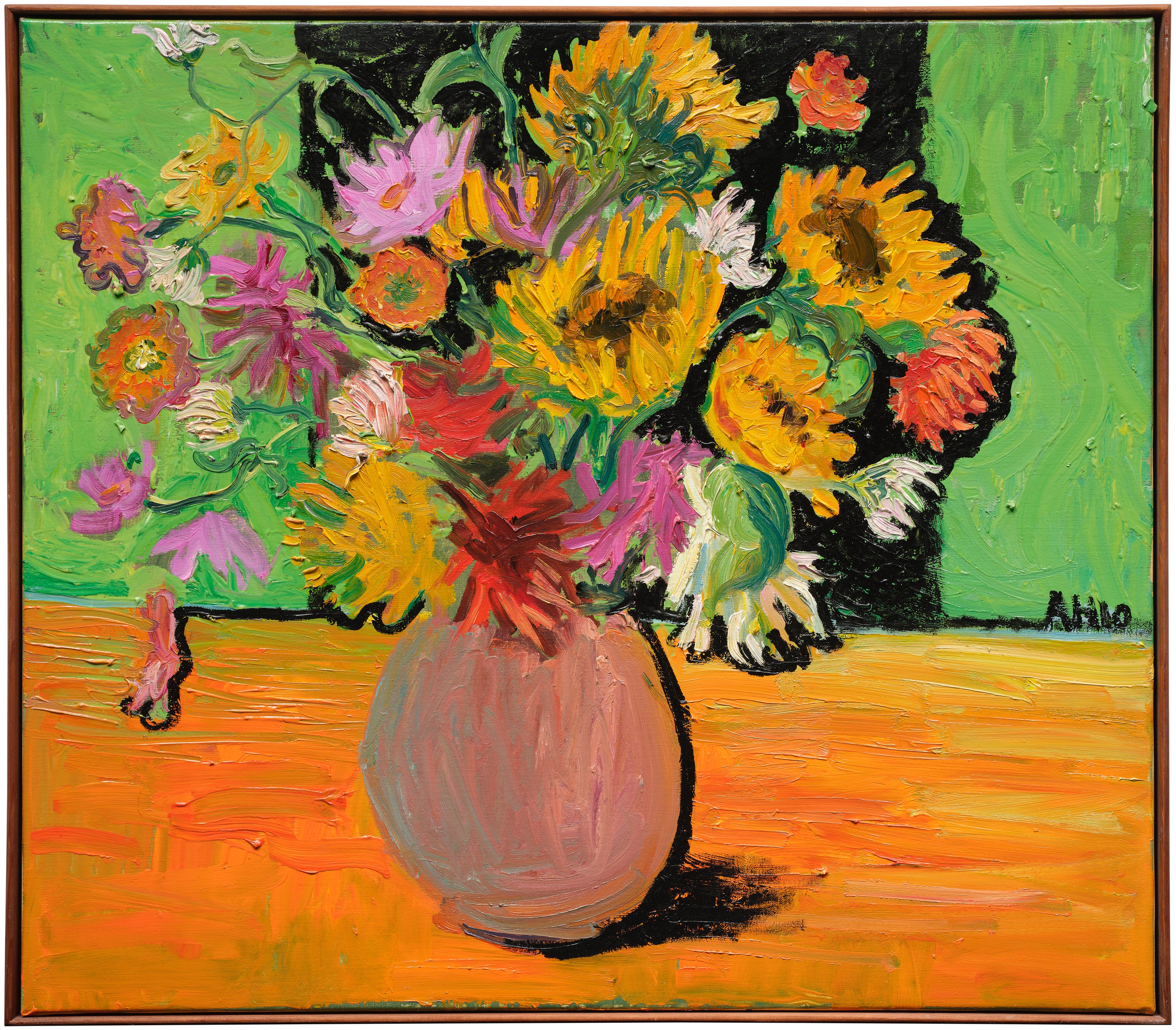
Anton Henning, Where Everything Delightfully Collides
Artist Spotlight · The Collection Editorial
When Anton Henning unveiled his sprawling installation at the Kunsthalle Mannheim, visitors found themselves inside something that felt less like an exhibition and more like a cultivated dream: rooms within rooms, canvases jostling against bespoke furniture, flowers rendered in riotous oil paint competing with the hum of designed objects. It was the kind of total environment that Henning has spent decades perfecting, one that refuses the white cube's cool neutrality and insists instead on warmth, clutter, and the productive chaos of genuine aesthetic enthusiasm. For collectors and curators who had followed his career since the 1990s, it confirmed what they already suspected: Henning is among the most intellectually generous and visually alive painters working in Europe today. Henning was born in Berlin in 1964, which means he came of age in a city that was itself a living argument about identity, rupture, and reinvention.
Anton Henning
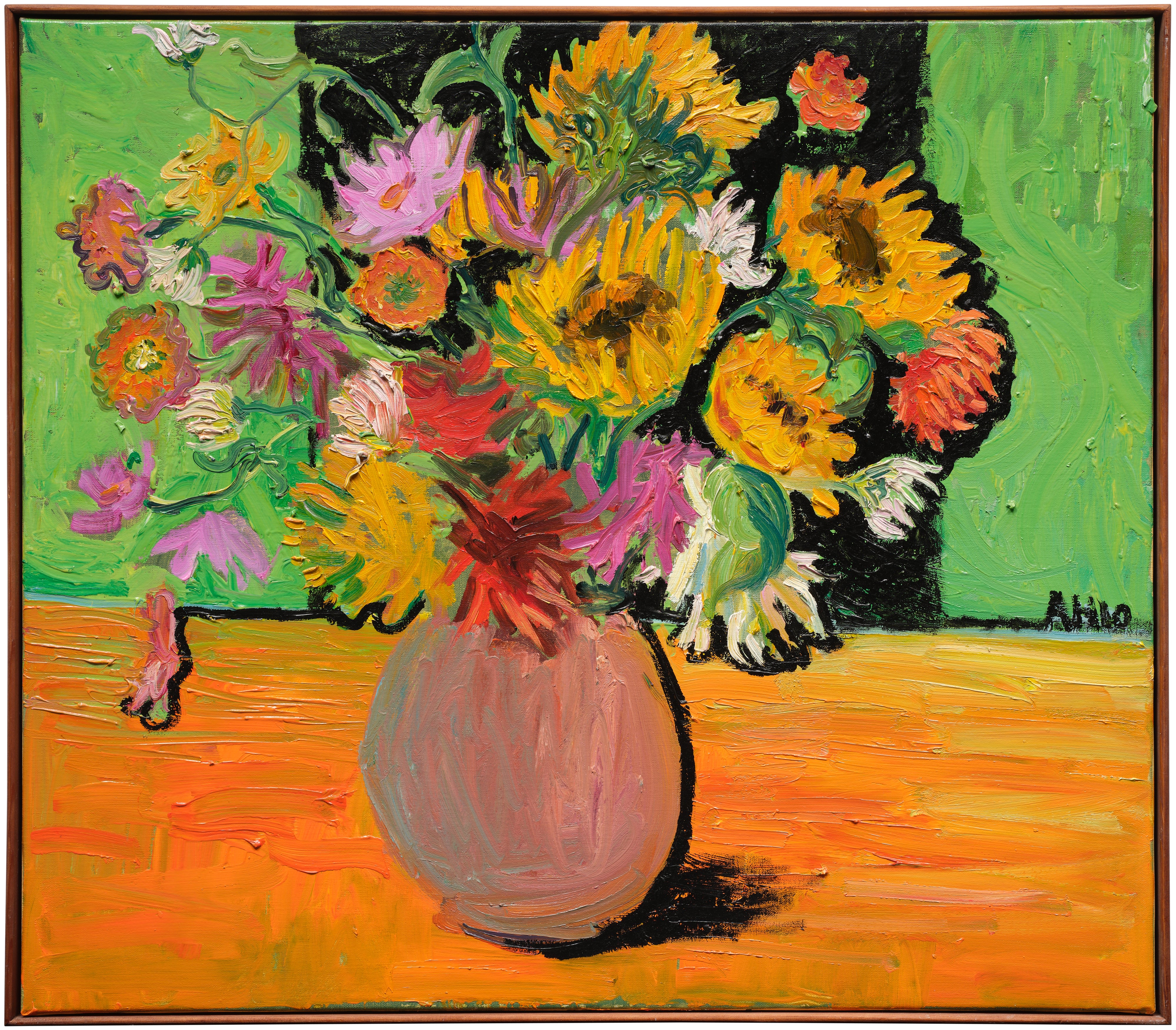
Blumenstilleben No. 410, 2010
West Berlin in the late 1970s and 1980s was a pressure cooker of subcultural energy, and the city's particular relationship to modernist ambition, postwar guilt, and pop iconography shaped a generation of artists who were suspicious of any single grand narrative. Henning absorbed all of it. He studied at the Hochschule der Künste in Berlin, where he encountered the full weight of German expressionism, the Bauhaus legacy, and the radical provocations of Fluxus and Concept art, and then proceeded to do something characteristically perverse: he fell in love with painting. What makes that love so interesting is that it was never naive.
Henning came to painting through irony and arrived at sincerity. His early works from the 1990s, including the series that would eventually be titled "The sudden and tragic death of modernism," announce his sensibility with almost theatrical clarity. These multi panel canvases take on the vocabulary of high modernism, its gestural marks, its color field ambitions, its existential posturing, and subject it to a kind of affectionate autopsy. The 1998 work "The sudden and tragic death of modernism no.
Anton Henning
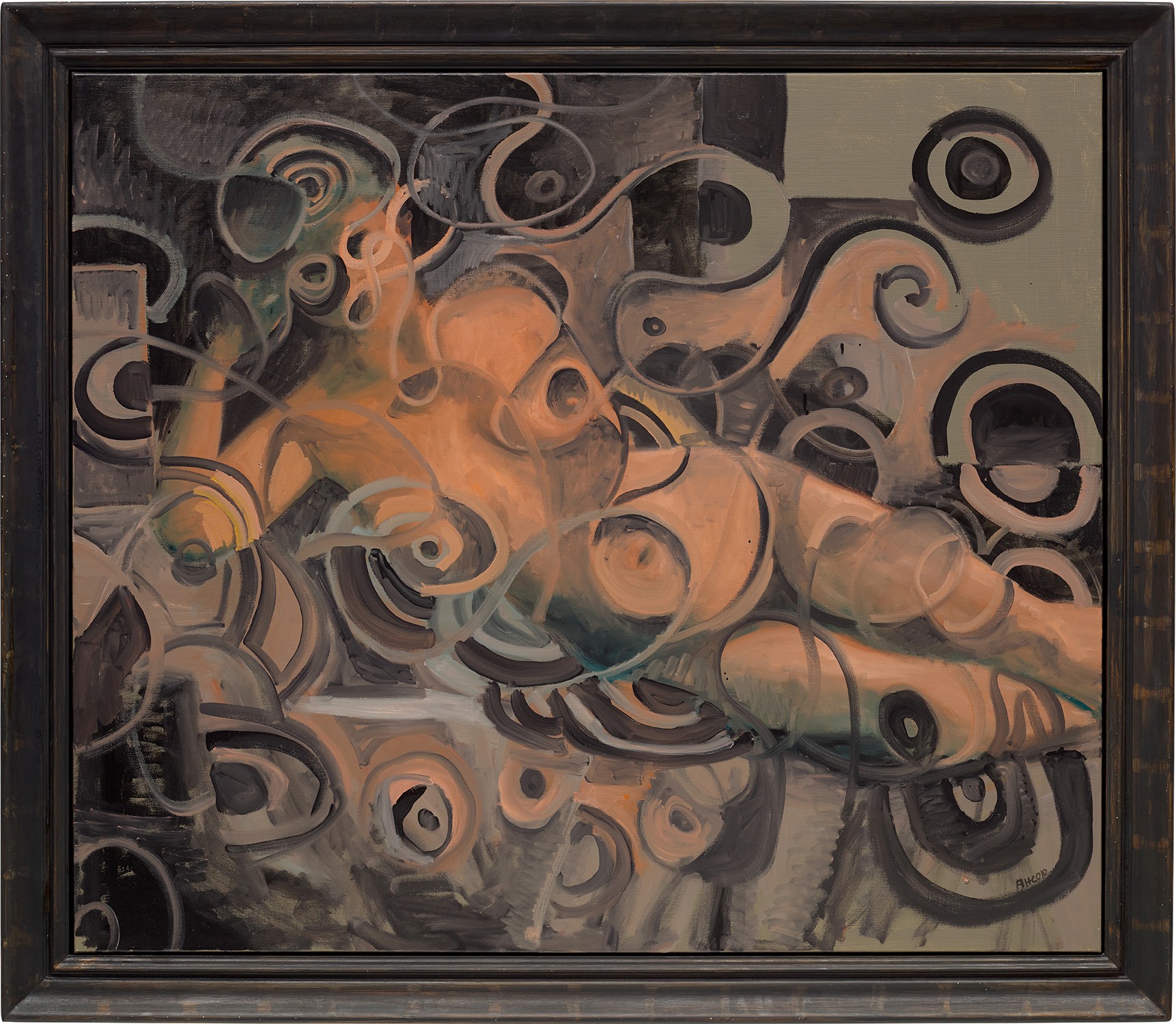
Pin Up No. 149, 2010
4," presented in nine parts, is a masterclass in this approach: it reads simultaneously as homage and gentle mockery, as a love letter written with a raised eyebrow. It is the work of someone who has studied the canon so thoroughly that he can inhabit and undermine it in the same brushstroke. Through the late 1990s and into the 2000s, Henning refined and expanded his vocabulary into several interlocking series that remain the backbone of his reputation. The "Blumenstilleben" paintings, still lifes of flowers executed with a knowing, almost aggressive sumptuousness, pay tribute to a genre that runs from Dutch Golden Age painting through Matisse and into the decorative excesses of the twentieth century.
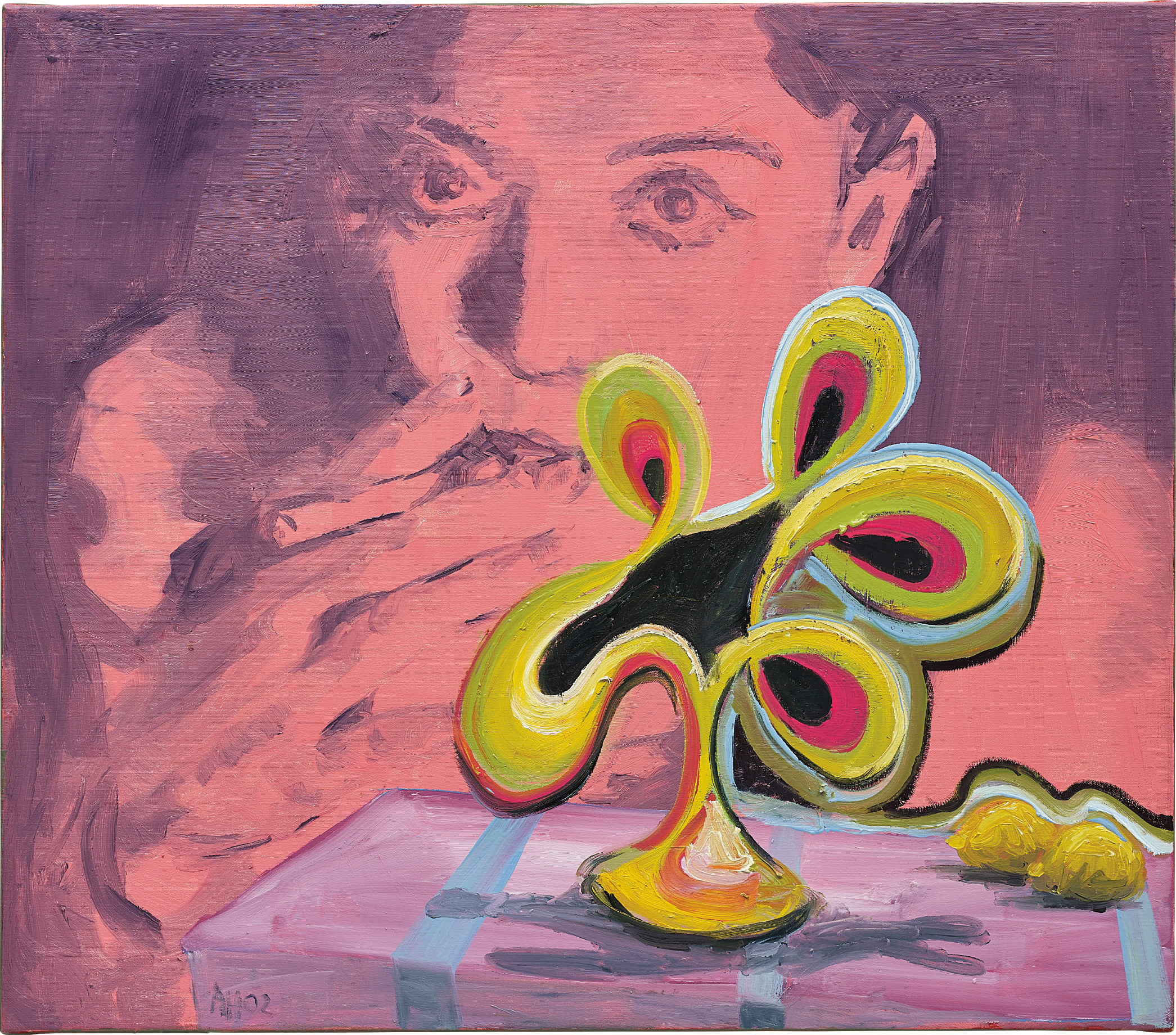
Works like "Blumenstilleben No. 131" and "Blumenstilleben No. 115," both from 2002, and the later "Blumenstilleben No. 410" from 2010, show the breadth of his engagement: these are not mere exercises in prettiness but deeply considered meditations on what flowers have meant to painters across centuries, and what it costs to paint them now.
Anton Henning
Blumenstilleben No. 131, 2002
The "Pin Up" series operates in adjacent territory, deploying the iconography of mid century erotic illustration with a wit that refuses both prurience and po faced critique. "Pin Up No. 149" from 2010, presented in one of his signature artist's frames, is typical of his best work in this vein: seductive and self aware in equal measure. The artist's frames deserve special mention because they are not merely decorative afterthoughts.
Henning designs and constructs frames that are integral to the work's meaning, treating the boundary between painting and world as a site of invention rather than convention. This impulse extends naturally into his installation practice, where he creates total environments that incorporate custom furniture, wallpaper, sculpture, and architectural intervention. These rooms, which he has built for institutions including Tate Modern, the Migros Museum in Zurich, and various international art fairs, position him in a lineage that includes Kurt Schwitters and his Merzbau, but also Edward Kienholz, Ilya Kabakov, and the domestic environments of Lucas Samaras. Henning's spaces are warmer and more inviting than most of those precedents, however.
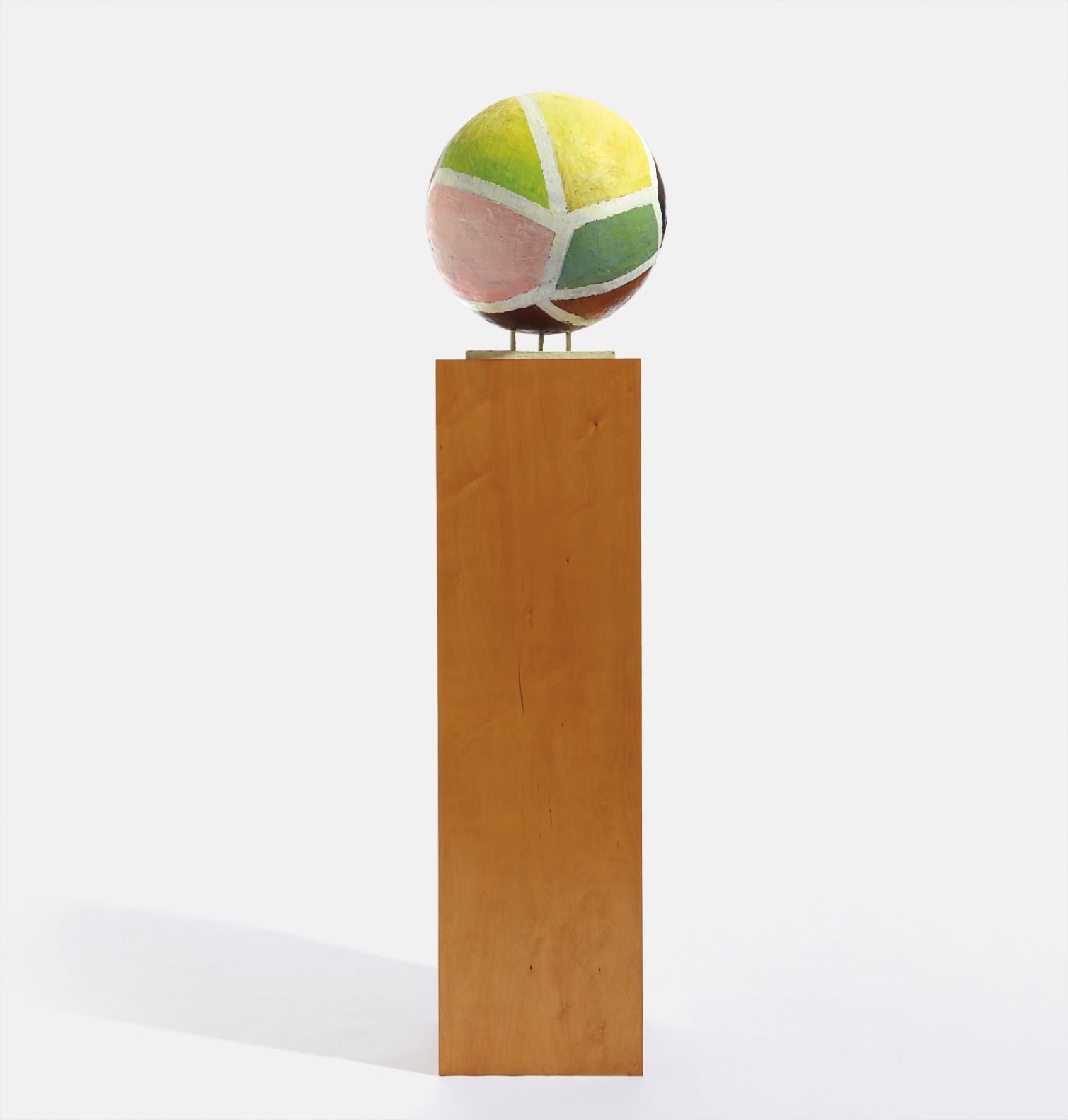
Anton Henning
Globale Malerei No. 11
They want you to feel at home, and then to notice, slightly unsettled, how strange home actually is. For collectors, Henning represents a compelling and still undervalued proposition. His works are held in significant private and institutional collections across Europe and the United States, and his gallery relationships with institutions including Haunch of Venison have ensured consistent international visibility. The multi part works present particular opportunities for collectors with serious ambitions: a work like "The sudden and tragic death of modernism no.
4" in its nine part form is the kind of acquisition that anchors a collection and opens a conversation rather than concluding one. More accessible entry points exist in the individual "Blumenstilleben" and "Interieur" canvases, which offer the full force of his painterly intelligence at a scale suited to domestic environments. Works on unusual supports, such as "You Stand There With That Green Thing On," which combines oil, pencil, and photograph on canvas, demonstrate his restless formal curiosity and tend to reward close attention over years of living with them. To understand Henning's place in art history is to trace a set of connections that run through painters as different as Sigmar Polke, Martin Kippenberger, and John Currin.
Like Polke and Kippenberger, he works in the productive space between high seriousness and deliberate silliness, understanding that irony need not be cold and that formal rigor can coexist with genuine pleasure. Like Currin, he has committed to figuration and genre painting at a moment when both required a certain courage, and has found in that commitment a rich vein of meaning about desire, representation, and the history of the image. His Berlin formation also connects him to a broader tradition of German painting that takes popular culture and kitsch seriously as aesthetic and political material rather than as embarrassments to be overcome. What ultimately distinguishes Henning is his commitment to the idea that the studio, the gallery, the domestic interior, and the history of art are all part of a single continuous world, one that is worth inhabiting with full attention and some degree of delight.
His work insists that painting is not finished, that the still life and the nude and the interior are not exhausted subjects but inexhaustible ones, and that the correct response to the weight of art history is not paralysis but invention. For collectors who believe that living with art means living in genuine dialogue with ideas, Henning is an artist whose work continues to give.