Antoine-Louis Barye
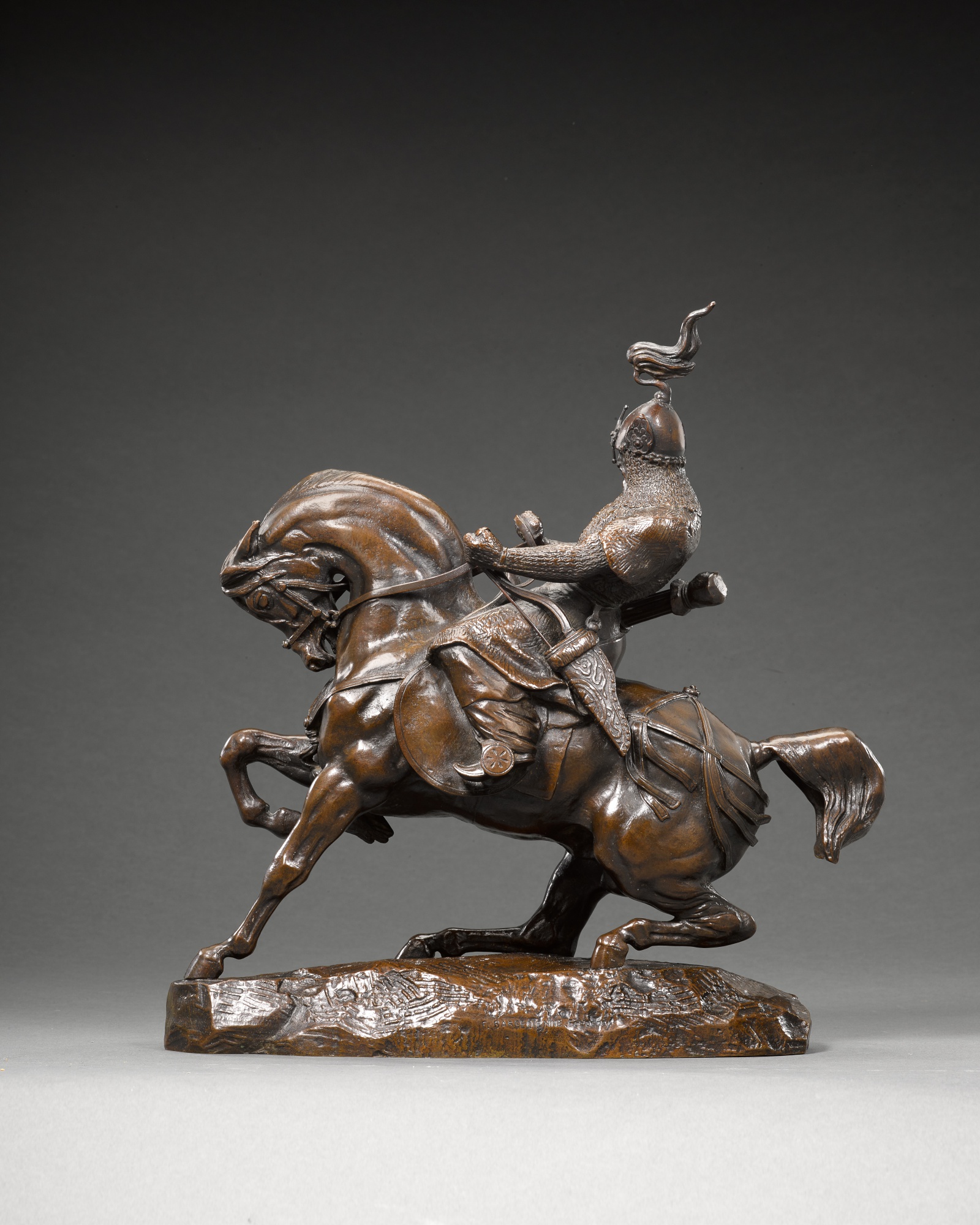
Barye: The Bronze Master Who Conquered Nature
Artist Spotlight · The Collection Editorial
There is a moment, standing before a Barye bronze, when the metal seems to breathe. The muscles of a lion mid strike coil with genuine anatomical tension, the fur of a bear reads as soft even in cold cast metal, and the violence or tenderness of the scene feels utterly inevitable, as though the sculptor had simply freed something already alive inside the material. That quality, at once scientific and deeply romantic, is why Antoine Louis Barye remains one of the most consistently compelling figures in nineteenth century French sculpture, and why collectors and institutions continue to seek his work with such focused enthusiasm. The market for Barye has remained remarkably stable across decades, a testament to the enduring appeal of an artist who understood both the natural world and the expressive possibilities of bronze with rare, almost unnerving clarity.
Antoine-Louis Barye
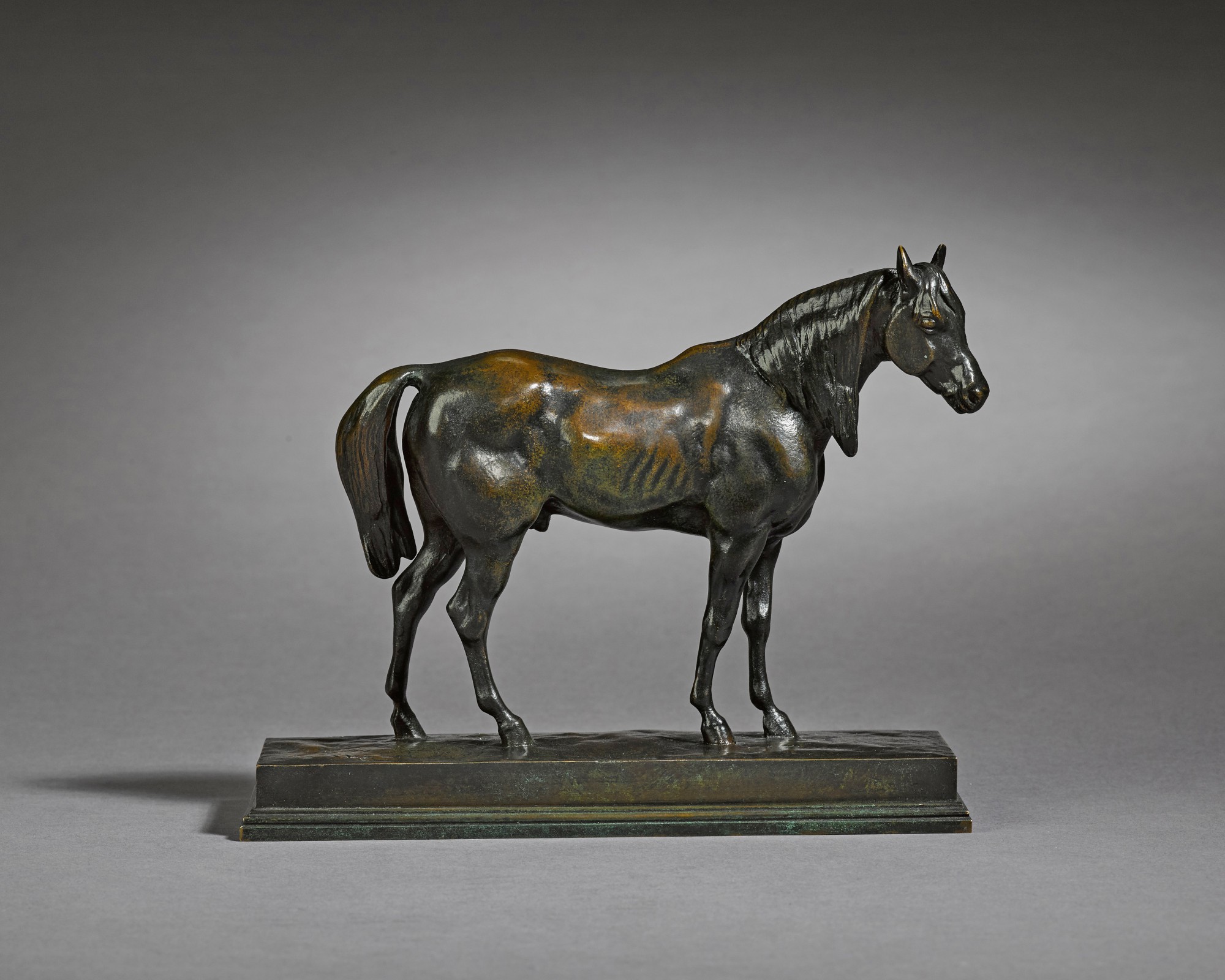
Cheval demi-sang (tête levée, réduction) (Half Blood Horse)
Barye was born in Paris in 1795, the son of a goldsmith, and that early proximity to metalwork and fine craft left a permanent mark on his sensibility. He trained first as an engraver, then entered the studio of the sculptor François Joseph Bosio, one of the leading Neoclassical practitioners of the Napoleonic era. He also studied painting under the great colorist Antoine Jean Gros, whose influence sharpened Barye's eye for dramatic light and movement. These twin inheritances, the disciplined precision of the goldsmith and the theatrical sweep of Romantic painting, would define everything he made.
The young Barye was equally devoted to scientific study, spending countless hours at the Jardin des Plantes in Paris, sketching and dissecting animals with the methodical rigor of a naturalist. This was not mere artistic convention but genuine intellectual commitment. His breakthrough came at the Salon of 1831, where his Tiger Devouring a Gavial of the Ganges caused a sensation. The piece was unlike anything Parisian audiences had encountered in sculpture: raw, kinetic, and anatomically precise in a way that made the academic animal sculptures of the previous generation seem bloodless and remote.
Antoine-Louis Barye
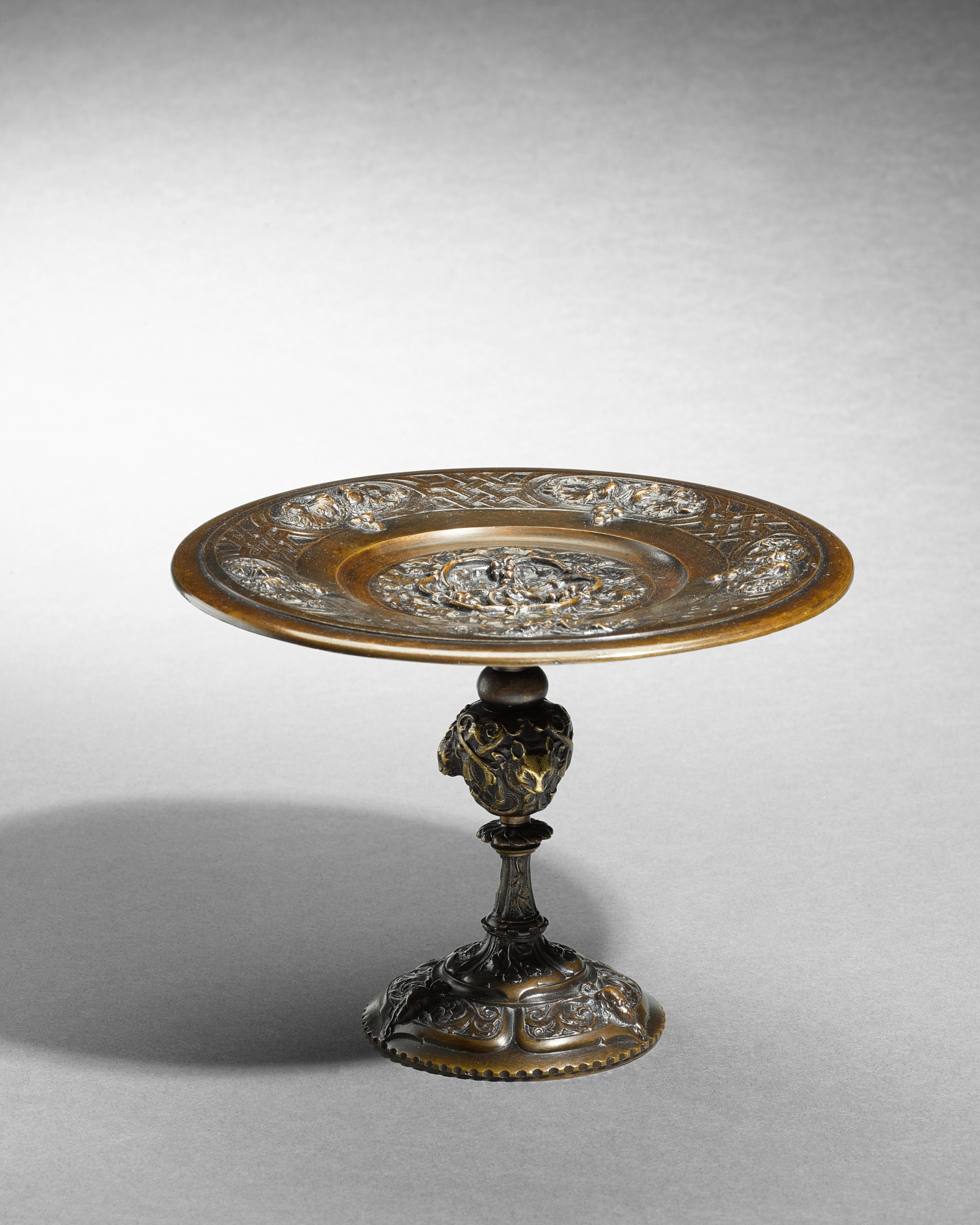
Coupe Ornée d'Arabesques et de Feuilles de Vigne (Tazza with Vines, Cat Masks and Owls)
The Salon jury, conservative in temperament, would later reject some of his most ambitious submissions, prompting Barye to withdraw from official exhibition for more than a decade. He was undeterred. During those years of relative institutional exile, he deepened his practice, refined his techniques, and built the commercial and artistic infrastructure that would sustain his legacy. He established his own bronze foundry and sales operation, selling directly to collectors from his Paris workshop, a move that was both pragmatic and quietly revolutionary for the time.
Barye's signature achievement is his seemingly inexhaustible ability to render conflict and coexistence in the animal kingdom with equal conviction. His lion and serpent groupings, produced across multiple editions and scales, brought him international fame and remain among the most recognizable images in Romantic sculpture. Works such as Hercule et le sanglier d'Érymanthe, with its silvered patina and marble base, demonstrate how fluently he moved between mythological subject matter and the naturalistic observation that was his true foundation. The half blood horse studies, such as Cheval demi sang (tête levée, réduction), capture equine anatomy with a refinement that reveals both his goldsmith origins and his years of sustained drawing from life.
Antoine-Louis Barye
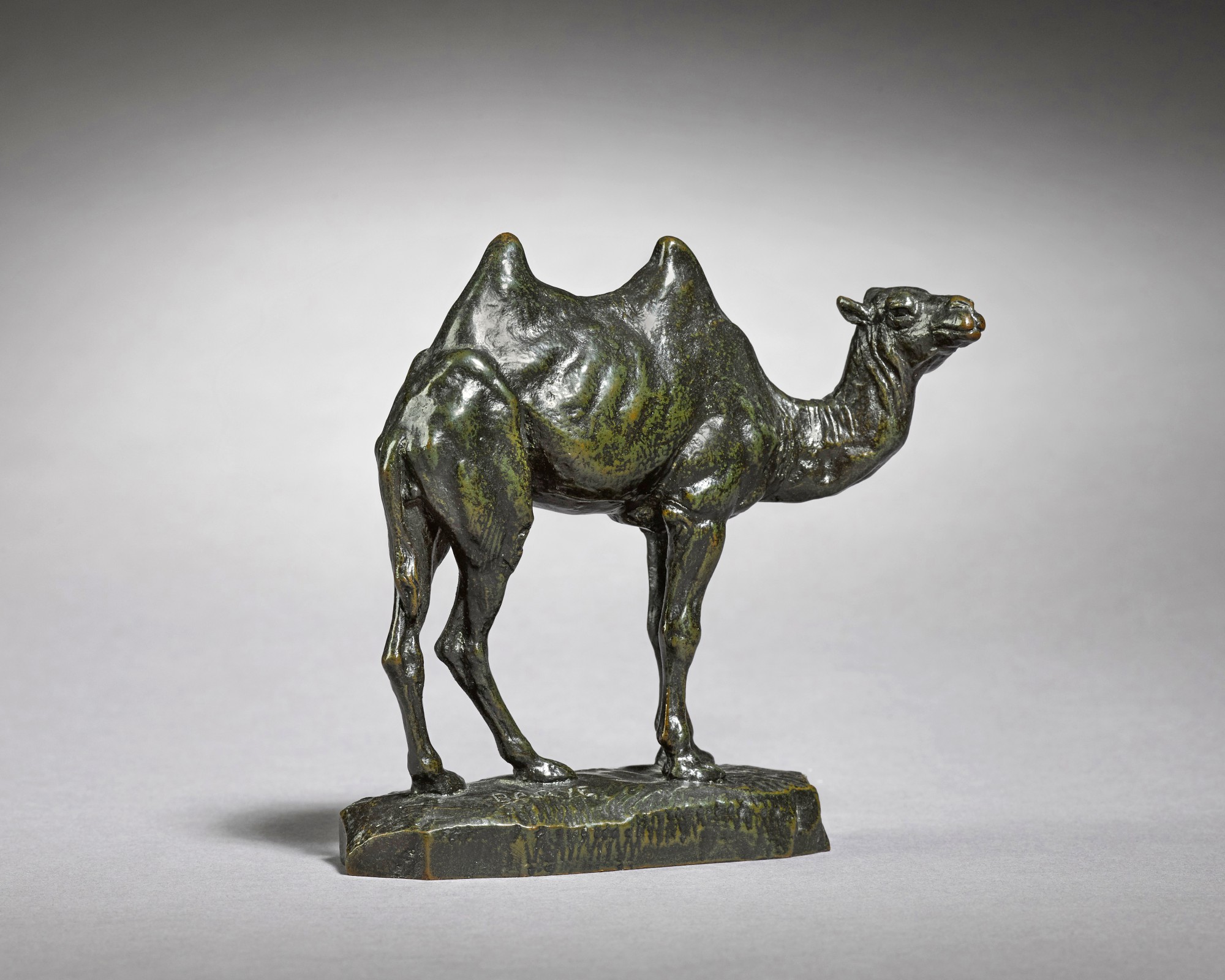
Petit Chameau de Perse (Small Persian Camel)
The small Persian camel, the Axis stag, the two young lions at rest: each of these works rewards close attention, offering fresh detail at every angle, every shift of light. For collectors, Barye presents a particularly rich and navigable landscape. Because he produced work in editions through his own foundry and, later, through the foundry of Emile Martin, examples range from the chef modèle originals, which are the models of highest fidelity and value, through authorized lifetime casts to posthumous editions. Understanding this hierarchy is essential for serious acquisition.
The Cerf Axis described as a chef modèle represents exactly the kind of benchmark piece that anchors a collection, combining documentary importance with supreme quality of finish. Patina is another critical variable: the warm brown, green brown, and reddish hues that appear across Barye's bronze surfaces are not merely decorative but carry information about casting date, foundry practice, and subsequent care. Auction records at Christie's, Sotheby's, and Drouot have consistently demonstrated strong demand for well provenanced examples, with major groupings and large scale works achieving significant results when they appear on the market. Barye exists in fascinating dialogue with his contemporaries and with the generation of animalier sculptors he effectively inspired.
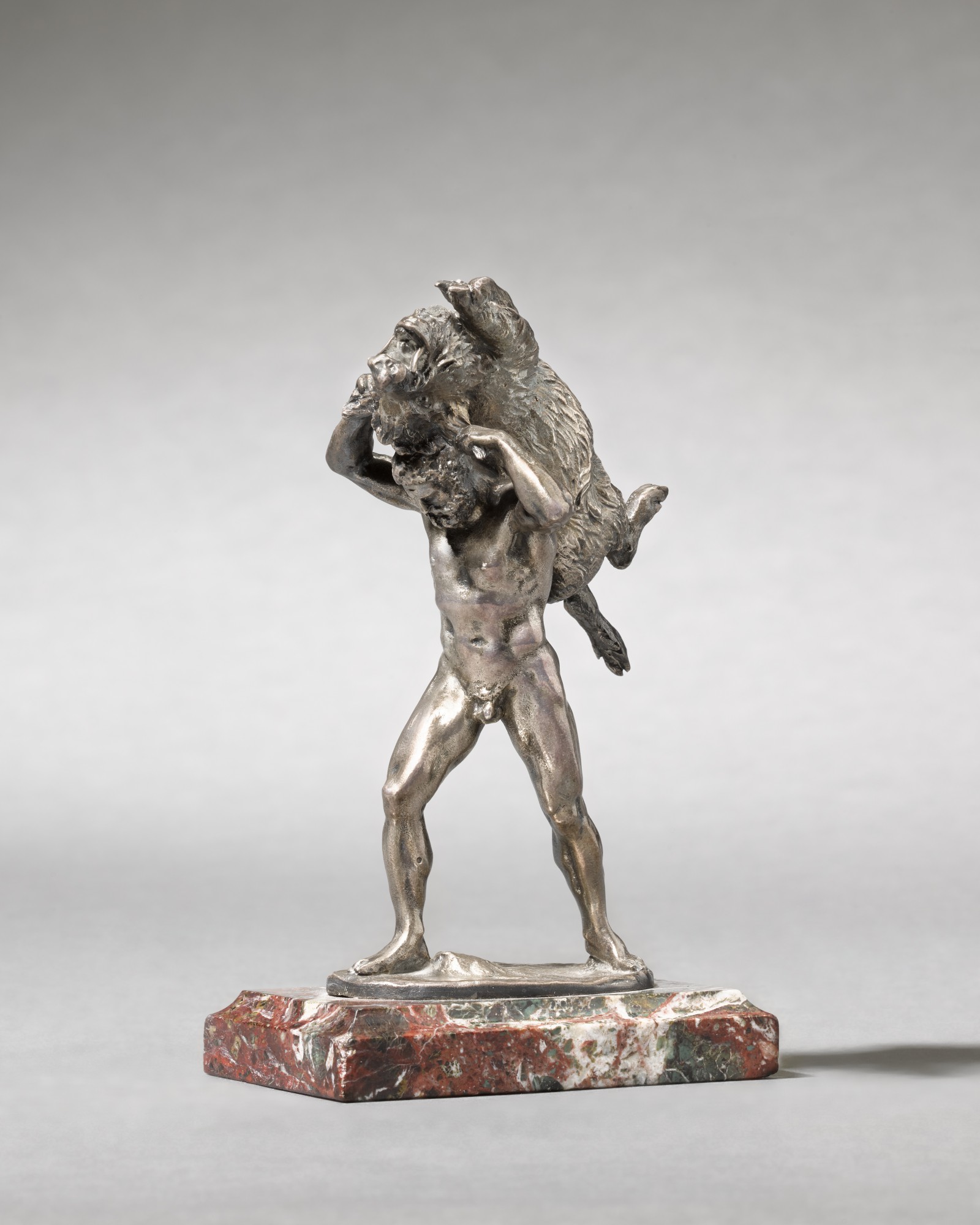
Antoine-Louis Barye
Hercule et le sanglier d'Érymanthe (Hercules and the Erymanthean Boar)
Emmanuel Frémiet, who would later occupy Barye's own professorship at the Muséum National d'Histoire Naturelle, carried forward the tradition of anatomically rigorous animal sculpture while adding his own taste for the dramatic and the macabre. Pierre Jules Mêne brought a gentler, more domestic sensibility to the genre, his horses and hunting dogs finding enormous popular success. Rosa Bonheur, working in paint rather than bronze, shared Barye's commitment to extended empirical observation of animals in motion. Placing Barye at the center of this constellation clarifies his singular importance: he was the originator, the one who established that animal sculpture could be serious art, worthy of the same intellectual and emotional investment as the grandest history painting.
His late career brought recognition that had sometimes eluded him earlier. He was appointed professor of zoological drawing at the Muséum National d'Histoire Naturelle in 1854, a position that formalized what he had always been: a man who understood living creatures with scholarly depth and expressed that understanding through an artist's hand. He also received major state commissions, contributing decorative sculpture to the Louvre under the direction of the architect Hector Lefuel during the great expansion of the 1850s. By the time of his death in 1875, Barye was understood in France and abroad as a foundational figure, a sculptor who had expanded what the medium could say and who had done so without sacrificing either beauty or intellectual rigor.
The retrospective assessment of his career, conducted in the decades after his death by critics, museum curators, and collectors across Europe and North America, only deepened that reputation. To collect Barye today is to participate in a conversation that has been continuous and enthusiastic for nearly two centuries, and to bring into one's home or collection an object that carries within it the full weight of that remarkable achievement.
Explore books about Antoine-Louis Barye

Antoine-Louis Barye: Sculptor of Romantic Realism
Glenn F. Benge
Barye: Life and Work
Lami, Stanislas
Antoine-Louis Barye and the Animals of the Nile
Michel Poletti
The Sculptures of Antoine-Louis Barye in the Metropolitan Museum
Kathryn Calley Galitz

Barye: Master of Animal Sculpture
Ruth Butler