Anthony James
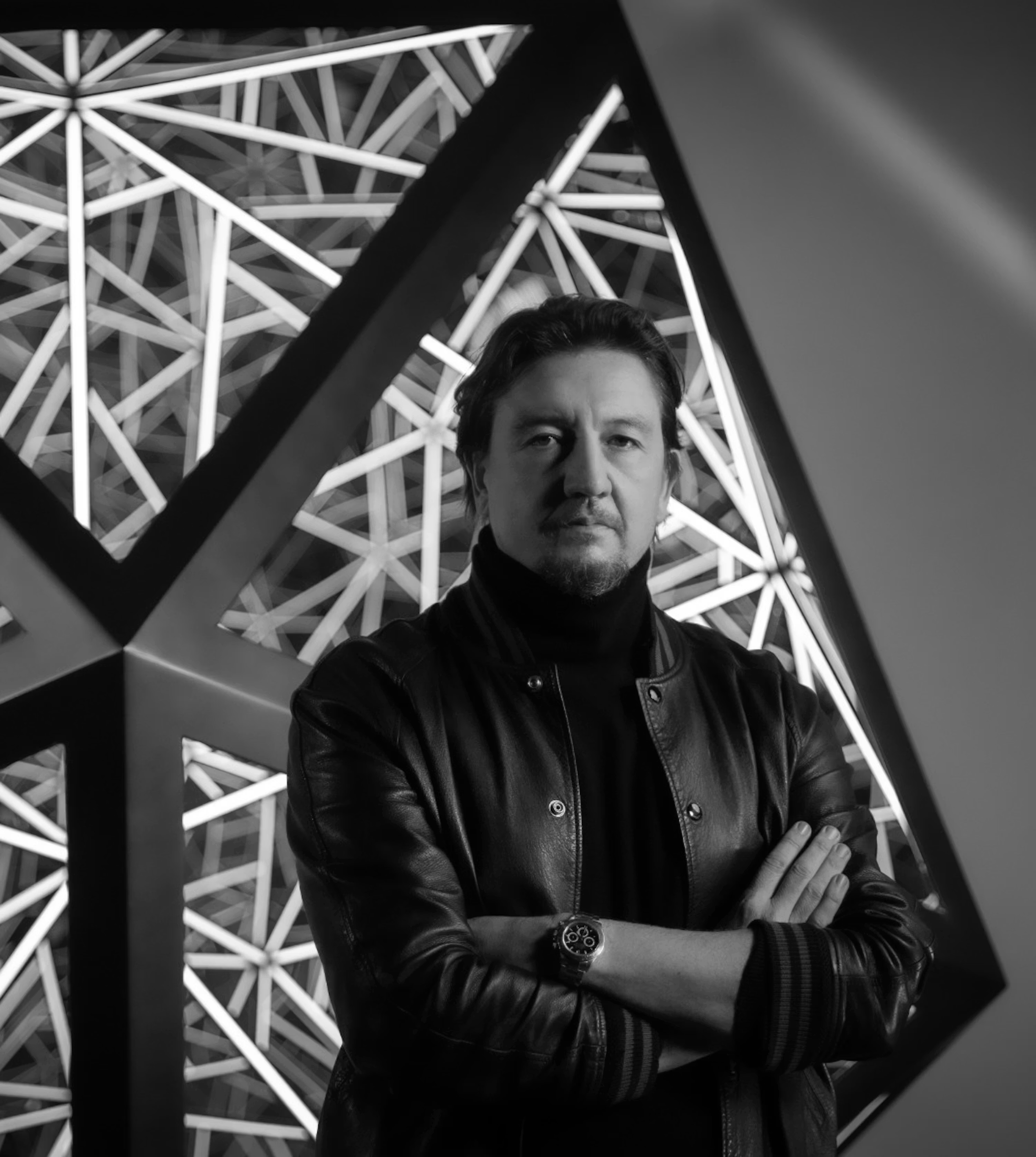
Anthony James Illuminates the Infinite Within
Artist Spotlight · The Collection Editorial
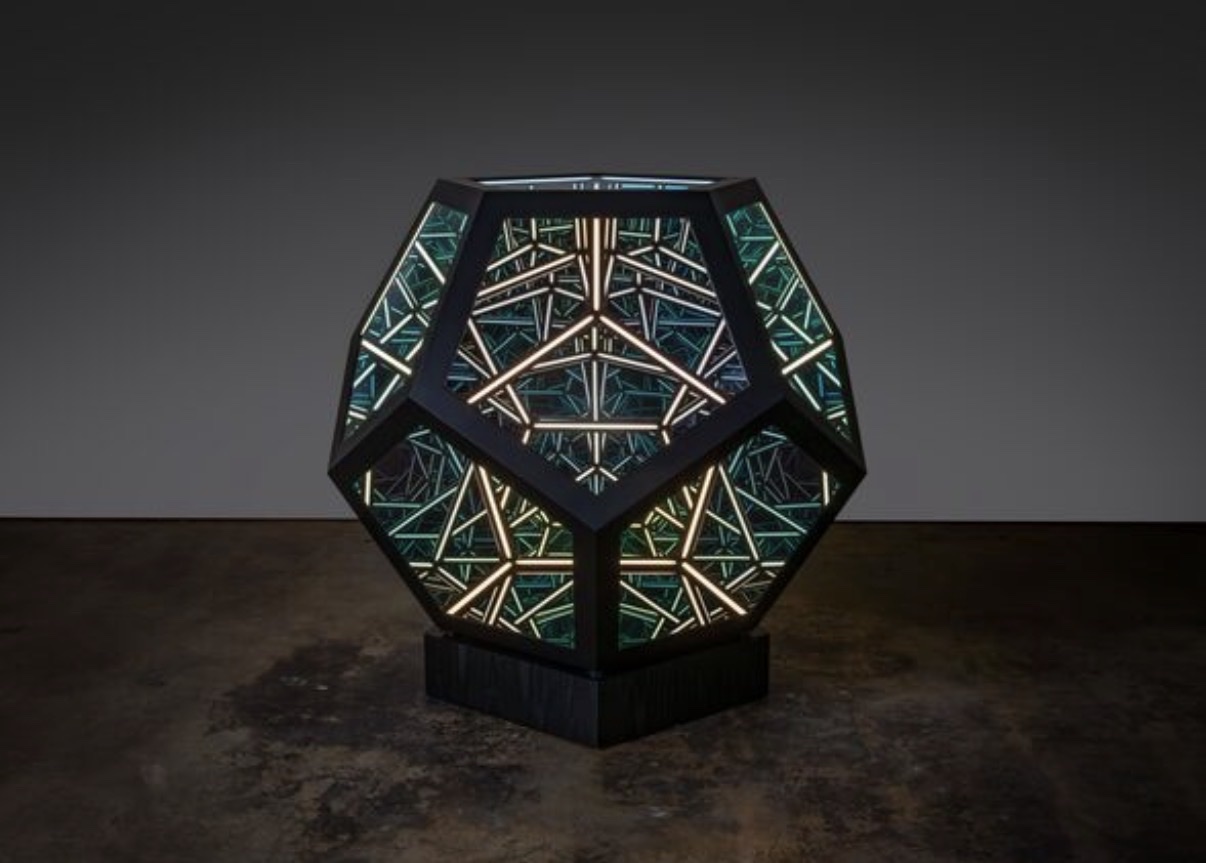
Something remarkable is happening at the intersection of geometry, light, and material consciousness, and Anthony James is at the centre of it. His 2025 additions to the Dodecahedron series, rendered in powder coated and raw stainless steel with his signature specialized glass and LED technology, have reaffirmed his position as one of the most compelling voices in large scale sculptural practice working today. These new works arrive at a moment when collectors and institutions alike are turning with renewed seriousness toward art that engages with light not as decoration but as primary material, and James meets that appetite with both technical rigour and genuine philosophical depth. Born in Britain in 1974, James came of age during a period of extraordinary ferment in contemporary art.
Anthony James
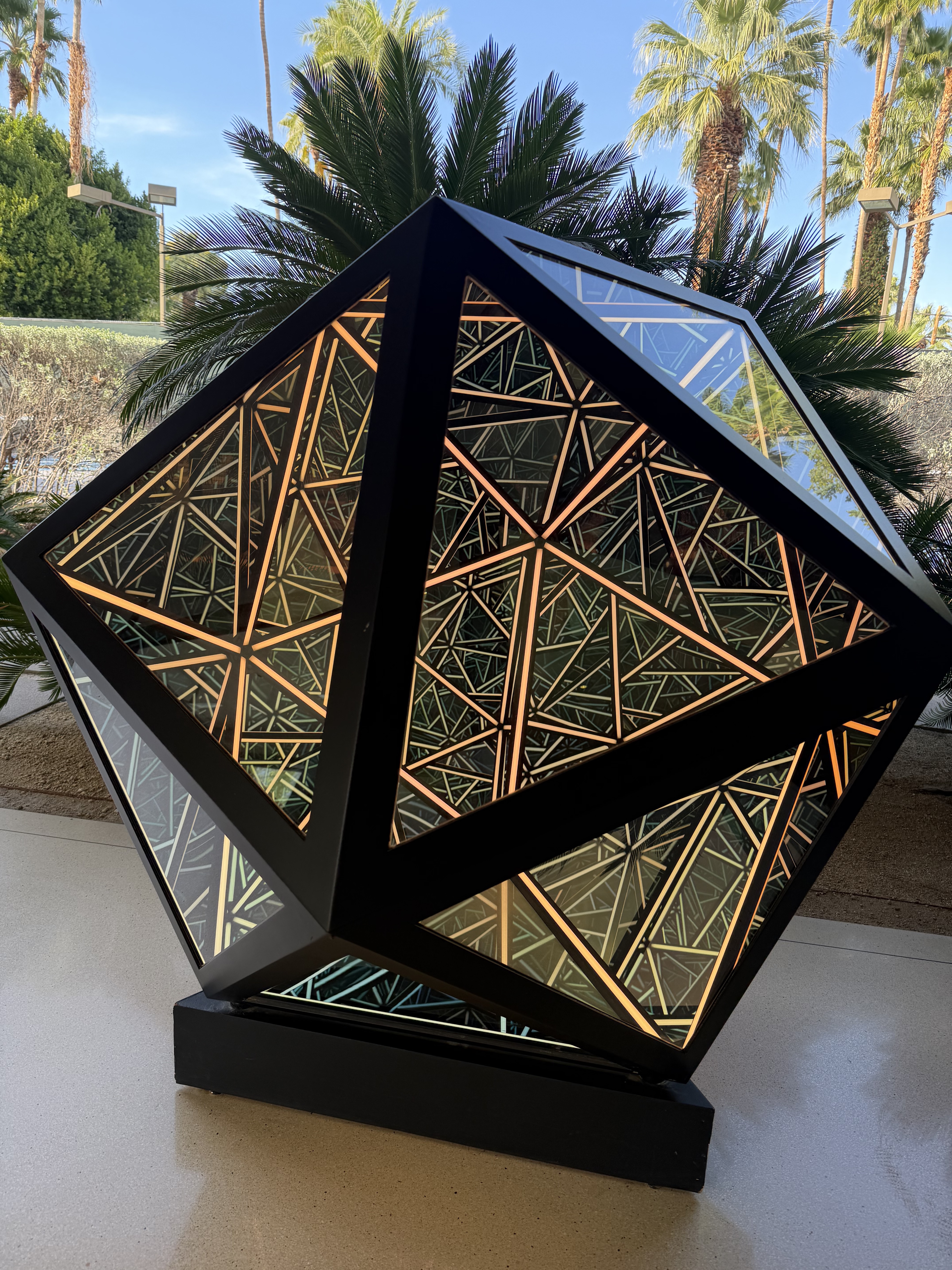
Portal Icosahedron, 2018
The Young British Artists were reshaping what sculpture and installation could mean, and across the Atlantic the legacy of Minimalism and Light and Space was being reconsidered by a new generation unwilling to accept its inherited boundaries. James absorbed both currents without being captured by either. He developed instead a practice oriented around a deeply personal set of questions: what happens when a physical object appears to contain something larger than itself, and what does that paradox reveal about perception, cosmos, and the nature of human experience. His early work, including the 2004 piece New York City 2, constructed from birch plywood and neon, already announced an artist interested in urban luminosity and the poetry of artificial light within structured form.
That piece carries within it a document of a specific place and a specific moment in time, New York in the years following seismic cultural disruption, seen through the cool yet tender lens of geometric containment. It is a collector's work of genuine historical interest, linking James's mature practice back to a rawer, more searching moment in his development and demonstrating that his engagement with light as subject was never a stylistic convenience but a sustained lifelong investigation. The breakthrough into his signature formal language came through his embrace of the Platonic and Archimedean solids, those ancient geometric forms that have fascinated philosophers, mathematicians, and artists for millennia. The icosahedron, the dodecahedron, the snub cube and the great rhombicosidodecahedron are not arbitrary choices.
Anthony James
Dodecahedron 40" (Solar Black), 2025
They carry centuries of symbolic weight, from Plato's association of the icosahedron with water and the cosmos to the Renaissance rediscovery of these forms as expressions of divine proportion. James works with this heritage knowingly, stripping the forms of mystical prescription while preserving their capacity to astonish. His Portal Icosahedron of 2018, built from steel, glass, and LED lights, remains one of his most discussed works, a piece that functions simultaneously as sculpture, architecture, and optical event. What distinguishes James from artists who simply deploy reflective geometry for visual effect is the quality of attention he brings to the interior life of each work.
His specialized glass, combined with precisely calibrated LED illumination, creates what appear to be infinite regressions of light within finite steel frames. Standing before a James piece, a viewer confronts the uncanny sensation that the object contains more space than the surrounding room, that the exterior world has somehow been turned inside out. This is not a trick. It is the result of deep material research and an almost obsessive commitment to the relationship between engineering and perception.
Anthony James
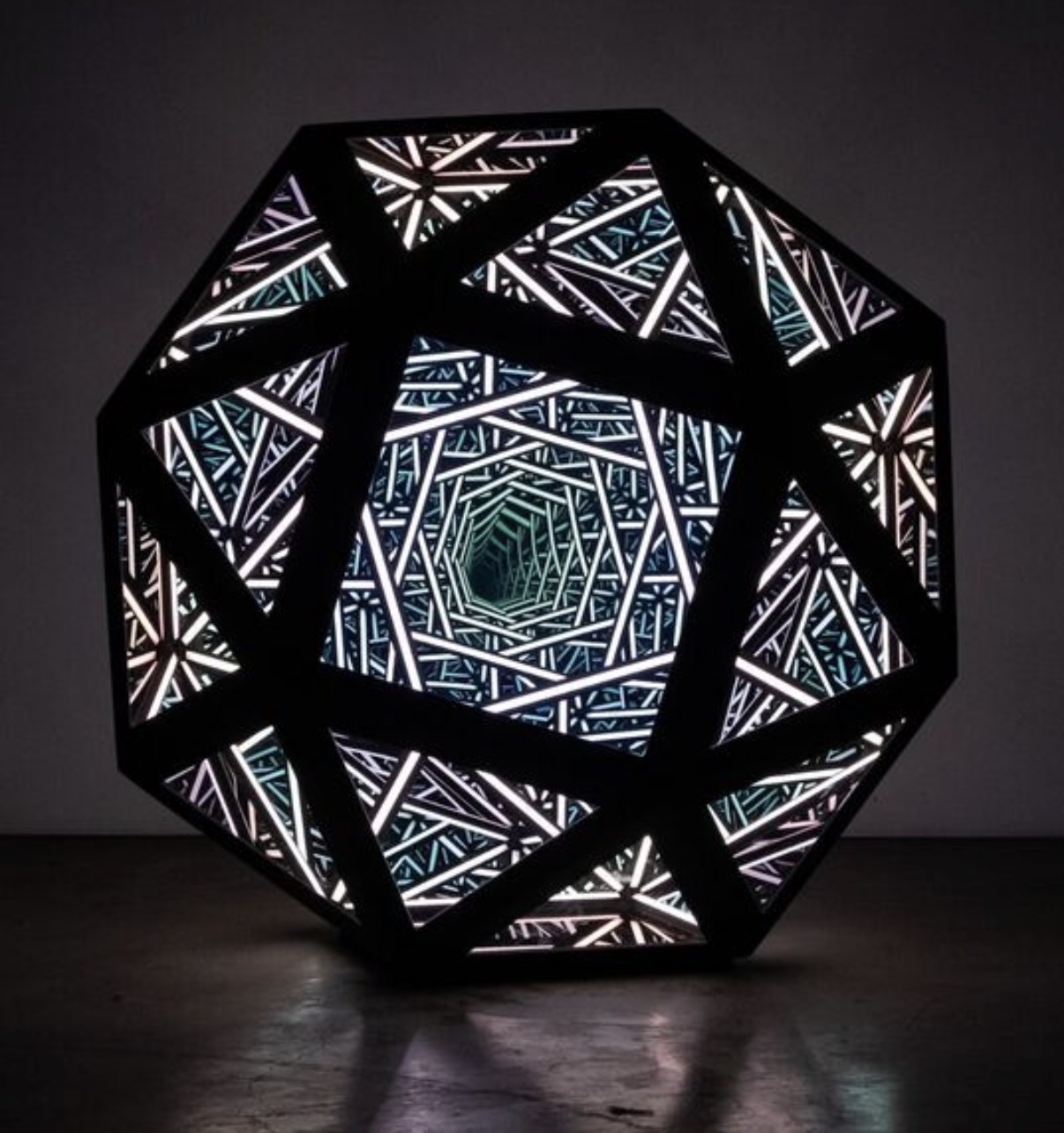
Snub Cube, 2018
The Snub Cube of 2018, in powder coated stainless steel, demonstrates this with particular elegance, its asymmetrical geometry catching light differently from every angle and rewarding the patient observer who takes the time to move around it. The Great Rhombicosidodecahedron of 2020 represents perhaps the fullest expression of his mature ambition. One of the most complex of the Archimedean solids, it presents sixty two faces and one hundred and twenty vertices, and in James's hands it becomes a kind of cosmological proposition. The work was made during a period of global withdrawal and stillness, and there is something in its self contained luminosity that speaks to that moment without being limited by it.
Collectors who acquired works from this period of James's practice have found that these pieces continue to deepen in resonance over time, their optical qualities shifting with the ambient light of different rooms and seasons. From a collecting perspective, James occupies a position of considerable interest and opportunity. His work sits at the confluence of several strong market currents: the ongoing collector enthusiasm for Light and Space and its successors, the growing institutional appetite for technology integrated sculpture, and the enduring appeal of work that functions powerfully in both private residential settings and large public or institutional contexts. His pieces have found homes in significant private collections and have been deployed in public settings where their capacity to transform architectural space becomes particularly evident.
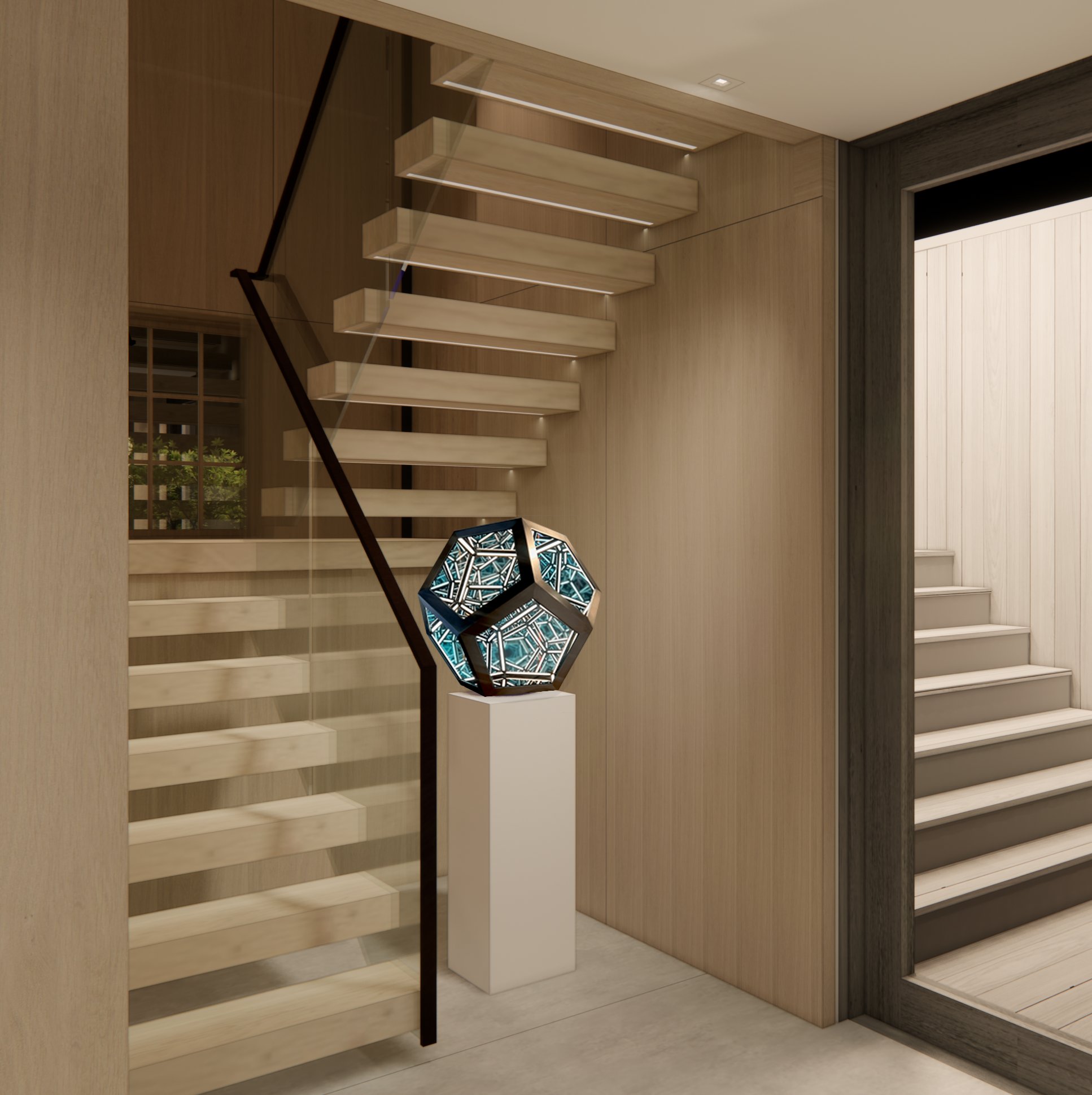
Anthony James
Dodecahedron (Solar Black), 2025
For collectors considering his work, the Dodecahedron series in its various scales and finishes offers a range of entry points, while earlier works such as New York City 2 provide historical depth and the pleasure of understanding an important practice from its roots. In the broader context of art history, James belongs to a lineage that includes James Turrell's investigations of perceptual light, Dan Flavin's consecration of the fluorescent tube as sculptural element, and the mirror and infinity explorations of Yayoi Kusama. Yet he is not derivative of any of these predecessors. Where Turrell dissolves the object into pure field and Kusama embraces the ornamental and the psychological, James insists on the integrity of the geometric form as a vessel, a container of infinite suggestion that remains resolutely present as a crafted physical object.
This balance between the transcendent and the material is distinctly his own. What matters most about Anthony James, as a cultural figure and as an artist whose work continues to evolve with genuine purpose, is that he is asking real questions through his practice. In an era saturated with imagery and overwhelmed by the ephemeral, his works demand a different quality of attention. They are slow works in the best sense, pieces that reveal themselves over time and that create around themselves a kind of silence.
For collectors, institutions, and viewers fortunate enough to spend time with them, that silence is not empty. It is full of light.