Anselm Reyle
Anselm Reyle Turns Excess Into Pure Brilliance
Artist Spotlight · The Collection Editorial
In the spring of 2008, visitors to the Kunsthalle Zurich encountered something that felt genuinely difficult to categorize: walls pulsing with neon light, canvases wrapped in crinkled metallic foil, and sculptures that seemed to oscillate between the showroom and the museum vitrine. Anselm Reyle had arrived in the international consciousness not with a whisper but with a full sensory confrontation. That exhibition crystallized what collectors, curators, and critics had been quietly noting for years: here was an artist with the nerve to ask what happens when beauty becomes almost too much, and the intelligence to make that question feel urgent. Reyle was born in Stuttgart in 1970 and came of age in a Germany still processing the seismic cultural shifts of reunification.
Anselm Reyle
This work is accompanied by a certificate of authenticity.
He studied at the Staatliche Akademie der Bildenden Künste Stuttgart before moving to Hamburg, where he attended the Hochschule für Bildende Künste. The rigorous German academic tradition gave him a grounding in art history that would prove essential, because his work is, at its core, a sustained and loving argument with modernism. He absorbed the lessons of postwar abstraction deeply enough to know exactly where to push back, and where to pay tribute. His artistic development accelerated in the early 2000s, when he began producing the foil paintings that would become his most recognizable contribution.
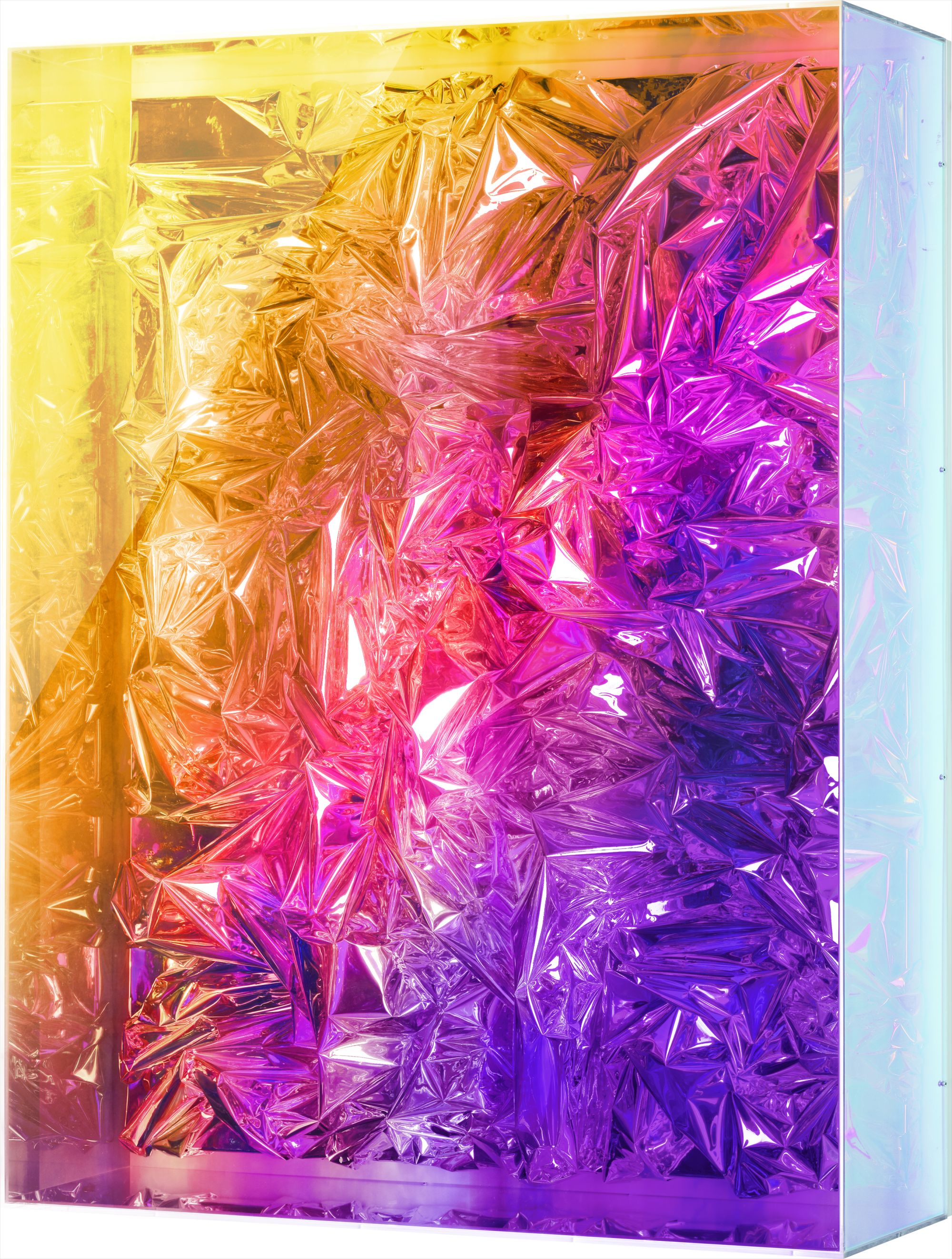
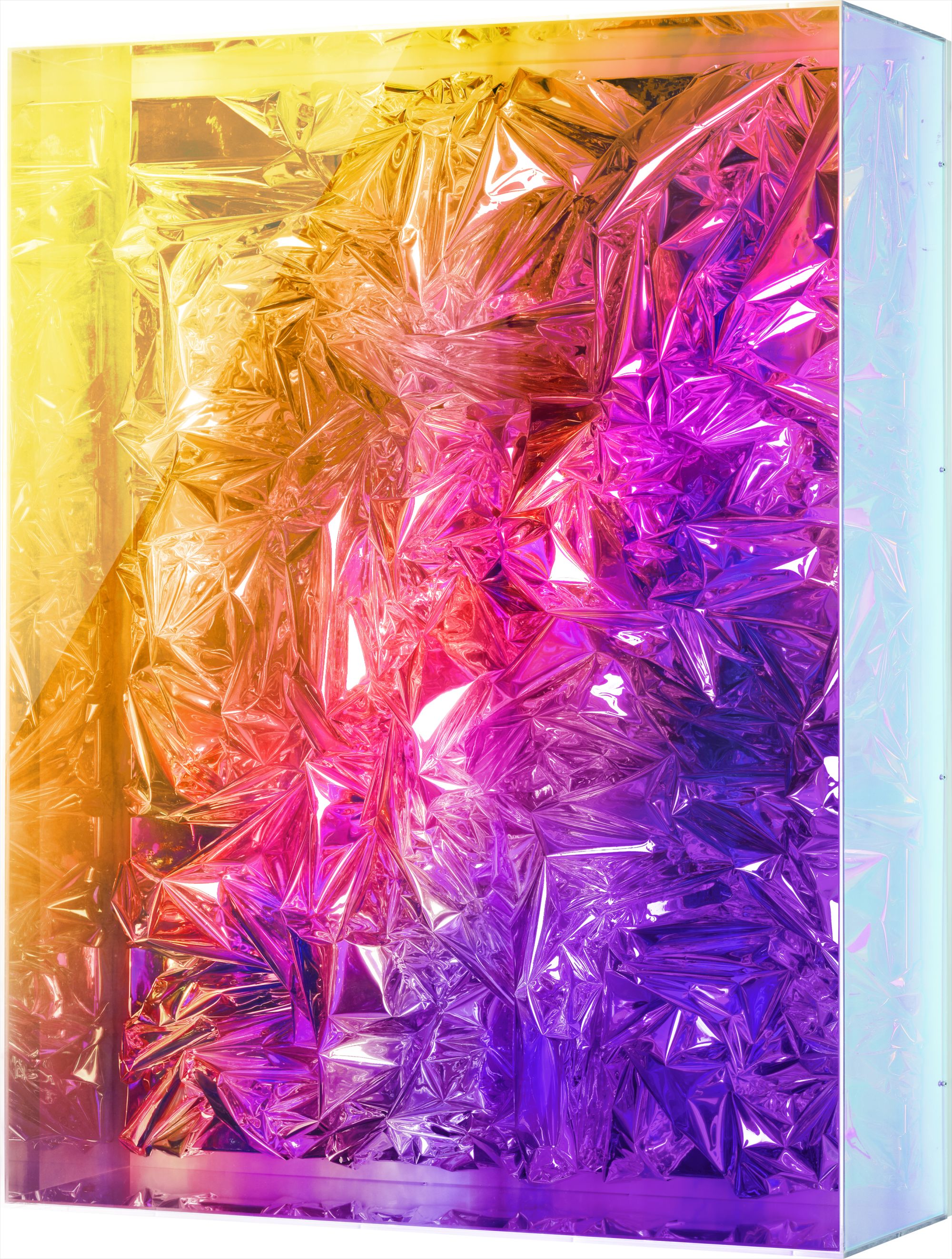
These works involve layers of crinkled, reflective metallic foil applied beneath or alongside resin, acrylic glass, and paint, creating surfaces that shift and shimmer depending on the viewer's position and the ambient light. The effect is simultaneously opulent and slightly destabilizing. Reyle was not simply making pretty objects. He was interrogating the very apparatus of taste, asking whether the line between decoration and fine art is a matter of aesthetics or simply of context.
Anselm Reyle
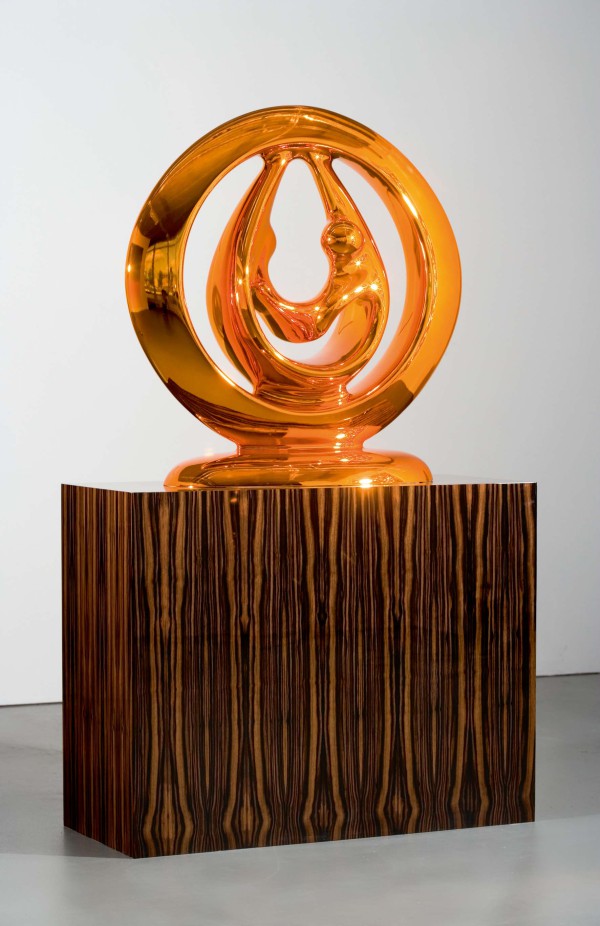
Intimacy, 2006
His striped canvases pushed a similar inquiry, invoking the legacy of artists like Frank Stella and Brice Marden while subjecting their austere geometry to a kind of chromatic exuberance that those forebears might have found alarming. Among the works that collectors and curators return to most consistently is "Intimacy" from 2006, a sculpture rendered in bronze with chrome optics and presented on a plinth veneered in rich macassar wood. The piece exemplifies Reyle's gift for elevating industrial and decorative materials into objects of genuine contemplative weight. The chrome surface catches and distorts whatever surrounds it, making the viewer part of the work while also holding them at a cool, reflective distance.
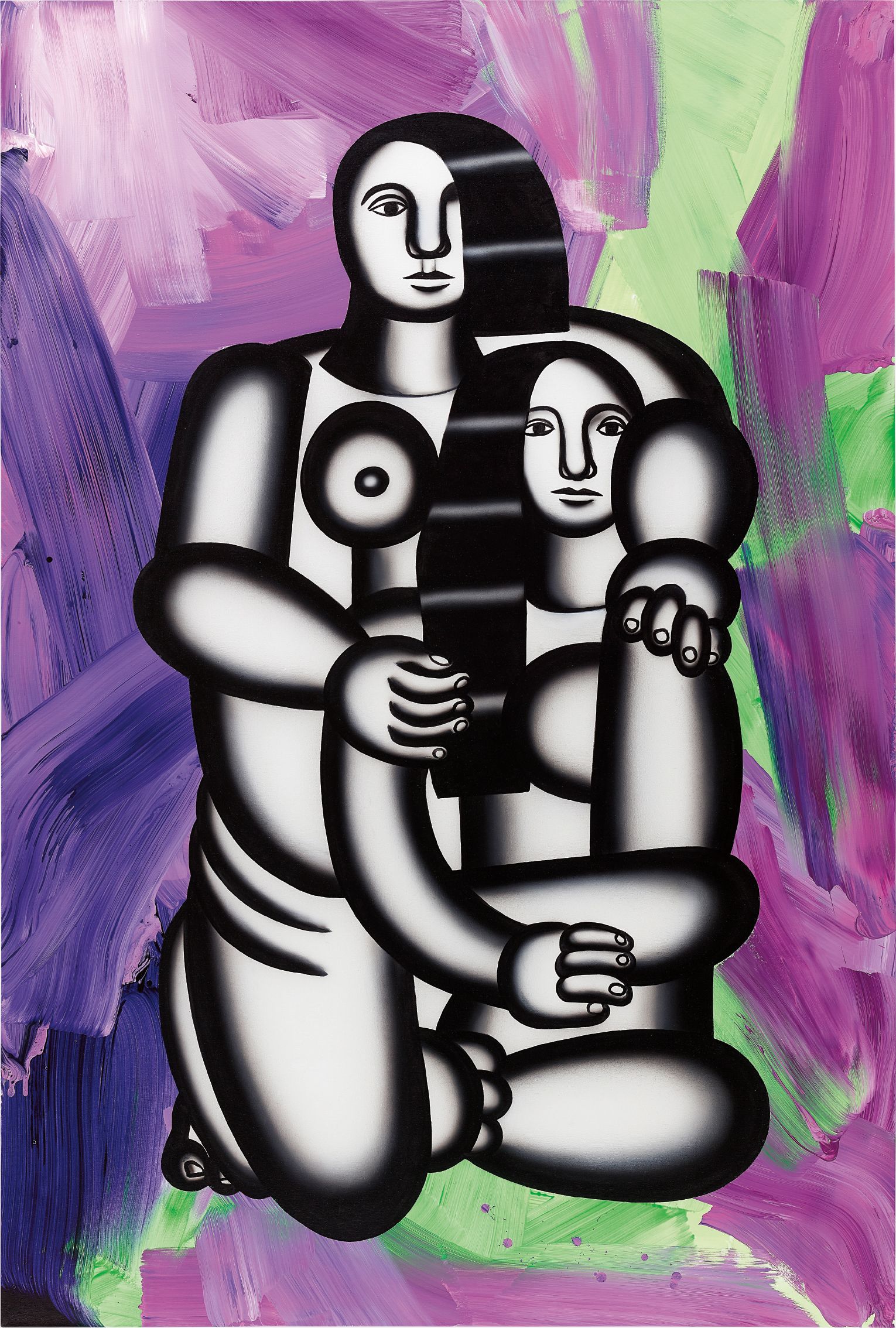
That same year he produced "Les deux figures (nues sur fond abstrait turbulent)," an oil on canvas that takes its title from a knowing nod toward figuration while delivering something far more turbulent and abstract in practice. The title functions almost as irony, or perhaps as an invitation to look harder. Works like "Black Earth" and "White Earth," both executed in mixed media on canvas within artist made frames, demonstrate how Reyle uses the frame itself as a compositional and conceptual element, refusing to let the artwork end where convention says it should. "29 Palms," an acrylic on canvas, shows his command of color as a force rather than a feature, with hues that press against the eye with cheerful insistence.
Anselm Reyle
Les deux figures (nues sur fond abstrait turbulent), 2006
Reyle's profile rose substantially through the mid to late 2000s as the international art market developed an appetite for work that felt both rigorously conceptual and visually immediate. His gallerist relationships with Almine Rech and Gagosian brought his work to a genuinely global audience, placing him in conversation with some of the most discerning private collections in Europe, the United States, and beyond. Auction results during that period confirmed what the primary market had already signaled: collectors were willing to commit serious resources to Reyle, recognizing that his work occupied a precise and defensible position in the history of postwar and contemporary abstraction. For anyone approaching the market today, the mixed media canvases within artist designed frames represent some of the most cohesive and collectible entries into his practice, combining his philosophical concerns with an immediate visual authority that reads powerfully across different kinds of interiors and collection contexts.
To understand Reyle fully, it helps to place him within a constellation of artists who have similarly interrogated the seams between high modernism and consumer visual culture. His sensibility has affinities with the work of Jeff Koons in its embrace of reflective surface and its willingness to flirt with the decorative, though Reyle's European formation gives his work a different register, one rooted more in the legacy of Arte Povera's reclamation of humble materials and the Düsseldorf school's analytical rigor. He shares with Wade Guyton and Sergej Jensen an interest in pushing painting toward its own limits, though his methods are more materially exuberant than either. The neon elements in his sculptures place him in dialogue with Dan Flavin and Bruce Nauman, but again the emotional temperature is different, warmer, more frankly seductive.
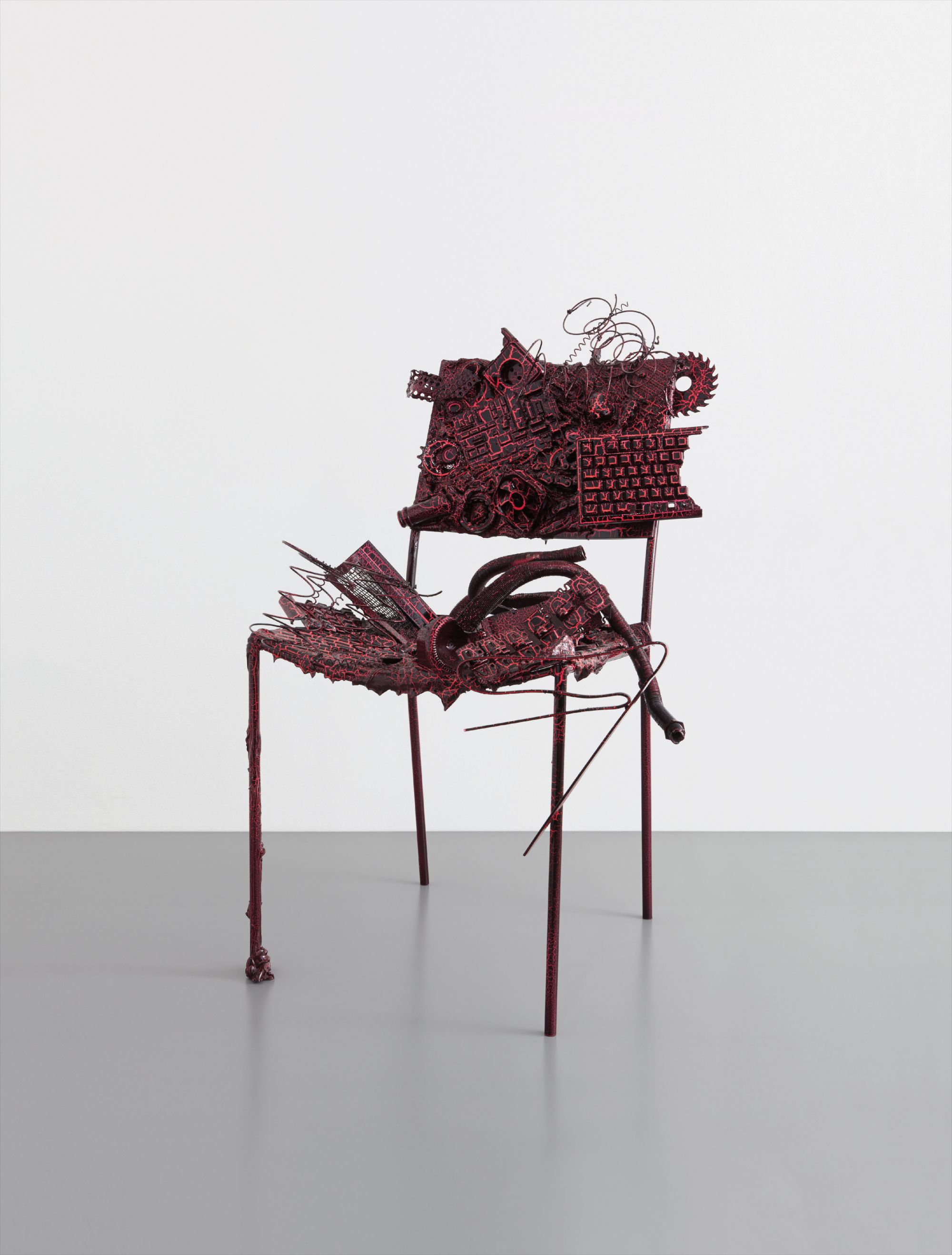
Anselm Reyle
Caruso
What makes Reyle matter today is precisely what made him controversial at the height of his early success: he refuses the false modesty that sometimes attaches itself to serious art. His work is allowed to be pleasurable. It is allowed to gleam. In a period when so much critical energy is spent on dematerialization and institutional critique, there is genuine intellectual courage in insisting that the visual experience of an object, its surface, its light, its sheer physical presence, remains a worthy subject for sustained artistic attention.
The Gemeentemuseum Den Haag recognized this, as have the collectors who have built significant holdings around his work. Reyle stands as one of the more important figures to emerge from the German art context in the past three decades, a painter and sculptor who takes the pleasures of looking seriously enough to make them mean something.