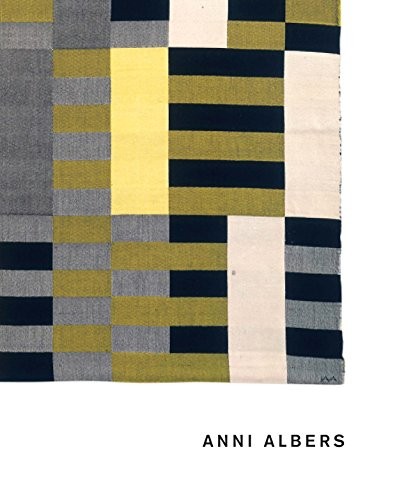
Anni Albers
Anni Albers: Weaving the Modern World Together
Artist Spotlight · The Collection Editorial
“Weaving is an old craft, and when it is good it is also art.”
On Weaving, 1965
In 2018, Tate Modern in London mounted the most comprehensive retrospective of Anni Albers ever assembled in Europe, drawing record crowds and reigniting a conversation that had been building for decades. Critics who had long situated her at the margins of the Bauhaus story suddenly found themselves confronted with an artist of extraordinary intellectual force and visual invention. The exhibition made plain what devoted collectors and textile scholars had quietly understood for years: Albers was not a supporting character in modernism. She was one of its essential architects.
Anni Albers
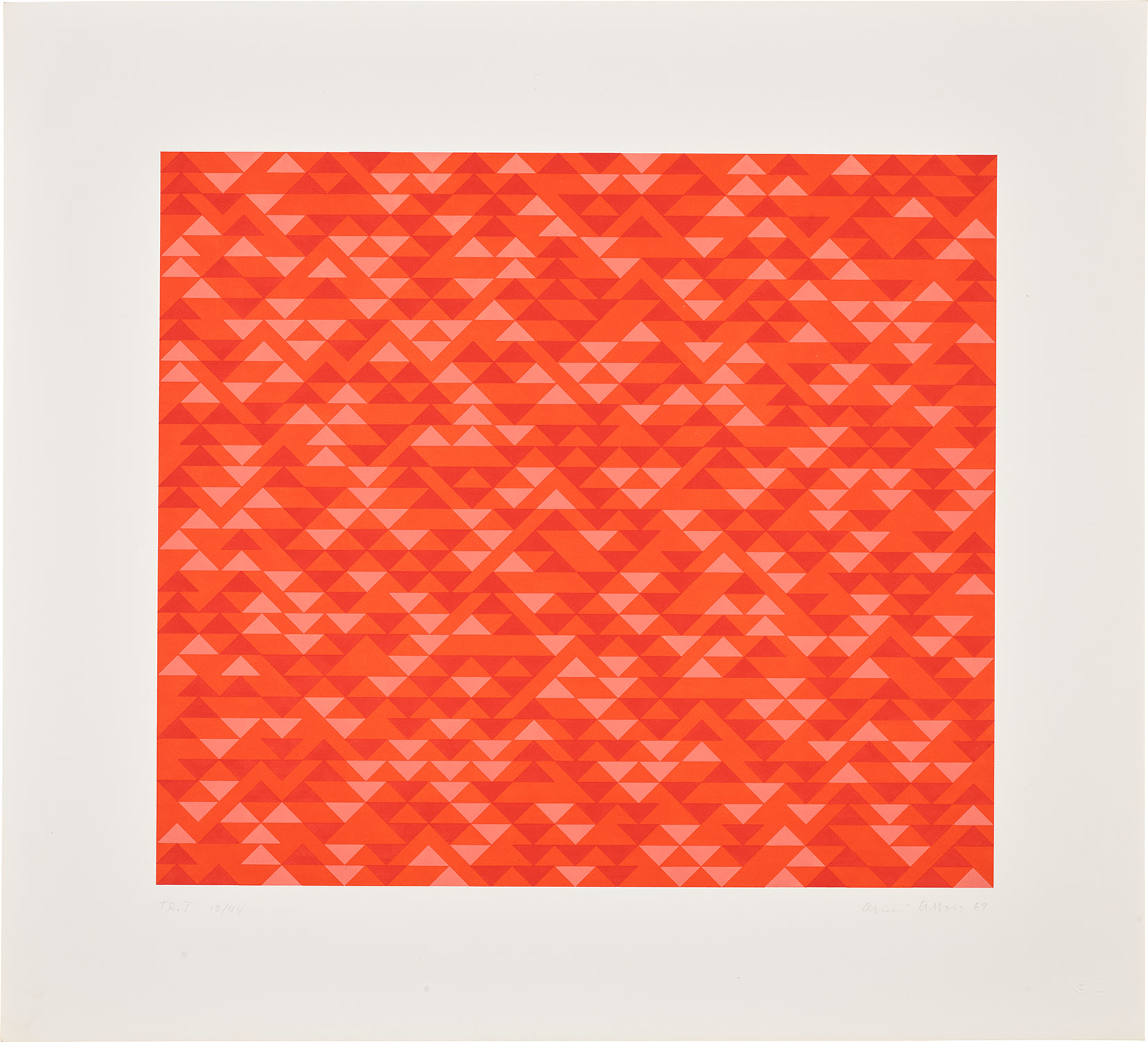
Tr I (g. 211, W. & D. 25)
Anni Albers was born Annelise Fleischmann in Berlin in 1899, into an affluent family that gave her access to culture and education but little preparation for the radical path she would choose. She studied painting briefly before enrolling at the Bauhaus in Weimar in 1922, drawn by the school's radical promise of dissolving the boundary between fine art and craft. The Bauhaus, however, directed women almost exclusively toward the weaving workshop, a policy that Albers would later reflect on with characteristic complexity. What might have been a constraint became the crucible of her life's work.
Under the mentorship of Georg Muche and later Paul Klee, whose teachings on form, rhythm, and pictorial structure left a permanent mark on her thinking, Albers developed a rigorous and deeply original approach to the loom. She came to understand weaving not as a decorative art but as a structural language, one capable of encoding meaning, generating visual tension, and achieving an aesthetic complexity equal to anything produced on canvas or paper. She became a master weaver and an increasingly influential teacher at the school, which relocated from Weimar to Dessau in 1925 and then to Berlin before closing under Nazi pressure in 1933. The closure of the Bauhaus forced a decisive turning point.
Anni Albers
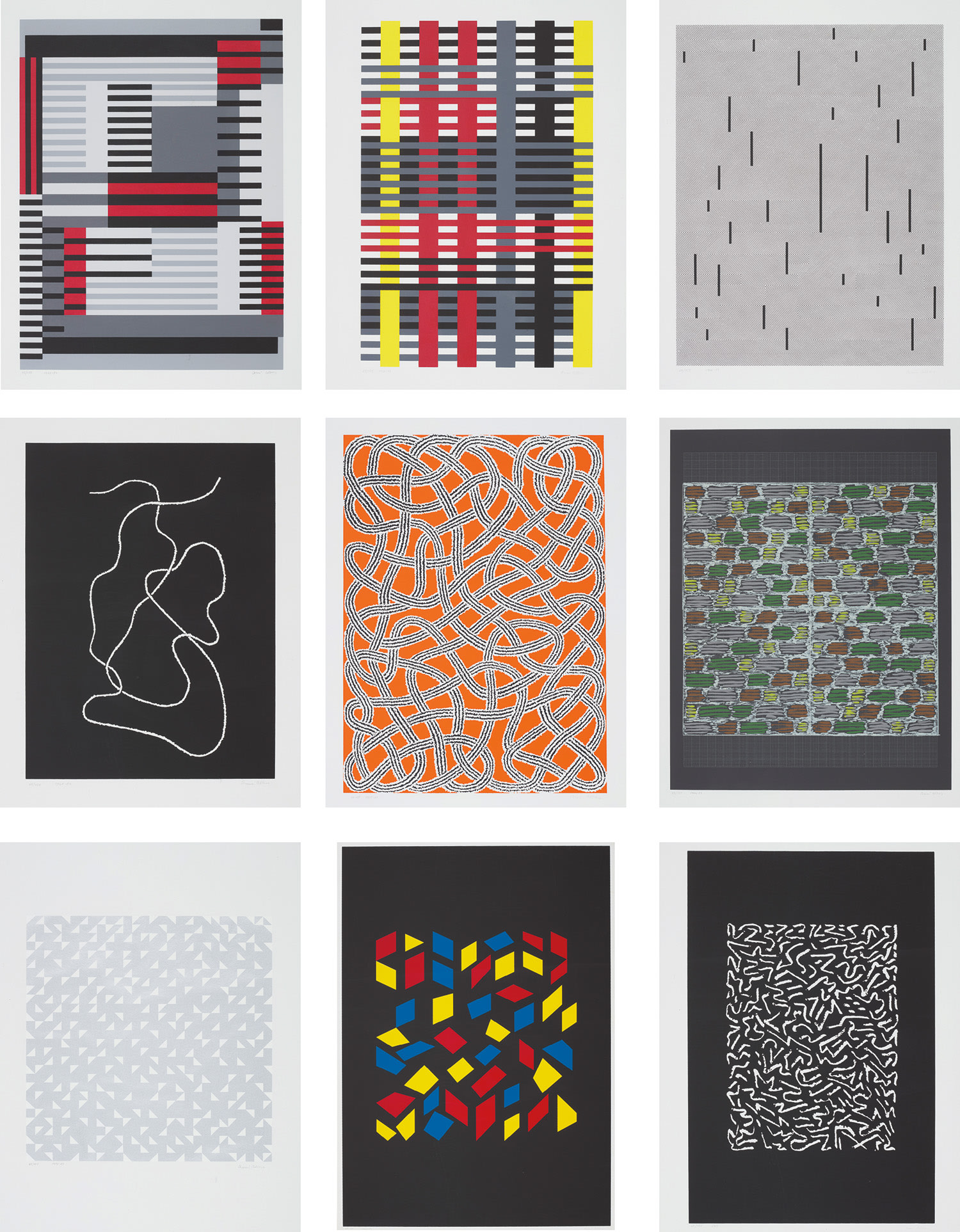
Connections (W & D. 71-79)
Albers and her husband, the painter Josef Albers, accepted an invitation from Black Mountain College in North Carolina, arriving in 1933 as part of a remarkable emigration of European modernists to the United States. At Black Mountain, Anni taught weaving and immersed herself in the study of pre Columbian textiles during trips to Mexico and Peru, encounters that deepened her understanding of geometric structure and the communicative power of pattern. This period of cross cultural study was transformative, and its influence can be traced clearly through the bold geometric abstractions that define her mature work. By the time Albers and Josef settled permanently in New Haven, Connecticut, following his appointment at Yale in 1950, her reputation was well established in American art circles.
“Art is something that opens our eyes, our ears, our hearts.”
Anni Albers: On Designing, 1959
In 1949 she became the first textile artist to be given a solo exhibition at the Museum of Modern Art in New York, a landmark moment that forced institutional reconsideration of what counted as art. Her book On Designing, published in 1959, and On Weaving, published in 1965, established her as one of the most thoughtful and articulate theorists of visual and material form working anywhere in the world. These texts remain foundational reading. In the 1960s and 1970s, Albers turned with sustained intensity toward printmaking, producing a body of graphic work that translated her textile sensibilities into lithograph, screenprint, and etching.
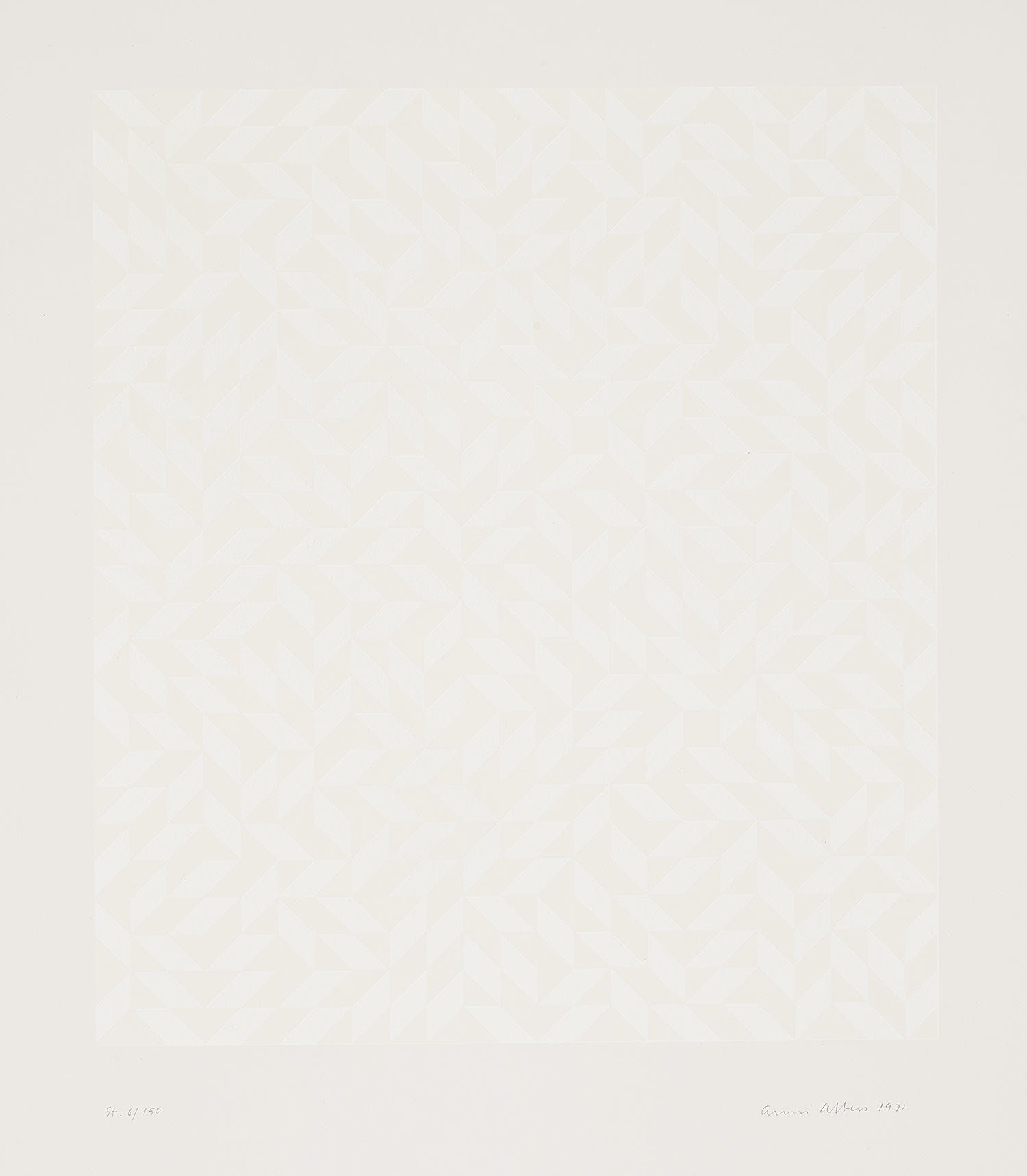
Anni Albers
St (W. & D. 28)
Works such as Tr I and Tr II, her lithographs on Arjomari paper, demonstrate how completely she understood the structural logic of a woven surface and how fluently she could transpose that logic into another medium. The Second Movement series, produced as etchings and aquatints on Arches Cover paper, carries the same quality of meditative geometric inquiry that characterized her weaving, rendered now in the intimate register of works on paper. Her Connections portfolio, published in a limited edition of 125 by Fausta Squatriti in Milan, gathers work spanning from 1925 to 1983, offering a rare and deeply satisfying view across almost six decades of creative thought. These prints are among the most collectible works she produced, and their availability on the secondary market reflects the sustained and growing demand for her graphic output.
“Let materials lead the way.”
Anni Albers
For collectors, Albers presents a compelling proposition that rewards close attention. Her works on paper sit at the intersection of several powerful collecting currents: Bauhaus history, geometric abstraction, feminist art history, and the broader reassessment of craft as fine art. The market for her prints has strengthened considerably since the Tate retrospective and subsequent exhibitions at the Guggenheim Bilbao and other major institutions brought her work to new international audiences. Collectors approaching her graphic work should look for strong impression quality, clean margins, and clear provenance through reputable galleries or publishers such as Squatriti.
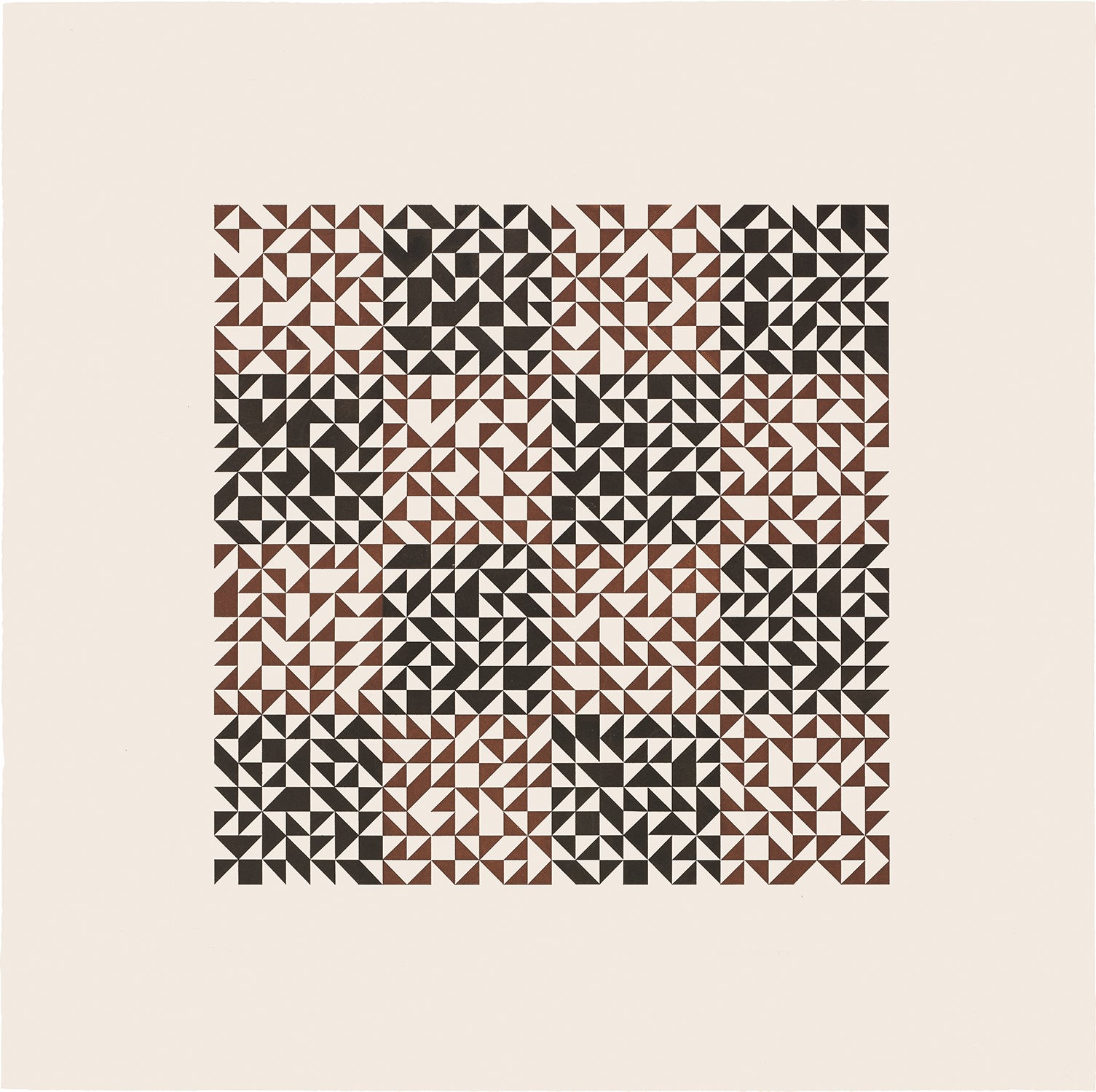
Anni Albers
Second Movement IV (T. 16, W. & D. 57)
The limited edition portfolios represent particularly strong long term value, combining historical significance with visual immediacy. Albers occupies a vital position in a constellation of artists who reconceived the relationship between structure, material, and abstract form in the twentieth century. Her thinking runs in parallel with and sometimes directly influenced artists such as Sol LeWitt, whose serial geometric logic owes something to the weaving tradition she theorized, and Agnes Martin, whose grids carry a meditative quality that resonates with Albers's own. Within the Bauhaus lineage she stands alongside Gunta Stölzl and Otti Berger as one of the weaving workshop's most consequential figures, while her graphic work places her in confident conversation with Josef Albers, Vasily Kandinsky, and Paul Klee, the teachers and peers who shaped her formation.
Anni Albers died in 1994 in Orange, Connecticut, at the age of 94, having worked with undiminished curiosity and precision into the final decades of her life. Her legacy is one of rare integrity: an artist who chose a material that the art world dismissed, mastered it so completely that the art world was forced to reconsider its own categories, and then extended her inquiry into new media without ever losing the essential quality of thought that made her work distinctive. To collect Albers is to invest in one of modernism's most rigorous and beautiful minds, and in a vision of making that insists, with quiet but irresistible authority, that structure itself can be a form of poetry.
Explore books about Anni Albers