Annette Messager
Annette Messager, Weaving the World Anew
Artist Spotlight · The Collection Editorial
“I have always worked with what is small, fragile, and intimate, things that are supposed to be without value.”
Annette Messager
When the French pavilion at the 2005 Venice Biennale unveiled Casino, Annette Messager's sprawling, breathing installation of stuffed animals, scattered limbs, and cascading nets, the art world stopped in its tracks. The work pulsed with a kind of dark carnival energy, part fairy tale and part fever dream, and the jury awarded it the Golden Lion for best national pavilion. It was a moment that felt both triumphant and inevitable, a formal recognition of an artist who had spent four decades building one of the most singular and emotionally alive bodies of work in contemporary art. For collectors and institutions who had long championed her practice, Venice was simply the world catching up.
Annette Messager
Mes Ouvrages (Possession)
Messager was born in Berck, in northern France, in 1943, and came of age in a country still reshaping its cultural identity in the aftermath of the Second World War. She studied at the École Nationale Supérieure des Arts Décoratifs in Paris during the 1960s, a period of enormous intellectual ferment, when French feminism was gathering force and artists across Europe were challenging the boundaries between fine art, craft, and the domestic sphere. Messager absorbed all of it, but she also looked inward, toward the rituals of girlhood and the quiet, coded labor of women's lives: knitting, embroidery, collecting, tending. These were not merely subjects for her.
They became her methods. Her early series from the 1970s established the conceptual and emotional territory she would explore for the rest of her career. Works such as Ma Collection de Proverbes, in which she embroidered misogynistic French proverbs onto fabric and hung them like domestic samplers, revealed a sharp and unsettling intelligence operating behind a deceptively modest surface. She called herself by shifting titles throughout this period, including Annette Messager Collectionneuse, Annette Messager Artiste, and Annette Messager Femme Pratique, each identity a mask held up and examined.
Annette Messager
Mes Petites Effigies
This ongoing performance of selfhood, this refusal to settle into a single role, was both a feminist provocation and a genuinely philosophical inquiry into identity and representation. By the 1980s and into the 1990s, Messager's installations had grown in physical scale and emotional complexity. She began incorporating taxidermy, particularly the small, soft bodies of sparrows dressed in hand knitted garments, alongside gelatin silver photographs of fragmented human body parts. These juxtapositions of the tender and the uncanny became her signature register.
“I want to tell stories. My work is a kind of narrative, always.”
Annette Messager
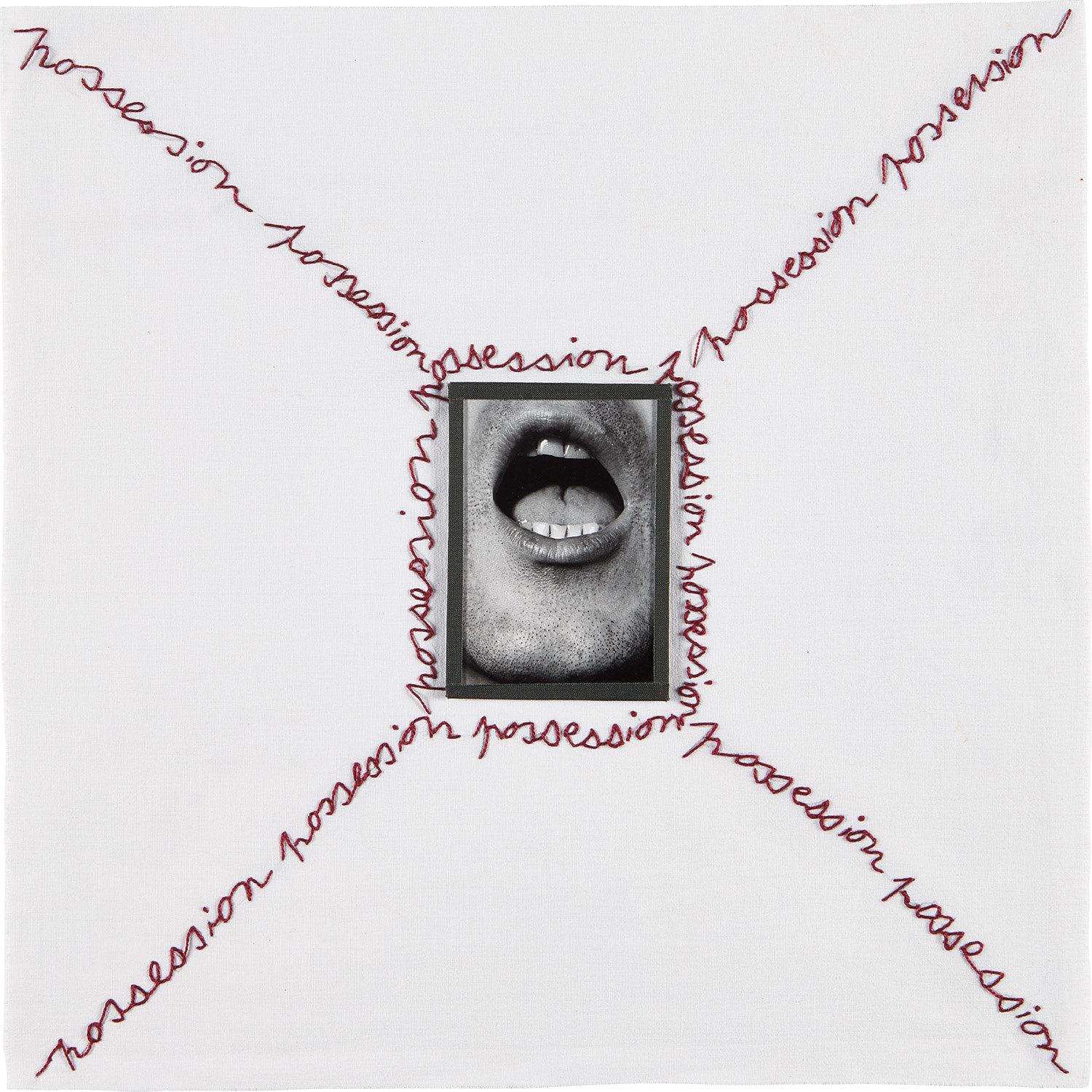
Works from this period introduced nets and suspension as structural elements, with objects hanging, swaying, and gathering in formations that suggested both capture and flight. The body, always the body, appeared in pieces: hands, eyes, feet, photographed close and printed small, pinned under glass or gathered into assemblages that felt like votive offerings or evidence from some intimate, unnamed ritual. Among the works available through The Collection, Mes Ouvrages (Possession) exemplifies Messager's ability to make photography feel utterly unlike photography. A gelatin silver print mounted on fabric and embellished with embroidery, it collapses the distance between image and object, between the mechanical and the handmade.
Annette Messager
Mes vœux (Avec ton visage)
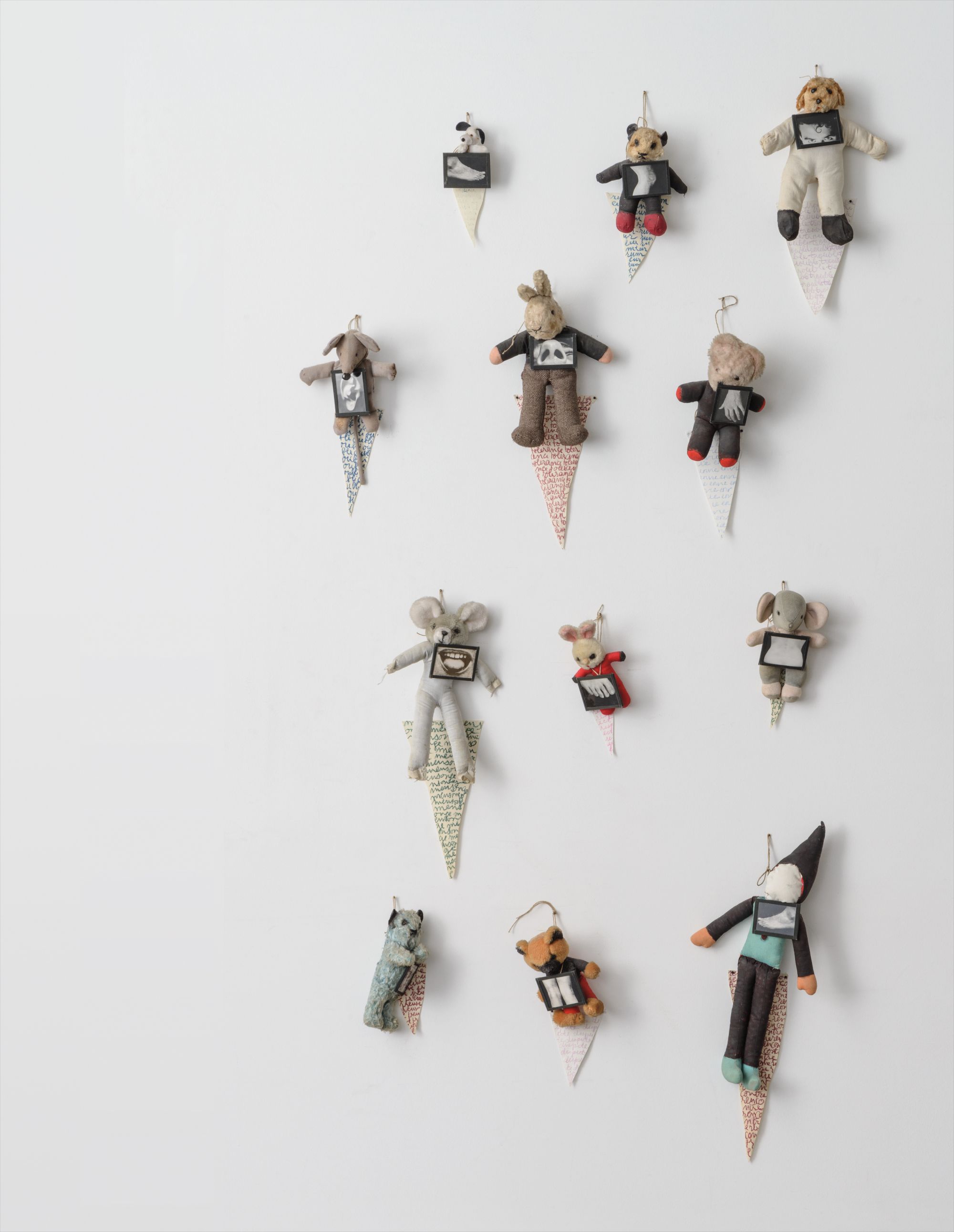
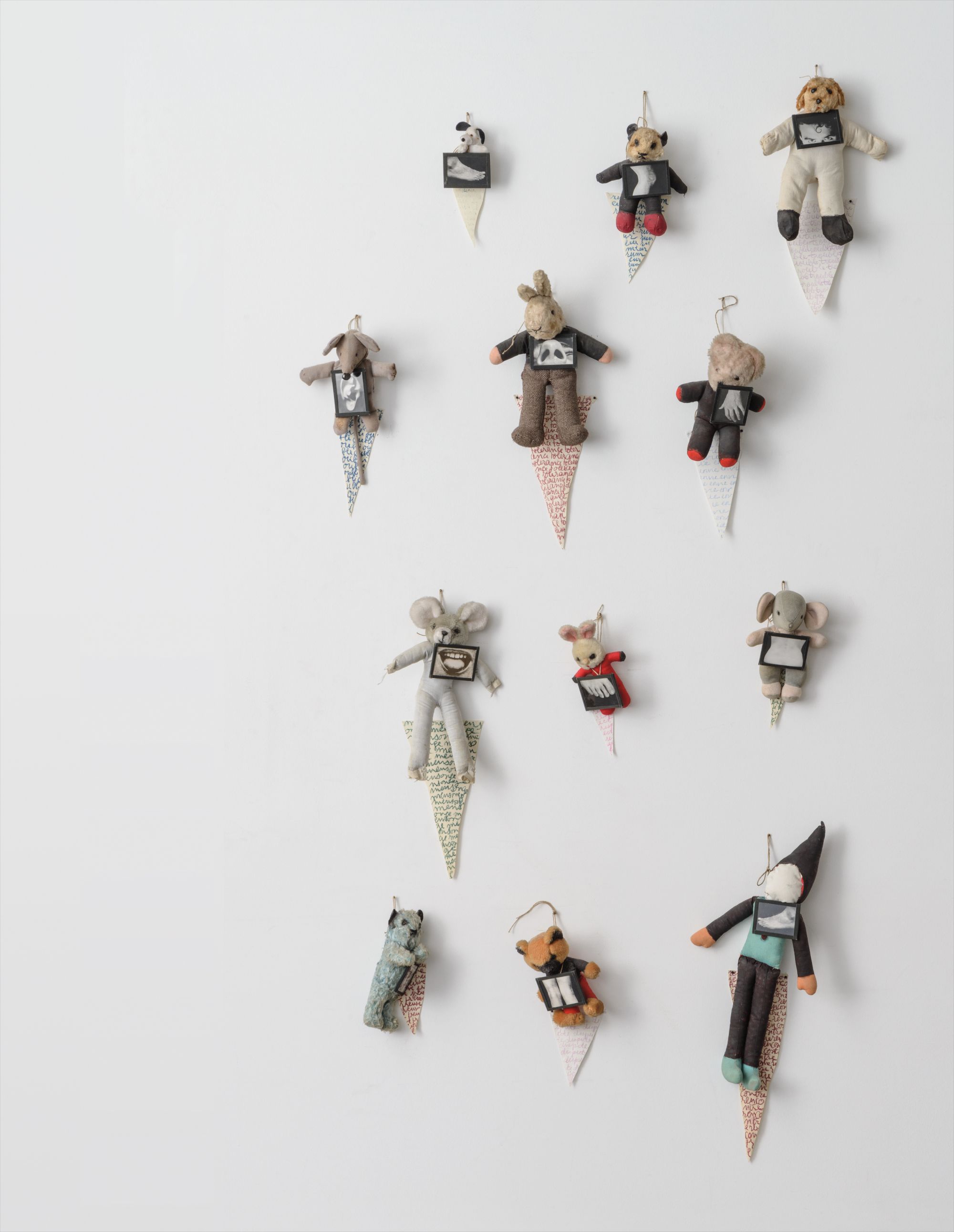
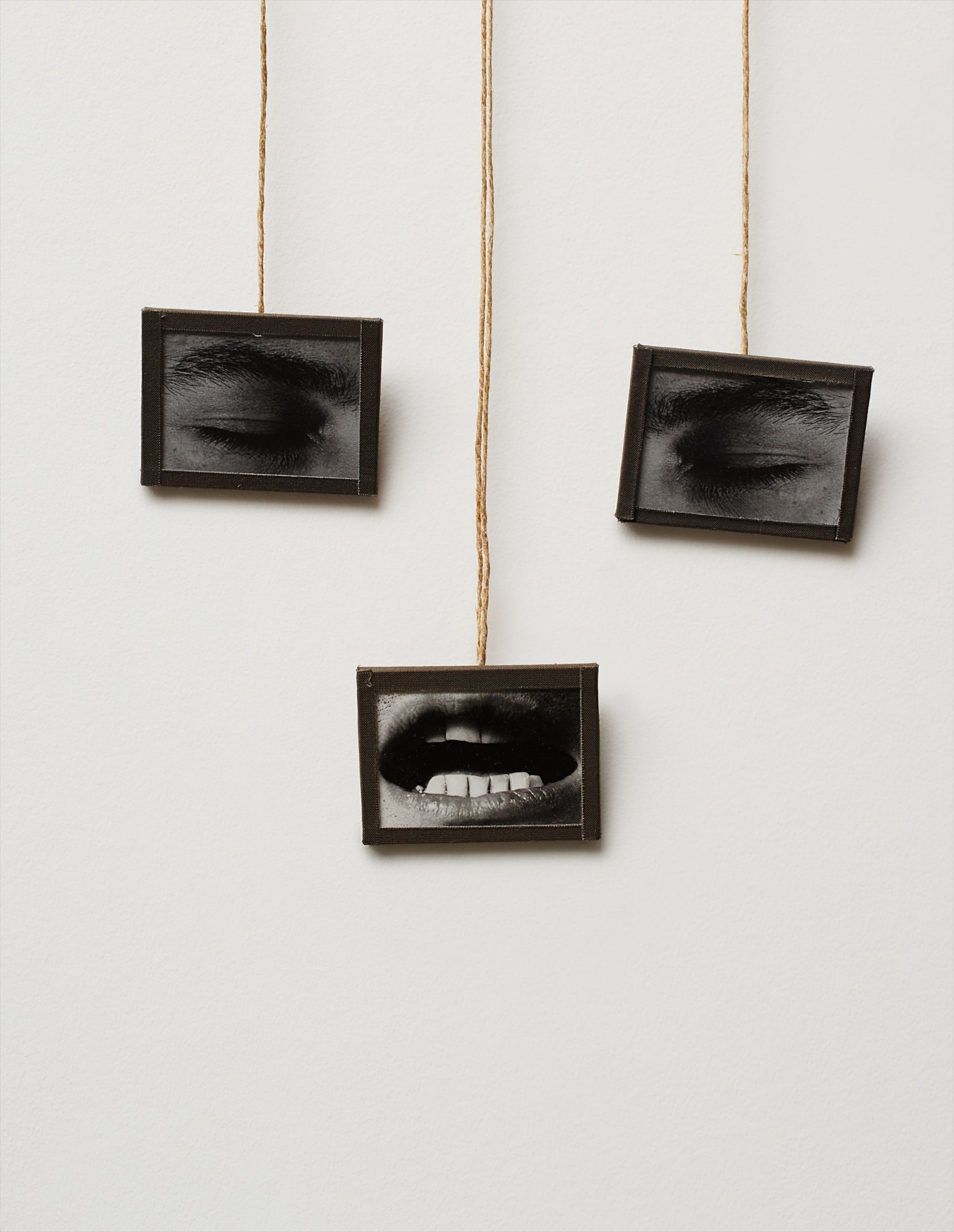
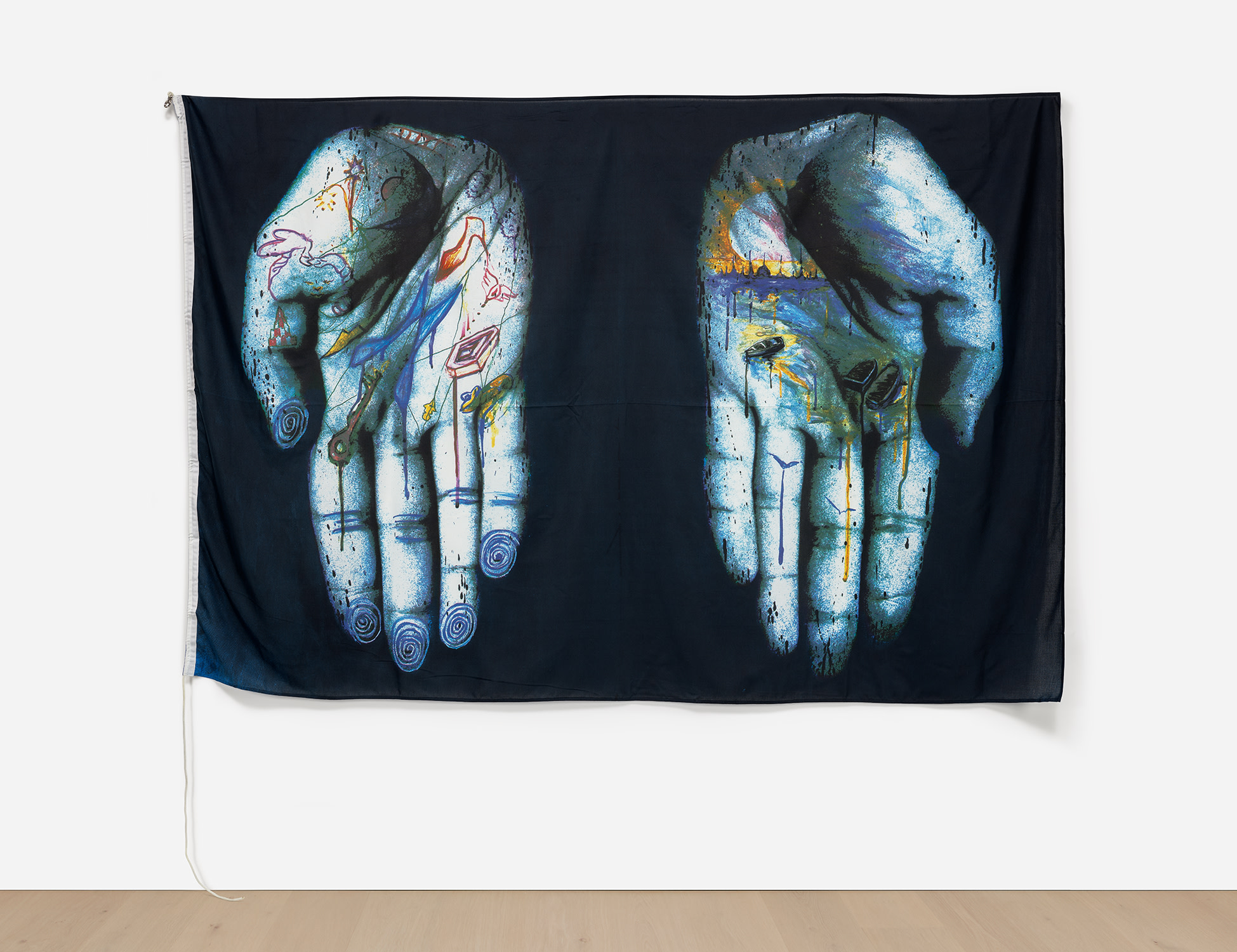
Mes Petites Effigies brings together plush toys and gelatin silver prints under glass with colored pencil drawn directly onto the wall, creating an environment that hovers between a child's bedroom and a cabinet of curiosities. Mes Voeux (Avec ton visage), in three parts and executed in chromogenic prints bound with tape and thread, carries the votive spirit that runs through so much of her work: these are wishes, offerings, tokens of longing. The monumental screenprint on polyester flag, simply titled Annette Messager, brings her name and her image into the vocabulary of public proclamation, as if claiming space in the civic world on her own terms. For collectors, Messager's work occupies a fascinating position in the market.
Her photographs and works on paper offer points of access across a range of price points, while her large scale installations remain among the most ambitious and physically complex works a serious collector could acquire. Institutions have led the way: the Centre Pompidou in Paris holds a significant body of her work, as does MoMA in New York and the Guggenheim. Private collectors drawn to her practice tend to be those who understand that the most meaningful art does not separate beauty from discomfort, and that objects rooted in the domestic and the feminine carry a radical charge that has only grown more legible over time. The embroidered texts, the pinned photographs, the swaddled birds: these are not decorative.
Annette Messager
Annette Messager
They are arguments, made with great formal sophistication. Messager's place within art history is best understood alongside contemporaries who were similarly rethinking what materials and methods were permissible in serious art. Louise Bourgeois, whose spider sculptures and fabric works shared Messager's interest in the body, memory, and the psychic weight of domestic labor, is a natural companion. So too is Sophie Calle, whose photographic and narrative investigations of intimacy and surveillance rhyme with Messager's early identity performances.
Further afield, the assemblage traditions of Joseph Cornell and the feminist conceptualism of artists like Judy Chicago provide useful coordinates, though Messager is not quite like any of them. She is genuinely sui generis, which is what makes her so rewarding to collect and to study. What makes Messager matter urgently today is not only the formal originality of her practice but the questions she has never stopped asking. Who tells the stories of women's inner lives?
What do we do with tenderness when the culture asks us to treat it as weakness? How do fairy tales shape the psyche, and what happens when we pull them apart stitch by stitch? Her work answers these questions not with manifestos but with objects, with the particular gravity of things that have been touched and transformed. Decades after her first exhibitions in Paris, her installations continue to arrive with the force of something both deeply familiar and genuinely strange.
That combination, the known made new, is the rarest thing in art.
Explore books about Annette Messager
Annette Messager
Paul Ardenne
Annette Messager: Faire connaissance
Centre Pompidou
Annette Messager: The Messengers
Paul Schimmel
Annette Messager
Alfred Pacquement
Annette Messager: Labyrinthine Universe
Musée d'Art Moderne et d'Art Contemporain