Anna Park
Anna Park Draws the World Alive
Artist Spotlight · The Collection Editorial
In the galleries that have come to define emerging contemporary art over the past several years, few presences announce themselves with quite the force of Anna Park's large scale drawings. When James Cohan Gallery in New York presented her work to an increasingly attentive audience, collectors and critics alike found themselves standing before sheets of paper that seemed to vibrate with nervous, jubilant life. Park, born in 1994 and raised between Korean and American cultural worlds, has built a practice that is as technically rigorous as it is emotionally immediate, and the art world has responded with a enthusiasm that feels entirely deserved. Park grew up shaped by the particular duality of the Korean American experience, a life lived at the intersection of two distinct cultural vocabularies, two sets of social rituals, two ways of understanding what it means to gather, to celebrate, and to belong.
Anna Park
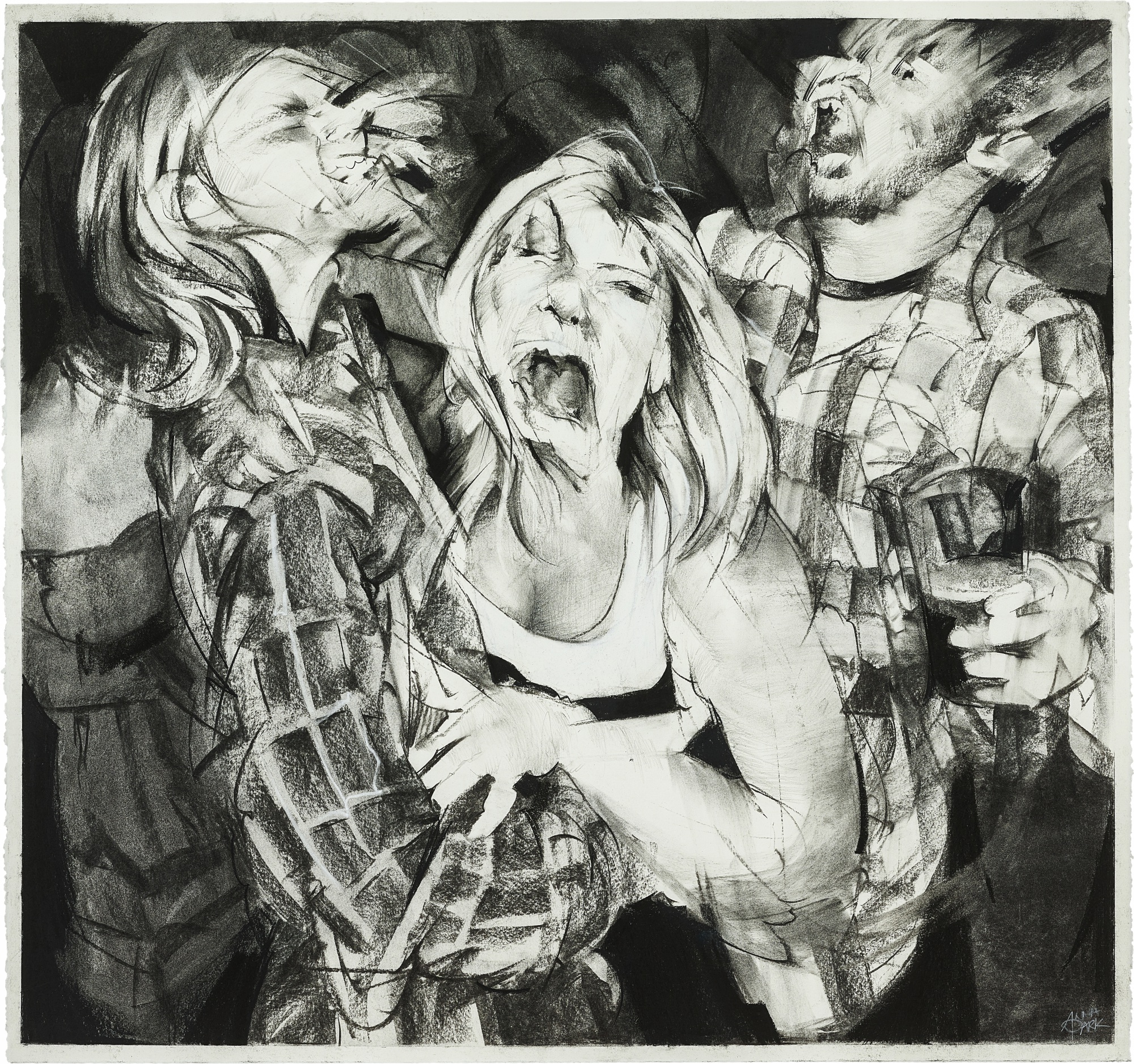
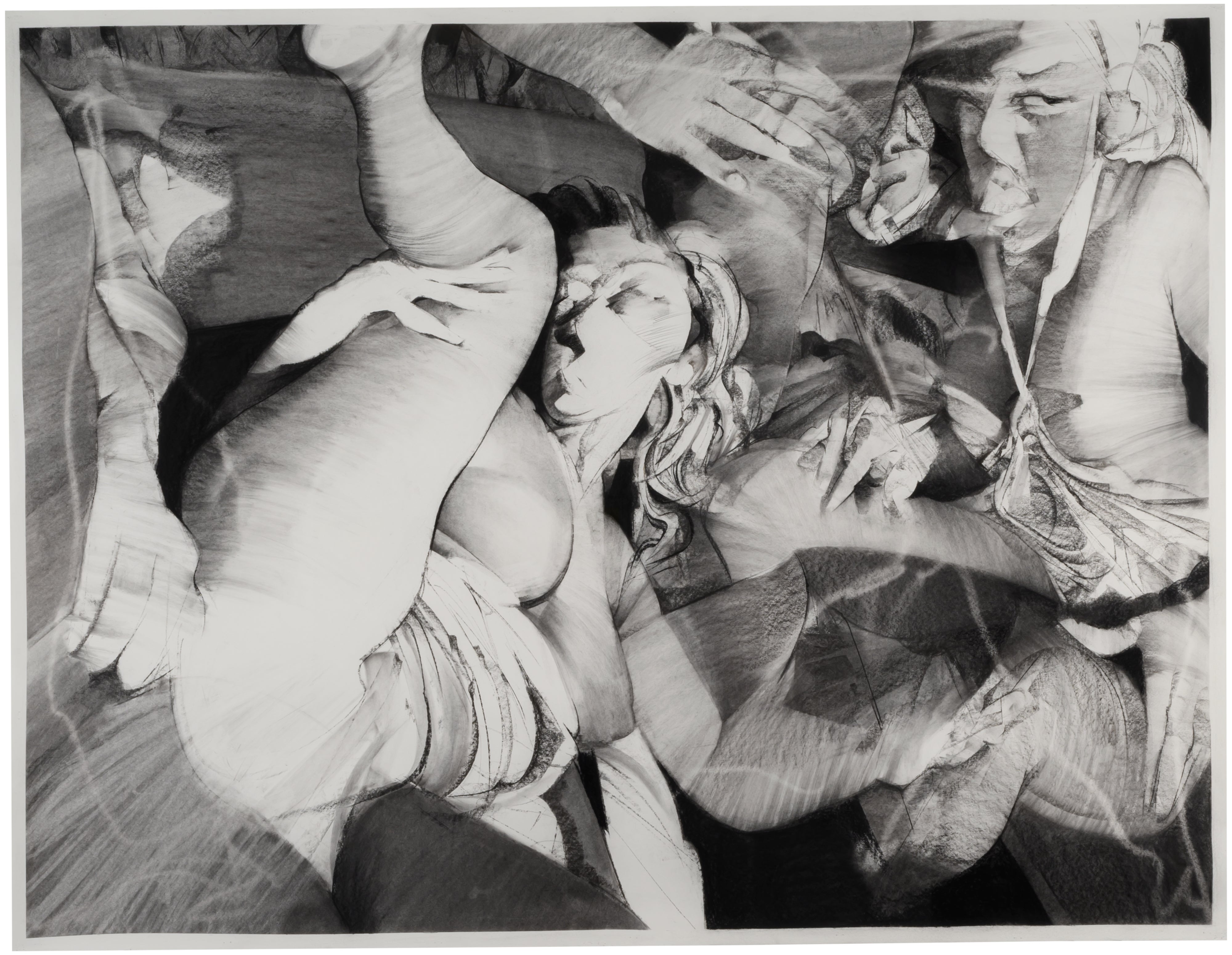
Catching Feelings, 2020
That biographical texture saturates her work without ever becoming didactic. She studied at the School of Visual Arts in New York, immersing herself in a city whose streets and parties and dense social choreography would become the primary subject matter of her art. New York gave her the raw material. Her own restless intelligence gave her the means to transform it.
The development of Park's practice has followed a logic that feels both inevitable and thrillingly original. She works almost exclusively in graphite, charcoal, and oil stick, a deliberately constrained palette that forces every expressive demand onto the quality of the mark itself. There are no colors to lean on, no atmospheric washes of paint to soften or seduce. What Park offers instead is line, pressure, smear, and accumulation.
Anna Park
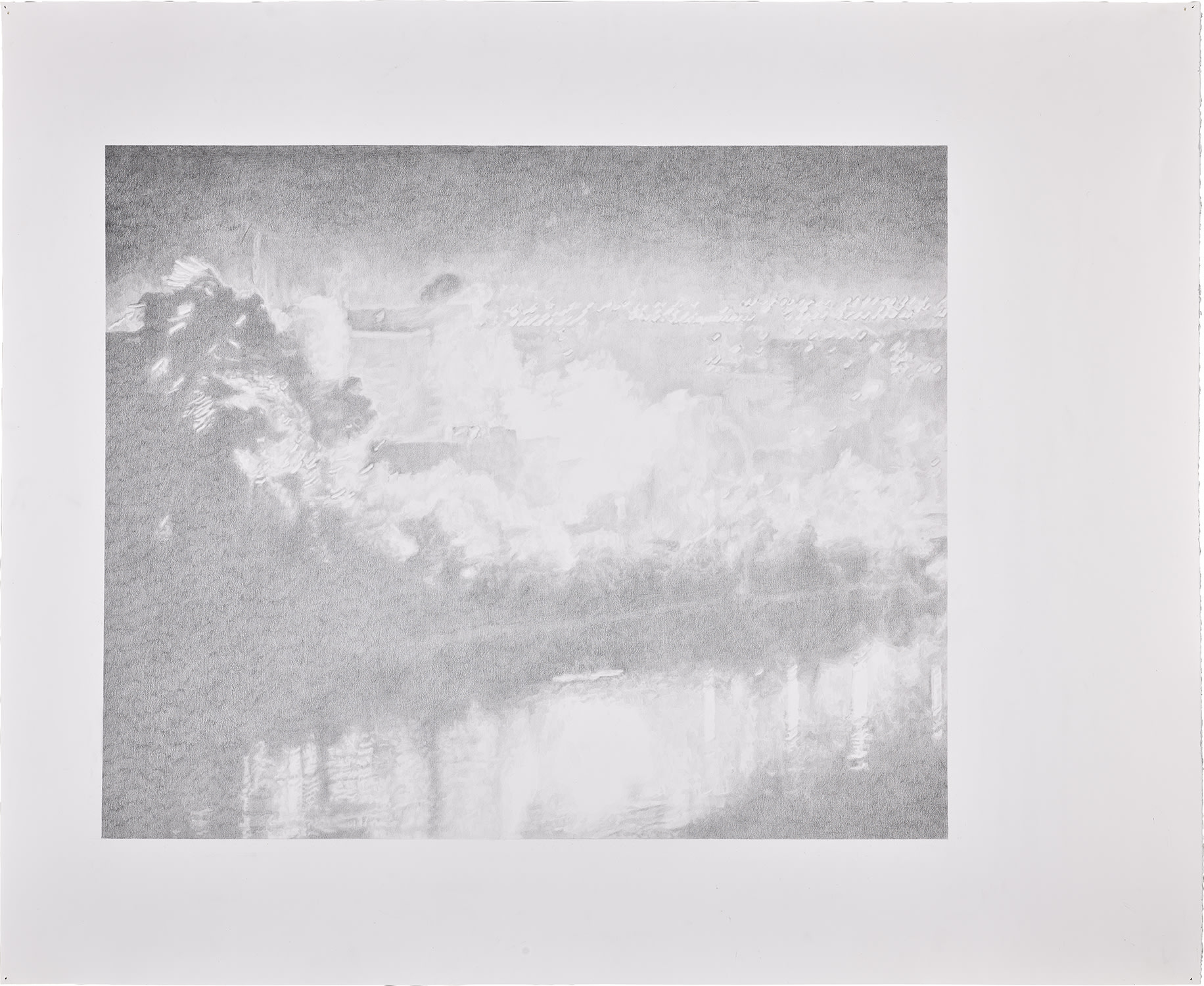
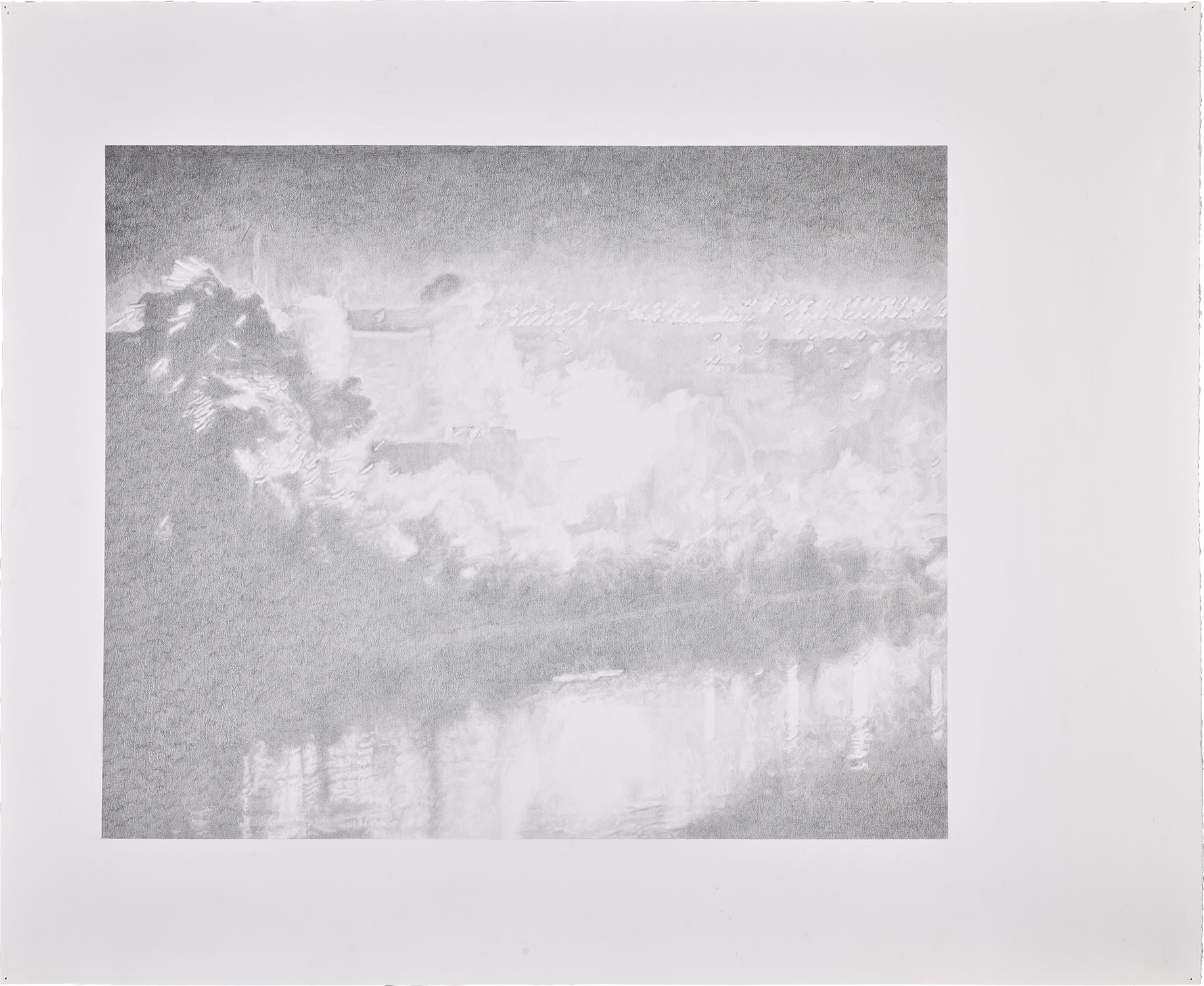
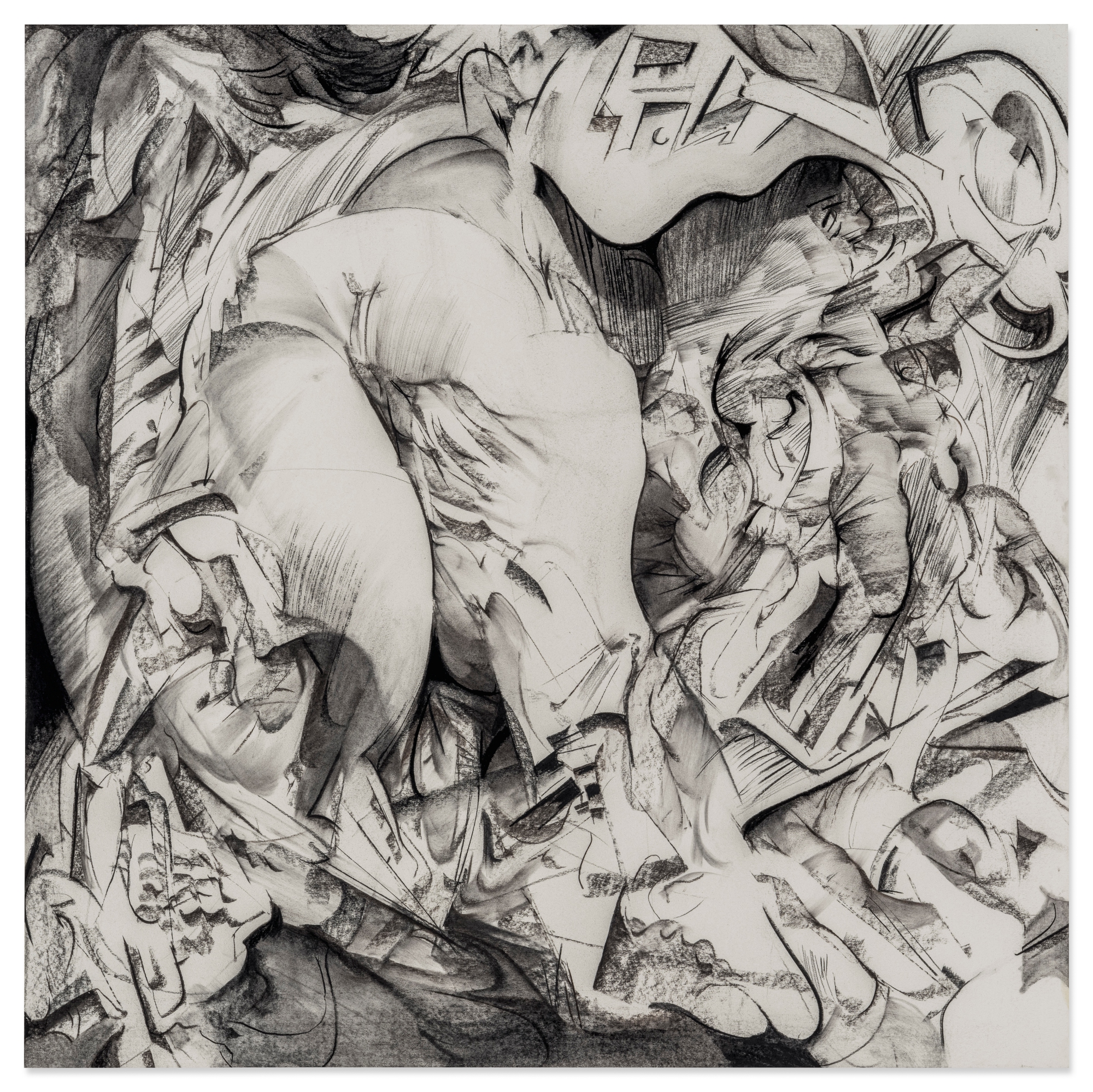
Self Care

Her gestural mark making owes something to the tradition of Abstract Expressionism, to the idea that the physical act of drawing can carry emotional weight directly, but she applies that energy to figurative scenes of extraordinary complexity. The result sits in thrilling tension between abstraction and representation, between chaos and composition. Among the works that have come to define her reputation, "Leaving Room for the Holy Spirit" from 2019, rendered in charcoal and graphite on paper, stands as a particularly compelling example of her method and her wit. The title refers to the old chaperone instruction given at school dances, and the work captures exactly that charged, awkward, electrically social moment between bodies that want to be closer than propriety permits.
"Real Estate" from the same year carries a bilingual title, presenting it in both English and traditional Chinese characters, a gesture that recurs throughout her practice and speaks to her interest in how language frames social space and belonging. Works like "Covees" from 2018 and "Catching Feelings" from 2020 demonstrate how consistently she has returned to the crowd, the party, the gathering, as a site where individual identity both dissolves and asserts itself most fiercely. "Hero Mentality," presented in two parts and bearing a title rendered in both English and Chinese, represents perhaps the most ambitious formal statement in her body of work. The diptych structure allows her to expand her characteristic density of figures across an even larger field, creating something closer to a panorama of contemporary social anxiety and exuberance.
Anna Park
Ready Set, 2020
The bilingual titling throughout her practice is never merely decorative. It insists that the viewer hold two cultural registers simultaneously, that they sit with the productive discomfort of dual meaning, which is precisely the condition Park herself has always inhabited. Other works such as "Susan," "Got Your Back," "I to I," and "Fortuneteller" each isolate particular social dynamics, particular geometries of attention and avoidance, with titles that carry an almost deadpan sociological humor. For collectors, Park's work presents a rare convergence of aesthetic power and cultural urgency.
Her medium, drawing on paper mounted to panel, occupies a space that serious collectors have increasingly recognized as one of the most vital and undervalued in contemporary practice. The intimacy of drawing, its directness and its demand for total commitment from the artist in every mark, gives her work a quality of presence that reproduces poorly and rewards sustained looking in person. Collectors who have acquired her work early have positioned themselves alongside an artist whose trajectory suggests significant institutional attention ahead. The scale of ambition in even her smaller works ensures that they hold a room rather than merely decorate it.
Anna Park
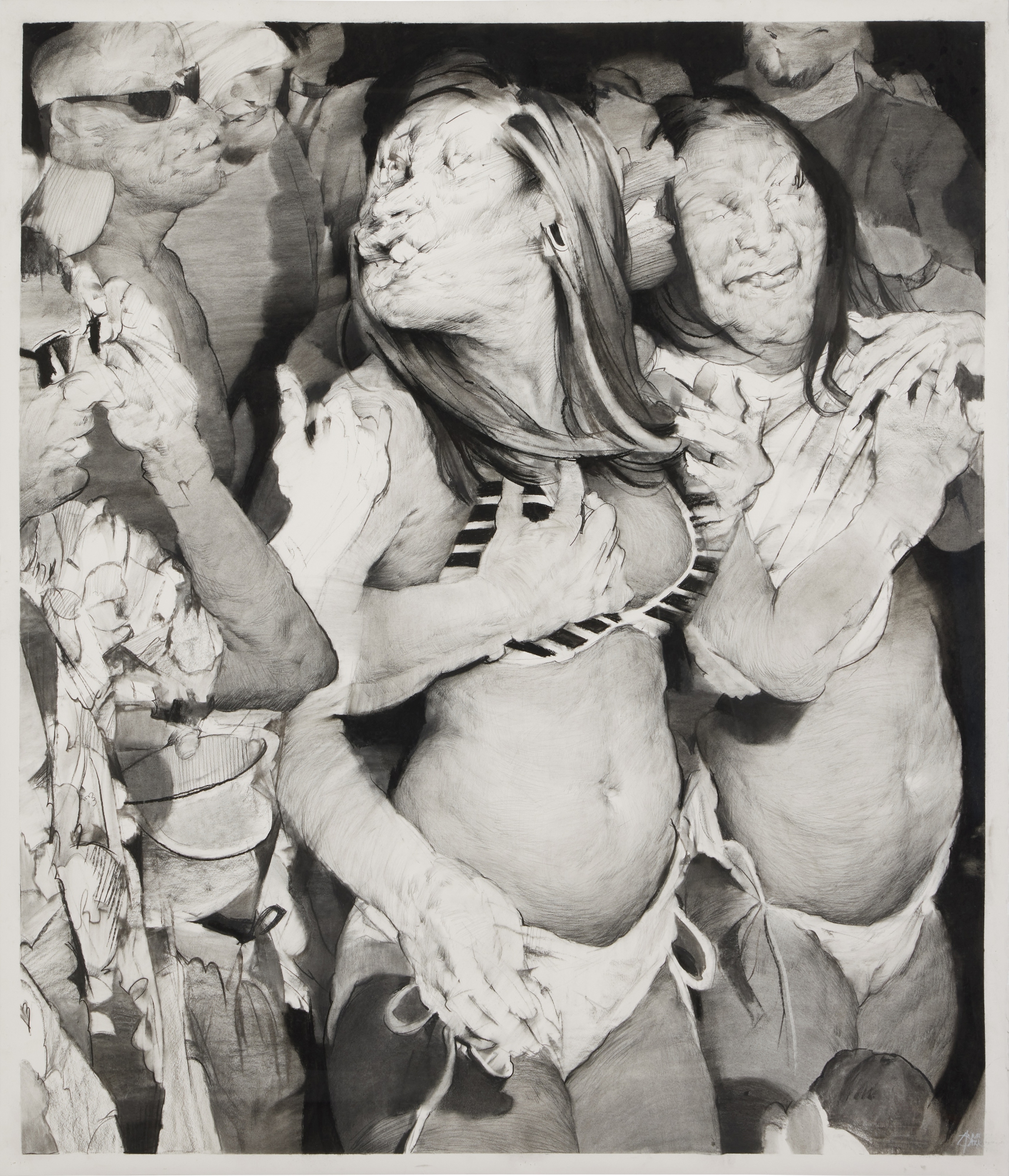
Contact Sport, 2019
To understand Park's place in contemporary art history, it helps to consider the company she keeps in spirit if not always in medium. Her interest in the crowd and the social body connects her to a lineage that includes George Grosz, whose satirical crowds carried the anxieties of Weimar Germany, and Philip Guston, whose late figurative work found a way to make line itself feel morally weighted. Among her contemporaries, she shares certain preoccupations with artists like Tschabalala Self and Diane Severin Nguyen, figures who are also interrogating social and cultural identity through formal experimentation. But Park's commitment to monochrome drawing as her primary language gives her a distinctly singular voice within that constellation.
What makes Anna Park matter right now, and what will ensure that her work continues to matter, is the precision with which she has identified her subject. The crowd is not merely a compositional choice for Park. It is a philosophical position. In her drawings, the individual is never fully separable from the mass of others pressing in from every direction, and yet individuality persists, a face turns, a gesture breaks free of the tangle, a moment of connection flashes between two figures before the surrounding chaos absorbs it again.
This is a deeply honest account of what contemporary social life actually feels like, the simultaneous longing for connection and the terror of dissolution into the group. Park renders that condition with a technical mastery and an emotional generosity that mark her as one of the most important artists of her generation.
Featured Works