Anna Glantz
Anna Glantz Paints the Space Between Feeling
Artist Spotlight · The Collection Editorial
Something quietly significant is happening in Los Angeles. In studios and galleries across a city perpetually renegotiating its relationship to painting, Anna Glantz has emerged as one of the most compelling voices working in figuration today. Her canvases arrive without fanfare and yet linger long after you have left the room, carrying a weight that feels both deeply personal and strangely universal. For collectors and curators who have encountered her work, the experience tends to be the same: you find yourself standing in front of a Glantz painting longer than you expected, reaching for language that keeps slipping away.
Anna Glantz
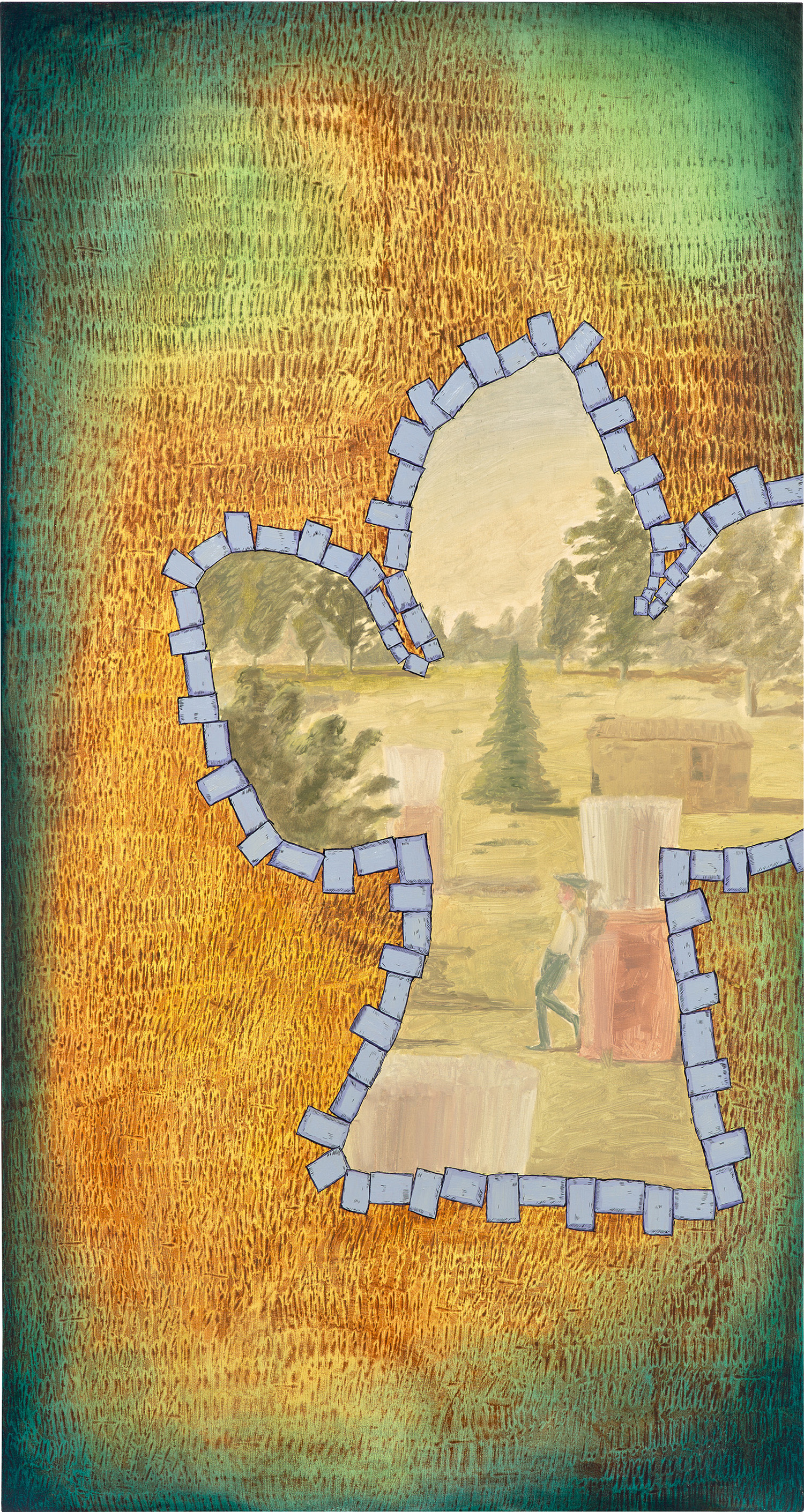
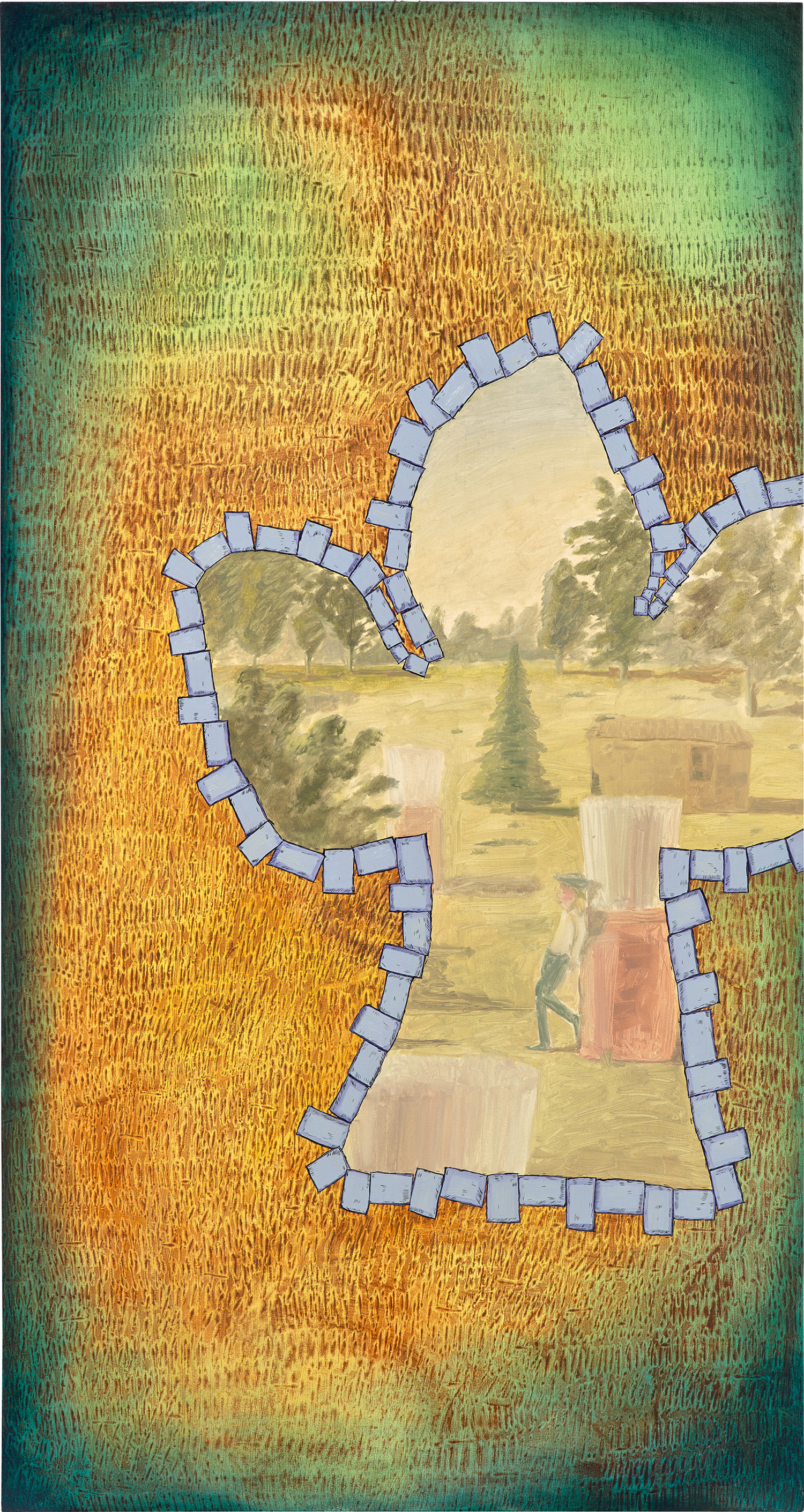
Happier than Piero, 2016
Glantz is an American painter whose practice is rooted in Los Angeles, a city that has nurtured some of the most important developments in contemporary painting over the past several decades. The light there is particular, and so is the sense of interior distance that seems woven into the culture. These qualities find their way into her canvases in ways that feel organic rather than deliberate, as though the city has seeped into her formal vocabulary without announcement. Her work sits comfortably in a lineage of American painters who understood that psychological truth and formal rigor are not competing interests but deeply intertwined ones.
What shaped Glantz as an artist is, in many ways, what shapes all serious painters: an acute sensitivity to the emotional freight that color and composition can carry. Her practice investigates the psychological possibilities embedded in formal decision making, which is a more radical proposition than it might first appear. To treat compositional choices as psychological acts is to insist that how a painting is structured is inseparable from what it means emotionally. This conviction gives her work an unusual density.
The paintings do not merely depict states of feeling; they enact them through the very architecture of the canvas. Her artistic development reflects a sustained engagement with the limits of figuration, a space that the most interesting painters of her generation have found extraordinarily productive. Figuration, when pushed toward its edges, begins to blur into something more ambiguous and more honest. Glantz works in that blur, maintaining enough representational legibility to anchor the viewer while allowing mood, color, and compositional tension to carry the emotional argument.
The result is a body of work that feels neither nostalgic nor programmatically contemporary but simply alive to its own moment. Among the works that have drawn the most sustained attention is "Happier than Piero," an oil on canvas completed in 2016 that serves as a kind of thesis statement for everything her practice stands for. The title itself is a small marvel of wit and melancholy, invoking Piero della Francesca, whose crystalline stillness and formal perfection have haunted painters for centuries. To claim happiness in relation to Piero is to acknowledge the weight of that comparison while also finding room for a kind of gentle, self aware humor.
The painting operates in that same register, holding apparent contradictions in suspension without resolving them. It is the kind of work that rewards sustained looking and repays return visits with new details, new tonal relationships, new emotional frequencies. Glantz has built an exhibition record that speaks to a growing international recognition of her work. She has shown across London, New York, Berlin, Oslo, and Los Angeles, a geography that reflects both the ambition of her practice and the appetite for serious painting that crosses national and cultural contexts.
Each of these cities has its own relationship to figuration and to psychological painting, and the fact that her work reads clearly across all of them suggests a pictorial intelligence that is not dependent on local context for its power. Collectors who have encountered her work in these varied settings often describe the same quality: a sense of being held by the painting rather than simply observing it. For collectors considering Glantz's work, the opportunity feels genuinely significant. She occupies a position in contemporary painting that rewards early attention.
Her practice has the kind of internal coherence and conceptual depth that sustains long careers, and her formal sensibility places her in conversation with artists whose work has proven enduringly important. Collectors drawn to painters who take psychological interiority seriously, who believe that painting can do something that no other medium can, will find in Glantz a practice that meets that conviction with real technical and intellectual seriousness. The works are not decorative propositions; they are arguments, made in paint, about the nature of feeling and form. In terms of art historical context, Glantz's work invites comparison with painters who have explored the space between figuration and psychological abstraction.
The lineage that runs through Luc Tuymans, with his muted palette and deliberate tonal restraint, and Marlene Dumas, with her insistence on emotional vulnerability as a painterly subject, provides useful coordinates for understanding where Glantz sits. Her engagement with melancholy as a formal condition rather than simply a subject matter also connects her to a broader tradition of painters who understood that slowness and difficulty are not obstacles to feeling but its very medium. These are painters who trusted the viewer to do some of the work, and Glantz belongs to that tradition completely. The question of legacy is always premature when an artist is still actively developing their practice, but it is worth noting what Glantz has already achieved.
She has established a body of work that is formally distinctive, psychologically ambitious, and genuinely moving. In a moment when painting is being made from every conceivable direction and with every conceivable intention, she has found a voice that is unmistakably her own. That is not a small thing. The collectors, curators, and institutions that are paying attention to her work now are, in all likelihood, positioning themselves alongside a painter whose contribution to contemporary art will only become clearer with time.
There is something very satisfying about encountering that kind of work early, about being the person in the room who said, simply and confidently: this is the one to watch.