Ann Craven
Ann Craven Paints the World Aglow
Artist Spotlight · The Collection Editorial
In the spring of 2023, Karma Gallery in New York mounted a presentation of Ann Craven's paintings that stopped visitors in their tracks. The rooms glowed. Moons hung luminous against inky skies, birds perched with an almost unbearable tenderness, and florals blazed in colors so saturated they seemed to hum. For those already devoted to Craven's work, the show confirmed what they had long suspected: that this painter, working quietly and obsessively in her own visual language for more than three decades, occupies a singular and irreplaceable place in contemporary American art.
Ann Craven
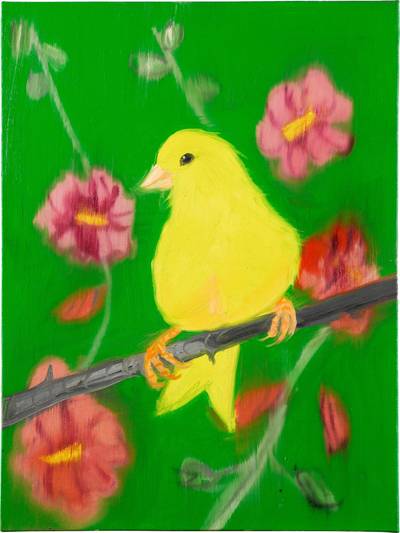
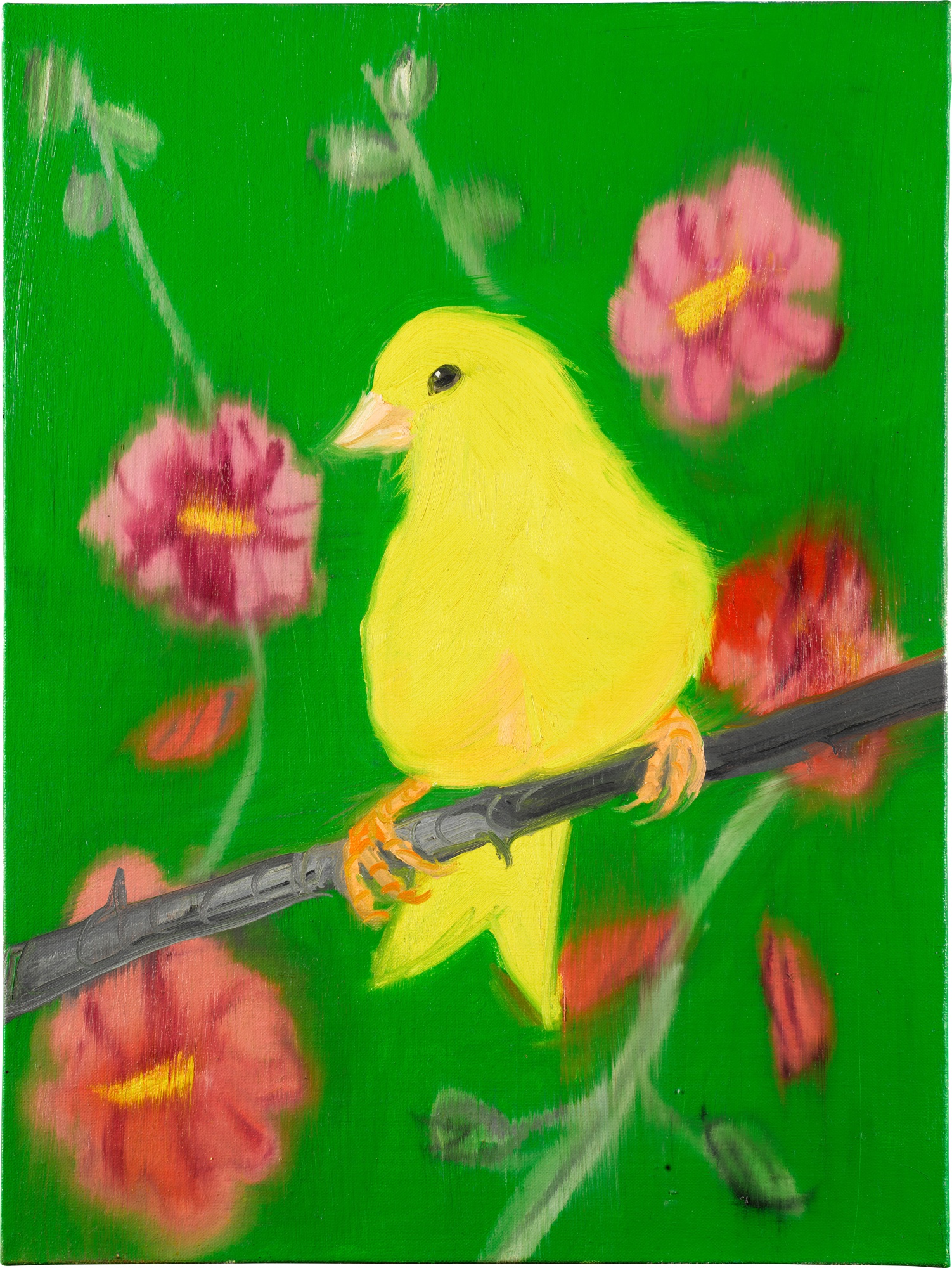
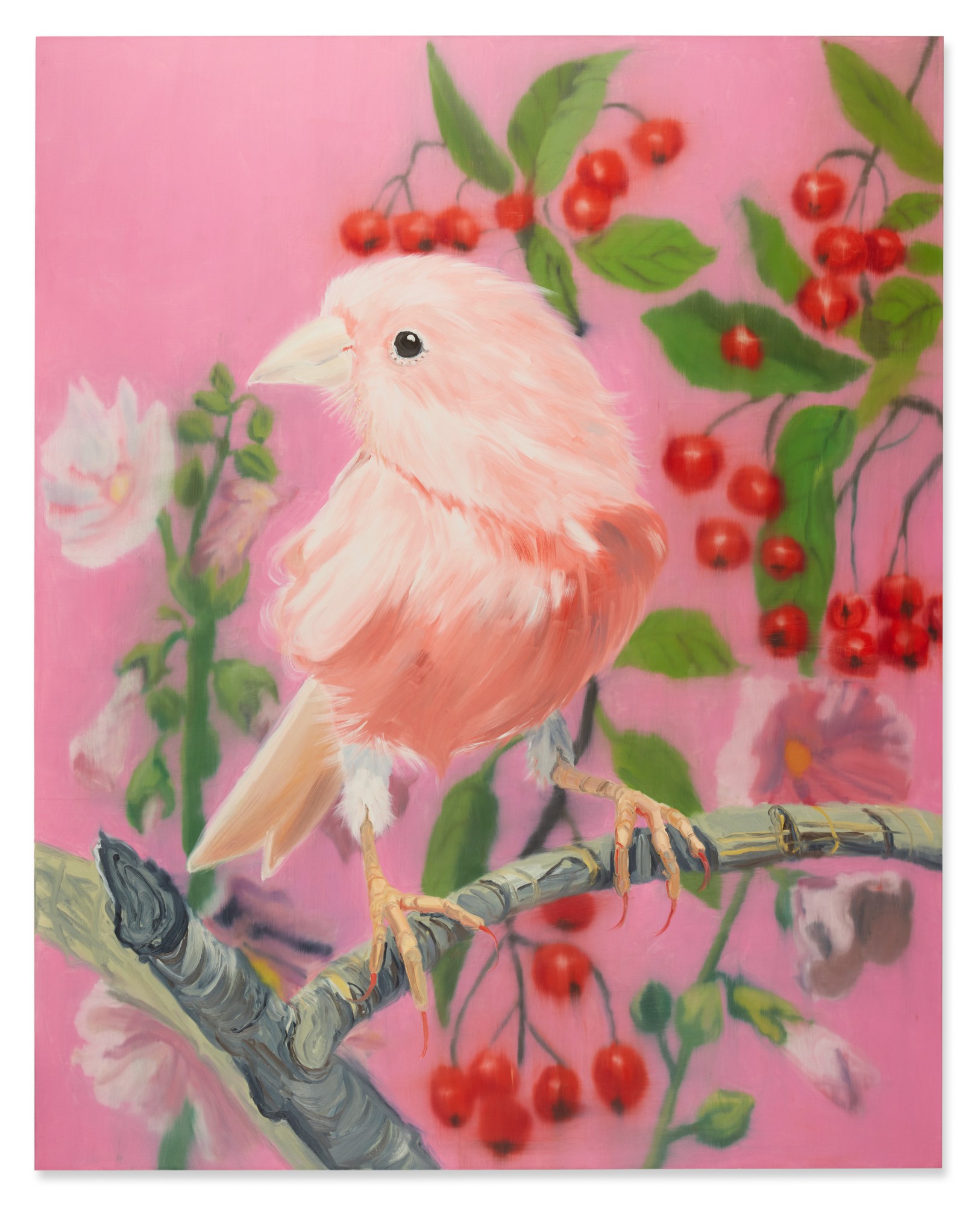
Yello Fello (on Green with Red Hollyhacks)
Ann Craven was born in 1967 and grew up shaped by the particular visual richness of the American landscape and the long tradition of painting from nature. She studied at the School of the Museum of Fine Arts in Boston, where she developed the rigorous observational habits that would anchor her practice for life. Boston's deep institutional relationship with European painting, particularly the Dutch and Flemish masters with their jeweled surfaces and intimate scales, left a lasting impression. But Craven's formation was never purely academic.
From early in her career she was drawn to the emotional register of color, to the way a particular blue or a burning cadmium orange could carry feeling as directly as music. Her artistic development unfolded through a sustained commitment to a small and deliberately chosen cast of subjects: birds, moons, flowers, and occasionally the twilight landscapes in which all three appear together. What distinguishes Craven's practice from simple naturalism is her use of repetition as a formal and philosophical strategy. She paints the same bird again and again, the same moon rising over the same tree line, not in pursuit of a definitive version but to map the infinite variation available within a single subject.
Ann Craven
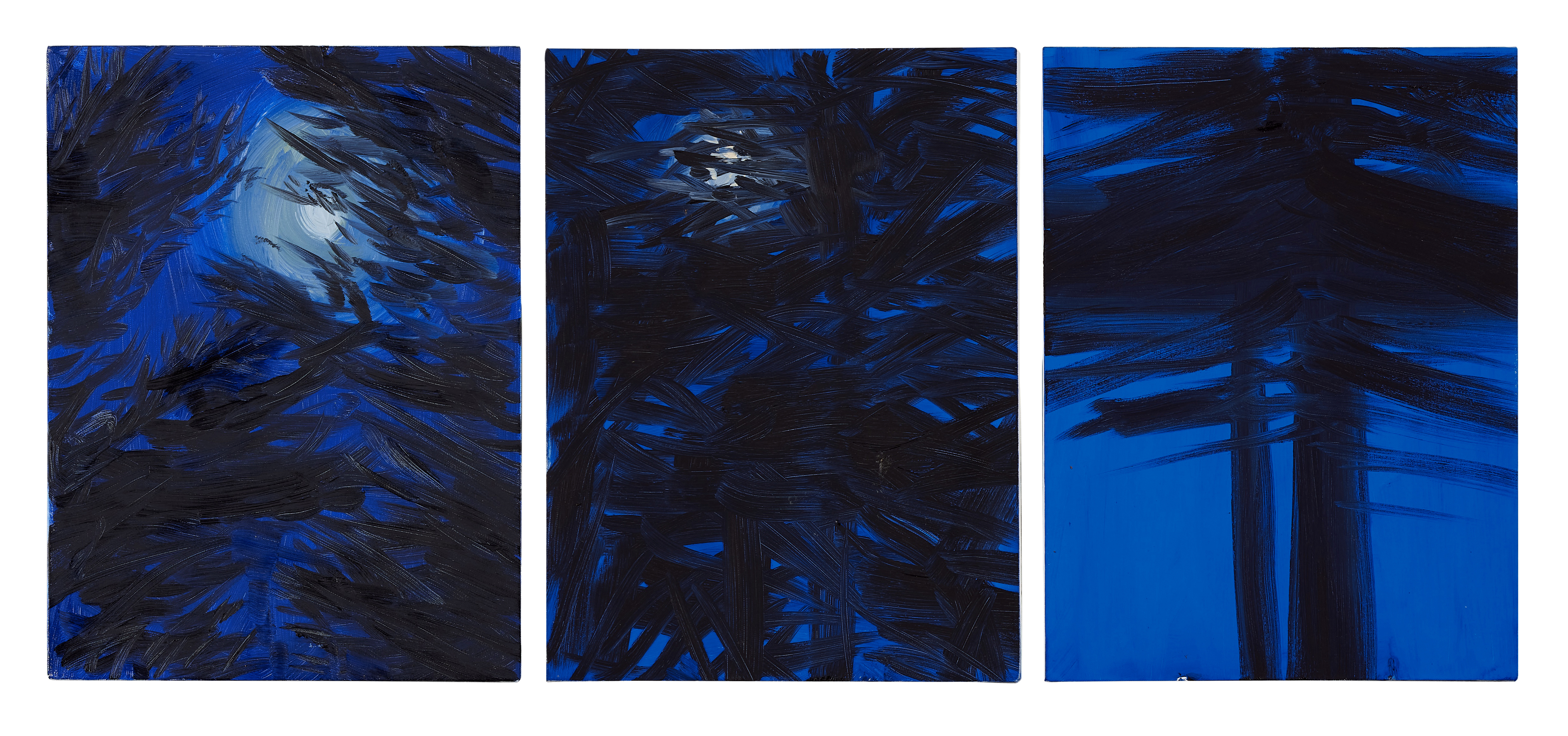
Triptych (Night Pines, Fall 2007), 2007, 2007
Each painting becomes a record of a specific moment of looking, a specific quality of light, a specific mood. The series format allows her to demonstrate that no two observations are alike, that the world renews itself constantly and painting is the instrument best suited to register that renewal. The works that have come to define Craven's reputation span from the late 1990s through the present and demonstrate the remarkable consistency of her vision even as her handling has grown increasingly assured. "Baby Cordon Bleu" from 1997, painted in oil on linen, is among her earliest iconic images, placing a tiny exotic finch against a field of color with a directness that feels both decorative and emotionally piercing.
"Stepping Up" from 2002 and "Stepping Out" continue this tradition of bird portraits that carry an almost human charge of vulnerability and poise. Her moon paintings, such as "Moon (Little Glowing Magenta Tree, Cushing)" from 2021, are among her most celebrated achievements, capturing the precise atmospheric magic of a specific night sky with a palette that feels simultaneously observed and dreamed. The "Triptych (Night Pines, Fall 2007)" from 2007 extends her practice into the landscape itself, arranging three canvases so that the viewer experiences duration and sequence, the way a stand of pines shifts in the failing light of a single autumn evening. Floral works such as "Red Oriental 2" from 2005 and "Yello Fello (on Green with Red Hollyhacks)" reveal another dimension of her intelligence.
Ann Craven
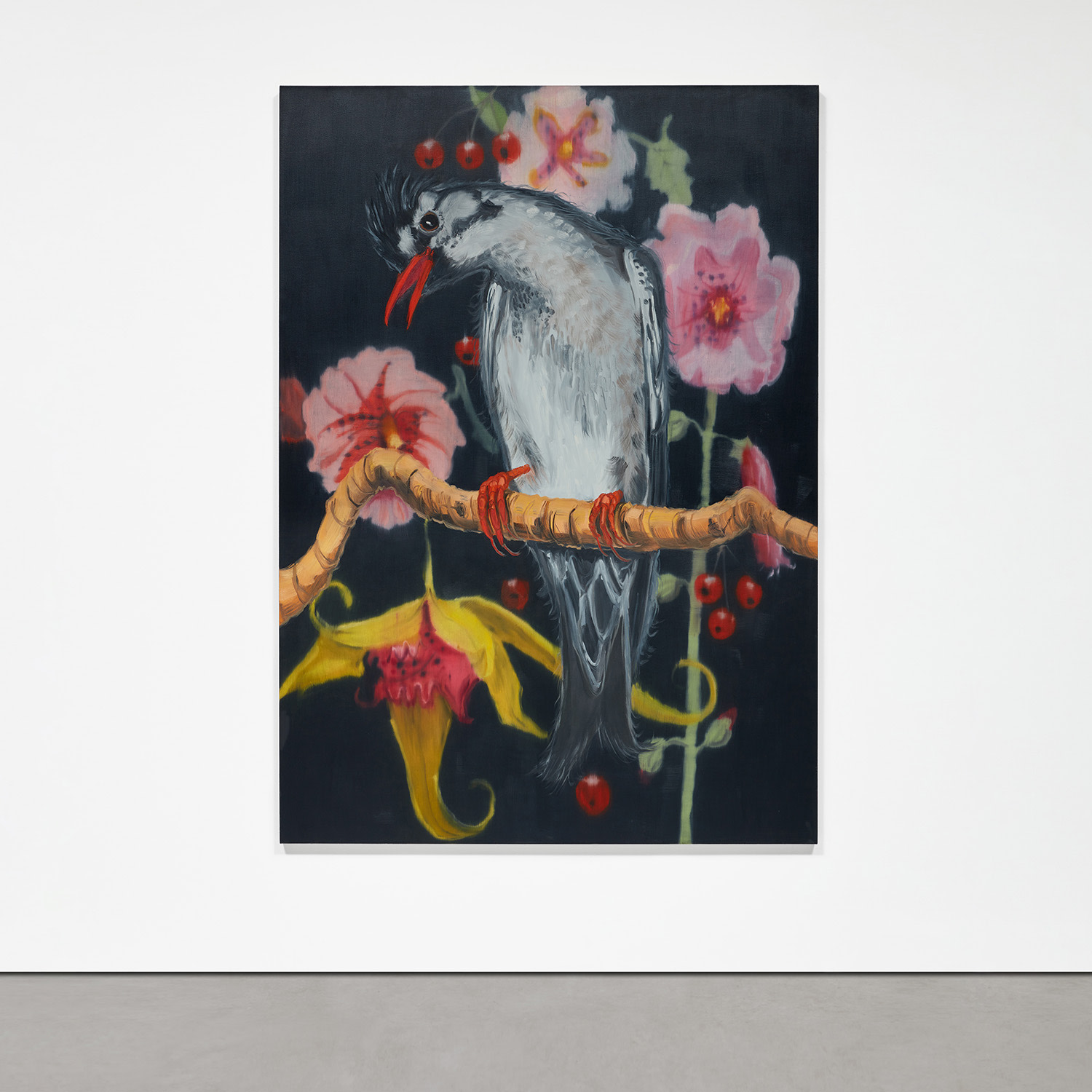
Grey Bend, 2004, 2004
These are paintings that know their art historical lineage, aware of everything from Fantin Latour to Georgia O'Keeffe to Manet's roses, yet they do not feel burdened by precedent. Craven's florals are alive with incident, painted with a loaded brush and a colorist's fearlessness. The sensation is of flowers caught at peak intensity, their beauty inseparable from its own transience. "Grey Bend" from 2004 and "Bird with Pussy Willows" from 2012 show how deftly she navigates between restraint and exuberance, between a cooler, more contemplative register and the full operatic splendor she is capable of unleashing.
From a collecting perspective, Craven's work rewards both the instinctive and the considered buyer. Her paintings hold their value precisely because they are not trendy, they are not responses to an art world moment but expressions of a sustained and deepening vision. Collectors who have followed her from early exhibitions at Gavin Brown's Enterprise, where she showed for many years and built a devoted following, to her subsequent presence at Karma, understand that each acquisition is both a discrete aesthetic experience and a contribution to a larger whole. The paintings speak to one another across time, and a small group of Craven works hung together creates the kind of resonant dialogue that defines a serious collection.
Ann Craven
Stepping Out
Her works are regularly sought by collectors who prize painterly quality, intimacy of scale, and emotional directness over spectacle. Within the broader landscape of contemporary painting, Craven belongs to a lineage of artists who have insisted on the continued vitality of representation and the resources of observation without apology. Her sensibility has affinities with the luminous color fields of Joan Mitchell, the tender naturalism of Rackstraw Downes, and the obsessive seriality of On Kawara, though her particular synthesis is entirely her own. She shares with painters like Cecily Brown and Lisa Yuskavage a commitment to pleasure as a serious aesthetic category, a belief that beauty is not a retreat from meaning but its most direct expression.
In a period when painting has returned emphatically to the center of critical and market attention, Craven's work stands as evidence that the most enduring contributions often come from artists who never left the studio, who kept faith with their subjects through every shift in fashion. Ann Craven's legacy is already visible in how she has expanded the range of what serious contemporary painting is permitted to feel. She has made it possible to paint a bird, a moon, or a peony with full commitment and full painterly intelligence, without irony and without apology, and to have that act understood as rigorous rather than merely decorative. At a moment when the art world increasingly values sincerity alongside criticality, her decades of quiet devotion to luminosity, color, and the endlessly renewable act of looking feel not only relevant but essential.
To own a Craven is to live with a painting that gives back differently on every viewing, that honors the light in any room it inhabits, and that reminds its owner, daily, of everything painting at its best can do.