Ania Hobson
Ania Hobson Paints the Soul Visible
Artist Spotlight · The Collection Editorial
In the years since her work began appearing in serious collections across Europe and beyond, Ania Hobson has established herself as one of the most compelling voices in contemporary British figurative painting. Her canvases have drawn sustained attention from collectors and curators who recognize in them something rare: a psychological acuity that feels both timeless and urgently of this moment. With works now held in private collections internationally and a growing presence in the secondary market through platforms including SINGULART, Hobson occupies a position that many painters spend entire careers striving toward, a place where critical respect and genuine collector enthusiasm arrive together. Born in 1992, Hobson grew up in Britain during a period when figurative painting was undergoing its own quiet renaissance.
Ania Hobson
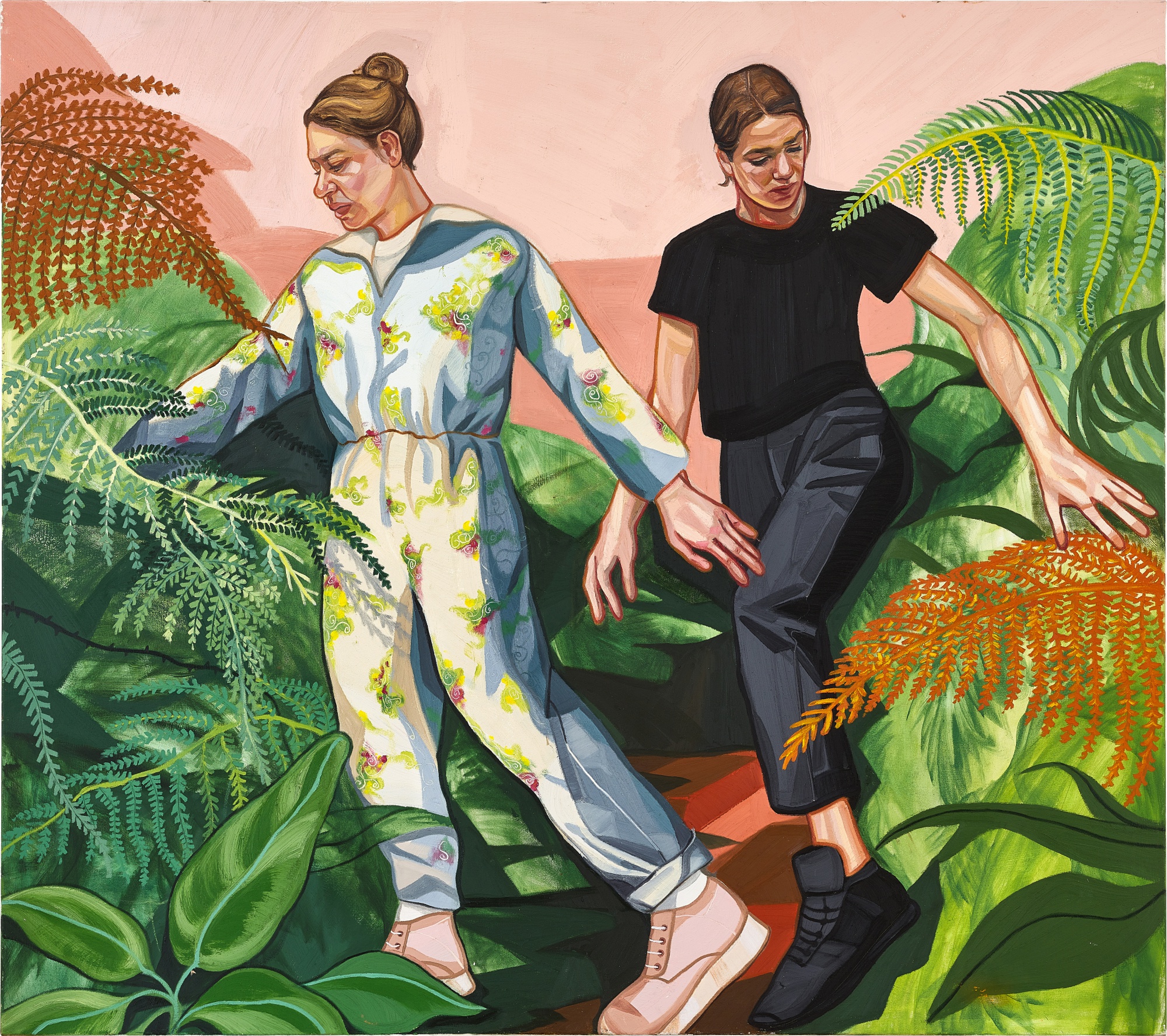
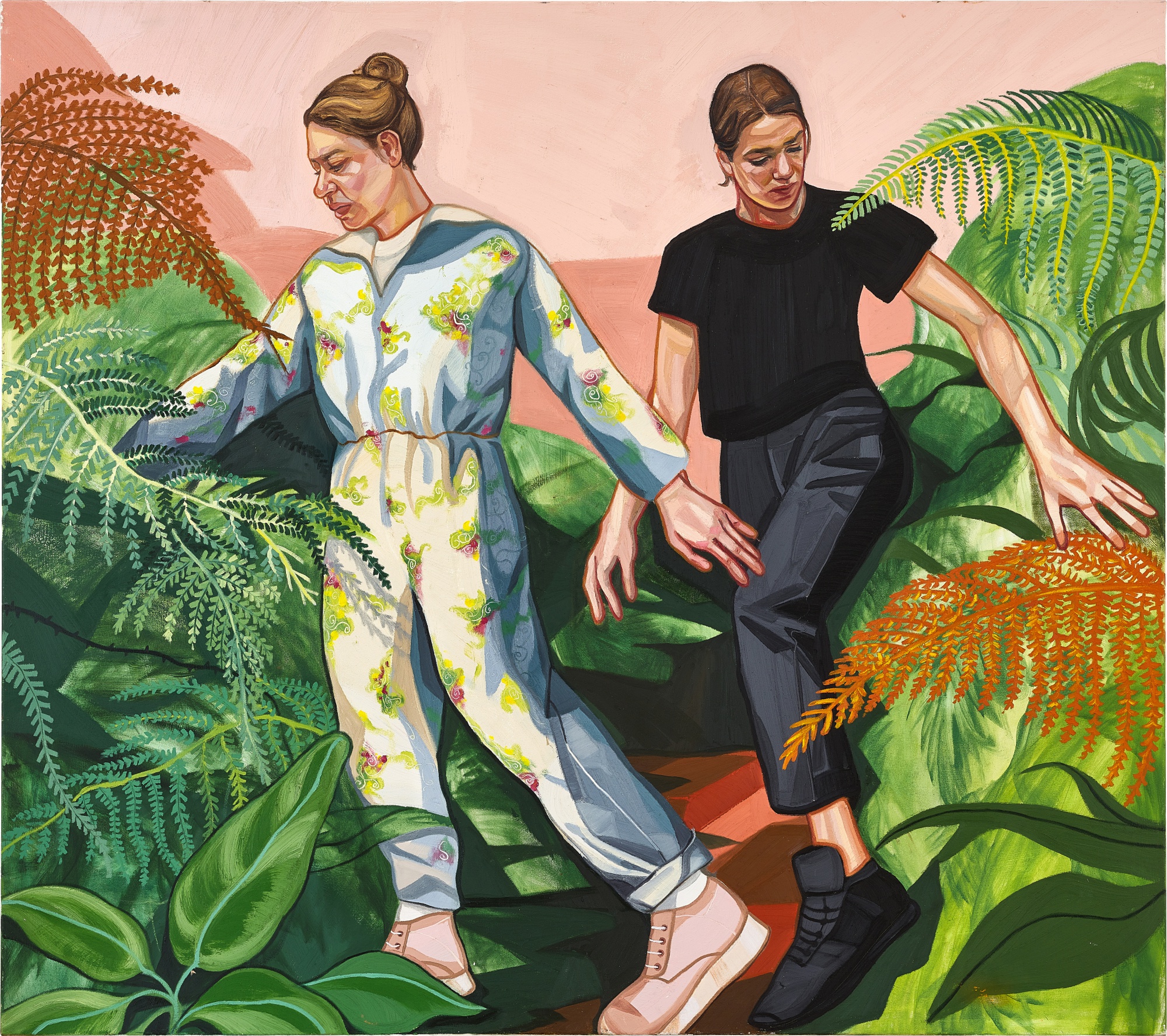
蕨, 2020
The generation of painters who came of age in the early 2000s inherited a complex legacy, caught between the lingering cool of conceptual art and a renewed appetite for the handmade, the human, and the emotionally direct. Hobson absorbed this tension and made it productive. Her training sharpened an instinct for observation that seems to have been present from the beginning, and she developed early on a sensitivity to the way a posed or caught figure can carry enormous psychological weight without resorting to narrative theatrics. Her artistic development has been marked by a clear and confident evolution.
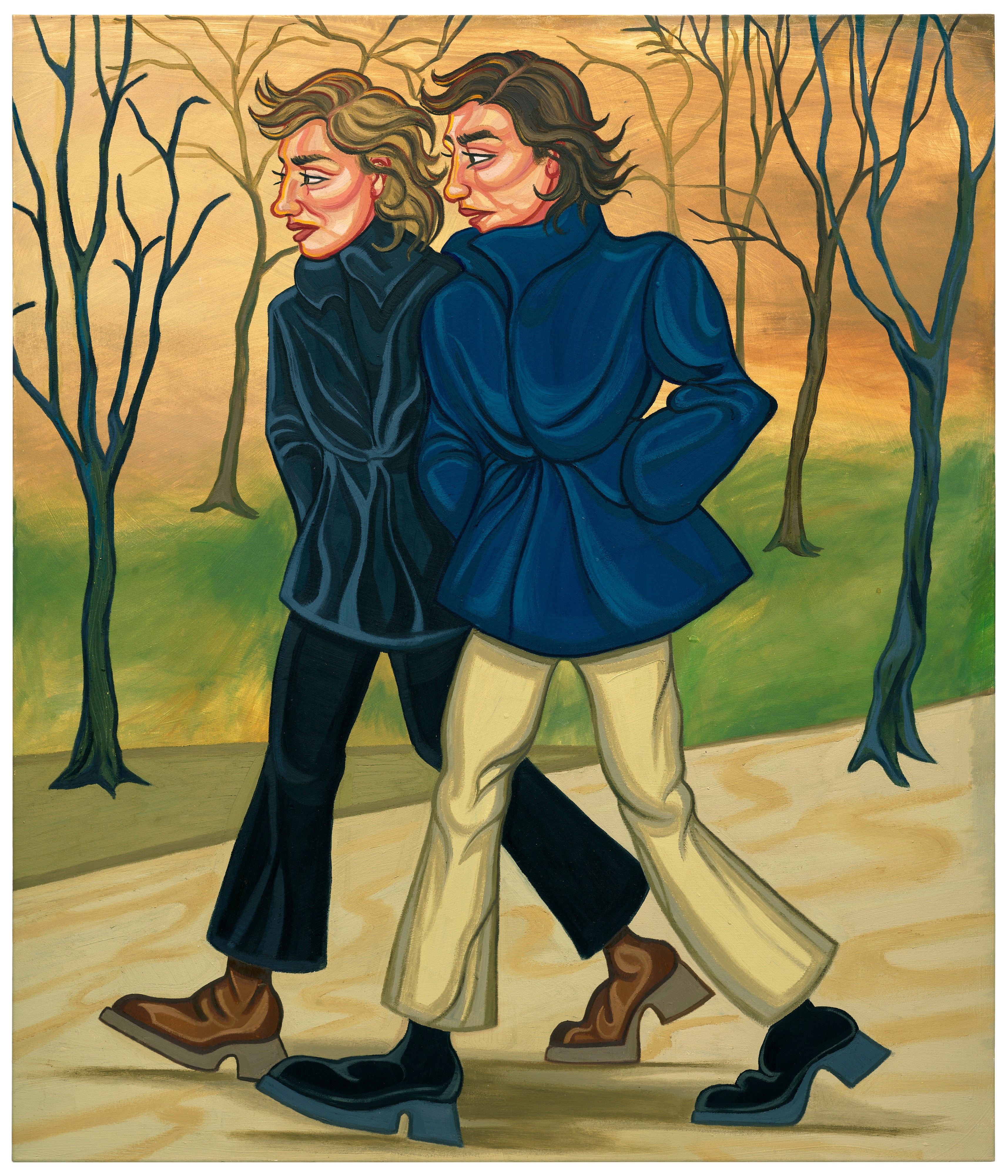
Early works showed her working through the possibilities of paint application and scale, testing how loose, gestural brushwork could coexist with a deeply considered approach to her subjects. Over time, she arrived at the signature visual language that now defines her practice: large canvases populated by solitary or paired figures rendered in a muted palette of greys, ochres, and muffled greens, with passages of expressive impasto punctuated by surprising moments of tender precision. The result is work that feels simultaneously spontaneous and deeply controlled, as though the painting itself is holding its breath. Among her most celebrated works is "Walk In The Park" from 2022, a canvas that exemplifies her ability to transform an unremarkable social scene into something charged with unspoken meaning.
Ania Hobson
Walk In The Park, 2022
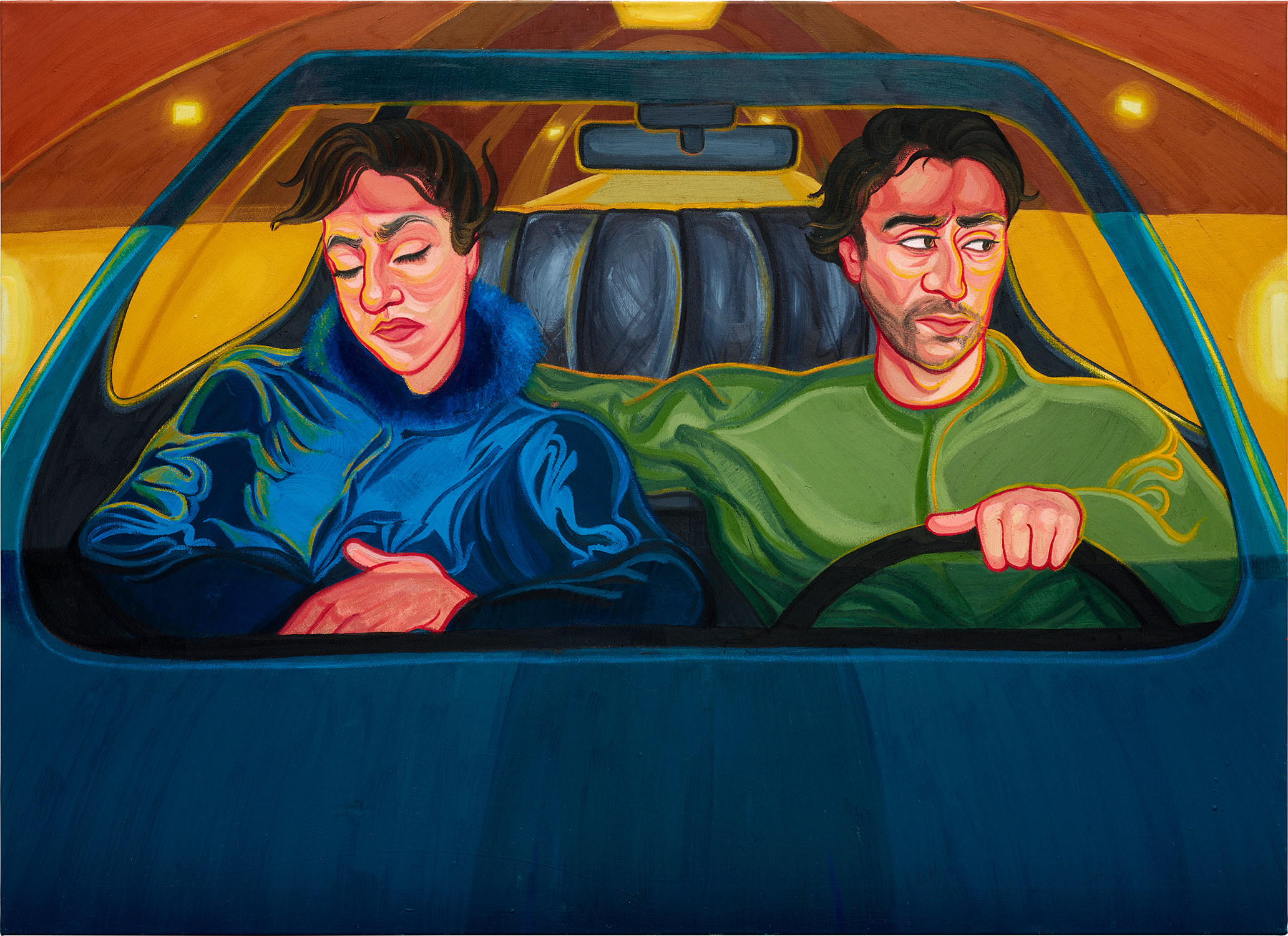
The figures in her world are most often young, caught in moments of stillness or transition, and Hobson renders their interiority with a generosity that stops well short of sentimentality. "Tunnel," also from 2022, pushes this further, using the spatial logic of its setting to create a painting that feels as much psychological as it does architectural. "Leave Us Alone" from 2021 carries a quiet defiance in its title that resonates through the entire composition, two figures asserting a kind of sovereignty over their own moment that feels entirely contemporary. Works like "蕨" and "邊走邊說" demonstrate her willingness to engage with subjects and titles beyond the purely Anglophone tradition, suggesting a painter whose curiosity about human experience extends across cultural boundaries.
The work invites comparison with a broader lineage of figurative painters who have prioritized psychological depth over decorative surface. One thinks of the restless observation of Jenny Saville, the tender estrangement found in the figures of Luc Tuymans, and the atmospheric quietude that Cecily Brown has brought to large scale figure painting. Among her British contemporaries, Hobson shares sensibilities with painters like Toby Ziegler and certain artists associated with the New Contemporaries tradition, though her voice is distinctly her own. She draws, too, on a longer history: the loaded silences of Vilhelm Hammershoi, the psychological portraiture of Alice Neel, and the formal boldness of early twentieth century northern European expressionism all feel present in her work without ever overwhelming her originality.
Ania Hobson
Tunnel, 2022
For collectors, the appeal of Hobson's work operates on several levels at once. There is the immediate visual impact, those large surfaces commanding attention in any domestic or institutional setting, and then a slower revelation as the emotional complexity of her subjects becomes apparent over time. Works on oil on canvas, her preferred medium, carry a physical presence that reproductions cannot fully communicate, and collectors who have lived with her paintings consistently report a deepening relationship with them. The certificate of authenticity issued with works like "邊走邊說" through SINGULART provides additional assurance for those entering the market, and the artist's practice of framing select works herself speaks to the care she brings to the complete object.
The secondary market for Hobson's work has shown steady and encouraging movement, reflecting the confidence that informed collectors have placed in her trajectory. Prices have climbed meaningfully as her profile has grown, and works from the period between 2020 and 2023 are now regarded as particularly significant, representing a concentrated period of artistic development and ambition. For those considering an acquisition, the canvases from this era combine the maturity of an artist who has found her voice with the energy of one still discovering its full range. "Girl in a Big Coat" and "Leather Jacket," both oil on canvas, demonstrate this quality beautifully, works that feel both complete and open, inviting sustained looking.
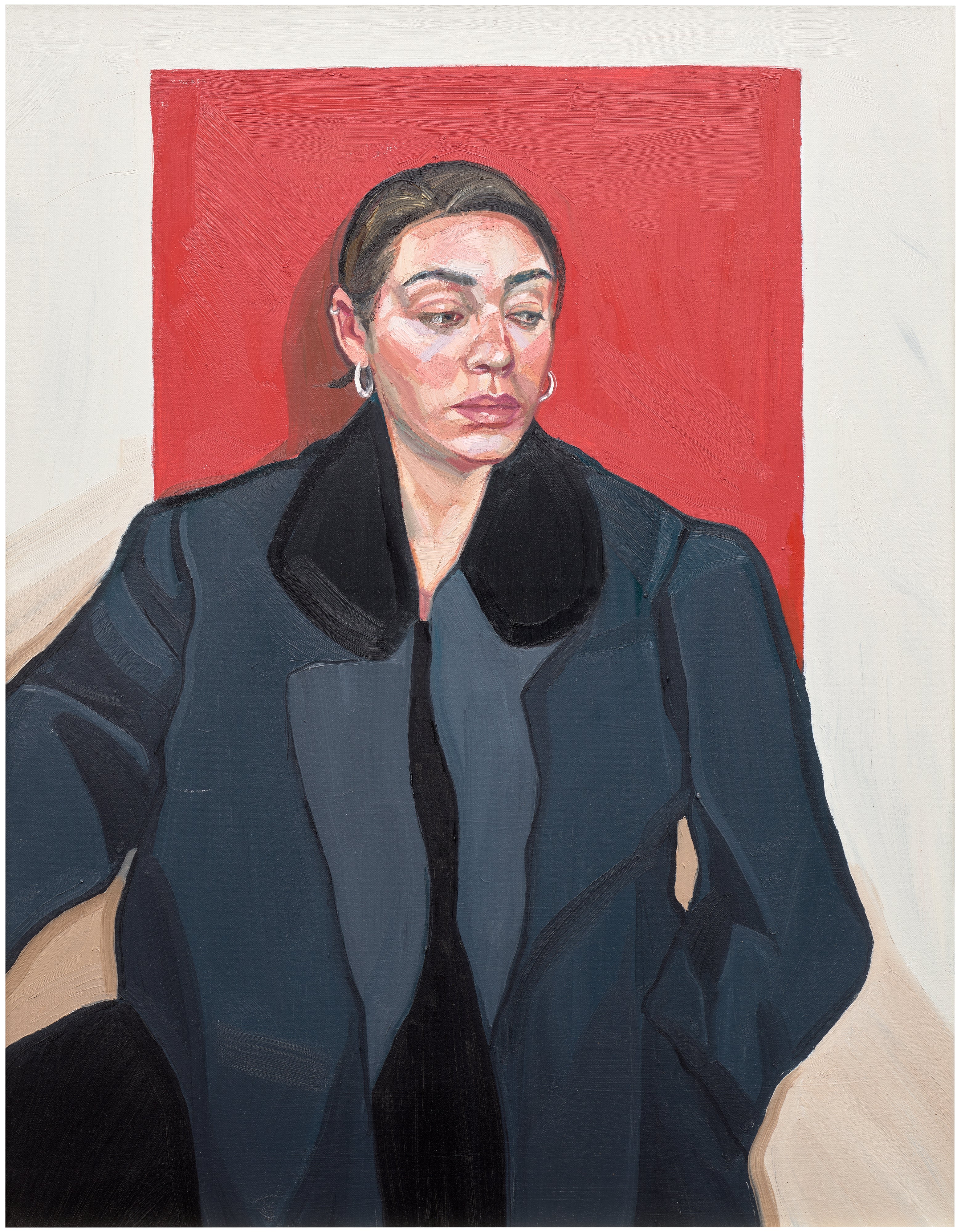
Ania Hobson
Girl in a Big Coat
What makes Hobson genuinely important to the story of contemporary British art is not only the quality of individual works but the consistency and seriousness of her vision across a body of work. She has arrived at a moment when figurative painting is experiencing renewed institutional and market enthusiasm globally, but she does not feel like a product of that enthusiasm. Her concerns, identity, interiority, the particular texture of being young and conscious in the twenty first century, feel like convictions rather than calculations. That distinction, always apparent to serious collectors and curators, is precisely what gives her work its staying power.
As her career continues to develop, the paintings she has already made stand as a genuine and lasting contribution to the tradition she has so deliberately and lovingly inhabited.