Angel Otero
Angel Otero Transforms Memory Into Luminous Matter
Artist Spotlight · The Collection Editorial
When Lehmann Maupin presented Angel Otero's paintings in recent years, the response from collectors and critics alike was immediate and visceral. There is something about standing before one of his canvases that defies easy categorization, a sense of encountering something simultaneously ancient and freshly made, as though the work has been excavated rather than constructed. Otero has steadily built one of the most distinctive and emotionally resonant bodies of work in contemporary painting, and the art world has taken notice in a sustained and meaningful way. Otero was born in Santurce, Puerto Rico in 1981, and the textures of that upbringing, its domestic interiors, its particular quality of light, its layering of memory and material, have never left his practice.
Angel Otero
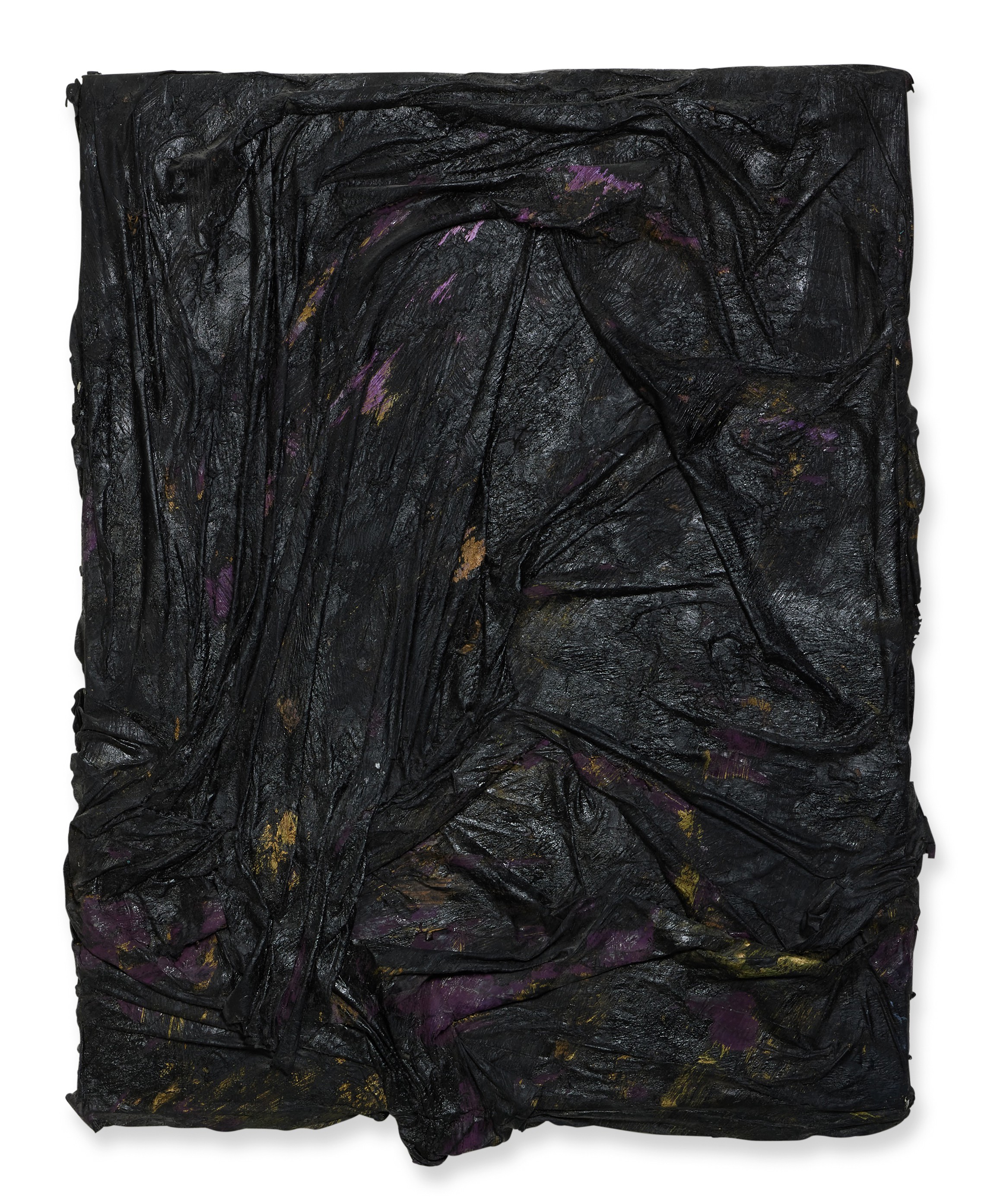
Untitled, 2011
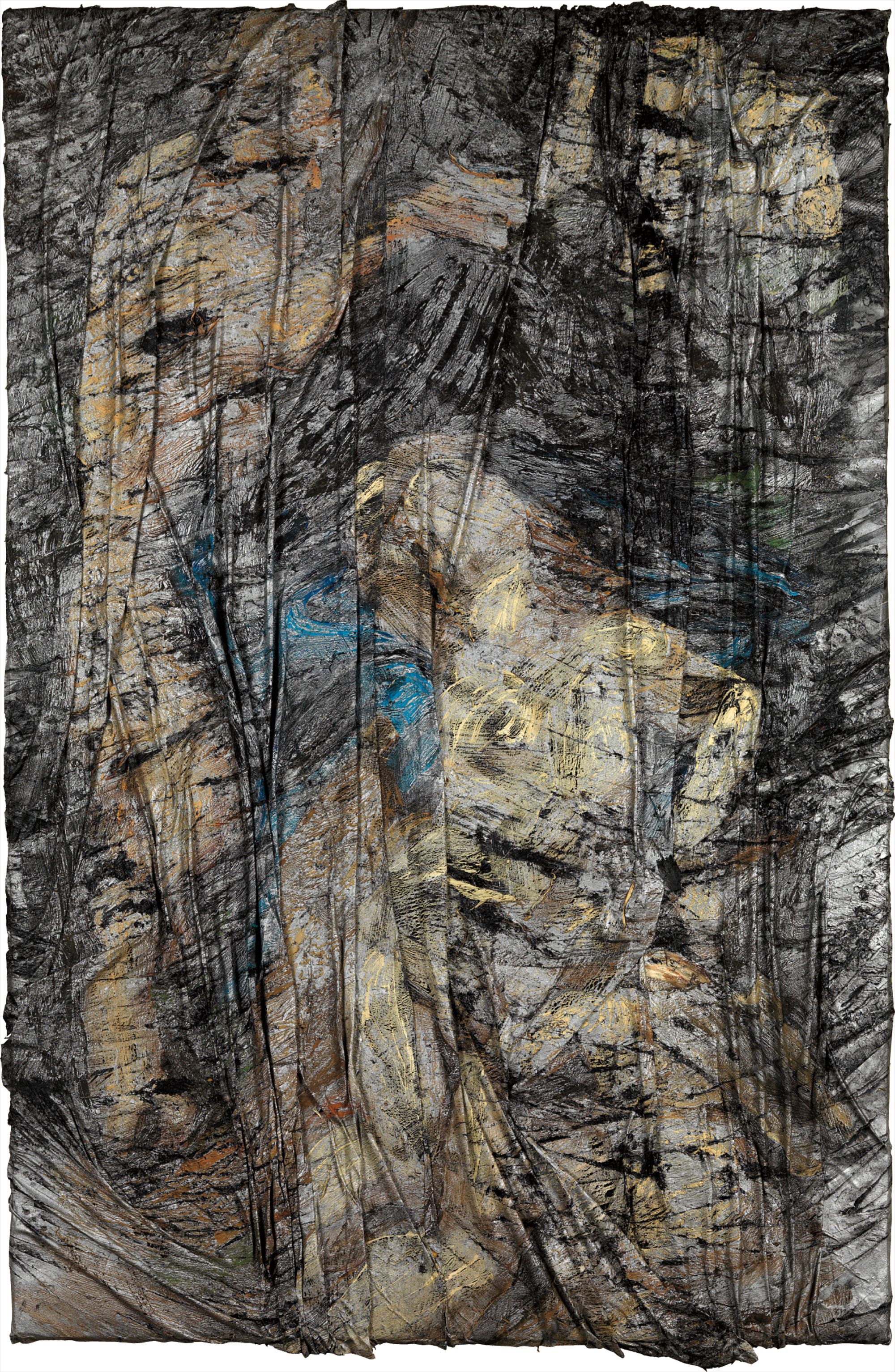
He moved to Chicago to study at the School of the Art Institute, and it was there that he began to move away from conventional painting toward something more physically engaged with the substance of paint itself. The education he received was rigorous and historically grounded, and it gave him the critical language to understand what he was building toward even as he was dismantling the conventions of how paint is applied and understood. The breakthrough came with what Otero himself developed and refined into what is now widely known as his oil skin technique. Rather than applying paint directly to canvas in the traditional sense, he pours and layers oil paint onto glass, allows it to dry into a skin, and then peels those translucent, wrinkled sheets away.
These skins are then collaged onto canvas, sometimes overlapping, sometimes crumpled, sometimes folded into near sculptural formations. The result is a surface that breathes and shifts, catching light differently depending on the angle of view, and the process introduces an element of chance that no painter working conventionally can access. This was not a gimmick but a genuine methodological invention, one that opened up a new territory of expressive possibility. The works that have come to define Otero's reputation span a remarkable range of emotional registers.
Angel Otero
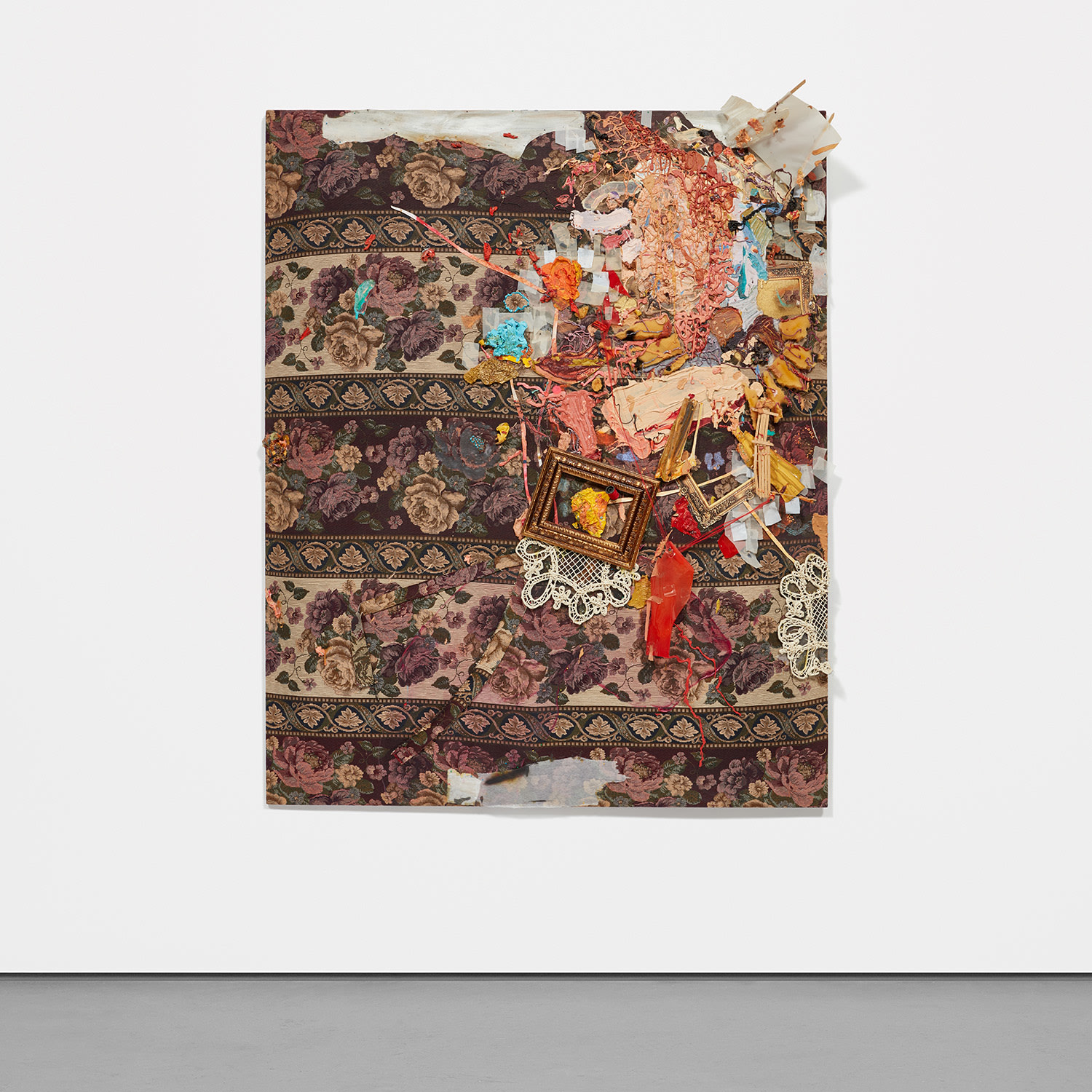
Portrait of My Grandmother's Couch, 2009
Portrait of My Grandmother's Couch, first realized in 2009, is one of the most quietly radical objects in his body of work. Using foam, paper, acrylic, oil, and found objects mounted onto actual couch fabric, the piece transforms a piece of domestic furniture into a portrait, insisting that the objects of daily life carry the weight of identity and love just as surely as any painted face. It is an act of devotion rendered in materials, and it signals from early in his career that Otero was interested in where abstraction and autobiography meet. A second version of this work, titled Portrait of My Grandmother's Couch with the title also rendered in Chinese characters, speaks to the cross cultural resonance his work has found, particularly across Asian markets where Lehmann Maupin has cultivated a strong collector base.
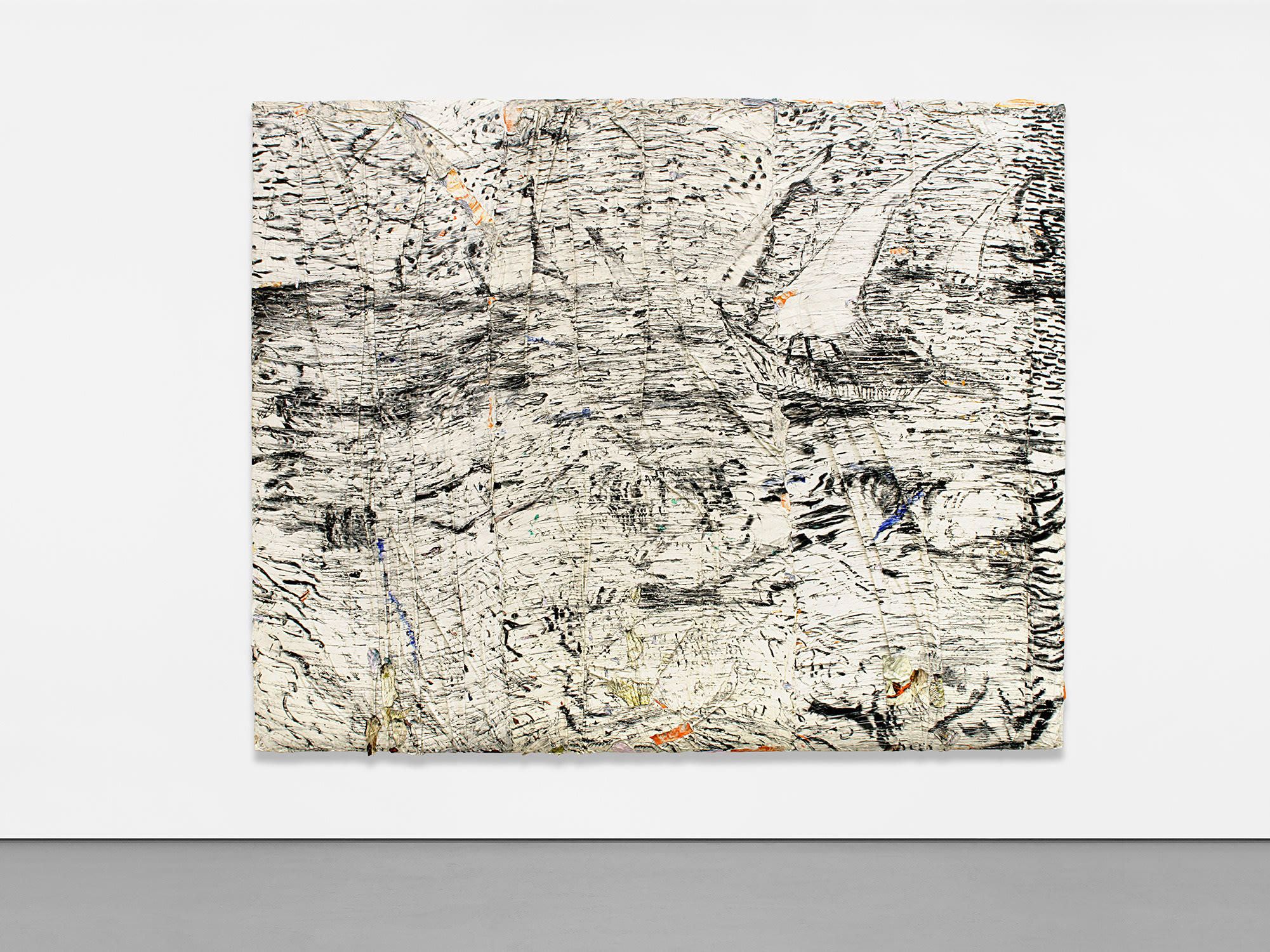
Works like Regata, Acis and Galatea, and Galatea (After Raphael) reveal Otero's sustained engagement with art historical tradition. He is deeply literate in the history of Western painting, and his references to Raphael and to mythological subjects are never decorative or ironic. They are earnest dialogues across centuries, invitations to consider how beauty and loss have always been linked in the making of images. Screams from the Balcony, completed in 2017, and Frozen Patios from 2014 demonstrate how his compositions became increasingly atmospheric over time, the paint skins floating within fields of color that suggest both interior and exterior space, both specific memory and universal feeling.
Angel Otero
Regata, 2011
Ornamental Winds, also from 2017, carries that same quality of suspended animation, as though a moment has been caught and held just at the point of dissolution. For collectors, Otero's work occupies a particularly compelling position in the contemporary market. His pieces are genuinely difficult to make, requiring technical patience and a willingness to collaborate with unpredictable processes, which means that no two works are alike in any superficial sense. The materiality of the oil skins gives his canvases a presence that reproduces poorly and rewards close looking in person, which is exactly the kind of quality that serious collectors prize.
His work has been acquired by significant institutional and private collections internationally, and his representation by Lehmann Maupin, a gallery with spaces in New York, Seoul, and Hong Kong, has ensured sustained visibility across the most important markets globally. Collectors who entered early have seen their holdings appreciate alongside a critical reputation that has only deepened. Otero belongs to a generation of painters who have absorbed the lessons of abstraction and figuration without feeling bound by the old hierarchies between them. In that sense he sits in productive conversation with artists like Kerry James Marshall, whose work also insists on the political and personal dimensions of domestic imagery, and with painters such as Julie Mehretu, whose layered, accumulated surfaces similarly reward extended looking.
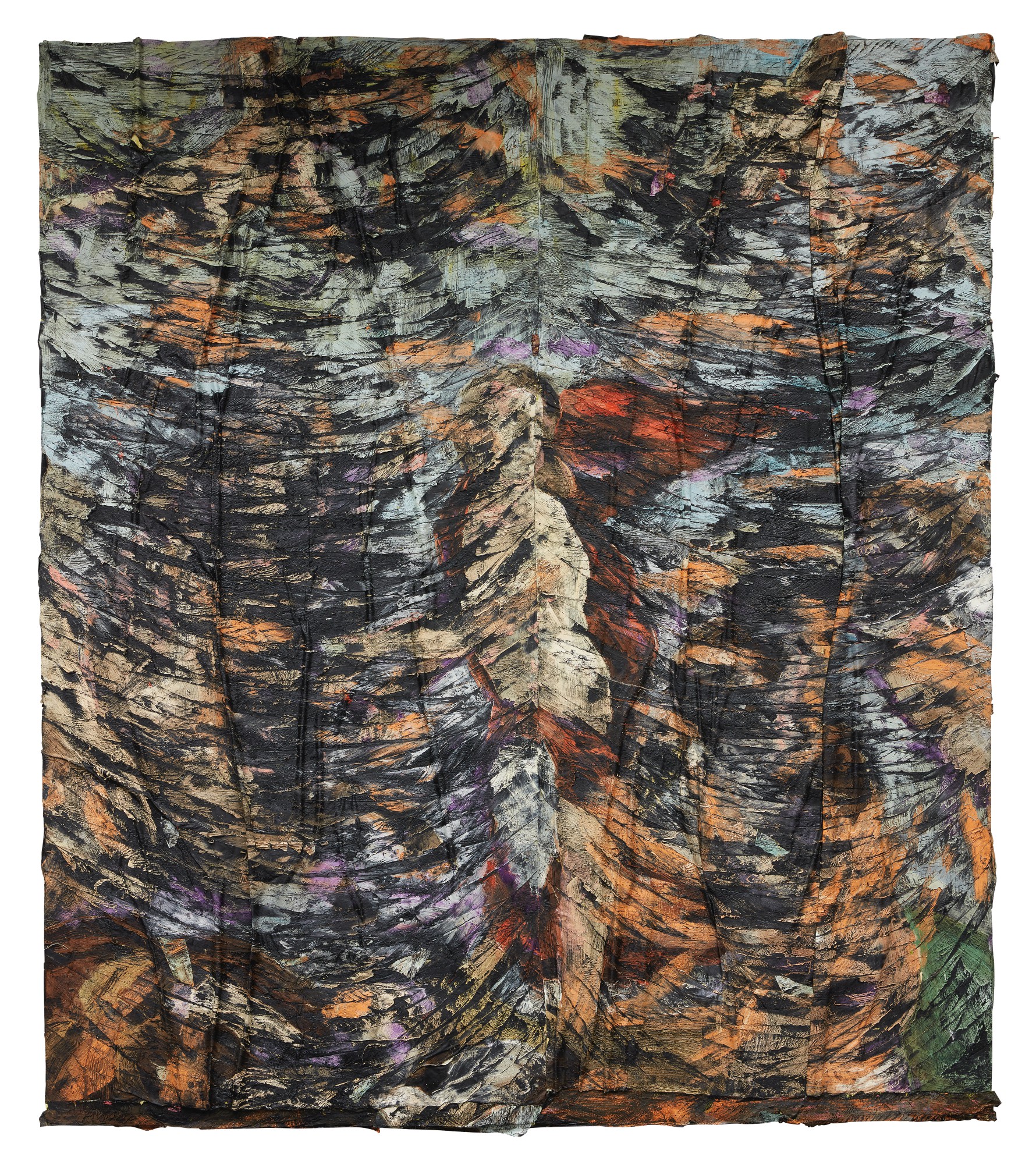
Angel Otero
Galatea (After Raphael)
His Puerto Rican identity inflects his work with questions about diaspora, cultural memory, and the way that objects carry histories across displacement, themes that resonate with particular urgency in the current moment. He is also in dialogue with the long tradition of process based painting, from Robert Rauschenberg's combines to the materially experimental work of Sigmar Polke, though Otero's voice is entirely his own. What makes Otero's achievement so durable is that his formal inventions are never separable from their emotional content. The peeled paint is not an aesthetic strategy so much as a metaphor made literal, the act of recovering what has dried and set, of finding within the residue of an earlier moment something new and alive.
Memory works that way, and so does love, and so does the ongoing project of understanding where we come from. Angel Otero is an artist who has found a way to make all of that visible in paint, and the body of work he has built stands as one of the more moving and enduring contributions to painting in the twenty first century.