Andy Goldsworthy
Andy Goldsworthy: Nature's Most Attentive Collaborator
Artist Spotlight · The Collection Editorial
“Each work grows, stays, decays. Process and decay are implicit. Transience in my work reflects what I find in nature.”
Andy Goldsworthy, Hand to Earth, 1990
There is a moment in Thomas Riedelsheimer's documentary film Rivers and Tides, released in 2001, that stops viewers cold. Andy Goldsworthy crouches at the edge of a Nova Scotia shoreline in the early morning, assembling a coiled sculpture from icicles, binding each frozen fragment with his bare hands and saliva. The structure rises, gorgeous and precarious, catching the winter light. Then the tide comes in.
Andy Goldsworthy
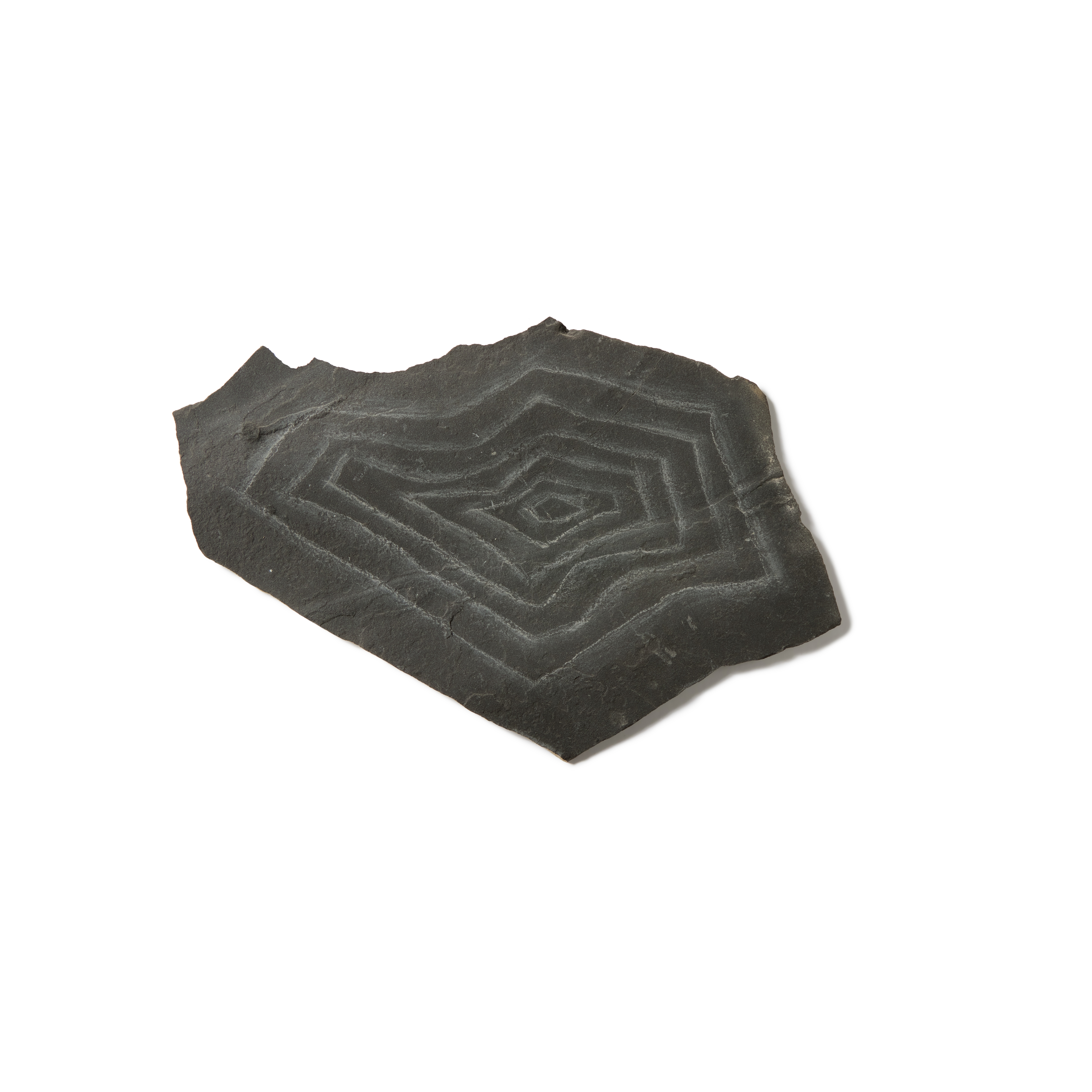
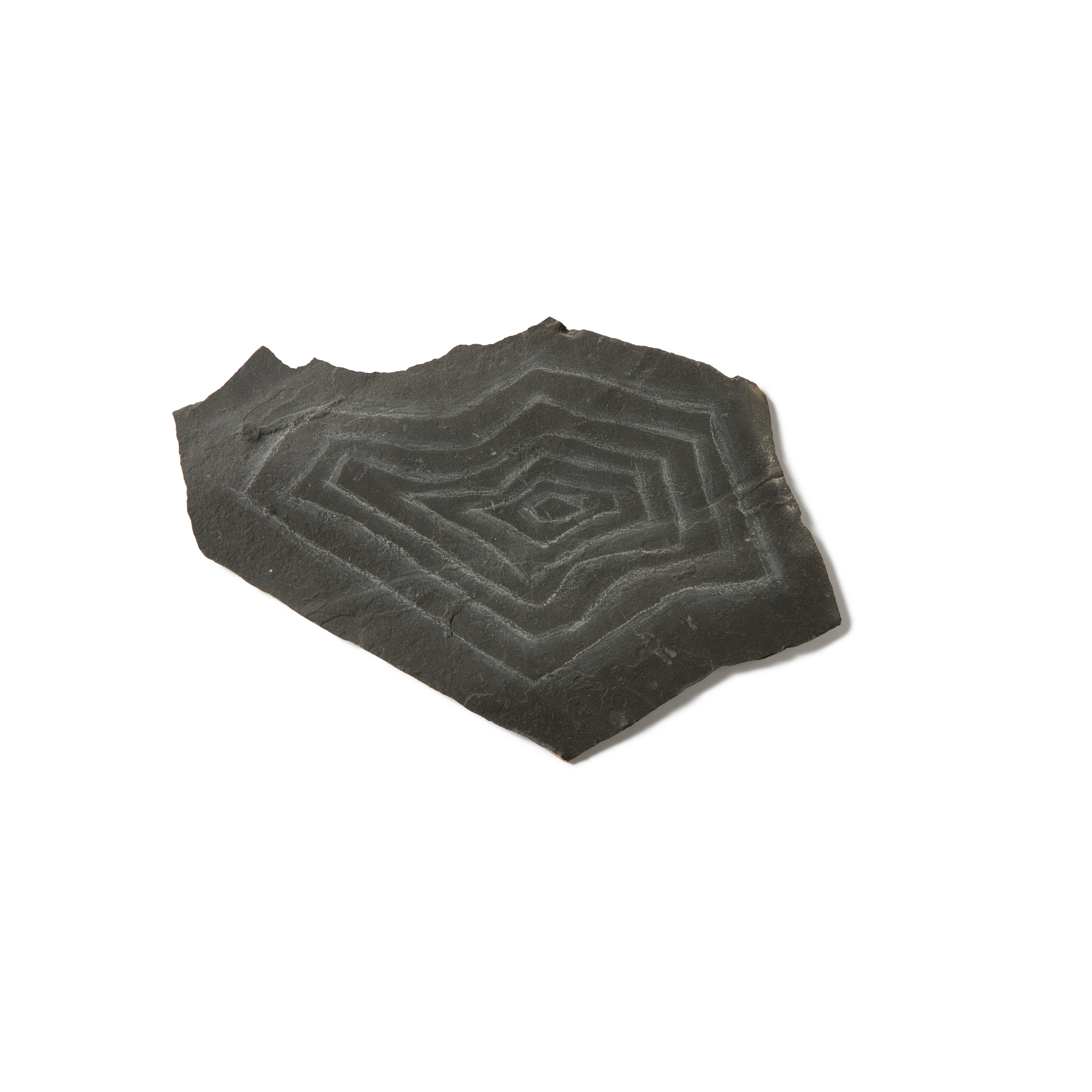
Slate Drawing, 1995
Within minutes, the work is gone. Goldsworthy watches. He does not look defeated. He looks, if anything, satisfied.
That scene distilled everything essential about one of the most quietly radical artistic practices of the past half century. Goldsworthy was born in Cheshire, England, in 1956, and grew up in Yorkshire, a landscape that would leave a permanent mark on his imagination. As a teenager he worked on farms in the Pennines, developing an early and unromantic intimacy with land, seasons, and the physical demands of outdoor labour. He studied at Bradford College of Art before completing his fine art degree at Preston Polytechnic, graduating in 1978.
Andy Goldsworthy
Andy Goldsworthy
These were formative years in British art, when land art was being debated with genuine urgency, and the influence of artists such as Richard Long and Hamish Fulton was beginning to circulate widely. Yet even at this early stage, Goldsworthy was charting a course that would diverge meaningfully from his predecessors. Where Long favoured the walk as artistic act and Fulton committed to photography as sole record of journeys taken, Goldsworthy was drawn to making, to the physical construction of things using only what the immediate environment provided. He began working outdoors in the late 1970s, creating sculptures from leaves, thorns, snow, ice, mud, sticks, feathers, and stone, almost always without tools or adhesives beyond what nature itself offered.
“I want to get under the surface. When I work with a leaf, rock, stick, it is not just what it looks like but what it is.”
Andy Goldsworthy, Hand to Earth, 1990
He settled in Penpont, in the Scottish countryside of Dumfries and Galloway, where he has lived and worked for decades, rooting his practice in a specific place while simultaneously travelling globally to make work in radically different landscapes. Japan, the Arctic, the American South, Australia: each environment demanded a different language, and Goldsworthy proved himself fluent in all of them. The 1990s marked a period of significant international recognition. Goldsworthy began attracting major institutional attention, with exhibitions at venues including the San Diego Museum of Art and continued documentation projects that brought his ephemeral work to audiences who would never encounter the originals.
Andy Goldsworthy
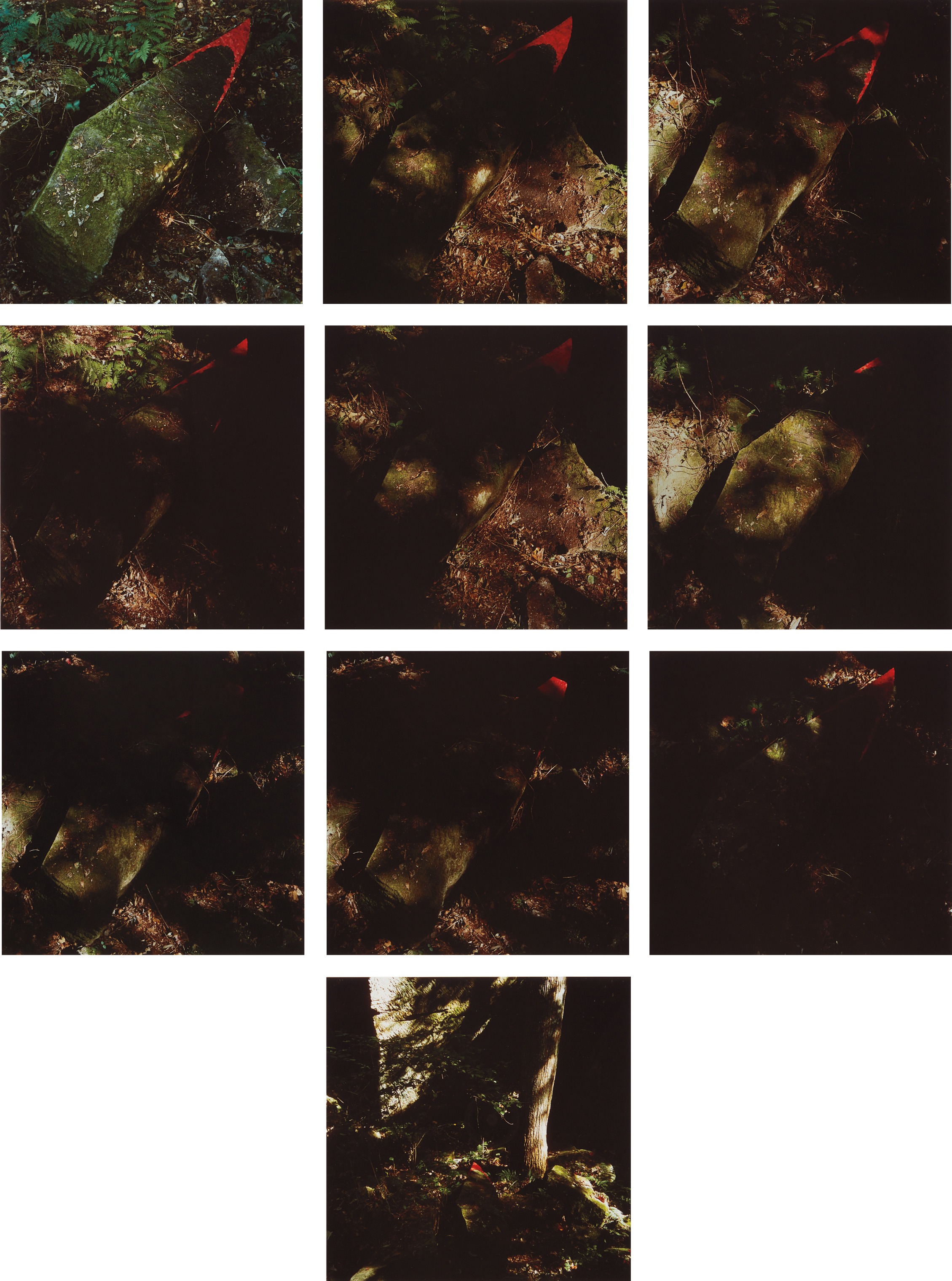
Red Leaves/Difficult to Find/Held with Water/To the Tip of a Quarried Stone/Government Island, Virginia October 13
His 1990 book Hand to Earth, published in conjunction with an exhibition at the Leeds City Art Gallery, became a touchstone document of the period, presenting the full scope of his practice with rigorous photographic precision. He also began developing his permanent stone works during this era, large scale dry stone installations, arches, cairns, and walls, that demonstrated his mastery of centuries old craft traditions alongside his more fleeting investigations. A major permanent installation at the Storm King Art Center in New York State, the Stone Wall completed in 1998, wound through the forest landscape and into an existing barn, becoming one of the defining land art works of its generation. Goldsworthy's signature works operate on two registers simultaneously.
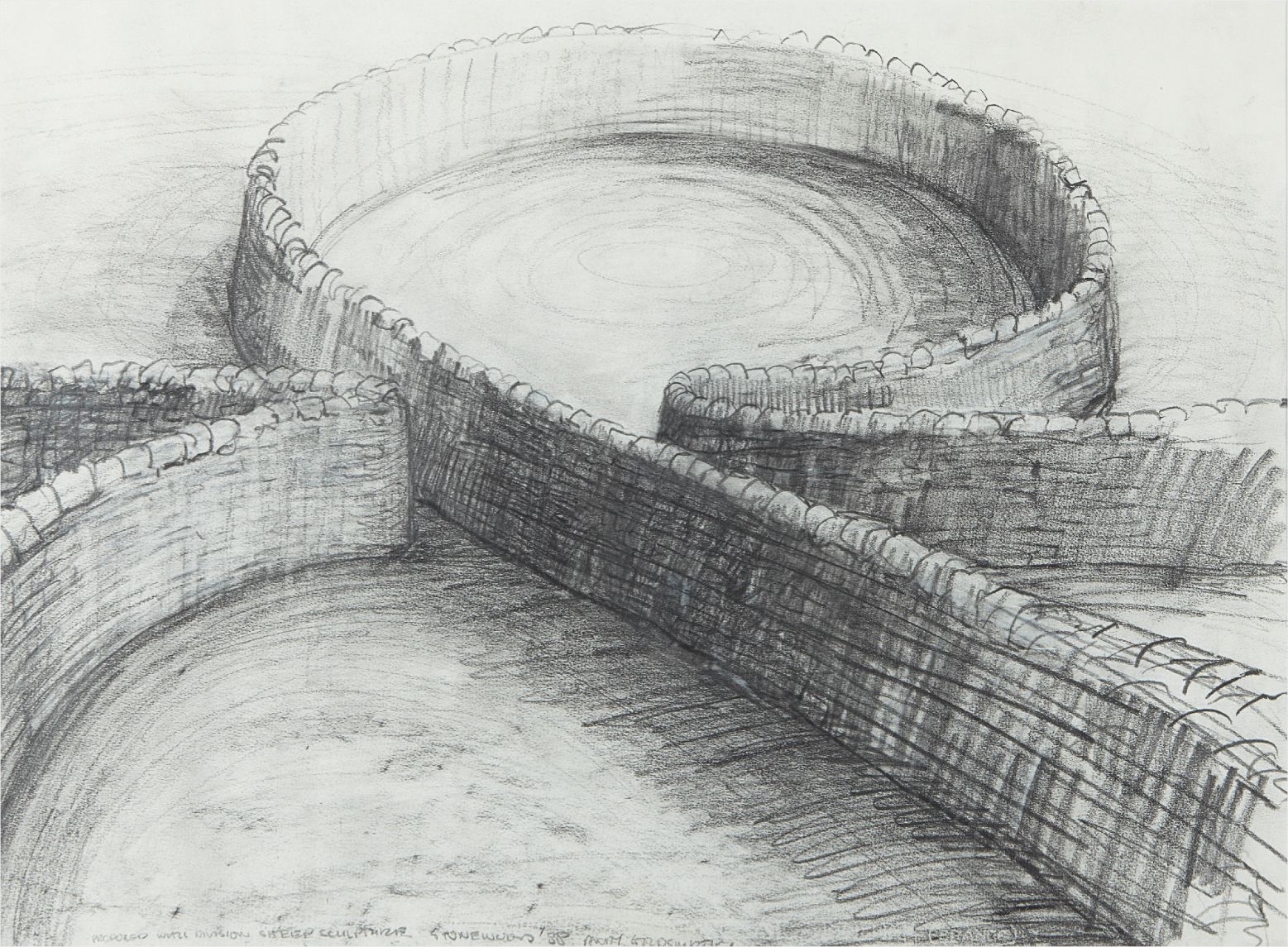
There are the ephemeral pieces, documented solely through his own photography, where the photograph is never quite a substitute for the vanished original but becomes instead its own kind of object. Works such as the Red Leaves suite from 1995, a set of nine cibachrome prints capturing leaves arranged in water against quarried stone in Virginia, exemplify this approach. The colours are startling, the composition precise, and the knowledge that the arrangement lasted only hours deepens rather than diminishes the work's power. Then there are the permanent stone installations, including proposed and realised wall divisions and sheep fold sculptures across the British landscape, where Goldsworthy collaborates with traditional dry stone wallers to create structures that feel both ancient and unmistakably contemporary.
Andy Goldsworthy
Proposed Wall Division Sheep Sculpture, Stonewood
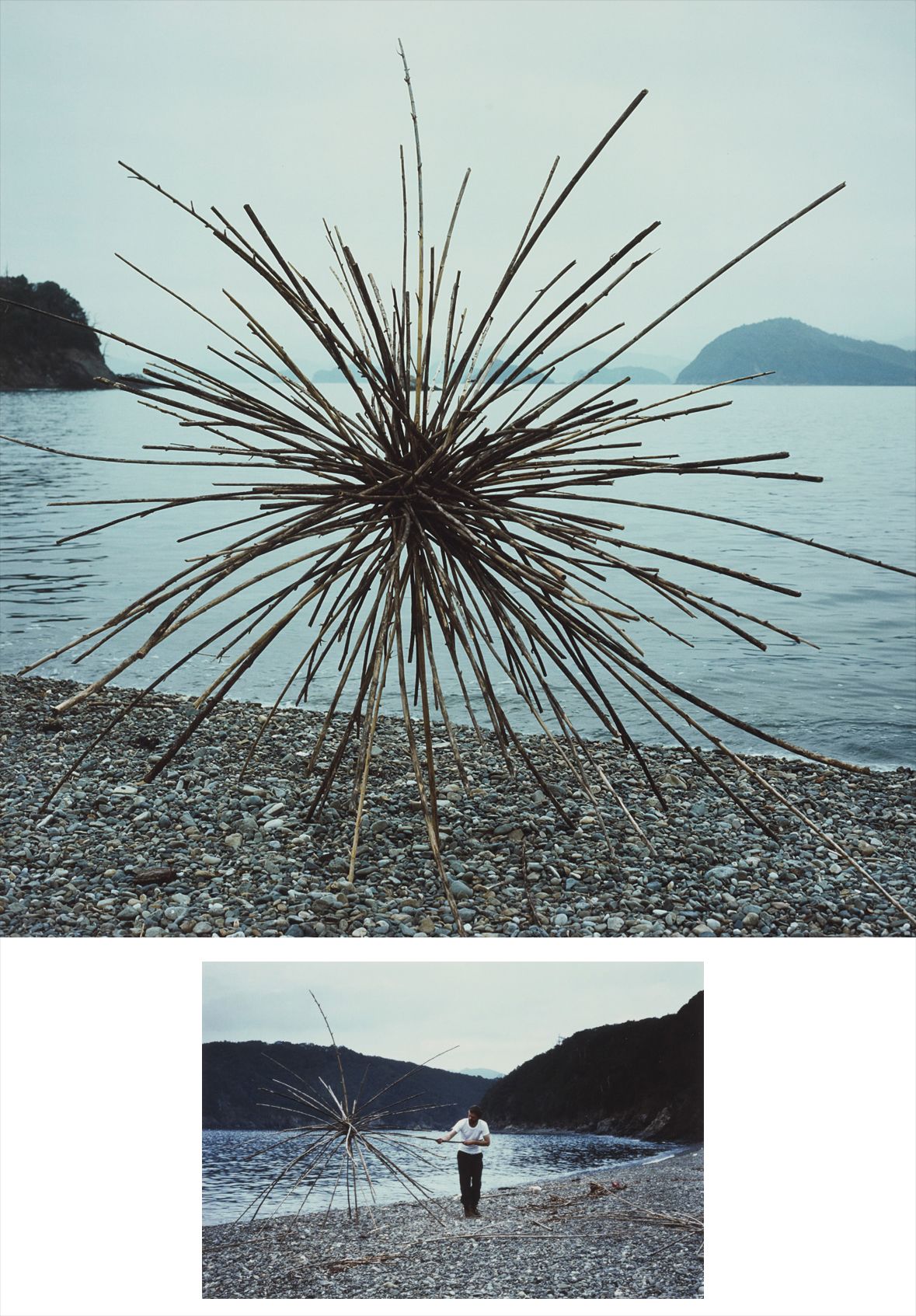
His woven bamboo works, created during visits to Japan, add yet another dimension, showing an artist who approaches each culture's materials with the same openness and rigour. For collectors, Goldsworthy's work presents a genuinely compelling proposition. The photographic works, which document otherwise vanished sculptures, carry the particular intensity of objects that hold an unrepeatable moment. Works on paper and the cibachrome and archival print suites have appeared consistently at auction through Christie's, Sotheby's, and Phillips, with strong demand from both institutional and private buyers.
The photographic works are especially sought after because they represent the only material trace of sculptures that no longer exist, giving each print an almost archaeological weight. Collectors are drawn not only to the beauty of the images but to the philosophy embedded in them: a sustained meditation on impermanence, attention, and the human impulse to make marks in the world. Slate drawings and mixed media works that incorporate natural materials alongside photographic documentation offer entry points at various price levels, making the practice accessible to collectors at different stages. Goldsworthy occupies a singular position within the broader lineage of land and environmental art.
His practice emerged from the same British tradition that produced Richard Long and Hamish Fulton, but he extended that tradition in directions neither artist pursued, combining the handmade intimacy of craft with a conceptual rigour more often associated with minimalism. On the American side, his permanent works invite comparison with Robert Smithson and Andy Goldsworthy has himself cited Smithson as an important antecedent, though Goldsworthy's relationship with landscape is fundamentally one of partnership rather than intervention. Artists such as Nils Udo, Wolfgang Laib, and more recently the practice of David Nash share something of his ecological sensibility, though each has pursued entirely distinct formal languages. Goldsworthy remains, in this company, one of the most recognisable and beloved figures in contemporary art.
What makes Goldsworthy matter now, decades into a practice that shows no signs of slowing, is precisely what made him matter in the beginning. He asks us to pay attention. In an era defined by speed and digital saturation, his works insist on slowness, on the specific gravity of a particular place at a particular moment. The sheep fold projects continuing across the British Isles, the ongoing photographic series from Penpont and beyond, and the permanent installations that age and weather alongside the landscapes they inhabit: all of it adds up to one of the most coherent and morally serious bodies of work in contemporary art.
To collect Goldsworthy is to bring that attentiveness home, to keep something of that still, watching quality close at hand.
Featured Works
Explore books about Andy Goldsworthy
Andy Goldsworthy: A Collaboration with Nature
Andy Goldsworthy
Andy Goldsworthy: Sculptural Forms
Andy Goldsworthy
Andy Goldsworthy: Hand to Earth
Andy Goldsworthy
Andy Goldsworthy: Touching Nature
Andy Goldsworthy
Andy Goldsworthy: Stone
Andy Goldsworthy
Andy Goldsworthy: Midsummer Snowballs
Andy Goldsworthy
Andy Goldsworthy: Time
Andy Goldsworthy
Andy Goldsworthy: Garden
Andy Goldsworthy