Andro Wekua
Andro Wekua's World of Beautiful Haunting
Artist Spotlight · The Collection Editorial
In recent years, the international art world has turned its attention with renewed warmth toward Andro Wekua, a Georgian born artist whose work occupies a singular position at the intersection of memory, sculpture, and painterly imagination. His presence in the permanent collection of the Centre Pompidou in Paris marks a significant institutional recognition, placing him among a generation of Central and Eastern European artists who have reshaped the contemporary conversation about identity, displacement, and the aesthetics of recollection. His continued presence at major international exhibition venues, including the Venice Biennale, has made him one of the most compelling figures working across painting, sculpture, and installation today. For collectors and curators alike, Wekua represents something genuinely rare: a voice that is utterly personal and yet speaks to universally felt experiences of time and loss.
Andro Wekua
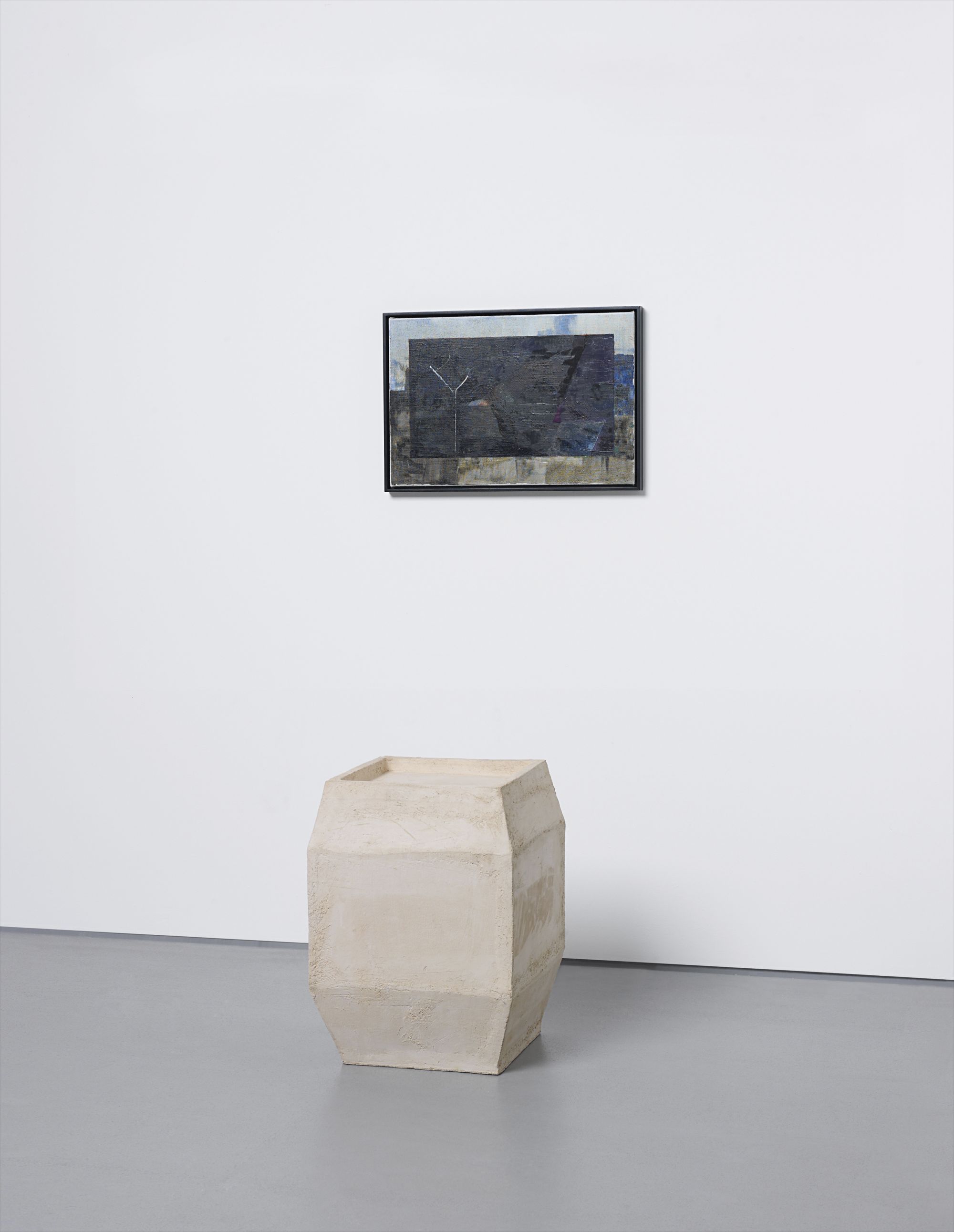
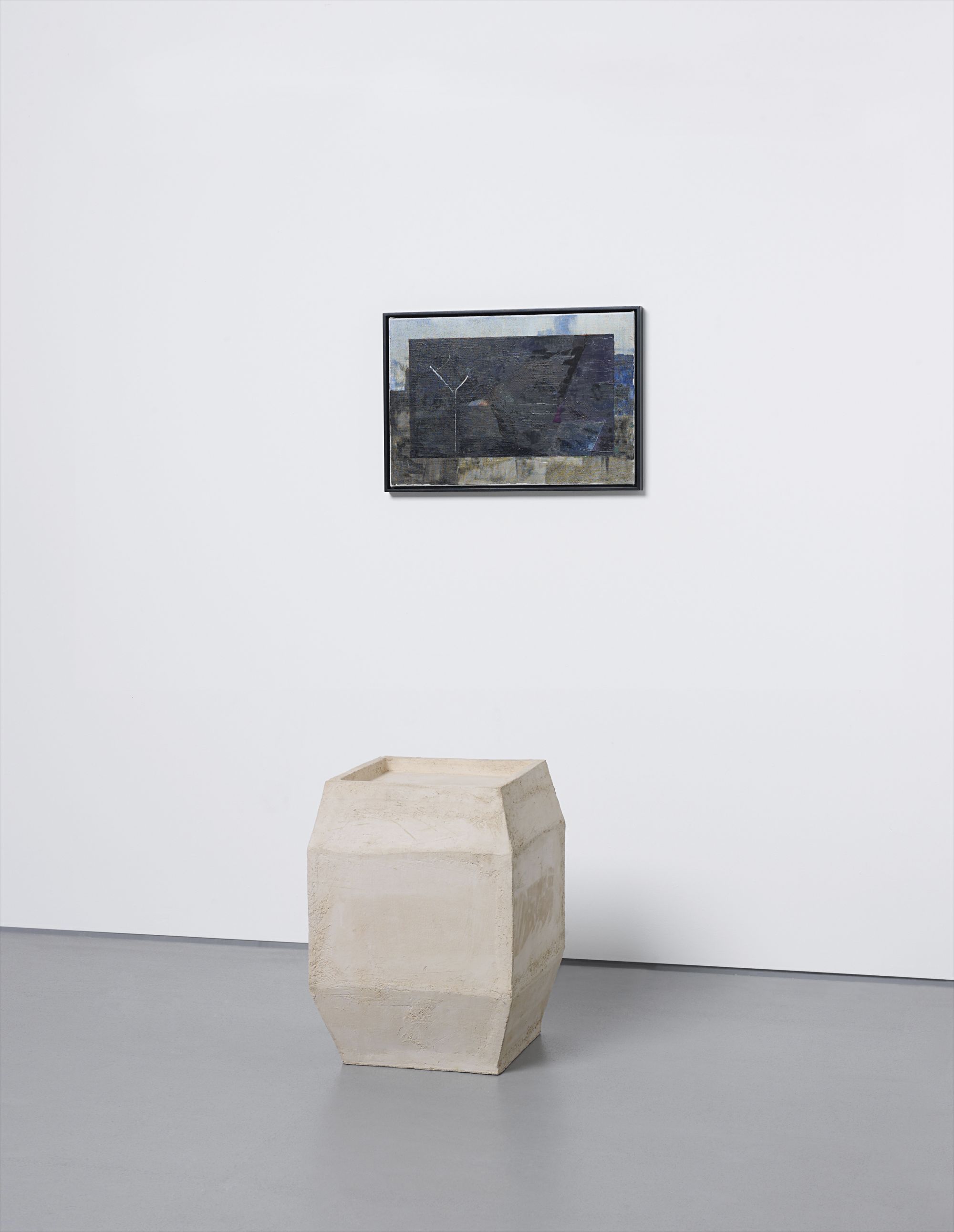
White Tree
Wekua was born in 1977 in Sukhumi, the capital of Abkhazia, a region of Georgia that would be convulsed by conflict and political upheaval in the years following the dissolution of the Soviet Union. The city itself, once a lush Black Sea resort destination beloved across the USSR, became a place of rupture and exile, and Wekua's family was among those displaced by the war that tore through the region in the early 1990s. This foundational experience of losing a home, of watching a familiar world become inaccessible and then gradually mythologized in memory, is the emotional bedrock beneath everything he makes. He later moved to Tbilisi and eventually to Europe, settling in the creative milieu of cities like Zurich and Berlin, which became the staging grounds for his mature artistic development.
Wekua studied at the Hochschule für Bildende Künste in Hamburg, an institution that has nurtured generations of rigorous and experimental artists. His formation there grounded him in the traditions of European modernism while giving him the critical tools to push against those traditions with genuine force. He absorbed influences ranging from Surrealism to the melancholy figuration of artists working in the postwar German and Swiss contexts, but he filtered all of this through the very specific lens of his Caucasian upbringing and the visual culture of Soviet Georgia. The result was a sensibility that could not be easily categorized, one that drew equally from Constructivist graphic traditions, from the haunted domestic imagery of Eastern European cinema, and from the more austere wings of contemporary conceptual practice.
Andro Wekua
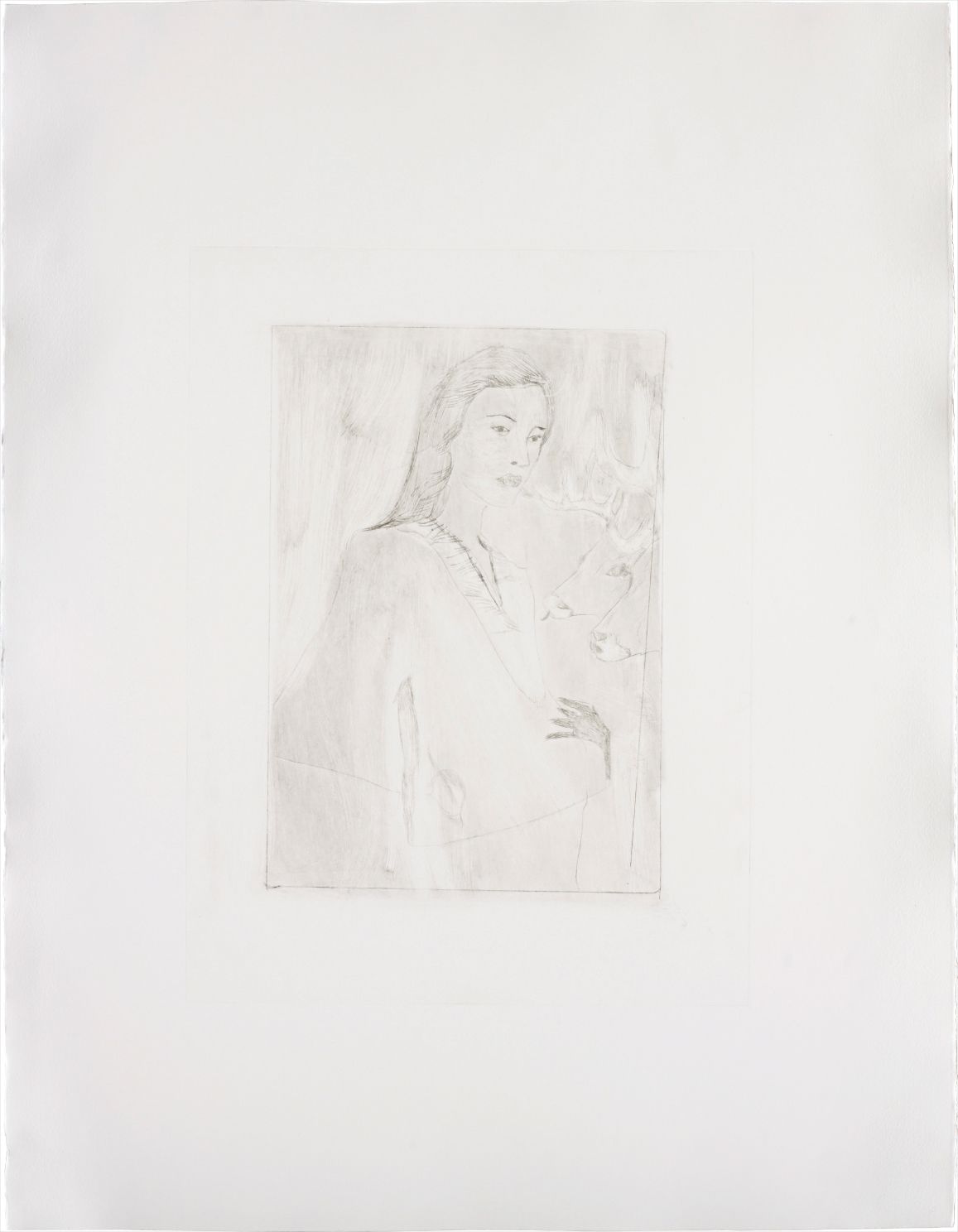
Zungenkuss
His artistic practice evolved into something richly layered and formally daring. Wekua works across oil painting, monotype, collage, ceramic sculpture, felt and found materials, and large scale installation, often combining these modes within a single body of work or even a single piece. His mannequin like figures, rendered with an uncanny stillness that hovers between the animate and the inanimate, have become one of his most recognized contributions to contemporary sculpture. These figures do not perform emotion so much as embody its absence, standing or sitting in postures that suggest interrupted lives, paused narratives, stories told in the spaces between words.
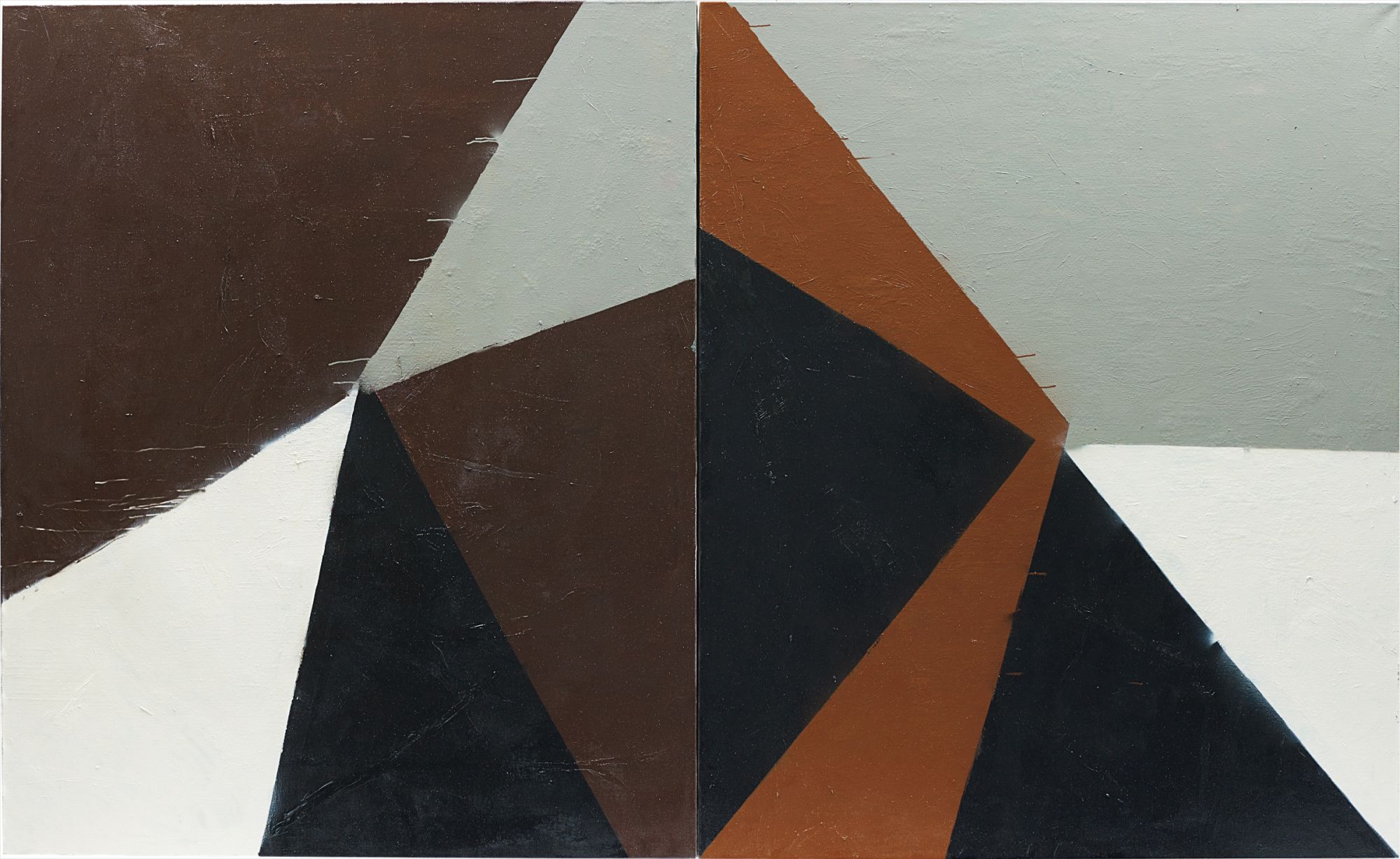
The sculptures carry the feeling of someone who has left the room and may or may not return, which is itself a profound metaphor for the experience of exile and the strange temporality of traumatic memory. Among the works available on The Collection, several offer particularly illuminating windows into Wekua's vision. White Tree, which combines oil on canvas with ceramic sculpture, is exemplary of his ability to unite painting and three dimensional form into a unified emotional environment. Taras Schewcenko, rendered in oil on canvas in two parts, demonstrates his interest in doubling, fragmentation, and the way meaning accumulates through repetition and variation.
Andro Wekua
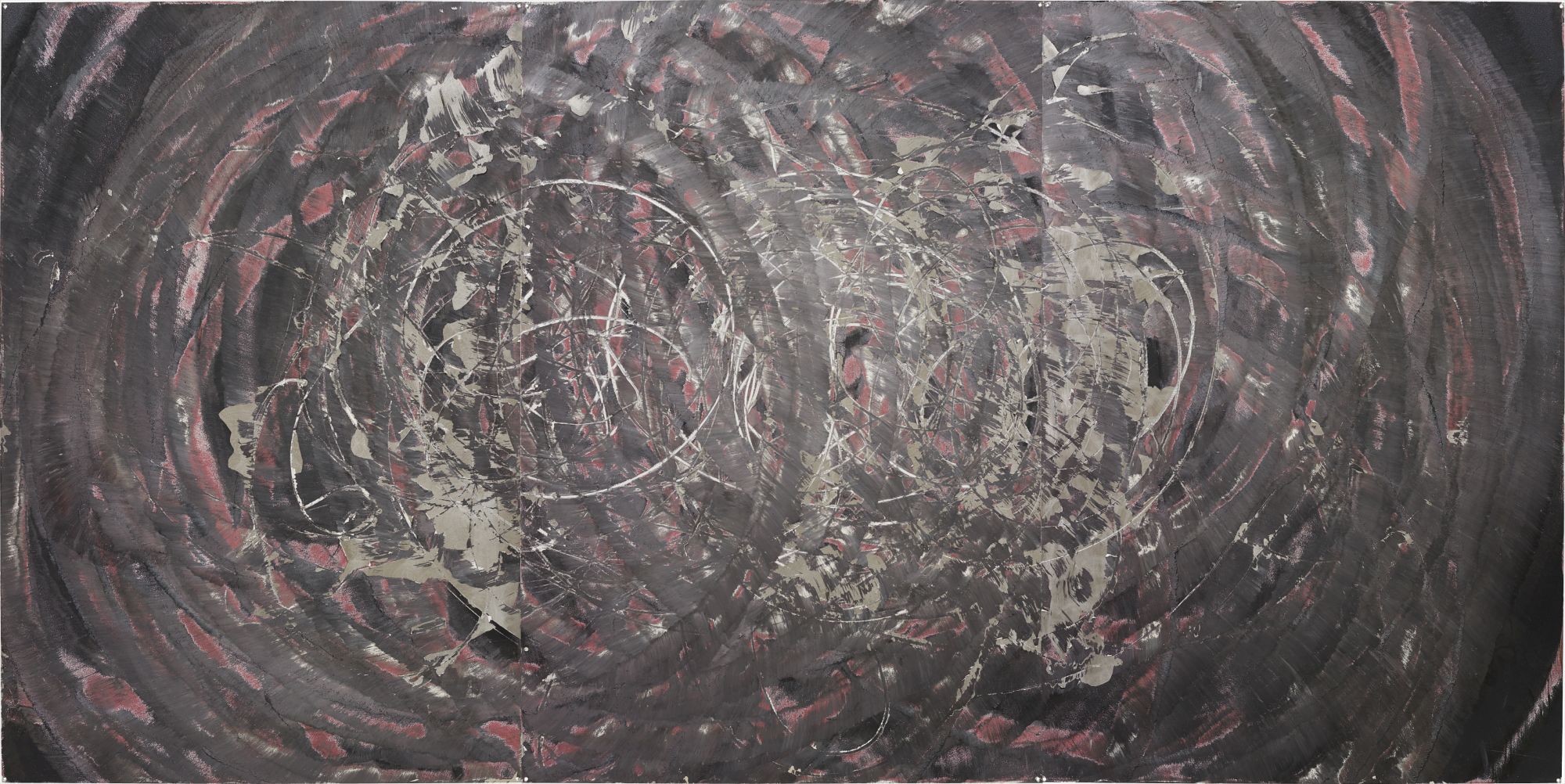
Taras Schewcenko
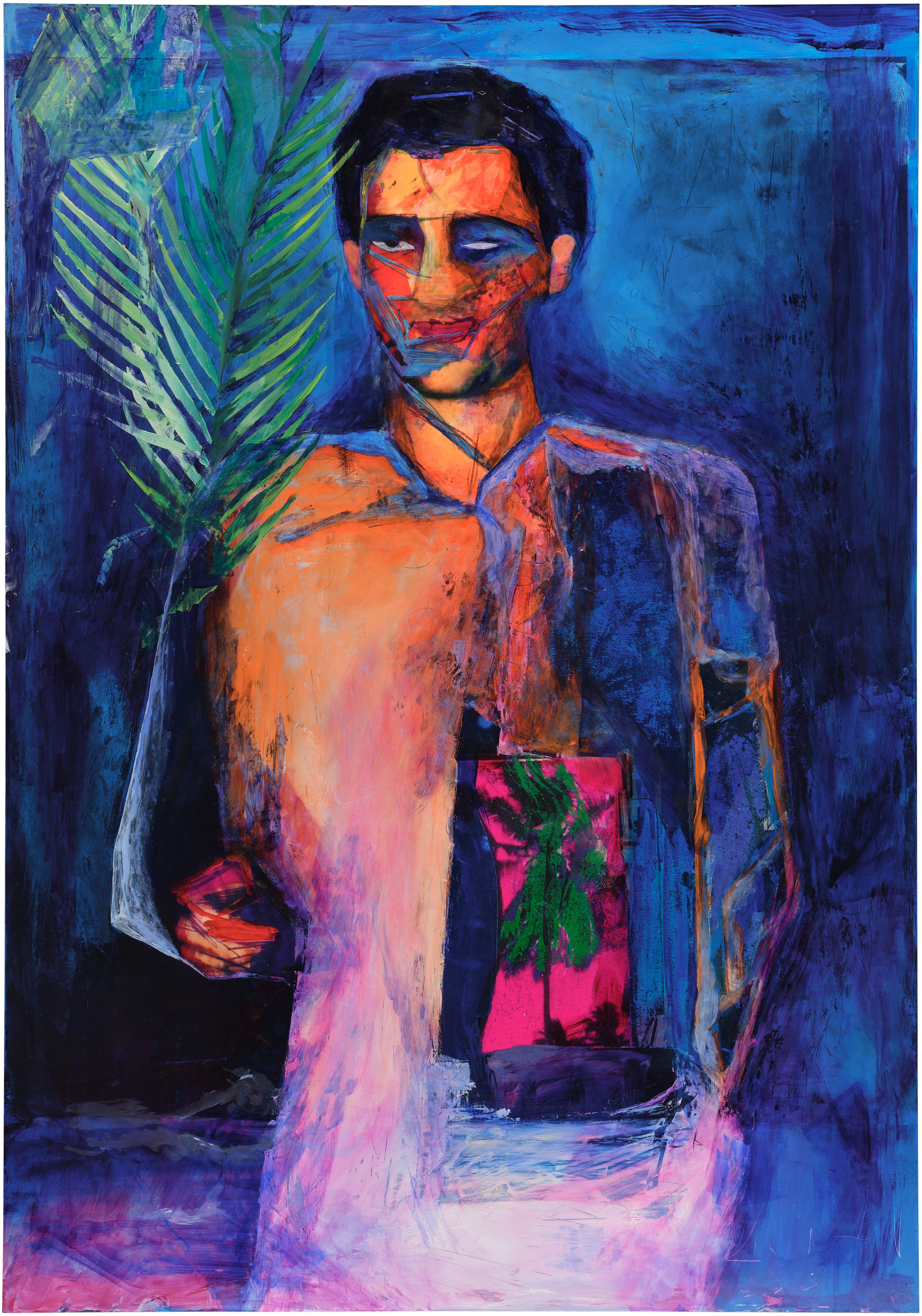
The work references the great Ukrainian poet and national symbol Taras Shevchenko, folding questions of national identity and cultural memory into Wekua's broader inquiry. Zungenkuss, a monotype on paper, shows the delicate, intimate register he can achieve in works on paper, where his imagery feels both dreamed and urgently present. Calling Over, a collage worked in felt pen and ballpoint pen on a photographic ground, reveals his comfort with the vernacular and the handmade, his willingness to treat every surface as a potential site of meaning. Portrait / Palm from 2018, made with oil and silkscreen ink on an aluminum panel, speaks to his ongoing dialogue with technology, reproduction, and the layered surfaces of contemporary image making.
For collectors, Wekua's work represents an extraordinary opportunity at a moment when his institutional profile continues to grow. His works on paper and smaller canvases offer accessible entry points into a practice that, at its larger scale, commands significant attention in international auction rooms and private sales. Collectors are drawn to the unmistakable atmosphere his work generates: there is no mistaking a Wekua for any other artist's work, and that quality of undeniable individual vision is precisely what sustains long term value in the market. His mixed media works, which combine photographic, painterly, and sculptural elements, are particularly sought after by collectors who appreciate the conceptual richness that accompanies genuine formal beauty.
Andro Wekua
Calling Over
Those approaching his practice for the first time would do well to consider works on paper as a way into his world, before exploring the more complex pleasures of his painting and sculpture. Within art history, Wekua belongs to a broader constellation of artists who have used personal and collective memory as the primary material of their practice. His work resonates with that of Kara Walker in its engagement with historical trauma and visual mythology, with Neo Rauch in its dreamlike figuration, and with artists like Berlinde De Bruyckere in its sculptural meditation on the human body rendered strange. Yet Wekua is not derivative of any of these figures.
He occupies his own distinct territory, one shaped by the specific history of the post Soviet Caucasus and the aesthetic traditions that emerged from that complex cultural geography. What makes Andro Wekua so important today is precisely his refusal to offer easy consolations. His work insists on the complexity of remembrance, on the way the past persists not as a stable archive but as a series of flickering, incomplete images that demand to be looked at with patience and care. In a contemporary art landscape that can sometimes reward spectacle over substance, Wekua's quiet intensity feels both countercultural and deeply necessary.
His is a practice built on the conviction that art can hold what history cannot fully account for, and that beauty remains one of the most honest languages available to us when words alone are insufficient.
Explore books about Andro Wekua