Andrew Moore
Andrew Moore Finds Beauty in Forgotten Places
Artist Spotlight · The Collection Editorial
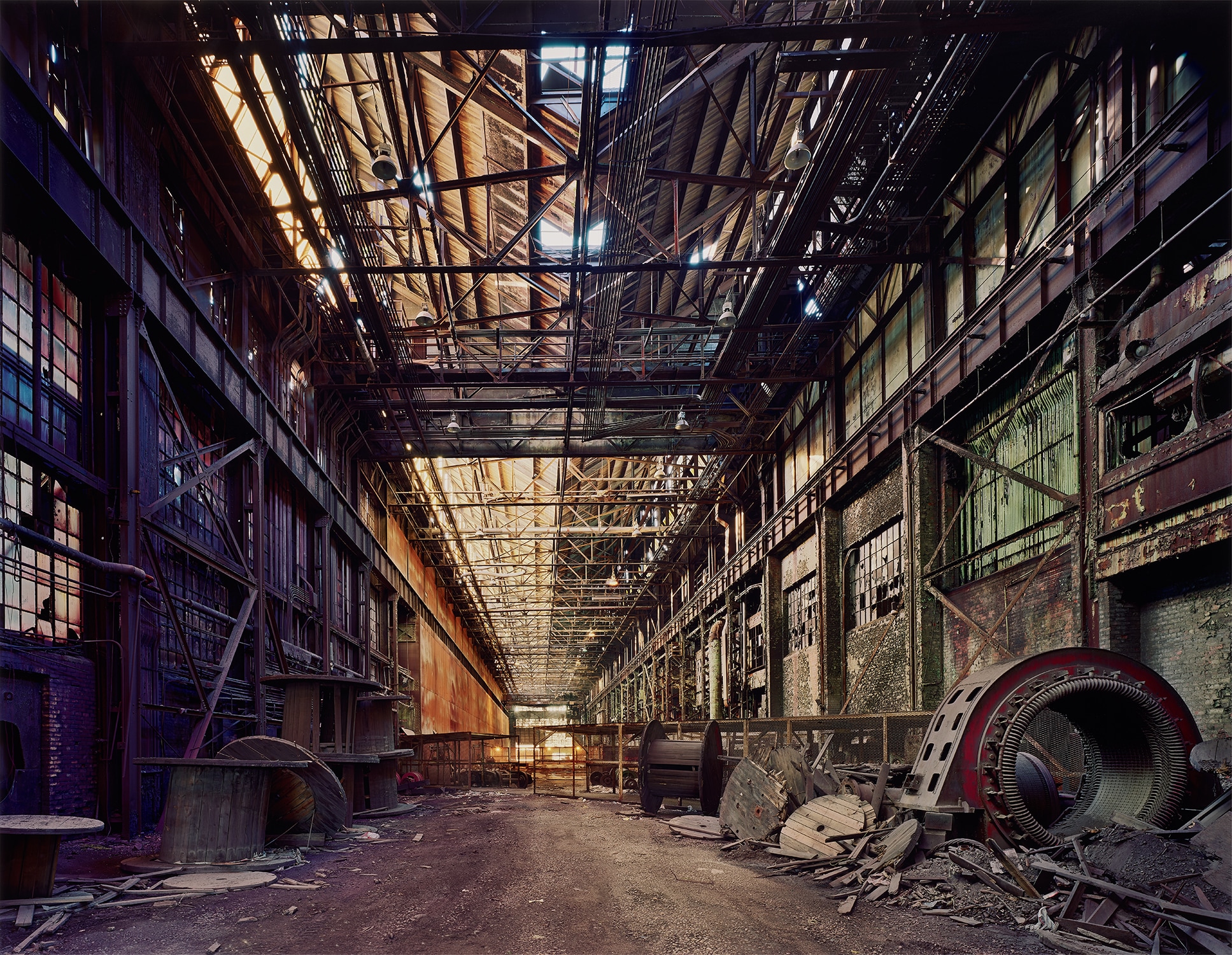
In the years since his landmark series Detroit Disassembled was published by Damiani in 2010 and exhibited widely across the United States and Europe, Andrew Moore has become one of the most quietly essential voices in contemporary American photography. His large format images of industrial ruins, colonial interiors, and windswept plains have found their way into museum collections, private holdings, and the broader cultural conversation about what America looks like when no one is watching. The timing of renewed institutional interest in his work feels entirely right. At a moment when questions of place, memory, and industrial transformation dominate public discourse, Moore's photographs feel less like documents and more like premonitions.
Andrew Moore
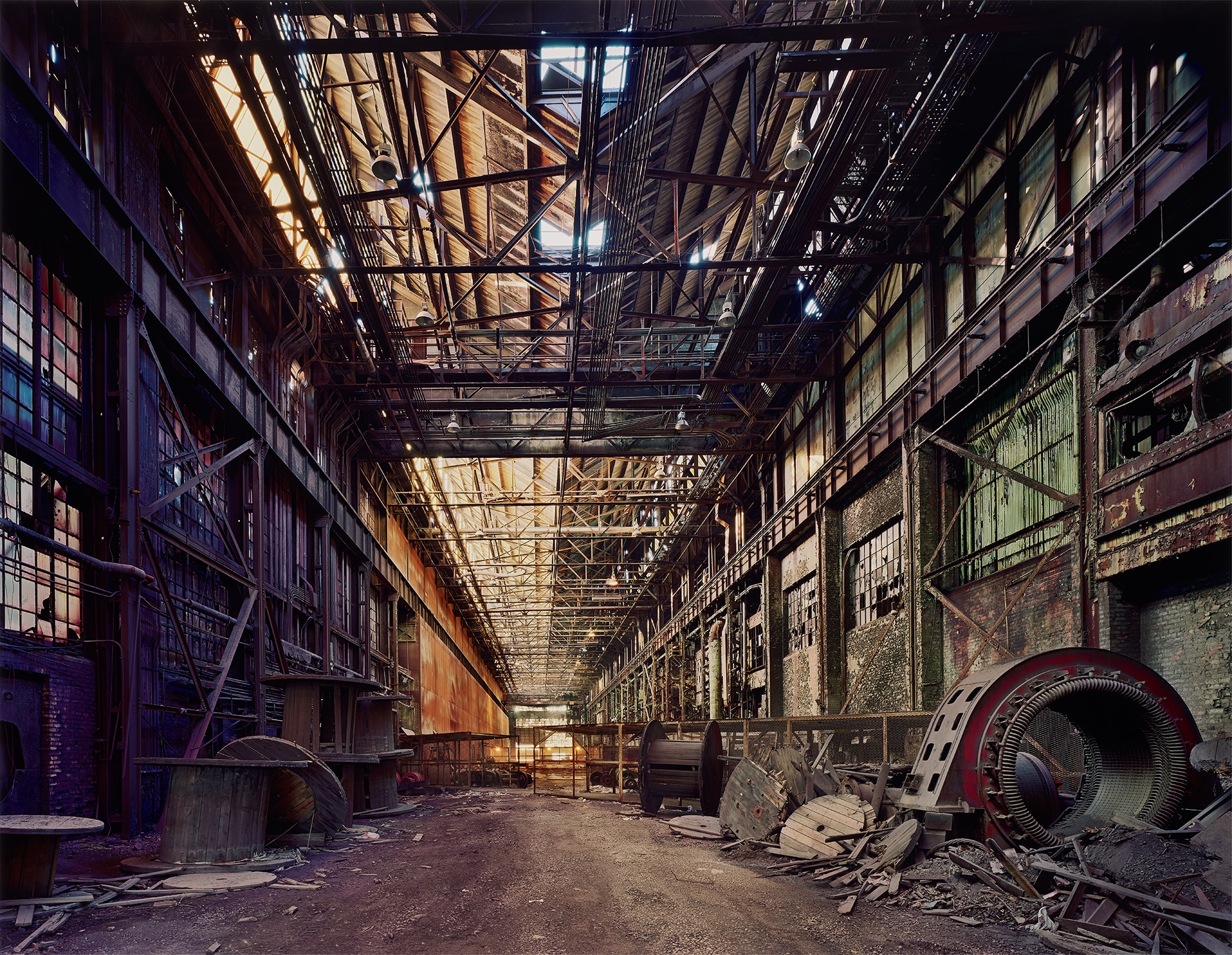
The Rouge, Dearborn, Michigan from Detroit Disassembled
Moore was born in 1957 and grew up with a sensibility shaped by the American landscape in all its contradictions. He studied at Yale University, where he earned both his undergraduate and graduate degrees, and it was there that the intellectual and formal foundations of his practice were laid. Yale's art and architecture programs have long produced photographers attuned to the built environment, and Moore absorbed that tradition while pushing it toward something more personal and more politically resonant. His early travels, including extensive time spent in Cuba beginning in the 1990s, gave him a worldview that refused easy borders between the beautiful and the broken.
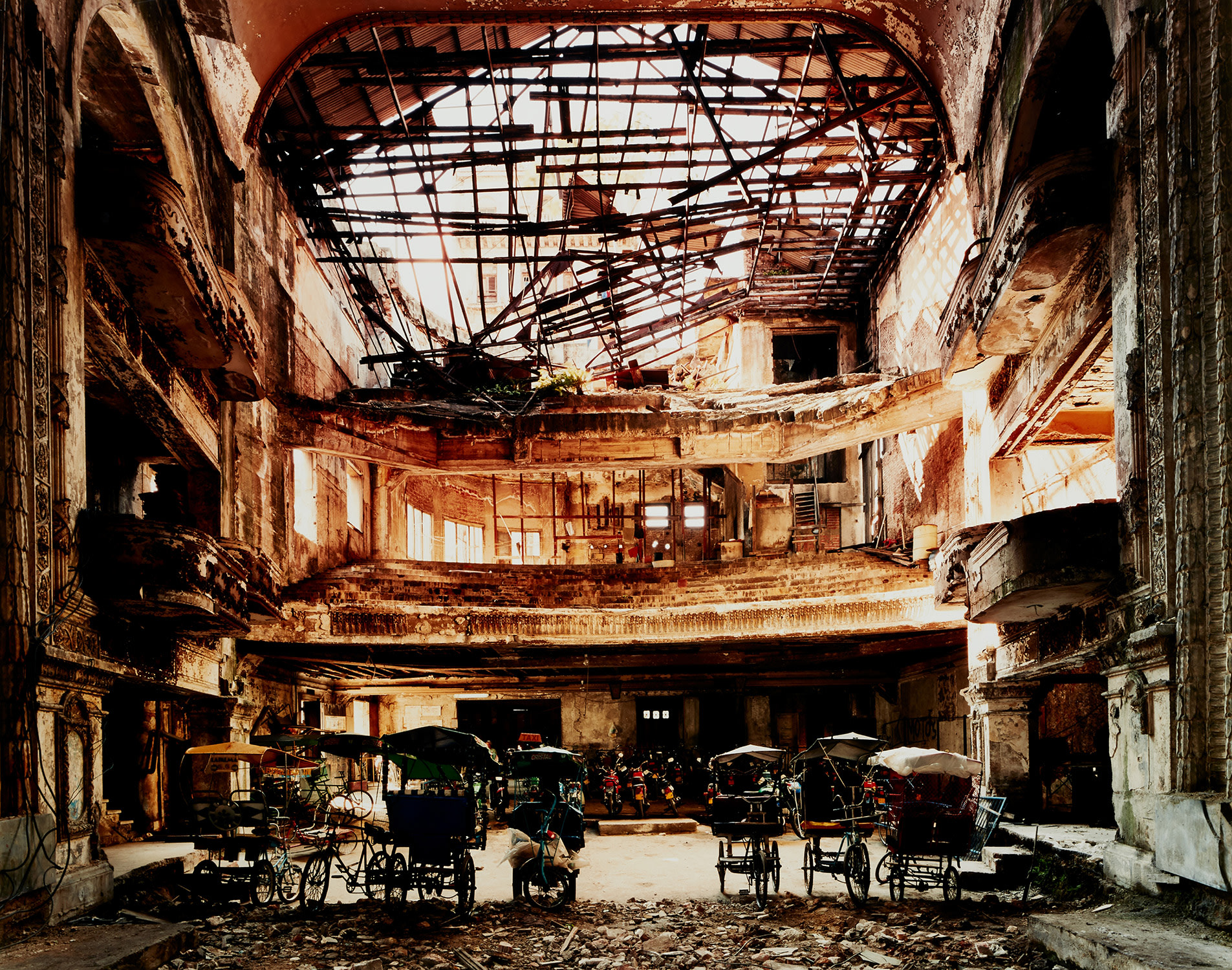
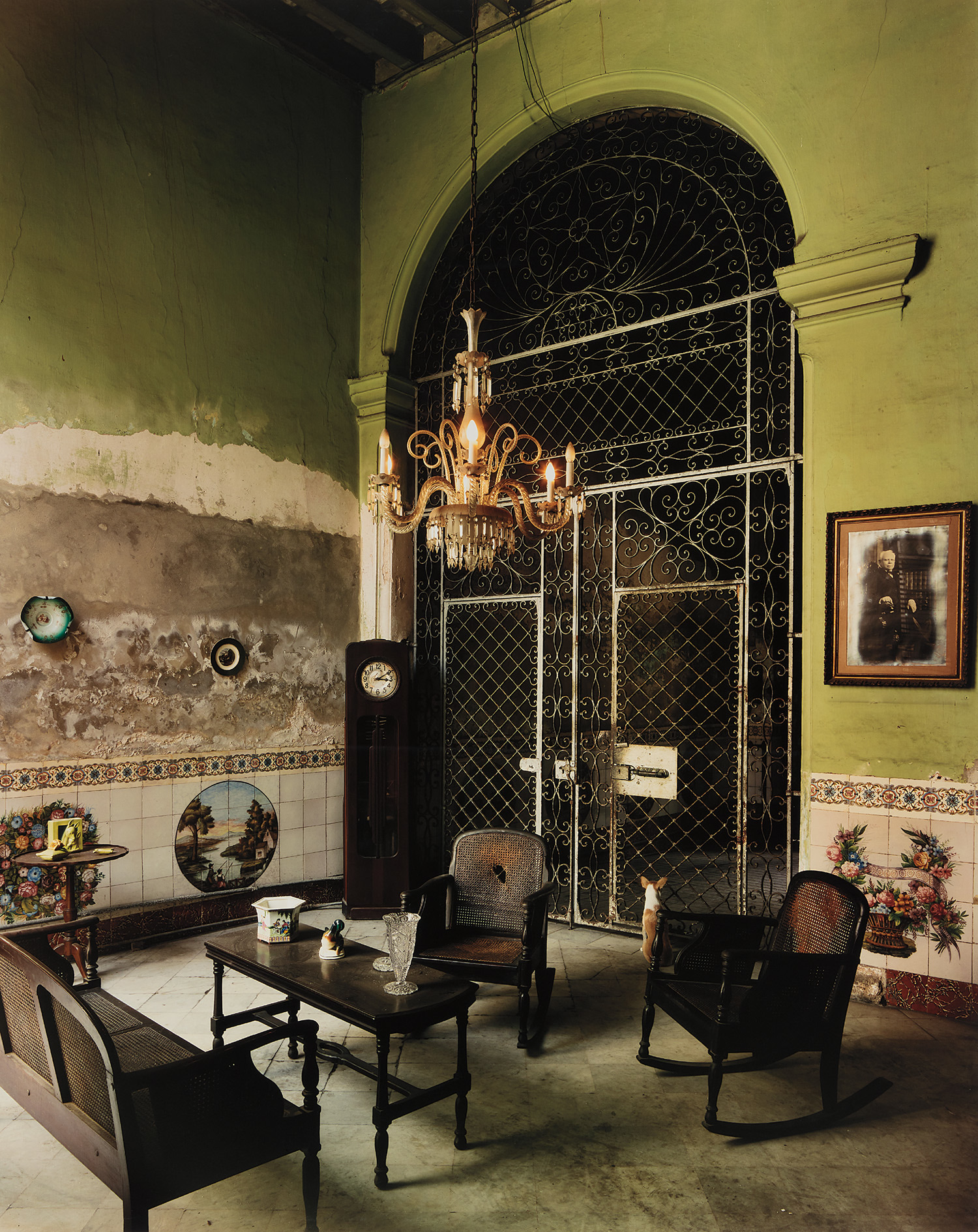
Moore's artistic development can be understood in distinct geographic chapters, each one representing a deepening commitment to a particular kind of looking. His Cuba work, made over many visits during a period when the island remained largely inaccessible to American eyes, introduced collectors and critics to his singular ability to find grandeur inside decay. Works such as Campoamor, Vista Oeste, Havana, Cuba and Salon Verde, Havana, Cuba are extraordinary examples of this sensibility. The flush mounted chromogenic prints glow with color, their peeling walls and broken ceilings bathed in light that seems almost operatic.
Andrew Moore
Campoamor, Vista Oeste, Havana, Cuba
These are not photographs of poverty. They are photographs of persistence, of beauty that refuses to yield. The Russia work that followed extended this inquiry into a colder register. Fishing Village, White Sea, Russia, a chromogenic print made around 2007, carries the stillness of a place that time has approached cautiously rather than abandoned entirely.
Moore spent considerable time in Russia photographing communities and structures that existed outside the familiar visual vocabulary of the post Soviet narrative, and the resulting images hold a quiet authority. Then came Detroit, and with it a body of work that would define a decade of photographic discourse about American industrial decline and reinvention. Detroit Disassembled arrived at precisely the moment when the city's bankruptcy and architectural fate were front page concerns, and Moore's photographs offered something the news cycle could not. They offered scale, stillness, and a kind of mournful respect.
Andrew Moore
Salon Verde, Havana, Cuba
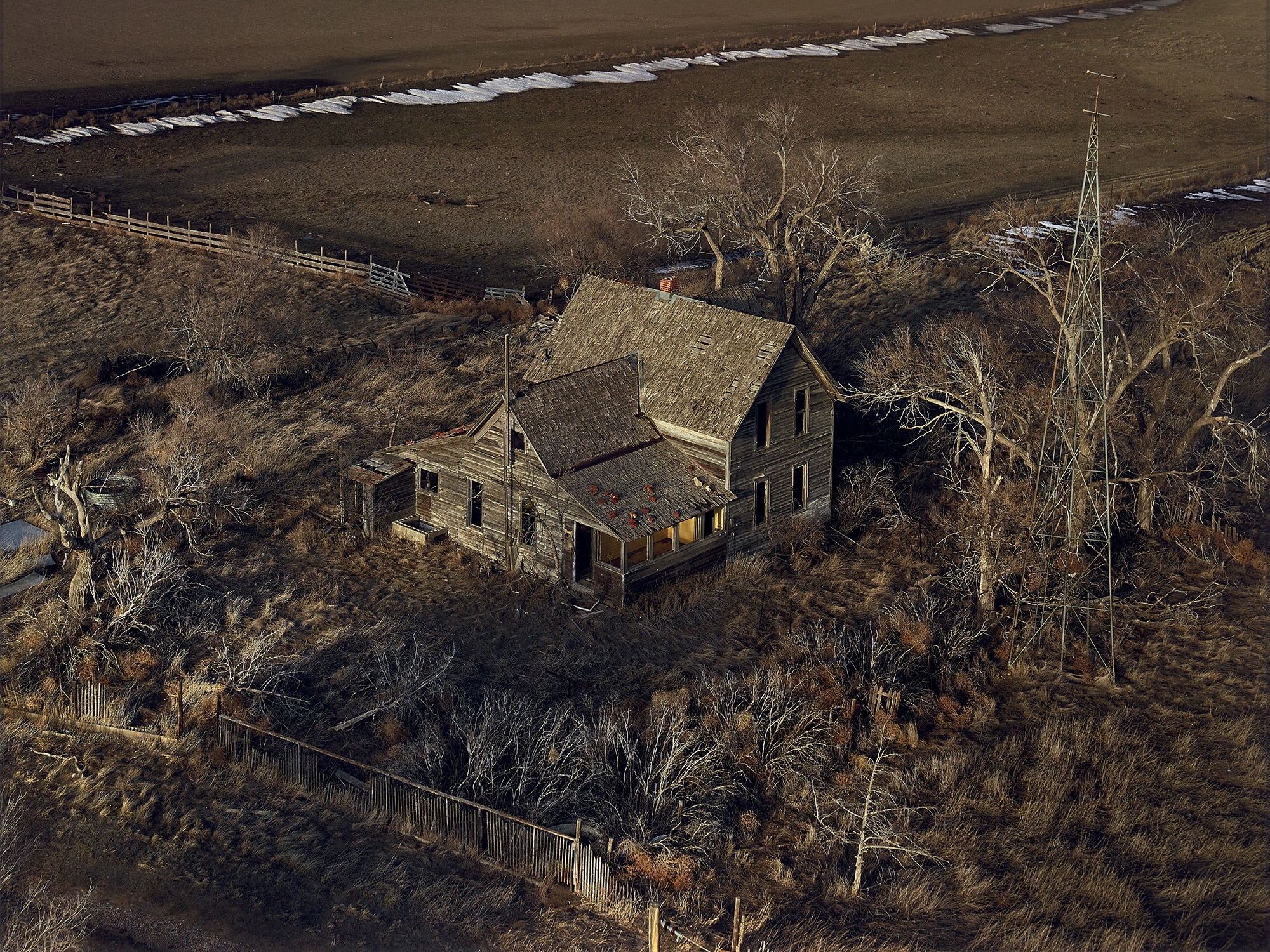
The Rouge, Dearborn, Michigan from Detroit Disassembled and Model T Headquarters, Highland Park, Detroit are among the most reproduced and collected images from that series. Shot with a large format camera that renders every surface with almost sculptural precision, these works sit comfortably in conversation with the great traditions of American documentary photography while transcending any purely documentary purpose. The Nebraska work, represented in collections by The Yellow Porch, Sheridan County, Nebraska, marks another evolution in Moore's practice. Moving from the urban and industrial to the rural and domestic, these images of the Great Plains carry a different emotional register.
A yellow porch against a vast sky becomes a meditation on solitude and resilience, on the particular American experience of living at the edge of something enormous. The pigment and archival pigment prints from this period have attracted strong collector interest precisely because they translate so beautifully into domestic spaces while retaining an intellectual weight that rewards sustained attention. From a collecting perspective, Moore represents a compelling proposition at every level of the market. His prints are typically issued in limited editions with rigorous production standards, whether chromogenic prints flush mounted to Plexiglas or archival pigment prints made to museum specifications.
Andrew Moore
The Yellow Porch, Sheridan County, Nebraska
The flush mounted works in particular have a physical presence that photographs on paper alone cannot replicate. Collectors who acquired the Cuba and Detroit bodies of work in the 2010s have seen sustained institutional validation of those choices. Moore's photographs are held in significant museum collections, and continued exhibition of the Detroit and Russia work at major venues has kept the secondary market for his prints healthy and consistent. For collectors building a thoughtful collection around American photography of the late 20th and early 21st centuries, Moore belongs alongside names like Edward Burtynsky, whose industrial landscapes share certain formal concerns, and Gregory Crewdson, whose staged American suburban scenes occupy a neighboring emotional territory.
One might also place Moore in conversation with the New Topographics tradition established by photographers like Robert Adams and Lewis Baltz, who in the 1970s taught American photography to look honestly at the altered landscape without sentimentality or despair. What distinguishes Moore from that tradition, and what makes him so important to contemporary collecting, is his insistence on color and his refusal to aestheticize ruin without also honoring what once lived there. The saturated interiors of Havana, the amber industrial light of Detroit, the impossible blue of a Nebraska sky. These are not neutral observations.
They are arguments for the value of looking carefully at things the culture has decided to stop seeing. In an era of accelerated image consumption, Moore's large format deliberateness feels almost radical. Each photograph required patience, physical presence, and a sustained engagement with its subject that the digital age makes increasingly rare. Andrew Moore is a living artist whose practice continues to develop, and his place within the canon of American photography is already secure.
His work reminds us that the camera, in the right hands, is still capable of genuine discovery. For collectors, institutions, and anyone who cares about the visual record of American experience in this era of transformation, his photographs are not simply acquisitions. They are commitments to a way of seeing that will matter for a very long time.
Explore books about Andrew Moore